Chapter 17. Mitochondrial, Chloroplast, Plastid, and Other Organellar RNA Genes
Scope Note
Mitochondria, chloroplasts, and other plastids retain genomes that descend from bacterial endosymbionts, but modern organellar RNA biology is not simply bacterial gene expression preserved inside a eukaryotic compartment. Organellar genomes encode only lineage-specific subsets of the RNAs and proteins required for respiration, photosynthesis, translation, and organellar maintenance. Most proteins that transcribe, process, edit, modify, stabilize, translate, or degrade organellar RNAs are encoded in the nucleus, synthesized in the cytosol, and imported into the organelle. This chapter explains how organellar RNA genes are organized, how their primary transcripts become mature RNAs, why organellar transcript annotation differs from ordinary nuclear gene annotation, and how organellar RNA systems connect evolution, disease, plant biology, and biotechnology.
The focus is RNA gene content and RNA annotation in organellar genomes. Detailed enzymology of mitochondrial and plastid RNA polymerases is treated in Chapter 22. Detailed RNA decay pathways are treated in Chapter 37. RNA modifications and editing mechanisms are treated in Chapters 46-51, translation is treated in Chapters 66-71, and database annotation problems return in Chapters 18, 19, and 140-144. This chapter uses enough mechanistic detail to make organellar RNA genes interpretable, but it does not try to replace those later specialized chapters.
Executive Summary
Organellar RNA genes are the RNA-producing remnants of genomes retained in mitochondria and plastids after endosymbiosis and genome reduction. A typical animal mitochondrial genome is compact and encodes a small set of oxidative-phosphorylation mRNAs, two rRNAs, and a near-complete set of tRNAs. This familiar animal pattern is not a universal mitochondrial pattern. Plant mitochondrial genomes can be large, recombinogenic, intron-rich, and strongly dependent on RNA processing. Fungal, algal, and protist mitochondria add further variation. Chloroplast genomes, often called plastomes, commonly retain rRNAs, tRNAs, photosynthesis genes, ribosomal proteins, plastid RNA polymerase subunits, and other gene-expression genes, although gene content changes in nonphotosynthetic plastids. The first rule of organellar annotation is therefore comparative restraint: an RNA gene model from one organellar lineage should not be treated as a template for all organelles.
Organellar genes frequently produce mature RNAs through multi-step post-transcriptional maturation. Mammalian mitochondrial transcription generates long precursor RNAs that are cleaved, trimmed, polyadenylated, modified, and surveilled before mature mRNAs, rRNAs, and tRNAs accumulate. The tRNA punctuation model describes a major animal mitochondrial logic in which tRNA structures positioned between neighboring RNA regions mark cleavage sites for processing enzymes. Plant mitochondria and chloroplasts often rely on polycistronic transcription, group II intron splicing, RNA editing, RNA stabilization by sequence-specific RNA-binding proteins, and translation control. As a result, a DNA coordinate is not the same thing as a mature organellar transcript model.
Organellar RNA editing is a major reason mature RNA sequences can differ from organellar DNA sequences. In land-plant mitochondria and chloroplasts, many editing events are site-specific C-to-U conversions that can restore conserved codons or alter start, stop, or amino-acid positions. In kinetoplastid mitochondria, guide RNAs direct extensive uridine insertion and deletion in many mitochondrial mRNAs. These systems both create annotation hazards, but they are mechanistically distinct and should not be described as one generic organellar editing pathway.
Mitochondrial and chloroplast tRNAs, rRNAs, and mRNAs are specialized products of organellar genomes. Organellar tRNAs can have unusual structures, lineage-specific decoding roles, cytosolic import in some organisms, and modification dependencies. Mammalian mitochondrial tRNAs receive 5-methylcytosine marks from NSUN2, illustrating how nuclear-encoded modification enzymes shape mitochondrial RNA function. Mitochondrial rRNA methylation contributes to mitochondrial ribosome biogenesis and translation. Organellar mRNAs encode only selected subunits of respiratory or photosynthetic systems, so their expression must be coordinated with nuclear genes encoding the other subunits and assembly factors.
The nucleus is central to organellar RNA biology. Nuclear genes encode organellar RNA polymerases, ribonucleases, RNA helicases, aminoacyl-tRNA synthetases, tRNA and rRNA modification enzymes, intron splicing factors, pentatricopeptide-repeat proteins, ribosomal proteins, and translation factors. In Arabidopsis, nucleus-encoded phage-type RNA polymerases are targeted to mitochondria and chloroplasts. Plastids also use a plastid-encoded multi-subunit RNA polymerase, and recent structures clarify the remodeled bacterial-like architecture of this enzyme. Nuclear-organelle coordination includes both anterograde control from the nucleus to organelles and retrograde signaling from organelles back to the nucleus.
Organellar RNA genes matter for medicine, evolution, agriculture, and biotechnology. Mitochondrial DNA variants can damage tRNAs, rRNAs, mRNAs, or processing signals, and nuclear variants can damage imported mitochondrial RNA factors even when mitochondrial DNA is unchanged. In plants, mitochondrial transcript structures and RNA-processing events contribute to cytoplasmic male sterility, stress responses, and breeding systems. Plastid transformation and chloroplast transgene expression depend on promoter choice, RNA processing, transcript stability, editing context, translation initiation, and plastid developmental state. Organellar RNAs can also dominate plant mRNA pools, so transcriptomic analysis must treat organellar reads as both biologically meaningful signals and potential technical confounders.
Concept Inventory
- Organellar genome: a genome located inside a eukaryotic organelle rather than in the nucleus. The main examples are mitochondrial genomes and plastid genomes. A mitochondrial genome, or mtDNA, is the genome retained in mitochondria. A plastid genome, or plastome, is the genome retained in chloroplasts or related plastids. Chloroplasts are photosynthetic plastids; nonphotosynthetic plastids may retain reduced genomes for gene expression and metabolic functions even after losing most photosynthesis genes.
- Endosymbiotic gene transfer: the movement of genes from an ancestral endosymbiont genome to the host nuclear genome during evolution. A transferred gene can remain functionally organellar if its protein product is imported back into mitochondria or plastids. This concept explains why organellar RNA metabolism is controlled by two genomes: the organellar genome supplies some RNA substrates, while the nuclear genome supplies many of the proteins that act on those RNAs.
- Polycistronic organellar transcript: a precursor RNA containing multiple coding or structural RNA regions. The term “polycistronic” means that a single transcript contains more than one gene product, but in organelles it does not always imply bacterial-like operon regulation. Mature RNAs can be generated mainly by processing a precursor rather than by independently initiating and terminating each mature transcript.
- tRNA punctuation model: a processing model most strongly associated with animal mitochondrial transcripts. In this model, tRNA structures embedded between mRNA and rRNA regions are recognized by processing enzymes, and cleavage around the tRNA releases neighboring mature RNA regions. The model is useful for mammalian mitochondria but should not be generalized to plant mitochondria, chloroplasts, or kinetoplastid mitochondria without evidence.
- Organellar RNA editing: any post-transcriptional nucleotide change that makes an organellar RNA sequence differ from the organellar DNA sequence. Plant organellar C-to-U editing and kinetoplastid uridine insertion-deletion editing are both organellar editing systems, but they use different molecular logic. A guide RNA is an RNA that directs sequence-specific action on another nucleic acid by base pairing. Kinetoplastid guide RNAs are one organellar example, but CRISPR guide RNAs and small nucleolar RNAs are guide RNAs in other biological contexts.
- Organellar polyadenylation: the addition of adenosine-rich tails to organellar RNAs. Poly(A) tails can help complete coding sequences, stabilize RNAs, promote translation, or mark RNAs for decay depending on the compartment and organism. The term should never be interpreted automatically by nuclear mRNA rules.
- Pentatricopeptide-repeat protein: a helical repeat RNA-binding protein class expanded in land plants. PPR proteins commonly bind organellar RNAs and influence editing, splicing, cleavage, stabilization, or translation. They are prominent in plant mitochondria and chloroplasts but are not the universal solution to organellar RNA regulation across all eukaryotes.
- Nuclear-organelle coordination: joint control of organellar function by nuclear genes, organellar genes, imported factors, and signals exchanged between compartments. An imported RNA factor is a protein or RNA produced outside the organelle and imported to affect organellar RNA transcription, processing, editing, modification, translation, or stability. Most imported RNA factors are proteins, but some lineages import RNA molecules such as tRNAs.
What to Know Before Reading This Chapter
The reader should know three distinctions before interpreting organellar RNA genes. First, a eukaryotic cell can contain more than one genome. The nuclear genome is the largest genome in most eukaryotes, but mitochondria and plastids retain additional genomes. These organellar genomes are not autonomous chromosomes. They are molecular compartments whose replication, expression, repair, and inheritance are deeply dependent on nuclear genes.
Second, a gene is not the same thing as a mature RNA. A gene is a DNA region that can contribute to a functional RNA or protein product. A primary transcript is the first RNA made by an RNA polymerase. A mature RNA is the processed, edited, modified, stabilized molecule that accumulates and functions in the cell. Organellar biology makes this distinction unavoidable because many organellar RNAs begin as longer precursors and become mature only after cleavage, trimming, splicing, editing, polyadenylation, and assembly with proteins.
Third, sequence similarity is not enough to establish RNA function. A predicted tRNA gene can be nonfunctional if it is not transcribed, correctly processed, modified, aminoacylated, or recognized by an organellar ribosome. A predicted mRNA can be misleading if it requires RNA editing to restore a conserved codon. A transcript detected by RNA-seq can represent a mature RNA, a precursor, an editing intermediate, a decay fragment, or DNA contamination. Later chapters discuss these evidence standards more generally; this chapter applies them to organelles.
This chapter uses four recurring examples. Mammalian mitochondria provide a compact genome with strong dependence on precursor processing. Plant mitochondria show how large organellar genomes can generate complex, edited, and recombinogenic transcript systems. Chloroplasts show how a bacterial-derived transcription and translation apparatus became embedded in nuclear control. Kinetoplastid mitochondria show an extreme editing system in which guide RNAs help produce mature mRNAs that cannot be predicted directly from DNA sequence.
17.1. Organellar genome architectures and RNA gene content
Table 17.1. Organellar Genome and RNA Gene Content by System. Comparison of major organellar systems shows that RNA gene content, genome size, and transcript-processing requirements differ substantially across lineages.
| System | Typical retained RNA genes | Typical retained protein-coding genes | Main transcript-processing features | Major annotation caveat |
|---|---|---|---|---|
| Animal mitochondria | 2 rRNAs, 22 tRNAs | 13 mRNAs (OXPHOS subunits) | tRNA punctuation, end trimming, polyadenylation, modification | Compact template does not apply to other lineages |
| Plant mitochondria | rRNAs, tRNAs (variable complement) | OXPHOS and ATP synthase subunits | Polycistronic processing, group II intron splicing, C-to-U editing, PPR-mediated stabilization | DNA sequence does not predict mature mRNA without editing evidence |
| Fungal mitochondria | rRNAs, tRNAs (variable) | OXPHOS subunits; gene content species-specific | Group I and group II intron splicing; RNA editing in some lineages | Gene content differs widely among fungal species; animal models cannot be assumed |
| Chloroplasts | rRNAs, tRNAs | Photosystem subunits, electron-transport proteins, ribosomal proteins, PEP subunits | Polycistronic transcription, processing, C-to-U editing, translation regulation | Mature transcripts shaped by nuclear-encoded factors; operon-like gene arrangement does not equal bacterial regulatory logic |
| Nonphotosynthetic plastids | rRNAs, tRNAs (reduced) | Reduced set supporting plastid gene expression | Transcription and processing reduced relative to chloroplasts | Photosynthesis gene loss does not eliminate the requirement for gene-expression machinery |
| Apicoplasts | rRNAs, tRNAs | Very reduced set | Transcription and processing; details lineage-specific | Plastid ancestry does not predict photosynthesis-related gene content or transcript-processing strategies |
| Kinetoplastid mitochondria | rRNAs, some tRNAs; guide RNAs encoded in minicircles | Maxicircle-encoded OXPHOS subunits | Extensive guide-RNA-directed uridine insertion-deletion editing | Mature coding sequence must be derived from RNA evidence, not genomic DNA alone |
The Organellar Genome Is a Lineage-Specific RNA Gene Container
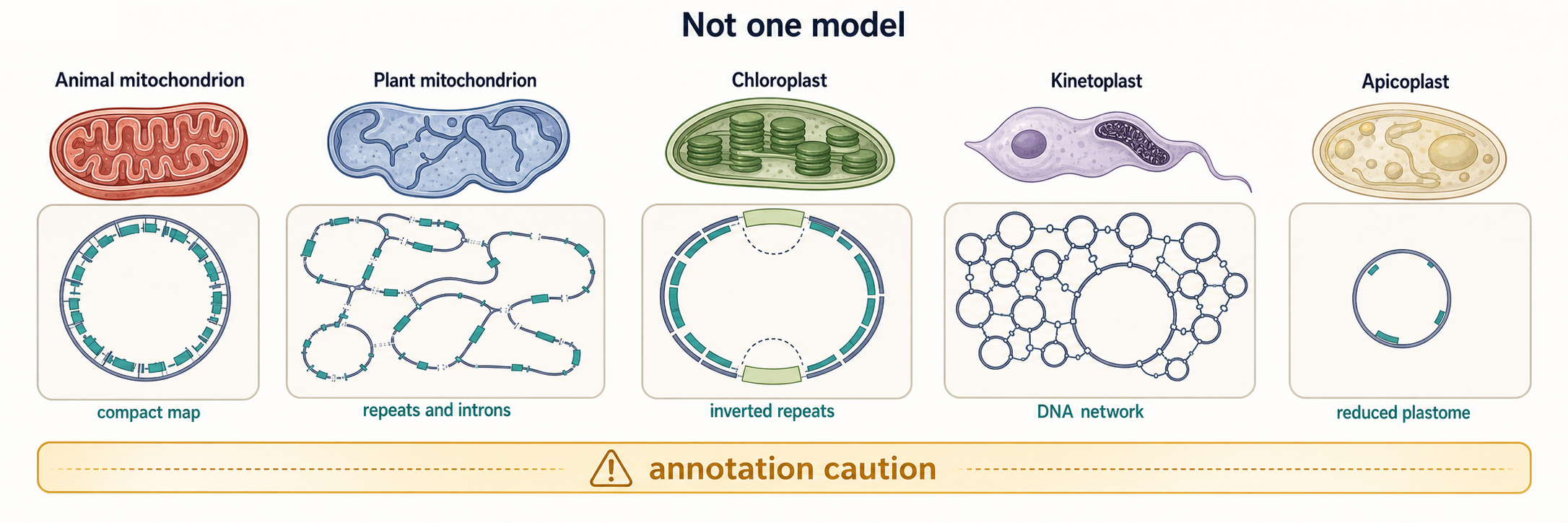
Figure 17.1. Organellar Genome Architecture Is Not One Model. Comparison of organellar genome architectures across major eukaryotic lineages shows that no single model covers all organellar RNA gene content. A compact animal mitochondrial genome encodes 13 mRNAs, 2 rRNAs, and 22 tRNAs with little intergenic space, whereas plant mitochondrial genomes can reach hundreds of kilobases and contain introns, repeated sequences, and recombinogenic regions. Chloroplast plastomes typically retain photosynthesis genes, ribosomal RNA operons within large inverted repeats, tRNA genes, and plastid RNA polymerase subunits. Specialized systems such as kinetoplast DNA networks and apicoplast genomes further illustrate that organellar RNA gene retention must be interpreted within the lineage and organelle type, not generalized from animal mitochondria.
An organellar genome is best understood as a retained, reduced, and lineage-specific genome rather than as a miniature version of the bacterial chromosome from which it descends. Endosymbiosis brought bacterial genomes into ancestral eukaryotic cells. Over evolutionary time, many endosymbiont genes were lost, transferred to the nucleus, or replaced by host genes. The remaining organellar genome typically retains genes whose products are needed locally, are difficult to import, or are embedded in organellar regulatory systems. This retention logic differs by lineage and by organelle.
Mitochondrial genomes usually encode some components of oxidative phosphorylation, the process by which electrons flow through respiratory-chain complexes and help generate ATP. Mitochondrial genomes also often encode rRNAs and tRNAs required for mitochondrial translation. However, mitochondrial gene content is far from uniform. Animal mitochondria are usually compact and gene dense, whereas plant mitochondria can be large and structurally dynamic. A gene category such as “mitochondrial tRNA” therefore has different annotation implications in different organisms.
Plastid genomes generally retain more genes for photosynthesis and gene expression than animal mitochondrial genomes do. A chloroplast plastome often encodes rRNAs, tRNAs, photosystem proteins, ATP synthase subunits, cytochrome b6f components, ribosomal proteins, and subunits of a plastid-encoded RNA polymerase. Many plastomes have a large inverted repeat region that includes rRNA genes, but this architecture is not universal. Nonphotosynthetic plastids, including apicoplasts in apicomplexan parasites, can retain reduced genomes that support plastid gene expression and essential metabolic functions rather than photosynthesis. Apicoplast genome transcription is a specialized reduced-plastid example, so detailed transcript-processing claims should remain lineage-specific.
Mammalian Mitochondria: Compact Genomes and Dense RNA Output
The human mitochondrial genome is a useful introductory example because it is small, compact, and extensively studied. It encodes 13 protein-coding mRNAs, 2 rRNAs, and 22 tRNAs. Most genes are packed with little intergenic sequence, and many transcript boundaries are defined by processing rather than by long untranslated regions. A human mitochondrial genome map therefore looks deceptively simple: genes are close together, tRNAs are interspersed among mRNA and rRNA regions, and the coding set is small.
The simplicity can mislead. The mature mitochondrial transcriptome is not a direct printout of annotated gene boxes. Heavy-strand and light-strand transcription generate long precursors. Processing enzymes release tRNAs and neighboring RNAs. mRNAs often require polyadenylation, and some stop codons are completed by the poly(A) tail. tRNAs require end maturation, CCA addition, and nucleotide modifications. rRNAs require processing and modification before assembly into mitochondrial ribosomes. Thus, even the compact human mitochondrial genome requires a complex RNA maturation pathway.
Plant Mitochondria: Large Genomes, Recombination, and RNA Processing
Plant mitochondrial genomes show why animal mitochondria are a poor model for all mitochondria. Land-plant mitochondrial genomes can be hundreds of kilobases or larger, contain repeated sequences, undergo recombination, and include introns and foreign DNA segments. Their physical forms can be heterogeneous even when genome assemblies are drawn as circular maps. The RNA output is shaped by transcription from multiple promoters, processing of long precursor RNAs, group II intron splicing, RNA editing, and stabilization by nuclear-encoded RNA-binding proteins.
Box 17.1. Do Not Teach Animal mtDNA as All Mitochondria
- Animal mitochondrial genomes are compact (typically 14–17 kb in vertebrates), encoding 13 mRNAs, 2 rRNAs, and 22 tRNAs with minimal intergenic sequence.
- Plant mitochondrial genomes can be hundreds of kilobases or larger, contain introns, undergo recombination, and produce complex transcript populations shaped by processing and C-to-U editing.
- Fungal and algal mitochondria show further variation: some have large intron-rich genomes, some encode unusual or reduced tRNA sets, and genetic codes differ among lineages.
- Protist mitochondria include extreme cases such as kinetoplastid kDNA, where guide-RNA-directed editing is required to produce functional mRNAs from minimally informative genomic sequences.
- The safe annotation default is to treat mitochondrial gene content and processing rules as lineage-specific: begin with experimental evidence from the organism in hand, not a presumed animal mitochondrial template.
A plant mitochondrial gene can therefore be difficult to define from DNA sequence alone. Some genes are interrupted by introns. Some transcripts require editing to generate conserved codons. Some mature RNA ends are determined by processing rather than by transcription initiation or termination. Some mitochondrial transcripts arise from rearranged regions and can have phenotypic consequences, including cytoplasmic male sterility in plants; CMS and restorer systems show how mitochondrial transcript structure, noncoding RNAs, and nuclear-encoded PPR factors intersect in breeding contexts.
Chloroplasts and Plastids: Bacterial Ancestry Under Nuclear Control
Chloroplasts evolved from photosynthetic bacterial endosymbionts. Their plastomes often retain genes for photosynthesis and for components of chloroplast gene expression. Chloroplast rRNAs and tRNAs support chloroplast translation, while chloroplast mRNAs encode photosystem, electron-transport, ATP synthase, ribosomal, and transcription-related proteins. Plastome gene organization can resemble bacterial operons in some regions, but mature chloroplast RNAs are heavily shaped by processing, splicing, editing, stabilization, and translation control.
The central point is that chloroplasts are neither free-living bacteria nor simple nuclear appendages. Plastids contain organellar DNA and organellar ribosomes, but most chloroplast proteins are nuclear encoded. Chloroplast RNA metabolism is therefore a hybrid system: plastid-encoded transcripts are processed and regulated by many nuclear-encoded factors imported into the chloroplast. This nuclear dependence is not a late detail; it is part of the basic definition of modern plastid gene expression.
Boundary Systems: Kinetoplasts, Apicoplasts, and Reduced Organelles
Kinetoplastids are protists whose mitochondria contain a specialized DNA network called kinetoplast DNA, or kDNA. In many kinetoplastids, mitochondrial mRNAs undergo extensive guide-RNA-directed uridine insertion and deletion. The kinetoplastid system is important because it breaks the expectation that a protein-coding sequence can be read from genomic DNA alone. The mature mRNA can be assembled post-transcriptionally by editing, with RESC factors and other lineage-specific RNPs contributing to transcript-specific editing outcomes.
Apicoplasts are nonphotosynthetic plastids in apicomplexan parasites. They retain plastid-derived genomes and gene-expression systems, but their RNA gene content and biological roles differ from those of green-plant chloroplasts. Apicoplasts are useful boundary cases because they show that plastid ancestry does not always mean photosynthesis. The RNA genes retained in a plastid genome must be interpreted in relation to the organelle’s current function, not only its evolutionary origin.
Annotation Consequence
The practical annotation rule is simple but demanding: organellar RNA gene content must be interpreted with lineage-specific genome architecture, transcript evidence, processing evidence, and genetic-code information. Animal mtDNA, plant mtDNA, plastomes, apicoplast genomes, and kinetoplast DNA networks are all organellar systems, but they require different assumptions. Table 17.1 should compare these systems side by side rather than forcing them into one model.
17.2. Organellar transcription, processing, editing, and polyadenylation
Primary Transcription Is Only the First Step
Transcription is the synthesis of RNA from a DNA template by an RNA polymerase. In organelles, primary transcription often produces immature RNA molecules. A primary organellar transcript can contain several mRNAs, rRNAs, or tRNAs; it can include introns; it can contain unedited codons; and it can have ends that must be trimmed or protected. The mature RNA population is therefore the outcome of transcription plus processing, editing, modification, stabilization, and decay.
Table 17.2. Organellar RNA Maturation Steps. Each maturation step transforms a primary organellar transcript or intermediate RNA, and failure at any step can alter mature RNA identity or abundance.
| Step | Substrate | Main molecular players | Mature product or consequence | Evidence class | Boundary cases |
|---|---|---|---|---|---|
| Primary transcription | Organellar DNA template | Organellar RNA polymerases (PEP, NEP, mitochondrial single-subunit polymerases) | Long polycistronic or monocistronic precursor RNAs | Northern blot, RNA-seq, run-on transcription | Promoter number and position differ sharply by lineage |
| tRNA punctuation | Polycistronic precursor containing embedded tRNA structures | RNase P, RNase Z | Released tRNA and flanking mRNA or rRNA regions | RNA end mapping, northern blot | Prominent in animal mitochondria; not universal |
| End trimming | Precursor RNA 5′ and 3′ ends | 5′ and 3′ exonucleases, RNase P, RNase Z | Mature RNA termini | RNA end mapping, RACE | Processing sites often differ from transcription start and stop sites |
| Intron splicing | Group II intron-containing precursors | Maturases, RNA helicases, PPR proteins | Spliced mRNA or rRNA | RT-PCR, northern blot, RNA-seq | Group I and group II introns present; some require imported nuclear-encoded splicing factors |
| RNA editing | Pre-edited organellar transcripts | Editing complexes, guide RNAs, PPR proteins, C-to-U deaminases | Mature edited RNA with corrected codons or remodeled sequence | Editing-aware RNA-seq, cDNA sequencing, DNA-RNA comparison | Plant C-to-U and kinetoplastid U-insertion/deletion are mechanistically distinct |
| CCA addition | tRNA lacking 3′ CCA | CCA-adding enzyme (nucleotidyltransferase) | Aminoacylation-competent tRNA 3′ end | tRNA sequencing, aminoacylation assays | Required because mtDNA often does not encode the CCA sequence |
| tRNA modification | Mature or near-mature tRNA | NSUN2 (5-methylcytosine), TrmL, other tRNA methyltransferases | Modified tRNA supporting decoding and structural stability | Mass spectrometry, modification-sensitive sequencing, primer extension | Some modifications substoichiometric or tissue-specific |
| rRNA modification | Precursor or mature rRNA | rRNA methyltransferases, pseudouridine synthases | Modified rRNA supporting ribosome assembly and function | Mass spectrometry, chemical probing, modification-sensitive sequencing | Methylation can affect assembly steps rather than direct catalysis |
| Polyadenylation | Processed RNA 3′ end | Poly(A) polymerases | Poly(A)-tailed RNA; stabilized or destabilized depending on context | 3′ RACE, poly(A) selection, direct RNA sequencing | Stabilizing in mammalian mitochondria; decay-promoting in some plastid and bacteria-like contexts |
| Stabilization | Processed mature RNA | PPR proteins, RNA-binding proteins, organellar RNA helicases | Protected mature transcript | Northern blot after factor depletion, genetic rescue | Loss of a stabilizing factor can phenocopy a transcription defect |
| Decay | Mature, aberrant, or excess RNA | PNPase, SUV3, RNase R, organellar RNA exosomes | RNA degradation and quality control | RNA half-life assays, sequencing of decay intermediates | Polyadenylation can promote or resist decay depending on system |
Mammalian mitochondria illustrate the difference between primary transcription and mature RNA. Transcription from mitochondrial promoters generates long precursor RNAs. Processing enzymes cleave around tRNA structures, releasing individual tRNAs and neighboring mRNA or rRNA regions. This is the tRNA punctuation model. It is not simply a metaphor: tRNA folding creates structural landmarks recognized by processing machinery. After cleavage, RNAs undergo additional maturation steps. tRNAs receive mature ends and CCA tails; mRNAs can acquire poly(A) tails; rRNAs are modified and assembled into ribosomes.
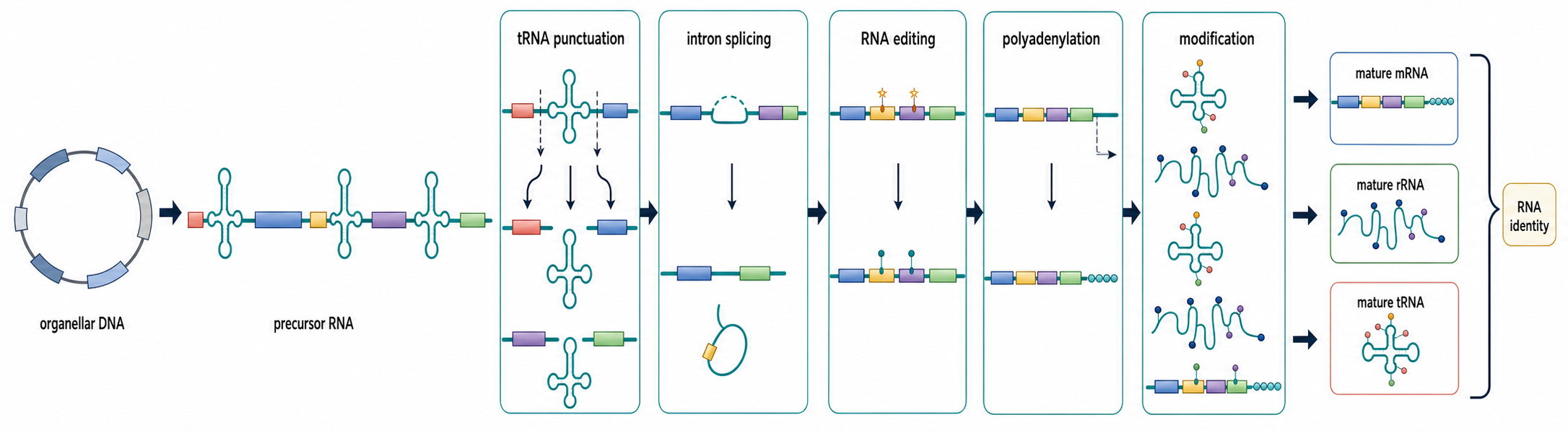
Figure 17.2. From Organellar DNA to Mature RNA. Organellar RNA maturation demonstrates that DNA coordinates alone do not define mature transcripts. A polycistronic precursor RNA is acted on by multiple sequential steps including tRNA punctuation, which releases individual tRNAs and adjacent mRNA or rRNA regions; group II intron splicing; RNA editing; polyadenylation; and nucleotide modification. The mature population of mRNAs, rRNAs, and tRNAs in the organelle reflects the combined outcomes of all post-transcriptional steps, not only the primary transcript sequence. A change at any step can alter mature RNA identity, abundance, or coding capacity independently of the underlying DNA sequence.
This model also explains why mutations outside obvious protein-coding regions can be harmful. A variant that disrupts a mitochondrial tRNA structure can affect the tRNA itself and can also impair processing of neighboring mRNAs or rRNAs. A variant near a processing boundary can change transcript abundance without changing the encoded protein sequence. Mature RNA analysis is therefore essential when interpreting mitochondrial genome variants.
Plant Organelles Depend on Post-Transcriptional Control
Plant mitochondria and chloroplasts use transcriptional regulation, but much of their gene-expression specificity is post-transcriptional. Long precursor RNAs are processed into mature mRNAs, rRNAs, and tRNAs. Group II introns are spliced from organellar transcripts. Specific sites are edited. RNA ends are stabilized by RNA-binding proteins. Translation can be activated or repressed transcript by transcript. Nuclear-encoded factors provide much of this specificity.
Pentatricopeptide-repeat proteins are a central plant example. A PPR protein contains repeated motifs that can specify binding to an RNA sequence. Different PPR proteins act in editing, splicing, cleavage, stabilization, or translation. The mechanistic theme is modular RNA recognition. A nuclear gene can encode a PPR protein, the protein can be imported into a mitochondrion or chloroplast, and the protein can bind a specific organellar RNA site to enable a downstream event. Loss of the PPR protein can therefore create a specific organellar RNA phenotype even when the organellar DNA sequence is unchanged. Current plant organellar maturation and editing sources support this factor-centered model, with MORF/RIP-associated editing factors providing a concrete plant stress-response example.
RNA Editing Changes the Meaning of the DNA Sequence
RNA editing is a post-transcriptional change in RNA sequence. In organelles, editing is not a rare curiosity; in some lineages it is central to gene expression. Plant mitochondrial and chloroplast C-to-U editing can change codons so that the mature RNA encodes a conserved protein sequence. A genome-encoded codon may appear nonconserved or even defective until the edited RNA is examined. Some editing events affect start codons, stop codons, or amino acids important for protein function.
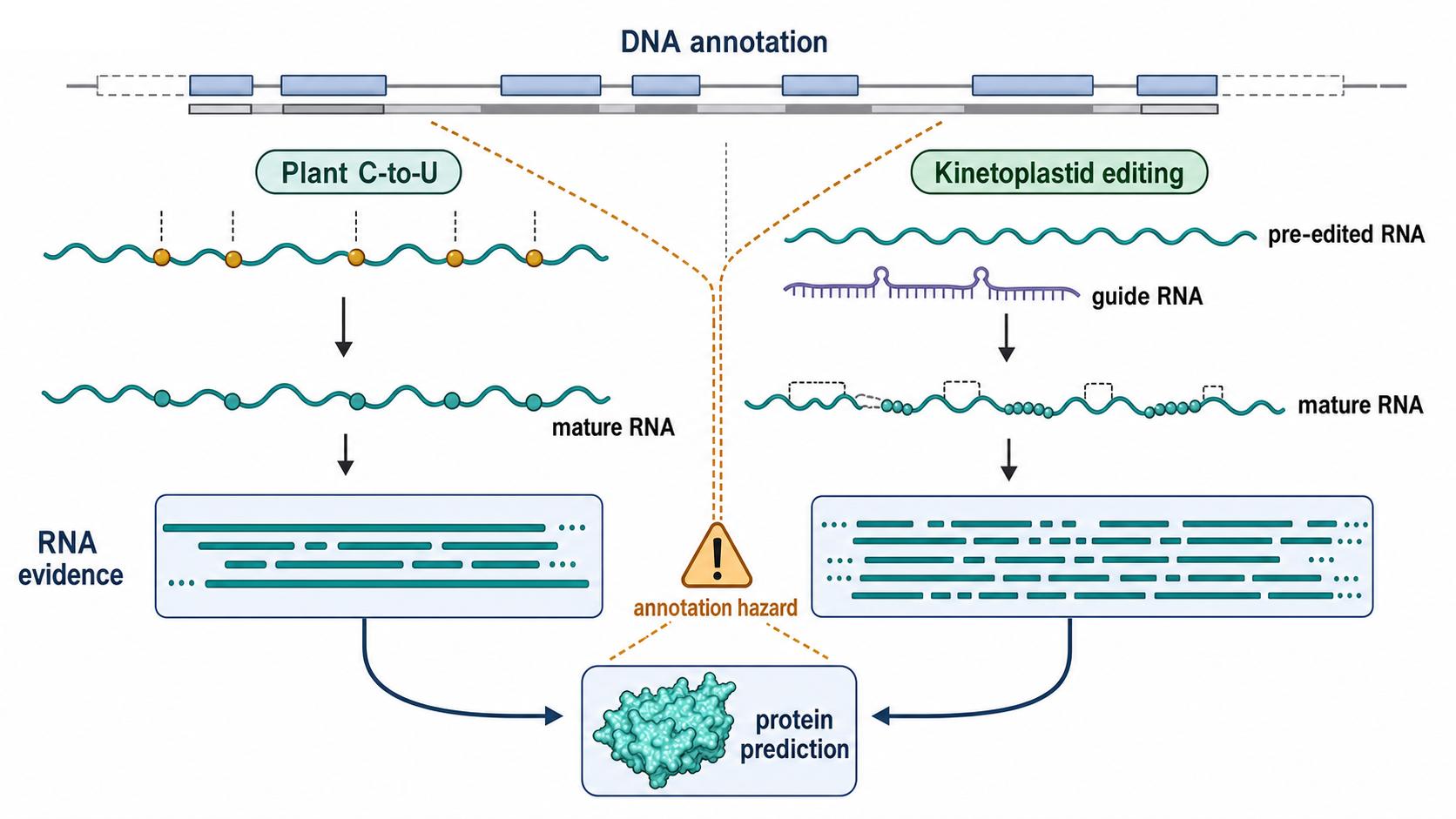
Figure 17.3. RNA Editing as an Annotation Hazard. Organellar RNA editing creates a systematic gap between genome-encoded sequence and the functional RNA product, requiring RNA-level evidence for accurate annotation. In plant mitochondria and chloroplasts, site-specific C-to-U editing restores conserved codons, creates start or stop codons, or corrects amino acid positions that appear defective in genomic DNA. In kinetoplastid mitochondria, guide RNAs direct extensive uridine insertion and deletion, producing mature mRNA sequences that differ far more dramatically from the DNA template. Both systems illustrate that a genome browser display of organellar DNA is an incomplete guide to mature RNA sequence and protein prediction, and that plant C-to-U editing and kinetoplastid uridine insertion-deletion editing operate through distinct molecular mechanisms that should not be merged into a single pathway.
Kinetoplastid editing is a more radical example. In many kinetoplastid mitochondria, guide RNAs base pair with pre-edited mRNAs and direct insertion or deletion of uridines. Mature mRNAs can differ extensively from the DNA-encoded sequence. This system demonstrates a general annotation principle: DNA sequence alone can be insufficient to infer the functional RNA and protein product. It also demonstrates a mechanistic boundary: plant C-to-U editing and kinetoplastid uridine insertion-deletion editing should not be merged into a single pathway.
RNA editing also creates evidence challenges. Short-read RNA-seq can detect edited positions, but read mapping must distinguish editing from sequencing error, misalignment, paralogous sequences, nuclear mitochondrial DNA segments, plastid DNA insertions in the nucleus, and RNA damage. Editing-aware alignment, cDNA validation, strand-specific libraries, and organelle-enriched preparations can help, but none eliminates all ambiguity. Editing sites should be reported with organism, compartment, transcript, genomic coordinate, mature RNA coordinate, editing fraction, developmental or environmental context, and evidence method when possible.
Polyadenylation Has Compartment-Specific Meanings
Polyadenylation is the addition of adenosine residues to the 3′ end of an RNA. In nuclear mRNAs, a poly(A) tail often promotes stability, export, and translation. Organellar polyadenylation cannot be assumed to mean the same thing. Mammalian mitochondrial mRNA polyadenylation can help complete stop codons and contribute to mature message identity. In bacteria-like RNA decay systems and some organellar contexts, adenosine-rich tails can help exonucleases degrade structured RNAs. In plant organelles, polyadenylation and oligoadenylation can be associated with decay or processing depending on substrate and system.
The safest teaching rule is that poly(A) describes a chemical tail, not a universal biological outcome. To interpret a poly(A) tail, ask four questions. Which compartment contains the RNA? Which enzyme or enzyme complex added the tail? Is the tailed RNA a mature transcript, processing intermediate, or decay substrate? Does the tail correlate with stability, translation, completion of coding sequence, or turnover? Mitochondrial maturation reviews and broader polyadenylation syntheses support this compartment-specific reading rather than a single nuclear-mRNA rule.
RNA Processing Creates Annotation Boundaries
Organellar processing events define boundaries that genome annotation alone may miss. A mature mRNA can start at a processing site rather than a promoter-proximal transcription start site. A mature transcript end can be protected by an RNA-binding protein rather than generated by a terminator. A chloroplast polycistronic region can yield multiple stable RNAs with different boundaries in different tissues or developmental states. A plant mitochondrial transcript can be trans-spliced from exons that are distant in the genome.
For this reason, organellar transcript models should be built from multiple evidence types. Genome sequence identifies possible genes and reading frames. RNA end mapping identifies mature boundaries. Long-read sequencing can connect distant exons or processed regions but must be checked for artifacts. Editing-aware RNA-seq identifies mature sequence differences. Ribosome profiling and proteomics can test translation, but organellar ribosome footprints require careful assignment. Genetic perturbation of processing factors can show causality, but loss-of-function phenotypes can be indirect when organelle function collapses.
Box 17.2. The Mature Organellar RNA May Not Match the Genome
- Primary organellar transcripts are often polycistronic; mature RNAs arise from processing, not from directly reading out annotated gene boxes.
- tRNA punctuation: in animal mitochondria, tRNA structures embedded in a precursor are recognized by RNase P and RNase Z, releasing the tRNA and flanking mRNA or rRNA regions.
- Intron splicing: many plant mitochondrial and chloroplast genes contain group II introns that must be removed from precursor RNAs before mature mRNAs or rRNAs accumulate.
- RNA editing: C-to-U editing in plant organelles can restore conserved codons; kinetoplastid uridine insertion-deletion can remodel mRNA sequences so extensively that protein prediction from genomic DNA is impossible.
- Polyadenylation: mammalian mitochondrial mRNAs acquire poly(A) tails that can complete stop codons; the same chemical modification promotes decay in some organellar and bacteria-like contexts.
- Practical rule: RNA-level evidence—not DNA annotation alone—defines mature organellar transcripts, their boundaries, and their coding sequences.
17.3. Mitochondrial and chloroplast tRNAs, rRNAs, and mRNAs
Organellar tRNAs Are Adaptors With Lineage-Specific Constraints
A transfer RNA, or tRNA, is an adaptor RNA that links a codon in an mRNA to an amino acid during translation. In organelles, tRNAs perform this same general role, but their structures and origins vary. Many animal mitochondria encode a near-complete set of tRNAs in mtDNA. Some mitochondrial tRNAs have shortened structural elements compared with canonical cytosolic tRNAs. Some organisms import tRNAs from the cytosol into mitochondria because their mitochondrial genomes do not encode a complete tRNA set. Plastids often encode many tRNAs, but plastid tRNA maturation and modification still depend on nuclear-encoded factors.
Table 17.3. RNA Classes in Mitochondria and Plastids. Organellar RNA classes differ in origin, maturation requirements, and common annotation errors.
| RNA class | Main function | Typical origin | Special organellar features | Common annotation mistake |
|---|---|---|---|---|
| mRNA | Encode locally retained OXPHOS or photosynthesis subunits | Organellar genome transcription | Require processing, editing, and polyadenylation to be functional; stop codons sometimes completed by poly(A) tail | Treating DNA-encoded ORF as mature coding sequence without editing evidence |
| rRNA | Structural and catalytic core of organellar ribosomes | Organellar genome | Reduced rRNA mass in animal mitoribosomes; require modification and nuclear-encoded assembly factors | Assuming bacterial rRNA features apply directly; ignoring modification requirements |
| tRNA | Amino acid adaptor in organellar translation | Organellar genome; cytosol (imported in some lineages) | Shortened structural elements; serve as processing punctuation marks in animal mitochondria; imported in tRNA-deficient mitochondria | Predicting tRNA function without evidence of modification, processing, and aminoacylation |
| Guide RNA | Direct uridine insertion or deletion in kinetoplastid mRNAs | Kinetoplast minicircles and maxicircles | Base pair with pre-edited mRNA to template editing; essential for producing functional mRNAs in many kinetoplastids | Confusing kinetoplastid guide RNA with CRISPR guide RNA or snoRNA |
| Intron RNA | Group I or group II intron structures; potential catalytic activity | Within organellar genes as part of the transcribed region | Group II introns can encode maturases; some require imported nuclear-encoded splicing factors | Treating intronic regions as independent small RNA genes |
| Small RNA fragments | Variable; possible processing byproducts or decay intermediates | Cleavage and degradation of precursor transcripts | May represent processing artifacts or decay substrates rather than functional regulators | Interpreting short RNA-seq reads as functional organellar small regulatory RNAs without functional evidence |
| Organellar lncRNA candidates | Proposed regulatory roles; emerging evidence | Organellar transcription or nuclear transcription targeted to organelle | CHLORELLA reported to mediate chloroplast functional transition in aging leaves via anterograde signaling | Overstating established functional evidence; applying nuclear lncRNA frameworks without organellar-specific data |
The tRNA role in mammalian mitochondria is doubled. A mitochondrial tRNA is both a translation adaptor and, in many genomic positions, a punctuation element that helps define processing boundaries. A mutation in a mitochondrial tRNA gene can therefore have several consequences. It can reduce aminoacylation, alter decoding, impair folding, disrupt nucleotide modification, destabilize the tRNA, or interfere with cleavage of neighboring transcripts. This is one reason mitochondrial tRNA variants are common in mitochondrial disease genetics.
Mitochondrial tRNA modification illustrates nuclear control of organellar RNA chemistry. NSUN2 introduces 5-methylcytosines into mammalian mitochondrial tRNAs. The enzyme is nuclear encoded, but its activity can alter mitochondrial tRNA structure and function. Other mitochondrial tRNA modifications influence wobble decoding, folding stability, and ribosome interaction. Because modifications are often substoichiometric and context dependent, absence of a modification signal in one assay does not prove that the modification is absent in every tissue, developmental state, or stress condition.
Organellar rRNAs Build Specialized Ribosomes
Ribosomal RNAs, or rRNAs, form the structural and catalytic core of ribosomes. Mitochondrial rRNAs and chloroplast rRNAs descend from bacterial rRNAs, but modern organellar ribosomes have specialized RNA-to-protein ratios, assembly factors, and regulatory dependencies. Mitochondrial ribosomes in animals contain reduced rRNA mass relative to bacterial ribosomes and many additional proteins. Chloroplast ribosomes are more bacterial-like in some respects but are still assembled and regulated in a eukaryotic cellular context.
Mitochondrial rRNA methylation shows that rRNAs are not merely passive scaffolds. Methyl groups placed at specific rRNA positions can influence ribosome assembly, decoding, or translation efficiency. A review of mitochondrial rRNA methylation emphasizes that methylation should be interpreted with attention to ribosome biogenesis, enzyme specificity, and organismal context. A methylation defect can appear as reduced organellar translation, but the causal chain may pass through ribosome assembly or stability rather than direct catalytic failure.
Chloroplast rRNAs also require maturation. Plastid rRNA operons are transcribed and processed, and mature rRNAs assemble with plastid ribosomal proteins. Chloroplast ribosome biogenesis depends on many nuclear-encoded factors. In photosynthetic tissues, chloroplast ribosome abundance and activity are coordinated with plastid development, light-responsive gene expression, and photosynthetic protein demand. A chloroplast rRNA gene should therefore be interpreted as part of a developmental gene-expression system, not only as a conserved structural RNA.
Organellar mRNAs Encode Local Components of Larger Complexes
Messenger RNAs, or mRNAs, encode proteins. Organellar mRNAs generally encode only selected subunits of organellar protein complexes. Mammalian mitochondrial mRNAs encode core subunits of oxidative-phosphorylation complexes. Plant mitochondrial mRNAs encode respiratory-chain and ATP synthase components. Chloroplast mRNAs encode proteins for photosystems, electron transport, ATP synthesis, ribosomes, and plastid transcription. Most other subunits and assembly factors are nuclear encoded.
Table 17.4. Nuclear-Encoded Organellar RNA Factors. Nuclear-encoded factors imported into mitochondria or plastids mediate most organellar RNA maturation steps; their loss produces organelle-specific RNA phenotypes.
| Factor class | Target compartment | RNA process | Example or evidence | What a loss-of-function phenotype can mean |
|---|---|---|---|---|
| Phage-type RNA polymerases (NEP) | Mitochondria and chloroplasts | Transcription of organellar genes | Arabidopsis RpoT genes targeted to both mitochondria and chloroplasts | Reduced precursor RNA levels for genes dependent on nucleus-encoded polymerase |
| Plastid-encoded polymerase sigma factors (nuclear-encoded) | Chloroplasts | Promoter recognition and transcription initiation by PEP | Arabidopsis sigma factors direct PEP to specific plastid promoters | Altered transcription of PEP-dependent plastid genes; photosynthetic or plastid-development defects |
| PPR proteins | Mitochondria and chloroplasts | Editing, splicing, end processing, stabilization, translation activation | Hundreds of PPR genes in Arabidopsis, each typically with a specific RNA target | Loss of one PPR protein produces a transcript-specific editing, processing, or translation defect without altering organellar DNA |
| RNA helicases | Mitochondria and chloroplasts | Intron splicing, RNA processing, ribosome assembly | Plant mitochondrial RNA helicases required for group II intron splicing | Accumulation of unspliced precursor; reduced mature mRNA or rRNA |
| Ribonucleases | Mitochondria and chloroplasts | RNA processing, end maturation, and decay | Organellar-targeted RNase P, RNase Z, and chloroplast-specific RNases | Altered transcript ends; accumulation of precursors or processing intermediates |
| tRNA modification enzymes | Mitochondria and chloroplasts | Nucleotide modification of tRNAs | NSUN2 introduces 5-methylcytosine into mammalian mitochondrial tRNAs | Reduced tRNA stability, aminoacylation, or decoding capacity; can impair organellar translation broadly |
| rRNA modification enzymes | Mitochondria and chloroplasts | Nucleotide modification of rRNAs | Mitochondrial rRNA methyltransferases acting on conserved positions | Ribosome assembly defects; reduced organellar translation efficiency |
| Aminoacyl-tRNA synthetases | Mitochondria and chloroplasts | Aminoacylation of organellar tRNAs | Dual-targeted synthetases serving both cytosol and organelle in some organisms | Specific codon misreading or translation stalling; mitochondria-specific synthetase defects can cause disease |
| Ribosome assembly factors | Mitochondria and chloroplasts | Assembly of organellar ribosomal subunits | Many mitoribosome assembly factors are nuclear encoded | Reduced mature ribosome levels; broad translational deficiency across all organellar mRNAs |
| Translation activators | Chloroplasts and mitochondria | Translation initiation of specific mRNAs | Chloroplast 5′-UTR-binding proteins activating specific photosynthesis mRNAs | Transcript accumulates at normal levels but is not translated; protein loss without corresponding RNA loss |
This split genetic architecture creates coordination problems. A respiratory-chain complex may contain organelle-encoded membrane subunits and nuclear-encoded accessory subunits. A photosystem may require plastid-encoded reaction-center proteins and nuclear-encoded light-harvesting or assembly proteins. Producing the organellar mRNA is necessary but not sufficient. The RNA must be processed, edited if needed, stable enough to be translated, loaded onto organellar ribosomes, and coordinated with imported proteins.
An organellar mRNA abundance measurement therefore does not automatically indicate protein output. In plants, a chloroplast mRNA can be abundant but poorly translated if a transcript-specific activator is missing. A mitochondrial mRNA can be edited incompletely, producing a mixture of coding capacities. A transcript can accumulate because decay is blocked, not because productive expression is high. Ribosome profiling, pulse labeling, proteomics, complex assembly assays, and genetic rescue can all help distinguish RNA accumulation from functional protein production.
Genetic Codes and Codon Interpretation
The genetic code is the mapping between codons and amino acids. Mitochondrial genetic codes often differ from the standard nuclear code, and the differences vary among lineages. Some codons that are stops in the standard code can encode amino acids in mitochondria, and some codons can be reassigned in lineage-specific ways. Plastid codes are generally more bacterial-like, but plastid translation still has organellar features. Annotation software must use the correct genetic-code table for the organism and compartment.
RNA editing complicates codon interpretation further. A genome-encoded codon may not be the mature codon. A C-to-U edit can change an amino acid or create a start or stop codon. Kinetoplastid insertion-deletion editing can create extensive coding sequence. Therefore, translation prediction should specify whether the input is genomic DNA, pre-edited RNA, mature edited RNA, or a consensus transcript model. Confusing these states can generate false pseudogenes, false protein truncations, or false claims of unusual coding capacity.
Evidence Limits for Organellar RNA Classes
Table 17.5. Organellar RNA Evidence and Failure Modes. Each organellar RNA evidence type supports specific conclusions and has characteristic artifacts that require dedicated controls.
| Evidence type | What it supports | What it does not prove | Common artifact or overinterpretation | Control or validation |
|---|---|---|---|---|
| Organellar genome annotation | Identifies candidate RNA genes and ORFs; establishes physical map of possible gene positions | Mature transcript sequence; functional RNA production; correct genetic-code assignment | Treating annotated gene boxes as mature RNA models; ignoring RNA editing | RNA evidence for expression and editing; correct organellar genetic-code table |
| Short-read RNA-seq | Quantifies RNA abundance; detects single-position editing; identifies processed regions | Full-length transcript structure; distinction of mature from precursor RNA | Nuclear organellar DNA inserts inflate mapping rates; polycistronic reads ambiguous for individual transcripts | Strand-specific libraries; simultaneous mapping to organellar and nuclear genomes; masking nuclear insert regions |
| Long-read RNA-seq | Connects exons, edited regions, and processed isoforms in single reads | High per-base accuracy; clear distinction of mature from precursor or decay intermediate | Captures precursors and degradation intermediates; lower per-base accuracy than short reads | Orthogonal confirmation of isoform structures; comparison with independent end-mapping data |
| RNA end mapping (RACE, peak analysis) | Identifies mature 5′ and 3′ transcript boundaries | Transcription start or stop site; primary versus processed end | Processing site confused with promoter; incomplete capture of structured 5′ ends | Compare with in vitro transcription start sites; run-on transcription assays |
| Editing-aware alignment | Detects RNA-DNA differences consistent with editing events | Distinguishes editing from sequencing error or SNPs without additional controls | Mapping artifacts near repeated regions; false-positive edits from misalignment | Matched genomic DNA control from same sample; multiple mapping tools; strand-specific libraries; organelle enrichment |
| Ribosome profiling | Identifies actively translated organellar ORFs | Total protein output; identifies all expressed mRNAs | Low read depth for organellar ribosomes; contaminating cytosolic ribosome footprints | Organelle purification before profiling; orthogonal proteomics; appropriate translation-inhibitor controls |
| Organelle isolation | Enriches organellar RNAs and proteins for downstream analysis | Complete purity; maintenance of fragile RNP complexes | Cytosolic contamination mimics imported RNAs; harsh isolation degrades RNA | Marker proteins for organellar and cytosolic fractions; RNA integrity assessment after isolation |
| Proteomics | Validates protein products of organellar mRNAs | All organellar proteins; edited coding sequences; substoichiometric products | Standard databases lack editing-corrected sequences; membrane proteins underrepresented | Editing-corrected protein databases for database searching; comparison with independent RNA-level evidence |
| Genetic rescue | Establishes causality between a gene and an organellar RNA phenotype | Mechanism; rules out indirect effects from general organellar collapse | Nonspecific rescue from restored overall organellar health; complementation by partial activity | Allele series with catalytic mutants; demonstration of transcript-specific phenotype rescue |
Each organellar RNA class requires evidence appropriate to its biology. A tRNA prediction should be supported by conserved structure, transcription, processing, modification where relevant, and compatibility with organellar decoding. An rRNA annotation should be supported by conservation, expression, processing, and ribosome assembly evidence. An mRNA annotation should be supported by transcript boundaries, editing status, coding potential, genetic-code table, ribosome association, and protein evidence when possible.
Short-read RNA-seq is useful but limited. It often cannot resolve full-length organellar transcript isoforms, distinguish mature RNAs from precursors, or assign reads uniquely when organellar DNA fragments have moved into the nucleus. Long-read RNA sequencing can connect transcript structures but can have lower per-base accuracy and may capture processing intermediates. Organelle purification enriches true organellar RNAs but can perturb fragile complexes or carry contamination. Good organellar RNA annotation combines methods rather than relying on one assay.
17.4. Nuclear-organellar coordination and imported RNA factors
Two Genomes Produce One Organelle
Nuclear-organelle coordination means that nuclear and organellar genomes jointly produce organellar function. The organellar genome supplies some RNAs and proteins. The nuclear genome supplies most organellar proteins, including many RNA factors. These nuclear-encoded proteins are synthesized on cytosolic ribosomes and imported into mitochondria or plastids through organellar import pathways. Once inside, they act on organellar DNA, RNA, ribosomes, membranes, and metabolic pathways.
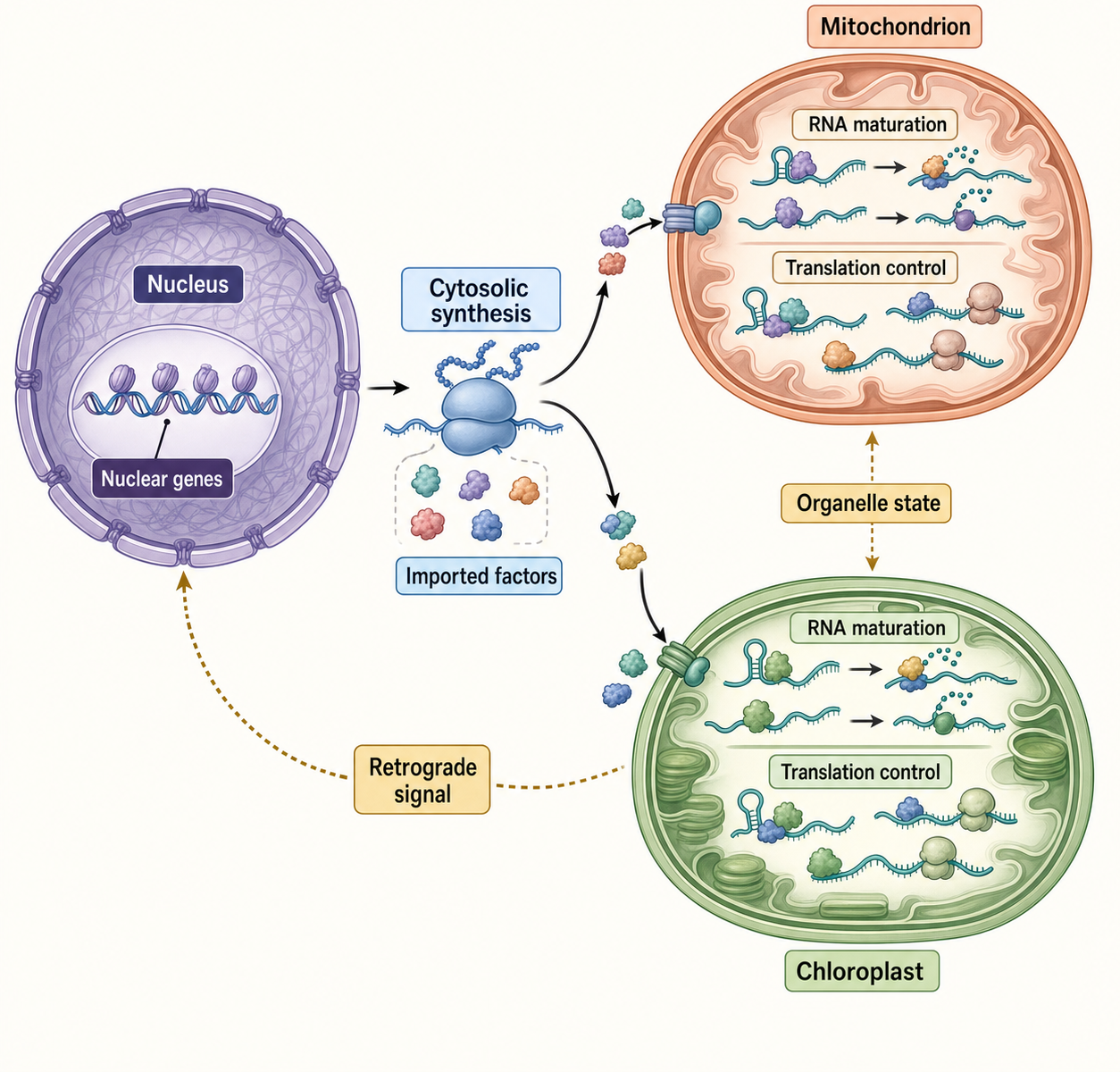
Figure 17.4. Nuclear-Organelle Coordination of RNA Metabolism. Nuclear-encoded proteins control most steps of organellar RNA metabolism in both mitochondria and plastids, and retrograde signaling from organelles back to the nucleus further integrates organellar and nuclear gene expression. Nucleus-encoded factors including phage-type RNA polymerases, pentatricopeptide-repeat proteins, RNA helicases, ribonucleases, and tRNA and rRNA modification enzymes are synthesized on cytosolic ribosomes and imported into organelles through dedicated import pathways. Inside the organelle these factors affect transcription, precursor processing, intron splicing, RNA editing, transcript stabilization, and translation. Anterograde signaling pathways, including proposed roles for regulatory RNAs such as the chloroplast-targeted lncRNA CHLORELLA, illustrate additional layers of nucleus-to-organelle communication.
The RNA consequence is profound. An organellar transcriptome can change because organellar DNA changes, because organellar transcription changes, because nuclear expression of imported RNA factors changes, because protein import changes, or because organellar stress changes RNA stability. A mutation in a nuclear gene can create a phenotype that looks like an organellar RNA defect. Conversely, a mutation in organellar DNA can change nuclear gene expression through retrograde signaling.
Polymerases as Imported and Retained Gene-Expression Machinery
Plant organellar transcription shows the split architecture clearly. Arabidopsis nuclear genes encode phage-type single-subunit RNA polymerases that are targeted to mitochondria and chloroplasts. These polymerases are nuclear gene products, but their substrates are organellar genomes. The result is nuclear control of organellar transcription initiation and transcriptional capacity.
Plastids also use a plastid-encoded RNA polymerase, often abbreviated PEP, that resembles bacterial multi-subunit RNA polymerase in ancestry. Recent structural studies of plant plastid-encoded RNA polymerase have clarified how this multi-subunit enzyme is organized with associated factors in chloroplasts. The structural evidence supports an evolutionary picture in which bacterial-like transcription machinery has been remodeled inside a eukaryotic organelle. Chapter 22 develops the polymerase mechanisms in detail.
The presence of both nucleus-encoded and plastid-encoded polymerase systems also has developmental consequences. Plastid gene expression changes as proplastids develop into chloroplasts and as photosynthetic tissues mature. Some plastid genes are more dependent on nucleus-encoded polymerase activity, while many photosynthesis-related genes are strongly associated with plastid-encoded polymerase activity. The exact promoter classes and factor dependencies are organism specific, but the broader point is stable: chloroplast transcription is a coordinated system rather than a single enzyme acting alone.
Box 17.3. Poly(A) Means Different Things in Different Compartments
- Nuclear mRNAs: poly(A) tails added at cleavage-polyadenylation sites promote nuclear export, cytosolic stability, and translation initiation.
- Mammalian mitochondrial mRNAs: short poly(A) tails complete UAA stop codons (encoded as UA in many mammalian mtDNA sequences) and contribute to mature message identity and stability.
- Bacterial and bacteria-like systems: adenosine-rich tails added by poly(A) polymerase can promote degradation by providing a 3′ single-stranded overhang for exonucleolytic attack; this mechanism extends to some plastid and plant mitochondrial RNA-decay pathways.
- Plant organellar mRNAs: both stabilizing and decay-associated polyadenylation have been reported; the outcome depends on the specific transcript, the enzyme involved, and developmental context.
- Key questions before interpreting any observed poly(A) tail: Which compartment? Which poly(A) polymerase added the tail? Is the tailed RNA a mature product, a processing intermediate, or a decay substrate? Does the tail correlate with stability or turnover in this system?
RNA-Binding Proteins and Transcript-Specific Control
Nuclear-encoded RNA-binding proteins give organellar RNA metabolism much of its specificity. In plant organelles, PPR proteins are major transcript-specific regulators. Other factor classes include RNA helicases, maturases, ribonucleases, RNA ligases, editing accessory proteins, translation activators, and ribosome assembly factors. These proteins can recognize a specific RNA sequence, structure, or processing intermediate, then recruit or stabilize a maturation event.
A causal example can be stated generically. A nuclear gene encodes a chloroplast-targeted RNA-binding protein. The protein is imported into the chloroplast. It binds the 5′ untranslated region of a chloroplast mRNA. Binding protects the RNA end from exonucleases or helps recruit translation machinery. Loss of the nuclear gene reduces accumulation or translation of that chloroplast mRNA. The organellar phenotype is transcript-specific, but the causal mutation is nuclear. This logic is central to interpreting plant organellar mutants.
RNA Import and Non-Protein Imported Factors
Most imported organellar RNA factors are proteins, but some lineages import RNA molecules. Mitochondrial tRNA import is the clearest broad category. If a mitochondrial genome lacks one or more tRNA genes required for translation, the organism may import cytosolic tRNAs into mitochondria. The mechanisms and selectivity differ among lineages. Some systems import many tRNAs, others import only specific tRNAs, and some do not import tRNAs at all.
RNA import should not be assumed from genome incompleteness alone. A missing mitochondrial tRNA gene may be compensated by wobble decoding, RNA editing, unusual tRNA recognition, or import. Experimental evidence for import can include organelle purification, protection assays, localization, mature tRNA detection inside mitochondria, and functional rescue. Each assay has artifacts. Cytosolic contamination can mimic import, while harsh purification can lose weakly associated RNAs. A current review of mitochondrial RNA localization emphasizes that imported or mitochondria-associated RNAs require mechanism-specific localization and function evidence.
Crosstalk Among Nucleus, Mitochondria, and Chloroplasts
Plant cells contain both mitochondria and plastids, and these organelles are metabolically and genetically coordinated. Inter-organellar crosstalk means that the state of one organelle can influence gene expression or RNA abundance in another. A primary study in higher plants showed that impaired chloroplast development can affect mitochondrial gene and transcript levels. This example should be interpreted carefully: it supports functional crosstalk, not a universal mechanism for every plant condition.
Plant transcriptomics further shows that organellar RNAs can be quantitatively prominent. Across plants of varying ploidy levels, organellar transcripts can dominate cellular mRNA pools. This observation affects experimental design. A total RNA library from plant tissue may contain abundant chloroplast and mitochondrial RNAs. Removing those reads as “contamination” can discard biologically relevant information, but failing to account for them can reduce nuclear transcript coverage and distort normalization.
Regulatory RNAs and Signaling
Organellar RNA biology also includes emerging regulatory RNA examples. A chloroplast-targeted long noncoding RNA named CHLORELLA has been reported to mediate chloroplast functional transition during leaf aging through anterograde signaling. The example is important because it suggests that RNA molecules can participate directly in nuclear-to-chloroplast regulation beyond serving as mRNAs, rRNAs, or tRNAs.
The evidence standard for organellar regulatory RNAs should be high. A transcript that localizes near an organelle is not automatically an organellar regulator. A proposed organellar lncRNA should have evidence for localization, molecular interaction, perturbation phenotype, rescue or specificity, and a plausible mechanism. CHLORELLA should be taught as an emerging plant case, not as proof that organellar lncRNAs are broadly established across eukaryotes.
17.5. Disease, evolution, and biotechnology of organellar RNAs
Mitochondrial RNA Defects in Disease
Mitochondrial disease is disease caused by impaired mitochondrial function. It can arise from mutations in mitochondrial DNA or from nuclear genes required for mitochondrial biogenesis and function. Organellar RNA genes are clinically important because mitochondrial translation is required to produce core oxidative-phosphorylation subunits. If a mitochondrial tRNA, rRNA, mRNA, processing signal, modification site, or nuclear-encoded RNA maturation factor is defective, respiratory-chain function can decline.
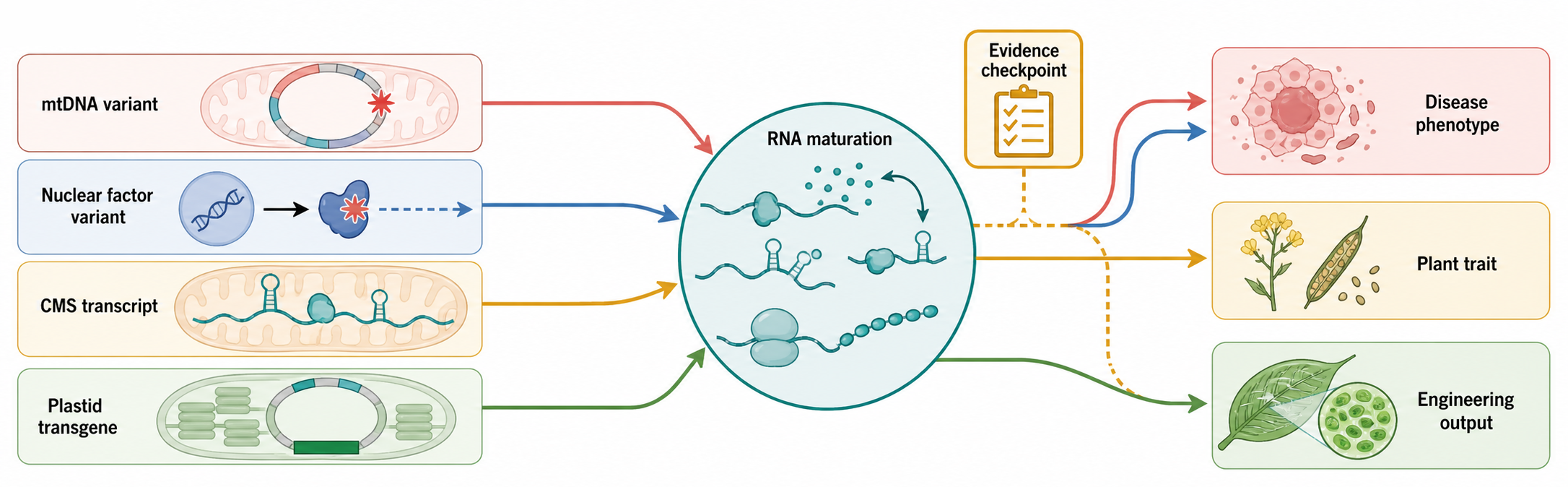
Figure 17.5. Organellar RNA in Disease and Biotechnology. Organellar RNA biology connects molecular maturation mechanisms to clinical phenotypes, plant traits, and biotechnology outcomes. Pathogenic variants in mitochondrial tRNA or rRNA genes can impair RNA folding, modification, processing of neighboring transcripts, or mitoribosome assembly, causing respiratory-chain deficiency. Nuclear mutations in imported RNA factors can produce identical organellar RNA phenotypes even when mitochondrial DNA is unaltered. In plants, unusual mitochondrial transcripts arising from genome rearrangements can cause cytoplasmic male sterility, which nuclear restorer genes suppress by altering transcript processing. Plastid transgene expression depends on promoter choice, RNA stability signals, editing context, and translation initiation, illustrating how organellar RNA maturation rules constrain chloroplast engineering.
Mitochondrial tRNA genes are frequent disease-relevant loci because a single tRNA defect can affect translation of many mitochondrial mRNAs. A pathogenic variant may alter tRNA folding, aminoacylation, modification, stability, processing of neighboring transcripts, or ribosome interaction. Mitochondrial rRNA variants can affect mitoribosome function or antibiotic sensitivity in some contexts. Mitochondrial mRNA variants can alter encoded proteins, but RNA processing and editing context must still be considered.
Nuclear genes can also cause mitochondrial RNA disease phenotypes. A nuclear-encoded RNase, RNA helicase, polymerase, tRNA synthetase, modification enzyme, or ribosome assembly factor can fail to reach or function in mitochondria. In that case, mitochondrial DNA may appear normal while mitochondrial RNA maturation or translation is defective. NSUN2-dependent mitochondrial tRNA methylation provides one example of nuclear-encoded enzymatic control over mitochondrial RNA chemistry. Mitochondrial protein-synthesis disease reviews and mitoribosome assembly studies provide the clinical and mechanistic bridge from RNA maturation to respiratory-chain dysfunction.
Clinical interpretation must also consider heteroplasmy, tissue energy demand, and nuclear background. Heteroplasmy is the coexistence of more than one mitochondrial DNA genotype in a cell or organism. A variant may cause disease only above a threshold fraction, and the threshold can differ among tissues. A mitochondrial RNA phenotype can therefore be tissue specific even when the mtDNA variant is present throughout the body. RNA-level assays in relevant tissues can be more informative than DNA sequencing alone, but tissue accessibility often limits clinical testing.
Evolutionary Logic of Retained Organellar RNA Genes
Endosymbiosis explains why organellar RNA systems look both bacterial and eukaryotic. Mitochondria descend from an alphaproteobacterial endosymbiont, and plastids descend from a cyanobacterial endosymbiont. The ancestral endosymbionts had many genes. Modern organelles retain only subsets. Some genes moved to the nucleus and acquired targeting signals that send their protein products back to the organelle. Other genes were lost because their functions were replaced or became unnecessary.
Why do organelles retain any genes at all? Several explanations can contribute. Hydrophobic membrane proteins may be difficult to import after cytosolic synthesis. Local redox control may favor retaining some genes near the electron-transport machinery they affect. Some gene products may require co-translational membrane insertion inside the organelle. Some retained genes may be historical residues constrained by incomplete transfer. No single explanation covers every retained gene in every organelle. The pattern is a mosaic shaped by function, import constraints, genetic code, expression machinery, and evolutionary history.
RNA genes are central to this retention. rRNAs and tRNAs support organellar translation, which permits local synthesis of retained protein-coding genes. mRNAs encode the retained proteins. Editing systems, introns, and transcript-processing factors can then become coevolved with the retained gene set. Once a mature RNA requires a lineage-specific editing or splicing system, simple DNA-level transfer to the nucleus may become less straightforward.
Plant Traits, Cytoplasmic Male Sterility, and Breeding
Plant organellar RNA biology affects visible traits and breeding systems. Cytoplasmic male sterility, or CMS, is maternally inherited failure to produce functional pollen. CMS is often associated with mitochondrial genome rearrangements and unusual mitochondrial transcripts that affect reproductive development. Nuclear restorer genes can suppress CMS, frequently by altering expression, processing, or translation of the sterility-associated mitochondrial transcript. This makes CMS a practical example of nuclear-mitochondrial RNA coordination in agriculture.
CMS should be taught carefully. It is not an animal mitochondrial disease analogue, and it is not caused by one universal mitochondrial gene. Different crop systems have different sterility-associated mitochondrial regions, transcripts, and restorer mechanisms. The shared concept is that mitochondrial genome rearrangements can produce novel RNA products, and nuclear genes can modulate their expression or consequence. Current CMS and restorer reviews support teaching CMS as an RNA-centered nuclear-mitochondrial coordination problem rather than as one crop-specific mechanism.
Plastid Transformation and Chloroplast Engineering
Plastid biotechnology uses the plastome as an engineering platform. In some plants, chloroplast transformation can introduce transgenes into plastid DNA, where high genome copy number and compartmentalized expression can support strong protein production. Maternal inheritance of plastids in many crops can reduce, but not universally eliminate, pollen transmission of transgenes. Plastid engineering is attractive for some recombinant proteins, metabolic pathways, and synthetic biology designs.
Organellar RNA biology determines whether a plastid transgene works. The transgene must be transcribed by an appropriate plastid promoter or expression context. The RNA must have stable 5′ and 3′ regions, suitable intercistronic processing if placed in an operon-like cassette, compatible codon usage and genetic-code assumptions, and translation initiation signals recognized by plastid ribosomes. RNA editing can be a problem if a coding sequence or regulatory region is copied from a nuclear or organellar context without considering the plastid maturation environment. Plastid-engineering reviews and marker-free transplastomic examples frame these RNA design constraints as part of chloroplast bioengineering rather than as generic nuclear transgene expression.
Organellar Transcriptomics in Plant and Biomedical Data
Organellar RNA abundance affects data interpretation. In plant RNA-seq, chloroplast and mitochondrial transcripts can be very abundant. A researcher studying nuclear gene expression may regard organellar reads as unwanted because they consume sequencing depth. A researcher studying photosynthesis, stress, development, or organellar dysfunction may regard the same reads as valuable. The experimental goal determines whether organellar reads should be depleted, retained, separately analyzed, or explicitly modeled.
In biomedical transcriptomics, mitochondrial RNA abundance can reflect mitochondrial content, cell type, stress, RNA stability, cell damage, or technical library effects. High mitochondrial read fraction in single-cell RNA-seq is often used as a quality-control signal, but it can also reflect real biology in metabolically specialized cells. Organellar RNA reads should therefore be interpreted with sample type, library preparation, cell-state markers, and DNA contamination controls.
Box 17.4. Organellar RNA-Seq Reads Are Not Background by Default
- Chloroplast and mitochondrial transcripts can be among the most abundant RNAs in plant total RNA, sometimes dominating the cellular mRNA pool across tissues and ploidy levels.
- Discarding organellar reads as contamination reduces sequencing depth for nuclear transcripts and eliminates information about plastid and mitochondrial biology, which may be the biological signal of interest.
- In single-cell RNA-seq, high mitochondrial read fraction is widely used as a quality-control filter for damaged cells, but metabolically specialized or highly active cells can have genuinely elevated mitochondrial content.
- In clinical mitochondrial genomics, RNA-level assays can reveal processing defects, editing failures, or stability changes that DNA sequencing alone will not detect.
- The appropriate treatment of organellar reads depends on the biological question: explicitly model them, retain them for organellar analysis, or deplete them upstream—but document the choice and its consequences for normalization and interpretation.
Other Organellar and Organelle-Associated RNA Systems
Several specialized organellar RNA systems sit near the boundary of this chapter. Kinetoplastid guide RNAs are true organellar RNA genes or gene products in many systems, but their full mechanism belongs with RNA editing. Apicoplast transcripts are plastid-derived but occur in parasitic lineages with reduced organelles. Some organelle-associated cytosolic mRNAs localize near mitochondria or chloroplasts for local translation, but those RNAs are usually nuclear encoded and are treated more fully in chapters on RNA localization and translation. The boundary question is whether the RNA is encoded by an organellar genome, imported into an organelle, or merely localized near an organelle.
Box 17.5. Nuclear Genes Can Cause Organellar RNA Phenotypes
- Most organellar RNA factors are nuclear encoded: RNA polymerases, ribonucleases, RNA helicases, PPR proteins, modification enzymes, and ribosome assembly factors are synthesized in the cytosol and imported into mitochondria or plastids.
- A loss-of-function mutation in a nuclear-encoded PPR protein can eliminate a specific organellar editing event, producing an mRNA with an unrestored codon—without any change in organellar DNA sequence.
- NSUN2, a nuclear-encoded enzyme, introduces 5-methylcytosine into mammalian mitochondrial tRNAs; its loss can alter tRNA structure and organellar translation without any mutation in mitochondrial DNA.
- A nuclear-encoded ribonuclease or RNA helicase defect can impair organellar precursor processing, causing accumulation of unprocessed polycistronic precursors alongside reduced mature RNA abundance.
- Clinical interpretation rule: if mitochondrial RNA maturation, stability, or translation is defective but the mitochondrial genome sequence is normal, consider nuclear gene variants affecting imported organellar RNA factors.
Experimental Foundations and Evidence
Comparative Genomics
Comparative organellar genomics identifies conserved and lineage-specific RNA genes. Genome sequencing can reveal rRNA genes, tRNA genes, protein-coding genes, introns, repeats, and structural rearrangements. Comparative analysis can detect gene loss, gene transfer, and genetic-code differences. However, organellar genome assemblies can be difficult because of repeats, multipartite structures, heteroplasmy, nuclear insertions of organellar DNA, and high copy number. A circular map is often an assembly representation, not proof that every physical genome molecule is a simple circle.
Transcript Mapping
RNA-seq, cDNA sequencing, northern blotting, primer extension, rapid amplification of cDNA ends, and long-read sequencing can identify expressed organellar RNAs. End-mapping methods are especially important because organellar mature transcript boundaries often arise by processing. Long-read methods can connect exons, edited regions, and processed transcript forms, but they can also capture precursors and degradation intermediates. Short-read methods can quantify abundance and editing fractions but may not resolve full isoforms.
Editing and Modification Detection
RNA editing is usually detected by comparing RNA-derived sequences with genomic DNA. This comparison requires careful controls because apparent mismatches can come from sequencing error, reverse-transcription artifacts, misalignment, nuclear organellar DNA insertions, or RNA damage. RNA modifications can be detected by mass spectrometry, modification-sensitive sequencing, primer-extension signatures, antibody enrichment, or direct RNA sequencing in some contexts. Each method has biases, so modification claims should include method, stoichiometry where available, and validation.
Genetics and Biochemistry
Genetic perturbation can establish causality. A nuclear gene knockout that eliminates a specific organellar editing event supports the gene’s role in editing, especially if complementation restores the event. A mitochondrial DNA variant associated with reduced mature tRNA abundance supports a processing or stability effect if RNA assays confirm it. Biochemical reconstitution provides stronger mechanistic detail but can be hard for large organellar RNPs and membrane-associated systems. Structural biology, such as recent plastid RNA polymerase structures, can clarify architecture but does not by itself define every in vivo regulatory state.
Artifact Controls
Organellar RNA experiments face recurring artifacts. DNA contamination can mimic unprocessed transcripts. Nuclear mitochondrial DNA segments and nuclear plastid DNA segments can confuse read mapping. Organelle isolation can enrich desired RNAs but can also damage organelles or carry cytosolic contamination. RNA-seq library selection can overrepresent or underrepresent organellar RNAs depending on rRNA depletion, poly(A) selection, and size selection. Editing analysis can be biased by mapping parameters. The best practice is to match the assay to the claim and to state what the assay cannot prove.
Biological Contexts Across Organisms
Animals
Animal mitochondria, especially mammalian mitochondria, are the standard example for compact mtDNA, tRNA punctuation, mitochondrial genetic-code differences, and mitochondrial disease variants. This system is excellent for teaching precursor processing and clinical interpretation, but it should not be used as the default for plant, fungal, or protist mitochondria.
Plants
Plants contain both mitochondria and plastids, making nuclear-organelle and inter-organellar coordination especially important. Plant organellar RNA biology includes large mitochondrial genomes, chloroplast plastomes, PPR-mediated RNA specificity, C-to-U editing, intron splicing, transcript stabilization, and developmental regulation. Plant organellar transcript abundance can be high enough to shape whole-transcriptome data.
Fungi and Protists
Fungal and protist mitochondria show many departures from animal mitochondrial simplicity, including intron-rich genomes, unusual gene structures, variant genetic codes, RNA editing in some lineages, and RNA import. Kinetoplastids are a major protist example because guide-RNA-directed editing can be essential for producing mature mitochondrial mRNAs. These systems are scientifically important but require dedicated lineage-specific sources for precise claims.
Plastid Diversity
Plastids include chloroplasts, chromoplasts, amyloplasts, and nonphotosynthetic plastids. Plastid genomes and transcriptomes should be interpreted in relation to plastid developmental state and organismal lineage. A chloroplast in a green leaf, a developing plastid in a meristem, and an apicoplast in a parasite do not have the same RNA gene-expression program.
Technology, Computational, Clinical, and Engineering Links
Organellar RNA annotation requires specialized computational handling. Annotation pipelines must specify the organellar genetic code, detect tRNAs with models tolerant of unusual structures, incorporate RNA editing evidence, distinguish mature transcripts from precursors, and handle organellar DNA insertions in nuclear genomes. Genome browsers should not display organellar DNA coordinates as if they automatically represented mature RNAs.
Transcriptome pipelines should decide how to handle organellar reads before analysis. In plant datasets, organellar transcripts may dominate the mRNA pool. In single-cell datasets, mitochondrial read fraction can be both quality information and biological information. In clinical mitochondrial genomics, RNA assays can help interpret variants that affect processing, modification, or transcript stability, but tissue accessibility and heteroplasmy complicate interpretation.
Engineering applications must respect organellar RNA maturation. A plastid transgene cassette needs promoter, untranslated region, processing, stability, and translation design compatible with plastid gene expression. A mitochondrial gene therapy strategy would need to confront mitochondrial import, genetic-code differences, heteroplasmy, and RNA-processing context. A plant breeding strategy involving cytoplasmic male sterility must track mitochondrial transcript structure and nuclear restorer effects.
Recent Consensus
- Organellar genomes are reduced endosymbiotic genomes, but their retained RNA gene content and genome architecture vary sharply across eukaryotic lineages.
- Mature organellar RNAs often cannot be inferred from DNA coordinates alone because precursor processing, splicing, editing, modification, polyadenylation, and decay shape RNA identity.
- Mammalian mitochondrial RNA maturation is a multi-step process involving long precursor transcripts, tRNA punctuation, RNA end processing, tRNA and rRNA maturation, mRNA polyadenylation, and quality control.
- Plant organellar gene expression depends strongly on post-transcriptional regulation by nuclear-encoded factors, including RNA-binding proteins that affect editing, splicing, stabilization, and translation.
- Plastid transcription uses both nucleus-encoded phage-type polymerases and plastid-encoded multi-subunit RNA polymerase systems, with recent structural work clarifying the chloroplast polymerase architecture.
- Organellar transcripts can be quantitatively dominant in plant mRNA pools and should be treated as meaningful biological and technical variables rather than automatically discarded.
Open Questions, Controversies, Deprecated Models, and Common Misconceptions
Open questions:
- How should organellar transcript models represent mixtures of precursor, processed, edited, partially edited, modified, polyadenylated, and degrading RNA species?
- Which plant organellar editing sites are essential, conditionally useful, nearly neutral, or retained because of historical dependence?
- How broadly do organellar regulatory RNAs beyond mRNAs, rRNAs, tRNAs, introns, and guide RNAs function across lineages?
- What are the complete rules for RNA import into mitochondria in lineages that import tRNAs or other RNAs?
- How should clinical pipelines integrate mtDNA genotype, heteroplasmy, nuclear genotype, RNA maturation, tissue context, and organellar translation assays?
- Which plastid and mitochondrial RNA design rules are reliable enough for predictable engineering across plant species?
Common misconceptions:
- “Mitochondria and chloroplasts use bacterial gene expression because they evolved from bacteria.” Organelles retain bacterial ancestry, but modern organellar gene expression is deeply remodeled by nuclear-encoded factors, organellar import, post-transcriptional control, and eukaryotic signaling.
- “The human mitochondrial genome is a good model for all mitochondrial genomes.” Human mtDNA is a useful compact example, but plant, fungal, algal, and protist mitochondrial genomes can be much larger, structurally complex, intron-rich, recombinogenic, and processing dependent.
- “An organellar DNA coding sequence directly gives the mature mRNA sequence.” RNA editing, splicing, processing, and polyadenylation can change the mature RNA sequence or boundaries. In kinetoplastids, editing can extensively remodel mRNA sequence.
- “Poly(A) tails always stabilize RNA.” Poly(A) describes a chemical tail. Its consequence depends on compartment and system. It can support nuclear mRNA stability, complete mammalian mitochondrial stop codons, or promote decay in some bacteria-like and organellar contexts.
- “Organellar RNA-seq reads are background contamination.” Organellar reads can be genuine, abundant, and biologically informative. They can also confound nuclear transcriptome analysis if not modeled explicitly.
- “A nuclear mutation cannot cause an organellar RNA phenotype.” Most organellar RNA factors are nuclear encoded. Mutations in nuclear genes encoding imported RNA-processing, editing, modification, or translation factors can produce organellar RNA defects.