Chapter 88. piRNA Pathways, Transposon Control, Germline Genome Defense, and Animal Diversity
Scope Note
This chapter explains PIWI-interacting RNA (piRNA) pathways as animal small-RNA systems that recognize mobile genetic elements, build heritable memories of transposon exposure, and protect germline genome integrity. The emphasis is on piRNA-producing loci, precursor processing, PIWI proteins, ping-pong and phased piRNA production, transcriptional and post-transcriptional repression, inheritance, organismal diversity, somatic piRNA biology, and disease connections.
Executive Summary
piRNAs are animal small RNAs, usually 24 to 32 nucleotides long, that associate with PIWI-clade Argonaute proteins. Unlike canonical microRNAs and many small interfering RNAs, most piRNAs are produced independently of Dicer from long single-stranded precursors. The pathway is best known for repressing transposable elements in animal germlines, where uncontrolled retrotransposon or DNA transposon activity can cause mutations, chromosomal rearrangements, gametogenic failure, and inherited genome damage. piRNA systems also regulate some host transcripts, participate in somatic lineages in several animals, and have been repeatedly remodeled during animal evolution.
The central design principle is a sequence-indexed immune memory. Genomic piRNA clusters contain transposon fragments, often arranged as molecular records of past invasions. Cluster transcripts are processed into primary piRNAs, which load PIWI proteins and guide them to complementary transposon RNAs. Some PIWI proteins slice transposon transcripts in the cytoplasm. Slicing can feed a reciprocal ping-pong amplification loop that enriches piRNAs matching active transposons. Additional phased piRNA production uses the cleavage site of a PIWI-bound precursor as a starting point for stepwise production of downstream piRNAs. In the nucleus, PIWI-piRNA complexes can recruit transcriptional silencing machinery, heterochromatin, or DNA methylation, depending on lineage and organism.
The pathway is not a single conserved module. Drosophila has distinct germline and ovarian somatic piRNA systems, mice use specialized prenatal and postnatal male-germline piRNA waves, nematodes use piRNA-related 21U RNAs that cooperate with worm-specific secondary small RNAs, and many animals deploy PIWI proteins in stem cells, regeneration, or soma. These differences make piRNA biology unusually good at illustrating how small-RNA mechanisms can preserve a common logic while changing protein components, genomic sources, cellular compartments, and developmental timing.
Disease claims require care. Loss of PIWI or piRNA factors causes infertility and transposon derepression in many animal models, especially in spermatogenesis and oogenesis. Human germline evidence is growing but is less mechanistically complete than mouse and insect work. PIWI proteins and piRNA-like small RNAs are reported in cancers, but many cancer studies face challenges of small-RNA annotation, contamination, and correlation rather than causation. The most defensible disease connection is that piRNA pathway failure can produce transposon activity and genome instability in germline systems; broader roles in cancer and immune disease remain context-dependent and require stronger mechanistic validation.
Concept Inventory
- piRNA: A small RNA bound by a PIWI-clade Argonaute protein, usually 24 to 32 nucleotides long, often bearing a 2′-O-methylated 3′ end, and commonly derived from transposon-rich genomic loci or transposon transcripts.
- PIWI protein: A member of the PIWI subclade of Argonaute proteins. PIWI proteins bind piRNAs and use them to guide slicing, transcript destabilization, chromatin silencing, or related repression mechanisms.
- piRNA cluster: A genomic locus that produces long precursor RNAs processed into many piRNAs. Clusters often contain fragmented transposon sequences and can be unistrand or dual-strand, depending on organism and locus.
- Primary piRNA pathway: Dicer-independent production of piRNAs from precursor transcripts, followed by loading into PIWI proteins, trimming, and 3′ end methylation.
- Ping-pong amplification: A reciprocal PIWI-guided cleavage loop in which antisense piRNAs slice sense transposon RNAs and sense piRNAs slice antisense precursor or transposon-derived RNAs, producing the characteristic 10-nucleotide 5′ overlap between piRNA partners.
- Phased piRNA production: Sequential generation of downstream piRNAs from a precursor after a PIWI-guided cleavage event, creating ordered piRNA series along the precursor.
- Transcriptional silencing: Repression of transposon transcription through nuclear PIWI-piRNA targeting and recruitment of chromatin or DNA methylation machinery.
- Maternal piRNA inheritance: Deposition of piRNAs and pathway proteins into oocytes or embryos, allowing inherited small RNAs to guide early silencing and influence which cluster transcripts become productive piRNA sources.
- Somatic piRNA pathway: A piRNA pathway functioning outside germ cells, such as in Drosophila ovarian follicle cells, animal stem cells, regenerative tissues, or some differentiated tissues.
What to Know Before Reading This Chapter
Readers should know that transposable elements are mobile DNA sequences whose expression often passes through RNA intermediates. Retrotransposons copy themselves through RNA and reverse transcription, whereas DNA transposons move by DNA-based mechanisms but can still be detected and regulated through their transcripts. Readers should also know the basic Argonaute principle from RNA interference: a small RNA guide makes a protein complex sequence-specific. The piRNA pathway uses this principle but differs from microRNA and small interfering RNA pathways in guide length, biogenesis, genomic source, protein family, and biological setting.
The running examples in this chapter are the Drosophila ovary and mouse male germline. In Drosophila, germ cells and surrounding follicle cells use different PIWI proteins and piRNA-producing loci to repress transposons. In mouse spermatogenesis, fetal and postnatal piRNA waves coordinate transposon control with male germ-cell development. These examples are not universal templates; they are concrete anchors for comparing animal diversity.
88.1. piRNA clusters, precursors, and processing pathways
piRNA clusters are the main genomic memory units of many piRNA systems. A cluster is not simply any repeat-rich locus. It is a locus whose transcripts enter a specialized processing pathway and generate populations of PIWI-bound small RNAs. Many clusters are enriched for transposon fragments, frequently in defective or rearranged forms that no longer encode autonomous mobile elements. Because piRNAs guide by base complementarity, these fragments can produce guides against related active transposons elsewhere in the genome. In this sense, a cluster resembles a molecular archive of past transposon encounters.
Cluster architecture differs across animals and even inside a single organism. Some clusters are unistrand loci transcribed mainly from one genomic strand. Others are dual-strand loci that generate piRNAs from both strands and require special transcription and processing logic to distinguish cluster transcripts from ordinary mRNAs. In Drosophila, the flamenco locus is a classic ovarian somatic unistrand cluster that produces antisense piRNAs against retrotransposons active in follicle cells, whereas germline dual-strand clusters require additional factors that promote noncanonical transcription, export, and processing. In mammals, pachytene piRNA loci produce abundant postnatal piRNAs, many of which are not obviously transposon-derived, illustrating that not every piRNA cluster is only a transposon graveyard.
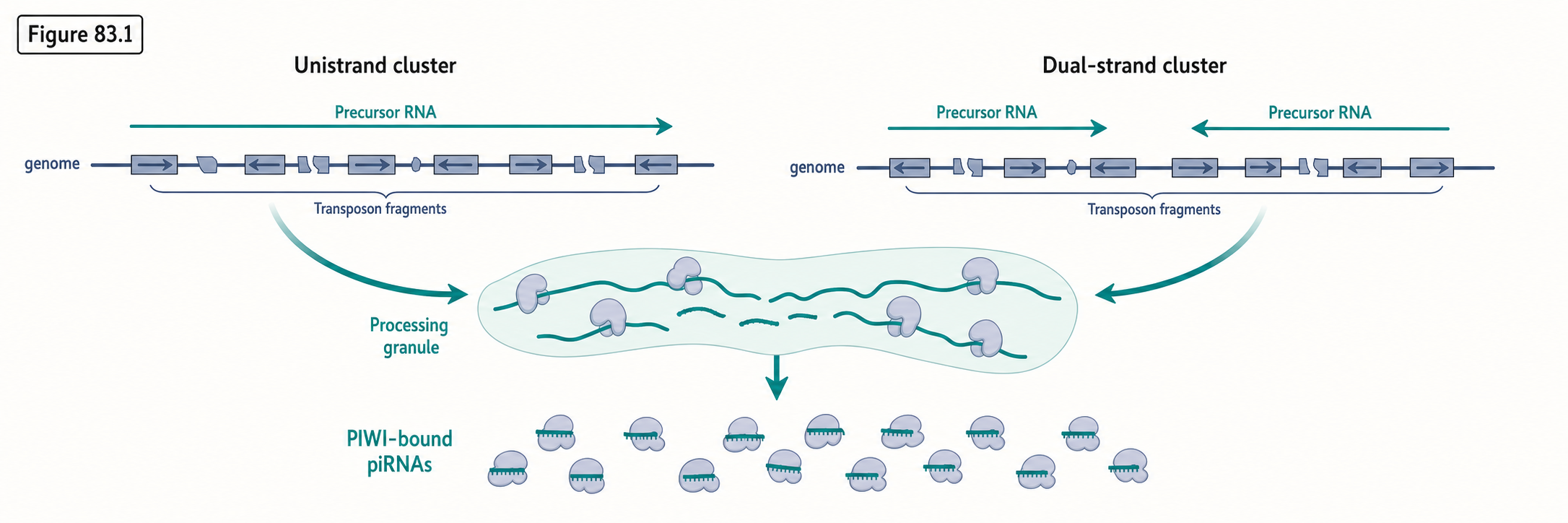
Figure 88.1. piRNA clusters as genomic transposon-memory loci. piRNA clusters preserve fragments of mobile elements in unistrand or dual-strand genomic loci, and precursor transcription routes this archive into diverse piRNAs rather than making every cluster transcript equivalent.
The first product of a cluster is a long precursor RNA. The precursor must be routed away from ordinary splicing, export, translation, and decay pathways into a piRNA biogenesis compartment. In flies, perinuclear germ granules called nuage and related cytoplasmic structures concentrate PIWI proteins, Tudor-domain proteins, helicases, nucleases, and scaffolds. In mammals, analogous processing occurs in intermitochondrial cement, chromatoid bodies, and other germ-cell granules. These structures are not merely storage droplets. They create local concentrations and spatial order so that precursor selection, cleavage, PIWI loading, trimming, and methylation occur efficiently.
Primary piRNA biogenesis begins when a precursor is cleaved to define a 5′ end that can be loaded into a PIWI protein. Many primary piRNAs show a bias for uridine at the first nucleotide, often called 1U bias, reflecting preferences of PIWI loading and precursor processing. After loading, the 3′ end is trimmed to a protein-specific length and methylated at the ribose 2′ hydroxyl by Hen1-related methyltransferases. This 3′ 2′-O-methylation protects the small RNA from tailing and degradation. The final piRNA length depends partly on the footprint of the bound PIWI protein, so piRNA size distributions can help identify which PIWI paralog is loaded.
The pathway therefore solves two recognition problems. It must recognize which long RNAs should become piRNA precursors, and it must select individual small RNA guides from those precursors. Cluster transcription marks, specialized RNA-binding proteins, nuclear export factors, and processing granules contribute to precursor recognition. PIWI loading preferences, endonucleolytic cleavage, exonucleolytic trimming, and methylation shape guide identity. The exact factor list differs among animals, and many factors were discovered in flies, mice, or silkworm cells before being compared more broadly.
Do not overgeneralize: a small RNA matching a transposon is not automatically a piRNA. A defensible piRNA annotation requires size, PIWI association or pathway dependence, end modification where tested, genomic origin, and biogenesis features. This matters in disease and nonmodel-organism studies, where degraded RNA fragments and misannotated small RNAs can mimic piRNA-like lengths.
Box 88.1. A practical checklist for calling a small RNA a piRNA
piRNAs are defined by pathway membership, not by length alone. A strong annotation usually combines several independent observations:
- The RNA is in the expected PIWI-associated size range for that organism or PIWI paralog.
- The RNA is physically associated with a PIWI-clade Argonaute, ideally by PIWI immunoprecipitation or an equivalent binding assay.
- The RNA changes when a relevant PIWI protein, nuclease, methyltransferase, or cluster-transcription factor is perturbed.
- The RNA has compatible end chemistry, such as 3′ 2′-O-methylation where the pathway is known to methylate mature guides.
- The genomic source fits a piRNA-producing locus, transposon transcript, or pathway-specific precursor rather than abundant rRNA, tRNA, snoRNA, or degraded mRNA.
- The proposed target or function is supported by derepression, cleavage, chromatin change, rescue, or another causal assay.
Common false positives include degradation fragments, repeat-mapping artifacts, database names carried over without pathway evidence, and small RNAs from mixed cell populations.
88.2. PIWI proteins, ping-pong amplification, and phased piRNAs
PIWI proteins are the effectors that turn piRNA sequence information into repression. Like other Argonaute proteins, many PIWI proteins contain PAZ and PIWI domains; the PAZ domain binds the small-RNA 3′ end, and the PIWI domain resembles an RNase H-like catalytic domain. Some PIWI proteins are slicers that cut target RNA across from positions 10 and 11 of the guide. Others act mainly as nuclear targeting factors or scaffolds for chromatin repression. One organism can encode several PIWI proteins with different subcellular locations, guide populations, developmental windows, and target classes.
In Drosophila germ cells, Aubergine and Ago3 form a canonical ping-pong pair. Antisense piRNAs loaded into Aubergine recognize sense transposon transcripts and slice them. The cleavage product can be loaded into Ago3 as a sense piRNA. Ago3-loaded sense piRNAs then target antisense cluster transcripts or related RNAs, generating new antisense piRNAs for Aubergine. Because each slicing event cuts a target at a fixed position relative to the guide, ping-pong partners often show a 10-nucleotide overlap between their 5′ ends. This molecular signature is a key diagnostic feature of ping-pong amplification in small-RNA sequencing data.
Table 88.1. Diagnostic signatures of piRNA biogenesis routes. Primary processing, ping-pong amplification, phased production, and secondary-small-RNA-linked routes have different inputs, molecular events, and sequencing signatures; a signature alone does not establish the full biogenesis mechanism.
| Route | Typical input | Key molecular event | Sequencing signature | Evidence needed | Main caveat |
|---|---|---|---|---|---|
| Primary piRNA production | Long single-stranded cluster precursor or transposon-fragment-rich transcript | Precursor cleavage defines a 5′ end, followed by PIWI loading, trimming, and Hen1-family 3′ methylation | 24- to 32-nt PIWI-sized reads, frequent 1U bias, cluster enrichment, no required 10-nt overlap | PIWI immunoprecipitation, pathway-factor dependence, end-modification evidence, cluster transcription data | Length, 1U bias, or transposon mapping alone can misclassify degradation fragments as piRNAs |
| Ping-pong amplification | Active transposon RNA plus complementary cluster-derived or target-derived piRNAs | Slicer PIWI complexes reciprocally cleave sense and antisense RNAs to generate new guide 5′ ends | Sense-antisense piRNA pairs with characteristic 10-nt 5′ overlap, often PIWI-paralog specific | Loss of slicer or PIWI paralog disrupts overlap and derepresses targets; cleavage and PIWI-loading evidence | The overlap is an inference from mapped reads and is absent or weak in some cell types and lineages |
| Phased piRNA production | PIWI-cleaved precursor or target fragment downstream of a trigger site | Zucchini/PLD6-family processing generates successive downstream piRNA 5′ ends in register | Ordered downstream piRNA starts at PIWI-footprint intervals, often adjacent to a trigger piRNA | Phasing maps, PIWI-bound downstream guides, and loss of phasing after processing-factor perturbation | Phasing often interlocks with primary or ping-pong routes, so route labels are not mutually exclusive |
| Secondary small-RNA-linked piRNA systems | PIWI-bound 21U RNA targets and nonself transcripts in nematode germlines | PRG-1 targeting recruits RdRP-dependent 22G RNA production and WAGO-linked silencing | 21U guides coupled to abundant secondary 22G RNAs rather than canonical fly or mouse ping-pong patterns | PRG-1 and secondary-Argonaute genetics, small-RNA profiling, and heritable silencing assays | Worm architecture is piRNA-related but should not be treated as a universal animal piRNA model |
Ping-pong amplification gives the pathway adaptive sensitivity. If a transposon is actively transcribed, its RNA becomes substrate for slicing and can drive production of more piRNAs against itself. The loop also reinforces antisense guide populations that are most useful for repression. However, ping-pong is not a free-running amplification reaction. It is constrained by PIWI paralog expression, processing compartments, target availability, protein cofactors, and quality-control steps that prevent inappropriate amplification from ordinary host transcripts. Recent work emphasizes that target selection often involves layered recognition, not simple complementarity alone.
Phased piRNA production adds a second logic. After a PIWI-piRNA complex cleaves a precursor, downstream processing can generate a series of piRNAs in register along the transcript. In insects and mammals, factors such as Zucchini/PLD6-family nucleases and associated processing proteins help create phased piRNA 5′ ends. Phasing spreads piRNA production beyond the initial trigger site and can produce many guides from one precursor molecule. This is especially useful when a cluster transcript contains multiple transposon fragments or when an initial cleavage event should license broader processing.
The distinction between primary, ping-pong, and phased piRNAs is conceptual rather than absolute. In a real germ cell, these routes feed each other. Primary piRNAs can initiate target slicing. Slicing can feed ping-pong amplification. Cleavage products can initiate phased production. Phased piRNAs can load PIWI proteins and guide additional repression. The outcome is a network that converts cluster transcription and transposon activity into a structured population of guides.
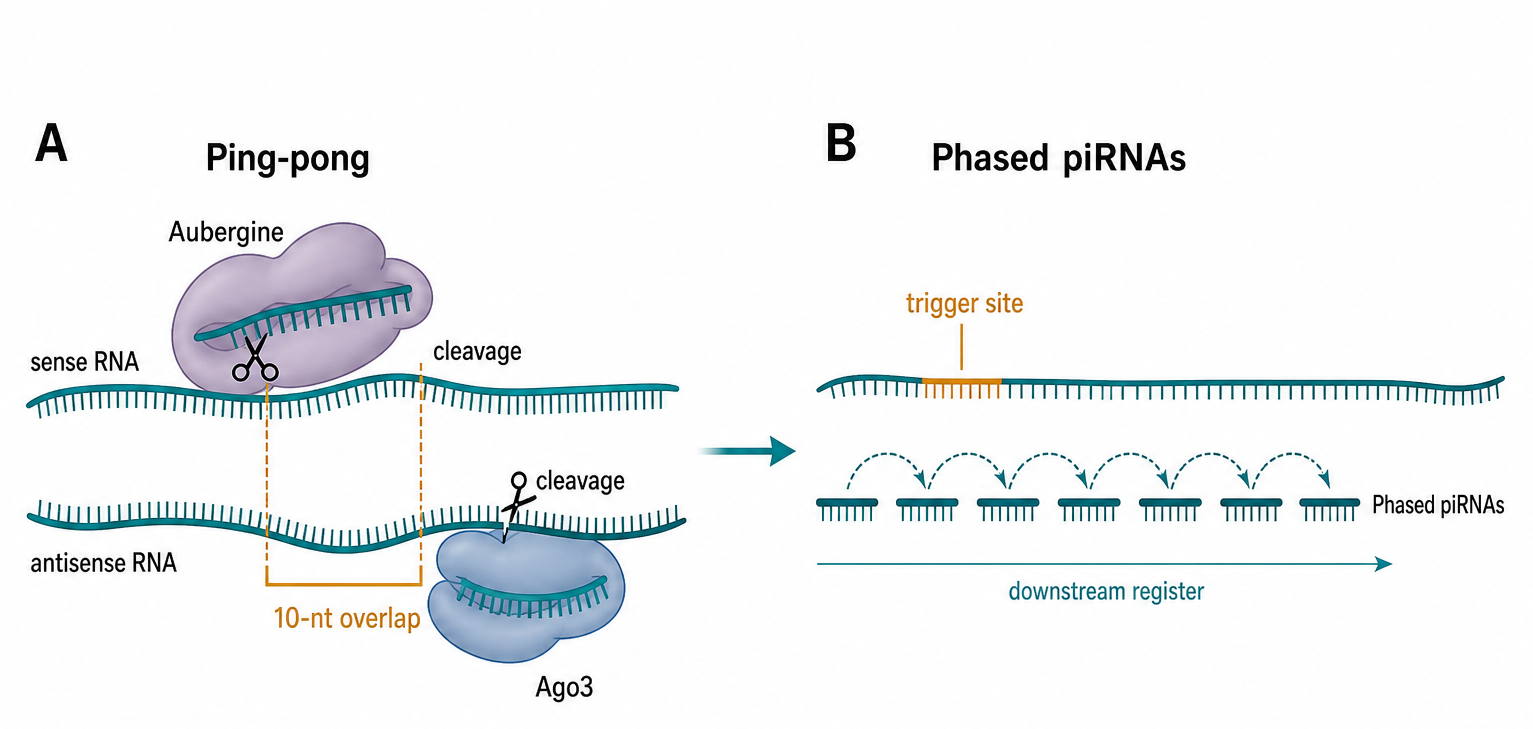
Figure 88.2. Ping-pong amplification and phased piRNA production. Reciprocal PIWI cleavage generates the diagnostic 10-nucleotide ping-pong overlap, while cleavage products can seed phased downstream piRNA production; the two routes reinforce one another but remain mechanistically distinct.
Evidence for these mechanisms comes from several kinds of data. Small-RNA sequencing reveals size classes, 1U bias, 10-nucleotide overlaps, strand asymmetry, and phased distances. Genetic perturbation of PIWI proteins or processing factors changes these signatures and derepresses transposons. Immunoprecipitation identifies which piRNAs bind which PIWI proteins. Biochemical and structural studies show how PIWI proteins bind guide RNAs and cleave targets. Imaging places pathway factors in nuage, Yb bodies, chromatoid bodies, or nuclei. No single assay proves the entire pathway; mechanism is assembled from convergent evidence.
88.3. Transposon repression, epigenetic silencing, and inheritance
The best-established biological function of piRNA pathways is transposon repression in animal germlines. The germline is a high-stakes context because mutations acquired in gamete precursors can be transmitted to offspring. Many transposons are transcriptionally activated during developmental windows when chromatin is reprogrammed, DNA methylation is remodeled, or germ cells proliferate and differentiate. A piRNA pathway therefore acts as a genome-defense system at moments when mobile elements could otherwise exploit open regulatory states.
piRNA repression has post-transcriptional and transcriptional branches. In the cytoplasm, slicer PIWI proteins directly cut transposon RNAs, reducing their abundance and generating substrates for additional piRNA production. This branch is conceptually close to RNA interference, although the guide source and protein family differ. In the nucleus, PIWI-piRNA complexes recognize nascent transposon transcripts or chromatin-associated RNA and recruit silencing machinery. In flies, nuclear Piwi promotes heterochromatin formation at target loci, involving histone H3 lysine 9 methylation and associated repressors. In mammals, prenatal piRNA pathways contribute to de novo DNA methylation of young transposons in male germ cells, especially LINE1 and intracisternal A-particle elements.
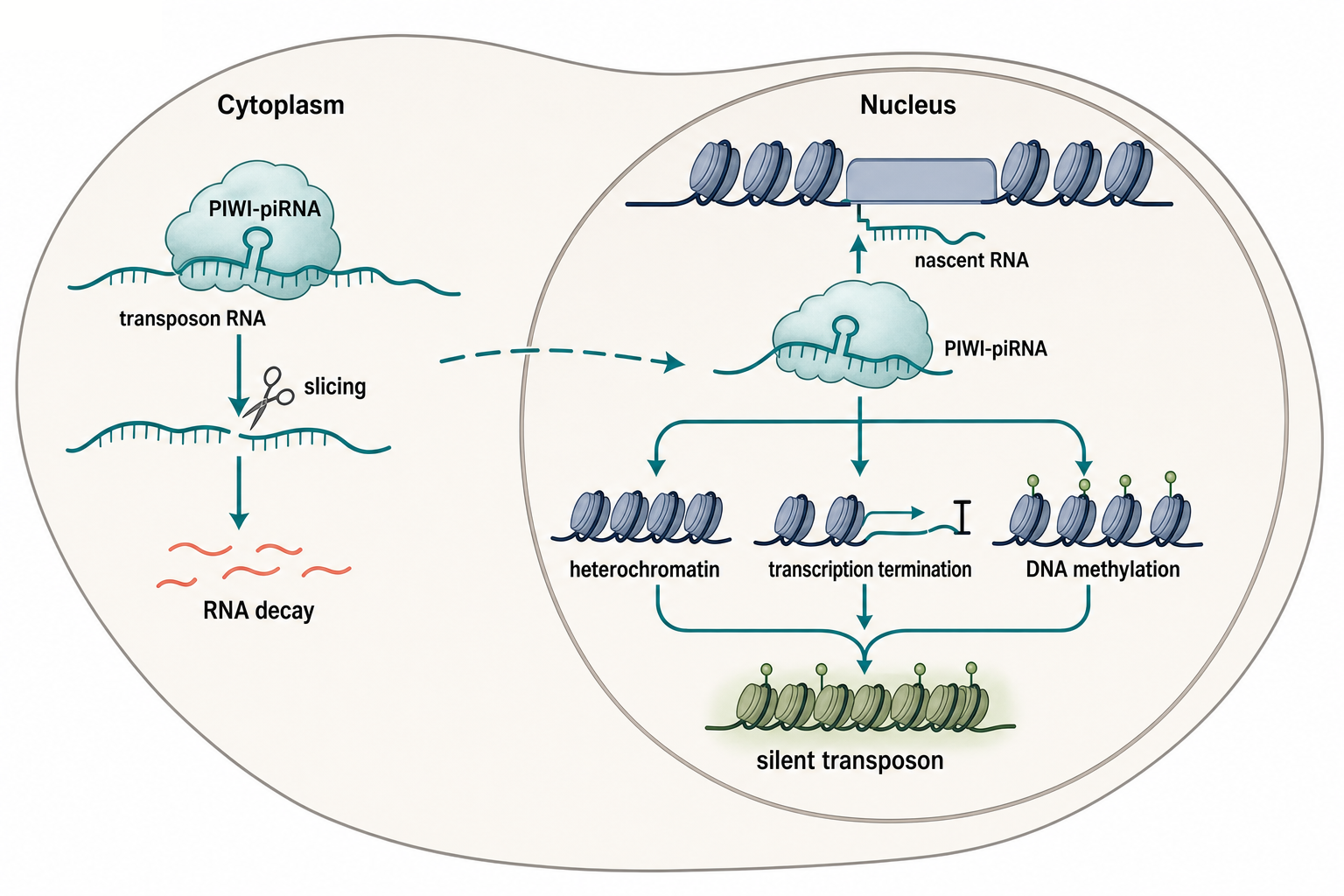
Figure 88.3. Cytoplasmic and nuclear transposon repression branches. piRNA guides repress transposons through separate cytoplasmic and nuclear outputs: target slicing destroys RNA, whereas heterochromatin or DNA-methylation pathways reduce transcription with lineage-specific machinery.
Epigenetic silencing is powerful because it represses transposons at their genomic source rather than only destroying their RNA products. A transposon copy that is kept transcriptionally silent cannot produce the proteins or RNA intermediates required for mobilization. Yet epigenetic targeting creates a specificity problem: the pathway must silence transposon sequences without spreading damaging repression into nearby host genes. Boundary elements, chromatin context, piRNA abundance, complementarity rules, nuclear cofactors, and transcript termination mechanisms all influence the precision of this targeting.
Inheritance adds another layer. In many animals, piRNAs and PIWI proteins are maternally deposited into oocytes and early embryos. These inherited molecules can provide immediate defense before zygotic transcription and can influence which genomic loci are recognized as piRNA sources in the next generation. In Drosophila, maternal piRNAs help explain hybrid dysgenesis, a phenomenon in which crosses between strains with different transposon histories produce offspring with germline defects because inherited piRNA protection does not match paternally introduced transposons. This is one of the clearest examples of small-RNA-mediated transgenerational genome defense.
The word inheritance should be used carefully. piRNAs can transmit sequence-specific regulatory information across generations, but this does not mean every piRNA effect is indefinitely heritable or independent of genomic loci. In many systems, inherited piRNAs reinforce silencing only when matching cluster sequences, target loci, or pathway-competent chromatin states are present. piRNA inheritance is therefore best understood as an interaction between small-RNA molecules, genomic archives, developmental timing, and chromatin feedback.
Box 88.2. What maternal piRNA inheritance does and does not mean
Maternal piRNA inheritance means that PIWI-bound guides and pathway factors deposited in the egg can influence early embryos before the embryo has built a full zygotic defense program. The inherited guides can recognize matching transposon transcripts, help maintain silencing, and influence which genomic loci become productive piRNA sources.
This mechanism has boundaries:
- The inherited information is sequence-specific and depends on complementarity between guides and targets.
- Persistence usually depends on compatible genomic loci, cluster transcripts, chromatin states, and developmental timing.
- A reciprocal cross effect, such as hybrid dysgenesis in Drosophila, is evidence for maternal small-RNA contribution only when transposon genotype, maternal guide pool, and germline phenotype are connected.
- Indefinite inheritance, adaptive benefit, or inheritance independent of genomic sequence should not be inferred without direct multigeneration evidence.
A rigorous inheritance claim should specify what is inherited, which generation shows the effect, which target is regulated, and whether the effect survives after the original maternal molecules are diluted or replaced.
88.4. Species diversity, germline biology, and somatic piRNAs
The animal piRNA pathway is ancient, but its implementation is remarkably diverse. PIWI proteins occur broadly across animals, including early-branching lineages, and are frequently associated with germ cells, stem cells, or regenerative capacity. However, the number of PIWI paralogs, the size and organization of piRNA clusters, the importance of DNA methylation, and the relationship between piRNAs and other small-RNA pathways vary widely. This diversity is not a side issue; it is central to interpreting piRNA studies across species.
In Drosophila, the ovary illustrates cellular specialization. Germ cells express PIWI proteins including Piwi, Aubergine, and Ago3 and use both primary processing and ping-pong amplification. Somatic follicle cells surrounding the germline express Piwi but not the full germline ping-pong machinery, and they rely heavily on primary piRNAs from somatic clusters such as flamenco. This separation allows the same organ to run related but distinct transposon-defense programs in germline and soma.
Table 88.2. Germline and somatic piRNA examples across animals. Germline and somatic piRNA systems vary across animal lineages in cell type, PIWI proteins, guide sources, and biological roles; evidence strength and antiviral or cancer claims must remain organism- and context-specific.
| Organism or lineage | Cell type | PIWI/piRNA feature | Dominant biological role | Evidence strength | Caution |
|---|---|---|---|---|---|
| Drosophila germline | Ovarian germ cells | Piwi, Aubergine, Ago3, dual-strand clusters, nuage, primary processing, and ping-pong amplification | Repress transposons, maintain fertility, and transmit maternal piRNA memory | Strong: genetics, PIWI profiling, small-RNA signatures, localization, and transposon derepression assays | Germline logic should not be assumed for follicle cells or mammals without cell-type evidence |
| Drosophila ovarian soma | Somatic follicle cells | Piwi-centered primary pathway, flamenco-derived piRNAs, and Yb-body-associated processing | Repress somatic retrotransposons that threaten ovarian genome integrity | Strong: cell-type-specific pathway studies and cluster-derived piRNA profiles | Lacks the full germline Aub/Ago3 ping-pong system; not a generic mammalian soma template |
| Mouse male germline | Fetal prospermatogonia and postnatal spermatocytes or spermatids | Mili/Miwi2 prepachytene piRNAs and abundant Miwi-linked pachytene piRNA waves | Direct transposon DNA methylation, support spermatogenesis, and regulate germ-cell transcripts | Strong for male fertility and transposon methylation; less resolved for many pachytene piRNA targets | Female roles and pachytene piRNA functions are context-dependent and incompletely assigned |
| C. elegans germline | Germ cells | PRG-1-bound 21U RNAs coupled to RdRP-derived 22G RNA amplification | Distinguish self from nonself transcripts and maintain heritable germline silencing | Strong pathway genetics and small-RNA profiling, but lineage-specific architecture | 21U RNAs are piRNA-related but not a simple fly or mouse canonical piRNA pathway |
| Planarian stem cells | Adult neoblasts and regenerative tissues | PIWI proteins and piRNA-like small RNAs associated with proliferative stem cells | Maintain stem-cell function, regeneration, and likely genome defense in dividing cells | Strong PIWI requirement for regeneration; direct guide-target mechanisms are less complete | PIWI loss can collapse stem-cell populations, complicating direct transposon-control claims |
| Arthropod antiviral-associated piRNAs | Mosquito or other arthropod infected tissues and germline-related contexts | Virus-derived piRNA-like reads and ping-pong signatures in selected species or infections | Possible antiviral restriction or viral-sequence control, depending on lineage | Moderate and context-dependent: profiles and perturbation results vary by system | Virus-derived piRNA signatures do not always prove protective immunity; siRNA pathways may dominate |
| Mammalian somatic or cancer-associated piRNA reports | Tumors or non-germline tissues | PIWI expression or piRNA-like small-RNA reads, often without demonstrated PIWI loading | Candidate biomarkers or proposed transcript, epigenetic, or transposon-regulatory mechanisms | Weak to emerging unless PIWI association, pathway dependence, target validation, and rescue are shown | Annotation artifacts, degradation fragments, cell mixture, and correlation-only studies are common risks |
In mice, piRNA biology is strongly tied to male germ-cell development. Fetal prospermatogonia produce prepachytene piRNAs that include many transposon-derived guides and help direct DNA methylation of transposon loci. Later, pachytene spermatocytes produce enormous quantities of pachytene piRNAs from large genomic loci. Many pachytene piRNAs do not map obviously to active transposons, and their functions include regulation of spermatogenic transcripts, meiotic progression, spermiogenesis, or quality control, although specific mechanisms remain less fully resolved than transposon silencing.
Nematodes show a different design. Caenorhabditis elegans 21U RNAs are often discussed as piRNAs because they bind the PIWI protein PRG-1 and participate in germline surveillance. They are short compared with many animal piRNAs, arise from thousands of individual loci, and trigger worm-specific secondary 22G-RNA pathways that execute much of the silencing. Worm piRNA biology is therefore a reminder that PIWI-bound guide RNAs can be embedded in lineage-specific amplification and memory systems.
Beyond the standard models, piRNA-like pathways occur in planarians, cnidarians, mollusks, arthropods, fish, amphibians, and other animals. In planarians, PIWI proteins are essential for adult stem cells and regeneration. In some mosquitoes and other arthropods, piRNA pathways intersect with antiviral responses and viral-derived small RNAs, although the boundary between transposon defense and antiviral immunity differs by lineage. In axolotl and other vertebrate comparisons, recent work suggests that piRNA-directed DNA methylation-like functions can illuminate how mammalian germline silencing logic evolved. These examples show that piRNA pathways are not restricted to a single germline script.
Comparative piRNA biology should therefore be organized around functions and evidence rather than around a single model organism. A useful comparison asks which PIWI paralogs are present, whether the guides derive from large clusters or dispersed loci, whether ping-pong signatures are visible, whether nuclear chromatin targeting occurs, whether DNA methylation participates, and whether the pathway acts in germ cells, stem cells, soma, or antiviral contexts. This framing prevents two common errors. The first error is to treat the fly ovary as the universal piRNA pathway. The second error is to treat every PIWI-expressing animal tissue as equivalent to a germline transposon-defense system. The conserved logic is sequence-guided recognition by PIWI-bound small RNAs; the implementation changes with genome repeat landscape, reproductive mode, developmental timing, and the available epigenetic machinery.
Somatic piRNAs are particularly important to handle with evidence discipline. Some somatic piRNA pathways are well supported, such as the Drosophila ovarian soma. Other claims, especially in mammalian somatic tissues, depend heavily on small-RNA sequencing annotation and sometimes lack PIWI immunoprecipitation, genetic dependence, or functional validation. A somatic small RNA should not be accepted as a functional piRNA solely because it has a piRNA-like length or maps to a piRNA database entry. Stronger evidence includes PIWI binding, pathway-factor dependence, target regulation, and exclusion of degradation fragments.
The same caution applies when piRNAs are discussed in regeneration, immunity, or development. PIWI proteins can mark stem-cell-like states in several animals, but PIWI expression alone does not reveal whether the relevant molecular job is transposon repression, transcript regulation, chromatin control, genome surveillance, or a noncanonical protein function. Developmental phenotypes can also be indirect: a piRNA-factor mutant may change cell composition, activate DNA damage responses, or disrupt gonad development before a specific target transcript can be assigned. For this reason, the most useful comparative studies connect small-RNA populations, PIWI occupancy, target derepression, cellular phenotype, and rescue in the same organismal context.
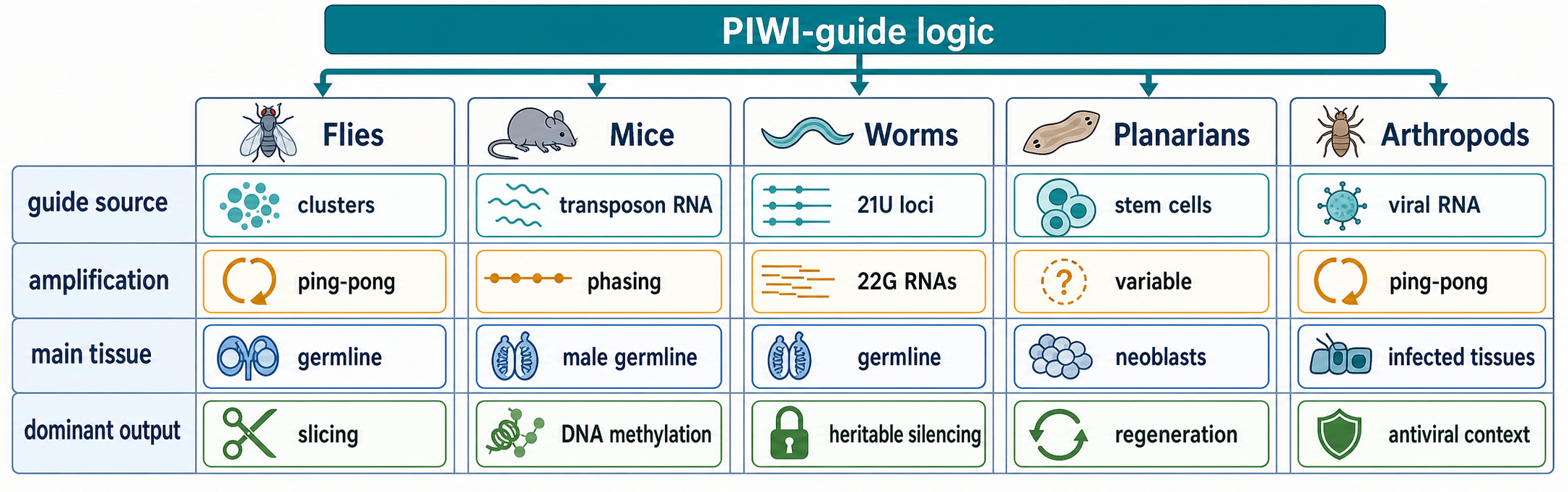
Figure 88.4. Animal diversity of piRNA pathway architectures. Animal piRNA pathways share PIWI-bound guide logic but vary in precursor sources, amplification systems, tissues, and silencing outputs; no single fly or mouse architecture should be generalized across metazoans.
88.5. Misregulation in infertility, cancer, and genome instability
Infertility is the clearest disease-adjacent consequence of piRNA pathway failure. In mice, mutations in PIWI proteins and piRNA biogenesis factors often cause male sterility, meiotic arrest, spermatogenic failure, transposon derepression, and DNA damage. The causal chain is biologically plausible and experimentally supported: defective piRNA production or PIWI loading reduces transposon repression; transposon transcripts and sometimes transposition-associated damage increase; germ cells activate DNA damage responses or fail developmental checkpoints. Female germline requirements vary by organism and factor, with Drosophila oogenesis providing strong evidence for ovarian piRNA functions.
Human infertility studies report associations between variants or altered expression of PIWI pathway genes and spermatogenic failure, ovarian disorders, or reproductive outcomes. These observations are important but should be treated as emerging evidence unless supported by genetics, molecular phenotyping, and transposon or piRNA measurements in relevant germ cells. Direct human evidence is now strongest for selected male-infertility cases in which inherited defects in piRNA biogenesis or PIWI-pathway genes are connected to impaired spermatogenesis, transposon derepression, or severe azoospermia. Human germline samples are limited, developmental timing is difficult to access, and pathway disruption can have indirect effects through germ-cell loss.
The evidence hierarchy for reproductive disease is therefore stricter than a simple association table. A strong infertility mechanism would connect a patient variant or altered factor level to defective PIWI loading or piRNA production, identify the affected developmental stage, show transposon or target derepression in the relevant germ-cell population, and explain how the molecular defect leads to meiotic arrest, gamete loss, or impaired embryo potential. Model organisms can provide causal chains that are impossible to test directly in humans, but species differences in PIWI paralogs, germline timing, and piRNA populations mean that human claims still need human molecular context. Conversely, a negative human association study does not invalidate a conserved germline-defense role; it may reflect limited sample access, allelic heterogeneity, compensation, or the fact that severe pathway loss removes affected germ cells before they can be sampled.
Cancer connections are more complicated. PIWI proteins are expressed in some tumors, and piRNA-like small RNAs have been proposed as biomarkers, oncogenic regulators, or tumor suppressors. Possible mechanisms include regulation of transposon expression, epigenetic states, mRNA stability, DNA damage, stem-like cell programs, and immune signaling. However, cancer samples are heterogeneous, and small-RNA datasets can contain degradation products, mapping artifacts, and signals from stromal or germline contaminants. Many reported piRNA biomarkers are not yet supported by PIWI loading, reproducible target validation, or perturbation-rescue experiments.
A rigorous cancer claim should therefore specify the molecule, tumor type, assay, and causal evidence. “PIWIL1 is overexpressed in a tumor cohort and correlates with poor prognosis” is not the same claim as “a PIWI-piRNA complex directly silences a tumor suppressor transcript.” The first is an association; the second requires molecular mechanism. Transposon derepression in cancer can contribute to genome instability or innate immune activation, but not all transposon expression in tumors is caused by piRNA failure, and many cancers do not express a canonical germline piRNA pathway. Recent cancer-focused reviews support using PIWI/piRNA findings as biomarkers or mechanistic candidates only after PIWI loading, target regulation, cell-state specificity, and perturbation-rescue evidence are separated from expression correlation.
Box 88.3. Reading piRNA disease and cancer claims
Disease studies often use similar words for different claims. Separate them before judging the evidence:
- PIWI expression claim: a PIWI-family gene or protein is detected or altered in a tissue, tumor, or patient group.
- piRNA annotation claim: small-RNA reads are assigned to known or predicted piRNA loci.
- pathway claim: the small RNA is loaded into a PIWI protein and depends on piRNA biogenesis factors.
- target claim: a specific transcript, transposon, or chromatin locus is regulated by a defined PIWI-piRNA complex.
- disease-mechanism claim: changing that pathway alters infertility, genome instability, growth, invasion, immune signaling, or another disease phenotype.
The evidentiary burden increases down the list. Correlation with prognosis can support biomarker development, but it does not prove a PIWI-piRNA mechanism. Strong mechanistic studies control for cell mixture, germline contamination, degradation fragments, repetitive-read mapping, target specificity, perturbation effects, and rescue.
Genome instability links piRNA biology to broader cell biology. Transposon activation can produce insertional mutagenesis, DNA breaks, recombination substrates, R-loops, replication stress, or inflammatory nucleic acids. In germ cells, piRNA pathways reduce this burden by targeting transposon RNA and chromatin. In somatic disease, the relationship is less direct but still relevant: loss of epigenetic repression, stress, aging, or tumorigenesis can reactivate repeats, and small-RNA pathways may modulate some of these effects. The safest synthesis is that piRNA pathways are proven genome-defense systems in animal germlines, while their roles in many somatic diseases remain promising but unevenly validated.
Experimental Foundations and Evidence
The strongest piRNA studies combine genetic perturbation, small-RNA profiling, transcript measurement, and cellular localization. A typical mechanistic experiment removes or mutates a PIWI protein, a nuclease, a helicase, a Tudor-domain factor, or a cluster transcription factor, then measures piRNA abundance, transposon RNA levels, fertility, DNA damage, and localization of pathway components. Small-RNA sequencing alone can identify signatures such as 1U bias, 10-nucleotide overlap, strandedness, and phasing, but it cannot by itself prove function.
PIWI immunoprecipitation is especially valuable because it distinguishes PIWI-bound piRNAs from similarly sized fragments. Genetic dependence is another important filter: a candidate piRNA should disappear or change when relevant PIWI or processing factors are disrupted. Target evidence requires more than complementarity. The strongest target claims show target RNA cleavage, transcriptional repression, chromatin change, derepression after pathway loss, and rescue by restoring the guide or pathway factor.
Artifact control is a recurring theme. Repetitive sequences are hard to map uniquely, so transposon quantification depends on read-mapping strategy and repeat annotation. piRNA clusters can overlap repeats, pseudogenes, or low-complexity regions. Small RNAs can be modified at their 3′ ends, which affects library preparation. Germline tissues contain changing cell populations, so apparent pathway differences can reflect altered developmental composition. These limitations do not undermine piRNA biology; they define the controls required for reliable interpretation.
Biological Contexts Across Animals
piRNA pathways are most consistently associated with germline protection, but “germline” has different developmental meanings in different animals. In mammals, primordial germ cells undergo epigenetic reprogramming, male germ cells establish methylation before birth, and later spermatocytes produce pachytene piRNAs. In flies, oogenesis occurs in an ovary with close signaling between germline cells and somatic follicle cells. In worms, PIWI-bound 21U RNAs cooperate with secondary small RNAs to distinguish self from nonself transcripts over generations.
Somatic piRNA biology ranges from well-established to speculative. The ovarian soma in insects is a strong case because the relevant cell type, clusters, PIWI protein, transposon targets, and genetic requirements are defined. Regenerative animals and stem-cell systems suggest broader ancestral roles for PIWI proteins in genome protection and cellular potency. Mammalian somatic claims require extra caution because canonical piRNA pathway expression is often low or absent outside germ cells, and because cancer and tissue datasets have annotation pitfalls.
Animal diversity also changes the relationship between piRNAs and DNA methylation. Mammalian male germ cells use piRNAs to help establish DNA methylation at transposons. Many insects lack a comparable global DNA methylation system and rely more heavily on histone-based heterochromatin and transcript slicing. Amphibian and other vertebrate data help bridge these modes, but more comparative work is needed before a single evolutionary path can be stated confidently.
Technology, Computational, Clinical, and Engineering Links
Computational piRNA annotation is difficult because piRNAs are defined by pathway membership, not by one universal sequence motif. Useful features include length, first-nucleotide bias, strand relationships, ping-pong overlap, phasing, genomic clustering, transposon enrichment, PIWI binding, and dependence on pathway factors. Databases can help, but database membership is not functional proof.
Technologically, piRNA systems inspire ideas for programmable transposon control, fertility diagnostics, repeat-aware genome analysis, and small-RNA biomarker discovery. The practical barrier is specificity. piRNA pathways evolved as complex cellular systems with inherited guide pools, chromatin feedback, and specialized germline compartments. Reengineering them as simple guide-RNA tools is not currently as mature as using CRISPR nucleases or RNA interference. Clinical use of piRNA biomarkers remains exploratory until assays distinguish true PIWI-bound piRNAs from abundant small-RNA fragments.
Recent Consensus
The consensus view is that piRNA pathways are Dicer-independent PIWI-bound small-RNA systems that defend animal germlines against transposons, with additional lineage-specific roles in transcript regulation, stem cells, soma, and development. piRNA clusters provide sequence memory; PIWI proteins provide effector specificity; ping-pong and phased processing amplify and diversify guide populations; and nuclear branches connect RNA recognition to chromatin or DNA methylation. The field also agrees that pathway architecture is highly diverse and that model-organism mechanisms should not be exported uncritically to all animals.
Open Questions, Controversies, Deprecated Models, and Common Misconceptions
Open questions:
- How cells choose cluster transcripts over ordinary RNAs?
- How nuclear PIWI complexes recruit silencing machinery with high precision?
- What many pachytene piRNAs do?
- How piRNA systems evolved across animals?
- How often somatic piRNA claims reflect functional pathways rather than annotation artifacts?
- The degree to which piRNA inheritance can shape adaptation beyond immediate transposon defense?
Common misconceptions:
- “PiRNAs are not simply longer siRNAs.” A transposon-matching small RNA is not automatically a piRNA. PIWI expression in a tumor does not prove a functional piRNA pathway. Maternal piRNA inheritance is not the same as unrestricted Lamarckian inheritance. Transposon repression is central to piRNA biology, but not every piRNA in every organism targets transposons.