Chapter 112. DNA-Virus Transcript Biology: Processing, Noncoding RNAs, Host Shutoff, Latency, and Immune Evasion
Scope Note
This chapter treats a DNA-virus infection as an RNA-production and RNA-control problem. It owns the comparative biology of DNA-virus transcripts: how viral DNA templates are transcribed, how viral pre-mRNAs are capped, spliced, cleaved, polyadenylated, exported, localized, translated, and degraded, and how viral coding and noncoding RNAs coordinate productive infection, persistence, latency, immune evasion, disease, and vector behavior. Nuclear herpesviruses, adenoviruses, papillomaviruses, and polyomaviruses depend extensively on host RNA polymerases and nuclear processing systems. Poxviruses are the essential counterexample: they replicate in cytoplasmic factories and encode much of their own transcription and mRNA-maturation machinery. No mechanism should be generalized across these compartments without evidence.
Chapter 111 owns comparative host-pathogen RNA regulation across pathogen classes; Chapter 108 owns the receptor enzymology and signaling logic of innate RNA sensing; Chapter 117 owns RNA-virus regulatory structures and host-shutoff strategies; and Chapter 85, Chapter 152, and other disease or therapeutic chapters own family-specific tumor biology and clinical detail. This chapter supplies the cross-family DNA-virus transcript framework needed by those contexts.
Executive Summary
DNA-virus genomes are not passive templates that simply yield one messenger RNA per gene. Most animal DNA viruses compress regulatory information by overlapping transcription units, using alternative promoters, alternative splice sites, alternative cleavage and polyadenylation sites, transcript readthrough, antisense transcription, and noncoding RNAs. RNA processing determines which viral open reading frame becomes accessible to ribosomes and when that product appears. The same genome can therefore produce distinct RNA repertoires in an entering cell, a DNA-replicating cell, a differentiated epithelial cell, a latently infected neuron, or a reactivating B cell.
Compartment is the first interpretive variable. Herpesviruses, adenoviruses, papillomaviruses, and polyomaviruses transcribe primarily in the nucleus and use host RNA polymerase II for most mRNAs. Their transcripts acquire host-like 5-prime caps and poly(A) tails, and many undergo host-catalyzed splicing. Viral proteins and RNA elements retune those systems. Poxviruses replicate in cytoplasmic factories and bring or encode a multisubunit RNA polymerase, stage-specific transcription factors, capping and methylating enzymes, and poly(A) polymerase. Poxvirus early, intermediate, and late RNAs are therefore mechanistically analogous to a temporal program but not products of ordinary nuclear co-transcriptional processing.
Temporal labels such as immediate early, early, and late are functional categories, not universal promoter types. Immediate-early herpesvirus transcription can initiate before new viral protein synthesis; early products support genome replication and host remodeling; late products often encode structural and assembly functions. Adenovirus major-late transcripts are processed through an extensive alternative-splicing and alternative-polyadenylation program. Papillomavirus early-to-late RNA processing is coupled to epithelial differentiation. Polyomavirus early and late transcription from opposite genome strands creates overlapping RNAs and unusual processing regimes. Poxvirus postreplicative transcription uses virus-encoded promoter recognition and can generate heterogeneous 5-prime poly(A) leaders and extensive readthrough.
DNA viruses also devote substantial transcriptional output to RNAs that do not function primarily as conventional mRNAs. EBV-encoded RNAs (EBERs), adenovirus virus-associated RNAs (VA RNAs), herpesvirus microRNAs, KSHV polyadenylated nuclear (PAN) RNA, HSV latency-associated transcripts (LATs), viral circular RNAs, and other antisense or structured RNAs can alter RNA stability, chromatin, translation, apoptosis, or immune sensing. Abundance or protein binding is not sufficient evidence of function. Strong assignments require sequence- or structure-specific perturbation, restoration by rescue, target engagement, and an infection-relevant phenotype.
Host shutoff is similarly plural. HSV-1 virion host shutoff (vhs) protein and KSHV SOX promote host mRNA cleavage; poxvirus D9 and D10 decap RNAs; adenovirus and herpesvirus proteins alter host transcription, processing, export, and translation. These activities can suppress antiviral gene expression, reshape the translatome, and reduce competition, but they can also degrade viral RNAs and trigger compensatory host responses. Selectivity emerges from RNA localization, translation status, sequence and structure, bound proteins, timing, and viral counter-regulation rather than from a simple host-versus-virus label.
Latency is a spectrum of cell-state-dependent transcript programs. Herpesvirus episomes persist in nuclei with restricted but nonzero transcription. HSV LAT-region products, EBV latency programs, KSHV latency transcripts, HCMV persistence programs, and viral microRNAs help shape the balance between survival, immune visibility, episome maintenance, and lytic competence. Reactivation is not necessarily a single synchronous switch; individual cells can traverse abortive, partial, and productive states. Bulk measurements can therefore confuse rare reactivating cells with low-level transcription in every latent cell.
Method choice defines what “the viral transcriptome” means. Short reads quantify regions and splice junctions but poorly reconstruct long, overlapping isoforms. Long reads resolve transcript connectivity but have platform-specific errors, incomplete-end artifacts, and lower depth. Single-cell methods expose heterogeneous infection states but sparsely capture viral RNAs; spatial methods preserve tissue context but may lack isoform resolution. Interaction assays show association, not regulatory consequence. Causal inference needs orthogonal measurement, perturbation of the viral RNA or its processing element, rescue, and a relevant viral or host phenotype.
Concept Inventory
- DNA-virus transcript program: the condition- and time-dependent set of viral coding and noncoding RNAs produced from a DNA-virus genome.
- Temporal gene class: an operational group of viral transcripts defined by when and under what dependencies they accumulate, such as immediate early, early, or late.
- Viral transcription unit: a DNA interval whose transcription and processing generate one or more overlapping RNA products.
- Transcript isoform: an RNA species distinguished by its start, splice junctions, end, or combination of these features.
- Alternative promoter use: production of RNAs with distinct 5-prime ends from different initiation sites.
- Alternative polyadenylation: selection among cleavage and polyadenylation sites to create different 3-prime ends.
- Host-like mRNA: a viral mRNA bearing processing features that resemble cellular mRNA; the term does not imply identical biogenesis or immune invisibility.
- Viral noncoding RNA: a virus-encoded RNA whose established principal function is not translation into a conventional protein.
- Abundant small RNA: a high-copy viral RNA such as adenovirus VA RNA or EBV EBER; abundance alone does not establish its mechanism.
- Structured immune antagonist: an RNA whose fold or RNP state interferes with an innate immune effector in a defined system.
- Viral microRNA: a virus-encoded small RNA loaded into an Argonaute complex and capable of sequence-directed target repression.
- Latency-associated transcript: an RNA enriched during latent infection; in HSV, LAT also names a specific transcriptional region and its processed products.
- Host shutoff: virus-induced reduction or reprogramming of host gene expression at transcriptional, RNA-processing, stability, export, or translation stages.
- Endonucleolytic host shutoff: host-mRNA cleavage by a viral or virus-recruited nuclease followed by cellular RNA decay.
- Viral transcript escape: relative resistance of selected viral or host RNAs to a shutoff mechanism.
- Episome: an extrachromosomal viral DNA molecule maintained in a cell nucleus.
- Latency: persistent infection with restricted productive replication and a cell-state-dependent viral gene-expression program.
- Reactivation: transition from a persistent or latent state toward lytic viral gene expression and, sometimes, virion production.
- Abortive reactivation: induction of part of a lytic program without completion of productive replication.
- Viral transcription factory: a spatially organized compartment in which viral genomes, polymerases, processing factors, and nascent RNAs concentrate.
- Cytoplasmic poxvirus factory: a cytoplasmic site of poxvirus DNA replication and virus-encoded transcription, distinct from a nuclear transcription domain.
- 5-prime poly(A) leader: a nontemplated adenosine tract created by polymerase slippage at some poxvirus intermediate and late promoters.
- Readthrough transcription: failure or bypass of an expected termination or 3-prime-end signal, producing extended or overlapping RNA.
- Polycistronic viral RNA: an RNA containing multiple open reading frames; only some may be efficiently translated in a eukaryotic cell.
- Viral transcriptome atlas: a mapped inventory of viral RNA starts, junctions, ends, abundances, and cell-state distributions.
- Isoform connectivity: the assignment of a 5-prime end, internal junctions, and a 3-prime end to the same RNA molecule.
- Viral burden: the amount of viral DNA, RNA, antigen, or infectious material in a sample; the chosen measurement changes interpretation.
- Infected-cell state: a joint cellular and viral molecular state rather than a binary label inferred from one viral read.
- Target engagement: direct evidence that a viral RNA or RNA-binding factor contacts and changes its proposed target in the relevant context.
- Causal transcript test: perturbation and rescue showing that a defined RNA species or processing event contributes to a phenotype.
What to Know Before Reading This Chapter
The reader should distinguish the viral genome from viral RNA. For DNA viruses, an RNA-sequencing read normally derives from a transcript, not from the genome used for heredity. Viral DNA copy number can increase without proportional transcription, and viral transcript abundance can change through promoter use, RNA processing, or decay without a change in genome number. Matched DNA and RNA measurements are therefore often needed.
A eukaryotic pre-mRNA is synthesized 5-prime to 3-prime and can be capped soon after initiation, spliced by the spliceosome, cleaved at a 3-prime processing site, polyadenylated, assembled into a ribonucleoprotein particle, and exported. These processes influence one another because they occur on the same nascent transcript. DNA viruses that transcribe in the nucleus can exploit this coupling. A viral splice-site mutation may alter not only exon choice but also RNA stability, export, translation, or an overlapping coding sequence.
Four running comparisons recur. HSV-1 represents a nuclear DNA virus with immediate-early, early, and late programs, abundant alternative transcripts, latency in neurons, and a virion-delivered host-shutoff nuclease. Adenovirus represents a nuclear lytic virus whose major late transcription unit yields many mRNAs through alternative processing and whose RNA polymerase III-transcribed VA RNAs antagonize PKR. HPV represents a small nuclear DNA virus whose RNA processing changes with epithelial differentiation. Vaccinia virus represents the cytoplasmic boundary case with virus-encoded transcription and mRNA maturation.
Evidence language matters. “Expressed” means an RNA was detected above a stated threshold. “Processed” means its start, junction, or end was measured. “Translated” requires ribosome engagement or protein evidence. “Functional” requires a perturbation linked to a molecular and biological effect. “Immune evasive” requires a relevant immune pathway and infection phenotype, not merely binding to an immune protein.
112.1. DNA-virus families, nuclear and cytoplasmic transcription, and generalization boundaries
Genome location determines access to RNA machinery
Herpesviruses, adenoviruses, papillomaviruses, and polyomaviruses deliver double-stranded DNA to the nucleus. Viral genomes become chromatinized to different extents and recruit host RNA polymerases. Most protein-coding transcripts are synthesized by RNA polymerase II, whereas selected abundant noncoding RNAs use RNA polymerase III. The resulting RNAs encounter host capping, splicing, cleavage, polyadenylation, export, surveillance, and translation systems. Viral proteins do not replace this machinery wholesale; they redirect it through promoter-bound factors, RNA-binding proteins, kinase signaling, compartment formation, and selective inhibition.
Genome architecture shapes the RNA problem. Herpesvirus genomes are large enough to encode many dedicated regulatory proteins and numerous noncoding RNAs, yet they still contain overlapping transcription units. Adenovirus compresses a large late coding repertoire into a common primary transcript whose alternative processing generates multiple mRNAs. Papillomavirus and polyomavirus genomes are smaller and rely heavily on overlapping open reading frames, bidirectional transcription, weak splice sites, and alternative polyadenylation. In these compact genomes, changing an RNA element can perturb several products simultaneously.
Poxviruses break the nuclear rule. Vaccinia virus replicates in cytoplasmic factories and encodes a multisubunit DNA-dependent RNA polymerase, early transcription factors packaged in the virion, intermediate and late transcription factors produced during infection, capping and methylating enzymes, and a poly(A) polymerase. Viral early mRNAs can be synthesized immediately after entry inside the viral core. Intermediate and late transcription follow genome replication. These RNAs resemble cellular mRNAs in having caps and poly(A) tails, but the enzymes, promoter grammars, termination behavior, and physical compartment are viral.
Similar outputs can arise through different mechanisms
A capped, polyadenylated viral mRNA is a phenotype, not a mechanistic diagnosis. Nuclear viral transcripts generally receive caps through host-associated co-transcriptional pathways and 3-prime ends through host cleavage and polyadenylation machinery. Poxvirus transcripts receive analogous features from virus-encoded enzymes in the cytoplasm. Likewise, “early” and “late” refer to timing and dependency. Herpesvirus late transcription often depends on viral DNA replication and family-specific transcription factors; poxvirus late transcription depends on a distinct virus-encoded promoter-recognition system.
The same caution applies within families. Alpha-, beta-, and gammaherpesviruses establish latency in different cell types and express different RNA repertoires. HSV neuronal latency cannot be used as a universal model for EBV B-cell latency or HCMV persistence in myeloid lineages. HPV transcript programs vary with viral genotype, integration status, lesion stage, and epithelial differentiation. Polyomavirus processing mechanisms documented in one model do not automatically describe all human polyomaviruses.
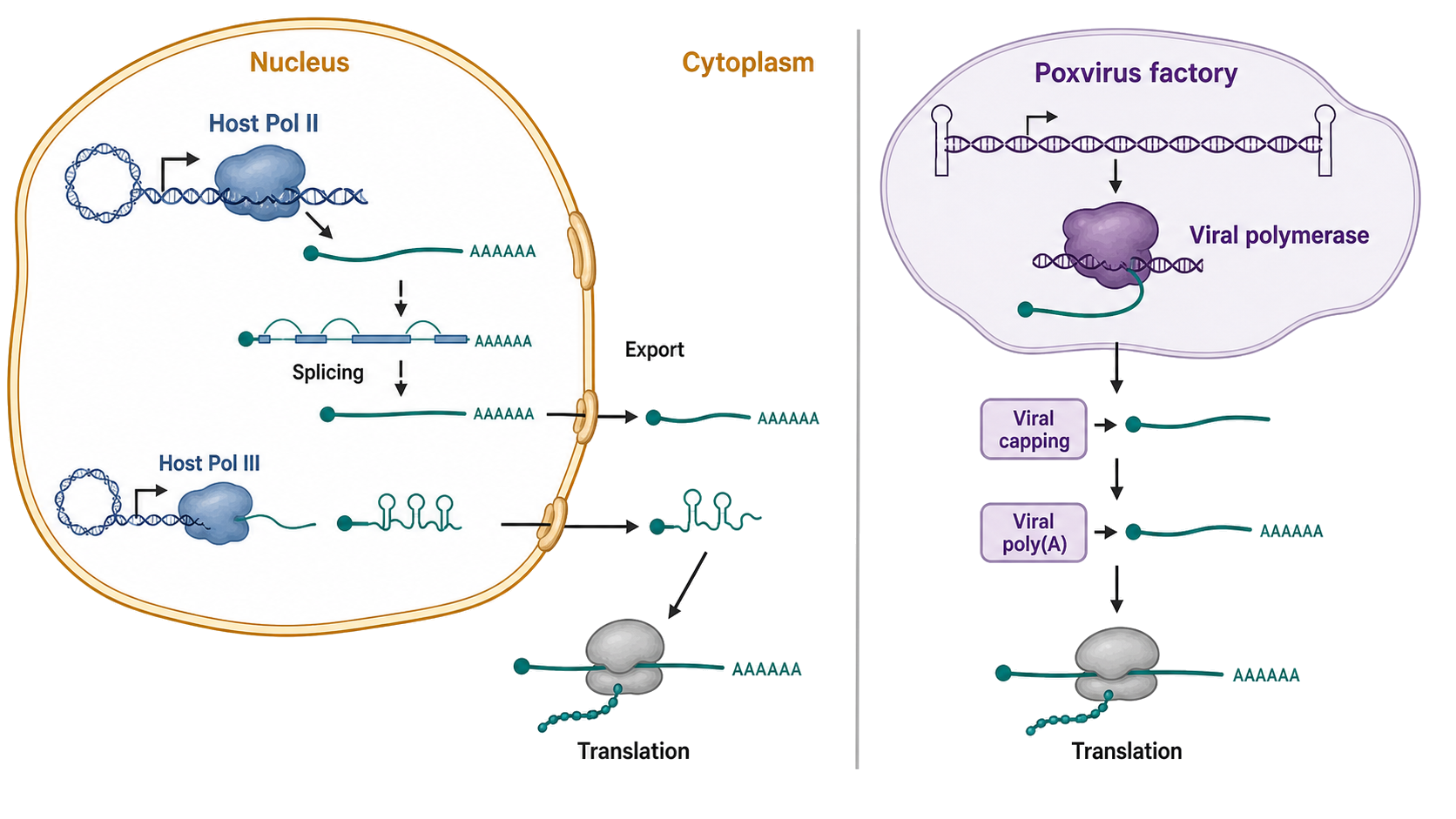
Figure 112.1. Nuclear DNA-virus transcription versus the cytoplasmic poxvirus boundary. Nuclear DNA viruses use host polymerases and nuclear RNA processing to different extents, whereas poxviruses encode a cytoplasmic transcription and maturation system. Arrows show mature-RNA flow rather than genome replication.
Figure 112.1 compares four nuclear DNA-virus strategies with the cytoplasmic poxvirus strategy. Table 112.1 records which polymerase, processing compartment, and temporal logic apply to representative families.
Table 112.1. DNA-virus transcript strategies and compartment boundaries. Family comparisons should begin with compartment and polymerase before comparing mature RNA features.
| Representative family | Primary transcript compartment and polymerase | RNA-processing emphasis | Representative ncRNA | Main boundary |
|---|---|---|---|---|
| Herpesviruses | Nucleus; mainly host RNA polymerase II, with selected Pol III RNAs | Temporal promoters, splicing, 3-prime processing, export, latency programs | miRNAs, EBERs, PAN RNA, LAT products | Alpha-, beta-, and gammaherpesvirus reservoirs and programs differ |
| Adenoviruses | Nucleus; host Pol II for mRNAs and Pol III for VA RNAs | Major-late alternative splicing and polyadenylation | VA RNA I/II and derived small RNAs | Major-late processing is not a poxvirus-like autonomous system |
| Papillomaviruses | Nucleus; host Pol II | Differentiation-coupled promoter, splice, and poly(A) choices | Selected ncRNAs and antisense products | Native epithelium and integrated tumors have different transcript programs |
| Polyomaviruses | Nucleus; host Pol II | Bidirectional early/late transcription, readthrough, overlap, editing context | Viral miRNAs in selected species | Classic polyoma mechanisms are not universal for every human polyomavirus |
| Poxviruses | Cytoplasmic factory; virus-encoded polymerase | Virus-encoded capping/polyadenylation; stage-specific starts; readthrough | Family-specific ncRNAs and pervasive noncoding transcription | No ordinary nuclear co-transcriptional splicing pathway |
The cross-family framework is therefore a matrix, not a single lifecycle. For every claim, ask: Which virus and strain? Which cell type? Which phase? Which polymerase? Which RNA species? Which compartment? Which assay? A mechanism becomes general only after those qualifiers have been compared directly.
112.2. Temporal transcription programs, promoter choice, capping, splicing, and 3-prime-end formation
Temporal programs are produced at transcriptional and post-transcriptional layers
HSV-1 illustrates a canonical cascade. Virion protein VP16 enters with the particle and, with host factors, activates immediate-early promoters. Immediate-early proteins then remodel viral chromatin and transcriptional control, allowing early genes involved in DNA replication and nucleotide metabolism to accumulate. Viral DNA replication enables robust late-gene expression, including structural proteins. This cascade is not a clock alone: promoter competence, genome copy number, transcription-factor availability, RNA processing, stability, and translation all contribute to when a product appears.
Adenovirus uses a different but equally RNA-dependent design. Early transcription units prepare the cell and genome for replication. After DNA replication begins, the major late promoter drives a long primary transcript. Choice among splice donors, splice acceptors, and polyadenylation sites yields families of late mRNAs. Viral proteins such as L4-33K and E4-ORF4 change splice-site selection. Thus, the temporal switch from early to late protein synthesis is not explained by promoter activation alone; processing of a shared precursor determines which coding region becomes the first efficiently translated open reading frame.
Papillomavirus transcription is coupled to tissue differentiation. In basal keratinocytes, early promoters and an early polyadenylation site favor RNAs encoding replication and regulatory proteins. As infected cells differentiate and move outward in the epithelium, promoter use, splice-factor abundance and phosphorylation, RNA-binding proteins, and suppression of the early polyadenylation signal permit late RNAs encoding capsid proteins. A monolayer culture can therefore reproduce only part of the native program. An organotypic epithelium or tissue is needed to connect RNA processing to differentiation state.
Polyomavirus early and late regions are transcribed from opposite strands of a circular genome. After DNA replication, late transcription and inefficient termination can generate overlapping complementary RNAs. Double-stranded regions, RNA editing, nuclear retention, and altered polyadenylation have been implicated in the early-to-late transition in classic systems. These features warn against interpreting every antisense read as an independently initiated regulatory transcript.
Processing choices define coding potential
Alternative promoter use changes the 5-prime leader, cap-proximal structure, upstream open reading frames, and which splice donor is available. Alternative splicing can remove an intron, join distant coding segments, alter the reading frame, or place a downstream open reading frame first. Alternative cleavage and polyadenylation terminate a transcript before or after a coding region. In compact viral genomes these choices are coupled: use of one splice acceptor may expose a polyadenylation signal, whereas recognition of an upstream cleavage site prevents downstream exons from ever appearing in that molecule.
Viral proteins can act directly on RNA processing or indirectly through host signaling. Adenovirus E4-ORF4 and L4-33K alter splice-factor activity and late RNA processing. Herpesvirus proteins recruit export and processing factors to intron-poor viral RNAs. HPV changes the abundance and modification of SR proteins and heterogeneous nuclear ribonucleoproteins. A viral protein that changes a splice isoform in overexpression is a candidate regulator; mechanistic assignment requires binding or recruitment evidence, a relevant infection-stage perturbation, and separation from changes in transcription rate.
Poxvirus processing again requires separate language. Early transcription termination recognizes a virus-specific signal. Intermediate and late polymerases frequently read through, creating overlapping transcripts with heterogeneous 3-prime ends. Polymerase slippage near intermediate and late starts can generate nontemplated 5-prime poly(A) leaders. These leaders and transcript overlaps are not splice isoforms, and poxvirus genes are generally not diversified by the host spliceosome in the way adenovirus genes are.
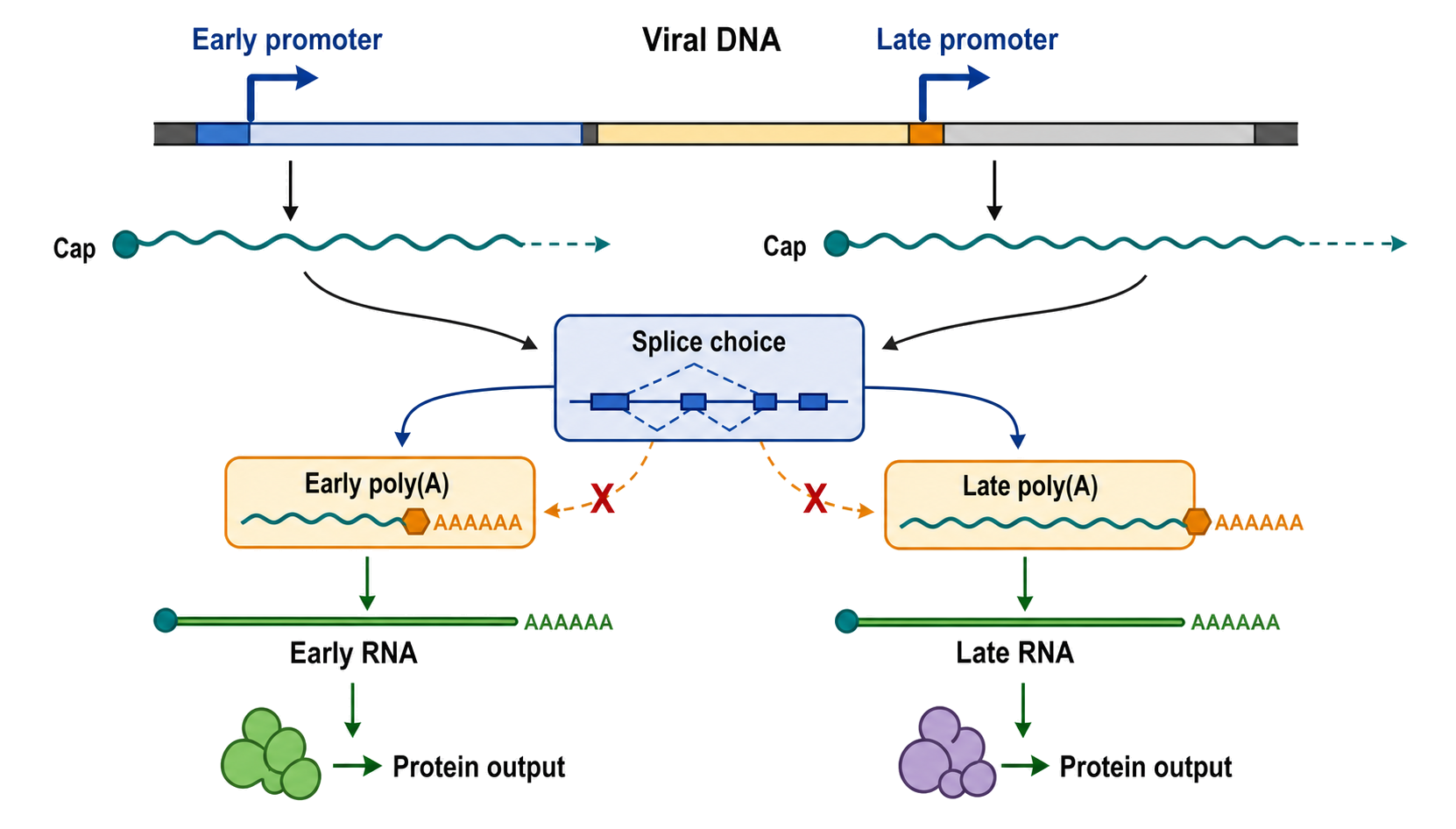
Figure 112.2. Coupled promoter, splicing, and 3-prime-end choices generate temporal viral isoforms. Alternative promoters define available leaders and splice donors; competing splice and polyadenylation sites then determine which coding region reaches a mature RNA and ribosome.
Figure 112.2 follows one viral DNA interval through promoter, splice, and 3-prime-end choices. The causal sequence is important: a DNA template is selected, a nascent RNA is initiated and capped, processing factors recognize competing sites, a mature RNA RNP is exported or retained, and only then does translation or decay determine output.
Processing evidence has characteristic failure modes
Short-read RNA sequencing detects exon coverage and junctions but cannot always assign distant starts and ends to the same molecule. Reverse transcription can switch templates across repeats or structured regions. PCR preferentially amplifies shorter isoforms. Poly(A) selection excludes nonpolyadenylated RNAs and can capture internally A-rich degradation fragments. Cap enrichment can include recapped or incompletely digested RNAs. Long reads improve connectivity but can truncate at either end, miscall homopolymers, or represent rare processing noise.
Strong transcript annotation combines orthogonal end mapping, junction validation, replicate detection, and evidence that the molecule exists in the relevant cell state. Strong processing mechanism adds mutational analysis of the cis-element, perturbation of the factor, rescue, and measurement of downstream protein or viral fitness. A transcript map is a prerequisite for mechanism, not a substitute for it.
112.3. Viral miRNAs, abundant small RNAs, long noncoding RNAs, and structured immune antagonists
DNA viruses exploit several noncoding-RNA biogenesis routes
Many herpesvirus microRNAs enter the host canonical microRNA pathway. A viral primary transcript folds into a hairpin, nuclear Microprocessor cleavage releases a precursor, export and Dicer processing generate a small duplex, and one strand loads into Argonaute. The loaded guide can reduce target RNA stability or translation through partial complementarity. Because the target rules resemble host microRNAs, a viral microRNA may modestly regulate many transcripts rather than switch one gene completely off.
Viral microRNAs can target viral immediate-early transcripts, host apoptotic regulators, cytokine pathways, antigen-presentation components, or cell-state factors. Yet target lists derived from prediction or Argonaute association are overinclusive. A strong target requires a site-dependent reporter or endogenous interaction, loss of regulation after microRNA or site mutation, restoration by sequence-matched rescue, and a phenotype in infected cells. A microRNA deletion can also perturb an overlapping transcript or hairpin structure, so precise processing-defective and seed-mutant alleles are valuable.
Abundant polymerase III transcripts follow a different route. Adenovirus VA RNA I is a structured RNA made at high levels late in infection. It binds protein kinase R (PKR) and can inhibit productive activation, helping translation continue despite double-stranded RNA stress. VA RNAs can also enter Dicer pathways and compete with endogenous small-RNA processing. EBV EBER1 and EBER2 are abundant nuclear RNAs assembled with host proteins. Proposed functions include interactions with innate sensors, transcriptional control, and modulation of growth or immunity, but conclusions can depend strongly on cell type and expression system.
Long and circular viral RNAs are scaffolds, decoys, guides, and sometimes translation templates
KSHV PAN RNA accumulates to extraordinary levels during lytic replication. Its stability depends in part on a cis-acting element that protects its poly(A) tail through a triple-helix-like structure, together with viral and host proteins. PAN RNA associates with chromatin regulators, viral proteins, and the viral genome and has been implicated in lytic gene expression. These associations support several mechanistic models—guide, scaffold, decoy, or local concentration platform—but no single label explains every interaction.
HSV LAT-region transcription yields a long primary RNA, unusually stable intronic products, small RNAs, and microRNAs during neuronal latency. “LAT” must therefore be used carefully: a promoter deletion, a stable intron, and a derived microRNA are different perturbation targets. Gammaherpesvirus transcriptomes also contain viral circular RNAs generated by back-splicing. Detection of a back-splice junction establishes circularization more convincingly when supported by RNase R resistance, divergent-junction validation, and long-read or northern evidence. It does not establish function or rule out low-abundance by-products.
Structured viral RNAs can antagonize immune effectors by binding without triggering productive signaling, competing for a limiting factor, or changing the conformation of an enzyme. Adenovirus VA RNA-PKR is the clearest running example. Whether a structured RNA is an antagonist, agonist, or both can depend on concentration, modification, subcellular location, and which sensor encounters it. EBV EBERs, for example, have been connected to innate sensing as well as evasion. The biologically relevant question is not “Does it bind an immune protein?” but “What pathway output changes at endogenous RNA abundance during infection?”
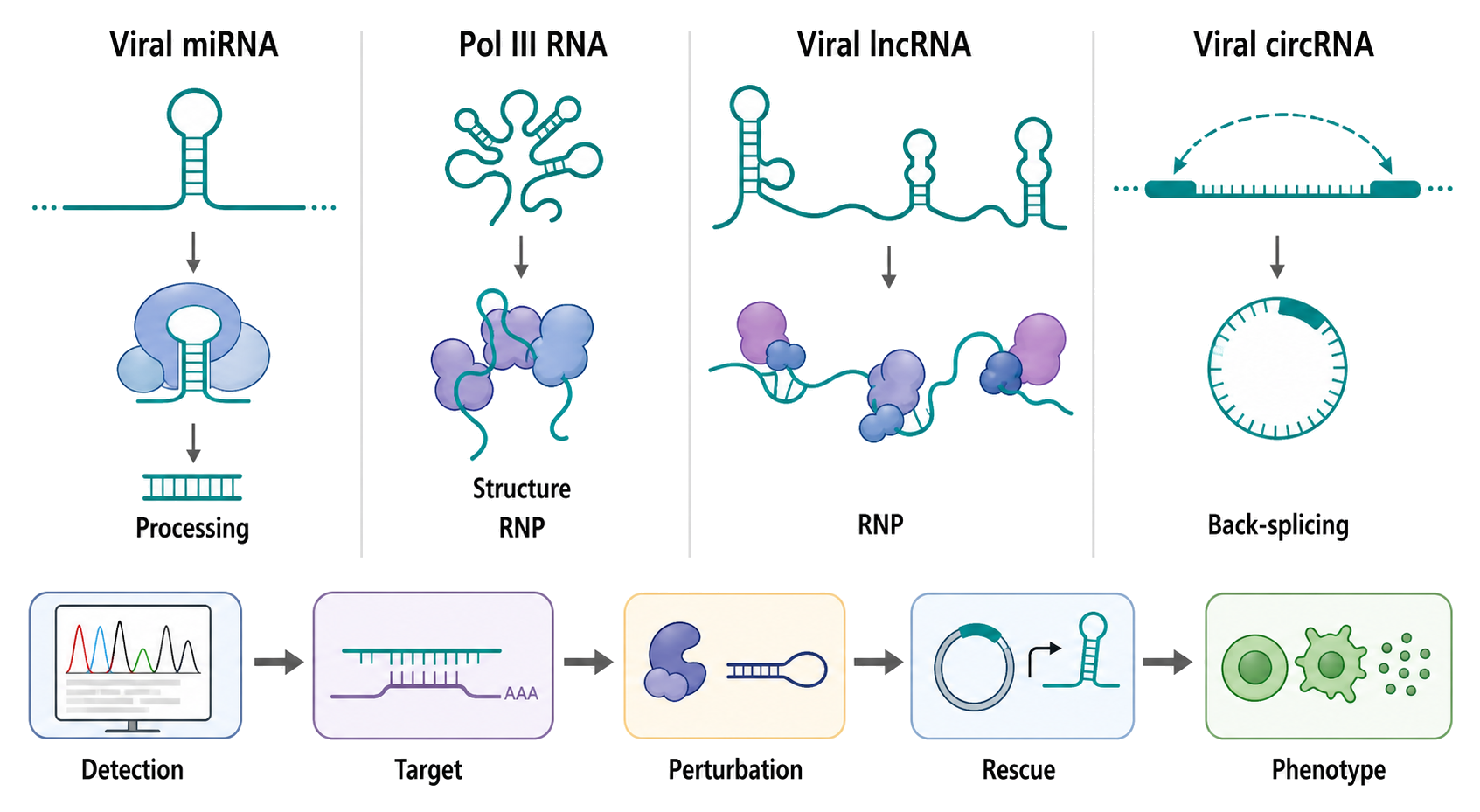
Figure 112.3. Distinct biogenesis and evidence chains for DNA-virus noncoding RNAs. Each viral ncRNA class has distinct biogenesis, molecular products, and minimum functional tests; abundance or binding alone is below the causal threshold.
Figure 112.3 separates microRNA, polymerase III RNA, long noncoding RNA, and circular RNA evidence chains. Box 112.1 gives a minimum standard for claiming function from an abundant viral RNA.
Box 112.1. An Abundant Viral RNA Is Not Yet a Functional Mechanism
Render-ready content:
Detection establishes that an RNA exists. End and junction mapping establish its molecular identity. Protein, RNA, DNA, or chromatin association nominates targets. A sequence- or structure-specific perturbation tests necessity, while a matched rescue tests whether the intended property—not an overlapping promoter or coding sequence—caused the effect. Molecular target engagement should precede an infection phenotype. This chain is especially important for VA RNAs, EBERs, PAN RNA, LAT-region products, and viral circular RNAs because unusual abundance or stability makes nonspecific association likely.
Boundary cases should remain visible. Some RNAs annotated as noncoding contain small open reading frames or associate with ribosomes. Ribosome association alone can reflect scanning, surveillance, or incidental contact; peptide detection and genetic separation are required to establish translation. Conversely, failure to detect a peptide does not prove that an RNA is nonfunctional. Coding potential and RNA-mediated function are separate axes.
112.4. RNA stability, export, localization, translation control, and host shutoff
A viral RNA must survive and reach the correct translation compartment
Nuclear DNA-virus RNAs are assembled into ribonucleoprotein particles as they are transcribed. Splicing can deposit exon-junction-associated factors and license export, whereas many viral RNAs are intronless or retain introns. Herpesvirus and adenovirus proteins recruit host export adaptors or redirect export pathways so viral transcripts reach the cytoplasm while selected host RNAs remain nuclear. Cis-acting RNA elements, cap status, poly(A)-tail binding, and viral RNA-binding proteins determine whether a transcript is exported, retained near a replication compartment, stored, translated, or degraded.
RNA stability is likewise designed. KSHV PAN RNA uses a protective 3-prime structure and bound proteins to achieve exceptional accumulation. Herpesvirus mRNAs may be stabilized by viral factors yet remain susceptible to viral shutoff nucleases. HPV late RNAs contain regulatory elements that can promote nuclear retention, instability, or inefficient translation in undifferentiated cells; differentiation changes the available RNA-binding proteins. Poxvirus mRNAs are synthesized in cytoplasmic factories and need not cross a nuclear pore, but their cap, poly(A) tail, leader sequence, and competition for ribosomes still control translation.
Translation output cannot be inferred from RNA abundance alone. Upstream open reading frames, leader structures, cap recognition, poly(A)-binding proteins, codon use, RNA localization, and global stress responses determine ribosome recruitment and elongation. Ribosome profiling can identify translated regions and initiation sites, but nuclease bias, overlapping open reading frames, and protected nonribosomal RNPs complicate viral interpretation. Protein measurements and coding-sequence mutants remain necessary.
Host shutoff is a network perturbation, not indiscriminate destruction
HSV-1 vhs is delivered in the virion and acts as an endoribonuclease that promotes cleavage of many mRNAs, followed by degradation by cellular exonucleases. Association with translation-initiation factors helps direct vhs toward translated RNAs. Viral proteins later restrain or relocalize vhs, preventing uncontrolled destruction from aborting viral gene expression. Different alphaherpesvirus vhs homologs can separate mRNA decay from translational arrest, so the name does not guarantee identical catalytic output across the subfamily.
KSHV SOX and related gammaherpesvirus factors induce widespread cytoplasmic mRNA decay through endonucleolytic cleavage. RNA sequence and structure contribute to cleavage susceptibility, but the system also changes nuclear events: accelerated cytoplasmic decay can redistribute poly(A)-binding protein, impair mRNA export, and feed back on host transcription. The phenotype called shutoff therefore propagates across compartments. Viral RNAs are not all intrinsically immune; escape can arise from protective RNA elements, bound viral proteins, localization, timing, or continued high-rate synthesis.
Poxvirus D9 and D10 proteins are Nudix-family decapping enzymes that expose RNAs to 5-prime-to-3-prime decay. Their substrates can include viral and host mRNAs. Regulated viral mRNA turnover helps transition between temporal classes as well as suppress host expression. Adenovirus uses multiple proteins to inhibit host transcription, alter splicing and 3-prime processing, block export, and redirect translation; no single nuclease defines its shutoff. Thus, “host shutoff” should be decomposed into the measured stage.
The causal steps are: a viral effector encounters a particular RNA or host factor; cleavage, decapping, processing inhibition, export blockade, or translation inhibition occurs; cellular decay or stress machinery amplifies the initial lesion; the host and viral translatomes change; and immune signaling, viral replication, or pathogenesis changes. Measuring only the last step cannot identify the first.
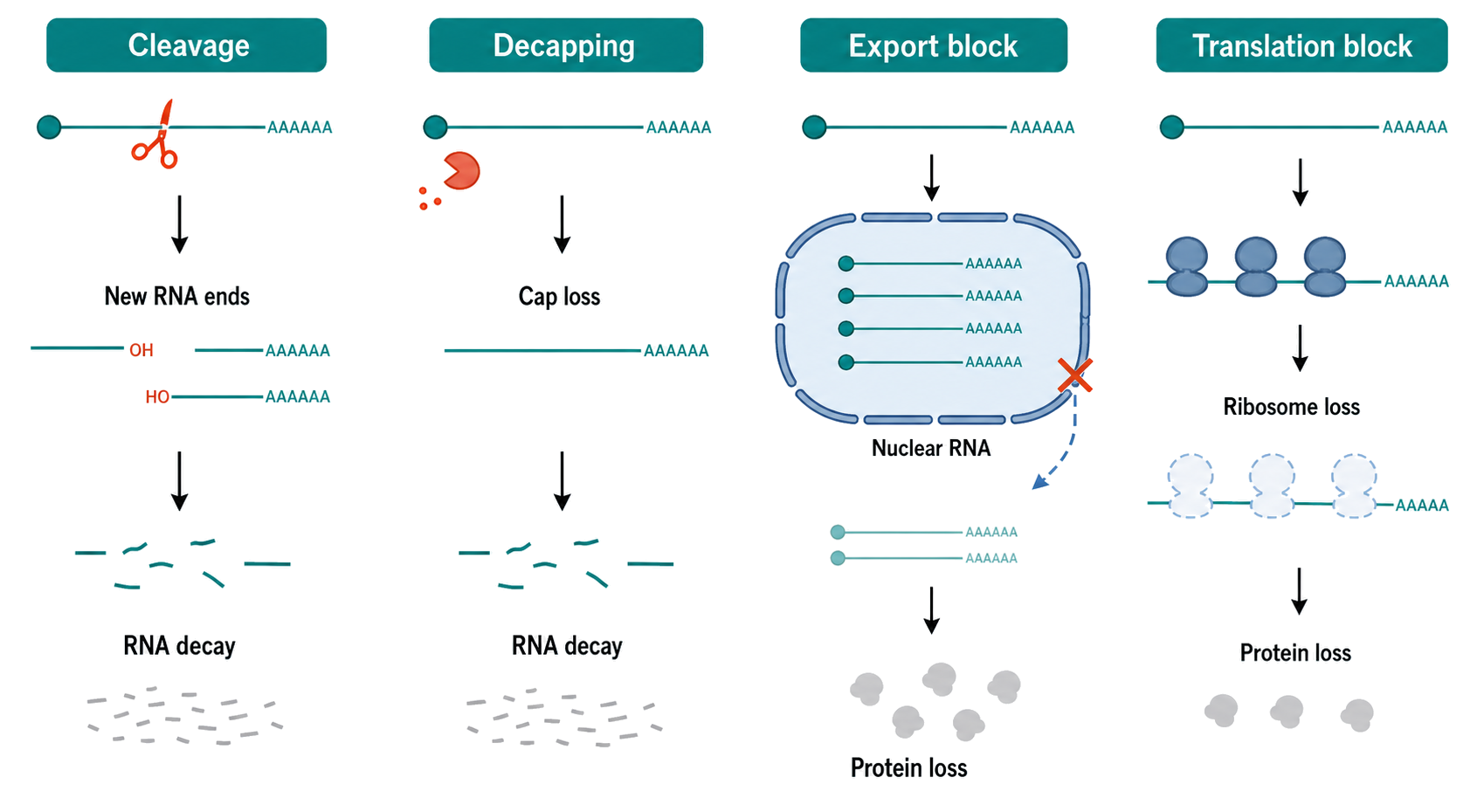
Figure 112.4. Four routes to host shutoff and their discriminating readouts. Viral effectors can reduce expression through cleavage, decapping, nuclear RNA retention, or ribosome inhibition; nascent RNA, end mapping, fractionation, steady-state RNA, and translation assays distinguish these routes.
Figure 112.4 compares vhs cleavage, SOX-linked mRNA decay, poxvirus decapping, and processing/export blockade. Table 112.2 lists readouts that discriminate transcriptional shutoff, RNA loss, export failure, and translational repression.
Table 112.2. Host-shutoff stages, readouts, and false interpretations. A phenotype should be named for the molecular layer directly measured.
| Candidate stage | Direct readout | Strong inference | Common false inference | Key control |
|---|---|---|---|---|
| Transcription inhibition | Nascent labeling or polymerase occupancy | Lower synthesis rate at defined loci | Lower steady-state RNA proves transcriptional shutoff | External normalization and matched decay estimate |
| Endonucleolytic cleavage | Mapped new RNA ends plus catalytic dependence | A nuclease initiates decay at a defined site or motif | Any RNA decrease proves direct cleavage | Catalytic mutant, rescue, downstream exonuclease dependence |
| Decapping | Cap-state assay and 5-prime decay dependence | Cap removal exposes selected RNAs to decay | Loss of cap is caused by one named viral enzyme | Enzyme mutant and alternative cap-loss controls |
| Export blockade | Nuclear/cytoplasmic RNA with leakage controls | RNA accumulates in the nucleus relative to synthesis | Cytoplasmic loss equals RNA decay | Fractionation markers, imaging, absolute normalization |
| Translation inhibition | Ribosome profiling or puromycin-based synthesis assay | Ribosome engagement or protein synthesis falls | RNA abundance predicts translational output | Matched RNA, stress-state, and protein measurements |
Shutoff experiments require normalization that survives global RNA loss
If total cellular mRNA collapses, normalizing every sample to the same library depth makes surviving RNAs appear induced. External spike-ins, cell counts, total RNA measurements, metabolic labeling, and matched nascent and steady-state assays help distinguish absolute loss from compositional change. Fractionation must control for leakage when nuclear poly(A) RNA accumulates. Reporter assays need matched transcription and transfection controls because a shutoff factor can alter reporter production before acting on the reporter RNA.
Catalytic mutants are essential but not sufficient. A mutation can destabilize a protein or disrupt localization. Rescue should restore expression and compartment, and orthogonal assays should verify the predicted RNA intermediate. For a cleavage mechanism, mapping a reproducible end and showing downstream exonuclease dependence is stronger than observing a lower steady-state abundance. Chapter 32 supplies the general enzymology of the decay machinery recruited after viral attack.
112.5. Latency-associated transcripts, episome maintenance, reactivation, and cell-state dependence
Latency is active restraint of a replication-competent genome
Herpesvirus latency requires persistence of viral DNA, suppression of most lytic gene expression, survival of the host cell, immune control or evasion, and retention of reactivation competence. Viral DNA generally persists as a chromatinized nuclear episome, although integration or defective genomes can occur in particular contexts. The transcript program varies by family and reservoir: HSV-1 persists in sensory neurons, EBV in B-cell lineages and epithelial contexts, KSHV in endothelial and B-cell contexts, and HCMV in hematopoietic progenitor and myeloid lineages.
Restricted transcription reduces antigen production but is not equivalent to complete silence. HSV LAT-region products accumulate in neurons and have been linked to neuronal survival, chromatin state, and control of lytic regulators. EBV expresses distinct latency programs ranging from relatively broad latent-protein and noncoding-RNA expression to highly restricted states; EBV microRNAs and EBERs remain important components. KSHV latency includes transcripts encoding episome-maintenance and survival functions together with microRNAs. The exact RNA set depends on cell differentiation, immune pressure, culture history, and assay sensitivity.
Episome maintenance is often protein-centered but transcript-dependent. A latent transcript may encode a DNA-binding tethering protein, control its abundance through splicing or polyadenylation, or regulate cell-cycle and survival pathways through microRNAs. RNA can also recruit chromatin regulators or act antisense to lytic transcripts. The mechanistic claim must name whether the RNA acts as a coding template, small-RNA precursor, scaffold, or transcriptional event.
Reactivation proceeds through heterogeneous intermediate states
Stress, differentiation, inflammatory signals, hypoxia, neuronal cues, B-cell receptor signaling, and chromatin perturbation can favor reactivation in different reservoirs. Immediate-early or lytic-switch transcription begins in a subset of cells. Viral feedback circuits then either amplify the program toward DNA replication and late expression or collapse into abortive reactivation. A bulk sample with one percent strongly reactivating cells can resemble a population in which every cell weakly expresses lytic RNAs.
The older binary model—latency completely off, lytic replication completely on—remains useful as an endpoint contrast but is biologically incomplete. Sensitive RNA measurements detect sporadic or partial transcription. Some signal reflects real intermediate states; some reflects ambient RNA, defective genomes, rare contaminating lytic cells, or postmortem reactivation. Single-cell RNA plus viral DNA, protein, or imaging measurements can distinguish these alternatives more effectively than RNA alone.
HSV and VZV illustrate a boundary within alphaherpesviruses. HSV LAT products are abundant and well characterized in latent ganglia. VZV latent transcription is more difficult to define, and postmortem tissue interval can confound interpretation. Findings from transformed cell lines, experimental latency models, explanted ganglia, and living-host sampling should not be merged without qualification.
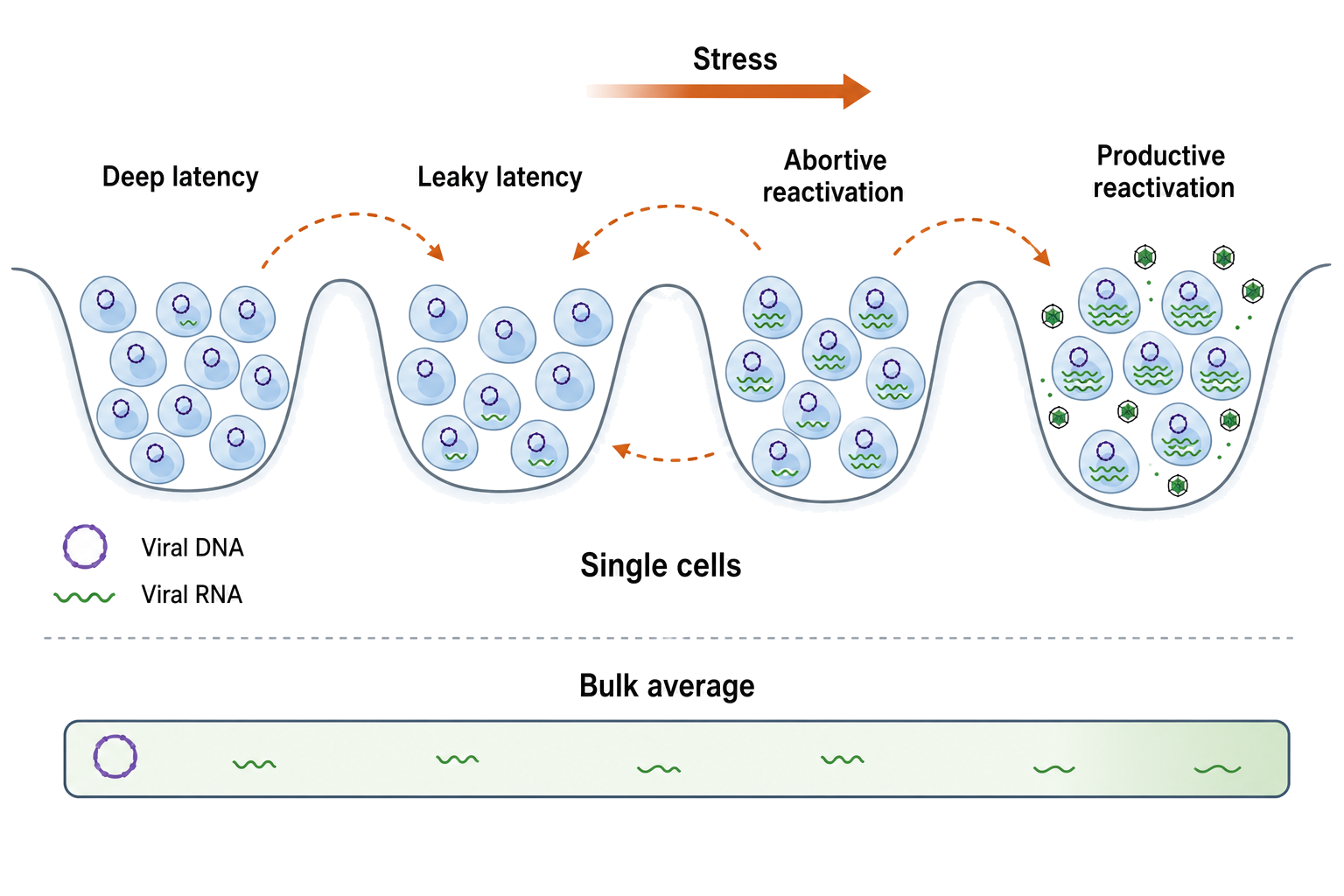
Figure 112.5. Latency and reactivation as a heterogeneous state landscape. Latently infected cells occupy reservoir- and cell-state-dependent positions; stress can produce failed, partial, or productive transitions, and bulk RNA collapses these distributions.
Figure 112.5 depicts latency as a landscape with stable, leaky, abortively reactivating, and productively reactivating states. The figure emphasizes that state frequency and per-cell expression are different quantities.
Causal latency-RNA experiments must preserve reservoir biology
A deletion of a latency locus may remove promoters, microRNA hairpins, antisense overlap, chromatin boundaries, or coding potential simultaneously. Better designs compare precise mutations that disrupt one processing event, restore the wild-type sequence in cis, and measure establishment, maintenance, reactivation, and host-cell survival separately. A phenotype in a transformed line should be tested in a reservoir-relevant primary cell, organoid, or animal model when possible.
Latency is also shaped by adaptive immunity. T cells can suppress reactivation or eliminate cells expressing lytic antigens. A viral RNA that reduces antigen expression may appear to stabilize latency cell-autonomously but operate in vivo chiefly by lowering immune recognition. Chapter 111 provides the broader host-pathogen context; this chapter retains ownership of how DNA-virus transcript states create or limit that recognition.
112.6. RNA-mediated innate and adaptive immune evasion across representative virus families
DNA-virus transcription generates immunostimulatory RNA even without an RNA genome
Oppositely oriented transcription, readthrough, structured noncoding RNAs, repetitive sequences, and convergent transcripts can generate double-stranded or otherwise unusual RNA during DNA-virus infection. PKR can bind double-stranded RNA and phosphorylate eIF2alpha, suppressing translation. OAS proteins can activate RNase L, and RIG-I-like receptors can respond to particular RNA ends or duplex structures. Endosomal Toll-like receptors can encounter viral RNAs after uptake or degradation. Chapter 108 owns these sensor mechanisms; the present question is how DNA-virus transcript programs create and antagonize their ligands.
Adenovirus VA RNA I binds PKR yet prevents productive kinase activation under infection-relevant conditions, preserving viral translation. The RNA’s three-dimensional organization matters: binding alone is not enough, because a structure-disrupting mutation can retain affinity while losing inhibition. VA-derived small RNAs can also load into Argonaute and perturb small-RNA pathways. The same transcript therefore intersects innate sensing, translation, and RNA silencing.
EBV and other herpesviruses encode microRNAs that reduce viral lytic-switch expression, cytokine production, apoptosis, antigen processing, or ligands recognized by cytotoxic lymphocytes. This can lower adaptive immune visibility indirectly by reducing antigen abundance and directly by changing host recognition pathways. EBERs and other structured RNAs can both stimulate and modulate innate pathways depending on localization and experimental context. Contradictory results are not always mutually exclusive; an abundant RNA may be sequestered in one phase and released or relocalized in another.
KSHV and HSV host-shutoff nucleases reduce many immune-response mRNAs before their proteins accumulate. This is RNA-mediated evasion through a protein enzyme acting on RNA, distinct from an RNA molecule serving as antagonist. Poxviruses combine decapping and transcript turnover with protein antagonists of PKR and other pathways. Papillomaviruses minimize inflammatory exposure through differentiation-restricted late gene expression and post-transcriptional regulation; they do not simply reproduce the abundant ncRNA strategies of adenovirus or herpesvirus.
Adaptive evasion often emerges from transcript economy
Latency restricts the number and abundance of translated viral products, reducing peptide presentation. Alternative splicing can change which epitopes are encoded, and premature polyadenylation can prevent expression of downstream antigens. Viral microRNAs can suppress antigen-presentation machinery or immune ligands without producing an antigenic protein themselves. Yet a noncoding RNA is not immunologically invisible: structured RNA can activate sensors, and microRNA precursors can create distinctive RNPs.
Immune-evasion claims require an evidence chain. First, identify the viral RNA or processing event at endogenous abundance. Second, show a defined molecular target. Third, demonstrate a pathway output such as PKR activity, interferon production, antigen presentation, or lymphocyte recognition. Fourth, use a precise viral mutant and sequence-matched rescue. Fifth, test replication or persistence in a system where the relevant immune component is present. A growth advantage in an immune-deficient cell line supports viral fitness but not immune evasion.
Box 112.2. Antagonism, Avoidance, and Tolerance Are Different Immune Strategies
Render-ready content:
Direct antagonism inhibits a sensor or response effector, as a structured RNA can inhibit productive PKR activation. Avoidance prevents an immune ligand or antigen from being produced or exposed, as restricted latent transcription can reduce peptide presentation. Tolerance allows a response but limits its harm to persistence or replication. Host shutoff can contribute to antagonism by removing immune mRNAs and to avoidance by reducing antigen or cytokine synthesis. A study should name the measured route rather than using “immune evasion” as a mechanism by itself.
Box 112.2 distinguishes immune antagonism, immune avoidance, and immune tolerance. This prevents every reduction in interferon-stimulated genes from being labeled direct sensor inhibition.
Family-specific oncology and immunity chapters carry deeper disease ownership. The comparative lesson here is that DNA viruses reduce immune visibility by controlling RNA identity, abundance, localization, translation, and decay, but the dominant layer differs by virus and cell state.
112.7. Oncogenesis, persistence, biomarkers, antiviral targets, vectors, and therapeutic applications
Transcript programs connect persistence to disease without acting alone
Persistent high-risk HPV infection can progress toward cancer when viral oncogene expression is sustained and normal differentiation-linked regulation is disrupted. Viral integration can separate E6/E7 expression from episomal controls, alter transcript structure, create virus-host fusion RNAs, or stabilize oncogene mRNAs. These events are important biomarkers and mechanisms, but integration is not required for every lesion and a detected fusion transcript does not by itself prove clonal driver activity.
EBV- and KSHV-associated malignancies express cell-type- and tumor-specific combinations of latent proteins, microRNAs, abundant noncoding RNAs, and occasional lytic transcripts. Viral RNAs can support survival, proliferation, immune evasion, and the tumor microenvironment. They operate with host mutations, epigenetic state, inflammation, and immune competence rather than as isolated oncogenic switches. Viral RNA abundance in a tumor must be assigned to malignant cells, infiltrating infected cells, or extracellular material before mechanistic interpretation.
Viral RNAs can serve as biomarkers because they may be abundant, stable, or infection-specific. EBER in situ hybridization is widely used to localize EBV-associated cells in tissue. HPV transcript patterns and viral-host junctions can inform active oncogene expression. Circulating viral microRNAs or cell-free transcripts are attractive, but pre-analytical stability, normalization, tissue origin, and disease specificity require careful validation. Detection is strongest when paired with anatomical localization or orthogonal viral DNA and protein evidence.
RNA processing and stability create antiviral targets
An antiviral can target a viral RNA sequence, a required RNA structure, a virus-specific processing event, a viral RNA-binding protein, or a host factor on which the virus is unusually dependent. Antisense oligonucleotides and small interfering RNAs can reduce selected viral transcripts, while small molecules can perturb structured ncRNAs or RNA-protein interfaces. Host-targeted processing inhibitors may have a higher resistance barrier but also narrower therapeutic windows. A target should be conserved, accessible in the infected compartment, required in the relevant disease phase, and distinguishable from essential host RNA metabolism.
Latency complicates target choice. Drugs that inhibit DNA replication do not remove latent episomes. “Shock and kill” seeks to induce antigenic lytic expression and eliminate infected cells; “block and lock” seeks deeper durable silencing; direct RNA targeting could suppress a maintenance transcript or sensitize a latent cell. Each strategy risks tissue-specific toxicity, incomplete reservoir access, and selection of escape states. Transcript biomarkers can be used as pharmacodynamic readouts only if they reflect the intended reservoir rather than transient lytic cells.
Vector transcript design inherits viral RNA biology
Adenovirus, adeno-associated virus, herpesvirus, papillomavirus-like particles, and poxvirus platforms are used for gene delivery, vaccination, or oncolytic therapy. Removing replication genes does not remove every viral transcript effect. Residual promoters, cryptic splice sites, polyadenylation signals, readthrough, antisense transcription, VA RNA expression, and vector-host junctions can alter potency or inflammation. Transgene codons alone do not determine expression; promoter choice, introns, untranslated regions, termination, vector genome structure, and cell type jointly define the RNA product.
Oncolytic herpesviruses and poxviruses deliberately retain regulated replication. Deleting a host-shutoff or immune-evasion factor can improve immune activation but reduce intratumoral spread or manufacturing yield. Conversely, preserving strong shutoff can suppress antitumor antigen presentation. Rational vector design therefore maps the intended transcript program in producer cells and target tissues, not only the DNA construct.
Table 112.3. Transcript-level requirements for applications. The DNA construct is not the final molecular product; transcript identity must be measured.
| Application | Desired RNA property | Failure mode | Minimum characterization |
|---|---|---|---|
| Tissue biomarker | State-specific, localized, stable signal | Signal from bystander or ambient viral RNA | Isoform-specific assay, tissue localization, DNA/protein orthogonal test |
| Latency-targeting therapy | Reservoir-accessible essential transcript | Rare lytic cells dominate pharmacodynamic readout | Single-cell state assay, reservoir model, sequence-matched rescue |
| Antisense antiviral | Conserved accessible RNA sequence or structure | RNP occlusion, escape mutation, delivery failure | Target engagement, resistant-site control, tissue delivery, viral phenotype |
| Replication-defective vector | Intended transgene RNA with minimal residual viral output | Cryptic splicing, readthrough, VA RNA or other backbone transcript | Long/short-read map, end mapping, residual viral RNA assay |
| Oncolytic vector | Controlled tumor-selective viral program | Excess shutoff reduces antigen presentation or spread | Tumor/normal transcript comparison, immune-competent assay, manufacturing profile |
Table 112.3 links applications to transcript-level failure modes and required assays. Regulatory characterization should include transcript identity, unintended splicing, readthrough, residual viral RNA, replication competence, biodistribution, innate activation, and batch consistency where relevant. Clinical efficacy and safety ownership remains with the therapeutic and regulatory chapters; this section defines the RNA mechanisms they must measure.
112.8. Short- and long-read sequencing, single-cell and spatial methods, interaction assays, and causal tests
No single assay captures viral transcript identity, abundance, and function
Short-read RNA sequencing provides depth, quantitative range, and splice-junction detection. Ribosomal depletion captures polyadenylated and nonpolyadenylated RNAs but includes abundant precursors and degradation intermediates. Poly(A) selection enriches conventional mRNAs and PAN-like transcripts but misses EBERs, VA RNAs, many small RNAs, and incompletely processed species. Small-RNA sequencing adds microRNAs and derived fragments, yet adapter ligation and end chemistry create severe representation bias. Library design is part of the biological claim.
Long-read cDNA or direct RNA sequencing can assign starts, splice chains, and ends to single molecules. This is especially valuable for herpesvirus and adenovirus overlapping transcriptomes. However, reverse transcriptase can stop before a true 5-prime end, nanopore reads can be error-prone around homopolymers, and direct RNA protocols often sequence from the poly(A) tail and underrepresent nonpolyadenylated molecules. Lower depth makes rare isoforms vulnerable to stochastic detection. A mature atlas uses long reads for connectivity and short reads or targeted assays for abundance and validation.
End-focused methods map initiation and cleavage/polyadenylation. Nascent-RNA labeling separates transcription from stability. Metabolic pulse-chase estimates synthesis and decay but can perturb stressed or infected cells. Ribosome profiling measures protected fragments and reading frame, while proteomics tests product accumulation. RNA fluorescence in situ hybridization localizes transcripts and counts individual molecules, provided probes distinguish overlapping viral RNAs. DNA FISH or genome labeling paired with RNA FISH links transcription to viral genome copies and replication compartments.
Single-cell and spatial methods expose state mixtures
Single-cell RNA sequencing distinguishes infected from bystander cells and can resolve latent, early, late, or abortive states. Standard 3-prime capture often assigns viral reads to shared polyadenylation regions and misses nonpolyadenylated RNAs. Ambient viral RNA creates false-positive cells, while low capture creates false negatives. Viral load, host cell type, cell cycle, and dissociation stress must be modeled together. Targeted enrichment, paired viral DNA detection, or imaging can improve classification.
Spatial transcriptomics preserves tissue architecture and can link viral RNA to epithelial differentiation, tumor niches, neuronal ganglia, or local immune cells. Spot-based assays mix cells, and probe-based assays measure only selected transcripts. Spatial colocalization is not molecular interaction. In HPV lesions, for example, late RNA enrichment in differentiated layers is biologically meaningful, whereas a mixed bulk sample can misattribute it to tumor cells.
Multiplexed single-cell imaging offers a complementary route. Simultaneous viral DNA, viral mRNA, host RNA, and protein measurements can order heterogeneous infection progression and expose neighboring-cell responses. The tradeoff is limited target number and dependence on probe specificity. Figure 112.6 shows how bulk, long-read, single-cell, and spatial views answer different questions.
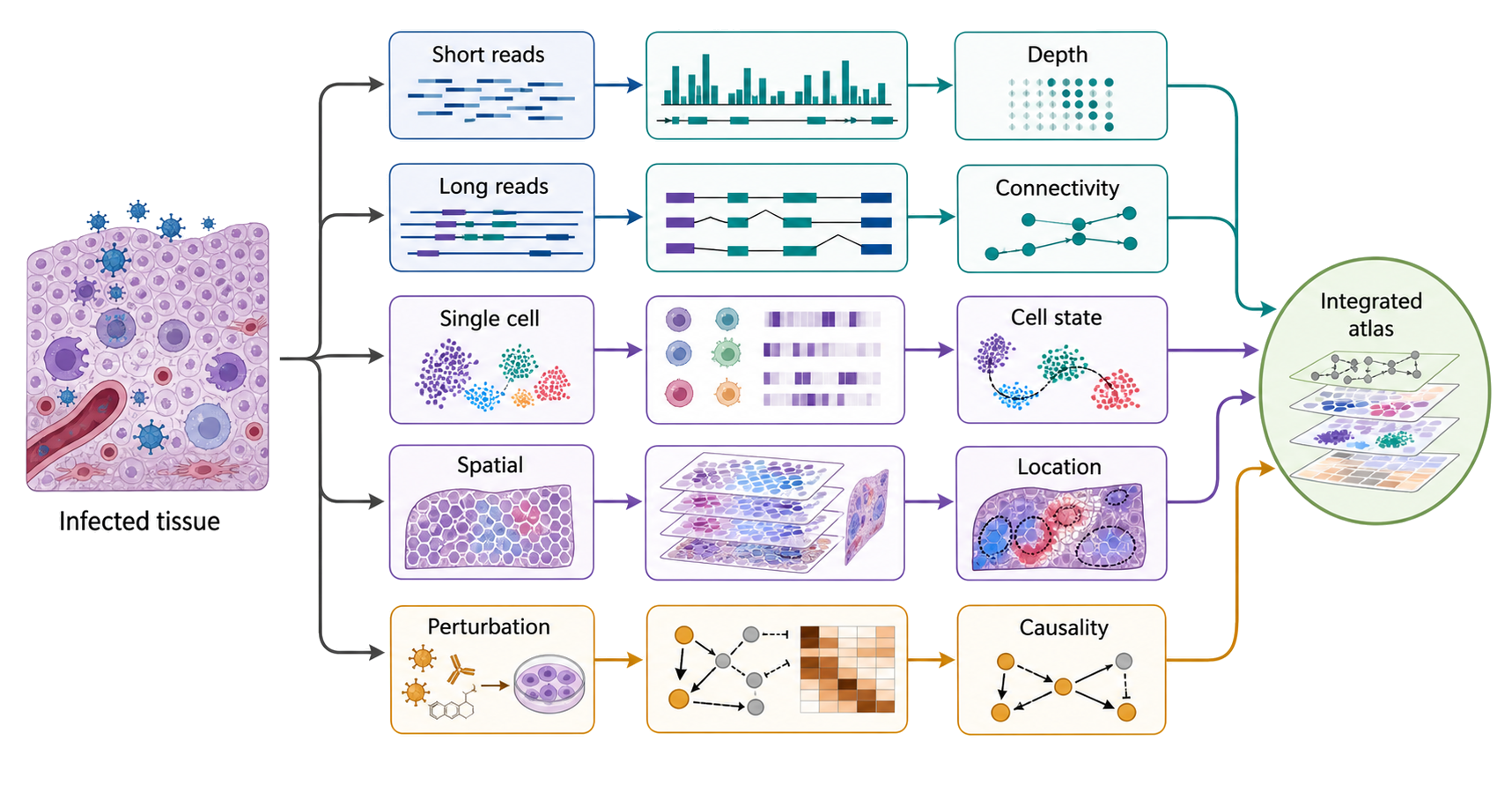
Figure 112.6. Complementary measurement views of a DNA-virus transcriptome. The same infected tissue yields different projections under short-read, long-read, single-cell, spatial, and perturbation assays; integration is required for a causal transcript atlas.
Interaction assays require causal follow-through
Crosslinking and immunoprecipitation identifies RNAs near a selected protein. RNA antisense purification or affinity capture identifies proteins, RNAs, or DNA associated with a chosen viral RNA. Proximity ligation and structure-probing assays can reveal RNA-RNA contacts or local flexibility. Crosslink chemistry, transcript abundance, compartment, and nuclease digestion determine what is recovered. A high-abundance viral RNA can dominate an interactome through mass action.
The evidentiary ladder is association, target engagement, molecular consequence, phenotype, and rescue. For a viral microRNA, Argonaute binding and target-site mutation support engagement; restored target protein and altered infection phenotype support consequence. For PAN RNA, chromatin association plus factor recruitment should be separated from effects of simply transcribing the locus. For a shutoff nuclease, mapped cleavage and catalytic dependence precede claims about immune evasion.
Causal transcript tests should preserve overlapping genome information. CRISPR deletion can remove DNA regulatory elements; antisense oligonucleotides can trigger RNase H and alter neighboring RNAs; hairpin mutation can change protein coding; promoter repression changes both RNA product and transcription through the locus. Use multiple perturbations with different failure modes, quantify all local transcripts, and rescue in cis when feasible. The goal is not merely to make the RNA disappear, but to identify which molecular property causes the phenotype.
Recent Consensus
DNA-virus gene expression is regulated at RNA processing and RNA fate as extensively as at promoter activation. Nuclear DNA viruses exploit host polymerases and processing machinery through family-specific viral factors and cis-elements; cytoplasmic poxviruses encode a distinct but functionally analogous transcription and mRNA-maturation system. Temporal classes are generated by coupled changes in transcription, processing, stability, export, and translation.
Viral noncoding RNAs are established components of DNA-virus biology, but their mechanisms require molecule-specific evidence. Herpesvirus microRNAs, adenovirus VA RNAs, EBV EBERs, KSHV PAN RNA, HSV LAT-region products, and viral circular RNAs are not interchangeable examples of one ncRNA class. Abundance, binding, or evolutionary conservation supports prioritization, not causality.
Host shutoff is selective and multistage. Viral nucleases, decapping enzymes, processing inhibitors, export blockers, and translation regulators reshape both host and viral expression. Global RNA loss makes ordinary relative normalization unreliable. Latency is also heterogeneous rather than absolutely silent, and reactivation can be abortive or partial at single-cell resolution.
Transcriptome annotation is most reliable when short-read depth, long-read connectivity, end mapping, imaging, and perturbation are combined. Family and cell-state boundaries must remain explicit. An observation in HSV-1 lytic fibroblasts, EBV-transformed B cells, HPV-positive tumors, or vaccinia-infected cytoplasm does not become a pan-DNA-virus mechanism by analogy alone.
Open Questions, Controversies, Deprecated Models, and Common Misconceptions
Open questions:
- Which low-abundance and transient viral isoforms are regulated functional molecules rather than tolerated processing noise?
- How often do viral transcription compartments directly organize co-transcriptional RNA processing, and which apparent effects arise indirectly from high local RNA concentration?
- What molecular features let selected viral and host transcripts escape vhs-, SOX-, or decapping-linked shutoff in each infection stage?
- How do latent cells move among deep latency, leaky expression, abortive reactivation, and productive reactivation in intact human tissues?
- Which viral circular RNAs and small open reading frames have reproducible functions at endogenous abundance?
- Can viral ncRNA or processing dependencies be targeted with sufficient cell-type selectivity to eliminate reservoirs or tumors without intolerable host-RNA toxicity?
Controversies:
- EBERs, LAT-region products, PAN RNA, and other abundant viral ncRNAs have multiple proposed mechanisms whose relative importance varies with model, perturbation, and infection state.
- Detection of broad lytic transcription in nominal latency can indicate genuine dynamic latency, rare reactivating cells, culture adaptation, postmortem change, ambient RNA, or incomplete cell classification.
- Many viral-host RNA interactions are reproducible associations, but only a subset have been connected to target engagement and viral fitness by precise rescue experiments.
Deprecated or weakened claims:
- The strictly binary model in which every infected cell is either transcriptionally silent or fully lytic is weakened by single-cell and sensitive time-resolved studies.
- The view that host shutoff is indiscriminate destruction of host RNA while every viral RNA is spared is inconsistent with selective escape and regulated turnover of viral transcripts.
- The assumption that a complete viral transcript can be reconstructed from short-read coverage alone is untenable for densely overlapping DNA-virus genomes.
Common misconceptions:
- “DNA viruses do not have important RNA biology because RNA is not their genome.” DNA-virus replication depends on complex coding and noncoding transcript programs, RNA processing, localization, translation, decay, and RNA-mediated immune interactions.
- “All DNA-virus mRNAs are made and processed by the host nucleus.” Poxviruses replicate in cytoplasmic factories and encode much of their own transcription, capping, methylation, and polyadenylation machinery.
- “Immediate early, early, and late mean the same mechanism in every family.” These are operational temporal classes whose promoter logic and dependency on DNA replication differ among herpesviruses, adenoviruses, papillomaviruses, polyomaviruses, and poxviruses.
- “A viral RNA that binds PKR or Argonaute is an immune antagonist.” Binding establishes association; endogenous pathway output, precise perturbation, rescue, and infection phenotype are required to establish antagonism.
- “A highly abundant viral noncoding RNA must be important for the phenotype under study.” Abundance can reflect promoter strength and unusual stability; function must be demonstrated in the relevant cell state.
- “Latency is complete absence of viral transcription.” Latency is a restricted, heterogeneous program that can include stable ncRNAs, microRNAs, maintenance transcripts, and sporadic or abortive lytic expression.
- “One viral read proves that a single cell is infected.” Ambient RNA, barcode swapping, and mapping ambiguity can produce false positives, while sparse capture can produce false negatives.
- “Long-read sequencing makes transcript validation unnecessary.” Long reads improve isoform connectivity but retain end truncation, error, depth, and library-selection biases.