Chapter 126. Small and Stable RNA Profiling: Short, Structured, Modified, and Abundant RNAs
Scope Note
This chapter explains how experimental and computational choices determine which short, highly structured, chemically modified, and very abundant RNAs enter a sequencing library and what their read counts mean. It owns profiling chemistry and primary processing for microRNAs (miRNAs), small interfering RNAs (siRNAs), PIWI-interacting RNAs (piRNAs), transfer RNAs (tRNAs), tRNA-derived fragments, ribosomal RNAs (rRNAs), small nucleolar RNAs (snoRNAs), small nuclear RNAs (snRNAs), and related stable RNAs. Standard bulk RNA sequencing is treated in Chapter 125, modification identity and stoichiometry in Chapter 132, dedicated RNA-end, tail, and cleavage assays in Chapter 127, and reusable transcript assembly and isoform annotation in Chapter 141. The central rule is that a read count measures molecules that survived a protocol-defined eligibility filter; it is not a direct census of every RNA in the sample.
Executive Summary
Short and stable RNAs violate several assumptions built into ordinary messenger-RNA sequencing. Many mature small RNAs lack poly(A) tails, so poly(A) selection discards them. Size cutoffs designed to remove adapter dimers or retain long inserts can remove the biological molecules of interest. Stable RNAs fold tightly, bind proteins, and carry modifications that inhibit adapter ligases or reverse transcriptases. Abundant rRNAs and tRNAs can consume most molecules in a library even when the biological question concerns a rare miRNA or snoRNA. A conventional RNA-seq library can therefore report that an RNA is absent when the protocol made it ineligible.
Eligibility begins with physical state. Extraction must preserve the intended size range and release RNP-bound molecules. A library may then require a 5-prime monophosphate, a 3-prime hydroxyl, a particular length, an accessible end, successful reverse-transcriptase traversal, and a uniquely alignable sequence. Each requirement defines a molecular subset. End repair broadens eligibility but erases information about native end chemistry. Demethylation and more processive reverse transcriptases improve recovery of some tRNAs, but neither makes all sequences equally detectable.
Adapter ligation is not a neutral tagging step. RNA ligases recognize local RNA-adapter structures, and different insert sequences can differ greatly in ligation yield. Randomized bases near ligation junctions diversify local structures and can reduce systematic bias, but their performance depends on protocol and analysis. Unique molecular identifiers (UMIs) can diagnose or collapse amplification duplicates only if their complexity, synthesis quality, and placement are adequate; short or biased UMIs can themselves distort small-RNA counts.
For miRNAs, siRNAs, and piRNAs, read length and end precision carry biological information. A one-nucleotide shift can change a miRNA seed sequence or distinguish a cleavage product from a templated mature end. Yet the same apparent isomiR can arise from RNA processing, terminal addition, sequencing error, ligation preference, reverse-transcription error, or alignment policy. Pathway-specific length, strand, end, and protein-association patterns strengthen interpretation, but abundance alone does not prove biogenesis or function.
tRNAs are an extreme recovery problem because compact structure and dense modification create reverse-transcription stops and mismatches. Mature tRNA genes also occur in near-identical families. Demethylase-assisted methods, thermostable group II intron reverse transcriptases, engineered reverse transcriptases, end-specific ligation, fragmented templates, and ordered relay approaches solve different parts of the problem. They produce different observables: full mature molecules, fragments, modification-sensitive stops, charging state, or relative abundance. A method that improves full-length tRNA recovery need not quantify every tRNA fragment, and a treatment that removes a modification-dependent block changes the evidence available about that modification.
Stable-RNA fragments require skepticism. A reproducible 5-prime tRNA half or rRNA fragment can be biologically generated, but a read that maps to tRNA or rRNA can also arise during extraction, freezing, nuclease exposure, alkaline hydrolysis, size selection, or library preparation. Discrete ends, condition dependence, enzyme genetics, RNP association, molecular validation, and functional perturbation distinguish regulated products from damage more effectively than read abundance alone.
Quantification requires controls that experience the relevant losses. A spike-in added after extraction cannot measure extraction recovery. A simple unmodified oligoribonucleotide does not model a heavily modified tRNA. A fixed mass of total RNA is not a fixed number of cells, and compositional normalization can make rare RNAs appear increased when an abundant class decreases. Quantitative designs therefore match standards to molecule class and workflow stage, measure recovery across concentrations, and report both absolute-like calibrated quantities and within-library compositions when possible.
Computational processing is part of the assay. Adapter trimming affects apparent ends; alignment penalties determine whether modification-associated mismatches are retained; multi-mapping rules redistribute reads among paralogs, isodecoders, and repeated rRNA loci; and annotation versions determine which molecules exist as countable features. The most defensible reports preserve end and mismatch evidence, provide family-level results when locus resolution is unsupported, and validate central claims with a method that does not share the dominant library bias.
Concept Inventory
The chapter uses small RNA operationally for RNA molecules or fragments recovered in a short-insert workflow, not as one biogenesis class. A stable RNA is an RNA class whose mature molecules are often long-lived, structured, abundant, or assembled into persistent RNPs; stability does not imply that every fragment is long-lived. Molecular eligibility is the set of chemical, structural, size, and sequence properties a molecule must have to become a countable read. Recovery efficiency is the fraction of input molecules represented in the final measurement under a stated workflow.
An isomiR is a mature miRNA sequence variant relative to a nominated reference, produced by alternative cleavage, trimming, tailing, editing, or technical processes. A tRNA isodecoder shares an anticodon with other tRNAs but differs elsewhere in sequence; an isoacceptor carries the same amino acid identity but may use a different anticodon. These are not interchangeable counting units. A multi-mapping read aligns plausibly to more than one genomic or transcript feature. A UMI is a sequence tag intended to label input molecules before amplification, but it is useful only within its collision and synthesis-error limits.
What to Know Before Reading This Chapter
RNA has polarity. A molecule’s 5-prime and 3-prime ends carry chemical groups that enzymes distinguish. RNA also folds, and the relevant substrate for ligation or reverse transcription is therefore not merely a linear string of bases. Reverse transcriptase synthesizes complementary DNA (cDNA) from an RNA template; it can stop, skip, misincorporate, or switch templates. Sequencing counts cDNAs, not original RNAs, unless a calibrated conversion model links the two.
Three running examples recur. First, a 22-nucleotide miRNA is compared between stressed and control cells. Second, a heavily modified mature tRNA and its 5-prime half are measured in the same samples. Third, a low-abundance snoRNA is quantified against an rRNA-rich background. These examples show why one universal small-RNA protocol cannot optimize end eligibility, structure traversal, dynamic range, and locus assignment simultaneously.
126.1. Why standard RNA-seq misses short, structured, modified, and abundant RNAs
Standard bulk RNA-seq is usually optimized for long transcripts, especially messenger RNAs. Poly(A) selection captures RNAs bearing sufficiently long accessible poly(A) tails. Ribosomal depletion removes abundant sequences through hybridization. Fragmentation creates inserts compatible with a long-RNA library, and cleanup steps impose lower size cutoffs. These choices are sensible for mRNA expression but exclude most mature miRNAs, many siRNAs and piRNAs, intact tRNAs, and numerous snoRNAs and snRNAs. The deeper treatment of long-RNA library construction and differential expression belongs to Chapter 125; the present issue is why the physical populations differ.
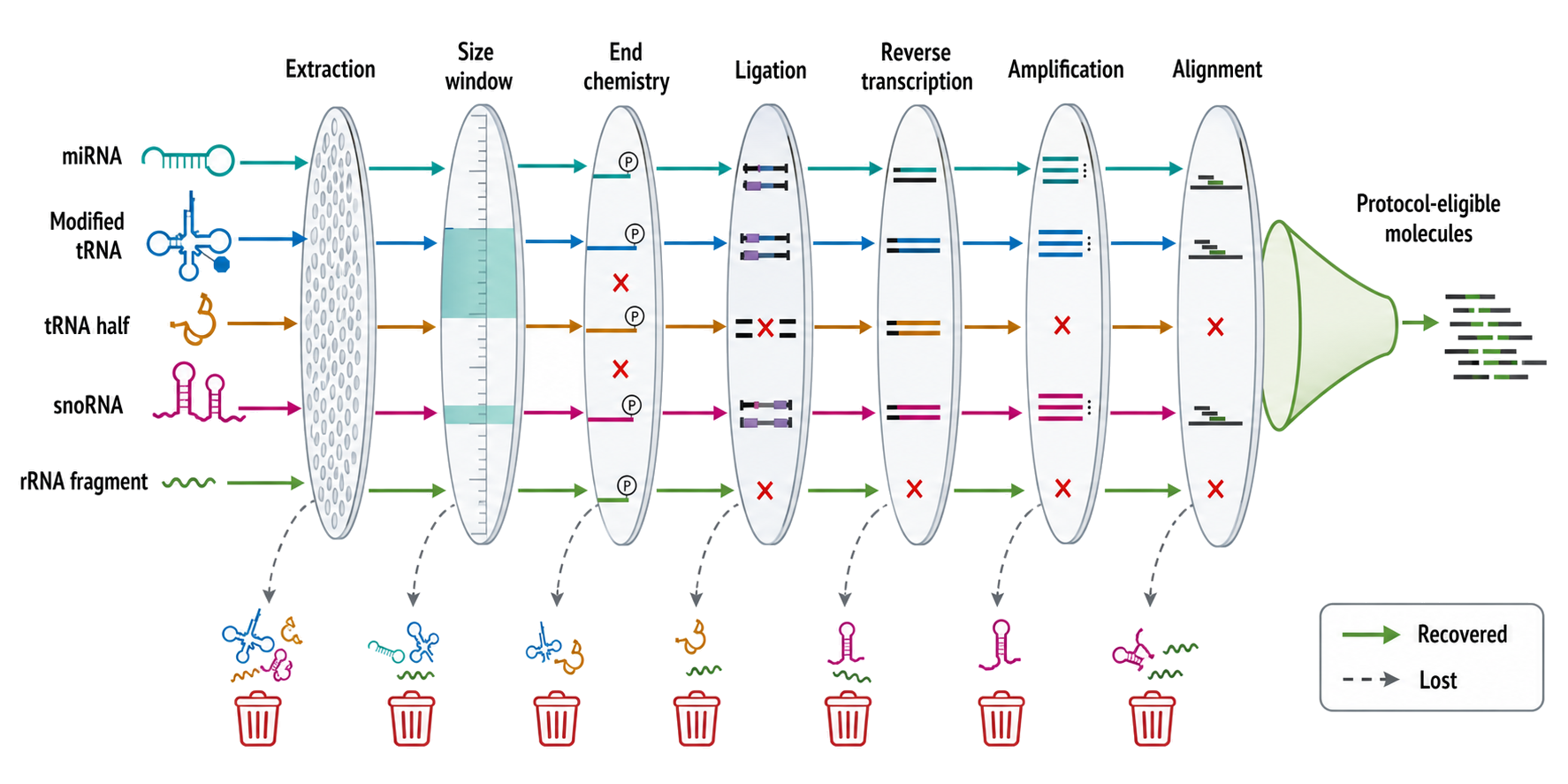
Figure 126.1. The eligibility funnel from biological RNA to countable read. “A countable read is the endpoint of sequential selection. Different RNA classes fail at different gates, so absence from the library is not equivalent to absence from the sample.”
Length creates several failure points. A 22-nucleotide miRNA can be lost during column cleanup, mistaken for free adapter, or excluded by insert-size filtering. An intact approximately 75-nucleotide tRNA may survive extraction but be removed if a protocol selects only 18-30-nucleotide molecules. Conversely, a short-insert library designed around miRNAs may exclude intact tRNAs and recover only their fragments. The phrase “small-RNA expression” is therefore incomplete unless the selected size interval and whether that interval was imposed before or after library construction are stated.
Structure changes biochemical access. Mature tRNAs form stable cloverleaf secondary structures and L-shaped tertiary structures. rRNAs and snoRNAs form compact RNPs. A ligase may poorly access a base-paired end, and reverse transcriptase may stop at a stable stem even without a covalent modification. Heating can transiently unfold RNA, but refolding occurs during enzymatic reactions; additives and temperature change both access and enzyme behavior. Thus, a structure-rich RNA standard is more informative than a flexible oligonucleotide when assessing recovery.
Modification adds a second barrier. tRNAs carry many modifications, including methylated bases that disrupt Watson-Crick decoding or block reverse transcriptase. A stopped cDNA yields a truncated product that may fail size selection or alignment. A misincorporated base may be filtered as an error or interpreted as a variant. Treatment with AlkB-family enzymes removes a subset of methyl modifications and improves traversal for affected tRNAs and fragments, as shown by demethylase-assisted tRNA methods and PANDORA-seq. However, untreated-versus-treated differences jointly reflect enzyme substrate scope, structure, reaction completeness, and downstream recovery. They do not directly provide modification stoichiometry; that ownership remains in Chapter 132.
Abundance creates a sampling problem. In total cellular RNA, rRNA is usually the dominant mass, with tRNAs and other stable RNAs also highly abundant. If those molecules are eligible, they consume ligase, reverse-transcription, PCR, and sequencing capacity. A million reads can still contain few reads for the low-abundance snoRNA running example. Depletion can improve useful depth but may cross-hybridize with related RNAs or remove biological fragments. Excluding rRNA computationally after sequencing does not recover the sequencing capacity already spent.
The relevant negative result is therefore protocol-specific: “no eligible reads were observed under this workflow,” not “the RNA is absent.” Orthogonal Northern blotting, targeted PCR after appropriate end treatment, or fluorescence in situ hybridization can test presence through different recognition mechanisms; those targeted methods are developed in Chapter 123. A failure in both sequencing and an orthogonal assay is stronger than a failure in two libraries sharing the same end and reverse-transcription requirements.
Table 126.1. Why RNA classes disappear from standard libraries. Map molecule class to physical barrier and corrective strategy.
| RNA class | Common barrier | Misleading interpretation | Useful response |
|---|---|---|---|
| miRNA or siRNA | Short insert, ligation bias | No reads means absent | Short-insert library and diverse standards |
| piRNA | Size window and terminal chemistry | Missing pathway | Broader window and treatment controls |
| Intact tRNA | Structure and modifications | Low abundance | Demethylation or processive RT with standards |
| Stable-RNA fragment | End chemistry and artifact | Regulated cleavage | End-aware profiling plus handling and size controls |
| snoRNA or snRNA | No poly(A), RNP structure | Not expressed | Total/class-aware profiling and orthogonal validation |
| rRNA-derived RNA | Competition or depletion | Biological enrichment | Undepleted/depleted comparison with calibrants |
Evidence for these biases comes from synthetic equimolar mixtures, cross-protocol comparisons, and modification-aware methods. Multicenter miRNA benchmarks found large protocol-dependent quantitative differences even when laboratories analyzed related reference inputs. tRNA methods recover markedly different populations after demethylation, fragmentation, or reverse-transcriptase changes. These comparisons establish that library composition is an interaction between molecules and protocol, not merely a noisy version of true abundance.
126.2. End chemistry, size selection, adapter ligation, reverse transcription, and molecule recovery
Most ligation-based small-RNA libraries require specific native ends: commonly a 3-prime hydroxyl for 3-prime-adapter ligation and a 5-prime monophosphate for 5-prime-adapter ligation. Canonical Dicer products often satisfy these requirements, which makes the workflow effective for many miRNAs and siRNAs. Other products may carry a 5-prime hydroxyl, 5-prime triphosphate, 2-prime,3-prime cyclic phosphate, 3-prime phosphate, aminoacylated 3-prime end, cap, or protein-linked end. Such molecules are invisible until an appropriate phosphatase, kinase, decapping enzyme, cyclic-phosphodiesterase, deacylation condition, or other repair is applied.
End repair is both a rescue and a transformation. Converting multiple native end states to a common ligatable state broadens the library, but the final reads no longer reveal which chemical group was present in vivo. Parallel untreated and selectively treated aliquots can retain some contrast, provided reaction efficiencies are measured. Detailed ownership of assays designed specifically to map ends, tails, and cleavage chemistry belongs to Chapter 127; here, end treatment is considered as an eligibility gate for profiling a molecule class.
Size selection can occur on total RNA, ligated intermediates, amplified libraries, or combinations of these. Early gel selection provides a clear insert window but can lose material, favor sharp boundaries, and separate molecules by conformation as well as length. Late library selection retains more input classes but must distinguish valid short inserts from adapter dimers. A broad window is useful for comparing the 22-nucleotide miRNA, a 35-nucleotide tRNA fragment, and intact tRNAs, yet one library chemistry may still recover those lengths unequally. Recovery should be measured across the entire interval rather than inferred from one standard.
Sequential adapter ligation creates two recognition events. The yield for an insert can depend on the base and structure at each end, the adapter sequence, polyethylene glycol concentration, enzyme, reaction order, and competing molecules. Fuchs and colleagues showed that adapter and RNA structure help determine ligation bias; changing only adapter context can reorder apparent abundance. This explains why an equimolar mixture need not yield equal counts and why a stress-induced change may be exaggerated if stress also changes end or structural states.
Randomized adapter bases near the ligation junction create a population of adapter structures. The goal is not to make every ligation equally efficient in a chemical sense, but to reduce systematic dependence on any one adapter-insert pairing. Randomized adapters improved recovery of miRNAs that standard preparations missed in a comparative protocol study. They require explicit handling during trimming, and random bases must not be mistaken for biological sequence or UMIs. Their diversity and synthesis quality should be checked rather than assumed.
Circularization and template-switching strategies alter the bias landscape instead of eliminating bias. A circularization protocol may reduce one ligation event but introduce circularization and cleavage preferences. Template switching can accommodate diverse ends after an initiating event, yet depends on reverse-transcriptase behavior and terminal nucleotide addition. Ordered two-template relay and related strategies can capture structured RNAs through alternative cDNA construction, but their measured population still reflects priming, traversal, relay, and cleanup. Protocol selection should be based on standards resembling the intended analytes.
Reverse transcription is another sequence- and structure-dependent conversion. A processive, thermostable reverse transcriptase can traverse stable stems more effectively than a conventional enzyme. Group II intron reverse transcriptases and engineered enzymes often tolerate modifications and structure better, but mismatch spectra and template switching differ. Demethylation removes selected blocks before reverse transcription. Fragmenting an intact tRNA reduces structure and can move modifications away from a single traversal path, but it sacrifices molecule continuity. There is no method-independent correction factor that converts all protocols to the same tRNA census.
UMIs should be attached before the amplification whose duplicates they are intended to diagnose. If a UMI has (k) random positions, its nominal space is (4^k), but nonuniform synthesis, sequencing error, and molecule abundance reduce effective complexity. Collisions become likely for highly abundant miRNAs or rRNAs. Saunders and colleagues showed that insufficient UMI complexity can distort small-RNA sequencing. UMI collapsing must therefore consider UMI sequence quality, adjacency rules, insert identity, and expected occupancy; “deduplicated” is not synonymous with “unbiased.”
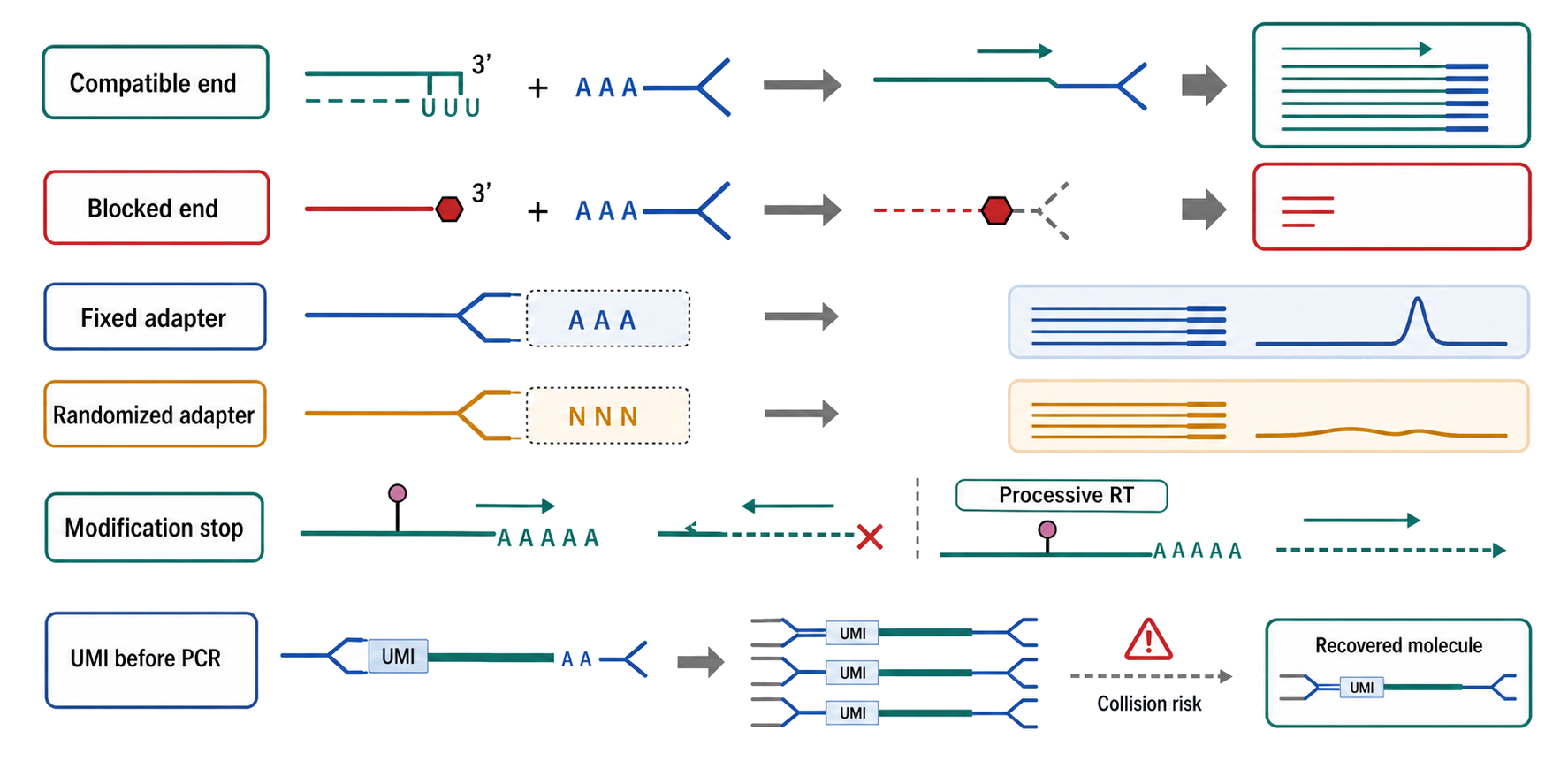
Figure 126.2. Adapter, end, and reverse-transcription bias mechanisms. “End repair, randomized adapters, processive reverse transcription, and UMIs act at different stages and therefore correct different failure modes.”
A recovery experiment mixes standards before extraction, after extraction, or just before ligation. Those placements answer different questions. A pre-extraction standard measures extraction plus downstream recovery if it resembles endogenous RNP-free RNA sufficiently. A post-extraction standard isolates library conversion. A post-ligation standard mainly monitors amplification and sequencing. The most informative design uses several standards spanning length, structure, end chemistry, modification, and abundance.
126.3. miRNA, siRNA, piRNA, isomiR, and small-RNA library strategies and biases
Canonical animal miRNAs are often approximately 22 nucleotides long and carry a 5-prime monophosphate and 3-prime hydroxyl after RNase III processing. These features fit conventional small-RNA adapters, but individual miRNAs still differ strongly in ligation efficiency. In the running example, a twofold count increase after stress could reflect more mature miRNA, better recovery of one isomiR, loss of competing abundant RNAs, or a global composition shift. External standards and a protocol comparison constrain these alternatives.
An isomiR is defined relative to a nominated mature sequence. A 5-prime shift can change the seed region used in target recognition; a 3-prime shift can reflect alternative cleavage, exonucleolytic trimming, or nontemplated tailing. The computational pipeline must compare the read to precursor and genome sequences before calling a nontemplated addition. Sequencing and reverse-transcription errors, especially at modified bases, must be separated from genuine variation. Gómez-Martín and colleagues demonstrated that inferred isomiR composition can change when library methods are reassessed, so variant proportions are particularly sensitive to protocol.
Small interfering RNAs often appear as duplex-derived populations with pathway-specific lengths and 5-prime preferences. In plants and many invertebrates, viral or endogenous siRNA profiles may show strand and positional patterns. Yet a pile of short reads across a transcript does not prove Dicer-dependent production. Degradation fragments can occupy the same size interval. Evidence improves with genetic dependence on the relevant nuclease, Argonaute association, reproducible end precision, characteristic duplex offsets, and loss or rescue under pathway perturbation.
PIWI-interacting RNAs are typically longer than miRNAs and siRNAs and can show 5-prime uridine enrichment, phased production, or ping-pong signatures depending on organism and pathway. These patterns are statistical evidence, not universal definitions. Oxidation-based enrichment exploits the resistance of some 2-prime-O-methylated 3-prime ends, but treatment efficiency and off-target survival require controls. A library window designed only for 18-24-nucleotide inserts can remove many piRNAs before sequencing.
Size selection can manufacture pathway boundaries. Sharp selection at 30 nucleotides can make a continuous degradation population resemble separate classes, while too broad a selection increases adapter-dimer and abundant-fragment burden. Reports should show the complete insert-length distribution before class assignment. Length should be considered with end chemistry, genomic origin, strand, sequence motifs, and protein association.
Circulating and extracellular small RNAs present additional matrix effects. Low input magnifies adsorption loss and contamination. Hemolysis can release abundant erythrocyte miRNAs; platelets and residual cells change plasma profiles. Different extraction kits and carriers recover distinct sequence classes. The multicenter and circulating-miRNA benchmarks found substantial method effects. A candidate biomarker should therefore be reproduced with extraction blanks, hemolysis indicators, process controls, and an orthogonal targeted assay rather than selected solely from one library protocol.
Table 126.2. Small regulatory RNA evidence and failure modes. Separate observed sequence pattern from pathway or function claim.
| Observation | Supported inference | Important alternative | Stronger evidence |
|---|---|---|---|
| Precise 22-nt mature miRNA | Recovered mature-like sequence | Ligation preference | Northern size plus calibrated sequencing |
| 5-prime isomiR | Shifted mature end | Trimming or analysis artifact | Precursor-aware mapping and protocol replication |
| Phased siRNA population | Pathway-consistent processing | Structured degradation | Nuclease genetics and Argonaute association |
| piRNA-like length and motif | Pathway-consistent population | Size-selected fragments | PIWI association and pathway perturbation |
| Circulating miRNA change | Matrix-associated abundance difference | Hemolysis or extraction batch | Process controls and independent targeted assay |
Primary processing should retain raw insert sequence, length, terminal additions, alignment multiplicity, and UMI evidence. Collapsing all reads immediately to a canonical miRNA count destroys information needed to distinguish alternative cleavage from tailing or artifact. At the same time, reporting hundreds of low-count variants without error thresholds overstates precision. A useful hierarchy presents family or mature-miRNA totals, well-supported 5-prime and 3-prime variants, and residual rare sequences separately.
Orthogonal validation depends on the claim. Northern blotting tests apparent size and abundance. Stem-loop or other targeted reverse-transcription PCR can sensitively confirm a nominated miRNA but has its own sequence-specific conversion. Argonaute immunoprecipitation tests RNP association, not repression. Reporter assays test a proposed target interaction but can be distorted by overexpression. A mature-miRNA abundance claim is strongest when size-resolved and sequence-resolved evidence agree under calibrated conditions.
126.4. tRNA, tRNA-fragment, and modification-aware sequencing strategies
Mature tRNAs combine nearly every difficult feature in this chapter: compact tertiary structure, modified nucleotides, related gene families, processed 5-prime and 3-prime ends, an added CCA terminus in many organisms, and a charged or uncharged amino acid state. Ordinary reverse transcription often stops before reaching the 5-prime end. Reads then accumulate at method-specific positions and cannot be interpreted as complete mature-molecule counts.
Demethylase-assisted sequencing removes selected methyl groups that block or perturb reverse transcription. ARM-seq uses AlkB-family treatment to expand recovery of modified tRNA fragments. DM-tRNA-seq combines demethylation with a thermostable group II intron reverse transcriptase to improve quantitative high-throughput tRNA sequencing. PANDORA-seq uses enzymatic treatment to reveal modification-obstructed small RNAs more broadly. In each case, the treatment-minus-control contrast demonstrates treatment-dependent recoverability. It does not establish that every new read is a newly discovered functional RNA or provide modification stoichiometry without further calibration.
Other strategies change the molecular target. YAMAT-seq ligates adapters to the conserved mature tRNA CCA end and discriminator region, enriching intact mature tRNAs with appropriate termini. Fragmentation-based methods reduce structure and distribute reverse-transcription barriers among shorter pieces, improving coverage but weakening full-molecule linkage. mim-tRNAseq uses engineered conditions and analysis to quantify tRNA abundance and modification-associated signatures at high resolution. Quantitative tRNA-seq, single-read tRNA-seq, and ordered two-template relay approaches provide different combinations of abundance, charging, modification, and fragment information. Method names should not be treated as interchangeable.
Charging introduces a chemically labile state. Aminoacyl-tRNAs carry an amino acid esterified to the terminal adenosine. Acidic extraction and handling can preserve charging, whereas alkaline or warm conditions promote deacylation. Some assays distinguish charged from uncharged ends through selective chemistry. A standard neutral total-RNA preparation may erase the state before library construction. If the claim concerns translation-ready tRNA supply, abundance alone is insufficient; charging and modification context matter, with broader biological interpretation in Chapter 66.
tRNA fragments can arise from precursor processing, mature-tRNA cleavage, turnover, or damage. A 5-prime tRNA half often ends near the anticodon loop; shorter 5-prime and 3-prime fragments have distinct proposed origins. However, cleavage during extraction can recreate structurally accessible boundaries, and modifications can make one fragment more recoverable than another. Calling a fragment requires explicit coordinates relative to precursor and mature tRNA, CCA status, end precision, and handling controls.
The running tRNA example illustrates the ambiguity. Stress produces more reads mapping to the 5-prime half and fewer full-length reads. One explanation is regulated cleavage. Another is stress-dependent modification or charging that reduces full-length reverse transcription while allowing the 5-prime fragment to be recovered. A third is ex vivo nuclease exposure in stressed samples that were harder to process. Evidence for cleavage includes immediate denaturation, matched handling times, synthetic recovery controls, Northern size validation, discrete ends, dependence on a nominated nuclease, and rescue or loss under genetic manipulation.
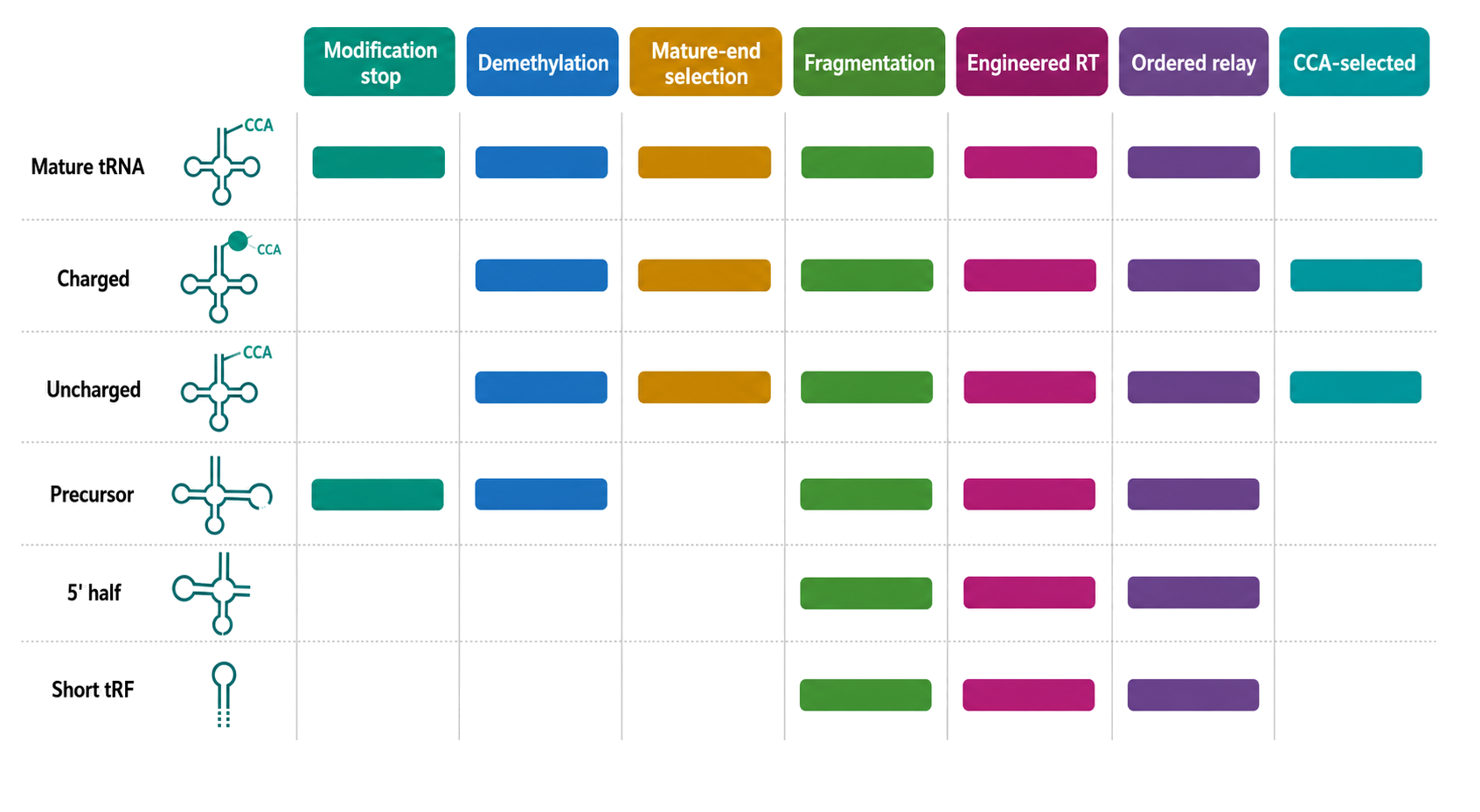
Figure 126.3. What major tRNA-seq strategy families recover. “tRNA-seq methods change different eligibility gates. Their outputs overlap but are not interchangeable measurements of one universal tRNA abundance.”
Mapping mature tRNAs is intrinsically many-to-many. Several gene copies may encode identical mature sequences; isodecoders can differ by only one or a few bases; post-transcriptional CCA is not genomically encoded in many systems; introns and leader or trailer sequences distinguish precursors from mature molecules. A composite reference should represent mature sequences, precursor-specific regions, organellar tRNAs, and decoys for similar genomic loci. Counts should be reported at the highest supported level: locus only with unique evidence, otherwise transcript sequence, isodecoder group, anticodon, or amino acid family.
Modification-associated mismatches and stops are useful but conditional. The same mismatch can reflect a modification, reverse-transcriptase error, genomic variant, editing, or misalignment to a near-identical tRNA. Altering the reverse transcriptase or pretreatment changes the signature. Modification discovery and stoichiometry require site-specific validation, standards, and ownership from Chapter 132. In this chapter, mismatch and stop patterns are quality diagnostics and possible biological signals, not self-validating modification calls.
126.5. rRNA, snoRNA, snRNA, and other abundant stable-RNA profiling
Ribosomal RNAs dominate many total-RNA preparations. For mRNA studies they are depleted; for stable-RNA profiling they can be analytes, competitors, and internal indicators of sample integrity. Intact rRNAs are long, structured, modified, and assembled with proteins. Short-insert libraries mainly recover rRNA fragments, not full rRNA abundance. A fragment profile can reflect processing intermediates, ribosome turnover, regulated cleavage, environmental nuclease exposure, or library hotspots.
Depletion reagents use complementary probes, enzymatic cleavage, or selective capture. They can remove target rRNA efficiently while cross-depleting RNAs with related sequences. Probe panels are organism- and version-specific: a human panel may perform poorly on microbial, organellar, or nonmodel rRNAs. Depletion also changes library composition, so counts from depleted and undepleted samples are not directly comparable without calibrants. If rRNA fragments are the biological target, depletion should be omitted or redesigned around regions not under study.
Small nucleolar RNAs guide rRNA modification or processing and often reside in introns or polycistronic precursors. Their mature ends, compact RNP structure, and variable terminal chemistry can impede recovery. Some snoRNA-derived fragments enter short-RNA libraries, but abundance of a fragment does not measure intact snoRNA abundance. The running low-abundance snoRNA may disappear beneath rRNA fragments in an undepleted library yet be cross-depleted by a probe in another workflow. Northern blotting or targeted end-aware PCR can test intact size independently.
Small nuclear RNAs are core spliceosomal RNP components. They can carry specialized caps, modifications, and structured ends. Standard poly(A)-selected RNA-seq underrepresents them, while total-RNA libraries vary with depletion and fragmentation. Reads from an snRNA locus may represent mature snRNA, precursor, pseudogene transcript, or related repeat. Variant snRNA studies require stringent mapping because paralogs and pseudogenes can differ by few bases. The transcript-assembly methods of Chapter 141 do not create locus resolution when the reads themselves are nonunique.
Y RNAs, vault RNAs, RNase P or MRP RNAs, 7SL RNA, telomerase RNA, bacterial small stable RNAs, and organellar RNAs add distinct end and structure constraints. In extracellular samples, fragments from Y RNAs and other abundant RNPs can dominate. Such fragments may reflect protected RNP cores rather than regulated intracellular processing. Comparing cell, biofluid, vesicle, and RNP-associated fractions requires stage-matched standards and contamination controls.
Stable-RNA fragments should be evaluated with an evidence ladder. First, the sequence must map with appropriate treatment of repeats and paralogs. Second, ends and length should be reproducible across biological replicates and handling controls. Third, abundance should respond coherently to a biological perturbation rather than processing delay. Fourth, a biogenesis factor, nuclease, or RNP association should support origin. Fifth, an orthogonal assay should confirm size or end. Functional claims require additional loss, rescue, target, and physiological evidence; profiling alone establishes a population, not its function.
Table 126.3. Stable-RNA fragment evidence ladder. Make discovery, biogenesis, and function distinct evidence levels.
| Level | Required observation | Claim supported | Claim not yet supported |
|---|---|---|---|
| Mapping | Plausible sequence origin | Read derives from a family | Unique gene origin |
| Reproducibility | Discrete length and ends across replicates | Stable recovered population | In vivo generation |
| Artifact control | Preserved under rapid, matched handling | Less likely handling artifact | Regulated biogenesis |
| Biogenesis | Nuclease or pathway dependence | Pathway-linked production | Physiological function |
| Orthogonal validation | Northern or targeted end evidence | Molecular size or boundary | Direct target mechanism |
| Functional perturbation | Loss and rescue with physiological output | Context-specific function | Universal function |
Abundant-RNA dynamic range can saturate multiple steps. Ligase or primer competition can make recovery nonlinear before PCR. PCR then amplifies already distorted molecules, and highly abundant inserts can dominate clusters. Diluting input does not necessarily restore rare species because absolute rare-molecule sampling falls. Selective depletion, blocker oligonucleotides, capture of target classes, or separate libraries may be preferable. The experimental question should determine whether rRNA is removed, measured, or used to define a denominator.
126.6. Spike-ins, normalization, copy-number range, recovery efficiency, and quantitative controls
A spike-in is an external molecule or cell population added in known relation to the sample. Its value depends on when it is added and how closely it models the analyte. A synthetic miRNA added to purified RNA measures library conversion but not lysis or extraction. A pre-extraction mixture can monitor more stages, yet naked standards may not mimic RNP release. A structured tRNA standard lacking native modifications does not reproduce reverse-transcription barriers. No single spike controls all molecule classes.
Standards should span the expected abundance range because recovery may be nonlinear. At low copy number, stochastic sampling and adsorption dominate. In the middle range, counts may track input approximately. At high abundance, ligation competition, UMI collision, PCR saturation, or sequencing allocation can compress response. A dilution series estimates the range over which fold changes are recoverable. One concentration cannot establish linearity or a limit of quantification.
Absolute copy-number inference requires a denominator. Copies per cell need an independent cell count or calibrated cell-equivalent input. Copies per mass of total RNA can change when total RNA per cell changes. Copies per volume of biofluid require controlled collection and extraction-volume accounting. Reads per million are compositional: they describe a share of eligible library molecules. If one abundant miRNA decreases, unchanged miRNAs can rise in reads per million. External scaling can expose that distinction.
Endogenous normalizers are not inherently stable. U6 snRNA, selected miRNAs, tRNAs, or rRNAs can vary with cell composition, disease, stress, extraction, and library chemistry. A reference should be selected and validated for the specific matrix and perturbation. Using a stable-RNA class as denominator can be especially misleading when the perturbation changes ribosome biogenesis, translation, or stress cleavage.
UMIs correct amplification counting only under a model. They do not correct extraction, ligation, or reverse-transcription losses that occur before tagging. For an abundant sequence, UMI collisions cause distinct molecules to share a tag; sequencing errors split one tag into several. The UMI length, base balance, attachment stage, error-correction algorithm, and saturation curve should be reported. A plateau in distinct UMIs can mean molecular saturation, limited tag space, or insufficient sequencing depth.
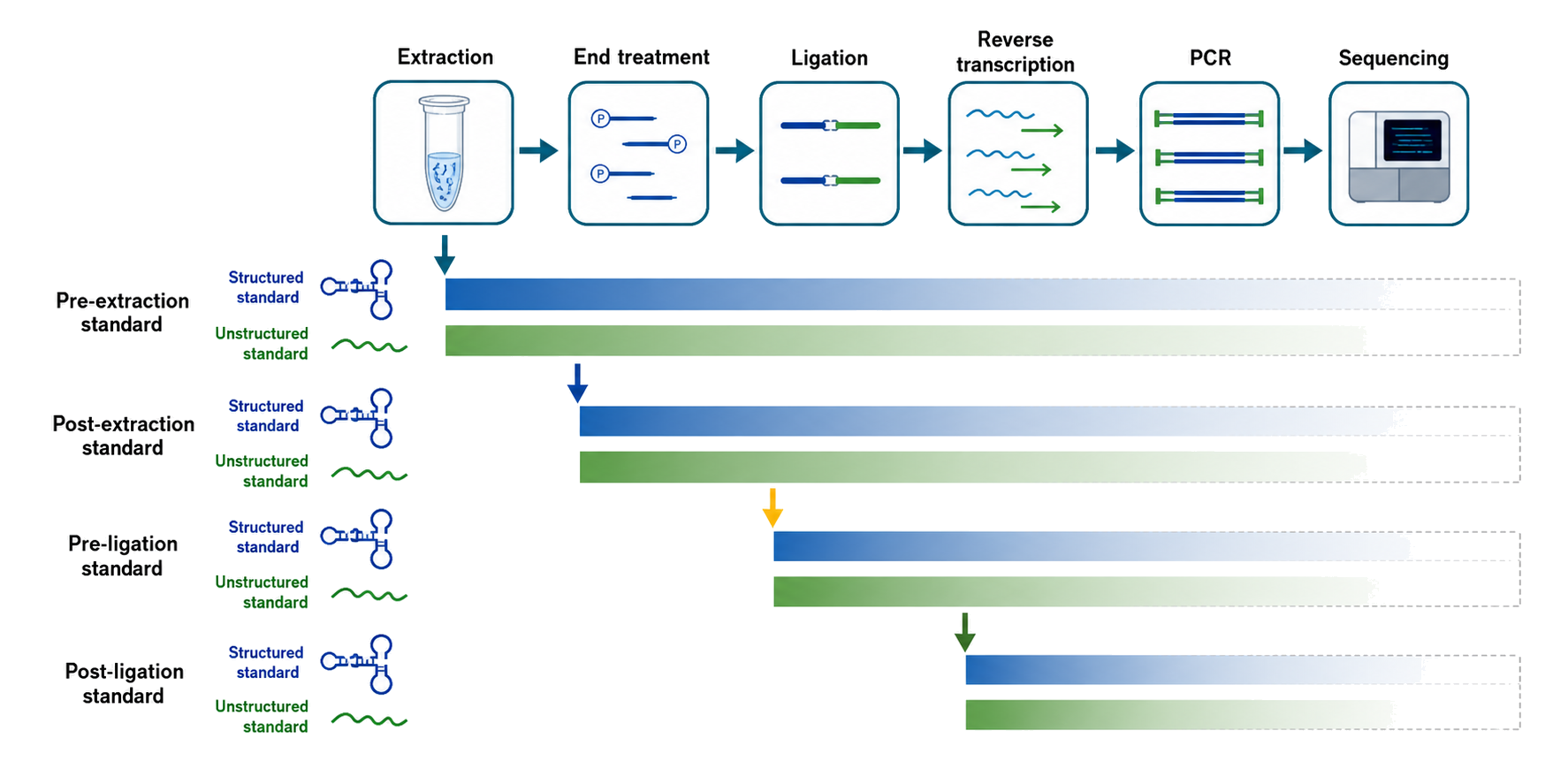
Figure 126.4. Quantitative control placement and the losses each control experiences. “A standard calibrates only the stages it traverses and models only the molecule properties it shares.”
Batch control is critical because adapter lot, enzyme lot, operator, extraction day, gel cut, and sequencing lane can all affect composition. Conditions should be balanced across batches, and the same standard mixture should appear in every batch. A standard that shifts selectively for one sequence family signals chemistry-specific drift that global normalization will not remove. Negative extraction controls and no-template controls identify environmental or reagent RNAs that matter in low-input samples.
Recovery efficiency is best described as a vector, not one number. The miRNA standard, structured tRNA standard, 5-prime-hydroxyl fragment, and low-copy snoRNA standard may each have different yields. Reporting this profile makes the biological limits visible. It also prevents an average recovery estimate dominated by an easy flexible oligonucleotide from validating a difficult modified RNA.
Quantitative claims should specify whether the output is relative composition, calibrated molecules per input unit, fold change within one protocol, or cross-protocol comparison. Cross-protocol absolute comparisons require shared reference materials and response models. Multicenter small-RNA studies show that protocols can agree on some abundant miRNAs while diverging on low-abundance or biased sequences. Replication within one method does not remove a systematic eligibility bias.
126.7. Computational processing, multi-mapping, annotation failures, and orthogonal validation
Primary processing begins before alignment. Adapter trimming must identify the correct adapter while preserving biological insert bases. Randomized adapter nucleotides and UMIs must be removed or parsed according to library design. Overaggressive trimming shortens genuine terminal variation; undertrimming adds adapter bases that appear as nontemplated tails or cause mapping failure. The pipeline should retain untrimmed, trimmed, rejected, and too-short read counts by sample.
Quality filtering has molecule-class consequences. A modified tRNA can generate a lower-quality or mismatched base at a biologically informative position. A filter optimized for mRNA may discard it. Conversely, permissive mapping can assign sequencing errors to related isodecoders. Useful workflows report how many reads are lost at each step and inspect mismatch, stop, length, and end distributions rather than hiding them in one mapping percentage.
Reference construction determines feature identity. Mature miRNA references should be linked to precursors and genomes so templated and nontemplated variants can be distinguished. tRNA references should represent mature CCA-added sequences, precursors, organellar genes, introns, and related genomic loci. rRNA references must include relevant species and organelles. snoRNA and snRNA annotations vary among releases and contain aliases, paralogs, and pseudogenes. Database version and sequence transformations belong in the reproducible record.
Multi-mapping cannot be solved by software preference alone. Discarding multi-mappers undercounts repeated families. Fractional allocation assumes a rule that may not match biology. Expectation-maximization uses uniquely informative reads and abundance priors, but near-identical molecules with no unique evidence remain unidentifiable. Random assignment creates artificial locus precision. The honest output is sometimes a family-level count with an explicit unresolved set.
Isodecoder and fragment assignment combine ambiguities. A short tRNA fragment may contain no sequence that distinguishes multiple mature tRNAs. A mismatch could be modification-associated or could identify another locus. The pipeline should separate unambiguous family membership from uncertain locus attribution. Claims about a particular tRNA gene require locus-specific sequence, precursor evidence, or an independent assay.
Annotation failure can turn degradation into novelty. A read absent from a selected small-RNA database may map perfectly to rRNA, tRNA, repeat, microbial RNA, or an updated annotation. Conversely, aggressive filtering against abundant RNAs can remove real regulatory fragments. Discovery pipelines should use a staged hierarchy, preserve competing assignments, and validate candidates through end precision, independent libraries, and orthogonal molecular evidence. De novo transcript assembly from short fragments is usually inappropriate; broader annotation ownership belongs to Chapter 141.
Table 126.4. Computational decisions and the claims they constrain. Connect trimming, mapping, annotation, counting, and normalization to interpretation.
| Decision | What changes | Required report | Safe claim boundary |
|---|---|---|---|
| Adapter and UMI parsing | Insert ends and molecule tags | Sequences, positions, rejection counts | Terminal variants only after correct parsing |
| Mismatch filtering | Modified tRNA retention | Penalties and quality rules | Mismatch is not modification identity |
| Multi-mapping policy | Repeated-family counts | Discarded, fractional, or modeled reads | Family level when locus unidentifiable |
| Annotation version | Available features and aliases | Database release and transformations | No novelty from one incomplete database |
| Normalization | Relative scale | Denominator and calibrants | Composition is not copy number |
Differential analysis must match the count unit. Mature miRNA totals, isomiR proportions, tRNA families, individual tRNA loci, and fragment endpoints are different hypotheses. Compositional shifts and strong mean-variance differences require suitable models and independent biological replicates. Technical replicates estimate library variation but do not replace independent samples. Filters and contrasts should be specified before inspecting the most dramatic fragments.
Orthogonal validation should break the dominant artifact chain. Northern blotting provides size evidence without adapter ligation or reverse transcription. Targeted ligation or PCR can test an end but may share end eligibility. Mass spectrometry can validate modifications but not necessarily the transcript of origin. Genetic perturbation of a nuclease tests biogenesis but may have indirect effects. RNP immunoprecipitation tests association. The validation set should be selected for the exact claim: abundance, end, modification, locus, biogenesis, or function.
Reports should include input definition, extraction method, size window, end treatments, adapter and UMI sequences, ligases and reverse transcriptase, cycle number, standards and addition stages, reference and annotation versions, trimming and multi-mapping policy, count unit, normalization denominator, and rejected-read summaries. These fields let another investigator determine which molecules were eligible and which conclusions can be transported to another protocol.
Experimental Foundations and Evidence
The field’s strongest evidence for systematic recovery bias comes from defined mixtures and cross-platform studies. Fuchs and colleagues isolated structural contributions to adapter ligation. Baran-Gale and colleagues tested a randomized-adapter protocol against methods that missed particular miRNAs. Giraldez and colleagues coordinated a multicenter evaluation of quantitative miRNA profiling. Wright and colleagues compared multiple biases across widely used methods. Together these studies show that precision within a protocol and agreement with input abundance are separate properties.
tRNA methods provide complementary perturbations of the measurement chain. ARM-seq changes methylation-dependent eligibility; DM-tRNA-seq combines demethylation and a processive reverse transcriptase; YAMAT-seq selects conserved mature ends; mim-tRNAseq integrates specialized chemistry and analysis; and ordered two-template relay methods change cDNA construction. Agreement among approaches is strong evidence for abundant families, while discrepancies identify modification, structure, end, or annotation dependence that should be investigated rather than averaged away.
Biological Contexts Across Organisms, Cell Types, and Perturbations
The same protocol cannot be assumed portable across organisms. Plant small RNAs include diverse siRNA classes and methylated termini. Animal piRNA lengths and amplification signatures vary among lineages. Bacterial and archaeal stable RNAs have different processing systems and modification patterns. Organellar tRNAs and rRNAs require appropriate reference sequences. Biofluids add low input, carrier effects, cellular contamination, and extracellular RNP protection. Pilot standards should reflect the intended organism and matrix.
Perturbations can also change measurement behavior. Stress can alter cleavage, modification, charging, RNP assembly, and total RNA composition. A disease tissue can change cell-type mixture. An enzyme knockout can change both the biological RNA population and the end chemistry required for capture. Interpretation therefore asks whether a count change is consistent across an orthogonal assay and whether standards reveal altered recovery.
Technology, Computational, Clinical, and Engineering Links
Small-RNA biomarkers are attractive because stable RNAs persist in tissues and biofluids, but persistence also increases contamination and origin ambiguity. Clinical assays require locked extraction, calibrants, detection limits, preanalytical controls, and independent cohorts. A discovery signature tied to one sequencing kit may fail when transferred to targeted PCR unless the two methods recognize the same variants.
Engineering efforts increasingly design ligases, reverse transcriptases, relay adapters, and computational models to flatten recovery. A lower mean bias is useful, but performance must be stratified by molecule class and abundance. Machine-learning correction cannot infer molecules that never entered the library without external information. Protocol innovation is strongest when paired with diverse reference mixtures and mechanistically interpretable failure analysis.
Choosing a workflow by claim rather than by platform name
A useful design begins by writing the biological noun and the quantitative verb. “Mature miRNA molecules increased per cell” requires calibrated recovery of mature ends and a cell denominator. “The fraction of miR-21 carrying one extra uridine increased” requires faithful terminal-sequence recovery and enough reads to estimate a within-miRNA proportion. “A 5-prime tRNA half accumulated” requires size and boundary evidence that distinguishes the half from failed full-length reverse transcription. “tRNA-Gly-GCC gene copy 4 changed” is not a feasible short-read claim unless the recovered sequence contains a locus-specific base or precursor region.
This claim-first approach often leads to more than one library. A narrow conventional small-RNA library can provide sensitive mature-miRNA counts, while a modification-aware or relay-based library captures structured tRNAs and fragments. The two libraries should not be forced onto one count scale without shared standards. Their value is complementary: one maximizes depth within a well-defined population, and the other tests whether the first population excluded important structured or chemically obstructed molecules.
Pilot experiments should challenge the intended failure modes. A reference set can include a flexible 22-nucleotide RNA, a structured RNA with the same termini, a 5-prime-hydroxyl fragment, a methylated tRNA-like substrate, and several concentrations of each. The pilot then measures not only total mapped reads but response slope, sequence-specific residuals, end fidelity, duplicate saturation, and cross-sample carryover. If the low-copy structured standard is never recovered, deeper sequencing of the biological samples will not repair the eligibility failure.
Evidence convergence for a stress-induced tRNA fragment
Consider the recurring observation that stressed cells contain more reads assigned to a 5-prime tRNA half. The first experiment establishes the sequencing pattern: a reproducible length, precise boundary, and family assignment. A rapid-processing control asks whether delayed lysis or nuclease exposure explains the increase. A modified and structured spike-in asks whether stressed samples inhibit full-length recovery. Northern blotting then tests whether an RNA of the expected physical size accumulates without adapter ligation or reverse transcription.
The next evidence level addresses biogenesis. Acute loss of the nominated nuclease should reduce the fragment without broadly destroying RNA integrity; restoring the enzyme should rescue production. Association with a relevant RNP can support biological engagement, but association alone does not prove function. A functional claim requires perturbing the endogenous fragment or its biogenesis while separating the fragment from the parent tRNA’s essential roles. This sequence of tests shows why discovery, biogenesis, and function must remain separate claims even when they concern the same read pile.
Recent Consensus
- Small- and stable-RNA sequencing measures protocol-eligible molecules, and ligation, structure, modification, length, and abundance can each cause large sequence-specific bias.
- Randomized adapters, demethylation, thermostable or engineered reverse transcriptases, alternative cDNA-construction strategies, and carefully designed UMIs can reduce selected biases but do not create a universally unbiased library.
- tRNA, rRNA, snoRNA, snRNA, and their fragments require class-aware references and mapping rules; locus-level claims are inappropriate when sequences do not contain locus-specific information.
- Stable-RNA fragments should not be labeled regulated products from mapping and abundance alone. Reproducible ends, handling controls, biogenesis evidence, size validation, and perturbational support are needed.
- Quantitative interpretation requires stage-matched standards, explicit denominators, response-range testing, and preservation of compositional as well as calibrated outputs.
- Modification-sensitive stops and mismatches are useful evidence but are not self-validating modification identities or stoichiometries; those conclusions require dedicated methods in Chapter 132.
Open Questions, Controversies, Deprecated Models, and Common Misconceptions
Open questions:
- Can one modular workflow quantify intact tRNAs, tRNA fragments, canonical regulatory small RNAs, and other stable RNAs across their full dynamic range without separate libraries?
- Which reference mixtures best reproduce native structure, modification, RNP association, end chemistry, and abundance for cross-laboratory benchmarking?
- How much of the stable-RNA fragment repertoire is generated in vivo, and how much reflects sample handling or method-specific recovery?
- When can modification-dependent reverse-transcription signatures be calibrated quantitatively across enzymes and sequence contexts?
- Which multi-mapping models provide useful family-level inference without creating unsupported locus precision?
Controversies:
- Some reported tRNA-, rRNA-, and snoRNA-derived regulators have strong biogenesis and functional evidence, whereas others remain supported mainly by sequencing peaks and overexpression. These evidence levels should not be merged.
- UMI deduplication is sometimes treated as molecular counting, but for abundant short inserts the result depends strongly on tag complexity, collision correction, and attachment stage.
Deprecated or weakened claims:
- The assumption that standard small-RNA-seq read counts are proportional to input abundance across sequences has been weakened by defined-mixture and multicenter benchmarks.
- The assumption that every read mapping to a stable RNA is a degradation product, or conversely a regulated fragment, is untenable without independent evidence.
Common misconceptions:
- “No reads means the RNA is absent.” No reads means no molecules survived the workflow’s eligibility and analysis filters at detectable depth.
- “A UMI removes all library bias.” A UMI can address amplification duplication after attachment; it does not restore molecules lost during extraction, ligation, or reverse transcription.
- “Demethylation reveals the true tRNA abundance.” Demethylation improves recovery of substrates blocked by removable modifications, but enzyme scope, structure, and residual modifications remain.
- “A tRNA fragment uniquely identifies its gene.” Many short fragments are identical among gene copies, isodecoders, or isoacceptors and support only family-level assignment.
- “rRNA depletion is only a harmless depth improvement.” Depletion changes composition and can cross-remove related RNAs or the fragments under study.
- “A sharp fragment endpoint proves enzymatic biogenesis.” Reproducible handling artifacts and structure-dependent breakage can also create endpoints; genetic and orthogonal evidence are needed.