Chapter 163. RNA Clinical Translation, Regulatory Science, Equity, and Individualized Development
Scope Note
This chapter owns the clinical-development pathway by which an RNA mechanism becomes a defined product, an interpretable evidence package, a reproducible manufacturing process, and a lifecycle decision. It covers target validation, translational gates, trial design, endpoints and estimands, chemistry-manufacturing-and-controls readiness, comparability, clinical operations, regulatory evidence, benefit-risk assessment, postmarket surveillance, equitable access, and individualized or n-of-1 development. It uses antisense oligonucleotides, small interfering RNAs (siRNAs), messenger RNA (mRNA) products, RNA vaccines, programmable RNA editing products, and RNA diagnostics as recurring examples. Delivery mechanisms belong principally to Chapter 157, therapeutic modality mechanisms to Chapters 149-155, and ethics, consent, data governance, biosafety, dual use, environmental release, and public trust to Chapter 164. Those subjects appear here only when they are direct inputs to a clinical-development decision.
Executive Summary
Clinical translation is a sequence of decisions rather than a single jump from mechanism to product. A target must be causally connected to disease or prevention; a modality must produce the intended change in a reachable tissue; an investigational product must have defined identity, purity, potency, and stability; a dose and schedule must create an interpretable exposure-response relationship; and a study must estimate a treatment effect that matters for the intended population. Strong molecular target engagement is valuable, but it does not by itself establish clinical benefit. Conversely, a clinically meaningful effect cannot be interpreted reliably if product quality, adherence, intercurrent events, missing data, or disease heterogeneity are poorly controlled.
An evidence package links disciplines that are often discussed separately. The nonclinical package should justify starting dose, route, tissue exposure, mechanism-aware toxicology, and monitoring. The clinical pharmacology package should connect administered dose to systemic and tissue exposure, pharmacodynamic response, and safety. The trial package should define the population, comparator, endpoint, estimand, analysis, and sensitivity analyses before outcomes are known. For RNA products, this chain often includes molecular measures such as splice correction, transcript knockdown, encoded-protein expression, editing fraction, immune response, or RNA-signature performance. These are most useful when their sampling compartment, measurement error, temporal behavior, and relationship to patient-centered outcomes are explicit.
Manufacturing readiness is part of the causal chain. The sequence alone is not the product. Oligonucleotide stereochemical composition, conjugation, chain-length impurities, residual reagents, aggregation, and stability can affect exposure and toxicity. mRNA cap structure, poly(A) distribution, RNA integrity, double-stranded RNA impurities, encapsulation, lipid composition, and particle properties can affect expression and innate immune activation. A manufacturing change therefore requires a comparability argument: analytical and functional evidence must show whether pre-change knowledge remains applicable, and additional nonclinical or clinical bridging is needed when the assays cannot exclude a clinically meaningful difference.
Rare and individualized RNA programs reveal the limits of conventional development most clearly. A progressive disease with a handful of patients may not permit a large randomized trial. Natural-history data, repeated pretreatment measurements, external controls, disease-specific clinical outcome assessments, and mechanistic biomarkers can make inference possible, but they do not remove confounding or regression to the mean. An n-of-1 oligonucleotide can reuse platform knowledge about chemistry, route, manufacturing, and class toxicology, yet the new sequence, target transcript, variant, patient condition, and dose remain product-specific. Each treatment should be designed to protect the patient and to generate reusable knowledge through prospective protocols, common data elements, independent monitoring, and registries.
Approval or authorization is not the end of development. Pharmacovigilance, active surveillance, product and disease registries, real-world data, confirmatory studies, manufacturing trend analysis, and subgroup assessment test whether benefit-risk remains favorable in broader use. Lifecycle decisions require thresholds: what signal prompts investigation, what evidence changes labeling or monitoring, what failure triggers a confirmatory-trial redesign, and when ineffective or unsafe use should be restricted or withdrawn. Different jurisdictions use different legal pathways and terminology, so the durable scientific principle is to match evidentiary flexibility to disease severity, unmet need, reversibility, product uncertainty, and the strength of enforceable follow-up.
Equity is also a development variable. Genotype-specific eligibility is meaningless without diagnostic access; a product cannot deliver population benefit without manufacturing capacity, trained sites, reimbursement, and follow-up; and a diverse label is weakly supported if trials exclude the groups expected to use the product. Development teams should measure where patients are lost between diagnosis and sustained treatment, distinguish price from manufacturing cost, include implementation burden in benefit-risk reasoning, and collect postmarket evidence from populations missing from pivotal studies. Broader questions of consent, privacy, dual use, and public governance are treated in Chapter 164.
Concept Inventory
- Clinical-development pathway: the ordered set of target, product, nonclinical, manufacturing, clinical, regulatory, implementation, and lifecycle decisions required to support a defined use. A pathway is not necessarily linear; evidence may force a return to candidate design, potency assays, dose, or population definition.
- Development candidate: the specific molecule, formulation, presentation, dose concept, route, and manufacturing process selected for formal development. A target or platform is not a development candidate.
- Translational evidence package: the integrated body of biological, analytical, nonclinical, clinical-pharmacology, clinical, manufacturing, and implementation evidence used to justify the next decision.
- Pharmacodynamic biomarker: a measure showing that an intervention changes its intended target or pathway. A biomarker becomes a surrogate endpoint only when evidence supports its use as a substitute for clinical benefit in a specified context.
- Estimand: a precise description of the treatment effect a trial intends to estimate, including population, treatment condition, outcome variable, handling of intercurrent events, and population-level summary.
- Clinical outcome assessment: a measure of how a patient feels, functions, or survives, obtained from the patient, clinician, observer, performance task, or other defined source.
- Critical quality attribute: a physical, chemical, biological, or microbiological property that must remain within an appropriate limit or distribution to assure product quality.
- Potency assay: an assay or assay matrix that measures a product’s biological activity in relation to its intended mechanism. Potency for release testing must also be sufficiently precise, robust, and practical.
- Comparability: the evidence-based conclusion that a product made before and after a manufacturing change has no clinically meaningful difference in quality, safety, or efficacy. Comparability does not mean analytical identity in every measured attribute.
- Rare-disease natural history: longitudinal evidence about disease onset, progression, variability, prognostic factors, and outcomes without the investigational treatment. Natural history can inform endpoints and external controls but is vulnerable to ascertainment and era effects.
- External control: a comparator group drawn partly or wholly from outside the concurrent randomized study. Its validity depends on exchangeability, aligned eligibility and follow-up, harmonized outcomes, and control of measured confounding.
- Individualized or n-of-1 RNA therapy: an RNA product designed for one patient or a very small number of patients, often for a private pathogenic variant. The product can inherit bounded platform knowledge but not automatic efficacy or safety.
- Benefit-risk assessment: a structured judgment integrating the magnitude and certainty of benefits, harms, uncertainties, alternatives, disease severity, population, feasibility of risk control, and consequences of delay.
- Pharmacovigilance: detection, assessment, understanding, and prevention of adverse effects or other medicine-related problems after exposure; active surveillance and registries can complement spontaneous reports.
- Real-world evidence: clinical evidence about use, benefit, or risk derived from analysis of routinely collected health data. Data being real-world does not make the resulting inference unbiased.
- Lifecycle learning: planned updating of product knowledge and decisions through confirmatory studies, long-term follow-up, manufacturing monitoring, registries, pharmacovigilance, and implementation data.
What to Know Before Reading This Chapter
The reader should distinguish the therapeutic molecule from its delivery system and its final drug product. An siRNA duplex is a cargo; a GalNAc conjugate or lipid nanoparticle changes distribution; a sterile filled presentation made under a defined process is the administered product. Chapter 157 explains delivery mechanisms in depth. Chapters 149-154 and Chapter 155 explain modality-specific mechanisms. This chapter asks what evidence is required after a plausible mechanism and product concept exist.
The reader should also distinguish observation from inference. A measured change in RNA abundance can be an assay output, a biomarker, evidence of target engagement, or part of an endpoint, depending on the protocol and validation. It is not automatically a treatment effect. A treatment effect is defined relative to a counterfactual comparison—what would have happened to the same target population under a different strategy. Randomization usually supports that comparison best, but small populations or emergency contexts can require other designs whose assumptions must be made visible.
Finally, regulatory terms are jurisdiction-specific. “Accelerated,” “conditional,” “emergency,” “expanded-access,” and “compassionate-use” pathways do not have one universal legal meaning. This chapter compares their scientific logic without treating one agency’s terminology as a global template. Questions about consent, privacy, biosafety, dual use, environmental release, and public trust are handed to Chapter 164.
163.1. Clinical-development pathways from target validation through approval
Clinical development begins with an intended-use statement: what product will be used, for which population, at what disease stage, by what route, for what purpose, and with what expected benefit. Without this statement, evidence accumulates without a decision target. “Knock down transcript X” is a mechanistic goal. “Reduce clinically meaningful attacks in adults with genetically confirmed disease Y by quarterly subcutaneous administration” is closer to a development goal because it specifies a population, regimen, and outcome. The intended use will change as evidence develops, but writing it early exposes mismatches between the biology, delivery route, endpoint, and feasible clinical setting.
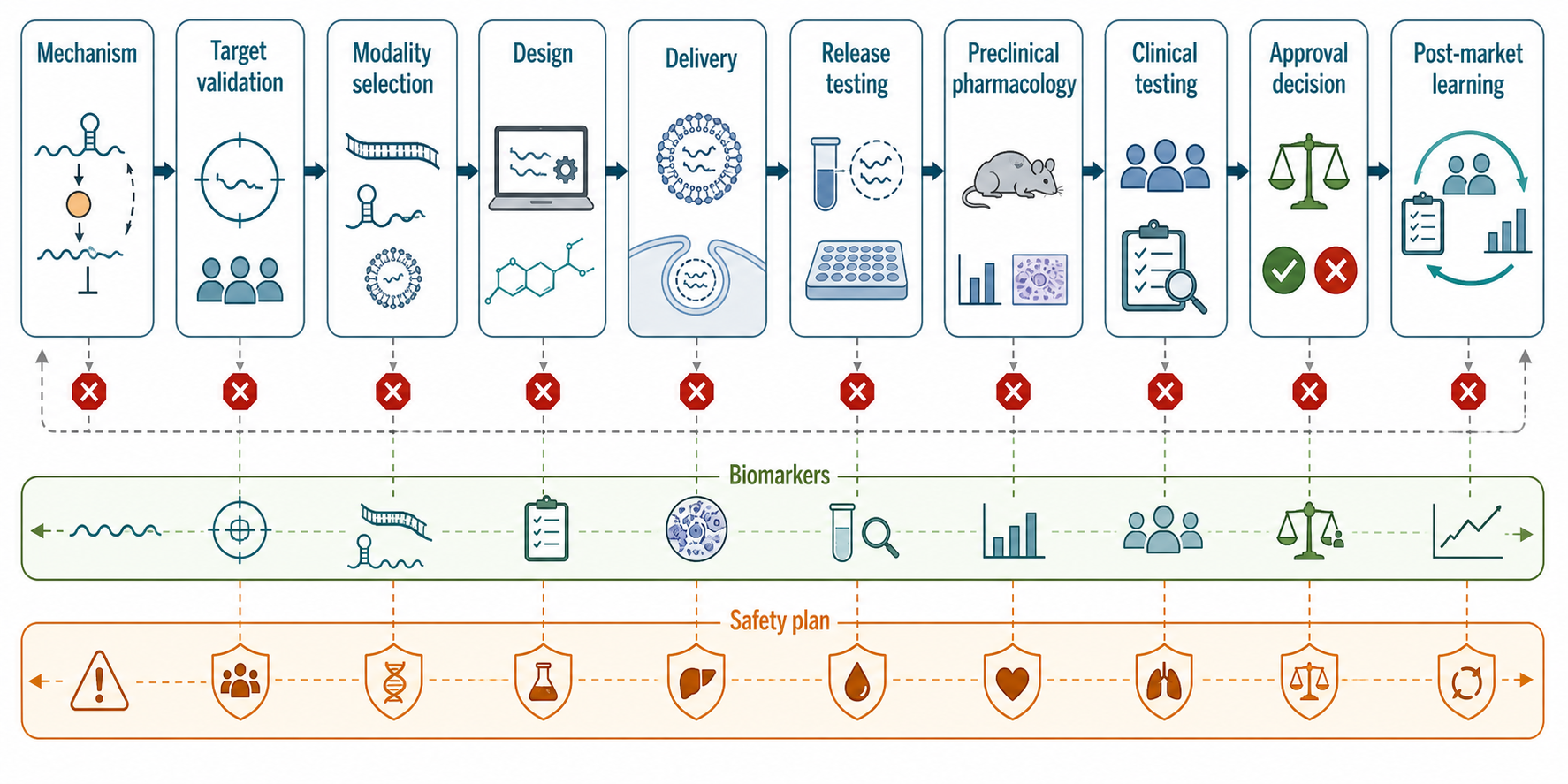
Figure 163.1. Development Gates From RNA Mechanism to Approved Use. Clinical translation is a gated, revisable pathway. A biologically valid target can fail because the product does not reach tissue, cannot be controlled analytically, produces unacceptable toxicity, lacks an interpretable endpoint, or cannot be manufactured reproducibly. Approval supports a defined product and use rather than every product built on the same platform.
Target validation asks whether changing the proposed RNA target is likely to improve the intended condition. Evidence may include human genetics, disease-associated splicing, longitudinal biomarker data, perturbation and rescue, patient-derived cells, organoids, animal models, and pharmacological experiments. The evidentiary pattern depends on the mechanism. For a toxic gain-of-function transcript, allele-selective suppression may have strong genetic logic, but the development team must still determine how much suppression is needed, whether the normal allele can be spared, and whether the accessible tissue contains the pathogenic cell population. For mRNA replacement, the team must establish which cells need protein, what expression window is useful, and whether transient expression can alter disease course. Correlation, differential expression, and binding enrichment can nominate targets; they do not establish causality.
Candidate selection converts target logic into a product. Sequence, chemistry, structure, conjugate, formulation, route, presentation, and manufacturing process are selected together because each changes the others. An antisense sequence with excellent activity in a transfected cell may fail after gymnotic uptake. A potent siRNA may be unusable if its target tissue lacks an effective delivery route. An mRNA encoding active protein may generate unacceptable innate sensing because of its sequence, impurities, or formulation. Candidate-selection criteria should therefore include activity in relevant cells, concentration-response, duration, off-target assessment, tissue exposure, route feasibility, class and sequence-specific toxicology, analytical tractability, stability, and manufacturability.
The nonclinical program is decision-oriented, not a ritual list of models. It should answer whether the product reaches intended and unintended tissues, whether pharmacological activity occurs at tolerable exposure, which organs require monitoring, how starting dose and escalation are justified, and whether reproductive, developmental, genotoxic, immunotoxic, or long-term studies are relevant. Species selection is especially difficult for sequence-specific products because the human target site may not be conserved. A pharmacologically active surrogate sequence can illuminate exaggerated pharmacology but is not chemically identical to the clinical candidate; a human-sequence candidate in a nonresponsive animal can reveal chemistry and distribution toxicity but not on-target biology. The evidence package should state which uncertainty each model resolves.
First-in-human planning joins nonclinical evidence to clinical operations. The starting dose can be limited by toxicology, predicted pharmacology, tissue exposure, platform knowledge, or the minimum dose expected to produce a measurable biological effect. Dose escalation should specify the observation window, stopping and review rules, sentinel dosing where appropriate, and what data authorize the next cohort. Route changes are not minor conveniences: intrathecal, ocular, inhaled, intramuscular, intravenous, and subcutaneous administration create different exposure, procedural risk, site requirements, and monitoring burdens. Repeat dosing raises accumulation, anti-drug immune response, tolerability, and feasibility questions that a single-dose study cannot answer.
Development gates should be explicit. A candidate might advance from discovery when activity, selectivity, and manufacturability meet thresholds; enter clinical testing when quality and nonclinical packages justify the planned exposure; enter a confirmatory trial when dose, endpoint, and population are sufficiently stable; and approach approval when efficacy, safety, quality, and implementation uncertainties fit the intended use. A gate can also stop a program. Failure to reach disease tissue, an uninformative biomarker, weak potency control, poor repeat-dose tolerance, or an infeasible clinical procedure can outweigh elegant molecular biology. Stopping early protects participants and redirects resources.
Approval is a claim about a defined product and use, not validation of a platform in general. Evidence supporting one GalNAc-siRNA sequence does not automatically establish another target’s safety. Evidence for one mRNA-LNP vaccine does not establish every encoded antigen, dose, or population. Platform knowledge is most transferable when the manufacturing process, formulation, route, tissue distribution, dose range, and known toxicology are genuinely shared. Product-specific sequence, payload, target, disease, and population uncertainties remain. The product’s label and risk-management plan should reflect what was studied rather than the broadest use that seems mechanistically plausible.
Table 163.1. Translational Gate Matrix Across RNA Product Classes. RNA product classes differ in candidate-defining attributes, exposure or activity evidence, and dominant development uncertainty; mechanism chapters supply modality detail while this matrix identifies translational gates.
| Product class | Candidate-defining attributes | Exposure or activity evidence | Dominant development uncertainty | Primary handoff |
|---|---|---|---|---|
| Antisense or splice-switching oligonucleotide | Sequence, chemistry, stereochemical profile where relevant, conjugate, route | Tissue exposure, transcript reduction or splice correction, protein or pathway response | Hybridization off-targets, chemistry toxicity, tissue access, repeat dosing | Chapter 150 and Chapter 151 |
| siRNA | Duplex sequence, modifications, conjugate or formulation, route | Productive RISC loading, target knockdown, protein response | Delivery beyond validated tissues, seed effects, class/formulation effects | Chapter 152 and Chapter 157 |
| mRNA or RNA vaccine | Coding sequence, untranslated regions, cap, poly(A), nucleosides, formulation | Encoded protein or antigen, immune response, tissue expression | Impurity-driven sensing, expression duration, formulation and repeat-dose effects | Chapter 156, Chapter 161, Chapter 162 |
| Programmable RNA editing | Guide, effector, formulation, route, persistence | Intended editing fraction, transcript/protein rescue, off-target assay | Tissue delivery, bystander/off-target editing, durability and clinical threshold | Chapter 154 |
| Aptamer or catalytic RNA product | Folded sequence, modifications, conjugate or expression system | Binding/occupancy or catalytic product, functional pathway response | Fold heterogeneity, delivery, payload release, catalytic turnover | Chapter 155 |
| Transcriptomic diagnostic | Specimen, locked wet-lab and computational assay, decision threshold | Analytical validity, clinical validity, clinical utility | Batch and pre-analytic effects, transportability, clinical action | Chapter 122 and neighboring methods chapters |
Diagnostics follow analogous gates but use different endpoints. A transcript signature must progress from discovery to locked assay, analytical validation, clinical validation in the intended-use population, assessment of clinical utility, and controlled implementation. Tissue composition, pre-analytic degradation, reference annotation, normalization, batch, and model drift can create impressive but nonportable performance. The handoff to clinical use requires a decision rule: who is tested, what result is reported, how uncertainty is handled, and what action follows. Detailed RNA measurement mechanisms belong to the methods chapters beginning with Chapter 122.
163.2. Translational evidence packages, trial design, endpoints, and biomarkers
A translational evidence package is useful when its layers connect. Product-quality data establish what was administered. Pharmacokinetics establish where and for how long measurable product-related material appears. Pharmacodynamics establish whether the target or pathway changes. Clinical outcomes establish whether patients benefit. Safety data establish harms and uncertainty. A package with a missing link can produce ambiguous failure: absent efficacy might reflect a wrong target, insufficient tissue exposure, an inactive lot, an insensitive endpoint, or treatment too late in disease. Prospective sampling and assays should be chosen to discriminate among these explanations.
Pharmacokinetics for RNA products cannot always be summarized by plasma concentration. Oligonucleotides can leave plasma rapidly yet persist in tissues; tissue concentration may include inactive, trapped, or degraded material; encapsulated and unencapsulated RNA can behave differently; and active intracellular concentration is often unavailable. Pharmacokinetic measures should therefore be interpreted with biodistribution, metabolite, cell-association, and pharmacodynamic data. For intrathecal or ocular delivery, cerebrospinal-fluid or vitreous measurements may not report concentration in the disease-relevant cell type. Modeling is valuable, but its assumptions should be tested against observed dose-response and time-course data.
Pharmacodynamic biomarkers include transcript knockdown, splice correction, protein restoration, edited-RNA fraction, secreted protein, immune response, metabolite normalization, or a disease-linked RNA signature. The ideal biomarker lies close enough to the mechanism to show target engagement and close enough to disease biology to inform dose or outcome. Sampling can break that link. A blood biomarker may not reflect central nervous system activity; a bulk-tissue value can hide cell-type heterogeneity; a relative expression measure can change because cell composition changes. Assay precision, lower limit of quantification, sample timing, specimen handling, and biological variability must be specified before treatment effects are interpreted.
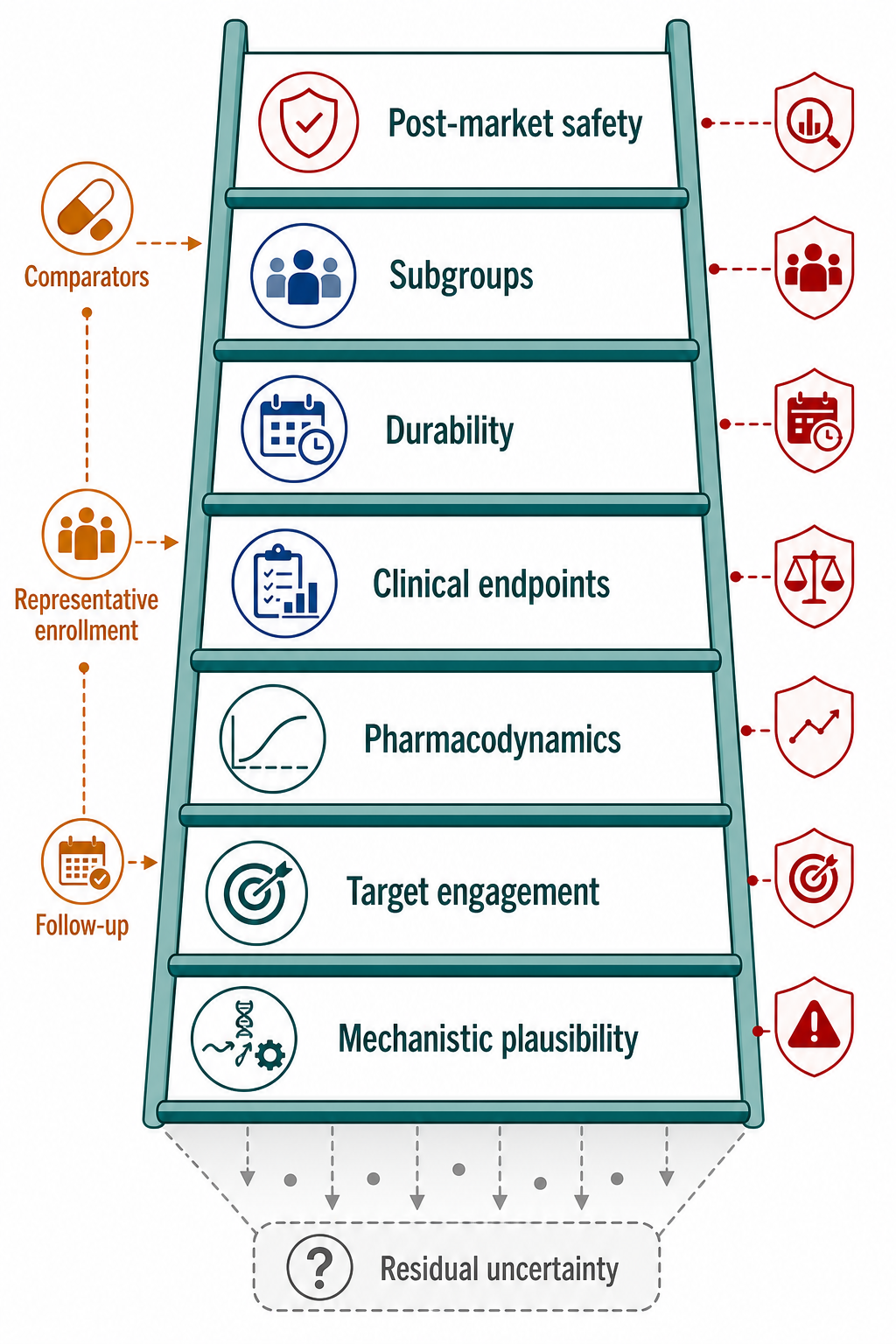
Figure 163.2. Evidence Chain From Administered Product to Patient Outcome. An RNA evidence package connects what was administered to what happened in the patient. Molecular response is strongest when product quality, exposure, assay timing, sampling compartment, and downstream clinical outcomes are all interpretable; a break in the chain changes the explanation of apparent failure or success.
Clinical endpoints measure survival, symptoms, function, events, health status, or other outcomes meaningful for the intended use. A clinical outcome assessment can be patient-reported, observer-reported, clinician-reported, or performance-based. The measure must be reliable, valid in the population, sensitive over the study window, and interpretable at the individual and group level. Motor scales can have floor, ceiling, learning, and age effects. Event endpoints require consistent ascertainment. Patient-reported outcomes require appropriate language, culture, age, and disability access. Selecting an endpoint because it changed in a small uncontrolled series is a weak foundation unless measurement properties and natural history are understood.
A surrogate endpoint is not merely an early endpoint. It is used as a substitute for direct clinical benefit because evidence supports prediction in a specified disease and intervention context. The same biomarker may be a useful pharmacodynamic measure but a poor surrogate if treatments can change the marker without changing function or survival. Mechanistic proximity helps but does not prove surrogacy. When earlier access relies on an intermediate or reasonably likely surrogate, the residual uncertainty should be paired with feasible confirmatory evidence, prespecified thresholds, and consequences if benefit is not confirmed.
The estimand framework forces the trial question to be precise. A trial should define the target population, treatment conditions, outcome variable, population-level summary, and how intercurrent events are handled. Intercurrent events include treatment discontinuation, rescue therapy, death, transplantation, infection, or another event that changes how the outcome is interpreted. A treatment-policy estimand may ask about outcomes regardless of discontinuation; a hypothetical strategy may ask what would have happened without rescue; a composite strategy may include an event in the endpoint. None is universally correct. The choice should match the clinical question and be supported by sensitivity analyses for missing or unverifiable assumptions.
Box 163.1. When an RNA Biomarker Is Not Yet a Clinical Benefit
Ask what causal link the measure occupies, where and when it was sampled, how precisely it was measured, how much change is biologically required, whether tissue can still recover, and what clinical outcome follows. Contrast splice correction, target knockdown, protein expression, and immune response as pharmacodynamic evidence with a validated surrogate or direct patient outcome.
Randomized concurrent controls generally provide the strongest protection against measured and unmeasured baseline confounding. Blinding reduces differential behavior and outcome assessment. RNA products can make blinding difficult when administration procedures or reactogenicity differ. Sham intrathecal or ocular procedures introduce their own burdens, so design must consider whether the information gain justifies procedural risk. Delayed-start, crossover, add-on, response-adaptive, or randomized-withdrawal designs can answer specific questions, but carryover, irreversible disease progression, long pharmacological persistence, and small samples constrain them.
Rare-disease studies often use natural history, external controls, or within-patient trajectories. Valid inference requires alignment of eligibility, index date, disease stage, follow-up, outcome definition, visit schedule, supportive care, and calendar era. A treated patient compared with historical patients may appear improved because diagnosis is earlier, background care has changed, or only patients healthy enough to enter treatment are selected. Quantitative adjustment cannot remove unmeasured differences. A credible analysis states the causal assumptions, examines overlap, prespecifies data curation, uses negative or falsification checks where possible, and shows how results change under plausible unmeasured confounding.
Heterogeneity should be designed into the evidence plan. Genotype, target expression, age, disease stage, organ reserve, prior treatment, immune status, and delivery anatomy can modify response. Subgroups defined after observing outcomes can generate unstable stories; prespecified effect modifiers with biological rationale are more useful. A small study may be unable to estimate every subgroup, so the aim may be to characterize exposure, direction of effect, and uncertainty rather than to declare equivalence. Postmarket registries can extend subgroup evidence if eligibility, outcomes, and missingness are managed deliberately.
Safety endpoints should reflect mechanism and modality. Oligonucleotide programs may monitor renal, hepatic, hematologic, complement, coagulation, immune, and injection or procedure-related outcomes depending on chemistry and route. mRNA and formulated RNA programs may monitor reactogenicity, innate immune activation, lipid-related effects, antigen-specific effects, and organ exposure. Editing programs require intended and off-target editing assays, persistence, immune response, and consequences of altered transcripts. The monitorable list should come from product attributes, nonclinical findings, class experience, and population vulnerability rather than from a generic panel alone.
Table 163.2. Trial Measures and What They Can Support. Product-quality measures, pharmacokinetics, pharmacodynamic biomarkers, surrogates, clinical outcomes, safety endpoints, and real-world measures support different claims; molecular response alone does not establish patient benefit.
| Evidence element | Example for RNA development | What it can support | What it cannot establish alone |
|---|---|---|---|
| Product-quality measure | RNA integrity, chain-length distribution, encapsulation | Lot identity and control within a validated strategy | Tissue exposure or clinical activity |
| Pharmacokinetic measure | Plasma oligonucleotide or formulation component | Systemic exposure and model calibration | Active intracellular concentration |
| Pharmacodynamic biomarker | Splice correction, knockdown, protein expression | Target engagement and dose/time response | Patient benefit or validated surrogacy |
| Surrogate/intermediate endpoint | Disease-linked protein or metabolite used for earlier decision | Context-specific prediction with residual uncertainty | Universal prediction across mechanisms or diseases |
| Clinical outcome assessment | Motor function, symptom score, performance task | Effect on a defined feeling or function | Survival or every domain of benefit |
| Clinical event endpoint | Hospitalization, infection, disease progression, death | Event-based treatment effect under the estimand | Mechanism when sampling is absent |
| Safety endpoint | Renal, hepatic, immune, editing, or procedural event | Defined harm rate in the studied exposure | Very rare, delayed, or excluded-population risk |
| Registry/RWE outcome | Long-term function or adverse event in routine use | Durability, broader use, hypotheses, and sometimes comparative evidence | Unbiased causality without fit-for-purpose design |
An evidence package should end with a decision, not a data inventory. Dose selection, cohort expansion, trial progression, or stopping should follow prespecified integration of quality, exposure, pharmacodynamic, efficacy, and safety findings. Discordant evidence is informative: adequate plasma exposure without tissue response points toward distribution or cell-entry failure; target engagement without functional change questions disease stage or causal sufficiency; and an apparent outcome benefit without mechanistic response demands scrutiny of assay sensitivity, adherence, comparator balance, and chance. Making these interpretations prospectively prevents a program from redefining success around whichever measurement changed.
163.3. Manufacturing readiness, comparability, scale-up, and clinical operations
Chemistry, manufacturing, and controls—usually abbreviated CMC—define how a development candidate becomes consistent clinical material. CMC begins before first-in-human dosing because early process choices determine impurities, assay performance, stability, and the ability to interpret later data. The quality target product profile translates clinical use into product properties: route and dose constrain concentration and volume; repeat dosing constrains stability and supply; intrathecal or ocular use demands stringent particulate and sterility control; global deployment may demand heat stability, simple presentation, or regional manufacturing.
Identity is multidimensional. For a synthetic oligonucleotide, identity includes sequence, length, chemical modifications, conjugate, stereochemical features where controlled, and the distribution of closely related species. Solid-phase synthesis produces deletion, insertion, shortmer, longmer, depurinated, oxidized, and other process-related variants whose separation and characterization become more difficult at larger length or complexity. For mRNA, identity includes coding sequence, untranslated regions, cap, poly(A) tail, nucleotide composition, integrity, and higher-order or particle-associated state. Formulated products add lipid identity and ratio, particle-size distribution, encapsulation, free components, and container interactions.
Critical quality attributes are selected because variation could affect safety, efficacy, or usability. The development team links each attribute to process parameters and controls through risk assessment and evidence. Double-stranded RNA impurities in an mRNA preparation can alter innate sensing and translation. An oligonucleotide conjugation impurity can change tissue uptake. Particle size can change biodistribution or stability. RNA integrity can change encoded-protein output. The link need not be known perfectly at first, but uncertainty should drive characterization rather than disappear into broad specifications.
Potency deserves special attention because a convenient analytical assay may not report the intended biological activity. Sequence identity or RNA concentration is not potency. A cell-based assay measuring splice correction, knockdown, expression, or editing is mechanistically informative but can be variable and slow. A biochemical assay may be more precise but too far from cell entry or productive intracellular action. An assay matrix can combine an orthogonal physicochemical measure with a functional assay. During development, the team should establish which assay is release-critical, how reference standards are qualified, and whether assay drift or reagent changes could mimic product drift.
Scale-up is not simply making a larger batch. Mixing times, mass transfer, reaction kinetics, hold times, purification loading, filtration, encapsulation, fill-finish, freezing, and shipping can change product attributes. A process designed for milligrams may not behave like one designed for kilograms. Site transfer adds equipment, operator, raw-material, and environment differences. Scale-out—parallel production in multiple smaller units—can preserve some conditions but creates comparability and scheduling challenges. Manufacturing readiness includes supplier qualification, raw-material traceability, contamination control, validated cleaning, in-process controls, release testing, stability-indicating methods, and enough capacity to supply trials without avoidable interruptions.
Comparability asks whether pre-change and post-change product can be considered sufficiently alike for prior evidence to remain relevant. It begins with a risk assessment of what changed and which attributes could be affected. Side-by-side analytical testing, functional potency, degradation studies, process performance, and stability often carry most of the argument. Nonclinical pharmacology, pharmacokinetics, or clinical bridging may be needed when analytical methods are insensitive to an attribute likely to affect clinical performance, when functional differences appear, or when the change is large. The correct question is not whether every number is identical but whether any observed or undetected difference could be clinically meaningful.
Clinical-stage changes require careful timing. A major process change before a pivotal study can reduce the risk that commercial material differs from trial material, but it can delay enrollment. A late change can preserve schedule but create a bridging burden and uncertainty around whether pivotal results apply. Reference lots, retained samples, well-characterized standards, and prospective comparability protocols reduce ambiguity. Changes should be documented with enough granularity to connect manufacturing history to clinical outcomes and adverse-event clusters.
Clinical operations are part of product performance. A drug that requires specialized thawing, preparation, intrathecal administration, imaging guidance, or rapid use after dilution can fail through operational variation. Sites need training, competency assessment, chain of identity or custody where relevant, temperature monitoring, accountability, dose-preparation controls, and procedure-specific safety plans. Sampling times must be feasible; otherwise pharmacokinetic and biomarker datasets become systematically missing. For individualized products, scheduling has exceptional urgency but compressed timelines cannot eliminate independent release, sterility, stability, and dosing review.
Manufacturing capacity shapes both trial representativeness and access. If only a few expert centers can receive and administer product, the enrolled population will reflect geography and referral networks. If analytical release requires scarce assays, batch cadence can determine who is treated. Decentralized or regional capacity can improve access, but only when technology transfer, training, quality systems, raw-material supply, and regulatory oversight preserve product control. Chapter 161 and Chapter 162 cover manufacturing mechanisms and vaccine production in greater platform detail; this section owns readiness and comparability as clinical-development decisions.
163.4. Equity, access, global implementation, and individualized or n-of-1 development
Equity is measurable across the development funnel. The relevant denominator begins with people who have the condition, not merely those reaching an expert clinic. Attrition can occur because disease awareness is low, diagnostic testing is unavailable, variants are not interpretable, trial sites are distant, eligibility is narrow, procedures are inaccessible, treatment is unaffordable, or long-term monitoring cannot be sustained. Reporting only the demographics of enrolled participants misses patients excluded before screening. Programs should map these losses and identify which are biologically necessary, which are operational, and which reflect remediable policy or resource choices.
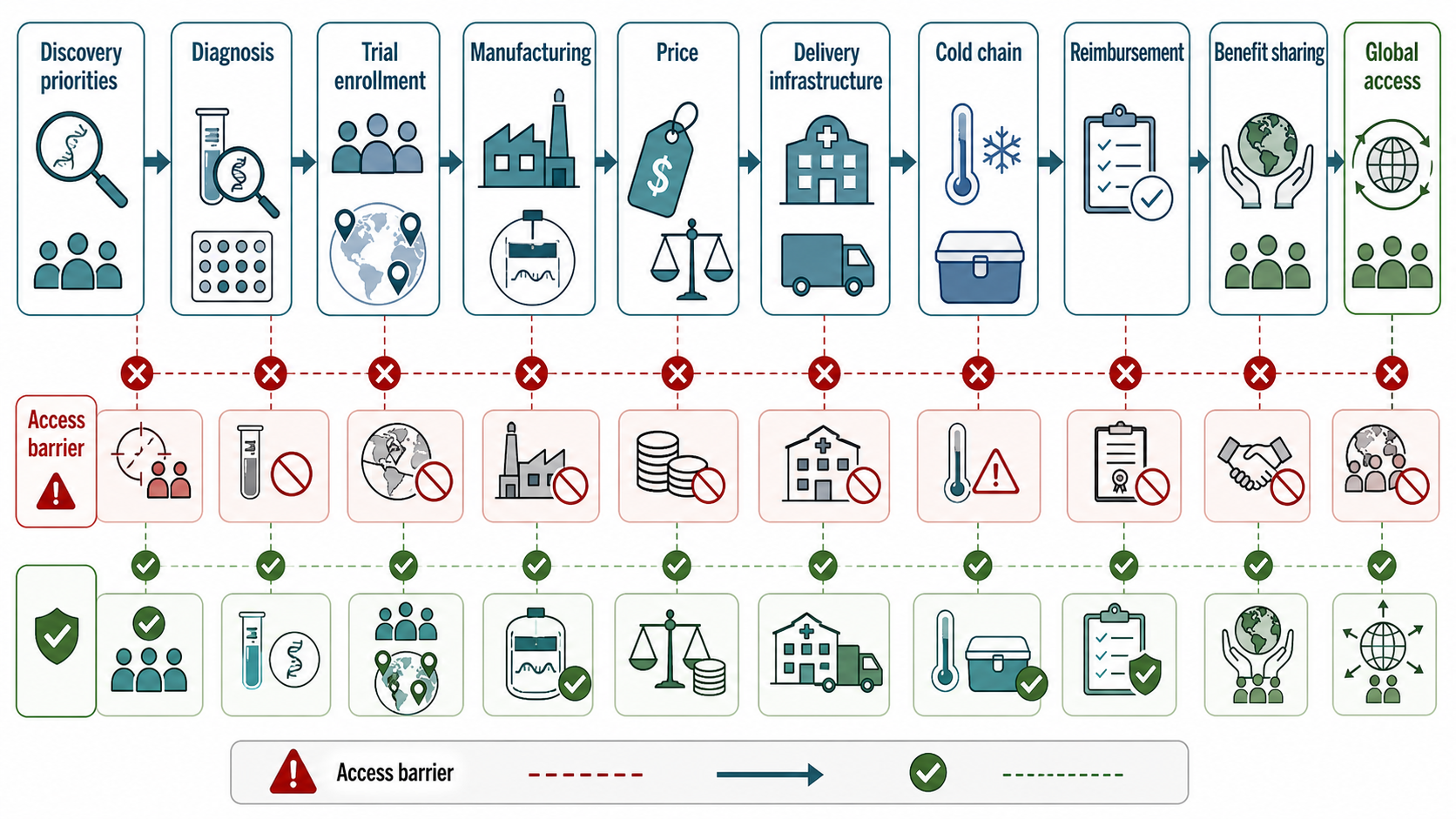
Figure 163.3. Equity and Access Losses Across the Development Funnel. The denominator for equitable RNA translation is the affected population, not only enrolled or treated patients. Genotype-specific eligibility, specialized administration, price, geography, and follow-up requirements can remove patients at different stages and should be measured as development outcomes.
Diagnostic access is unusually important for precision RNA products. A splice-switching therapy requires identification and functional interpretation of a variant; allele-selective suppression requires the target allele; a tumor RNA product may require sequencing and computational selection. Underrepresented ancestry groups can receive more uncertain variant classifications when reference data are sparse. A therapy program can therefore widen disparity even if drug eligibility is written neutrally. Solutions include validated testing pathways, coverage for confirmatory RNA assays, representative reference resources, transparent variant review, remote consultation, and support for reanalysis as annotation changes.
Trial inclusion and generalizability require more than demographic targets. Site location, travel, caregiving, language, disability accommodation, digital access, prior diagnosis, and procedure burden determine who can participate. Exclusions for pregnancy, age, renal impairment, immune status, or comorbidity may be justified early but should be revisited as evidence accumulates. Pharmacology and safety may differ in excluded groups, so postapproval use without planned evidence can shift uncertainty onto those patients. Enrollment strategies should connect representation to scientific questions about exposure, response, safety, and feasibility.
Price, affordability, and value are related but not identical. Manufacturing cost is one component of price; research risk, intellectual property, market exclusivity, expected population, negotiation, payer structure, and commercial strategy also matter. A high-priced product can be cost-effective under some assumptions yet unaffordable to a health system because the eligible population or budget timing is large. Outcome-based contracts, annuity payments, risk pools, public procurement, licensing, patent pools, tiered pricing, and technology transfer distribute uncertainty differently. Each requires auditable outcome definitions and safeguards against restricting access to make performance appear better.
Global implementation is not solved by publishing an RNA sequence. Manufacturing requires qualified raw materials, validated synthesis or transcription, purification, formulation, fill-finish, release analytics, cold or controlled-temperature logistics, and trained personnel. Regulatory reliance can reduce duplication, but evidence should still be interpreted for local disease epidemiology, standard care, population, and infrastructure. Regional production can improve resilience and responsiveness; it can also fail if technology transfer omits tacit process knowledge, analytical standards, maintenance, or sustainable demand. Implementation plans should be evaluated as part of the product strategy rather than after approval.
Table 163.3. Equity and Access Levers for RNA Interventions. Diagnostic access, trial geography, manufacturing, price, administration, and individualized-development capacity create distinct access losses; measurable responses must retain molecular, safety, and feasibility constraints.
| Development stage | Access failure | Measurable response | Important caveat |
|---|---|---|---|
| Disease recognition and diagnosis | No testing, delayed referral, uncertain variant interpretation | Time to diagnosis, testing coverage, reanalysis rate, ancestry-stratified uncertain calls | More testing does not help if follow-up interpretation and care are absent |
| Trial access | Distant sites, procedural burden, language or disability barriers | Screened-to-enrolled fraction and reasons for exclusion or decline | Representation targets should connect to pharmacology and outcome questions |
| Product development | Commercially unattractive small population | Public or shared infrastructure, platform methods, transparent prioritization | Platform reuse must not erase sequence-specific evidence |
| Manufacturing | Scarce capacity, raw-material dependence, no regional release analytics | Qualified sites, batch cadence, technology-transfer completeness | Local production without sustained quality systems is not durable access |
| Pricing and reimbursement | Budget impact, uncertain durability, restrictive coverage | Time from eligibility to treatment, denial rate, patient cost, outcome-linked contract audit | Cost-effectiveness and affordability answer different questions |
| Administration and follow-up | Specialty procedures, travel, cold chain, monitoring burden | Missed-dose rate, travel burden, site capacity, registry retention | Trial efficacy can overstate real-world benefit when burden excludes patients |
| Individualized treatment | Scarce design capacity allocated by wealth or visibility | Published selection criteria, independent review, common outcomes, registry contribution | Fair allocation cannot substitute for molecular tractability and safety review |
Rare diseases concentrate uncertainty. Small populations make effect estimates imprecise; phenotypes can be heterogeneous; progression can be nonlinear; and validated endpoints may not exist. Strong human genetics can increase confidence in the target but does not establish dose, treatment timing, or reversibility. Natural-history cohorts should begin early, use common definitions, record supportive care and genotype, and measure outcomes at intervals compatible with the planned trial. Patient and caregiver experience can identify meaningful functions that conventional scales miss, but new measures require validation and prespecification.
An individualized antisense oligonucleotide illustrates the full workflow. A patient receives a molecular diagnosis; RNA studies show an aberrant splice event; candidate oligonucleotides are designed and tested in patient-derived cells; a sequence is selected; product is manufactured and released; nonclinical and platform evidence justify a starting regimen; and a prospective protocol defines baseline observations, dosing, monitoring, outcomes, stopping, and reporting. The milasen case demonstrated that such a path can be executed rapidly, but one patient’s improvement cannot establish a general efficacy rate. The reusable lesson is the workflow and its safeguards, not a guarantee that the next sequence will help.
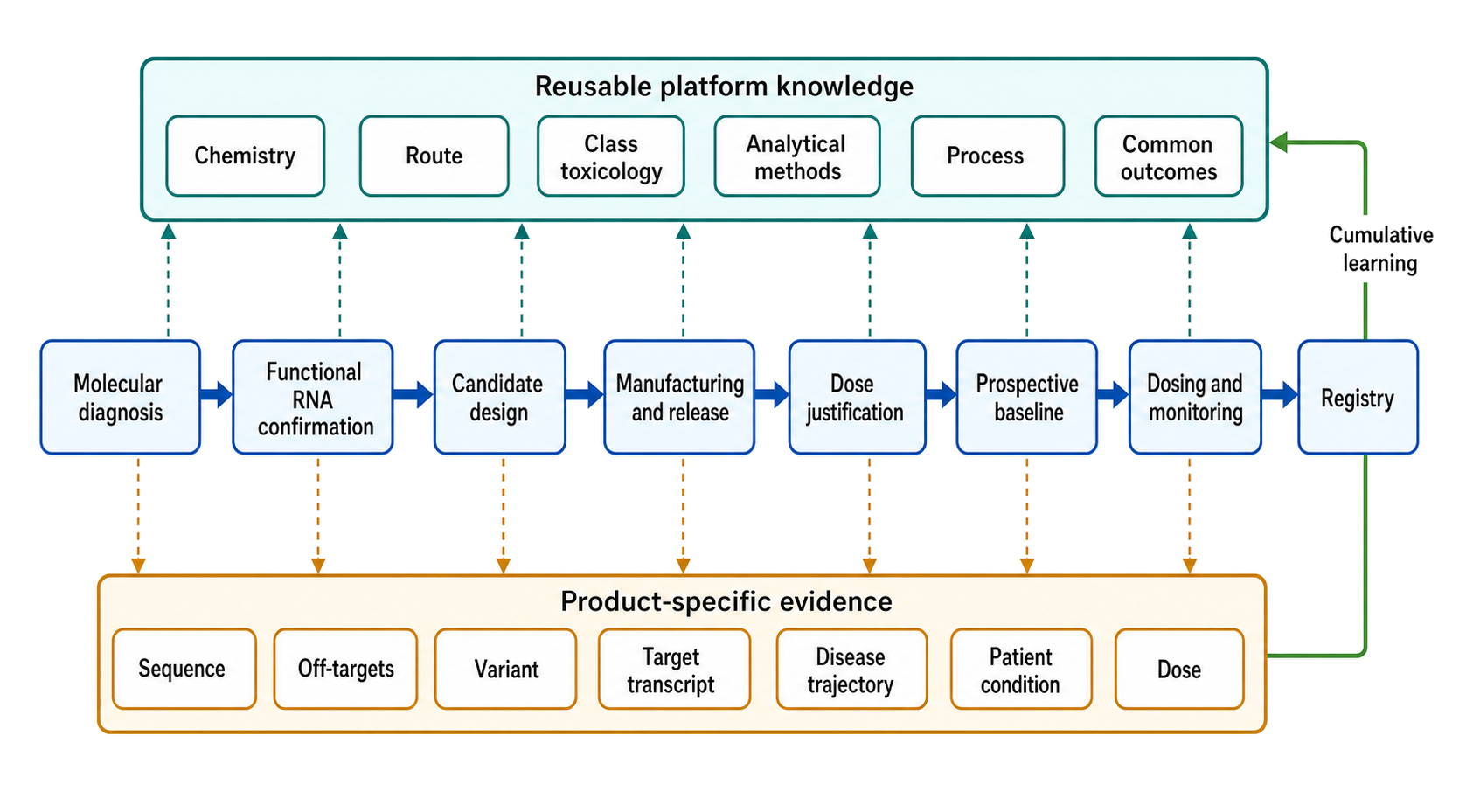
Figure 163.7. Individualized Oligonucleotide Development and Cumulative Learning. Individualized RNA development can reuse bounded platform knowledge while preserving sequence- and patient-specific review. Prospective protocols, repeated baselines, common outcome definitions, independent monitoring, and registries allow care for one patient to contribute to future learning without treating platform familiarity as proof of efficacy.
Box 163.2. Checklist for Learnable n-of-1 RNA Development
Confirm molecular diagnosis and causal variant; demonstrate functional RNA correction; define transferable platform evidence and sequence-specific evidence; release a controlled product; collect repeated baseline measures; prespecify dose, monitoring, clinical and molecular outcomes, stopping, and independent review; register and report positive, negative, and inconclusive results using common data elements.
Platform evidence should be partitioned. Knowledge about phosphorothioate chemistry, route, biodistribution, assay methods, manufacturing process, and known class effects may transfer when those elements are shared. Hybridization off-targets, transcript consequences, variant interpretation, disease biology, and patient trajectory remain sequence- and context-specific. Even a small sequence change can alter impurity separation, protein binding, RNA structure, and unintended hybridization. A platform approach is strongest when it defines explicit similarity boundaries and triggers for new studies.
n-of-1 inference needs a time series rather than a dramatic before-and-after anecdote. Multiple pretreatment observations can estimate slope and variability. Outcomes should include mechanistic biomarkers, clinical measures meaningful to the patient, treatment burden, and safety. Disease progression, regression to the mean, concurrent therapy, maturation, learning effects, and caregiver expectations can bias interpretation. Blinded or randomized periods may be impossible when effects are irreversible or treatment persists, but standardized measurement, independent adjudication, objective sensors, and external natural history can strengthen conclusions. Cross-patient common data elements allow aggregation even when each sequence differs.
Fair allocation is a clinical-development constraint when design and manufacturing capacity are scarce. Transparent criteria can consider molecular tractability, disease severity, rate of progression, strength of functional rescue, monitoring feasibility, and time available to intervene. Ability to pay or fundraising visibility should not silently determine access. Sustainable programs need shared protocols, sequence-screening methods, validated assays, reference standards, manufacturing networks, registries, and funding for lifelong follow-up. Broader ethical frameworks and consent questions are owned by Chapter 164, while this chapter focuses on development readiness and learnable treatment.
163.5. Regulatory evidence, product lifecycle management, and postmarket surveillance
Regulatory science develops and evaluates the tools used to decide whether a product’s quality, safety, and efficacy support a particular use. Agencies operate under different laws and terminology, but they commonly evaluate a defined product, manufacturing process, indication, population, dose, route, evidence package, and risk-management plan. A scientific discussion should not imply that one jurisdiction’s approval pathway applies everywhere. Early engagement can clarify product classification, study requirements, comparator expectations, pediatric plans, CMC timing, and whether platform or prior knowledge may be used.
The regulatory dossier is integrated. Quality uncertainty changes how clinical findings are interpreted; nonclinical tissue findings determine monitoring; pharmacokinetics and pharmacodynamics justify dose; trial design defines the claim; and implementation affects whether benefits can be realized safely. A molecularly precise product does not receive a lower evidence burden simply because its sequence is rationally designed. Precision can improve causal plausibility while introducing new analytical and population-specific questions.
Pathway flexibility responds to context. Serious disease, unmet need, a large and persuasive effect, or a justified surrogate can support earlier access with greater residual uncertainty. Emergency conditions can change the consequences of delay and feasibility of ordinary trials. Expanded access can provide treatment outside a development trial but is not a substitute for a program capable of estimating benefit and harm. Whatever the legal mechanism, the scientific record should identify what is known, what remains uncertain, what evidence will be generated, by when, and what action follows an unfavorable result.
Postmarket surveillance begins before approval by specifying important identified risks, potential risks, missing information, exposure denominators, data sources, and escalation procedures. Spontaneous reports can detect unusual events but are affected by stimulated reporting, missing clinical detail, duplicate reports, and absence of a reliable denominator. Active surveillance uses defined populations and systematic outcome ascertainment. Product registries, disease registries, electronic health records, claims, laboratory networks, pregnancy registries, and distributed data networks answer different questions and have different biases.
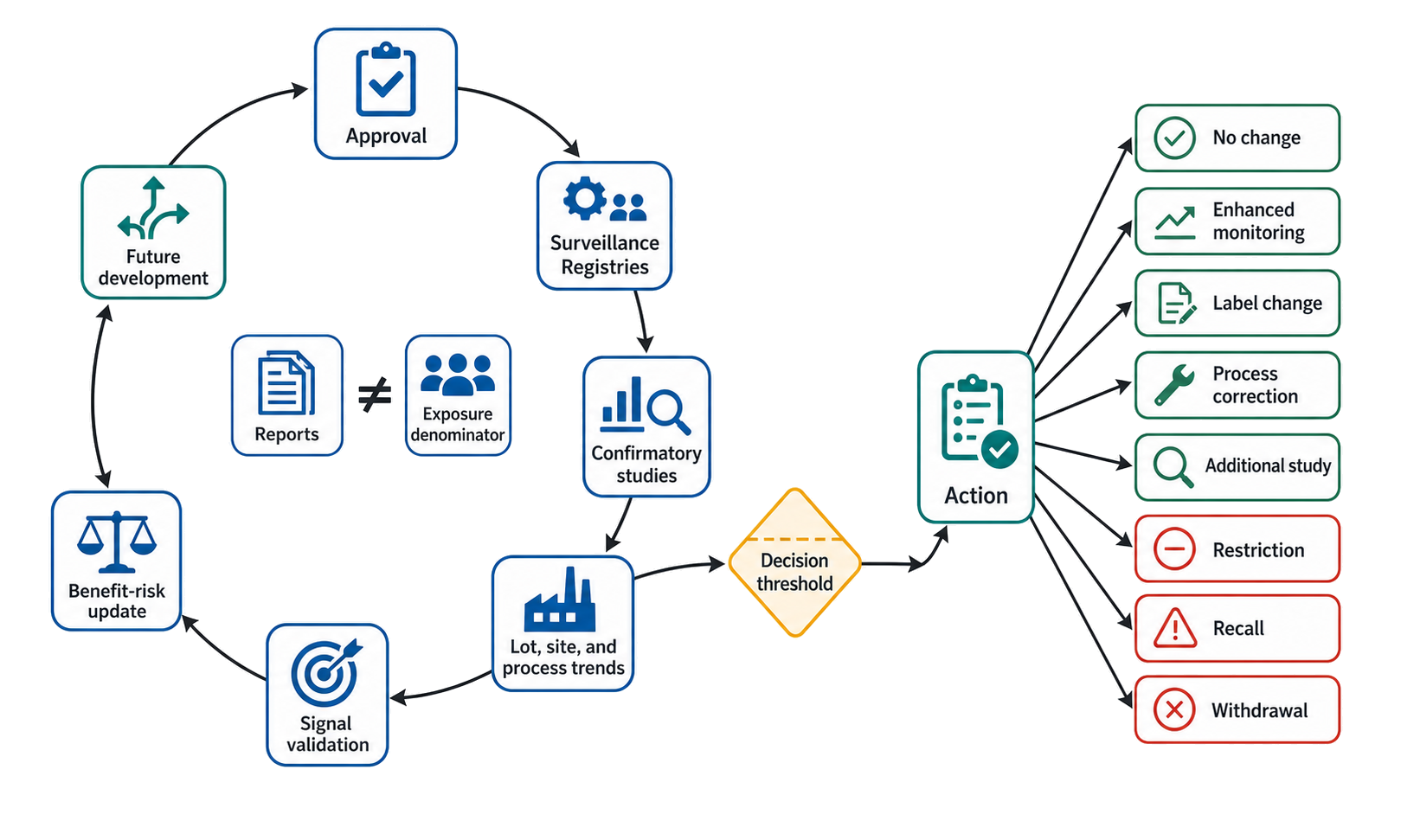
Figure 163.8. Postmarket Evidence and Product Lifecycle Control Loop. Postmarket evidence is useful only when signals can be connected to exposure denominators, patient context, product and lot history, and prespecified actions. Lifecycle regulation can preserve use, modify it, or end it as benefit-risk evidence changes.
Real-world data become real-world evidence only through a fit-for-purpose design and analysis. Data provenance, coding, linkage, missingness, outcome validity, exposure definition, confounding, immortal-time bias, and loss to follow-up must be evaluated. A registry designed for advocacy or clinical coordination may not contain the timing or comparator data needed for causal inference. Conversely, a prospective registry with common measures can be invaluable for rare disease, long-term durability, pregnancy, and excluded subgroups. Protocols and analysis plans should be specified before looking at comparative outcomes whenever possible.
Pharmacovigilance must connect adverse-event signals to product and manufacturing history. Lot, site, formulation, raw material, device, route, co-medication, and patient characteristics can reveal clusters. A rise in events may reflect reporting changes rather than biology; absence of reports may reflect poor access or recognition. Signal evaluation combines clinical review, observed-to-expected analyses, mechanistic plausibility, dechallenge or rechallenge where ethical, epidemiology, and product testing. Decisions can include communication, enhanced monitoring, labeling, contraindication, process correction, additional study, temporary restriction, or withdrawal.
Product lifecycle management includes planned manufacturing changes, new presentations, new sites, expanded populations, new routes, and additional indications. Each change should have a bridging strategy proportionate to its potential effect. Platform experience can reduce duplication when similarity is demonstrated. It should not be used to conceal accumulated drift: several individually small changes can together move the product outside the space supported by pivotal evidence. Continued process verification and stability trends help detect such movement.
Confirmatory evidence needs enforceable milestones. A postapproval trial that cannot recruit because the product is freely available may have been poorly designed from the outset. Alternative designs—registry randomization, pragmatic trials, external comparators, or earlier confirmatory initiation—may be needed, but each has assumptions. Decision thresholds should be stated: what magnitude and certainty of clinical benefit would confirm the claim, what outcome would be inconclusive, and what failure would support restriction or withdrawal. Delay without learning transfers uncertainty to patients without a compensating public benefit.
International coordination can share inspection findings, standards, pharmacovigilance signals, and scientific assessments. Harmonization reduces avoidable duplication, but it does not erase differences in legal authority, standard care, epidemiology, pricing, and health-system capacity. A product can have a favorable intrinsic efficacy profile yet poor real-world benefit where diagnosis, administration, or monitoring are unavailable. Regulatory and implementation evidence should therefore communicate rather than proceed as separate final stages.
163.6. Benefit-risk assessment, long-term follow-up, and lifecycle learning
Benefit-risk assessment is a structured synthesis, not a single ratio. Benefits have magnitude, probability, onset, duration, relevance to patients, and uncertainty. Risks have severity, reversibility, timing, preventability, detectability, and affected subgroups. Alternatives include standard treatment, supportive care, another modality, trial participation, or no intervention. Disease severity and unmet need influence how uncertainty is tolerated, but neither makes evidence irrelevant. A fatal progressive pediatric disease may justify substantial uncertainty; a preventive product given to healthy millions usually requires a different safety threshold.
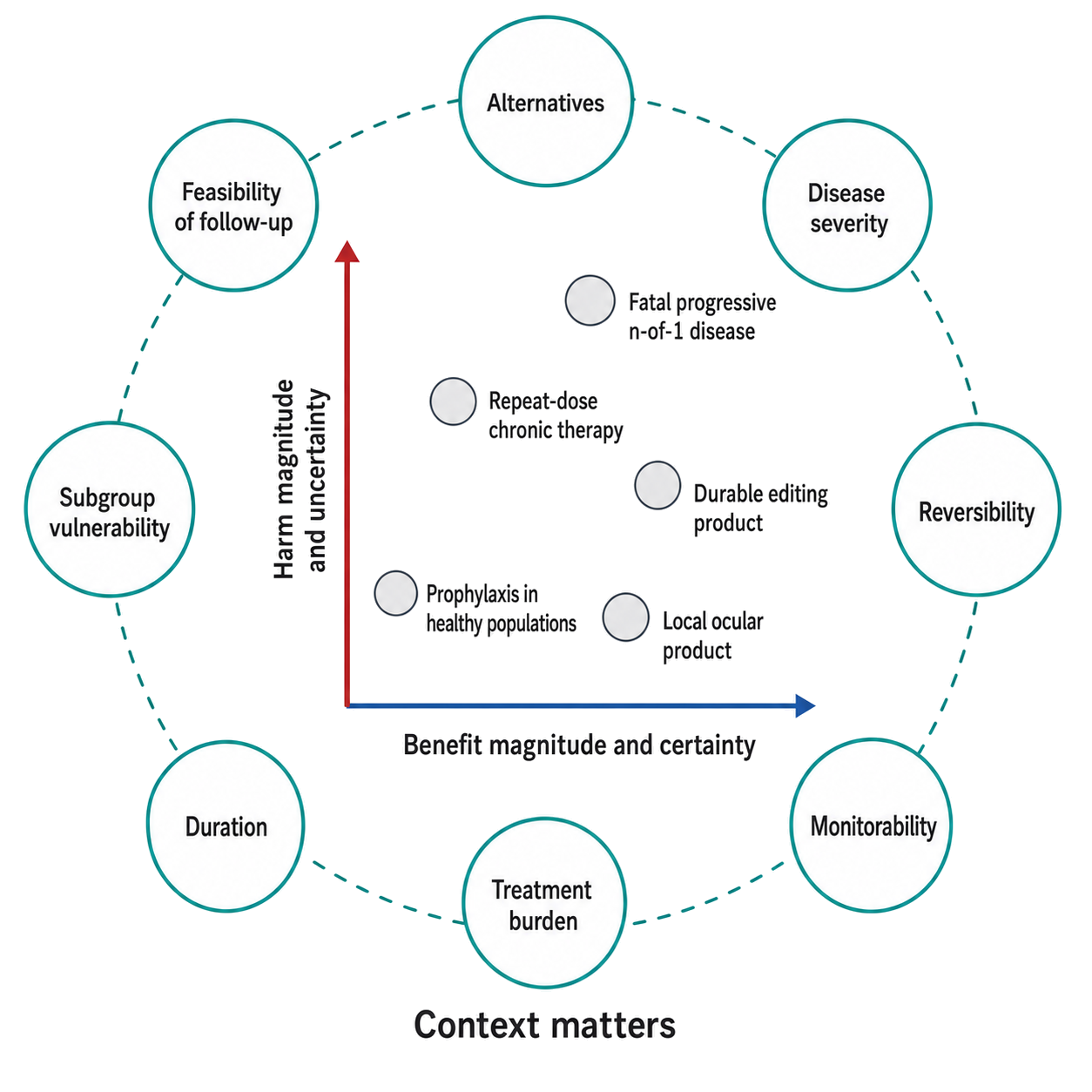
Figure 163.9. Contextual Benefit-Risk Matrix for RNA Products. Benefit-risk is contextual. Disease severity and unmet need can justify residual uncertainty, whereas broad preventive exposure or irreversible effects can require greater safety assurance. The decision integrates magnitude, certainty, reversibility, alternatives, and the ability to detect and control harm.
The chain from molecular effect to benefit should be explicit. A treatment may reach tissue, alter RNA, restore protein, change physiology, improve function, and extend survival. Evidence can be strong at one link and weak at the next. Failure to improve outcome despite target engagement can indicate treatment too late, insufficient effect size, wrong cell type, compensatory biology, or an invalid disease model. Benefit-risk review should resist both interpretations that target engagement proves success and that a failed clinical outcome disproves every version of the target mechanism.
Long-term follow-up is driven by product and disease properties. A transiently measured RNA can produce durable protein, immune memory, editing, developmental change, or downstream toxicity. Tissue-retained oligonucleotides may support infrequent dosing but prolong exposure after discontinuation. Repeated intrathecal or ocular procedures add cumulative procedural risk. Follow-up should cover the plausible latency and reversibility of outcomes, not an arbitrary interval shared by every RNA modality. The protocol should define which assessments can move from intensive to routine monitoring and what signal restores greater surveillance.
Durability is an efficacy and access question. Waning effect can require redosing; redosing can change immunogenicity, adherence, cost, and burden. A treatment that works only with frequent specialty procedures may have lower real-world effectiveness than its biological efficacy suggests. Conversely, a durable one-time effect creates long uncertainty about late outcomes and manufacturing comparability for future patients. Exposure-response and time-to-waning models should be updated as later cohorts and postmarket data accumulate.
Lifecycle learning requires compatible data. Trial extensions, registries, pharmacovigilance systems, routine clinical records, laboratory data, and patient-reported outcomes should use stable definitions and product identifiers. Changes in endpoint instruments, assay platforms, reference annotations, and standard care must be recorded so that trends are not mistaken for treatment effects. Data completeness should be monitored by site and subgroup because loss to follow-up is often informative: patients with poor outcomes, high burden, or access barriers may be the first to disappear.
Box 163.4. Convert Lifecycle Evidence Into Action
For each important uncertainty, specify data source, denominator, outcome validation, review interval, alert threshold, adjudicator, decision authority, and possible actions. Include distinct thresholds for safety signal investigation, manufacturing drift, inadequate confirmatory benefit, subgroup evidence, and loss to follow-up.
Decision thresholds convert monitoring into action. A safety plan can define a background rate, alert threshold, adjudication process, and response. A confirmatory plan can define the minimum clinically important effect and acceptable uncertainty. A manufacturing plan can define when an out-of-trend attribute triggers investigation or comparability testing. A population plan can define when subgroup evidence is too sparse for an expanded use. Thresholds need not be mechanically binding, but writing them prospectively reduces motivated reinterpretation after an inconvenient result.
Withdrawal can refer to product withdrawal, indication restriction, batch recall, trial stopping, or an individual patient’s discontinuation. These decisions differ. A product may remain favorable for a severe subgroup but not for a broader one; a manufacturing defect may affect particular lots; absent confirmatory benefit may undermine an accelerated indication without changing established uses. Communication should specify the decision object and evidence. Questions about broader public communication and institutional trust are treated in Chapter 164.
Lifecycle evidence can also improve future products. Class toxicology, assay validation, disease natural history, common outcomes, manufacturing analytics, and site competence may be reusable. Negative results are especially valuable when they reveal inadequate tissue exposure, invalid biomarkers, or nonresponsive disease stages. Reuse requires precise boundaries: a lesson about one chemistry, route, target tissue, and dose should not be generalized to every RNA product. A mature RNA-development ecosystem learns rapidly without confusing shared tools with shared clinical performance.
Recent Consensus
RNA products are no longer treated as a single experimental class. Development is modality-, sequence-, formulation-, route-, tissue-, disease-, and population-specific. Platform knowledge can accelerate analytical methods, manufacturing, toxicology, and clinical planning, but only within stated similarity boundaries. The product used in a trial is defined by its process and attributes as well as by its intended sequence.
Evidence layers should not be collapsed. Molecular target engagement, pharmacodynamic response, surrogate response, clinical benefit, durability, safety, implementation effectiveness, and access answer different questions. Trial estimands and handling of intercurrent events should be specified prospectively. External controls and real-world evidence can be valuable, especially in rare disease, but they require stronger attention to data provenance, alignment, confounding, and sensitivity analysis than a simple historical comparison suggests.
Manufacturing development and clinical development are interdependent. Potency, critical quality attributes, scale-up, stability, and comparability determine whether evidence from one stage applies to the next. Regulatory flexibility is most credible when residual uncertainty is paired with feasible, timely, and consequential confirmatory and postmarket learning.
Individualized oligonucleotide development should reuse platform knowledge while generating sequence- and patient-specific evidence. Prospective baseline data, common outcomes, independent monitoring, registries, and transparent stopping rules can protect an individual and build generalizable knowledge. Equity depends on diagnostic access, representative evidence, manufacturing and site capacity, affordability, and sustained follow-up—not approval alone.
Open Questions, Controversies, Deprecated Models, and Common Misconceptions
Open questions:
- Which analytical and functional similarity criteria are sufficient to transfer platform evidence after an RNA sequence or manufacturing change?
- For which RNA mechanisms and diseases do molecular or intermediate endpoints reliably predict patient benefit?
- How can external controls be made credible when disease progression, supportive care, and measurement instruments change rapidly?
- What minimum common dataset should every individualized oligonucleotide program contribute to cross-patient learning?
- How should confirmatory evidence be designed before earlier access makes ordinary randomized recruitment infeasible?
- Which payment and manufacturing models can sustain ultrarare development without tying access to wealth or fundraising visibility?
- How should long-term follow-up duration be matched to tissue retention, repeat dosing, immune memory, editing, or developmental timing?
- What lifecycle decision thresholds best distinguish a transient safety signal, a product-quality problem, and a true shift in benefit-risk?
Common misconceptions:
- “A rational RNA sequence is already a development candidate.” A candidate also requires a defined chemistry, formulation, route, process, analytical control strategy, dose concept, and evidence plan.
- “Target engagement proves clinical benefit.” Target engagement establishes one causal link; downstream physiology, disease stage, endpoint validity, and patient outcomes remain separate.
- “A biomarker is a surrogate endpoint.” A biomarker can support dose selection without being validated to predict clinical benefit.
- “Real-world data are automatically more representative and therefore unbiased.” Routine data can broaden populations while retaining confounding, coding, selection, and missing-data biases.
- “Comparability means two products must be analytically identical.” Comparability asks whether differences create a clinically meaningful change in quality, safety, or efficacy.
- “Platform experience removes sequence-specific risk.” Shared chemistry and process knowledge do not erase new hybridization, target, payload, or disease-context risks.
- “An n-of-1 treatment cannot generate generalizable knowledge.” Standardized design, common measures, registries, and transparent reporting can create reusable evidence even when each sequence is unique.
- “Approval completes translation.” Product performance continues to depend on manufacturing control, access, adherence, pharmacovigilance, confirmatory evidence, and lifecycle decisions.
- “Regulatory flexibility means a lower scientific standard everywhere.” Flexible pathways differ by jurisdiction and should match unmet need with explicit uncertainty and enforceable learning.