Chapter 119. Viroids, Satellites, Defective RNAs, Plant RNA Pathogens, and Viral Ribozymes
Scope Note
This chapter treats viroids and the broader subviral RNA world of satellite RNAs, virusoids, defective interfering RNAs, and self-cleaving ribozymes embedded in minimal replicons. It owns their natural pathogenic context: rolling-circle replication, processing of multimeric intermediates, helper-virus relationships, plant defense, diagnostics, and agriculture. Chapter 9 owns comparison of hammerhead and related catalytic mechanisms across biological contexts; Chapter 8 owns RNA-world inference; and Chapter 115-Chapter 118 own RNA-virus genome strategies.
Executive Summary
Viroids are the most extreme known expression of RNA as a genetic entity. They are small (roughly 246 to 401 nucleotides), single-stranded, covalently closed circular RNA molecules that infect plants, replicate autonomously in susceptible hosts, and cause disease — yet they encode no proteins. Their existence is a biological paradox: an RNA molecule that provides no enzymatic or structural proteins must redirect host machinery to copy an RNA template that the host would not normally replicate. The solution to this paradox lies in a combination of RNA structural biology and host polymerase promiscuity. Viroids fold into rod-like or branched secondary structures that somehow recruit host DNA-dependent RNA polymerases to perform RNA-templated transcription. The resulting multimeric RNA transcripts are then processed into unit-length genomes by one of two mechanisms: self-cleavage by an embedded ribozyme, or cleavage by host ribonucleases.
The viroid world is divided into two families with fundamentally different replication strategies. Members of the Pospiviroidae, exemplified by potato spindle tuber viroid (PSTVd), replicate in the nucleus through an asymmetric rolling-circle mechanism, use host RNA polymerase II for transcription, lack ribozymes, and rely on host RNase III-like enzymes for cleavage. Members of the Avsunviroidae, exemplified by avocado sunblotch viroid (ASBVd), replicate in chloroplasts through a symmetric rolling-circle mechanism, use the chloroplast-encoded nuclear-encoded polymerase or a plastid-encoded RNA polymerase, and encode hammerhead ribozymes that process both multimeric strands. The hammerhead ribozymes first discovered in ASBVd were the first natural self-cleaving RNAs identified, preceding the broader ribozyme discoveries of the RNA World era by several years.
Satellite RNAs, satellite viruses, and virusoids are subviral agents that depend on a helper virus for replication or encapsidation. The taxonomy is confusing but important: a satellite RNA is a small RNA molecule that requires a helper virus for replication but is not part of the helper virus genome; a satellite virus encodes its own capsid protein and requires a helper virus for replication; a virusoid is a satellite-like circular RNA that encodes a ribozyme and is encapsidated within the helper virus capsid (essentially a satellite RNA with ribozyme activity); and hepatitis delta virus (HDV) is the only known human pathogen in this category, a satellite virus that requires hepatitis B virus surface antigen for envelopment but can replicate independently using host RNA polymerase II. The cucumber mosaic virus satellite RNAs are among the best-studied plant satellite systems; they alter helper virus symptoms, sometimes dramatically, through RNA-mediated mechanisms.
Defective interfering (DI) RNAs are truncated forms of viral genomes generated during replication by aberrant polymerase events including template switching, deletion, and copy-back. Unlike satellites, DI RNAs are derived from the helper virus genome rather than being foreign sequences. They retain replication and encapsidation signals but have lost essential coding regions, and they interfere with standard virus replication by competing for polymerase and structural proteins. The von Magnus effect, described for influenza virus in the 1950s, was the first observation of defective particle interference and remains the classic example. In plant systems, DI RNAs from tombusviruses and bromoviruses modulate disease severity and are used experimentally to study RNA replication and recombination.
The practical importance of viroids and subviral RNA agents goes beyond fundamental biology. Viroids cause economically significant losses in potato, tomato, citrus, avocado, coconut, chrysanthemum, hop, and grapevine. Diagnosis relies on RNA-specific methods including RT-PCR, Northern blot, and small RNA sequencing. RNA silencing pathways in plants generate viroid-derived small RNAs that can be used for diagnostics, and the same pathways are being engineered for crop protection. Ribozymes from plant pathogens have been adapted into diagnostic platforms and experimental tools, providing a direct link from fundamental viroid biology to biotechnology.
Concept Inventory
- Viroid: an infectious, protein-free, single-stranded circular RNA molecule, typically 246-401 nucleotides in plants, that replicates autonomously in susceptible host species and can cause disease. Viroids do not encode proteins, lack capsids, and replicate entirely through host enzymes. The term was coined by Theodor Diener in 1971 following the characterization of potato spindle tuber viroid.
- Aliases: naked RNA pathogen, minimal replicon, subviral pathogen.
- Boundary: viroids must be distinguished from satellite RNAs, which depend on a helper virus. Viroids replicate autonomously in susceptible hosts. The distinction from virusoids is that virusoids are encapsidated within helper virus particles and require the helper for replication, whereas viroids are unencapsidated and replicate independently. The boundary is not fully crisp because some viroid-like RNAs may depend on host factors that are induced only in specific developmental stages.
- Pospiviroidae: one of the two viroid families. Members replicate in the nucleus, have a central conserved region, lack ribozymes, and use an asymmetric rolling-circle mechanism. PSTVd is the type species. The family includes genera such as Pospiviroid, Hostuviroid, Cocadviroid, Apscaviroid, and Coleviroid.
- Avsunviroidae: the other viroid family. Members replicate in chloroplasts, lack a central conserved region, encode hammerhead ribozymes, and use a symmetric rolling-circle mechanism. ASBVd is the type species. The family includes Avsunviroid, Elaviroid, and Pelamoviroid.
- Rolling-circle replication: the mechanism by which circular RNA genomes are copied into multimeric linear RNAs, which are then processed into monomeric circles. The term is borrowed from rolling-circle DNA replication of bacteriophages and plasmids but adapted to RNA: an RNA template is transcribed multiple times before processing. The rolling-circle can be asymmetric (only one polarity strand is multimerized) or symmetric (both plus and minus strands are produced as multimers and self-cleave).
- Symmetric rolling-circle replication: characteristic of Avsunviroidae, involves transcription of the circular plus-strand into a multimeric minus-strand, which self-cleaves via hammerhead ribozymes into monomeric linear minus-strands. These are circularized by a host RNA ligase, and the circular minus-strand is transcribed into a multimeric plus-strand, which also self-cleaves and circularizes. Both strands serve as templates, and both carry the hammerhead ribozyme.
- Asymmetric rolling-circle replication: characteristic of Pospiviroidae, involves transcription of the circular plus-strand into a multimeric minus-strand by host Pol II, which is then used directly as a template for synthesis of multimeric plus-strands without first circularizing the minus-strand. The multimeric plus-strand is cleaved by host enzymes, likely RNase III family members, into monomeric linear forms that are circularized by host RNA ligase. Only the plus strand accumulates as circles.
- Virusoid: a small, circular, single-stranded satellite RNA that is encapsidated within the capsid protein of a helper virus and encodes self-cleaving ribozymes. The term emphasizes the viroid-like properties (circular, ribozyme-encoding, small) but distinguishes these RNAs from true viroids because virusoids require a helper virus for replication and encapsidation.
- Aliases: satellite viroid, encapsidated viroid-like RNA.
- Boundary: some authors use “virusoid” and “satellite RNA” interchangeably when the satellite is circular and encodes a ribozyme. The distinction is useful because virusoids share mechanistic features (ribozyme self-cleavage, rolling-circle replication) with Avsunviroidae while sharing ecological features (helper dependence, encapsidation) with satellite RNAs.
- Satellite RNA: a small linear or circular RNA molecule that depends on a helper virus for replication and, in some cases, encapsidation. Satellite RNAs are not part of the helper virus genome and encode either no proteins or a single nonstructural or capsid protein. Well-studied examples include cucumber mosaic virus satellite RNAs and tobacco ringspot virus satellite RNAs.
- Satellite virus: distinguished from satellite RNA by encoding its own capsid protein. Satellite tobacco necrosis virus is the classic example: its RNA encodes a capsid protein that forms icosahedral particles distinct from those of the helper tobacco necrosis virus, but its RNA-dependent RNA polymerase activity is provided by the helper.
- Helper virus: a virus that provides one or more functions required by a satellite RNA, satellite virus, or virusoid. The functions provided can include the RNA-dependent RNA polymerase, the capsid protein for encapsidation, movement proteins, or transcriptional machinery. Different satellites depend on different helpers, and the helper-satellite relationship can be highly specific or relatively broad.
- Defective interfering RNA (DI RNA): a truncated form of the helper virus genome that retains replication and packaging signals but has lost essential coding regions through deletion or rearrangement. DI RNAs replicate only in the presence of the standard helper virus, whose replication they can interfere with by competing for limiting replication factors. DI RNAs are generated during viral replication by aberrant polymerase events and are distinct from satellite RNAs because they are derived from the helper genome rather than being foreign sequences.
- Aliases: DI particle RNA, defective viral genome (a broader term), subgenomic defective RNA.
- Boundary: DI RNAs require a helper virus (like satellite RNAs) but are derived from the helper genome (unlike satellite RNAs). Defective viral genomes (DVGs) is the broader category that includes DI RNAs, copy-back RNAs, snapback RNAs, and simple deletion variants that may not interfere with standard virus replication.
- Hammerhead ribozyme: a small self-cleaving RNA motif first discovered in ASBVd and later found in satellite RNAs, virusoids, and some cellular transcripts (including in animals and in eukaryotic retrotransposons). The minimal hammerhead consists of three helices radiating from a conserved catalytic core of approximately 13 conserved nucleotides. Self-cleavage occurs via a transesterification reaction that produces 2′,3′-cyclic phosphate and 5′-hydroxyl termini. The reaction requires divalent metal ions, typically magnesium, under physiological conditions, though the precise role of metal ions in the catalytic chemistry has been debated.
- Aliases: hammerhead self-cleaving motif, HHRz.
- Boundary: distinct from the hairpin ribozyme and HDV ribozyme in sequence, structure, and catalytic mechanism. Hammerhead ribozyme catalysis in ASBVd occurs in a double-hammerhead arrangement where two hammerhead motifs dimerize to stabilize the active conformation.
- Hairpin ribozyme: a self-cleaving RNA motif found in the minus strand of tobacco ringspot virus satellite RNA and in some other satellite RNAs. Unlike the hammerhead, the hairpin ribozyme does not require divalent metal ions for cleavage; metal ions are required for folding but not for the chemical step. The reaction produces 2′,3′-cyclic phosphate and 5′-hydroxyl termini, the same products as the hammerhead.
- Hepatitis delta virus (HDV) ribozyme: a self-cleaving RNA motif found in both the genomic and antigenomic strands of HDV RNA. The HDV ribozyme uses a double-pseudoknot fold that is structurally distinct from the hammerhead and hairpin ribozymes. The cleavage mechanism differs: the HDV ribozyme uses a cytosine nucleobase as a general acid, and the reaction produces 5′-hydroxyl and 2′,3′-cyclic phosphate termini but proceeds through a different transition-state structure. HDV is the only known human pathogen that encodes a ribozyme.
- Viroid-derived small RNA (vd-sRNA): a small RNA (typically 21-24 nucleotides in plants) generated by the host RNA silencing machinery (Dicer-like proteins) from viroid RNA during infection. vd-sRNAs are loaded into Argonaute proteins and can, in some cases, direct cleavage of host mRNAs, potentially contributing to viroid pathogenesis. vd-sRNAs are also useful as diagnostic markers.
- RNA silencing in the context of viroids: the host plant’s small RNA-based defense response against viroid replication. Dicer-like proteins process viroid double-stranded RNA or highly structured single-stranded RNA regions into small RNAs. However, evidence suggests that viroids are relatively resistant to complete clearance by RNA silencing, possibly because their highly base-paired rod-like structures restrict accessibility to the silencing machinery or because they replicate in compartments (nucleus or chloroplast) that may be less accessible to cytoplasmic silencing effectors.
What to Know Before Reading This Chapter
The reader should understand the central dogma distinction: DNA is transcribed into RNA, which is translated into protein. Viroids violate this paradigm because they are RNA molecules that are replicated without ever passing through a DNA intermediate, and they encode no proteins. The host machinery that normally copies DNA into RNA is hijacked to copy RNA into RNA, a reaction that the host did not evolve to perform. Understanding how this works requires familiarity with RNA structure (covered in Chapter 10-Chapter 13 and Chapter 60-Chapter 63), the concept of ribozymes (Chapter 8), and the basics of plant virology (Chapter 113 and Chapter 115).
The reader should be comfortable with three categories of RNA processing: transcription (RNA synthesis from a template), cleavage (endonucleolytic cutting of RNA at specific sites), and ligation (joining of RNA ends to form a circle or linear product). Viroid replication combines all three, and the chapter describes which steps use host enzymes and which use ribozymes.
The reader must keep four categories of subviral RNA agents separate: viroids (autonomous, protein-free, unencapsidated, infectious circular RNAs), satellite RNAs (depend on helper virus, may be linear or circular, may or may not encode proteins), satellite viruses (depend on helper virus, encode their own capsid protein), and defective interfering RNAs (derived from the helper genome, not autonomous). These categories are frequently confused in the literature, and the chapter will explicitly distinguish them.
Viroids infect plants. With the sole exception of HDV, which is a satellite virus with viroid-like features that infects humans, no true viroid has been found in animals. The chapter focuses primarily on plant systems because they are the natural hosts of viroids and most characterized subviral RNA pathogens, but the principles of ribozyme catalysis, rolling-circle replication, and RNA silencing apply broadly.
119.1. Viroid genome structures, replication, and trafficking
Potato spindle tuber viroid (PSTVd) is the paradigm. The disease was first described in the 1920s as a graft-transmissible disorder of potato that produced elongated, spindle-shaped tubers with reduced yield. By the late 1960s, Theodor Diener at the US Department of Agriculture had demonstrated that the infectious agent was a free RNA molecule — no capsid, no protein coat, no helper virus — and in 1971 he proposed the term “viroid.” PSTVd is a covalently closed circular RNA of 359 nucleotides (the type strain; length varies slightly among isolates) that folds into an extended rod-like secondary structure with extensive intramolecular base pairing.
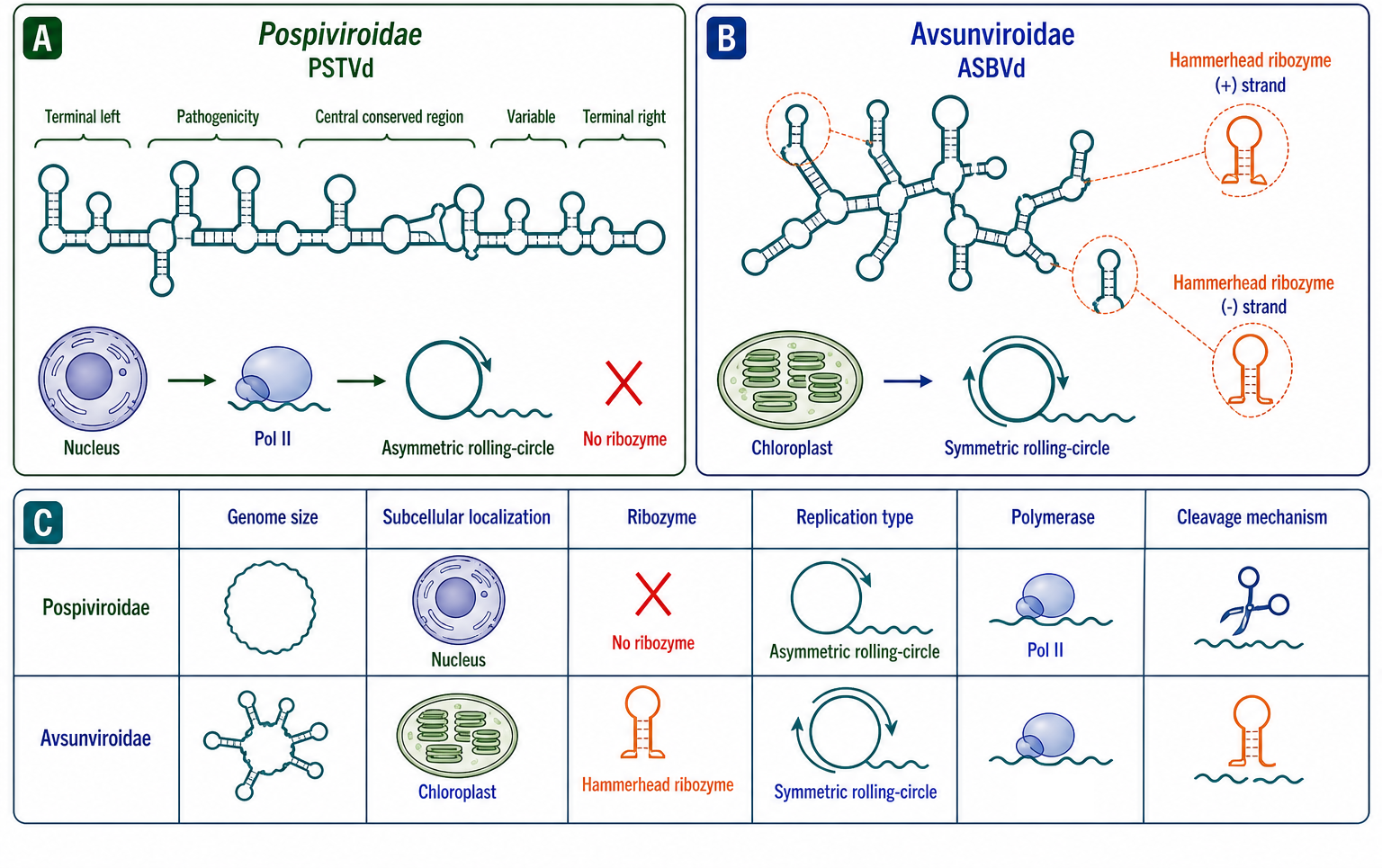
Figure 119.1. Viroid Families — Pospiviroidae versus Avsunviroidae. Viroids are divided into two families. Pospiviroidae (e.g., PSTVd) replicate in the nucleus via asymmetric rolling-circle replication without ribozymes, using Pol II and host RNases. Avsunviroidae (e.g., ASBVd) replicate in chloroplasts via symmetric rolling-circle replication, with hammerhead ribozymes processing both strands.
The PSTVd rod is not a perfect duplex. It contains five structural domains identified by comparative sequence analysis across pospiviroids: the terminal left domain, the pathogenicity domain, the central conserved region, the variable domain, and the terminal right domain. The rod structure is critical: it protects the RNA from exonucleases, presents the promoter elements to host Pol II, and may be recognized by host factors for nuclear import. Mutations that destabilize the rod structure generally reduce infectivity or alter pathogenicity, although the relationship between stability and function is not always simple.
PSTVd replication occurs in the nucleus and follows the asymmetric rolling-circle mechanism. The infecting circular plus-strand is used as a template by host DNA-dependent RNA polymerase II, which transcribes it into a multimeric linear minus-strand RNA. This is the central enzymatic anomaly of viroid biology: Pol II normally transcribes DNA templates, yet it recognizes a structured RNA template for viroid replication. The structural features that redirect Pol II specificity to RNA are incompletely understood, but the rod-like secondary structure appears to present double-stranded regions that resemble DNA or that interact with transcription factors in a way that recruits the polymerase. The multimeric minus-strand then serves directly as template for Pol II to produce multimeric plus-strands, without prior circularization of the minus-strand. The multimeric plus-strand is cleaved, likely by a host RNase III family enzyme (Dicer-like proteins have been implicated), into monomeric linear forms that are circularized by a host RNA ligase. Only the plus-strand accumulates as circles in the infected cell.
In contrast, avocado sunblotch viroid (ASBVd), the type member of the Avsunviroidae, replicates in chloroplasts using a symmetric rolling-circle mechanism. ASBVd is 247 nucleotides, considerably smaller than PSTVd, and its sequence contains hammerhead ribozyme motifs in both the plus and minus strands. The infecting circular plus-strand is transcribed by a chloroplast RNA polymerase — either the nuclear-encoded phage-type polymerase (NEP) or the plastid-encoded eubacterial-type polymerase (PEP), depending on developmental stage — into a multimeric minus-strand. The hammerhead ribozyme in the minus strand self-cleaves the multimer into monomeric linear minus-strands, which are circularized by a chloroplast RNA ligase. The circular minus-strand is then transcribed into a multimeric plus-strand, which self-cleaves via its hammerhead ribozyme into monomeric linear plus-strands that are circularized. Both strands serve as templates and accumulate as circles.
The two replication strategies produce different experimental signatures. In asymmetric replication, minus-strand multimers are present only transiently and are difficult to detect. In symmetric replication, both plus-strand and minus-strand multimers and circles can be detected. This difference was historically used to classify new viroids before sequence-based taxonomy became standard.
The host polymerases used by viroids are a study in molecular opportunism. Pospiviroids use Pol II, which is remarkable because this is a DNA-dependent RNA polymerase recruited to an RNA template. Sensitivity to alpha-amanitin, a Pol II-specific inhibitor, provided early evidence for this assignment. Avsunviroids use the chloroplast transcription machinery; sensitivity to tagetitoxin, which inhibits PEP but not NEP, has been used to probe which polymerase is active in which developmental context. The existence of viroids proves that the discrimination between RNA and DNA templates by cellular RNA polymerases is less absolute than textbook descriptions suggest.
Viroid trafficking within the infected plant requires movement from the initial infection site to distal tissues. For mechanical or graft inoculation, the viroid must enter a cell, replicate, move cell-to-cell through plasmodesmata, and enter the phloem for long-distance transport. PSTVd has been shown to traffic as a naked RNA-protein complex rather than as free RNA. Specific host proteins, including a phloem lectin (PP2) and a bromodomain-containing protein (VIRP1), bind PSTVd and are required for systemic infection. The viroid structural domains responsible for trafficking have been mapped: mutations in specific loops of the rod structure can abolish systemic movement without preventing replication in inoculated cells, indicating that replication and movement are structurally separable functions.
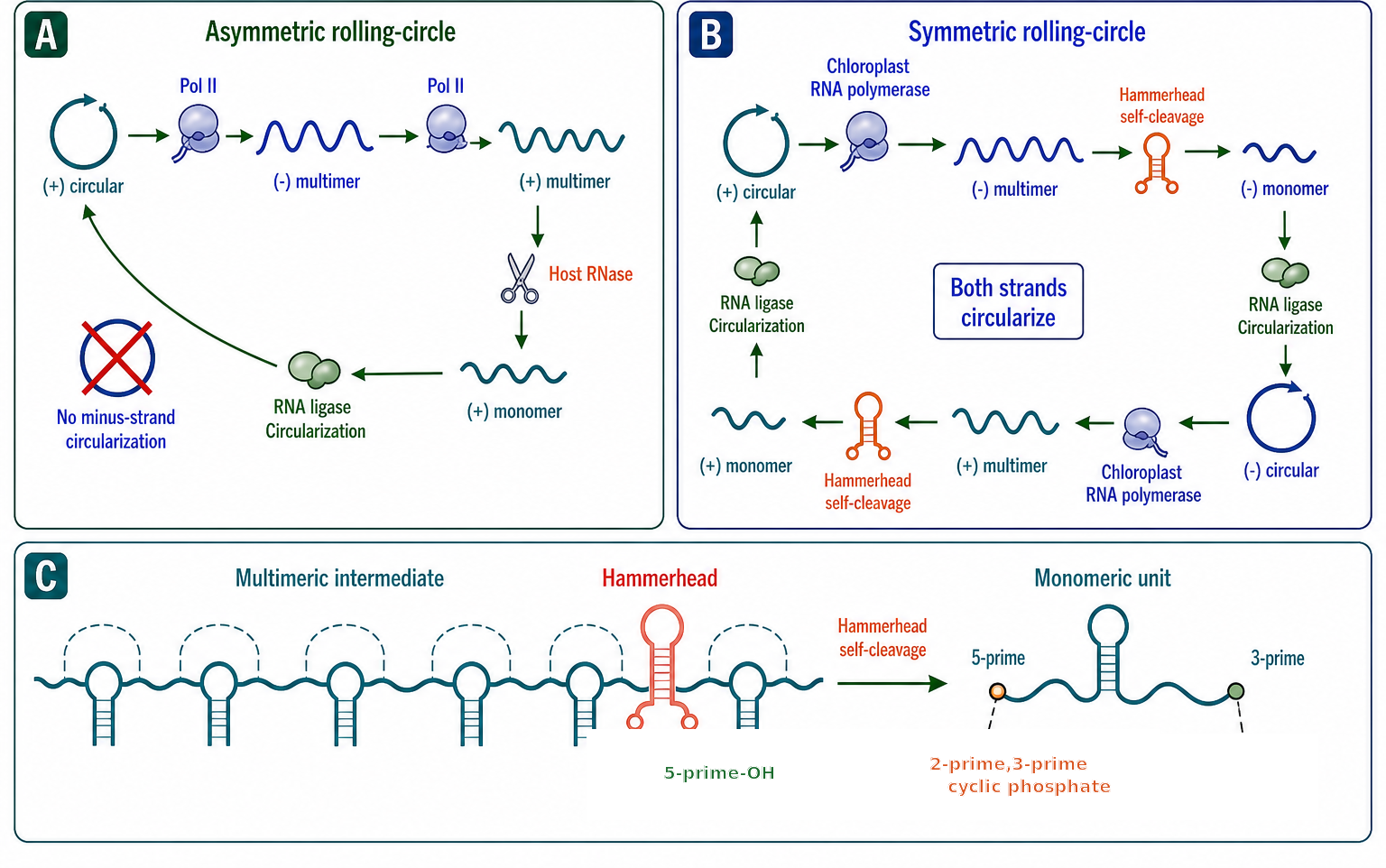
Figure 119.2. Rolling-Circle Replication Mechanisms in Viroids. Viroids replicate by rolling-circle mechanisms. Pospiviroidae use an asymmetric mechanism in which only the plus strand is circularized. Avsunviroidae use a symmetric mechanism in which both strands self-cleave via hammerhead ribozymes and are circularized.
Viroid host range is determined at multiple levels. Some viroids infect only a narrow range of species; PSTVd primarily infects solanaceous plants (potato, tomato, and relatives), though experimental hosts include many species. Other viroids, such as hop stunt viroid and chrysanthemum stunt viroid, have broader host ranges. Host specificity can operate at the level of replication, where the viroid structure is unable to recruit the host polymerase or the polymerase-transcribed product cannot be processed correctly; at the level of trafficking, where host factors required for movement are absent or incompatible; or at the level of silencing, where host small RNA pathways effectively restrict the viroid.
A common misconception is that viroids are the simplest possible pathogens. While viroids are indeed the smallest known infectious agents, their biology is not simple. The viroid genome encodes its own replication strategy in its RNA structure, not in protein-coding capacity, and the structural information content — folds, loops, bulges, and pseudoknots recognized by host proteins — is substantial. The information density of a viroid genome may rival that of a small protein-coding virus when structural features are counted alongside sequence.
119.2. Hammerhead and other ribozymes in plant pathogens
The hammerhead ribozyme was discovered in 1986 in ASBVd by Symons and colleagues, who noticed conserved sequences in ASBVd plus and minus strands that resembled the self-cleaving RNA motif they had previously identified in the satellite RNA of tobacco ringspot virus. The discovery was a landmark because it demonstrated that naturally occurring self-cleaving RNAs exist outside the specialized contexts of group I and group II introns and RNase P, and it implied that ribozyme-mediated processing was central to the replication of an entire class of pathogens.
The hammerhead ribozyme catalyzes a site-specific transesterification reaction that converts a phosphodiester bond into a 2′,3′-cyclic phosphate and a 5′-hydroxyl. The reaction is a nucleophilic attack by the 2′-hydroxyl adjacent to the scissile phosphate, with departure of the 5′-oxygen of the downstream nucleotide. The products — 2′,3′-cyclic phosphate and 5′-hydroxyl — are chemically distinct from the 3′-hydroxyl and 5′-phosphate generated by most protein ribonucleases, a feature that can be used to identify ribozyme cleavage products in vivo.
The minimal hammerhead ribozyme consists of three helices (I, II, and III) radiating from a conserved single-stranded core of approximately 13 nucleotides. The core nucleotides, which include the sequence CUGAUGA followed by a GAAA motif in most natural hammerheads, are largely invariant across biological examples. The cleavage site is immediately 3′ to the NU triplet (where N is any nucleotide and U is the nucleotide at the cleavage site), typically NUH where H is A, C, or U. The conserved core nucleotides position the scissile phosphate for in-line nucleophilic attack by the 2′-hydroxyl.
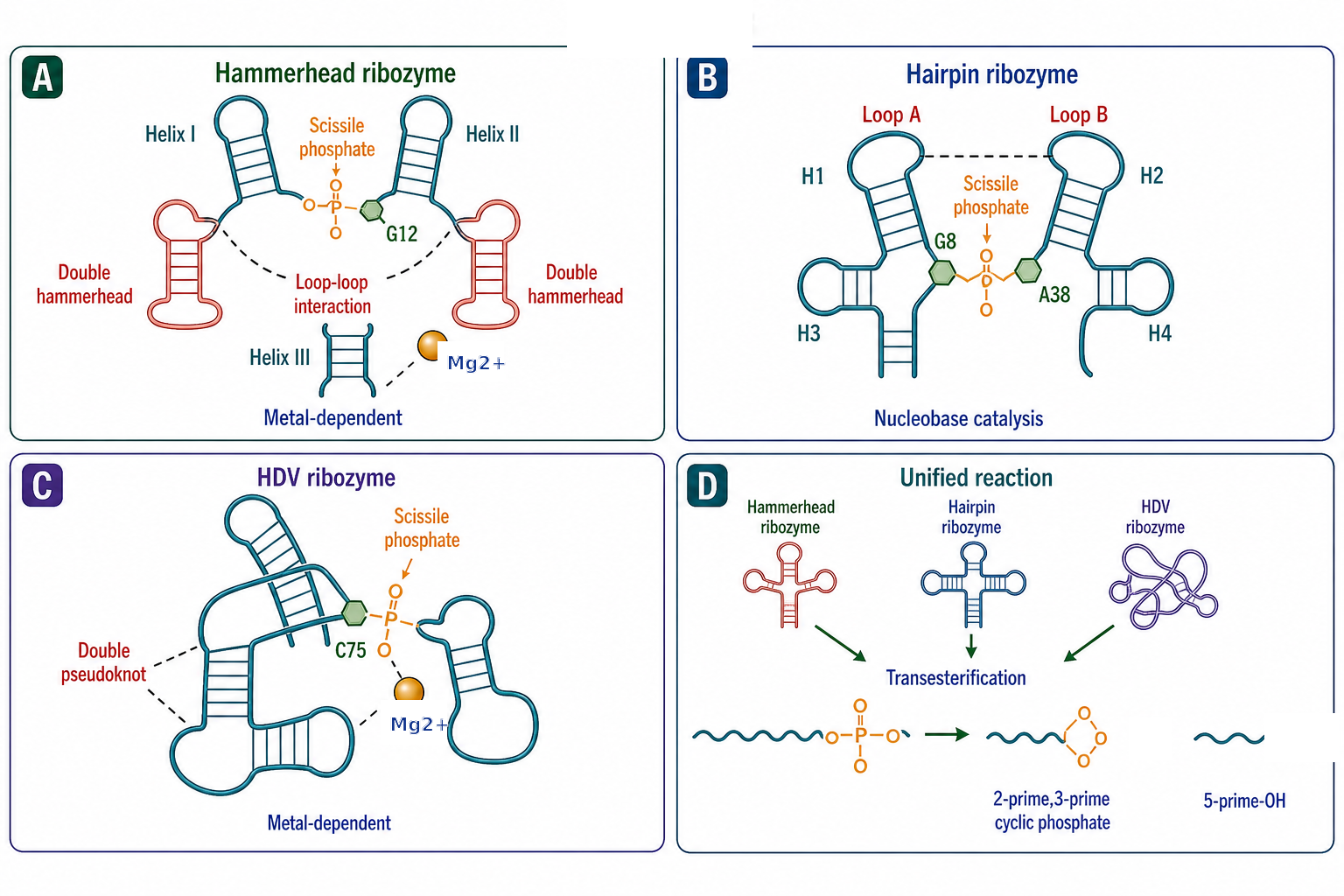
Figure 119.3. Ribozyme Architectures in Plant Pathogens and HDV. The hammerhead, hairpin, and HDV ribozymes are three structurally distinct self-cleaving RNAs that catalyze the same transesterification reaction. They differ in fold, catalytic strategy (metal-dependent versus nucleobase catalysis), and biological context (plant pathogens versus a human pathogen).
The catalytic mechanism of the hammerhead ribozyme has been the subject of extensive structural and biochemical investigation. X-ray crystallography of minimal hammerheads initially showed a structure in which the scissile phosphate was not positioned for in-line attack, creating a mechanistic puzzle. The resolution came from the discovery that, in the context of the full-length natural sequences (which include tertiary interactions between loops in helices I and II), the active site pre-organizes into a catalytically competent conformation. In the biological hammerhead, the ribozyme operates through a double-hammerhead arrangement: two hammerhead motifs interact through loop-loop tertiary contacts to stabilize the active conformation, ensuring that cleavage occurs only in the context of correctly folded multimeric replication intermediates. The transition-state stabilization involves acid-base catalysis, with the nucleobase of a conserved guanosine (G12 in the conventional numbering) acting as a general base to deprotonate the 2′-hydroxyl, and a divalent metal ion or another nucleobase acting as a general acid to protonate the 5′-oxygen leaving group. The exact role of metal ions in the chemical step remains debated; while divalent metal ions, particularly magnesium, are required for activity at physiological pH and ionic strength, high concentrations of monovalent ions can support cleavage in some hammerheads, and the catalytic repertoire of the hammerhead includes both metal-ion-dependent and metal-ion-independent contributions.
The hairpin ribozyme, found in the minus strand of tobacco ringspot virus satellite RNA and in some other satellite RNAs, is structurally and mechanistically distinct from the hammerhead. The hairpin ribozyme consists of four helices (H1-H4) arranged around two internal loops (A and B) that dock to form the active site. The catalytic mechanism is remarkable because divalent metal ions are not required for the chemical step. Instead, the hairpin ribozyme uses nucleobase catalysis: a conserved guanosine (G8) acts as a general base to deprotonate the 2′-hydroxyl, and a conserved adenosine (A38) acts as a general acid to protonate the 5′-oxygen leaving group. Metal ions are required for folding into the docked, active conformation but not for the transesterification chemistry. This makes the hairpin ribozyme one of the clearest examples of true nucleobase catalysis in a biological ribozyme.
The hepatitis delta virus ribozyme is a third class of self-cleaving RNA found in a human pathogen. HDV is a satellite virus of hepatitis B virus: it encodes its own ribozyme for processing replication intermediates, but its envelope proteins are supplied by hepatitis B virus. The HDV ribozyme uses a double-pseudoknot fold in which two nested pseudoknots create an active site cleft. The catalytic mechanism uses a conserved cytosine (C75) as a general acid to protonate the 5′-oxygen leaving group, while a hydrated magnesium ion is proposed to act as the general base by providing a hydroxide nucleophile or by activating the 2′-hydroxyl. The HDV ribozyme produces the same 2′,3′-cyclic phosphate and 5′-hydroxyl products as the hammerhead and hairpin ribozymes but through a distinct fold and catalytic apparatus. The HDV ribozyme is the fastest known natural self-cleaving ribozyme, with a rate constant of approximately 1 per second under physiological conditions, roughly 10-100 times faster than typical hammerhead and hairpin ribozymes.
The varkud satellite ribozyme, found in the Neurospora Varkud satellite RNA, is an additional self-cleaving RNA that operates in a satellite context. Although the Varkud satellite is a retroelement-associated RNA rather than a plant pathogen, its inclusion in textbooks alongside the plant satellite ribozymes illustrates the broad phylogenetic distribution of self-cleaving RNAs. The Varkud satellite ribozyme is the largest known nucleolytic ribozyme and uses a distinct active-site architecture.
The biological functions of these ribozymes in plant pathogens are clear: they process multimeric replication intermediates into unit-length genomes. Without self-cleavage, viroid and satellite RNA replication would stall at the multimer stage, unable to produce the circular monomeric genomes that are the substrates for the next round of rolling-circle replication and the forms that accumulate in the infected cell. The ribozymes are therefore essential for the replication cycle of Avsunviroidae and ribozyme-encoding satellite RNAs. The fact that Pospiviroidae lack ribozymes but still replicate via a rolling-circle mechanism demonstrates that ribozyme cleavage is one solution to the multimer-processing problem, not the only solution.
Hammerhead ribozymes have been discovered outside the viroid-satellite context in many organisms, including mammals, amphibians, insects, nematodes, plants, and diverse eukaryotes. Many of these cellular hammerheads are associated with short interspersed repetitive elements (SINEs), retrotransposons, and other repetitive sequences. The hammerhead ribozymes in the 3′ untranslated regions of some mammalian mRNAs, particularly the CPEB3 ribozyme in the 3′ UTR of the mammalian cytoplasmic polyadenylation element binding protein 3 mRNA, are conserved and expressed, though their biological function remains enigmatic. The hammerhead ribozymes of the plant pathogen world (Avsunviroidae, satellite RNAs) are therefore part of a broader ribozyme biology that spans from pathogens to host genomes, but the plant pathogen hammerheads remain the best-characterized examples where the biological function — replication intermediate processing — is experimentally established.
It is important to distinguish the natural hammerhead ribozymes in plant pathogens from engineered minimal hammerheads used in biotechnology and diagnostics. The minimal hammerhead, an artificial construct of about 50 nucleotides containing only the core and essential helices, is the form most often used in ribozyme engineering, diagnostic sensors, and therapeutics. But the natural plant pathogen hammerheads are larger, containing loop-loop tertiary interactions that stabilize the active conformation and couple cleavage to multimerization. The distinction matters because claims about hammerhead catalysis based on minimal constructs may not fully capture the behavior of the natural ribozymes in their biological context.
119.3. Satellite RNAs and helper-virus dependence
Satellite RNAs exemplify a broader principle in the subviral world: dependence through molecular parasitism. A satellite RNA requires a helper virus for replication, encapsidation, or both, but its sequence is unrelated to the helper genome. Unlike viroids, which have evolved to recruit host enzymes directly, satellite RNAs have evolved to exploit the viral replication machinery that the helper virus already provides. This dependency distinguishes satellites from viroids and from defective interfering RNAs: a satellite RNA cannot infect a host in the absence of its helper virus, whereas a viroid can.
Cucumber mosaic virus (CMV) satellite RNAs are among the best-studied satellite systems and illustrate the complexity of satellite-helper interactions. CMV is a positive-strand RNA virus with a tripartite genome (RNAs 1, 2, and 3) belonging to the Bromoviridae. Certain CMV isolates are associated with small (approximately 335 nucleotide) linear satellite RNAs that are replicated by the CMV RNA-dependent RNA polymerase (encoded by RNA 1 and RNA 2) and encapsidated by the CMV capsid protein (encoded by RNA 3). The satellite RNA does not encode proteins. Its replication depends on sequence and structural elements, including a tRNA-like structure at the 3′ end, that are recognized by the CMV replicase.
The biological impact of CMV satellite RNAs can be dramatic. Some satellite variants ameliorate CMV symptoms: a CMV infection that would normally cause severe mosaic and stunting may, in the presence of a particular satellite RNA, produce only mild mottling. Other satellite variants intensify symptoms: the same helper virus with a different satellite RNA can cause lethal necrosis in tomato (the so-called necrogenic satellites) or brilliant yellow chlorosis (the chlorosis-inducing satellites). The molecular basis of symptom modulation is complex. Some satellite RNAs induce or suppress host RNA silencing pathways, altering the balance of viral and host RNAs. Others produce small RNAs that target host genes. Still others may affect the accumulation of the helper virus RNA directly, changing the viral load and thereby the disease severity. The CMV satellite system is a natural demonstration that a small noncoding RNA can profoundly alter the outcome of a viral infection.
Satellite tobacco necrosis virus (STNV) is the canonical example of a satellite virus — it encodes its own capsid protein and forms its own icosahedral particles. STNV is a small (approximately 1,239 nucleotide) positive-strand RNA that encodes a single capsid protein. It depends on tobacco necrosis virus (TNV) as its helper for replication: the TNV RNA-dependent RNA polymerase replicates STNV RNA, but STNV particles are assembled from STNV-encoded capsid protein. The STNV-TNV system clarifies the satellite virus definition: the satellite provides its own structural protein but relies on the helper for the replication enzyme. This distinguishes satellite viruses from satellite RNAs, which provide neither structural proteins nor replicase, and from defective interfering RNAs, which are derived from the helper genome.
Virusoids, also called satellite viroid-like RNAs, occupy the conceptual space between satellites and viroids. Like viroids, virusoids are small circular single-stranded RNAs that contain ribozymes and replicate via rolling-circle replication. Like satellite RNAs, they depend on a helper virus for replication and encapsidation. The well-characterized examples — including the tobacco ringspot virus satellite RNA (which contains the hairpin ribozyme and also behaves as a linear satellite RNA), the subterranean clover mottle virus satellite, and the velvet tobacco mottle virus satellite — are encapsidated in the helper virus capsid. The term “virusoid” was coined to reflect the viroid-like properties (circular, ribozyme-encoding, rolling-circle replication) combined with helper-virus dependence. Some authors collapse virusoids into satellite RNAs; this chapter keeps the distinction because the ribozyme-mediated replication mechanism differs fundamentally from the linear satellite RNA replication mechanism.
Hepatitis delta virus (HDV) deserves special attention as the only subviral RNA pathogen of humans. HDV is a small (approximately 1,679 nucleotide) circular single-stranded RNA that encodes one protein, the hepatitis delta antigen. It requires hepatitis B virus surface antigen (HBsAg) for envelopment and transmission, making it a satellite virus of hepatitis B virus. However, HDV RNA replication — the synthesis of new genomic and antigenomic RNA circles from a transfected RNA template — can occur in hepatocytes in the absence of hepatitis B virus if the RNA is delivered experimentally. HDV RNA replicates in the nucleus using host DNA-dependent RNA polymerase II (and possibly Pol I for some RNA species), following a double rolling-circle mechanism in which both the genomic and antigenomic strands are produced as multimers that self-cleave via the HDV ribozyme and circularize. HDV is therefore viroid-like in its replication strategy (circular RNA genome, rolling-circle replication, ribozyme processing, host polymerase usage) and satellite-like in its dependence on a helper virus for the envelope protein. The existence of HDV demonstrates that RNA-based replication strategies that evolved in plant viroids can also support a human pathogen, though HDV is the only known example.
The specificity of helper-satellite relationships varies widely. Some satellite RNAs are highly specific for a particular helper virus strain. Others can be supported by multiple related helper viruses or even by viruses from different families. CMV satellite RNAs generally require CMV or closely related cucumoviruses. Satellite tobacco mosaic virus RNA can be replicated by several tobamoviruses in addition to its namesake helper. The determinants of specificity lie in the cis-acting replication signals on the satellite RNA — the promoter sequences, the 3′-terminal structures, and the internal replication enhancer elements — that must be recognized by the helper virus replicase. Evolutionarily, satellite RNAs likely arise from host or foreign RNA sequences that, by chance, acquired replication signals recognizable by a resident viral replicase.
A common error is to use “satellite” and “defective interfering RNA” interchangeably. Satellite RNAs are not derived from the helper virus genome; they have independent evolutionary origins. DI RNAs are derived from the helper virus genome by deletion or rearrangement. A second common error is calling all encapsidated small RNAs “satellite viruses.” Satellite viruses encode their own capsid protein; satellite RNAs do not. The distinction is important for understanding the molecular basis of dependence and for interpreting experiments that test which helper functions are required.
Table 119.1. Classification of Subviral RNA Agents. Subviral RNA agents form a spectrum from autonomous (viroids) to helper-dependent (satellites, DI RNAs). Key distinctions include genome origin, coding capacity, encapsidation, ribozyme content, and replication mechanism. HDV combines features of both satellites and viroid-like replicons.
| Agent category | Genome type | Encodes proteins | Replication autonomy | Helper virus required | Encapsidated | Contains ribozyme | Subcellular replication site | Well-characterized example |
|---|---|---|---|---|---|---|---|---|
| Viroid (Pospiviroidae) — PSTVd | Circular ssRNA | No | Autonomous (host Pol II) | No | No (naked RNA) | No | Nucleus | PSTVd |
| Viroid (Avsunviroidae) — ASBVd | Circular ssRNA | No | Autonomous (host Pol) | No | No (naked RNA) | Yes (hammerhead) | Chloroplast | ASBVd |
| Satellite RNA — CMV satellite RNA | Linear ssRNA | No | Helper-dependent | Yes | Yes (helper virus CP) | Varies | Cytoplasm | CMV satellite RNA |
| Satellite virus — STNV | Linear ssRNA | Yes (capsid protein) | Helper-dependent | Yes | Yes (own CP) | No | Cytoplasm | STNV |
| Virusoid — TRSV satellite RNA | Circular ssRNA | No | Helper-dependent | Yes | Yes (helper virus CP) | Yes (hammerhead or hairpin) | Cytoplasm | TRSV satellite RNA |
| Defective interfering RNA — Influenza DI RNA | Linear ssRNA (deletion or copy-back) | No (deleted) | Helper-dependent | Yes | Yes (standard virus CP) | No | Cytoplasm or nucleus | Influenza DI RNA |
| Hepatitis delta virus — HDV | Circular ssRNA | Yes (HDAg) | Helper-dependent | Yes (HBV for envelopment) | Yes (HBsAg envelope) | Yes (HDV ribozyme) | Nucleus | HDV |
Table 119.1. Classification of Subviral RNA Agents
| Agent category | Genome type | Encodes proteins | Replication autonomy | Helper virus required | Encapsidated | Contains ribozyme | Subcellular replication site | Well-characterized example |
|---|---|---|---|---|---|---|---|---|
| Viroid (Pospiviroidae) | Circular ssRNA | No | Autonomous (host Pol II, RNase III-like) | No | No (naked RNA) | No | Nucleus | PSTVd (potato spindle tuber viroid) |
| Viroid (Avsunviroidae) | Circular ssRNA | No | Autonomous (host NEP, chloroplast Pol) | No | No (naked RNA) | Yes (hammerhead) | Chloroplast | ASBVd (avocado sunblotch viroid) |
| Satellite RNA | Linear ssRNA | No | Helper-dependent | Yes | Yes (helper virus CP) | Varies | Cytoplasm | CMV satellite RNA (cucumber mosaic virus) |
| Satellite virus | Linear ssRNA | Yes (capsid protein) | Helper-dependent | Yes | Yes (own CP) | No | Cytoplasm | STNV (satellite tobacco necrosis virus) |
| Virusoid | Circular ssRNA | No | Helper-dependent (helper for replication, rolling-circle) | Yes | Yes (helper virus CP) | Yes (hammerhead or hairpin) | Cytoplasm | TRSV satellite RNA (tobacco ringspot virus) |
| Defective interfering RNA | Linear ssRNA (deletion or copy-back) | No (deleted) | Helper-dependent (co-infection required) | Yes | Yes (standard virus CP) | No | Cytoplasm or nucleus (depends on helper) | Influenza DI RNA (von Magnus particles) |
| Hepatitis delta virus | Circular ssRNA | Yes (HDAg, two isoforms) | Helper-dependent (HBV for envelopment only) | Yes (HBV for envelopment) | Yes (HBsAg envelope) | Yes (HDV ribozyme) | Nucleus | HDV (hepatitis delta virus) |
119.4. Defective interfering RNAs and pathogenesis
Defective interfering RNAs arise during viral replication when the viral polymerase produces aberrant products through template switching, internal deletion, or copy-back synthesis. Unlike satellite RNAs, which have independent evolutionary origins, DI RNAs are truncated or rearranged versions of the standard viral genome. They retain the cis-acting signals required for replication and encapsidation — typically the genomic termini — but have lost one or more essential coding regions. This deletion is what makes them defective: they cannot complete the viral replication cycle without co-infection by the standard helper virus, which provides the missing gene products in trans.
The term “interfering” is mechanistic. Because DI RNAs are shorter than the standard viral genome, they can be replicated more rapidly by the same polymerase. In a co-infected cell, DI RNAs compete with standard genomes for limiting polymerase, structural proteins, and encapsidation machinery. The result is a reduction in the yield of standard infectious virus — the interference effect. The magnitude of interference depends on the DI RNA-to-standard virus ratio, the replication advantage conferred by the deletion, the multiplicity of infection, and whether the DI RNA is transmitted to progeny cells or hosts.
The von Magnus effect, observed in the 1950s before the molecular nature of DI particles was understood, was the first description of defective particle interference. Preben von Magnus found that serial undiluted passage of influenza A virus in embryonated chicken eggs produced a cyclical variation in infectious titer. At high-multiplicity passages, the infectious titer dropped, and preparations contained increased proportions of incomplete, non-infectious particles. When these preparations were passaged at low multiplicity, the infectious titer recovered. We now understand the von Magnus cycle in molecular terms: serial high-multiplicity passage favors the accumulation of DI RNAs because they have a replication advantage when standard virus is abundant, but the resulting low-titer stocks must be passaged at low multiplicity to dilute the DI RNAs and allow standard virus to recover. The von Magnus effect is a direct demonstration that DI RNAs are not simply dead-end byproducts: they shape population dynamics over multiple passages.
In plant virology, DI RNAs have been extensively characterized in tombusviruses and bromoviruses. Tomato bushy stunt virus DI RNAs are among the best-studied examples. The standard tombusvirus genome is a positive-strand RNA of approximately 4,800 nucleotides encoding five proteins. DI RNAs arise during replication by internal deletion and retain the genomic termini (approximately 150-200 nucleotides at each end), which contain the promoter elements for the viral replicase. Small DI RNAs of approximately 400-500 nucleotides can accumulate to high levels in infected plants and reduce the accumulation of standard virus. The modular structure of tombusvirus DI RNAs — a fixed set of terminal sequences with a variable internal deletion junction — has made them useful experimental tools for mapping cis-acting replication signals, for studying the mechanism of RNA recombination, and for testing whether small RNAs can be replicated by a viral replicase.
DI RNA generation is mechanistically linked to the same template-switching behavior that produces recombinant viral genomes (covered in Chapter 116). When the viral RdRP pauses at a template feature — a strong secondary structure, a modified nucleotide, a bound protein, or a region of low nucleotide concentration — the nascent RNA strand can dissociate from the template. If the nascent RNA re-anneals to a downstream region of the same template and the polymerase resumes elongation, the result is an internal deletion. If the nascent RNA folds back on itself through intramolecular base pairing and the polymerase uses the nascent strand as a new template, the result is a copy-back DI RNA with complementary termini. Both mechanisms retain the replication signals at the termini while eliminating the internal coding region.
The pathogenic consequences of DI RNAs are context-dependent. In some virus-host combinations, DI RNAs attenuate disease by reducing the standard virus load. In experimental settings, co-inoculation of tombusvirus DI RNA with standard virus reduces symptom severity in Nicotiana benthamiana. In other cases, DI RNAs may contribute to disease persistence. In chronic hepatitis C virus infection, defective viral genomes with large in-frame deletions have been detected in patient samples, and these genomes may contribute to immune evasion. In paramyxovirus infections, copy-back DI RNAs are potent activators of innate immunity because they contain long stretches of double-stranded RNA, the ligand for MDA5 and RIG-I. The DI RNAs may therefore exacerbate immunopathology even as they reduce standard virus replication. The net effect of DI RNAs on disease is a balance between reduced viral replication and altered immune stimulation.
DI RNAs also have practical implications for vaccine production. Live-attenuated virus vaccines grown in cell culture can accumulate DI particles that reduce yields and potentially alter vaccine immunogenicity. Quality control of vaccine stocks must include DI RNA monitoring. Conversely, some experimental approaches have explored the use of DI RNAs as antiviral agents — a concept sometimes called “defective interfering particle therapy” — in which a DI RNA is delivered to reduce replication of a pathogenic virus. This approach has been studied preclinically for influenza, but it faces challenges of delivery, specificity, and the risk that DI RNAs could recombine with the pathogenic virus to generate novel variants.
The distinction between DI RNAs and satellite RNAs becomes important for experimental design. If a small RNA is detected in infected tissue and is associated with reduced standard virus accumulation, is it a DI RNA (derived from the helper genome) or a satellite RNA (independent origin)? Sequence comparison with the helper genome answers this question: DI RNAs map to the helper genome sequence, whereas satellite RNAs do not. A second distinction is that some satellite RNAs encode proteins (such as the capsid protein of satellite viruses or the delta antigen of HDV), whereas DI RNAs never encode functional proteins beyond fragments that may be fortuitously expressed from remaining open reading frames.
A misconception to address: not every truncated viral RNA is a DI RNA. Defective viral genomes (DVGs) is the broader category. A DVG is simply an aberrantly replicated viral RNA that is shorter than the standard genome and cannot complete the replication cycle autonomously. A DI RNA is a DVG that specifically interferes with standard virus replication. Some DVGs replicate slowly and do not measurably interfere; others may persist at low frequency without detectable effect. The interference property requires experimental demonstration, typically by showing that co-infection with the candidate DI RNA reduces standard virus yield in a dose-dependent manner.
119.5. Plant defense, agriculture, and diagnostics
Viroids and satellites cause economically significant crop losses, and understanding their biology is essential for management. PSTVd is the most economically important viroid globally. In potato, it reduces tuber yield and quality, producing the characteristic spindle-shaped, cracked, and knobby tubers that are unmarketable. In tomato, PSTVd infection causes stunting, epinasty, leaf distortion, and reduced fruit set. The disease is exacerbated by high temperature and high light intensity. Because PSTVd is mechanically transmissible — on tools, hands, clothing, and machinery during agricultural operations — and is also transmitted through true seed and pollen in some hosts, sanitation and clean planting material are the primary control measures.
Citrus viroids cause a range of diseases in citrus trees, including citrus exocortis (caused by citrus exocortis viroid, CEVd), cachexia (caused by hop stunt viroid variants infecting citrus), and various forms of stunting and bark scaling. These diseases are particularly problematic in citriculture because citrus is propagated by grafting onto rootstocks, and viroids can be transmitted through infected budwood. The use of viroid-free budwood sources and viroid indexing programs in citrus producing regions has been essential for disease management.
Coconut cadang-cadang viroid (CCCVd) causes the lethal cadang-cadang disease of coconut palms in the Philippines. The disease has killed millions of palms since its recognition in the early twentieth century and remains a serious constraint on coconut production. The viroid accumulates in palm tissues over years, with symptoms progressing from small, spherical nuts to complete cessation of nut production and death. The molecular mechanism of pathogenesis is incompletely understood but involves extensive accumulation of the viroid and viroid-derived small RNAs in meristematic tissues.
The molecular basis of viroid pathogenicity has been the subject of long-standing investigation and unresolved controversy. Several mechanisms have been proposed, and the evidence suggests that pathogenesis can differ among viroid-host combinations. One mechanism is RNA silencing: viroid-derived small RNAs (vd-sRNAs) generated by host Dicer-like proteins can, if they share sequence complementarity with host mRNAs, direct Argonaute-mediated cleavage or translational repression of those host mRNAs. In PSTVd-infected tomato, vd-sRNAs with complementarity to host genes involved in gibberellin signaling and other developmental pathways have been identified, and silencing of these host genes by vd-sRNAs has been proposed to contribute to the stunting and leaf distortion symptoms. A second mechanism is direct RNA interaction: the viroid RNA, particularly the pathogenicity domain, may bind host proteins and disrupt their normal function. A third mechanism is transcriptional interference: viroid replication in the nucleus may compete with host genes for Pol II or transcription factors, altering host gene expression. A fourth mechanism is that viroid accumulation itself, at very high copy numbers (thousands to tens of thousands per cell in susceptible hosts), may stress the cell through resource consumption or RNA quality-control pathway activation. The pathogenic mechanisms are not mutually exclusive and may contribute differently in different viroid-host-pathosystems.
RNA silencing, the plant’s primary antiviral defense pathway, presents a paradox in viroid biology. Viroids are highly structured RNA molecules that should be excellent substrates for Dicer-like proteins, and indeed viroid-derived small RNAs are abundant in infected plants. Yet RNA silencing does not eliminate viroids, and viroids can accumulate to very high levels in susceptible hosts. Several explanations for viroid resistance to silencing have been proposed. The extensive intramolecular base pairing of viroid RNA restricts accessibility to Dicer proteins; the rod-like structure may be a poor substrate compared with the extended double-stranded RNA produced during viral replication. Viroids that replicate in the nucleus or chloroplast may be partially sequestered from cytoplasmic silencing complexes. The rapid circularization of monomeric viroid RNA may reduce the pool of linear RNA accessible to RNA-dependent RNA polymerases that amplify the silencing signal. And, in some cases, viroid infection may suppress components of the host silencing machinery, though direct evidence for a viroid-encoded suppressor of silencing is lacking (since viroids encode no proteins, any suppression would need to operate through the RNA itself).
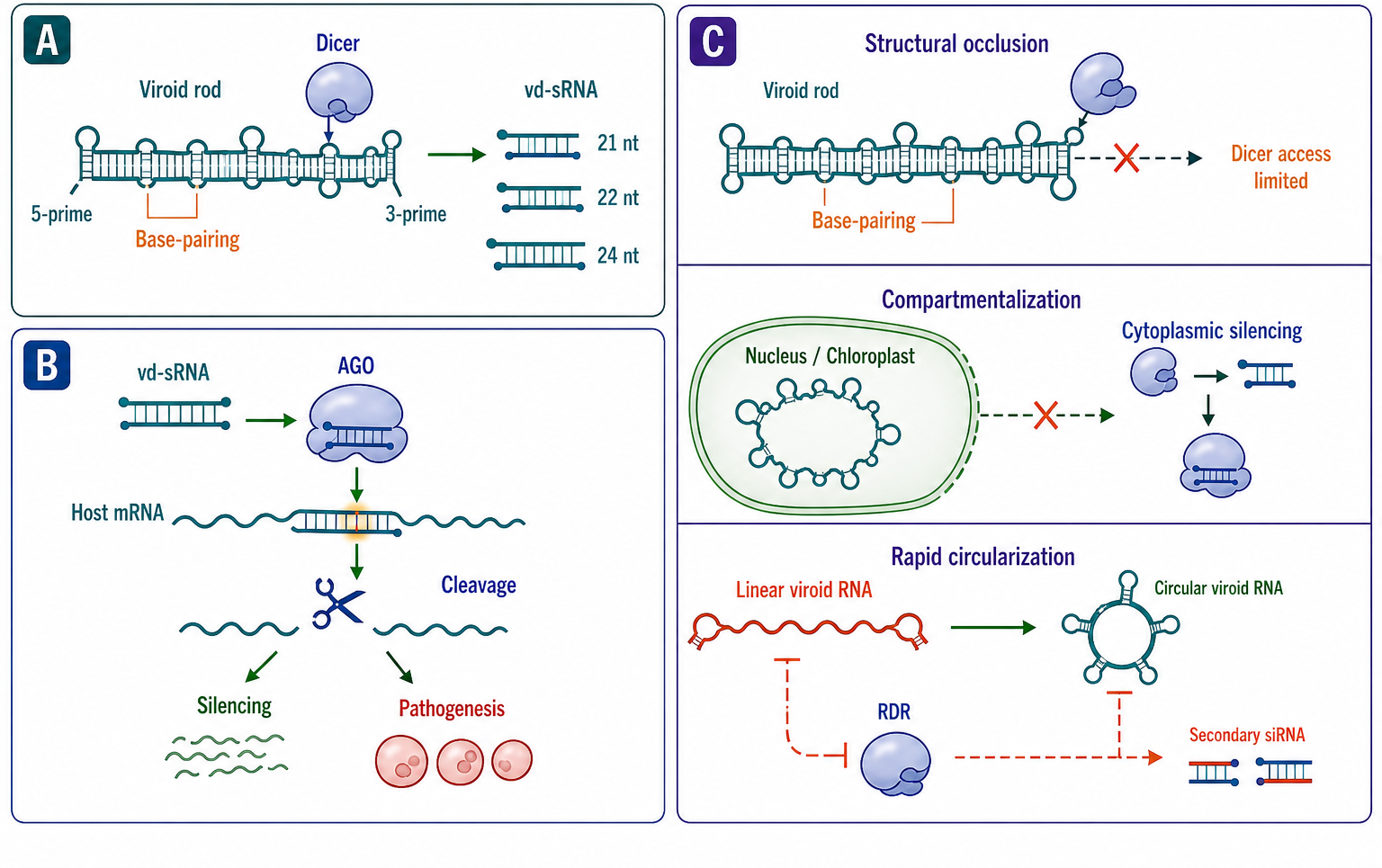
Figure 119.4. RNA Silencing and Viroid Defense in Plants. Viroids are processed by host Dicer into vd-sRNAs, which can direct silencing of host mRNAs and contribute to pathogenesis. Despite this processing, viroids resist complete silencing-mediated clearance through a combination of structural occlusion, subcellular compartmentalization, and rapid circularization.
Diagnostics for viroids and satellites rely on RNA-specific methods because these pathogens lack protein antigens. The standard diagnostic workflow begins with symptoms, proceeds to nucleic acid extraction, and uses RT-PCR with viroid-specific primers for detection. Northern blot hybridization with viroid-specific probes provides complementary information about the circular and linear forms present. For known viroids, real-time RT-PCR offers sensitivity and quantification. For novel viroids, next-generation sequencing of small RNAs from infected tissue has become the discovery method of choice because viroid-derived small RNAs are abundant and can be identified by assembling overlapping small RNA reads into contiguous sequences that, when circularized, correspond to the viroid genome. Deep sequencing of small RNAs has been used to discover several new viroids and to monitor viroid populations in agricultural settings.
Ribozyme-based diagnostics are a direct biotechnology application of the ribozymes discovered in plant pathogens. The hammerhead ribozyme, engineered into a format where cleavage is contingent on the presence of a specific target RNA (a so-called “hammerhead ribosensor” or allosteric ribozyme), can produce a fluorescence, electrochemical, or colorimetric signal upon target binding and cleavage. The modular architecture of the hammerhead ribozyme — separable substrate strand and enzyme strand — enables this engineering. While hammerhead-based diagnostics have been developed for bacterial and viral targets, their use in viroid diagnostics remains largely at the proof-of-principle stage. The natural hammerheads in Avsunviroidae are themselves robust, and understanding their folding and cleavage kinetics has informed the design of more stable engineered ribozymes.
Agricultural management of viroids relies on exclusion, sanitation, and resistance. Exclusion through quarantine and certified clean planting material is the first line of defense and has been effective for PSTVd in many potato production regions. Sanitation, including disinfection of tools between plants (sodium hypochlorite is effective against viroid RNA on surfaces) and removal of infected plants, reduces mechanical transmission. Resistance breeding has identified some sources of partial resistance or tolerance to viroids in crop germplasm, though high-level resistance is rare. Transgenic approaches using pathogen-derived resistance — expressing viroid sequences as transgenes to trigger RNA silencing against the viroid — have shown efficacy in experimental settings, and RNA interference constructs targeting PSTVd have been tested in transgenic potato and tomato, producing plants with reduced viroid accumulation and milder symptoms.
The intersection of viroid biology and crop protection is evolving toward RNA-based solutions. Spray-induced gene silencing (SIGS), in which double-stranded RNA or small interfering RNA is applied to plant surfaces and taken up by plant cells to trigger silencing of a target RNA, has been proposed as a non-transgenic approach to viroid control. Because viroids are naked RNA molecules that move through the plant, they could in principle be targeted by SIGS approaches. However, the highly structured nature of viroid RNA, its subcellular localization in the nucleus or chloroplast, and the practical challenges of field-scale RNA delivery make this approach challenging, and field efficacy has not yet been demonstrated for viroid targets. Related strategies using viroid-derived small RNAs as pathogen-inducible triggers for plant defense gene expression represent another speculative but conceptually interesting direction.
Box 119.1. Diagnosing Viroid Disease — From Symptoms to Koch’s Postulates
- Step 1: Symptom recognition — common viroid disease symptoms (stunting, epinasty, leaf distortion, fruit or tuber malformation, bark scaling in trees) versus symptoms caused by nutrient deficiency, water stress, other pathogens, or herbicide damage.
- Step 2: Nucleic acid testing — RT-PCR with viroid-specific or universal viroid primers, Northern blot for circular versus linear forms, small RNA sequencing for discovery of unknown viroids.
- Step 3: Differential diagnosis — exclude other pathogens (viruses, phytoplasmas, fungi) and abiotic causes.
- Step 4: Koch’s postulates adapted for viroids — purify viroid RNA from symptomatic tissue under denaturing conditions, inoculate healthy indicator plants, observe symptom development over weeks to months, re-isolate the viroid from symptomatic tissue, and confirm identity by sequence or hybridization. Note that bioassay on highly susceptible indicator hosts (e.g., Rutgers tomato for PSTVd) is more sensitive than direct molecular detection in some cases.
- Step 5: Common pitfalls — asymptomatic infection, mixed infections, environmental modulation of symptoms, RT-PCR contamination, and the difference between viroid presence and viroid causation.
- Practical table: indicator hosts used for common viroids (PSTVd on Rutgers tomato, CEVd on Etrog citron, HSVd on cucumber, etc.).
A diagnostic consideration that is often overlooked: detection of a viroid by RT-PCR in a plant sample does not prove that the viroid is causing the observed disease. Many viroids can infect plants without producing obvious symptoms under all conditions; symptom expression depends on the viroid strain, the host genotype, the environmental conditions, and co-infection with other pathogens. Definitive diagnosis requires both viroid detection and the fulfillment of Koch’s postulates adapted for non-culturable pathogens: inoculation of healthy plants with purified viroid RNA (or infectious cDNA transcripts) and reproduction of the characteristic disease symptoms.
The economic significance of viroids extends beyond direct yield loss. Quarantine restrictions imposed by importing countries on viroid-host commodities affect trade. Certification programs for planting material, viroid indexing, and the maintenance of viroid-free nuclear stock collections are expensive but essential for industries reliant on vegetatively propagated crops. The cost of viroid management — testing, sanitation, certification, and rejected shipments — is substantial but difficult to quantify at the global level because losses from viroids are often attributed to “decline” or “unknown etiology” in the absence of specific diagnostics.
Satellite RNAs and defective interfering RNAs provide a final comparison of helper dependence before turning to evidence standards. Both can use helper-virus polymerase and structural proteins, yet sequence ancestry separates them: satellite RNAs carry independently derived cis signals compatible with a helper replicase, whereas DI RNAs retain helper-genome termini around a deletion or copy-back junction. Their effects on infection are conditional. A satellite RNA can increase or decrease symptom severity, while a DI RNA can reduce standard-virus yield, alter immunity, or have no demonstrated interference; in either case, transmission of the small RNA depends on a compatible coinfection context.
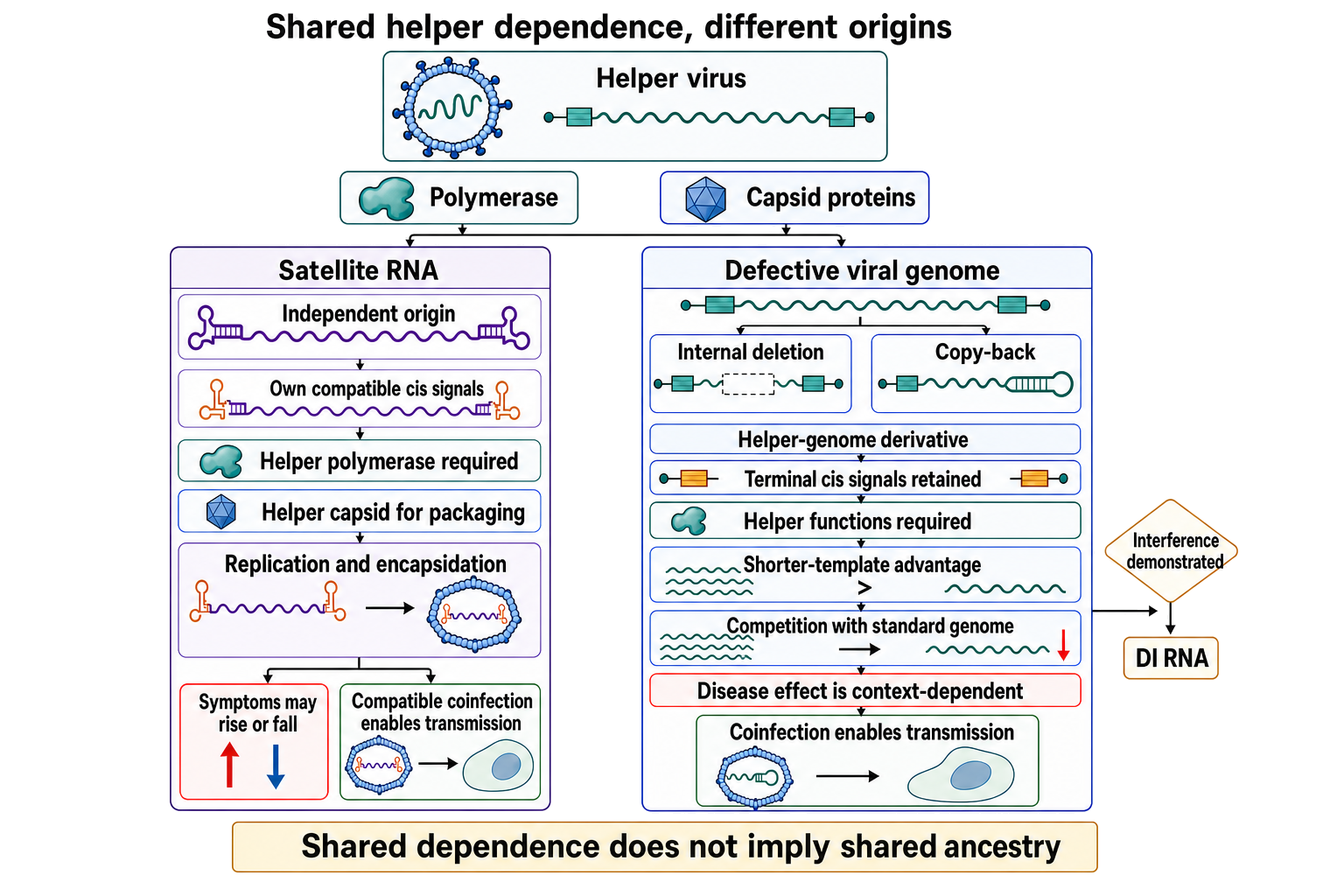
Figure 119.5. Helper-Virus Dependence in Satellite RNAs versus Defective Interfering RNAs. Shared helper dependence does not imply shared ancestry. Satellite RNAs carry independently derived cis signals recognized by a helper replicase, whereas DI RNAs are helper-genome derivatives that retain terminal cis signals; interference must be demonstrated experimentally rather than inferred from truncation alone.
Experimental Foundations and Evidence Standards
The experimental foundation of viroid biology rests on several landmark approaches, each with specific interpretive limits.
Infectivity of purified viroid RNA. The definitive demonstration that viroids are protein-free infectious agents came from experiments in which PSTVd RNA purified from infected tissue under denaturing conditions — phenol extraction, polyacrylamide gel electrophoresis in the presence of denaturants — was inoculated onto healthy tomato or potato plants and reproduced the disease. Sensitive assays, including bioassay on highly susceptible tomato cultivars (such as Rutgers), were essential because viroid RNA at femtomolar quantities can be infectious. The infectivity of naked RNA is the defining experimental criterion for viroids, distinguishing them from conventional viruses, which require capsid proteins for infectivity.
Viroid sequence determination and structure probing. The complete nucleotide sequences of PSTVd (359 nucleotides), ASBVd (247 nucleotides), and many other viroids were determined by RNA sequencing methods that predated the widespread use of reverse transcription and DNA sequencing. The rod-like secondary structure was deduced from nuclease sensitivity mapping (using RNase T1, which cleaves after unpaired guanosines, and RNase V1, which cleaves double-stranded regions) combined with thermodynamic secondary structure prediction. Modern chemical probing methods (SHAPE, DMS footprinting) and NMR studies of viroid fragments have refined the structural models.
Rolling-circle replication mechanism. The asymmetric versus symmetric rolling-circle models were distinguished by Northern blot analysis of viroid-infected tissue, comparing the abundance and size of plus-strand and minus-strand RNA species. For PSTVd, minus-strand multimers are barely detectable, consistent with an asymmetric mechanism. For ASBVd, both plus-strand and minus-strand monomers and multimers are detected, supporting the symmetric mechanism. Inhibitor studies with alpha-amanitin established Pol II involvement in pospiviroid replication. In vitro transcription of viroid cDNA followed by infectivity testing confirmed that the cDNA-derived transcripts could initiate infection, establishing that no host-derived RNA modification beyond sequence is required for infectivity.
Ribozyme characterization. The discovery that ASBVd plus-strand and minus-strand RNAs self-cleave was made by in vitro transcription of viroid cDNA and observation of specific cleavage products. The minimal hammerhead sequence was defined by deletion analysis: truncating the flanking sequences while preserving the conserved core and helical domains identified the minimal catalytically active RNA. The double-hammerhead arrangement, necessary for efficient in vivo cleavage, was revealed by the observation that full-length hammerhead sequences in their natural sequence context require tertiary interactions absent from minimal constructs. Kinetic analyses (single-turnover and multiple-turnover cleavage assays) established the rate constants and metal ion requirements. Structural biology — X-ray crystallography of minimal hammerheads and NMR of natural hammerhead constructs — provided the catalytic mechanism at atomic resolution, including the roles of specific nucleobases and the controversial role of metal ions in the chemistry.
Testing DI RNA interference. The interference property of DI RNAs is established by co-infection experiments: a standard virus stock is mixed with increasing amounts of DI-rich material, and the yield of standard virus is measured. Classical experiments with influenza demonstrated that the DI effect is multiplicity-dependent and that DI accumulation follows the von Magnus cycle. For plant viruses, transcript-derived DI RNAs can be inoculated together with wild-type virus onto plants, and the reduction in standard virus accumulation and symptom severity can be quantified.
Small RNA analysis. The role of RNA silencing in viroid biology has been investigated by high-throughput sequencing of small RNAs from viroid-infected plants. Viroid-derived small RNAs are readily detected and can be mapped to the viroid genome. The polarity and size distribution (21, 22, or 24 nucleotides) provide clues about which Dicer-like proteins generated them. Functional testing requires showing that the small RNAs are loaded into Argonaute proteins (by immunoprecipitation followed by sequencing) and that host mRNAs with complementarity to specific vd-sRNAs are cleaved at the predicted positions (by degradome sequencing or 5′-RACE).
The most important interpretive hazards in viroid research are: (1) detecting a viroid by RT-PCR in a symptomatic plant and attributing the symptoms to the viroid without fulfilling Koch’s postulates; (2) conflating hammerhead ribozyme activity in vitro (with high magnesium concentrations, optimized buffer, and minimal constructs) with in vivo function, where the ribozyme operates in the context of a larger RNA, in a specific subcellular compartment, and at physiological magnesium concentrations; (3) interpreting statistical correlation between a viroid-derived small RNA and a host mRNA degradation pattern as evidence for causality without testing the effect of that specific small RNA in the absence of other viroid-derived small RNAs; and (4) assuming that all small RNAs of viroid origin are functional silencing effectors when many may be degradation products of the viroid RNA.
Biological Contexts and Cross-Chapter Boundaries
This chapter sits at the intersection of subviral biology, RNA enzymology, plant pathology, and RNA biotechnology. Ribozyme chemistry is covered in depth in Chapter 8, which treats the RNA World hypothesis and the chemical repertoire of natural and artificial ribozymes. This chapter provides the pathogenic context for the hammerhead, hairpin, and HDV ribozymes and explains their biological function in rolling-circle replication.
Viral polymerase biology is covered in Chapter 116, which includes template switching, recombination, and defective viral genome generation. This chapter treats DI RNAs as distinct biological entities with their own replication dynamics and pathogenic consequences. The reader coming from Chapter 116 will understand the polymerase errors that generate DI RNAs; this chapter extends the story to the biological consequences for disease and viral population dynamics.
Plant RNA immunity, environmental RNAi, and cross-kingdom RNA are treated in Chapter 113. The role of RNA silencing in viroid defense and viroid pathogenicity is covered here in the context of the specific viroid-host interaction, while Chapter 113 provides the broader framework of plant small RNA pathways. Chapter 113 also covers spray-induced gene silencing and crop protection strategies that are relevant to viroid control.
Viral RNA structures are treated in Chapter 117, which covers the structural motifs used by RNA viruses for genome replication, translation, and packaging. This chapter extends that coverage to the extreme case of viroids, where the entire genome is essentially one large RNA structure, and to the ribozyme motifs that are structurally distinct from the translation-enhancer and packaging structures covered in Chapter 117.
RNA structure prediction methods (Chapter 60-Chapter 63) are directly relevant to viroid biology because the rod-like secondary structure of viroids was one of the early successes of computational RNA folding, and modern methods continue to be used for viroid discovery and structural characterization.
The most important boundary is between viroids and RNA viruses. Viroids are not viruses: they lack capsids, encode no proteins, replicate entirely through host machinery, and have genomes an order of magnitude smaller than the smallest RNA virus. The RNA virus genome strategies chapter (Chapter 115) covers viral genome types and replication cycles; this chapter covers the alternative subviral replication strategies that exist outside the virus definition. A second boundary concerns the role of ribozymes in non-pathogenic contexts; the hammerhead ribozymes found in mammalian genomes, retrotransposons, and repetitive elements are noted here but belong primarily to the RNA World and ribozyme evolution narrative in Chapter 8.
Recent Consensus
The division of viroids into Pospiviroidae (nuclear, asymmetric replication, no ribozyme) and Avsunviroidae (chloroplastic, symmetric replication, hammerhead ribozyme) is established consensus supported by decades of sequence, structural, and biochemical evidence. The host polymerases used by each family are established: Pol II for Pospiviroidae, chloroplast RNA polymerase(s) for Avsunviroidae. The rolling-circle replication mechanism is established, though some details of plus-strand cleavage in Pospiviroidae (which host enzyme cleaves, and where specifically) continue to be refined.
The hammerhead, hairpin, and HDV ribozyme structures and catalytic mechanisms are largely established consensus, with the major debate centering on the precise role of divalent metal ions in the chemical steps of the hammerhead ribozyme. The consensus view has shifted from a purely metalloenzyme model to one in which nucleobases participate as general acid-base catalysts, with metal ions playing structural and possibly catalytic roles. The hairpin ribozyme is the clearest case of nucleobase catalysis in the absence of catalytic metal ions.
The RNA silencing response to viroids is established: Dicer-like proteins process viroid RNA into small RNAs, and these small RNAs are loaded into Argonaute proteins. The contribution of RNA silencing to viroid pathogenesis (through host mRNA targeting by vd-sRNAs) is supported by evidence in PSTVd-tomato and some other systems but is not universally established across all viroid-host combinations. The resistance of viroids to complete clearance by silencing is an observation, but the mechanistic basis (structural occlusion, compartmentalization, circularization rate) remains debated.
The distinction among viroids, satellite RNAs, satellite viruses, and DI RNAs is the established taxonomic and conceptual framework, though literature usage remains inconsistent. The ICTV (International Committee on Taxonomy of Viruses) classification of subviral agents, while periodically revised, provides the authoritative taxonomy.
Open Questions, Controversies, Deprecated Models, and Common Misconceptions
Open questions:
- What is the precise mechanism by which Pol II, a DNA-dependent RNA polymerase, recognizes and transcribes an RNA template?
- Which structural features of the viroid rod recruit Pol II, and does Pol II recognize viroid RNA through DNA-like or non-canonical interactions? High-resolution structures of Pol II engaged with a viroid RNA template would directly test these models.
- What is the biological function, if any, of the hammerhead ribozymes found in mammalian genomes? The CPEB3 ribozyme in the 3′ UTR of the mammalian CPEB3 mRNA is a conserved, self-cleaving hammerhead ribozyme, but its cleavage product does not appear to change the protein-coding sequence or the stability of the mRNA in an obvious way. The ribozyme could be a nonfunctional evolutionary relic, or it could have a function that is revealed only under specific conditions (stress, development, tissue type) that remain to be identified.
- Do true viroids exist in animals? Despite extensive metagenomic surveys, no animal viroid has been found. The absence may reflect a genuine biological constraint — perhaps animal RNA polymerases cannot be diverted to RNA templates, or animal RNA silencing pathways are more effective against viroids — or it may reflect undersampling. The discovery of an animal viroid would fundamentally alter the understanding of viroid evolution and host range.
Controversies:
- The role of vd-sRNAs in viroid pathogenesis remains controversial. Some studies report that specific vd-sRNAs target host mRNAs and cause disease symptoms, while others find that vd-sRNAs with complementarity to host genes do not necessarily mediate cleavage, and that the gross accumulation of viroid RNA rather than specific small RNAs causes symptoms. The controversy stems in part from the challenge of disentangling correlation from causation: a vd-sRNA can be complementary to a host mRNA that is downregulated during infection, but the downregulation could be caused by transcriptional changes, by other vd-sRNAs, or by indirect effects. Rigorous tests require expressing individual vd-sRNAs in the absence of viroid infection or using target mimicry to block specific vd-sRNA activities.
- Controversy: the catalytic role of metal ions in the hammerhead ribozyme. Crystallographic studies of minimal hammerheads showed metal ions at the active site, and biochemical experiments showed a requirement for divalent metal ions. But studies of the full-length natural hammerhead and experiments with high concentrations of monovalent ions suggest that the ribozyme can self-cleave without divalent metals if the RNA is correctly folded. The debate is whether divalent metal ions are directly catalytic (participating in the chemical step as a general base), indirectly catalytic (positioning the nucleophile without participating in proton transfer), or purely structural. The field has moved toward a model in which both nucleobases and metal ions contribute, with the balance depending on the specific hammerhead sequence and conditions.
Common misconceptions:
- “Viroids are just viruses that lost their capsid.” Viroids are not degenerate viruses. Evolutionary comparisons show that viroids are not derived from any known RNA virus; they have independent origins, possibly from the RNA World or from cellular RNAs that acquired replication competence. Viroids and viruses represent independent evolutionary solutions to the problem of RNA-based information transfer.
- “Hammerhead ribozymes are only found in plant pathogens.” Hammerhead ribozymes have been discovered in organisms across the tree of life, including mammals. The plant pathogen hammerheads are the best-characterized in terms of biological function, but the catalytic motif is broadly distributed.
- “DI RNAs protect the host by interfering with virus replication, so they are always beneficial.” DI RNAs can reduce standard virus replication, which may limit disease, but they can also stimulate innate immune responses that exacerbate immunopathology. The net effect is context-dependent, and DI RNAs are not evolutionarily selected for host benefit — they are selfish genetic elements selected for their own replication advantage.
- “Satellite RNA symptoms are caused by the satellite RNA encoding a toxin.” With the exception of satellite viruses that encode capsid proteins, and HDV which encodes a functional protein, most satellite RNAs do not encode proteins. Their effects on symptom severity are mediated by RNA-RNA interactions, RNA silencing, competition with the helper virus, or alteration of helper virus replication.
- “If a plant tests positive for a viroid by RT-PCR, the viroid is causing the disease.” Viroid detection in a symptomatic plant is a correlation, not a proof of causation. Asymptomatic viroid infections are common in crop plants and wild species. Definitive causal attribution requires fulfilling Koch’s postulates with purified viroid RNA.