Chapter 98. Transcription-Replication Conflicts, DNA Repair, and RNA-Linked Genome Surveillance
Scope Note
Transcription-replication conflicts occur when the machinery that copies DNA and the machinery that transcribes DNA interfere with one another on the same template. RNA is central to these conflicts because nascent transcripts, RNA-DNA hybrids, RNA processing factors, nuclear export pathways, and RNA surveillance systems determine whether a busy gene remains compatible with genome duplication and repair. This chapter treats transcription-replication conflicts as part of a broader RNA-linked genome surveillance network: cells must distinguish productive transcription from stalled polymerases, persistent R-loops, defective messenger ribonucleoproteins, damaged chromatin, and aberrant RNA species that escape their normal nuclear routing.
Executive Summary
DNA replication forks and transcription complexes use the same DNA template but have different speeds, structures, and tolerance for obstacles. A transcription-replication conflict can occur when the replisome meets an active RNA polymerase, a paused or backtracked polymerase, a transcription-associated protein complex, a nascent RNA tethered to chromatin, a stable RNA-DNA hybrid, or a DNA secondary structure promoted by transcription. Head-on conflicts, in which replication and transcription move toward one another, are usually more disruptive than co-directional conflicts, but co-directional conflicts can still stall forks when transcription complexes pause or when RNA-DNA hybrids persist after the fork passes.
RNA processing defects are genome-instability defects because nascent RNA must be rapidly packaged, spliced, cleaved, exported, or degraded to avoid becoming a chromatin-associated obstacle. Defects in capping, splicing, 3′ end formation, transcription termination, RNA export, or nuclear RNA decay can expose transcripts to their template DNA, increase R-loop formation, prolong polymerase pausing, and recruit inappropriate repair factors. This is why RNA biogenesis proteins are often recovered in genome-stability screens: they do not merely control RNA abundance; they control the physical compatibility of transcription with replication and repair.
RNA-DNA hybrids are context-dependent repair signals. At some DNA breaks or stalled forks, hybrids can help recruit repair proteins, promote homologous recombination, or mark transcription-associated lesions. In other contexts, persistent hybrids block repair, favor mutagenic processing, or create post-replicative structures that signal unresolved stress. Repair pathway choice depends on cell-cycle phase, transcription state, chromatin context, end structure, and the proteins bound to the hybrid. No single rule states that R-loops are always repaired by homologous recombination or always harmful to end joining.
Nuclear sentry systems connect RNA quality control to genome surveillance. Nuclear retention factors, export adaptors, the nuclear exosome, MTR4-containing complexes, and chromatin-associated RNA-binding proteins prevent defective RNAs from accumulating on chromatin or leaking into the cytoplasm. When surveillance fails, aberrant RNAs can remain near their genes, form hybrids, misdirect repair, overload export pathways, or appear in compartments where innate immune sensors interpret them as danger signals. Cancer cells often carry transcriptional, replication, repair, and RNA processing stress simultaneously, creating therapeutic opportunities that exploit transcription-replication conflict, RNA-DNA hybrid resolution, or synthetic lethality with DNA repair defects.
One defined tumor-cell example links these general pathways without making them universal. In MYCN-driven neuroblastoma models, MYCN recruits the nuclear RNA exosome to target promoters and RNA polymerase II; the exosome supports productive elongation, while an ATM-BRCA1-decapping response can terminate transcription when exosome buffering fails (Papadopoulos et al. 2022). This two-tier system has not been established for all MYC-family cancers.
Concept Inventory
- Transcription-replication conflict: interference between transcription machinery and DNA replication machinery on the same DNA molecule. The conflict may involve direct polymerase collision, a transcription-associated nucleic acid structure, a chromatin-bound RNA processing complex, or transcription-induced topology.
- Head-on collision: a conflict in which the replication fork and transcription complex move toward each other. Head-on orientation tends to expose the replisome to the front of a transcription complex and is often associated with stronger fork slowing, DNA damage signaling, and mutagenesis.
- Co-directional collision: a conflict in which replication and transcription move in the same direction. Co-directional orientation is usually less disruptive, but it becomes dangerous when the fork catches a paused RNA polymerase, a processing-defective transcript, or a stable RNA-DNA hybrid.
- Replication stress: any state in which DNA synthesis slows, stalls, restarts aberrantly, or collapses into DNA damage. Transcription-replication conflicts are one source of replication stress, alongside nucleotide depletion, DNA lesions, difficult-to-replicate sequences, oncogene activation, and protein-DNA barriers.
- RNA-DNA hybrid: a duplex containing one RNA strand and one DNA strand. In conflict biology, hybrids can be transcriptional R-loops, repair-associated hybrids, Okazaki or mitochondrial intermediates, post-replicative hybrids, or experimental and therapeutic hybrid states.
- Nuclear RNA surveillance: nuclear quality-control systems that retain, remodel, or degrade defective RNAs and immature ribonucleoprotein particles before they are exported or before they persist on chromatin.
- Aberrant RNA leakage: escape of defective, incompletely processed, repeat-derived, viral, or damage-associated RNA from its normal nuclear routing into the cytoplasm, inappropriate chromatin compartments, or translation machinery.
- Synthetic lethality: a therapeutic logic in which inhibition of one pathway selectively kills cells that already depend on a second pathway. In this chapter, examples include tumors with DNA repair defects, high transcriptional stress, or extrachromosomal DNA that become vulnerable to additional conflict-inducing or hybrid-resolving pathway perturbation.
What to Know Before Reading This Chapter
The reader should know that replication forks duplicate double-stranded DNA during S phase, while RNA polymerases can transcribe genes throughout much of interphase. The replisome is not a single enzyme but a moving assembly that unwinds DNA, copies both strands, coordinates leading- and lagging-strand synthesis, and responds to damage. RNA polymerase is also a large moving complex, and eukaryotic RNA polymerase II carries a carboxy-terminal domain that coordinates capping, splicing, elongation, termination, and RNA export factor recruitment. A conflict is therefore not just a collision between two catalytic centers. It is a collision between two large, regulated machines and their associated RNA, DNA, chromatin, and protein environments.
The chapter also assumes the basic distinction between DNA lesions and repair responses. A stalled fork is a replication problem before it is necessarily a broken chromosome. The ATR pathway senses replication-associated single-stranded DNA and fork stress, whereas ATM is often associated with double-strand break signaling. Homologous recombination uses a homologous template and is favored in S and G2 phase when a sister chromatid is available. Nonhomologous end joining can ligate DNA ends without extensive homology and is prominent outside S phase. RNA-DNA hybrids can influence these choices, but they act through local context rather than through a universal repair code.
98.1. Collision types between transcription and replication machineries
The simplest transcription-replication conflict is a physical encounter between the replisome and RNA polymerase. This simple picture is useful but incomplete. A replication fork can meet a moving transcription elongation complex, a paused or backtracked polymerase, a promoter-proximal pause complex, a termination complex, a topologically constrained chromatin loop, a protein-dense ribonucleoprotein assembly, or an RNA-DNA hybrid left behind by transcription. The fork may stall transiently and restart, reverse into a four-way junction, bypass the obstacle, break, or trigger checkpoint signaling without immediate chromosome breakage.
Orientation matters because the replisome and RNA polymerase present different obstacles depending on direction. In a head-on conflict, the fork approaches the front of the transcription complex, so helicase movement, leading-strand synthesis, and polymerase translocation are directly opposed. Head-on conflicts are enriched in many experimental systems for fork slowing, DNA damage signaling, mutagenesis, and rearrangements, including bacterial studies that connect replication-transcription orientation to restart, R-loop formation, stress survival, and accelerated gene evolution (Merrikh et al. 2011; Paul et al. 2013; Lang et al. 2017). In a co-directional conflict, the fork approaches from behind. This configuration can be more tolerable because both machines move in the same overall direction, but it is not benign. A fast replication fork can overtake a slow or paused RNA polymerase, and a co-directional transcript can still form an R-loop that obstructs lagging-strand synthesis, fork restart, or post-replicative repair.
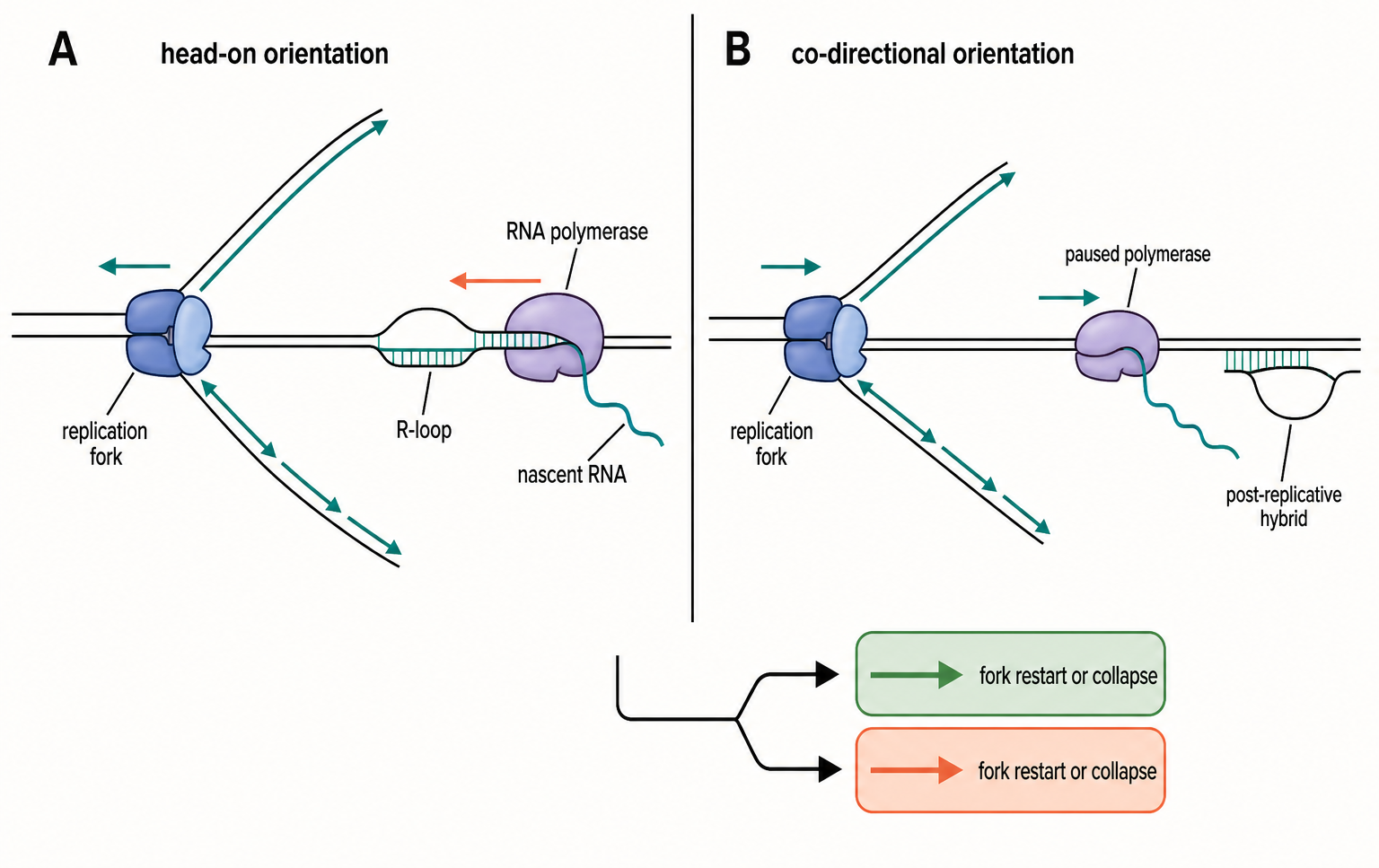
Figure 98.1. Orientation and anatomy of transcription-replication conflicts. Head-on and co-directional encounters differ in geometry and typical severity, but either can combine paused polymerases, nascent RNPs, RNA-DNA hybrids, torsional stress, and repair intermediates into a composite replication-fork obstacle.
The obstacle in a conflict is often composite. RNA polymerase itself may be the largest physical barrier, but the nascent RNA can remain annealed to DNA, RNA processing factors can hold the transcript near chromatin, and negative supercoiling behind polymerase can favor DNA unwinding. The displaced DNA strand in an R-loop can become single stranded, damaged, or folded into a secondary structure. Protein complexes bound to the RNA or hybrid may then be what the replisome actually encounters. Direct visualization of transcription-replication conflicts has strengthened this view by showing that DNA:RNA hybrids can persist after replication has passed, making “post-replicative hybrid” a useful concept rather than an oxymoron (Stoy et al. 2023).
Not every conflict is caused by unusually high transcription. Long genes, late-replicating regions, common fragile sites, ribosomal DNA, immunoglobulin switch regions, mitochondrial DNA, extrachromosomal DNA circles, and repeat-rich regions create conflict-prone geometry even when transcription levels are not extreme. Chromatin organization also matters. Replication timing and transcription units are usually coordinated so that many highly transcribed genes are replicated in favorable orientations or times. Conflict rises when this coordination fails, when oncogene activation drives unscheduled transcription and replication, or when replication is slowed so that ordinary transcription becomes a barrier.
Cells manage conflicts with several classes of factors. Topoisomerases relieve torsional stress; RNase H enzymes remove RNA from RNA-DNA hybrids; helicases and translocases such as SETX and RecQ-family proteins remodel RNA-DNA or protein-DNA obstacles; ATR stabilizes stalled forks; Fanconi anemia and BRCA pathway proteins promote repair and restart; transcription elongation and termination factors limit polymerase pausing; and RNA processing factors package transcripts so they do not reanneal to DNA. These mechanisms are partially redundant. A cell can tolerate loss of one prevention pathway until replication stress, repair deficiency, or increased transcription reveals a synthetic defect.
Box 98.1. What Counts as the Obstacle?
When reading a transcription-replication conflict claim, identify the obstacle before assigning mechanism. The obstacle may be:
- An RNA polymerase state: elongating, paused, backtracked, terminating, or arrested at DNA damage.
- A nascent RNA state: properly packaged, exposed, hybridized to DNA, retained on chromatin, or routed to decay.
- A DNA or chromatin state: negative supercoiling, displaced single-stranded DNA, a G-quadruplex, nucleosome density, or a protein barrier.
- A fork state: slowed, reversed, restarted, broken, or signaled without breakage.
- A response state: topological relief, RNase H action, helicase remodeling, ATR signaling, recombination, or transcriptional shutdown.
The same gamma-H2AX signal can follow several routes. A precise explanation states which obstacle is primary, which readout detects the consequence, and which rescue experiment would distinguish alternatives.
98.2. RNA processing defects as sources of genome instability
RNA processing protects DNA because a nascent RNA is a potential DNA-binding molecule until it is packaged into a mature ribonucleoprotein particle or degraded. Capping, splicing, cleavage and polyadenylation, termination, export adaptor loading, and nuclear decay all reduce the time that an RNA remains naked or improperly assembled near its template. When these steps fail, RNA can form RNA-DNA hybrids, polymerase can pause or backtrack, and chromatin can retain defective ribonucleoprotein assemblies that obstruct replication.
Splicing defects are a recurrent source of transcription-associated genome instability. Introns keep nascent transcripts tethered to chromatin while spliceosomes assemble and catalyze intron removal. Efficient splicing can package RNA and promote orderly elongation, whereas defective splicing can increase the residence time of transcript segments near DNA. The resulting stress is not simply a matter of unspliced RNA abundance. A splicing factor defect can change elongation kinetics, alter topological stress, recruit surveillance proteins, expose repetitive intronic sequences, and trigger nuclear retention. Any of these changes can increase R-loops or fork barriers.
Cleavage, polyadenylation, and termination defects create a different hazard: transcription continues beyond its normal boundary. Readthrough transcription can invade downstream genes, replication origins, convergent transcription zones, or chromatin domains that are not configured to tolerate elongating polymerase. Termination failure can also leave RNA polymerase II and processing factors at 3′ ends, where stable RNA-DNA hybrids and unresolved nascent RNA are common. A transcription unit is therefore a genome-stability unit, not only an expression unit. Its end must be made at the right place and time.
Table 98.1. RNA processing defects that create genome-instability risk. Defects in capping, splicing, cleavage, export, retention, and decay can expose the genome to different conflict and hybrid hazards; pathway disruption identifies risk but does not by itself prove the damaging intermediate.
| RNA step | Normal genome-protective function | Defect or perturbation | Likely hazard | Boundary caveat |
|---|---|---|---|---|
| Capping | Early cap formation helps commit nascent Pol II transcripts to orderly processing, packaging, and export-factor recruitment. | Delayed, inefficient, or surveillance-triggering cap formation leaves promoter-proximal RNA poorly protected. | Increased polymerase pausing, exposed nascent RNA, promoter-proximal hybrids, or retention of defective ribonucleoproteins near chromatin. | Cap defects can also change transcription initiation, elongation, and decay, so hybrid signal alone does not prove a direct R-loop mechanism. |
| Splicing | Spliceosome assembly packages intron-containing pre-mRNA and coordinates elongation with ribonucleoprotein maturation. | Splicing-factor depletion, slow intron removal, cryptic splicing, or retention of repetitive intronic sequence. | Longer residence of transcript segments near template DNA, altered elongation kinetics, R-loop accumulation, and fork barriers in long or highly processed genes. | Genome instability can be driven by pausing, chromatin change, or surveillance recruitment even when an R-loop intermediate is not demonstrated. |
| Cleavage and polyadenylation | 3′ end formation releases a defined transcript end and promotes proper mRNP maturation. | Inefficient cleavage, poly(A)-site failure, or defective 3′ processing complex assembly. | Readthrough transcription, persistent 3′-end RNA-DNA hybrids, and polymerase occupancy downstream of the intended gene boundary. | Readthrough can be a cause or consequence of transcription stress; locus-specific timing and rescue tests are needed. |
| Termination | Termination clears RNA polymerase II and associated RNA processing factors from completed transcription units. | Termination failure, slow polymerase release, or defective termination-linked helicase activity. | Elongation into downstream genes, replication origins, convergent transcription zones, or chromatin domains that are poorly buffered against transcription. | Termination defects can reflect topological stress or DNA damage signaling rather than being the initiating lesion. |
| TREX/THO export adaptor loading | TREX and THO help assemble export-competent messenger ribonucleoprotein particles while keeping nascent RNA from reannealing to DNA. | Defective adaptor loading or mRNP assembly failure leaves transcripts near their genes. | Chromatin-associated RNA retention, transcription-associated recombination, R-loop formation, and fork slowing. | Nuclear retention is protective when coupled to remodeling or decay; the hazard is retention that leaves RNA paired with chromatin. |
| Nuclear exosome decay | The nuclear exosome removes cryptic, promoter-proximal, readthrough, and improperly processed RNAs and can support productive RNAPII elongation. | Exosome dysfunction allows unstable RNA to persist; in MYCN-driven neuroblastoma models, EXOSC10 depletion caused slow, nonproductive elongation. | Persistent RNA or stalled polymerase can create chromatin obstacles; in the MYCN model, fork slowing and promoter-proximal double-strand breaks accompanied exosome loss. | Increased RNA abundance does not identify the damaging species, and the MYCN study did not detect typical R-loops at the affected promoter-proximal sites. |
| MTR4-associated sorting | MTR4-containing adaptor pathways route defective RNAs toward remodeling, retention, or exosome-mediated degradation. | NEXT, PAXT-related, or other MTR4-associated sorting defects misroute immature RNA. | Defective RNA can remain chromatin-associated or leak into export and cytoplasmic pathways, linking genome stress with immune or proteotoxic stress. | Different MTR4 adaptors act on different RNA classes; pathway-specific RNA identity matters for causal interpretation. |
RNA export defects link ribonucleoprotein assembly to fork stability. The TREX and THO pathways help couple transcription, RNA processing, and export. When export-competent messenger ribonucleoprotein particles fail to form, transcripts can accumulate at or near genes. In yeast, Huertas and Aguilera (2003) showed that cotranscriptional DNA:RNA hybrids can impair transcription elongation and promote transcription-associated recombination, providing a direct primary anchor for the THO/TREX logic. Nuclear retention can be protective if it keeps defective RNA from being translated or exported, but retention becomes dangerous if it traps RNA on chromatin. The difference is whether the retained RNA is held in a soluble surveillance compartment, remodeled for decay, or left paired with DNA and transcription machinery.
RNA decay defects create a related problem. The nuclear exosome and its cofactors degrade many unstable, cryptic, readthrough, promoter-proximal, and improperly processed RNAs. MTR4-containing adaptor systems, including NEXT and PAXT-related pathways, help sort RNAs toward degradation. If decay fails, unstable RNAs may persist long enough to form hybrids or recruit RNA-binding proteins that alter chromatin. Garland and Jensen (2020), Khan et al. (2023), and Winczura et al. (2018) provide the broader framework: nuclear RNA sorting is a genome organization problem as well as an RNA quality-control problem.
Papadopoulos et al. (2022) provide a mechanistically detailed but deliberately narrow example in neuroblastoma cells driven by the MYCN paralog of MYC. MYCN physically associated with nuclear-exosome subunits and recruited EXOSC10 to MYCN-bound promoters and RNA polymerase II. When EXOSC10 was depleted, MYCN could still load polymerase near transcription start sites, but nascent-RNA sequencing and polymerase occupancy measurements showed slow, nonproductive elongation across a large group of cell-cycle-regulated genes. In S phase, EXOSC10 loss increased RNA polymerase II proximity to the replication clamp PCNA, slowed forks in DNA-fiber assays, increased FANCD2-marked stalled forks, and produced double-strand breaks detected by BLISS near transcription start sites and MYCN-binding sites. R-loops were not typically detected at those affected promoter-proximal sites, so the evidence does not support reducing this phenotype to a universal R-loop mechanism.
The same study supports a two-tier conflict-buffering model. Nuclear-exosome loss activated ATM signaling; ATM-dependent BRCA1 recruitment promoted association of nuclear mRNA-decapping machinery, including DCP1A, with RNA polymerase II to restrict MYCN-driven transcription, with decapping coupled to promoter-proximal termination through XRN2. When DCP1A was depleted, this backup termination route failed, ATR signaling increased, replication tracts shortened, and RNA polymerase II became more proximal to active and stalled fork markers. The causal sequence therefore separates a first tier that maintains productive elongation from a second tier that terminates transcription when replication stress emerges. This pathway was defined in cultured MYCN-switch and MYCN-amplified neuroblastoma cells, and the authors identified tissue culture and incomplete accounting of other synthetic-lethal RNA-processing factors as limitations. MYCN-specific exosome dependence should not be generalized to endogenous MYC, every neuroblastoma, or all MYC-driven cancers without direct tests.
The boundary case is important. RNA processing defects can cause genome instability without a demonstrable R-loop intermediate. A defective processing factor may slow RNA polymerase, mislocalize repair proteins, change chromatin compaction, alter nucleotide pools, or activate cell-cycle checkpoints. Conversely, a rise in RNA-DNA hybrid signal after processing-factor depletion may be secondary to transcription arrest or cell stress. A mechanistic claim should specify whether the defect creates a hybrid, a paused polymerase, a repair-factor recruitment error, an exported aberrant RNA, or several of these.
Box 98.2. R-Loop Signal Is Not R-Loop Mechanism
An increased RNA-DNA hybrid signal is a starting observation, not a complete mechanism. A strong R-loop mechanism usually needs four layers of evidence. Temporal order: hybrid accumulation should occur before or with fork slowing, DNA damage signaling, or repair-factor recruitment, not only after global stress. Locality: the hybrid should appear at the affected transcription unit, break, fork, or chromatin region. Perturbation logic: RNase H, a hybrid-remodeling helicase, or a targeted sequence change should reduce both the hybrid and the genome phenotype. Specificity: transcription output, cell-cycle distribution, RNA processing, and checkpoint activation should be controlled well enough to rule out indirect stress.
Failure at one layer does not make the hybrid irrelevant, but it changes the claim. The safer wording may be “hybrid-associated,” “hybrid-correlated,” or “hybrid-sensitive” rather than “hybrid-caused.”
98.3. RNA-DNA hybrids in repair pathway choice and damage signaling
RNA-DNA hybrids occupy an ambiguous position in DNA repair. They can be damage-associated structures, repair intermediates, or lesions to be removed. At a transcribed double-strand break, local transcription can generate RNA that pairs with resected DNA ends or nearby template strands. Such hybrids may recruit repair proteins, alter end processing, or help signal that the break lies in an active gene; Aymard et al. (2014) provide a primary anchor for the broader principle that transcriptionally active chromatin can recruit homologous recombination at double-strand breaks. In other settings, persistent hybrids block access to DNA ends, expose single-stranded DNA to damage, or favor mutagenic repair. The same chemistry can therefore support repair at one time and obstruct repair at another.
Repair pathway choice depends on whether the cell interprets the hybrid as a sign of a transcription-coupled lesion, a stalled fork, or a dangerous RNA-bound DNA end. Transcription-coupled nucleotide excision repair begins when RNA polymerase stalls at bulky lesions on the transcribed strand and recruits repair machinery to remove the lesion. That pathway is not equivalent to R-loop repair, but it shows the principle that a transcription complex can direct repair to a specific DNA strand and locus. Nieto Moreno et al. (2023) emphasize that UV damage triggers both lesion removal and a broader transcriptional response, so transcription-associated repair cannot be reduced to one protein-recruitment step.
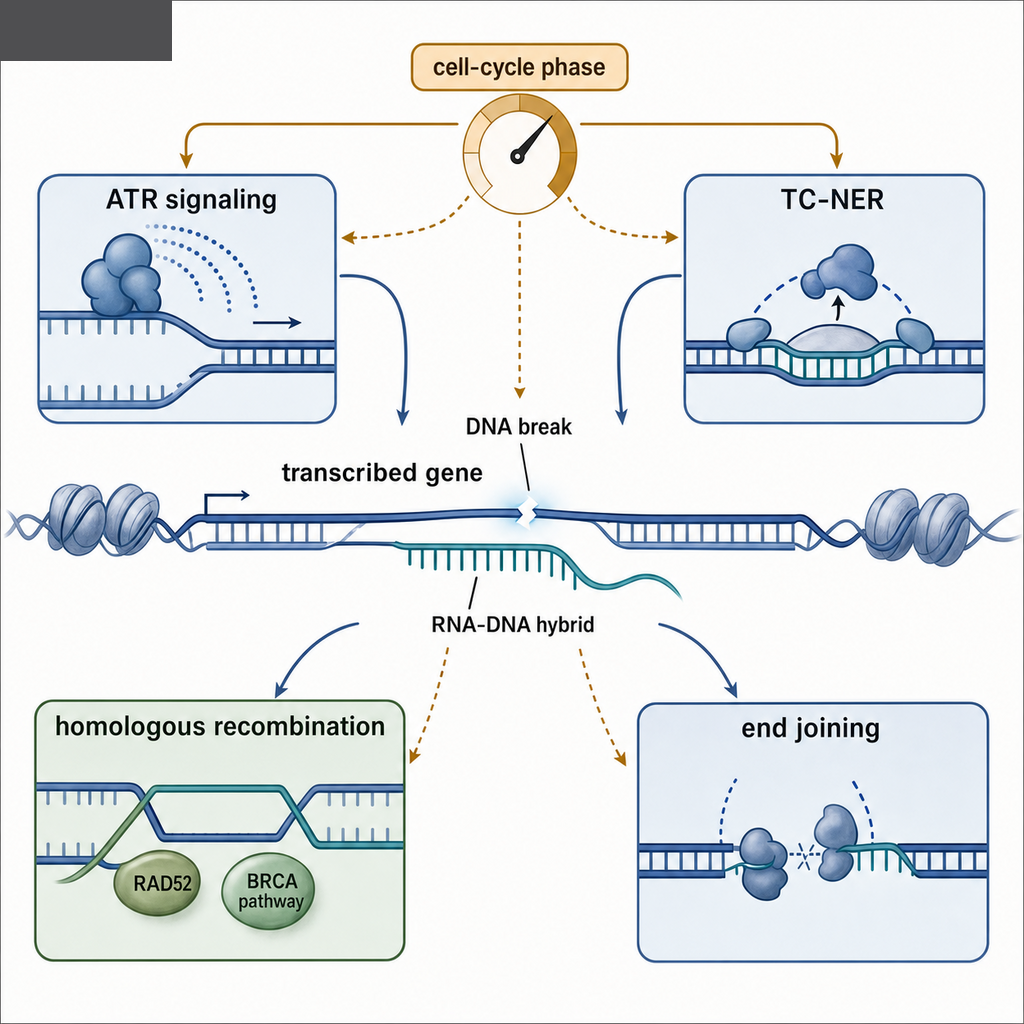
Figure 98.2. RNA-DNA hybrids as repair signals or repair obstacles. An RNA-DNA hybrid can recruit or stabilize repair signaling in one context and obstruct end processing or fork restart in another; outcome depends on lesion type, cell-cycle state, and available repair factors.
At replication forks, hybrids can influence whether the cell stabilizes the fork, reverses it, restarts it, or converts the problem into recombination. ATR signaling is commonly engaged when single-stranded DNA accumulates near stalled forks. RNA-DNA hybrids can contribute to this signal by stabilizing exposed DNA or by preventing normal fork progression. RAD52 has emerged as a factor of interest because it can resolve or manage transcription-replication conflicts in R-loop-associated contexts, and recent primary work argues that RAD52 mitigates R-loop-induced genome instability (Jalan et al. 2024). This does not mean RAD52 is a general R-loop enzyme; it means RAD52-dependent repair becomes especially important in certain hybrid-associated conflict states.
BRCA1, BRCA2, Fanconi anemia factors, RecQ helicases, and SETX illustrate the overlap between RNA-linked stress and canonical repair. BRCA1-deficient cells often accumulate transcription-associated damage and hybrid signals, but BRCA1 also functions in end resection, fork protection, checkpoint responses, and chromatin regulation. RecQ helicases manage difficult DNA and RNA-linked structures during transcription-associated stress (Das et al. 2021). SETX links termination, R-loop resolution, and neurological disease. Because these proteins have broad functions, rescue by RNase H or accumulation of S9.6 signal is not enough to assign the primary defect to an R-loop. The pathway assignment must be tested by timing, localization, catalytic requirements, and epistasis.
RNA-DNA hybrids can also bias repair away from a desirable pathway. Persistent hybrids at breaks may inhibit classical nonhomologous end joining by blocking end recognition or ligation. Hybrids may promote homologous recombination when a sister chromatid is available but become harmful in G1, when recombination templates are limited. Conversely, uncontrolled removal of hybrids may erase useful damage signals at actively transcribed genes. Repair biology therefore does not ask whether RNA-DNA hybrids are good or bad. It asks which hybrid, at which structure, in which cell-cycle phase, with which bound proteins, is being interpreted by which repair system.
98.4. Nuclear sentry systems, aberrant RNA leakage, and surveillance
The nucleus contains sentry systems that prevent defective RNA from becoming a genome hazard or a cytoplasmic danger signal. These systems include co-transcriptional packaging, spliceosome surveillance, cleavage and termination checkpoints, nuclear retention, RNA export licensing, RNA decay by the nuclear exosome, and chromatin-associated RNA-binding proteins that remodel defective ribonucleoproteins. A mature messenger RNA is not merely a sequence with a cap, exons, and a poly(A) tail. It is an export-competent particle whose protein composition records that processing and quality-control decisions were completed.
Nuclear retention is a protective first response. Defective or incomplete RNAs are often kept away from the cytoplasm so they are not translated or sensed as foreign. Retention can occur at transcription sites, nuclear speckles, paraspeckle-like compartments, nucleoli, or decay-associated assemblies depending on RNA class and cell type. The protective value of retention depends on rapid remodeling. If a defective RNA remains tethered to chromatin with complementarity to its gene, retention can increase R-loop formation and conflict risk. If the RNA is transferred to a degradation pathway, retention prevents both translation of aberrant products and chromatin-associated hybrid persistence.
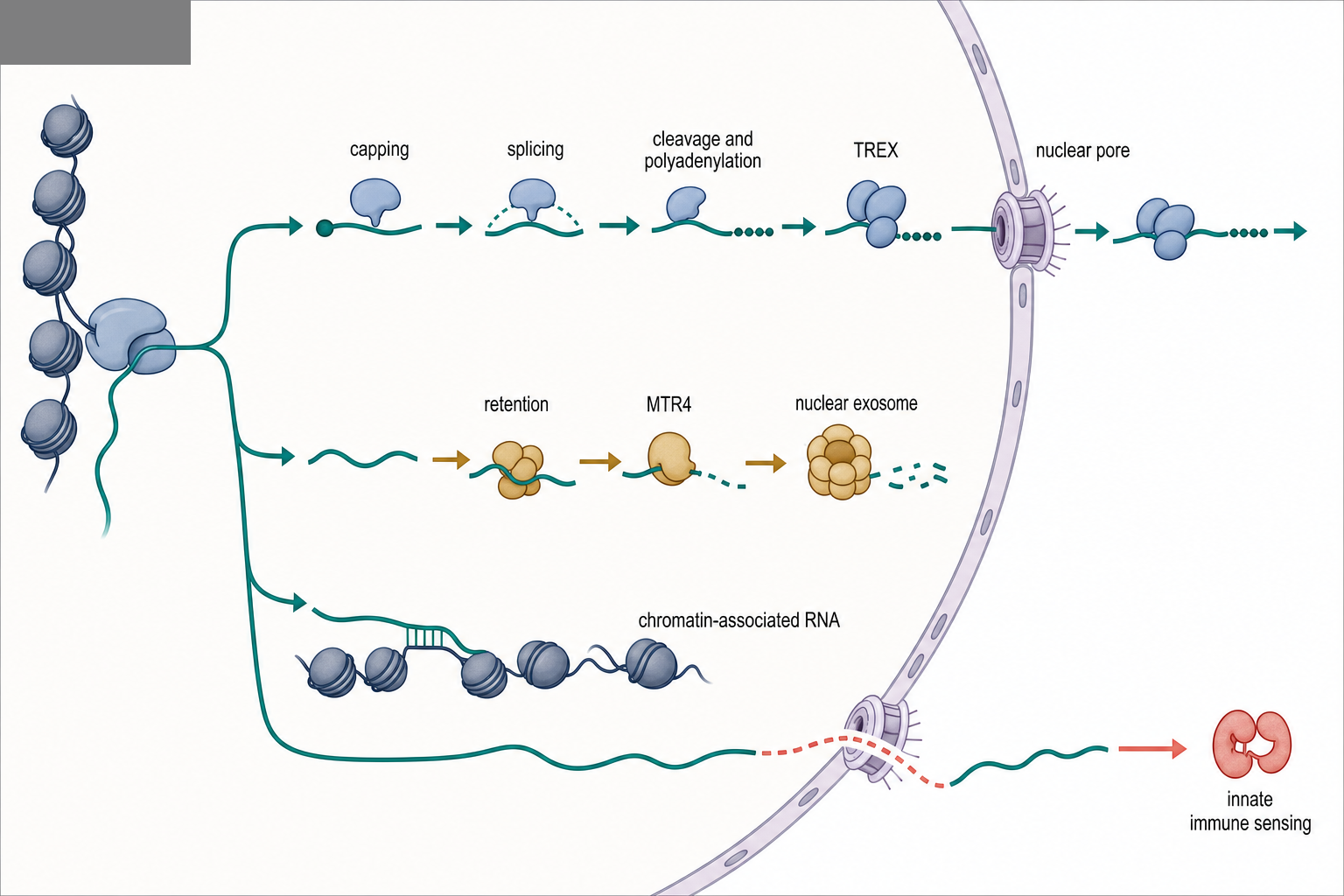
Figure 98.3. Nuclear sentry systems route RNA away from genome hazards. Nuclear RNA quality control routes nascent transcripts toward productive processing and export or toward retention and decay; failure can leave RNA on chromatin with R-loop risk or permit aberrant cytoplasmic leakage and immune sensing.
Export licensing is therefore a genome surveillance step. TREX-associated adaptors, nuclear pore-associated factors, and RNA-binding proteins help define which RNAs leave the nucleus. Viral infections often perturb mRNA export, either to favor viral gene expression or to shut off host transcripts (Guo et al. 2023). Cancer-associated mutations in transcription and RNA processing factors can also disturb export and surveillance. Oncogenic CDK13 mutations, for example, have been reported to impede nuclear RNA surveillance (Insco et al. 2023). The mechanistic implication is that defective surveillance can expose cells to both RNA quality defects and DNA damage vulnerability.
Aberrant RNA leakage has two meanings. First, defective RNA can leak from its normal nuclear processing route into the cytoplasm, where it may be translated, detected by innate immune pathways, or incorporated into inappropriate ribonucleoprotein assemblies. Second, RNA can leak into chromatin states where it forms hybrids or recruits repair and chromatin factors at the wrong time. These are different events and should not be merged. Cytoplasmic leakage creates immune and proteotoxic hazards; chromatin leakage creates replication and repair hazards. Some stresses generate both.
Nuclear RNA surveillance also intersects with phase behavior of RNA-binding proteins. Many RNA-binding proteins contain low-complexity or prion-like domains that help assemble dynamic ribonucleoprotein condensates but can also form aberrant assemblies under stress. Nuclear import receptors can reverse some aberrant phase transitions of RNA-binding proteins (Guo L. et al. 2018), linking transport biology to surveillance. When transport or phase-control systems fail, RNA-binding proteins may be unavailable for normal RNA packaging or may create persistent chromatin-associated assemblies. The genome consequence is indirect but real: an RNA that is not properly packaged is more likely to remain a replication obstacle.
98.5. Disease, cancer therapy, and synthetic-lethality opportunities
Diseases of RNA-linked genome surveillance arise when transcriptional load, RNA processing defects, hybrid accumulation, and repair weakness exceed buffering capacity. Neurological disease is one recurring setting because neurons express long genes, rely on extensive RNA processing, experience oxidative stress, and have limited replacement capacity. Cancer is another because oncogene activation can drive both transcription and replication stress while tumor suppressor loss impairs repair. Autoinflammatory disease can arise when nucleic acid species generated by genome or RNA processing defects reach innate immune sensors. RNase H2 genetics provides a concrete example: RNASEH2A, RNASEH2B, and RNASEH2C mutations cause Aicardi-Goutieres syndrome, and disease-associated RNase H2 alleles can have genome-instability consequences (Crow et al. 2006; Potenski et al. 2019).
Cancer cells can be vulnerable to deliberate worsening of transcription-replication conflicts. CDK9 inhibition can slow or distort transcription elongation and has been reported to induce conflicts and DNA damage accumulation in breast cancer models (Lee et al. 2025). Small molecules that target conflict biology have been explored for selective chemotherapy (Gu et al. 2023). These strategies are not simply “more transcription inhibition.” A useful therapeutic window requires tumor cells to depend more heavily than normal cells on conflict-resolution pathways, repair buffering, or high transcriptional output.
Extrachromosomal DNA-positive cancers provide a specific conflict-rich context. Extrachromosomal DNA circles can carry amplified oncogenes, replicate under unusual constraints, and support intense transcription. Recent work reports that enhancing transcription-replication conflict can target ecDNA-positive cancers (Tang et al. 2024). The principle is plausible because ecDNA combines high copy number, high transcriptional activity, altered chromatin context, and replication demands. The therapeutic challenge is selectivity: normal cells also transcribe and replicate, so the exploitable feature must be the tumor’s reduced capacity to absorb additional conflict.
Table 98.2. Therapeutic and synthetic-lethality opportunities in RNA-linked genome surveillance. RNA-linked genome-surveillance vulnerabilities connect tumor context and conflict source to candidate interventions, but synthetic-lethality and therapeutic claims require mechanism-specific evidence, selectivity, and clinically relevant exposure.
| Vulnerability context | Stress mechanism | Candidate intervention | Cited evidence | Caveat |
|---|---|---|---|---|
| MYCN-amplified neuroblastoma | MYCN recruits the nuclear exosome to RNAPII and target promoters to maintain productive elongation; ATM, BRCA1, and nuclear mRNA decapping provide backup termination when exosome buffering fails. | Test exosome, decapping, or conflict-buffering dependencies in genotype-defined MYCN tumors while preserving normal-tissue RNA surveillance. | Papadopoulos et al. 2022; co-immunoprecipitation and ChIP, nascent-RNA and RNAPII profiling, DNA fibers, FANCD2 mapping, PCNA-RNAPII proximity, and BLISS. | Evidence is from cultured neuroblastoma models. MYCN and endogenous MYC may use different stress-buffering pathways, and in vivo selectivity remains untested. |
| CDK9-sensitive transcriptional stress | Perturbed elongation can increase stalled polymerases, conflict frequency, and DNA damage accumulation in highly transcribed cancer cells. | CDK9 inhibition or dosing schedules that transiently worsen transcription-replication conflict. | Lee et al. 2025; Gu et al. 2023. | Transcription inhibition has many effects, so fork assays, transcription measurements, and rescue logic are needed before assigning killing to conflicts. |
| ecDNA-positive tumors | Amplified oncogene circles combine intense transcription, unusual replication constraints, and altered chromatin context. | Conflict-enhancing therapy or combinations that exploit ecDNA-associated stress buffering limits. | Tang et al. 2024. | ecDNA status is a candidate biomarker, not a universal response predictor; normal proliferating cells still require a selectivity window. |
| RAD52-dependent hybrid stress | R-loop-associated conflicts can create reliance on RAD52-linked repair or restart activities. | RAD52 pathway targeting or combinations with agents that increase hybrid-associated fork stress. | Jalan et al. 2024. | RAD52 should not be framed as a universal R-loop resolver; dependency is expected to be context and genotype specific. |
| Base-excision repair wiring in pancreatic cancer | Oxidative lesions, abasic sites, nicks, or repair intermediates can intersect transcription and replication at active genes. | Pair conflict-inducing approaches with base-excision repair pathway stratification or modulation. | Meng et al. 2024. | The lethal structure may be a repair intermediate encountered by a fork rather than the initial RNA polymerase obstacle. |
| BRCA, Fanconi, or fork-protection defects | Weak homologous recombination, fork protection, or crosslink-response capacity lowers tolerance for hybrid-associated fork stress. | Combine conflict induction with repair-pathway inhibitors or exploit existing repair-defective tumor genotypes. | Petermann et al. 2022, Wulfridge and Sarma 2024, and Chang and Stirling 2017. | Repair proteins have broad roles; RNase H sensitivity or gamma-H2AX alone is insufficient for a synthetic-lethality claim. |
| Spliceosome, export, or nuclear surveillance defects | Poor mRNP maturation can leave RNA on chromatin or route defective RNA into inappropriate compartments. | Spliceosome modulators, export-stress combinations, or surveillance-pathway vulnerabilities in genetically defined tumors. | Insco et al. 2023 for CDK13-linked surveillance impairment; Khan et al. 2023, Garland and Jensen 2020, and Schmid and Jensen 2018 for surveillance framework. | Disrupting RNA quality control may cause toxicity in normal proliferating tissues; biomarker-defined dependence is essential. |
| Topoisomerase and transcription-elongation stress | Torsional stress, paused polymerase, and unresolved elongation complexes can convert normal transcription into a fork barrier. | Topoisomerase poisons or elongation-stress combinations guided by conflict and repair biomarkers. | Das et al. 2021, Papadopoulos et al. 2022, and Chang and Stirling 2017. | DNA damage from these drugs can arise through multiple mechanisms, so orientation, locus specificity, and rescue tests are needed. |
Synthetic-lethality opportunities cluster around three axes. The first is repair deficiency. Tumors defective in BRCA, Fanconi anemia, RecQ, or fork-protection pathways may be vulnerable to agents that increase hybrid-associated fork stress or block backup repair. The second is RNA processing dependence. Tumors with spliceosome, transcription elongation, CDK12/CDK13, export, or nuclear surveillance defects may be unusually sensitive to further disruption of RNA quality control. The third is conflict burden. Tumors with high MYC activity, ecDNA, ribosomal DNA stress, or replication timing disruption may already operate near a conflict threshold.
MYCN-amplified neuroblastoma illustrates how these axes can be experimentally connected. In cultured models, exosome impairment exposed a MYCN-dependent need to preserve productive RNA polymerase II elongation, while ATM, BRCA1, and nuclear mRNA decapping supplied a backup route that curtailed transcription when damage accumulated (Papadopoulos et al. 2022). This result identifies a candidate tumor-specific dependency rather than a ready-made therapy: the study did not test tumor growth in vivo, and its contrast between MYCN-amplified and non-amplified neuroblastoma cells does not establish that exosome or decapping perturbation will spare normal proliferating tissues. It also argues against using “high MYC activity” as a single biomarker, because MYCN and endogenous MYC may buffer replication stress through different pathway combinations.
Base-excision repair and other repair pathways also modulate conflict responses. Recent work in pancreatic ductal adenocarcinoma links base-excision repair pathway activity to transcription-replication conflict regulation (Meng et al. 2024). This example is useful because it broadens the field beyond the common BRCA/R-loop framing. Oxidative lesions, abasic sites, single-strand break intermediates, and repair-associated nicks can all interact with transcription and replication. A conflict may begin with RNA polymerase, but the lethal event may be a repair intermediate encountered by a fork.
Therapeutic interpretation requires caution. Many drugs that increase DNA damage also alter transcription, chromatin, RNA processing, mitochondrial function, and cell-cycle state. Increased gamma-H2AX or S9.6 signal after drug treatment does not prove that transcription-replication conflicts are the primary killing mechanism. Stronger evidence combines fork assays, orientation or locus specificity, RNase H or helicase rescue, repair epistasis, transcription measurements, cell-cycle controls, and tumor-selective response. The most useful clinical translation will likely come from biomarker-defined contexts rather than from treating all R-loop-positive cancers as one category.
Box 98.3. Before Calling a Cancer Vulnerability Synthetic Lethal
A synthetic-lethality claim in RNA-linked genome surveillance should name both sides of the dependency. One side is the tumor state: BRCA or Fanconi pathway weakness, RAD52 dependence, ecDNA-associated transcriptional load, defective RNA surveillance, or unusual base-excision repair wiring. The other side is the intervention: increased transcription-replication conflict, impaired hybrid resolution, blocked fork protection, or disrupted RNA processing.
The evidence should show selective loss of viability in the predicted genotype, conflict-relevant molecular readouts, and rescue or sensitization consistent with the pathway model. Additive toxicity is not enough. A topoisomerase poison plus a transcription inhibitor may produce more DNA damage without revealing a specific synthetic relationship. Stronger studies connect genotype, locus or fork behavior, hybrid or repair state, and tumor-selective response. The clinical version also needs a biomarker that can be measured before treatment, not only a post hoc explanation of why cells died.
Experimental Foundations and Evidence
Conflict biology uses methods that measure moving processes rather than static molecules. DNA fiber analysis measures replication fork speed and restart after nucleotide labeling. Fork directionality profiling and replication timing maps identify regions where forks are likely to meet transcription units. Chromatin immunoprecipitation and nascent transcription assays locate stalled polymerases and elongation changes. R-loop mapping identifies hybrid-associated signals, but Chapter 97’s cautions apply: antibody enrichment, RNase H sensitivity, and orthogonal validation are required before assigning causality.
Single-molecule and direct visualization methods are especially valuable because conflicts are transient. Stoy et al. (2023) directly visualized transcription-replication conflicts and found post-replicative DNA:RNA hybrids, helping separate the immediate collision from structures that remain after fork passage. Such work supports a temporal model in which an obstacle can be created by transcription, encountered by replication, and then processed by repair or surveillance systems after replication has moved on. This matters because a damage signal observed after S phase may reflect a structure generated earlier.
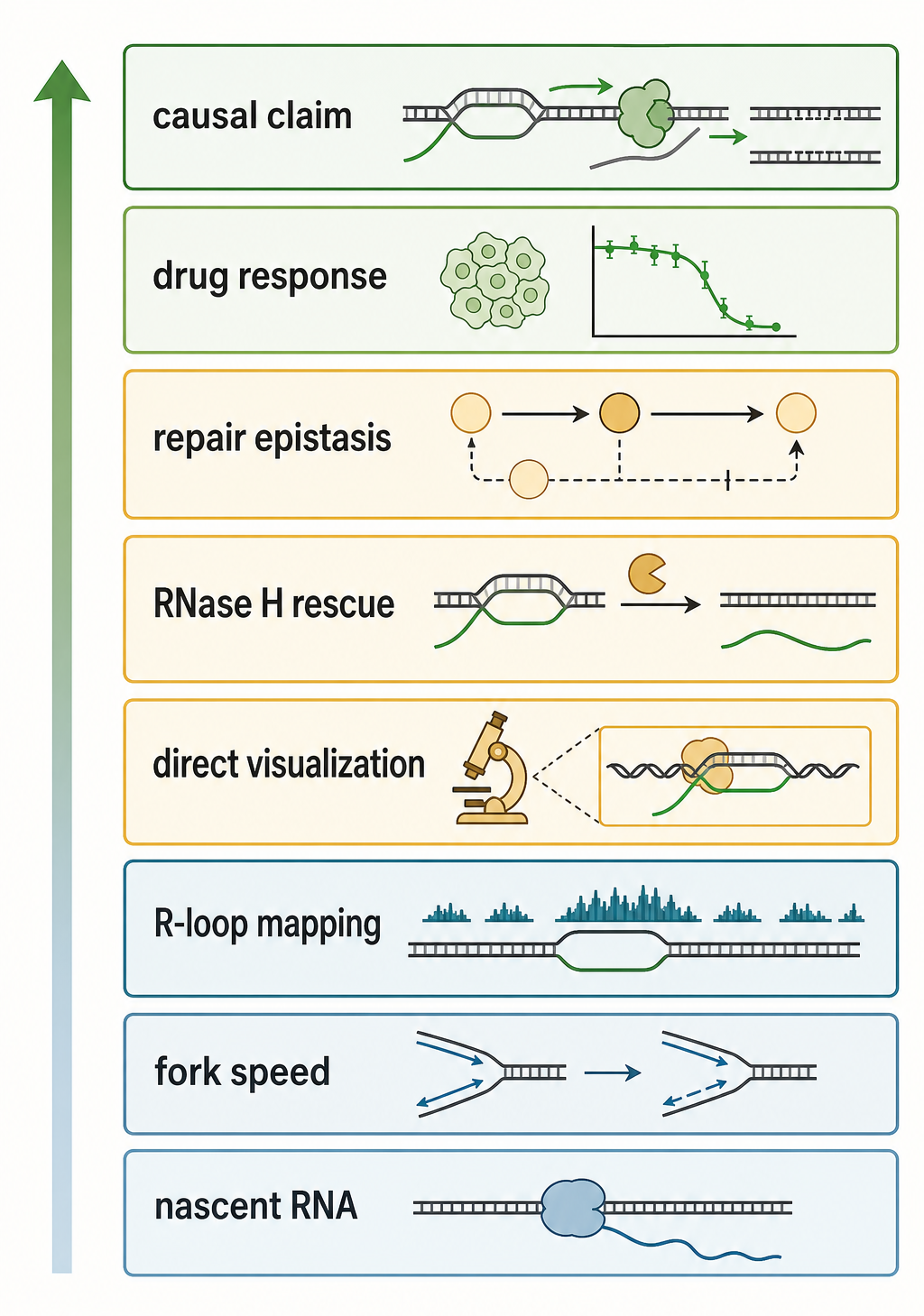
Figure 98.4. Experimental evidence ladder for assigning conflict causality. Causal assignment of a transcription-replication conflict requires convergent evidence from transcription, fork behavior, hybrid mapping, collision orientation, RNase H sensitivity, repair epistasis, rescue, and context-specific drug response.
Genetic perturbation provides causality but also creates ambiguity. Depleting an RNA processing factor, helicase, RNase H enzyme, repair protein, or transcription kinase can alter many pathways. A high-quality experiment therefore asks whether the same phenotype is rescued by a catalytic mutant, a localization mutant, RNase H overexpression, transcription reduction, or restoration of processing. Epistasis is essential: if RAD52 loss, RNase H1 overexpression, and ATR inhibition produce distinct or overlapping effects, their relationships can reveal whether the critical lesion is a hybrid, a stalled fork, or a downstream repair intermediate.
Disease and therapy studies require additional evidence. Drug-treated cancer cells should be analyzed for cell-cycle distribution, apoptosis, transcriptional output, replication fork dynamics, DNA damage markers, and hybrid accumulation. Biomarkers should be linked to mechanism rather than merely correlated with sensitivity. For example, ecDNA-positive status, CDK9 inhibitor response, or base-excision repair dependence becomes more persuasive when conflict induction is shown at relevant loci and when rescue or sensitization follows the predicted pathway logic.
Biological Contexts Across Organisms, Cell Types, and Genome Regions
Bacteria have long provided clear examples of orientation-dependent conflict because transcription and replication occur in the same compartment and genome organization often favors co-directional alignment of highly expressed genes with replication. Head-on transcription units can increase mutagenesis and fork problems, while co-directional conflicts can still require replication restart and R-loop management (Merrikh et al. 2011; Paul et al. 2013; Lang et al. 2017). Bacterial systems also show that topoisomerases, RNase H, and transcription elongation factors can buffer conflicts without the nuclear compartmentalization found in eukaryotes.
Yeast systems connect RNA biogenesis to genome stability with powerful genetics. THO/TREX defects, topoisomerase defects, RNase H perturbations, and helicase mutants have been central to showing that defective mRNP assembly can produce transcription-associated recombination and hybrid-dependent instability (Huertas and Aguilera 2003). These models support a general principle: RNA metabolism becomes genome maintenance when transcription and replication share a template.
Mammalian cells add long genes, chromatin domains, splicing-rich transcription, enhancer transcription, nuclear speckles, fragile sites, and complex repair pathway choice. Neural cells emphasize long transcription units and RNA processing burden. Immune and epithelial cells add inflammatory consequences of aberrant nucleic acid handling. Cancer cells combine oncogene-driven transcription, replication stress, copy-number changes, repair defects, and altered RNA processing. The same molecular structure can therefore have different consequences depending on cell identity and cell-cycle state.
Mitochondria are a boundary case. Mitochondrial DNA transcription and replication are tightly linked, and RNA primers or RNA-DNA hybrid-like intermediates can be physiological. Barshad et al. (2018) provide evolutionary context for mitochondrial transcription regulation. Mitochondrial hybrid biology should not be automatically interpreted as nuclear R-loop pathology, but mitochondrial stress can release nucleic acids and contribute to inflammatory signaling. The compartment is part of the mechanism.
Technology, Computational, Clinical, and Engineering Links
Computational models can prioritize conflict-prone regions by combining transcription level, gene length, replication timing, fork direction, GC skew, R-loop mapping, chromatin state, origin use, and repair-factor binding. These models are useful for hypothesis generation but limited by cell-type specificity. A gene that is conflict-prone in one cell type may be harmless in another because replication timing, transcriptional bursting, splicing kinetics, and chromatin structure differ.
Engineering approaches can test causality. Locus-specific recruitment of RNase H, hybrid-binding domains, helicases, transcriptional repressors, or repair factors can ask whether a local structure drives a local phenotype. Reporter systems can place transcription units in head-on or co-directional orientation relative to a replication origin. Synthetic circuits can tune transcriptional load, processing efficiency, and replication timing. The strongest designs perturb one variable while measuring transcription, hybrid formation, fork behavior, and repair outcome in the same system.
Clinical translation is most advanced in cancer, but inflammatory and neurological applications are plausible. Conflict-inducing drugs, transcription kinase inhibitors, DNA repair inhibitors, topoisomerase poisons, spliceosome modulators, and hybrid-resolution pathway targets all intersect this chapter’s biology. The risk is lack of specificity. Because transcription and replication are essential in normal proliferating tissues, therapeutic development must identify tumor-selective dependencies or transient dosing schedules that exploit stress thresholds without causing unacceptable genome damage in normal cells.
Recent Consensus
Recent reviews and primary studies converge on the idea that transcription-replication conflict is a systems-level problem involving transcription machinery, replication machinery, nascent RNA, RNA processing, DNA topology, chromatin, and repair. Head-on collisions are usually more severe than co-directional collisions, but orientation alone does not predict outcome. Stable RNA-DNA hybrids and defective RNA processing can convert routine transcription into a replication barrier, while repair and surveillance factors determine whether the barrier is resolved, signaled, or converted into DNA damage.
The field also increasingly treats RNA surveillance as genome surveillance. Nuclear retention, export licensing, and decay pathways prevent defective RNAs from becoming chromatin-bound obstacles or inappropriate cytoplasmic ligands. Cancer studies have moved from broad claims about R-loop accumulation toward pathway-specific vulnerabilities, including CDK9 inhibition, RAD52-dependent conflict resolution, base-excision repair modulation, and ecDNA-positive tumor stress. The strongest therapeutic claims specify the conflict source, repair dependency, biomarker, and rescue logic.
The MYCN-neuroblastoma exosome study sharpens this pathway-specific view: productive RNA polymerase II elongation, ATM-BRCA1-decapping backup termination, fork slowing, and double-strand-break evidence were connected within one tumor-cell system, while the absence of a typical promoter-proximal R-loop signal and the tissue-culture setting constrain broader interpretation (Papadopoulos et al. 2022).
Open Questions, Controversies, Deprecated Models, and Common Misconceptions
Open questions:
- How often RNA-DNA hybrids actively choose repair pathways rather than simply marking sites where transcription and replication have already failed?
- how cells decide whether to retain a defective RNA for decay, release it for export, or remove it from chromatin. The balance likely depends on RNA class, processing status, transcription site, chromatin state, and cell-cycle phase, but a predictive grammar is not yet available.
- How can therapeutic selectivity be achieved? Conflict induction can kill cancer cells, but normal proliferating cells also experience transcription-replication conflicts. The field needs biomarkers that distinguish tumors with unusually high conflict burden or unusually weak resolution capacity. ecDNA, BRCA pathway defects, RAD52 dependence, CDK9 sensitivity, base-excision repair wiring, and nuclear surveillance mutations are candidates, but each requires careful clinical validation.
Common misconceptions:
- “A transcription-replication conflict is not always a direct crash between RNA polymerase and a replisome.” A co-directional conflict is not automatically safe. RNA processing defects do not always cause genome instability through R-loops.
- “A DNA damage marker does not prove fork collapse.” Nuclear retention is not always protective if retained RNA remains on chromatin. Aberrant cytoplasmic RNA sensing is not the same event as chromatin R-loop formation. Synthetic lethality is a pathway-specific relationship, not a synonym for any drug combination that increases DNA damage.