Chapter 33. RNA Damage, End Chemistry, Healing, Ligation, and Repair
Scope Note
This chapter explains what happens when an RNA base, ribose, or phosphodiester backbone is chemically altered or cleaved, with primary ownership of the enzymes that recognize damaged ends, convert incompatible termini, and restore a continuous strand. Its central comparison is chemical: a break bearing a 2’,3’-cyclic phosphate and a 5’-hydroxyl requires a different route from a nick bearing a 3’-hydroxyl and a 5’-phosphate, and a methylated base can sometimes be reversed without cutting the backbone. The chapter distinguishes literal restoration of a pre-existing RNA from regulated processing, editing, rescue, and turnover. Chapter 32 owns the broader enzymology of RNA degradation; Chapter 39 owns tRNA biogenesis; Chapter 37 owns organellar turnover; Chapter 47 owns modification-enzyme families; Chapter 127 owns transcriptome-scale end profiling; and Chapter 124 owns general quantitative assay design. These neighboring chapters are connected here through the chemistry that determines whether an injured RNA can be healed, sealed, reused, or destroyed.
Executive Summary
RNA damage is not one lesion class. Reactive oxygen species can oxidize bases and ribose; electrophiles can alkylate ring nitrogens; ultraviolet light can create photoproducts or protein-RNA crosslinks; spontaneous or enzyme-catalyzed transesterification can break the backbone; and nucleases can deliberately cut RNA during processing, stress signaling, immunity, or biological conflict. The products differ in base identity, strand continuity, and terminal groups. A chemical lesion can stall a ribosome without breaking the RNA, whereas a single cleavage can create an upstream 2’,3’-cyclic phosphate and a downstream 5’-hydroxyl that ordinary adapter ligases cannot join.
Cells therefore face a context-dependent choice among restoration, functional rescue, and turnover. Repair is favored when the RNA is costly or difficult to replace, when the break lies in a known processing pathway, or when an aggressor repeatedly targets an essential RNA. Turnover is favored when the lesion cannot be reversed faithfully, when a damaged mRNA threatens translation, or when degradation is itself the intended antiviral or regulatory response. Stable RNAs are not automatically repaired, and short-lived RNAs are not automatically discarded: tRNA splice junctions are routinely sealed, while an oxidized rRNA can instead trigger ribosome quality control and replacement.
End healing converts a nuclease product into the substrate required by a particular ligase. A kinase can phosphorylate a 5’-hydroxyl; a phosphatase can expose a 3’-hydroxyl; and a cyclic phosphodiesterase can open a 2’,3’-cyclic phosphate. Fungal Trl1 integrates cyclic-phosphodiesterase, polynucleotide-kinase, and ATP-dependent ligase activities, leaving a junctional 2’-phosphate that is removed later. The phage T4 repair pair uses Pnk to prepare 3’-hydroxyl/5’-phosphate ends and Rnl1 to seal them. By contrast, RtcB accepts 3’-phosphate or cyclic-phosphate and 5’-hydroxyl termini, uses GTP and divalent metal, forms a covalent histidyl-GMP intermediate, activates the RNA 3’-phosphate with GMP, and completes a conventional 3’-5’ junction.
Classical ATP-dependent RNA ligases use three adenylate-transfer steps: enzyme adenylylation, AMP transfer to the RNA 5’-phosphate, and nucleophilic attack by the 3’-hydroxyl. The adenylylated RNA intermediate is productive only when the two ends are aligned correctly. Mispaired ends, damaged bases, secondary structure, and excess ATP can change the balance between sealing, abortive adenylylation, circularization, and intermolecular concatemerization. Ligase activity therefore does not by itself establish biologically accurate repair.
Direct reversal is a narrower category. Bacterial AlkB and human ALKBH3 can oxidatively demethylate certain alkyl lesions in RNA in vitro, using Fe(II), 2-oxoglutarate, and oxygen. This is genuine base restoration for compatible substrates, but it does not justify calling every RNA demethylation event “repair.” Removal of an installed regulatory modification, guide-directed editing, uridine insertion/deletion, and re-ligation during normal processing may use related chemistry while serving different biological purposes. The term RNA repair is most informative when the damaged molecular state and the restored functional state are both demonstrated.
RNA-repair modules have been repeatedly recruited into conflict and physiology. Bacterial ribotoxins and anticodon nucleases attack tRNAs; phages encode end-healing and sealing enzymes; Pnkp-Hen1 systems methylate a repaired ribose to reduce re-cleavage; fungal Trl1 and metazoan RtcB perform tRNA splicing and stress-regulated HAC1 or XBP1 mRNA ligation; and kinetoplastid mitochondrial ligases seal deliberately edited mRNAs rather than random damage. The same enzymes are indispensable biotechnology tools for circularization, adapter attachment, cyclic-phosphate capture, 5’-hydroxyl sequencing, and synthetic RNA assembly. Their biases are part of the measurement model, not a technical footnote.
Concept Inventory
- RNA lesion: a chemical or structural alteration that changes an RNA’s sequence information, folding, interactions, or reactivity.
- Backbone break: cleavage of a phosphodiester bond, producing two termini whose chemistry depends on the reaction mechanism.
- End chemistry: the covalent groups present at a 5’ or 3’ RNA terminus.
- End healing: enzymatic conversion of damaged termini into the substrate state required for sealing or another downstream reaction.
- End sealing: formation of a phosphodiester bond between aligned RNA termini.
- Direct reversal: restoration of a damaged base without excising and replacing a nucleotide or fragment.
- Repair-versus-turnover decision: the context-dependent routing of damaged RNA toward restoration, functional rescue, sequestration, or degradation.
- 2’,3’-cyclic phosphate: a terminal cyclic phosphodiester made when the ribose 2’-oxygen attacks the adjacent phosphate.
- Adenylylated RNA: an activated 5’-phosphate linked to AMP through a 5’-5’ phosphoanhydride.
- RtcB pathway: GTP-dependent joining of a 3’-phosphate or cyclic-phosphate end to a 5’-hydroxyl through histidyl-GMP and RNA-GMP intermediates.
- Product fidelity: the extent to which sealing restores the intended partners, orientation, junction chemistry, and sequence context.
- Functional rescue: recovery of biological activity without necessarily returning every chemical feature to its original state.
- Abortive adenylylation: accumulation of AppRNA when a classical ligase activates a 5’-phosphate but fails to complete strand joining.
- Damage signature: a lesion, terminal state, or functional consequence used to infer a generating process, with stated alternatives.
- Orthogonal end validation: confirmation by a method whose terminal selection and dominant artifacts differ from the primary assay.
What to Know Before Reading This Chapter
RNA’s phosphodiester backbone links the 3’-oxygen of one ribose to the 5’-oxygen of the next. The ribose 2’-hydroxyl makes RNA more susceptible than DNA to intramolecular transesterification: after deprotonation, the 2’-oxygen can attack the adjacent phosphorus, cleaving the chain and often yielding a 2’,3’-cyclic phosphate on the upstream product plus a 5’-hydroxyl on the downstream product. Hydrolysis or metal-dependent nuclease reactions can instead yield a 3’-hydroxyl and 5’-phosphate. These pairs are not cosmetic variants. Classical ATP-dependent ligases usually require 3’-hydroxyl/5’-phosphate termini, whereas RtcB-family enzymes are adapted to 3’-phosphate or cyclic-phosphate/5’-hydroxyl breaks.
Three running examples will anchor the comparisons. In fungal tRNA splicing, a splicing endonuclease cleaves precursor tRNA to create cyclic-phosphate/5’-hydroxyl exon halves. Trl1 opens the cyclic phosphate, phosphorylates the 5’-hydroxyl, and seals the exons, after which a separate enzyme removes the junctional 2’-phosphate. In mammalian endoplasmic-reticulum stress, IRE1 cleaves XBP1 mRNA and the RtcB complex joins the exon halves, converting a cleavage event into a transcription-factor mRNA. During bacteriophage T4 infection, the host anticodon nuclease PrrC can cleave tRNA^Lys; phage Pnk and Rnl1 heal and seal the broken tRNA, counteracting host defense.
The word “repair” must be tied to a defined before-and-after state. Sealing two synthetic oligonucleotides in vitro proves catalytic capacity, not physiological repair. Accumulation of a full-length band can reflect correct joining, misligation, template switching, or circularization. Recovery of translation or stress signaling is stronger functional evidence, but it still does not show that every repaired molecule has the intended junction. The best claims combine defined terminal chemistry, product identity, catalytic dependence, and recovery of a relevant cellular function.
33.1. Oxidative, alkylative, photochemical, hydrolytic, and nuclease-generated RNA damage
A lesion can alter a base, ribose, backbone, or RNP interface
Chemical damage begins with a reaction, not with a pathway label. Reactive oxygen species generated by metabolism, inflammation, irradiation, or metal-catalyzed chemistry can oxidize nucleobases and ribose. Guanosine is particularly oxidation-prone; 8-oxoguanosine is a widely used marker, although oxidative treatment generates a mixture that also includes oxidized adenine and pyrimidine products, abasic sites, strand breaks, and crosslinks. An antibody enrichment for 8-oxoguanosine therefore samples one lesion class and can be influenced by epitope accessibility. Liquid chromatography coupled to mass spectrometry can quantify modified nucleosides after digestion but normally loses their original transcript and position.
Alkylating agents transfer carbon groups to nucleophilic atoms on bases or the backbone. N1-methyladenosine and N3-methylcytidine disrupt canonical Watson-Crick pairing because methylation changes charge and hydrogen-bonding faces. The same formulas can describe intentionally installed tRNA modifications and chemically induced lesions; biological context and biosynthetic route determine whether a mark is damage. Electrophile exposure can also modify proteins in the same ribonucleoprotein particle, so a loss of RNA function need not originate in RNA itself.
Ultraviolet light can excite nucleobases, create covalent base-base photoproducts, and crosslink RNA to nearby proteins. Photochemical crosslinking is intentionally exploited in interaction-mapping experiments, but in a cell it can immobilize an RNP or obstruct reverse transcription. Ionizing radiation and reactive radicals can cleave ribose or backbone bonds with heterogeneous end products. These lesions differ from the relatively clean termini produced by many metal-independent endoribonucleases. A gel band called “cleaved RNA” can consequently contain several chemical populations that respond differently to phosphatase, kinase, and ligase treatment.
Hydrolytic cleavage illustrates RNA’s distinctive chemistry. Base-catalyzed transesterification commonly passes through a pentacoordinate phosphorus transition state and produces a cyclic phosphate/5’-hydroxyl pair. RNase A-family enzymes and many ribotoxins use general acid-base catalysis to achieve related chemistry with sequence or structural selectivity. Metal-dependent nucleases often activate water for hydrolysis and commonly generate 3’-hydroxyl/5’-phosphate products. These are tendencies, not universal rules; the exact products must be established for the enzyme and conditions under study.
Nuclease-generated breaks span normal processing and hostile attack. tRNA-splicing endonucleases, IRE1, RNase L, anticodon nucleases, toxin-antitoxin nucleases, self-cleaving ribozymes, and degradative ribonucleases can generate chemically similar termini while serving different purposes. End chemistry can narrow the candidate reaction class but rarely identifies the nuclease by itself. Sequence motif, RNP context, genetic dependence, time course, and complementary upstream and downstream products are needed to move from a mapped end to a mechanism.
Figure 33.1 organizes lesion classes by the physical feature changed, while Table 33.1 relates common cleavage mechanisms to their expected—but not guaranteed—terminal products.
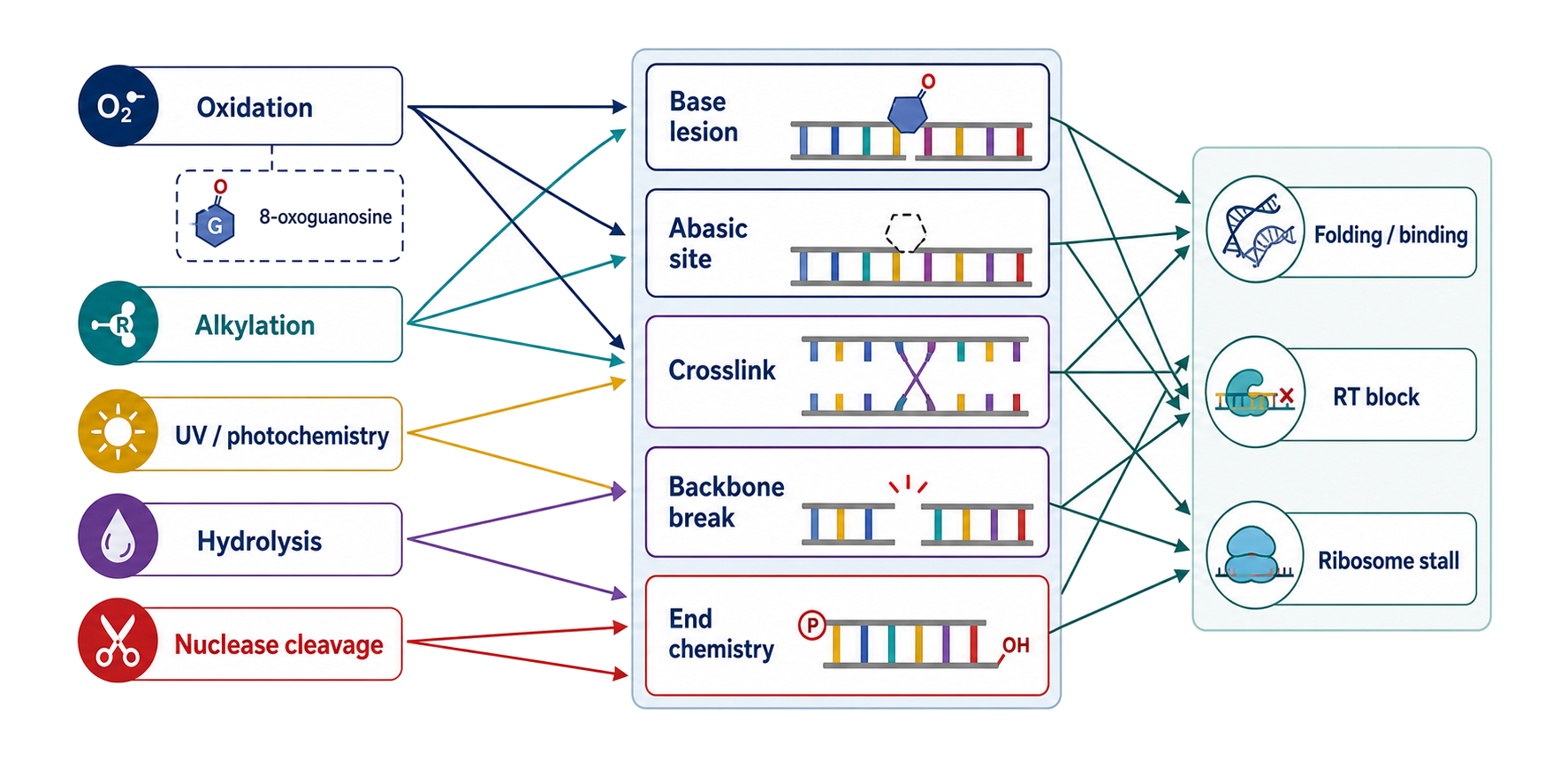
Figure 33.1. From damaging reaction to chemical lesion and functional consequence. Prevent “RNA damage” from being treated as one molecular state.
Table 33.1. Cleavage mechanism, expected end pair, and diagnostic limitations. Connect reaction chemistry to terminal products without turning tendencies into universal rules.
| Generating reaction | Common upstream end | Common downstream end | Example class | Essential caution |
|---|---|---|---|---|
| Intramolecular transesterification | 2’,3’-cyclic phosphate | 5’-hydroxyl | Spontaneous alkaline cleavage, self-cleaving ribozymes | Cyclic phosphate can hydrolyze during handling |
| Metal-independent acid-base nuclease | 2’,3’-cyclic phosphate | 5’-hydroxyl | RNase A-like enzymes, several ribotoxins, RNase L | Motif and termini do not identify the enzyme alone |
| Metal-activated water hydrolysis | 3’-hydroxyl | 5’-phosphate | Many processing and degradative nucleases | Family-specific exceptions occur |
| Radical or photochemical cleavage | Heterogeneous phosphate/hydroxyl ends | Heterogeneous phosphate/hydroxyl ends | Irradiation and oxidative exposure | One gel band can contain several chemical species |
| Programmed editing or processing cut | Pathway-specific | Pathway-specific | tRNA splicing, IRE1, editosome | Programmed intermediates are not automatically damage |
Damage becomes biological when an RNA-dependent process encounters it
The ribosome is one sensor of damaged mRNA. A defined 8-oxoguanosine in a codon can slow bacterial peptide-bond formation by orders of magnitude and produce stalled translation complexes. In yeast, oxidized mRNAs accumulate on polysomes when no-go decay is compromised. This evidence supports a route from base damage to translational arrest and surveillance, but it does not imply that every oxidized nucleotide stalls or that the ribosome directly identifies a particular chemical adduct. Position, surrounding sequence, RNA structure, lesion mixture, and organism all matter.
Stable RNA damage has different consequences. Oxidized residues in ribosomal RNA can inhibit distinct elongation steps depending on their position in the catalytic center. A damaged tRNA can be rejected during aminoacylation or decoding, fragmented by stress nucleases, or misread by a reverse transcriptase. Damage to an abundant RNA pool can thus alter translation before total RNA abundance changes. Deeper treatment of collision sensing and ribosome-associated quality control belongs to Chapter 71; the present chapter asks whether the affected RNA can be chemically restored or must be replaced.
33.2. Damage recognition and the context-dependent choice between repair, rescue, and turnover
There is no universal RNA-damage checkpoint
DNA repair often uses an intact complementary strand as a template. Most cellular RNAs lack a permanently paired, independently preserved copy, and many are continuously transcribed. These facts favor turnover, but they do not eliminate repair. The decision depends on molecular value, lesion reversibility, localization, copy number, replacement cost, and whether the break is generated by a programmed pathway. An intron-containing pre-tRNA is routed to an assembly line that expects a precise break; a randomly oxidized mRNA is more likely to be recognized indirectly through stalled translation and degraded.
Damage recognition can be direct or consequence-based. A repair enzyme may bind a specific end pair, as RtcB does with a 3’-phosphate and 5’-hydroxyl presented in a suitable geometry. An AlkB-family enzyme can recognize a methylated base in a flexible single-stranded region. Alternatively, a ribosome, RNA-binding protein, or surveillance complex can detect loss of function without contacting the original lesion selectively. Enrichment of a protein on damaged RNA is therefore not equivalent to chemical lesion recognition unless binding specificity is tested against matched undamaged and alternative-lesion substrates.
The repair route must preserve identity. For a broken tRNA, the correct two halves must be aligned and the anticodon loop must regain a usable structure. For XBP1 mRNA, IRE1 cleavage sites and exon pairing constrain the ligation junction. A generic ligase expressed at high levels could increase full-length products while also joining wrong partners. Structure, sequence complementarity, scaffolding proteins, subcellular localization, and coupling between cleavage and ligation all increase fidelity. Turnover becomes safer when these constraints are absent.
Repair, rescue, and turnover are experimentally separable outcomes
Literal repair restores the relevant chemical state and sequence continuity. Functional rescue restores activity, perhaps with a chemically altered junction. Fungal Trl1 provides a clear distinction: it seals tRNA exons while leaving a 2’-phosphate at the splice junction, and a later 2’-phosphotransferase removes that mark. The ligated intermediate is rescued from fragmentation but is not yet chemically identical to mature tRNA. Likewise, a bacterial Pnkp-Hen1 system can install a protective 2’-O-methyl group near the repaired site, deliberately producing a molecule that differs from the pre-attack RNA yet resists repeat cleavage.
Turnover can itself be protective. Degrading an oxidized mRNA prevents repeated ribosome stalling and synthesis of incomplete proteins. Clearing damaged rRNA allows ribosome rebuilding. RNase L cleavage during innate immunity is intended to suppress viral and host translation and amplify signaling; immediate re-ligation would oppose that purpose. Whether selected RNase L-derived tRNA fragments are repaired in particular contexts remains a separate, experimentally testable question, not a consequence of their cyclic-phosphate/5’-hydroxyl chemistry.
Figure 33.2 frames the decision as an evidence-based routing problem, and Box 33.1 gives a checklist for using “RNA repair” precisely.
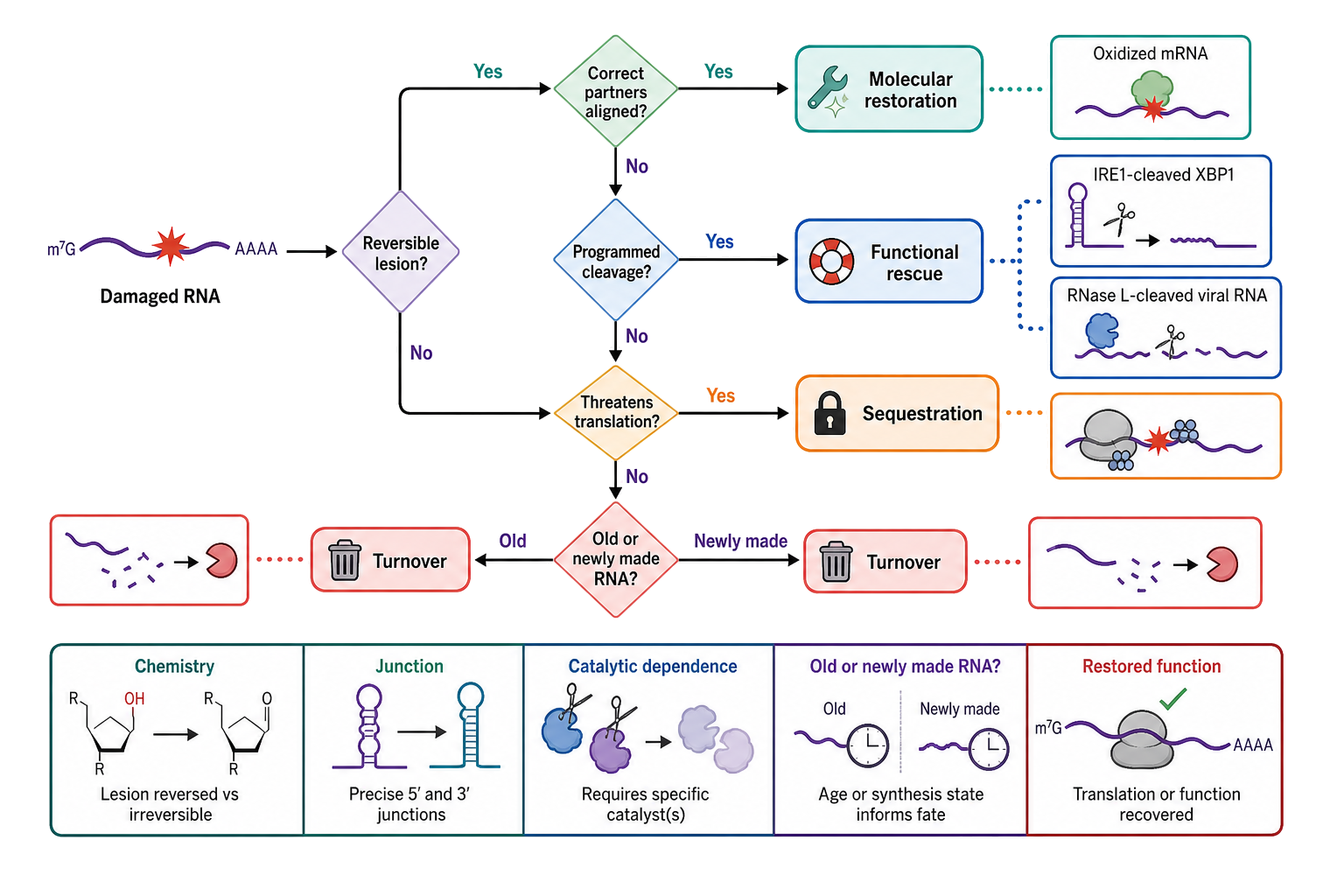
Figure 33.2. Repair, functional rescue, or turnover: a context-dependent routing map. Show why chemically similar lesions can have different biological fates.
Box 33.1. When is “RNA repair” the right claim?
- Contents:
- Define the lesion or break and verify its chemical state.
- Show that the proposed enzyme converts that state through a chemically plausible route.
- Demonstrate the intended junction or restored base on the RNA.
- Distinguish old-molecule restoration from new transcription and altered decay.
- Require catalytic dependence and appropriate localization or complex assembly.
- Measure recovery of an RNA-specific function.
- Use “processing,” “editing,” “end conversion,” or “functional rescue” when those terms are more accurate.
- Misconception prevented: Any beneficial effect of a ligase on RNA abundance is repair.
The strongest in-cell repair demonstration begins with a defined generating enzyme or perturbation, maps both termini, shows catalytic dependence on the proposed healing and sealing factors, verifies the junction by an orthogonal method, and measures recovery of RNA function. A steady-state increase in full-length RNA after ligase overexpression is weaker because altered transcription or decay can produce the same observation. Pulse-chase or inducible cleavage designs can distinguish restoration of pre-existing molecules from replacement by new transcription.
33.3. RNA-end healing by kinases, phosphatases, and cyclic-phosphodiesterases
Healing is defined relative to the receiving ligase
End healing is not a single reaction. It is the conversion of a break into the end pair required by the next enzyme. For a classical ATP-dependent RNA ligase, the canonical target is a 3’-hydroxyl beside a 5’-monophosphate. A 5’-hydroxyl kinase transfers the terminal phosphate of an NTP to the downstream RNA end. A 3’-phosphatase hydrolyzes a blocking terminal phosphate. A 2’,3’-cyclic phosphodiesterase opens the cyclic phosphate, but it can yield either a 2’-phosphate/3’-hydroxyl or a 3’-phosphate/2’-hydroxyl depending on catalytic family and orientation. Only the first combination directly exposes the 3’-hydroxyl needed by a classical ligase.
Fungal Trl1 is a compact running example. Its cyclic-phosphodiesterase domain opens the upstream cyclic phosphate to a 2’-phosphate/3’-hydroxyl. Its GTP-dependent kinase domain phosphorylates the downstream 5’-hydroxyl. Its ATP-dependent ligase domain then seals the 3’-hydroxyl/5’-phosphate nick. The junctional 2’-phosphate is subsequently removed by Tpt1 through an NAD-dependent phosphotransfer reaction. Calling Trl1 only an “RNA ligase” hides two essential substrate-preparation reactions and the chemically marked product.
T4 polynucleotide kinase-phosphatase illustrates a different modular architecture. Its kinase and 3’-phosphatase activities prepare broken tRNA for T4 Rnl1. Domain organization, nucleotide donor preference, metal dependence, and terminal specificity differ among viral, bacterial, fungal, and metazoan polynucleotide kinases. Human CLP1 has RNA 5’-kinase activity and associates with the tRNA-splicing endonuclease, yet the physiological relationship between CLP1 kinase activity and mammalian tRNA exon ligation is not a simple copy of the fungal pathway. Disease-associated CLP1 mutations establish biological importance but do not by themselves assign every phenotype to failure of end healing.
RtcB changes the meaning of healing. RtcB can open a 2’,3’-cyclic phosphate to a 3’-phosphate and then use that 3’-phosphate for ligation to a 5’-hydroxyl. Converting these ends to 3’-hydroxyl/5’-phosphate would redirect the substrate to a classical ligase and erase the original chemical signature. Thus, a treatment advertised as “universal end repair” is a deliberate many-to-one transformation. It improves library inclusion or synthetic yield at the cost of information about the generating reaction.
Figure 33.3 compares Trl1, T4 Pnk-Rnl1, and RtcB routes from the same cyclic-phosphate/5’-hydroxyl break. Table 33.2 lists diagnostic conversion reactions and the information each destroys.
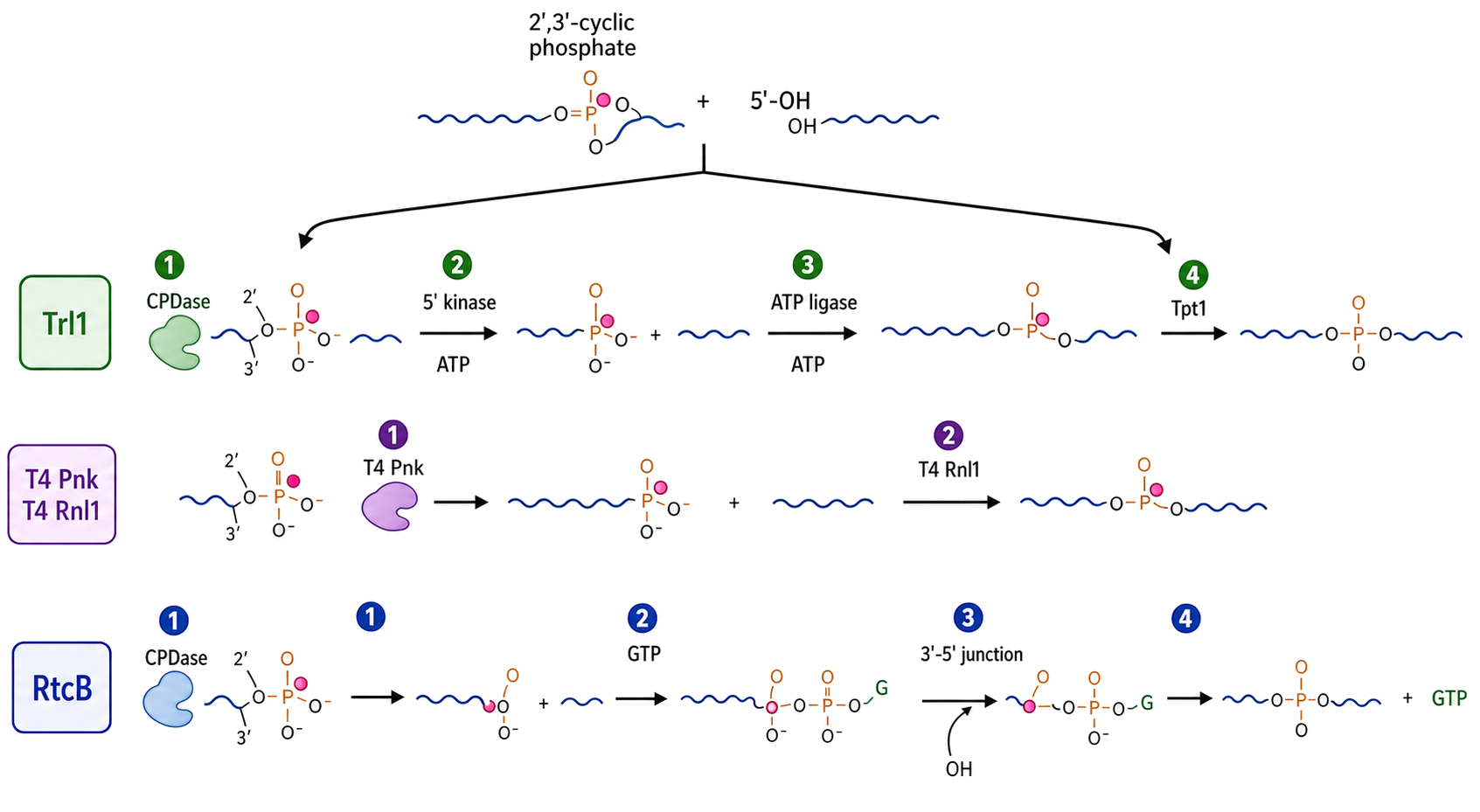
Figure 33.3. Three routes from a cyclic-phosphate/5’-hydroxyl break. Make “healing” relative to the receiving ligase.
Table 33.2. End conversions, receiving enzymes, and information loss. Make every conversion explicit about what it enables and erases.
| Starting terminus | Conversion | Product | Enables | Information lost or preserved |
|---|---|---|---|---|
| 5’-hydroxyl | Polynucleotide kinase | 5’-phosphate | Classical ATP-dependent ligation and common 5’ adapter ligation | Original 5’-hydroxyl identity lost unless paired aliquot retained |
| 3’-phosphate | 3’-phosphatase | 3’-hydroxyl | Classical ligation and many 3’ adapter ligations | Original 3’-phosphate identity lost |
| 2’,3’-cyclic phosphate | CPDase yielding 2’-P/3’-OH | 2’-phosphate plus 3’-hydroxyl | Trl1-type sealing | Cyclic origin partly retained as junctional 2’-phosphate |
| 2’,3’-cyclic phosphate | RtcB opening | 3’-phosphate | RtcB activation and ligation | Cyclic state converted within the RtcB pathway |
| Mixed blocked 3’ ends | Broad phosphatase/end-repair treatment | Enriched 3’-hydroxyl pool | Wider library admission | Several generating chemistries merged |
Healing assays require chemically homogeneous substrates
Synthetic oligoribonucleotides can be prepared with defined 5’-hydroxyl, 5’-phosphate, 3’-hydroxyl, 3’-phosphate, or cyclic-phosphate termini, but synthesis and storage can introduce mixtures. Denaturing polyacrylamide electrophoresis often cannot distinguish isomeric 2’- and 3’-phosphates. Phosphatase sensitivity, kinase-dependent radiolabeling, selective ligation, nuclease digestion followed by chromatography, and high-resolution mass spectrometry provide complementary evidence. A substrate specification should state strand sequence, length, structure, terminal chemistry, purity method, active fraction, and how the terminus was verified.
Kinetics must separate the healing steps. In a multi-enzyme reaction, the observed accumulation of ligated product reports the slowest or least populated transition, not necessarily ligase chemistry. Time-resolved measurement of cyclic-phosphate opening, 5’ phosphorylation, activated intermediates, and final junction can reveal substrate channeling or bottlenecks. Removing one enzyme and supplying a pre-healed substrate is a powerful way to assign the blocked step, provided the replacement substrate matches the real intermediate.
33.4. RNA ligase families, adenylate-transfer chemistry, strand joining, and product fidelity
Classical RNA ligases activate the 5’-phosphate with AMP
T4 Rnl1, T4 Rnl2, fungal Trl1-LIG, and kinetoplastid RNA editing ligases belong to the covalent nucleotidyltransferase superfamily. Their shared logic has three steps. First, an active-site lysine attacks the alpha phosphate of ATP, producing ligase-AMP and pyrophosphate. Second, the enzyme transfers AMP to the substrate 5’-phosphate, producing AppRNA. Third, the adjacent 3’-hydroxyl attacks the activated 5’ phosphorus, releasing AMP and forming a 3’-5’ phosphodiester. The adenylate is a transient leaving group that makes an otherwise unreactive phosphate susceptible to attack.
The shared chemistry does not imply shared substrate preference. Rnl1 efficiently joins single-stranded RNA ends and can circularize small RNAs. Rnl2 is adapted to nicked duplex substrates and is widely used in truncated form to attach pre-adenylylated adapters to RNA 3’ ends without ATP. Trl1 recognizes a junction bearing a 2’-phosphate, and kinetoplastid REL proteins work in multiprotein editosomes. Domain additions, RNA-binding surfaces, partner proteins, and local helix geometry determine whether the same catalytic core favors a nick, a hairpin break, a free end, or a programmed editing junction.
Structural snapshots of Rnl2 show conformational changes as the enzyme advances from ligase-AMP to AppRNA and then to the sealed product. The 3’-terminal nucleotide must be positioned accurately for the third step. Mispairs or damaged bases near the nick can slow sealing and allow AppRNA to accumulate. Some damaged or mismatched junctions can nevertheless be sealed, embedding a chemically or informationally defective nucleotide in the product. Product fidelity therefore includes correct partner choice, junction sequence, backbone connectivity, and absence of persistent activated intermediates.
RtcB activates the 3’-phosphate with GMP
RtcB is chemically inverted relative to classical ligases. The enzyme reacts with GTP at an active-site histidine to form covalent RtcB-GMP. RtcB opens a cyclic phosphate when necessary, transfers GMP to the RNA 3’-phosphate to form an activated RNA(3’)pp(5’)G intermediate, and enables attack by the 5’-hydroxyl. GMP is released and the original terminal phosphate becomes the junction phosphate. Two-metal coordination and conserved active-site residues position GTP, the RNA phosphate, and the attacking hydroxyl.
This mechanism explains why ATP, magnesium, and a 5’-phosphate are not universal requirements for RNA ligation. It also creates distinctive regulatory opportunities. Eukaryotic RtcB operates with cofactors including archease and other tRNA-ligase-complex components; cofactor availability, localization, oxidation state, and substrate presentation can alter productive cycling. Archaeal and bacterial RtcB proteins can be simpler, and paralogs can diverge toward capping or other phosphotransfer activities. Sequence annotation as “RtcB” predicts a fold and catalytic neighborhood, not an identical in vivo substrate list.
Figure 33.4 contrasts AMP-on-5’-phosphate and GMP-on-3’-phosphate activation. Table 33.3 compares major ligase families, cofactors, preferred ends, and common side products.
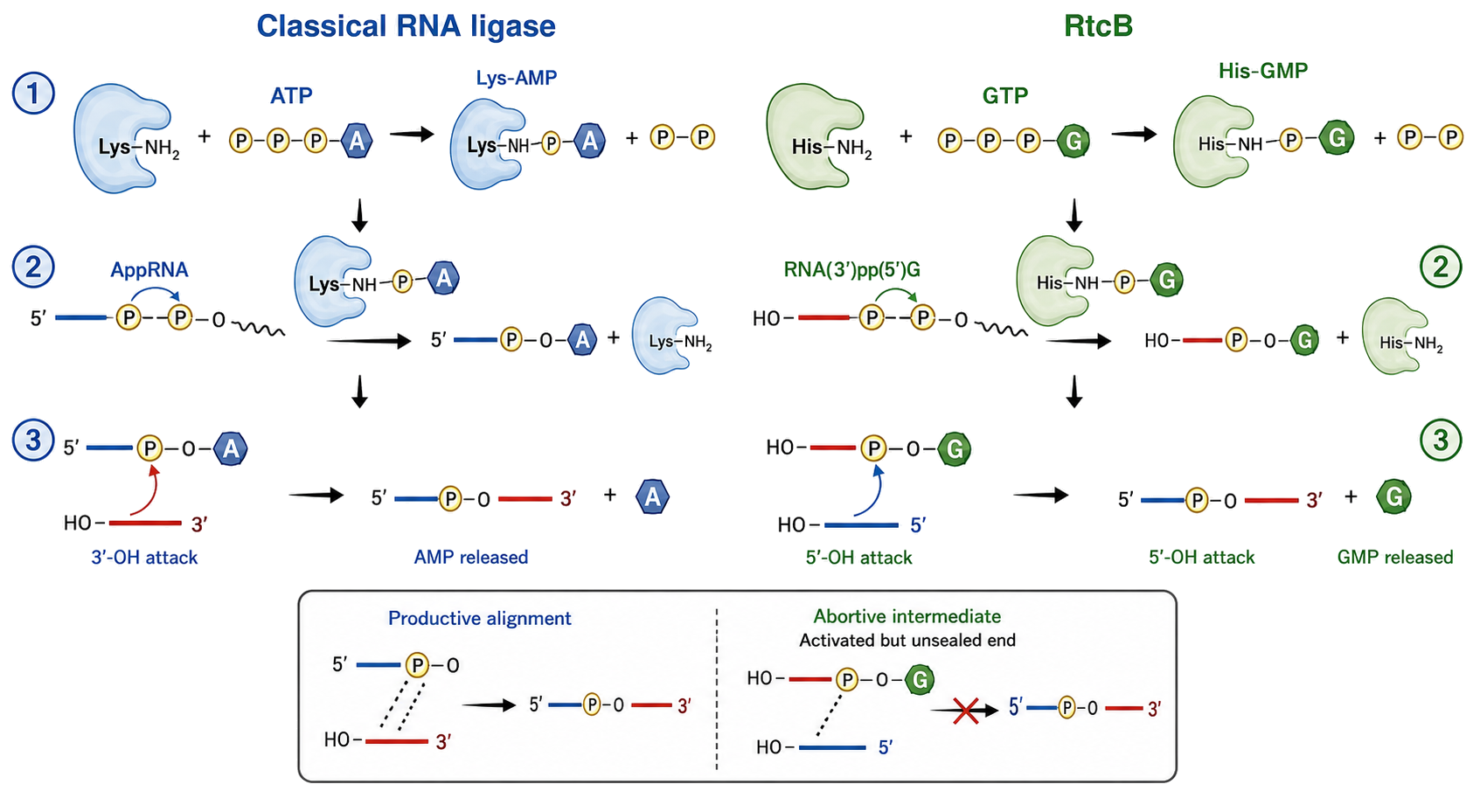
Figure 33.4. Opposite activation polarities in classical RNA ligases and RtcB. Compare AMP-on-5’-phosphate and GMP-on-3’-phosphate mechanisms step by step.
Table 33.3. Major RNA-ligase solutions to end joining. Compare chemistry, architecture, substrate, and failure modes.
| Ligase system | Preferred end pair | Nucleotide and covalent intermediate | Typical biological or technical context | Major side product or boundary |
|---|---|---|---|---|
| T4 Rnl1 | 3’-OH/5’-P, often flexible single-stranded ends | ATP; lysyl-AMP and AppRNA | Phage tRNA repair, 5’ adapter ligation, circularization | Circles and concatemers |
| T4 Rnl2 | 3’-OH/5’-P nick in duplex | ATP; lysyl-AMP and AppRNA | Nick repair, pre-adenylylated 3’ adapter ligation | Abortive AppRNA at poor junctions |
| Fungal Trl1-LIG | 3’-OH,2’-P/5’-P nick | ATP; lysyl-AMP and AppRNA | tRNA and HAC1 splicing | Requires upstream healing and later 2’-P removal |
| Kinetoplastid REL1/REL2 | Editosome-aligned 3’-OH/5’-P nick | ATP; lysyl-AMP and AppRNA | Guide-directed mitochondrial editing | Programmed editing, not stochastic-damage repair |
| RtcB | 3’-P or cyclic-P/5’-OH | GTP; histidyl-GMP and RNA(3’)pp(5’)G | tRNA/XBP1 splicing, repair, end-selective tools | Cofactor and geometry dependence |
| Bacterial Pnkp-Hen1/Rnl modules | System-specific healed 3’-OH/5’-P | ATP-dependent ligase chemistry | Ribotoxin defense plus protective methylation | Composition varies among loci |
Product distributions reveal mechanism better than endpoint yield
An endpoint gel can merge several routes. Intramolecular circularization, correct bimolecular joining, concatemer formation, adapter dimerization, unsealed AppRNA, hydrolyzed ends, and truncated products may overlap or interconvert. Junction-specific nuclease digestion, primer extension, capillary electrophoresis, mass spectrometry, and sequencing can identify products. Strand-specific labels on each partner distinguish self-products from the intended heterodimer. A mass increase equal to the sum of two substrates is insufficient when isomeric circles and linear products are possible.
Kinetic partitioning depends on enzyme pre-adenylylation, ATP concentration, end concentration, and geometry. Excess ATP can re-adenylylate enzyme but can also favor repeated activation of unsealed 5’-phosphates in some systems. Pre-adenylylated adapters and ATP-free reactions suppress undesired insert circularization in library preparation. Splinted ligation increases effective molarity and partner choice by base-pairing the ends to a complementary oligonucleotide, but the splint can impose mismatch tolerance or sequence-dependent structure. The correct metric is not simply percent ligated; it is yield of the intended, verified product per active substrate under a stated kinetic regime.
33.5. Direct damage reversal, demethylation, editing, and limits of RNA repair terminology
AlkB-family dioxygenases can reverse selected alkyl lesions
Escherichia coli AlkB and human ALKBH3 provided a direct demonstration that some alkylated RNA bases can be restored enzymatically. These Fe(II)- and 2-oxoglutarate-dependent dioxygenases bind a damaged base, activate oxygen, hydroxylate the aberrant methyl group, and release the carbon as formaldehyde while converting 2-oxoglutarate to succinate and carbon dioxide. The base is restored without cutting and re-synthesizing the RNA backbone. Substrate accessibility matters: single-stranded nucleic acid and locally flexible bases are generally more compatible than buried residues in a stable RNP.
The result is chemically compelling but biologically bounded. AlkB-family proteins have diverse cellular substrates and functions, including repair and regulated modification. In vitro demethylation of a synthetic RNA does not show that the same enzyme repairs that lesion in a given cell. Cellular proof requires lesion formation, enzyme-dependent loss of the lesion on RNA, compatible localization and kinetics, and restoration of RNA function. Oxidative demethylation also has the potential for uncoupled reactive chemistry when cofactors or substrates are mismatched, so enzyme addition is not a neutral “cleanup” step.
ARM-seq turns AlkB activity into an assay treatment. Pretreatment removes reverse-transcription-blocking m1A, m3C, and m1G from compatible RNAs, increasing recovery of modified tRNAs and fragments. In this context the enzyme deliberately erases both endogenous modifications and possible lesions to improve sequencing. Treated-versus-untreated enrichment is conditioned on demethylation efficiency, reverse-transcriptase behavior, end eligibility, and RNA abundance. It is not a direct cellular repair measurement.
Editing and processing can resemble repair without restoring damage
Guide-directed editing changes RNA information according to a biological program. Trypanosomatid mitochondria cleave pre-mRNA, insert or remove uridines, and use REL1 or REL2 to re-ligate the edited strand. This pathway uses an ATP-dependent ligase and can be inhibited in enzymatic screens, but its substrate is a programmed maturation intermediate rather than randomly damaged RNA. Likewise, tRNA intron removal and XBP1 splicing create breaks by design. “Repair enzyme” is reasonable when emphasizing the end-healing chemistry and evolutionary ancestry, but “processing ligase” better states the immediate biological function.
Demethylation is similarly ambiguous. Removing an aberrant alkyl adduct is direct repair; removing a regulated methyl mark may be modification turnover; and apparent demethylation can arise because modified molecules were degraded and replaced. Isotope tracing or pulse-chase design is needed to show restoration of pre-existing RNA. The same caution applies to pseudouridine loss, deamination, and tail remodeling: a change in population average does not identify a molecular reversal mechanism.
Box 33.2 provides a terminology ladder from catalytic activity to physiological repair.
Box 33.2. A terminology ladder from catalytic capacity to physiological repair
- Contents:
- Catalytic activity: purified enzyme transforms a defined substrate.
- Substrate compatibility: a cellular RNA can be transformed under reconstituted conditions.
- Cellular dependence: changing the enzyme changes lesion or junction abundance in cells.
- Molecular restoration: a pre-existing damaged molecule returns to the intended chemical state.
- Physiological repair: restoration prevents a relevant defect or restores function in its native context.
- Required example pair: AlkB removal of m1A from synthetic RNA versus verified cellular repair; REL-mediated editing ligation versus stochastic-damage repair.
- Misconception prevented: “Demethylase,” “editing ligase,” and “repair enzyme” are interchangeable labels.
A useful reporting sentence names four elements: initial lesion or break, enzyme-dependent chemical transformation, restored or newly created product, and biological context. “RtcB ligates IRE1-generated XBP1 exon halves during mammalian unfolded-protein-response signaling” is more precise than “RtcB repairs stress RNA.” “AlkB demethylates m1A in synthetic single-stranded RNA in vitro” is more defensible than “AlkB repairs the epitranscriptome.”
33.6. Stress, toxin-antitoxin, phage, antiviral, and organellar RNA repair systems
Programmed cleavage can be a signal, a toxin, or a defense
The unfolded protein response shows how cleavage and ligation create a regulatory switch. In fungi, Ire1 cleaves HAC1 mRNA and Trl1 joins the exon halves. In metazoans, IRE1 cleaves XBP1 mRNA and the RtcB complex performs ligation. The splice changes the coding output to produce a transcription factor that expands endoplasmic-reticulum folding and secretory capacity. Genetic depletion, catalytic rescue, reconstituted cleavage-ligation assays, and plasma-cell phenotypes support RtcB’s role. The pathway is not repair of accidental damage; it is stress-activated, unconventional mRNA splicing that reused an end-joining system.
Toxin-antitoxin and inter-organismal conflicts exploit essential RNAs. Anticodon nucleases can cleave tRNAs and arrest translation. During T4 infection, host PrrC targets tRNA^Lys, while phage-encoded Pnk and Rnl1 restore ligatable ends and seal the tRNA. The system demonstrates an evolutionary arms race in which terminal chemistry dictates counterdefense. Other bacterial systems combine Pnkp, an RNA ligase, and Hen1. Hen1 methylates the 2’-hydroxyl adjacent to the repaired junction, making the site less susceptible to repeated ribotoxin cleavage. Here functional rescue is coupled to chemical immunization.
Comparative genomics reveals extensive shuffling of kinases, phosphatases, ligases, methylases, and scaffold domains in bacterial defense neighborhoods. Gene proximity and domain architecture generate hypotheses about repair modules, but biochemical reconstitution and genetics are needed to establish substrate and direction. A neighboring nuclease and ligase can participate in offense, self-protection, processing, or turnover. Horizontal transfer and paralog expansion further weaken one-to-one inference from sequence.
Antiviral cleavage usually favors destruction, with repair as a contextual countercurrent
The OAS-RNase L pathway cleaves host and viral RNA during innate immune activation, often producing cyclic-phosphate and 5’-hydroxyl termini. Cyclic-phosphate-selective sequencing has mapped cleavage sites in viral and host RNAs. The dominant established function is RNA destruction and signaling, not restoration. RtcB-compatible ends make repair chemically possible, but a physiological repair claim requires time-resolved, enzyme-dependent rejoining of defined RNase L products. This distinction prevents terminal compatibility from being mistaken for pathway direction.
Viruses can encode or appropriate ligases, phosphatases, capping enzymes, and RNA-modifying factors. A host repair enzyme can support antiviral defense by maintaining translation, or support viral replication by processing a viral or host RNA. Knockout effects on viral yield are therefore not enough to identify the RNA substrate or prove catalytic repair. Catalytic mutants, RNA junction mapping, infection-stage timing, and separation of immune-signaling from ligase activity are necessary.
Organellar ligation spans quality control and programmed editing
Mitochondria and chloroplasts expose RNA to reactive metabolism and use organelle-specific processing and turnover systems. Some lineages import nuclear-encoded repair factors; others evolved distinctive editing complexes. Kinetoplastid mitochondria provide the clearest ligase-rich example: guide RNAs direct cycles of cleavage, uridine insertion or deletion, and REL-mediated re-ligation. The editosome restores a translatable message relative to genomic sequence, but it is programmed information processing, not repair of stochastic chemical damage.
Organelle-localized RNA breaks must be interpreted against compartmental constraints. Apparent accumulation of damaged RNA can reflect altered transcription, import, ribosome assembly, membrane association, or mitophagy rather than local repair failure. Conversely, whole-cell assays can dilute an organellar event below detection. Fraction purity, organelle integrity, imported enzyme localization, and matched nuclear-cytosolic controls are essential. Chapter 37 treats organellar turnover, while Chapter 51 treats editing mechanisms in depth.
Figure 33.5 compares four biological uses of the same end-joining logic: tRNA splicing, unfolded-protein-response signaling, phage counterdefense, and kinetoplastid editing.
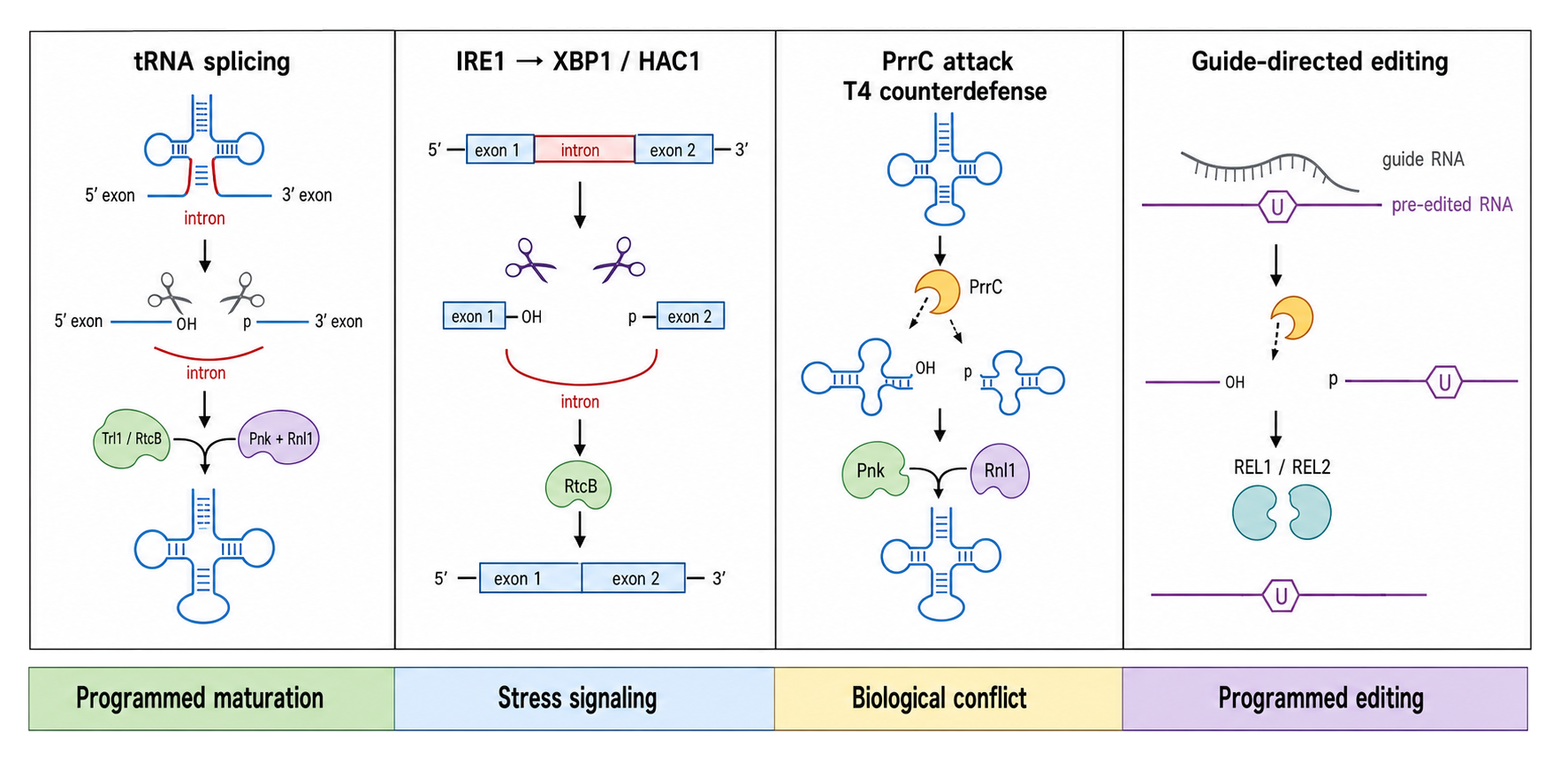
Figure 33.5. Reuse of end-joining chemistry across processing, stress, conflict, and editing. Separate conserved chemistry from biological purpose.
33.7. Evolutionary diversity, RNA-seq library engineering, therapeutics, and biotechnology
Modular chemistry encourages evolutionary reassortment
RNA repair systems behave like chemical toolkits. A nuclease determines the break; a kinase, phosphatase, or cyclic phosphodiesterase prepares ends; a ligase seals them; and a methylase can protect the product. These functions can be fused in one polypeptide, assembled as a stable complex, or recruited transiently. Fungal Trl1 fuses three activities. T4 divides healing and sealing between Pnk and Rnl1. Bacterial Pnkp-Hen1 complexes couple repair to protective methylation. RtcB can combine cyclic-phosphate opening and ligation while relying on cofactors and substrate-delivery partners in eukaryotes.
Convergent chemistry is as important as common descent. Classical ligases activate a 5’-phosphate with AMP; RtcB activates a 3’-phosphate with GMP. Both solve the same thermodynamic problem—making a phosphate a better electrophile—but use different protein folds, nucleotides, covalent residues, and end polarities. Such alternatives allow one organism to route chemically distinct breaks to different enzymes or to replace one ligation system over evolution.
Library construction is controlled RNA-end engineering
RNA sequencing libraries often use ligases outside their native biological context. T4 Rnl2 truncations attach pre-adenylylated DNA adapters to RNA 3’-hydroxyls in ATP-free conditions; T4 Rnl1 attaches 5’ adapters to RNA 5’-phosphates; RtcB can capture 5’-hydroxyl RNA by joining it to a 3’-phosphate adapter; and plant or fungal tRNA ligases can capture cyclic-phosphate-terminated RNAs after pathway-specific transformations. Each reaction selects a terminal class and imposes sequence, structure, and concentration biases.
Adapter ligation bias arises because terminal nucleotides, local folding, RNA-adapter cofolding, and enzyme geometry change effective reaction rates. Randomized adapter ends can broaden compatible structures, but they do not make recovery unbiased. Universal end repair increases inclusion of previously blocked fragments but merges original end classes. The correct design uses untreated and conversion-treated aliquots plus standards that vary end chemistry, sequence, length, and structure. Chapter 127 develops the inference framework; this chapter supplies the enzymatic reasons.
End-selective methods can turn repair chemistry into a molecular sensor. Cyclic-phosphate capture enriches products of RNase A-like or ribozyme cleavage. RtcB-based 5’-hydroxyl sequencing identifies the downstream halves of compatible breaks. AlkB pretreatment reveals reverse-transcription-blocking methylated RNAs. These methods report molecules that completed the full conversion and library chain. Failure to observe a read can mean absence, wrong chemistry, poor ligation, reverse-transcription arrest, mapping failure, or rapid biological turnover.
Table 33.4 maps biotechnology goals to enzyme choice, preserved information, and major bias.
Table 33.4. Choosing repair enzymes for RNA biotechnology. Match a technical objective to end state, information preserved, and dominant bias.
| Goal | Starting RNA state | Enzyme strategy | Preserved information | Leading artifact or control |
|---|---|---|---|---|
| Capture 5’-hydroxyl cleavage products | RNA 5’-OH | RtcB plus 3’-phosphate adapter | Downstream-fragment coordinate | 5’-P depletion and 5’-OH standards |
| Capture cyclic-phosphate products | RNA 2’,3’-cyclic phosphate | Plant/fungal ligase route or validated RtcB workflow | Upstream-fragment terminal class | Linear-phosphate acceptance and ring-opening control |
| Attach a 3’ adapter | RNA 3’-OH plus pre-adenylylated adapter | Truncated Rnl2, ATP-free | Compatible 3’ end | RNA-adapter cofold bias and randomized standards |
| Join synthetic fragments | Designed compatible termini | Splinted Rnl2, Trl1 route, or RtcB | Designed junction | Wrong partners, circles, and intact-mass/junction validation |
| Improve modified-tRNA sequencing | RT-blocking methylated bases | AlkB pretreatment before library construction | Sequence after compatible demethylation | Treatment efficiency and end eligibility |
| Broaden end capture | Heterogeneous blocked ends | Kinase/phosphatase/end-repair cocktail | More molecules admitted | Original end chemistry erased; retain untreated aliquot |
Therapeutic opportunities require pathway selectivity
RNA repair enzymes can be therapeutic targets when a pathogen depends on a ligase absent or divergent in the host. Trypanosomatid REL1 is essential for mitochondrial RNA editing and has supported fluorescence-based high-throughput inhibitor assays. Fungal Trl1 domains are also attractive in principle because metazoans use a different tRNA-ligation system. Selectivity cannot be inferred from absence of a close sequence homolog alone: compounds may chelate metals, react with ATP sites, inhibit unrelated nucleotidyltransferases, or perturb RNA structure.
Conversely, repair chemistry can manufacture therapeutic RNA. Enzymatic ligation can assemble long or chemically modified RNAs from fragments, circularize RNA, or attach functional handles. Product heterogeneity is a regulatory and pharmacological concern because wrong junctions, residual AppRNA, double-stranded by-products, triphosphates, or contaminating enzymes can alter translation and innate sensing. Preparative workflows require junction sequencing, intact-mass analysis, impurity profiling, nuclease mapping, and functional potency assays rather than reliance on gel mobility alone.
Manipulating endogenous RtcB or AlkB-family activity could alter stress signaling, tRNA homeostasis, or lesion burden, but pleiotropy is substantial. RtcB connects tRNA maturation to XBP1 signaling; AlkB-family enzymes can act on DNA, RNA, or physiological modifications depending on family member. A credible intervention must separate the desired substrate from essential housekeeping substrates and establish whether catalytic inhibition, complex disruption, localization, or substrate delivery is the effective lever.
33.8. Structures, kinetics, end-chemistry assays, cellular validation, inhibitors, and artifacts
Mechanistic evidence is strongest when intermediates are observed
Structures provide hypotheses about catalytic geometry; kinetics tests whether those states lie on the productive pathway. Covalent ligase-AMP can be detected by radiolabeled ATP or mass spectrometry. AppRNA can be resolved after nuclease digestion or by intact mass. RtcB histidyl-GMP and RNA-GMP intermediates can be mapped chemically and spectrometrically. Trapping an intermediate with a catalytic mutant is informative only if the mutation does not create a nonphysiological binding mode. Time courses should show precursor loss, intermediate rise and fall, and product accumulation with mass balance.
Steady-state turnover is useful for comparing substrates but can hide single-use enzyme populations, inactive fractions, product inhibition, and slow recharging. Single-turnover experiments place active enzyme in excess and resolve chemistry after binding; pre-steady-state bursts can report a fast chemical step followed by slow product release or re-adenylylation. Global fitting across enzyme, substrate, nucleotide, and metal concentrations can distinguish models better than fitting each curve independently. The quantitative principles and identifiability limits are treated in Chapter 124.
Metal dependence requires special care. Chelators, reducing agents, nucleotide-metal complexes, and contaminating phosphate change free-metal concentration. RtcB commonly prefers manganese in reconstitution, whereas classical ligases often use magnesium, but in vitro optima do not directly reveal the in-cell metal donor. AlkB-family dioxygenases require Fe(II), 2-oxoglutarate, and oxygen; ascorbate can preserve reduced iron but also changes redox chemistry. Buffer identity and pH alter phosphate protonation and metal availability.
End-chemistry assays are selective reactions, not direct vision
Kinase-dependent radiolabeling supports a 5’-hydroxyl assignment only when existing 5’-phosphates, nucleotide exchange, and phosphatase contamination are controlled. Direct 5’-phosphate ligation reports ligatable molecules, not every monophosphate. Cyclic-phosphate-selective capture can be confounded by incomplete depletion of 3’-hydroxyl RNA, partial ring opening during extraction, or enzyme acceptance of a 3’-phosphate. Enzyme-treated differential libraries should include no-enzyme controls, catalytically inactive enzyme, chemically defined spike-ins, and recovery measurements for each terminal class.
Mass spectrometry can distinguish terminal compositions and covalent enzyme intermediates, but ionization efficiency, salt adducts, in-source fragmentation, and isomeric phosphate positions complicate assignment. Nuclease digestion simplifies spectra at the cost of positional context. Nuclear magnetic resonance and isotope-labeled water can distinguish mechanistic routes in purified systems but are rarely transcriptome-wide. Sequencing supplies position and sequence context but transforms chemistry through multiple selective steps. Combining these methods is more informative than treating one as definitive.
Figure 33.6 presents an evidence ladder from gel mobility to chemically and functionally validated repair, and Table 33.5 lists leading artifacts with discriminating controls.
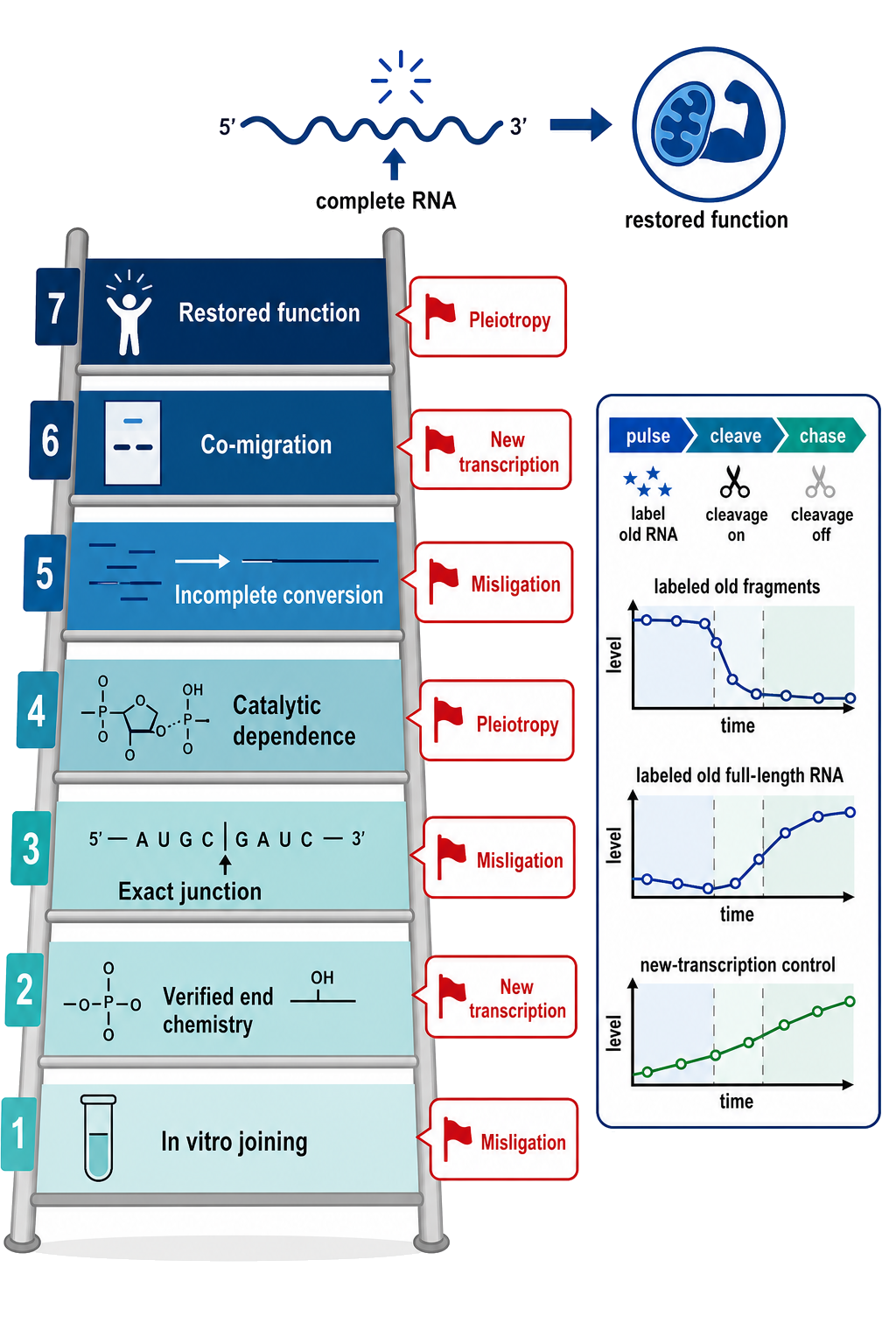
Figure 33.6. Evidence ladder for a cellular RNA-repair claim. Rank evidence from catalytic possibility to physiological restoration.
Table 33.5. Artifacts and discriminating controls in repair enzymology. Pair each leading alternative explanation with a control that can falsify it.
| Apparent result | Alternative explanation | Discriminating control | Stronger conclusion after control |
|---|---|---|---|
| Full-length band appears | Circle, concatemer, heterologous join, co-migration | Strand-specific labels, junction sequencing, nuclease topology test, intact mass | Intended partners and topology verified |
| Kinase-dependent labeling | Nucleotide exchange or contaminating phosphatase | Chemically defined 5’-OH/5’-P standards and no-enzyme control | Accessible 5’-OH assigned within assay limits |
| Cyclic-phosphate enrichment | 3’-phosphate acceptance or ring opening during extraction | Cyclic-P, 3’-P, and 3’-OH matched spike-ins | Selectivity quantified rather than assumed |
| Catalytic mutant loses phenotype | Mutant destabilizes protein or complex | Abundance, folding, localization, and partner-binding controls | Catalytic function separated from structural role |
| Full-length RNA rises in cells | New transcription or reduced decay | Pulse-chase, transcription block, old-RNA labeling | Restoration of pre-existing molecules supported |
| Compound inhibits ligase signal | Fluorescence quenching, aggregation, metal chelation, RNA binding | Orthogonal product assay, detergent test, counterscreens | Target-proximal inhibition supported |
| Sequencing reads increase after repair treatment | Conversion and RT effects rather than biological abundance | Untreated/treated pairs and chemistry-diverse standards | Treatment-conditional molecular recovery quantified |
Cellular validation must distinguish rejoining from replacement
An inducible cleavage pulse followed by nuclease shutoff can reveal whether pre-existing fragments disappear as a full-length product rises. Metabolic labeling can distinguish old from newly transcribed RNA. Junction-specific reverse transcription, Northern blotting with probes on both sides, long-read sequencing, and intact-RNA mass analysis test continuity at different scales. Catalytic-dead rescue separates structural from enzymatic functions, while substrate-site mutants test whether the proposed cleavage and ligation junction is necessary.
Functional recovery should match the RNA. For tRNA, assays can measure aminoacylation, ribosome delivery, codon-specific translation, and growth. For XBP1, the spliced coding product and downstream transcriptional program matter. For a phage repair system, restored tRNA and phage propagation should be connected genetically. For a synthetic therapeutic RNA, translation, innate sensing, and dose-response should be measured alongside chemical purity. A single abundance measurement cannot establish these links.
Inhibitor studies need counterscreens. Nucleotide-site inhibitors may block multiple ATP- or GTP-dependent enzymes. Metal chelators can suppress catalysis nonspecifically. Fluorescent ligation assays can be distorted by compound absorbance, quenching, aggregation, or RNA binding. A credible inhibitor shows concentration-dependent activity with an appropriate kinetic mode, direct target engagement or resistant mutants, orthogonal product detection, counterscreens against related enzymes, and cellular phenotypes that are rescued by a resistant target allele when feasible.
Experimental Foundations and Evidence
The core chemical pathways are unusually well supported by defined-substrate enzymology. Classical ligase studies have isolated ligase-AMP, AppRNA, and sealed product; RtcB studies have observed histidyl-GMP and guanylylated RNA intermediates and have resolved structures across catalytic states. Trl1 and Pnkp-Hen1 systems have been reconstituted with cyclic-phosphate/5’-hydroxyl substrates. These experiments establish chemical competence and reaction order under defined conditions.
Physiological assignment requires additional evidence. RtcB’s role in mammalian XBP1 splicing is supported by genetic depletion, catalytic rescue, in vitro reconstitution, and plasma-cell phenotypes. T4 Pnk-Rnl1 counteraction of PrrC is supported by the compatibility of generated ends, enzyme activities, and infection biology. Comparative-genomic predictions of additional repair systems are valuable but remain hypotheses until substrate, products, and organismal consequence are established.
Damage evidence is more heterogeneous. Defined 8-oxoguanosine reporters establish translational stalling, while cellular immunoprecipitation and mass spectrometry report lesion burden with different positional resolution. End-selective sequencing maps compatible termini but does not identify the generating nuclease without orthogonal evidence. No one assay spans chemical identity, transcript position, molecular continuity, and restored function; robust repair claims combine them.
Biological Contexts Across Organisms, Cell Types, and Perturbations
In bacteria and phages, RNA repair is strongly associated with toxin-antitoxin systems, anticodon nuclease conflicts, and mobile defense islands. In fungi and plants, Trl1-like chemistry supports tRNA splicing, and in fungi it also supports HAC1 mRNA splicing. Metazoans use RtcB-centered complexes for tRNA and XBP1 ligation. Archaea encode RtcB and diverse tRNA-processing systems, but pathway organization differs by lineage.
Cell state changes the value of repair. Secretory differentiation increases dependence on XBP1 signaling. Oxidative stress raises lesion formation and can simultaneously inhibit metal- or redox-sensitive enzymes. Viral infection activates destructive nucleases while altering translation and endoplasmic-reticulum homeostasis. In organelles, local reactive chemistry, genetic code, RNA import, and lineage-specific editing reshape both lesion burden and available responses.
These comparisons should not be compressed into a universal pathway. The conserved unit is a chemical problem—damaged base, broken strand, incompatible ends—not a single repair regulon. Organism, compartment, and biological purpose determine which module receives that problem.
Technology, Computational, Clinical, and Engineering Links
End-healing enzymes are foundational reagents for RNA-seq, circular RNA construction, splinted ligation, adapter synthesis, and fragment assembly. Computational pipelines must retain treatment state, terminal eligibility, adapter sequence, and conversion history so that reads remain interpretable. A coordinate without chemistry metadata is not a complete end measurement.
Clinical links include neurodevelopmental disease associated with tRNA-splicing factors, secretory and stress phenotypes linked to RtcB-XBP1 activity, pathogen-specific ligases as drug targets, and oxidative RNA damage in disease. Association with a disease does not identify the causal RNA substrate. Mechanistic translation requires substrate-resolved lesion measurements, enzyme dependence, and a functionally relevant rescue.
Engineering can exploit orthogonal end pairs. Choosing RtcB for cyclic-phosphate/5’-hydroxyl junctions or an ATP-dependent ligase for 3’-hydroxyl/5’-phosphate junctions can reduce cross-reaction in multistep assembly. The same specificity can become a blind spot if substrate ends are heterogeneous. Design should begin with analytical confirmation of each fragment’s terminal state.
Recent Consensus
RNA is chemically damaged often enough to require dedicated quality-control responses, but turnover is more broadly established than template-directed molecular repair. Bona fide RNA repair is strongest for precise strand breaks in programmed processing or biological conflict, where end-healing and ligation pathways can be assigned chemically and genetically. Selected alkyl lesions can be directly reversed by AlkB-family dioxygenases, but physiological substrate scope must be demonstrated case by case.
Classical ATP-dependent RNA ligases and GTP-dependent RtcB ligases solve end joining through distinct activated intermediates and opposite phosphate polarities. Terminal chemistry is therefore a causal determinant of pathway choice and assay visibility. Ligases and end-repair enzymes are not neutral library reagents; their substrate preferences and side reactions shape observed RNA populations.
The field also agrees that “RNA repair” should not erase biological distinctions among damage reversal, tRNA or mRNA splicing, guide-directed editing, stress rescue, and degradation avoidance. Mechanistic descriptions should name the substrate, end pair, transformation, product, and context.
Open Questions, Controversies, Deprecated Models, and Common Misconceptions
Open questions:
- How often are stochastically oxidized or alkylated endogenous RNAs directly restored rather than selectively degraded and replaced?
- Which cellular factors deliver damaged RNA to AlkB-family enzymes, RtcB, or other repair systems, and how is wrong-partner ligation prevented?
- Do repair and destructive nuclease pathways compete for the same cyclic-phosphate/5’-hydroxyl fragments during innate immune activation?
- How do redox state, metal availability, and metabolite pools regulate repair chemistry in cells without causing nonspecific oxidative or metal stress?
- Which comparative-genomics-predicted bacterial repair islands act on tRNA, rRNA, mRNA, phage RNA, or unknown noncoding RNAs?
- Can pathogen-selective ligase inhibitors achieve cellular target engagement without broad nucleotide-enzyme or metal-chelation toxicity?
- What fraction of apparent RNA “demethylation” in cells reflects direct reversal of old molecules rather than turnover and replacement?
Controversies:
- The biological breadth of direct RNA base repair remains less established than the in vitro substrate scope of AlkB-family enzymes.
- Terminal compatibility with RtcB is sometimes treated as evidence of cellular re-ligation, but compatible ends can remain committed to degradation or signaling.
- Broad use of “RNA repair” for editing and processing clarifies evolutionary chemistry for some audiences but obscures lesion biology for others.
Deprecated or weakened claims:
- RNA’s short average lifetime does not make chemical damage irrelevant; stable RNAs, translating mRNAs, and stress-induced lesions can create immediate functional defects.
- A full-length gel band is not sufficient proof of correct RNA repair because circular, concatemeric, misjoined, and adenylylated products can co-migrate.
- End-repair treatment does not recover an unbiased RNA population; conversion and ligation efficiencies remain substrate-dependent.
Common misconceptions:
- “All nuclease cuts leave a 3’-hydroxyl and a 5’-phosphate.” Metal-independent transesterifying nucleases commonly generate a 2’,3’-cyclic phosphate and a 5’-hydroxyl, while other nucleases generate different products.
- “RNA ligases all use ATP and activate a 5’-phosphate.” RtcB uses GTP, forms histidyl-GMP, and activates an RNA 3’-phosphate for attack by a 5’-hydroxyl.
- “If two fragments can be ligated in vitro, the cell repairs them.” Physiological repair additionally requires substrate encounter, catalytic dependence, correct junction identity, and functional recovery.
- “Demethylation is always repair.” Demethylation can reverse damage, remove a regulated modification, or serve as an assay pretreatment; the initial state and biological purpose determine the term.
- “Universal end repair preserves the origin of every fragment.” Converting multiple terminal states into one ligatable class erases information unless parallel untreated samples are retained.
- “A ligation yield reports product fidelity.” High yield can include wrong partners, circles, concatemers, and activated but unsealed intermediates.
- “Kinetoplastid RNA editing ligases repair accidental mitochondrial damage.” Their established role is programmed guide-directed mRNA editing, even though their chemistry and evolutionary relationships inform RNA-repair enzymology.