Chapter 143. AI for Noncoding RNA Function, RBP Interactions, RNA Design, and Foundation Models
Scope Note
This chapter explains how artificial intelligence and machine-learning methods are used to predict noncoding RNA function, RNA-protein and RNA-chromatin interactions, RNA-target relationships, and engineered RNA behavior. The chapter treats AI as a scientific modeling layer over RNA biology, not as an automatic substitute for mechanistic evidence. It emphasizes what model inputs physically mean, how training labels are produced, where generalization fails, and how computational predictions should be connected to biochemical, cellular, and therapeutic experiments.
Executive Summary
Machine-learning models for RNA biology translate sequences, structures, expression profiles, interaction maps, and experimental readouts into numerical representations that can be used for classification, ranking, regression, generation, or uncertainty estimation. In RNA biology the central promise is not merely faster prediction; it is the ability to connect sequence variation, structure, RNP assembly, cellular context, and design constraints at scales that are difficult to handle by manual rules alone. The central risk is equally clear: many RNA labels are indirect, noisy, redundant, cell-type-specific, or contaminated by homologous sequences and assay-specific artifacts. A model can appear accurate while learning database shortcuts, family identity, expression confounding, or technical batch structure.
RNA language models and foundation models are trained to learn statistical regularities from large RNA sequence or transcriptomic corpora. They can provide useful embeddings for ncRNA family classification, secondary-structure-related tasks, variant prioritization, RBP binding prediction, and design proposals. However, an RNA foundation model does not automatically understand function. Function is a biological claim that depends on molecules, compartments, binding partners, perturbation phenotypes, and evolutionary or clinical context. A predicted embedding cluster, conserved motif, or high model score is a hypothesis generator unless tied to direct evidence.
AI prediction of ncRNA interactions must distinguish several molecular claims. An ncRNA-RBP model predicts physical association or functional binding to an RNA-binding protein. An ncRNA-chromatin model predicts association with DNA, chromatin regulators, histone marks, compartments, or loci. An ncRNA-target model predicts base-pairing, recruitment, decoy activity, scaffold function, or downstream regulation. These labels are not interchangeable. CLIP, RNA pulldown, ChIRP, CHART, RAP, GRID-seq, SPLASH, reporter assays, and perturbation screens each observe a different layer of the biological process, and each layer has different false positives.
Generative design uses learned or explicit objectives to propose guide RNAs, aptamers, switches, mRNAs, circular RNAs, and therapeutic oligonucleotides. The design problem is multi-objective: a useful RNA must satisfy target recognition, folding, expression, delivery, stability, manufacturability, immune compatibility, off-target avoidance, and context-specific activity. Generative models can search a large sequence space, but they require experimental feedback because many objectives are only weakly predictable from sequence alone.
The strongest current standard for AI in RNA biology is not a single model architecture. It is a validation workflow: define the biological label precisely, split data so homologs and assay duplicates do not leak into test sets, report calibration and failure modes, interpret model features cautiously, and close the loop with perturbation, structure, binding, or function experiments. The chapter therefore treats interpretability, uncertainty, and experimental feedback as core scientific requirements rather than optional explanations appended after prediction.
Concept Inventory
- RNA language model: a model trained on RNA sequences, and sometimes related DNA, protein, structure, or expression data, to learn representations of nucleotide context. A foundation model is broader: it is a reusable model pretrained on large, diverse data and adapted to many downstream tasks. In RNA biology, “foundation” should not be read as “universally reliable.” A foundation model may learn base composition, family membership, annotation conventions, conserved motifs, secondary-structure signals, and experimental biases; only some of those signals are mechanistically relevant for a specific claim.
- Sequence-function model: maps an RNA sequence or sequence-derived representation to a biological output such as RBP binding, subcellular localization, translation efficiency, decay rate, splice effect, guide activity, aptamer affinity, or regulatory phenotype. The model may be a simple regularized regression, a convolutional neural network, a transformer, a graph neural network, a probabilistic model, or an ensemble. The important scientific question is not whether the architecture is modern, but whether the input, label, split, and validation match the causal claim.
- ncRNA interaction prediction: physical contact, co-localization, base-pairing, recruitment of a protein complex, chromatin association, or functional regulation. These are separate concepts. For example, the lncRNA OIP5-AS1 interaction with MEF2C mRNA provides a concrete ncRNA-target case in which a transcript-RNA relationship is linked to myogenic gene expression [Yang et al. 2020; PMID: 33270893]. By contrast, H19 studies summarize many proposed lncRNA mechanisms in cancer cell death pathways, including competing, scaffolding, and signaling models, with varying levels of direct evidence [Xia et al. 2024; PMID: 38355574].
- Generative RNA design is the inverse problem: instead of predicting the output of a given RNA, the designer asks for one or more RNA sequences that satisfy a desired function. The target may be a CRISPR guide with high on-target activity and low off-target risk, an aptamer that binds a small molecule, a toehold switch that activates translation when a trigger RNA is present, an mRNA that expresses a protein with desired stability and innate immune properties, or an oligonucleotide therapeutic that binds a disease transcript.
- Benchmark leakage: nonindependence between training and test data that inflates measured performance. In RNA, leakage commonly occurs through homologous RNA families, duplicated database records, overlapping genomic loci, shared genes, related guide RNAs, highly similar aptamer variants from the same selection round, or labels from the same experiment split across training and test sets. Homology-aware benchmarking deliberately splits data by family, species, locus, structure class, target gene, RBP, experiment, or time so the test better asks whether the model extrapolates.
- Uncertainty: the model’s explicit account of when a prediction should not be trusted. Useful uncertainty can arise from probabilistic outputs, ensembles, conformal prediction, Bayesian approximations, out-of-distribution detection, calibration curves, or experimental replicate models. In RNA biology, uncertainty should include both statistical uncertainty and biological uncertainty: whether the RNA exists in the relevant cell state, whether the structure is populated in cells, whether an interaction is direct, and whether a perturbation changes the intended molecule rather than a neighboring gene or cell state.
What to Know Before Reading This Chapter
Readers should know the difference between an RNA sequence, a transcript isoform, a folded structure, an RNP complex, and a functional phenotype. A model input such as “the lncRNA sequence” may hide multiple biological choices: which isoform, which processing state, which modifications, which cellular compartment, and which interacting proteins. Chapters 90 and 91 cover lncRNA biogenesis and causality standards, Chapters 56 and 133 cover RNA-protein recognition and interaction mapping, Chapters 60-65 cover RNA structure prediction and design, and Chapter 139 covers experimental design and reproducibility.
Readers should also keep separate three evidence layers. First, a computational model can rank candidate molecules. Second, an assay can measure binding, expression, localization, structure, or activity under defined conditions. Third, a perturbation or rescue experiment can test whether the molecule is necessary or sufficient for a biological outcome. AI can help at each layer, but evidence does not automatically transfer upward. A high binding score is not a function claim; a differential-expression signature is not proof of direct targeting; a designed RNA that works in a reporter does not automatically work as a drug.
Finally, the local references for this chapter are stronger for ncRNA biology examples than for AI-modeling methods.
143.1. RNA language models, structure models, and sequence-function prediction
RNA language models borrow a central idea from natural-language and protein-language modeling: a sequence contains statistical regularities that can be learned before the model is trained for a specific task. In an RNA setting, the tokens are usually nucleotides, k-mers, modified-base symbols, structure states, or higher-level transcript features. A masked-token model might hide nucleotides and learn to reconstruct them from surrounding context. An autoregressive model might predict the next nucleotide. A contrastive model might learn that related RNA sequences, structures, or annotations should be near each other in representation space. A multimodal model may combine sequence with secondary-structure probability, chemical probing signal, CLIP peaks, expression profiles, or genomic context.
The representation produced by the model is often called an embedding. An embedding is a numerical vector that summarizes patterns in the input. For an RNA sequence, the embedding may reflect base composition, repeat content, family identity, local motifs, possible pairing signals, splice-related context, or annotation artifacts. The embedding is not itself a mechanism. It becomes biologically useful only when a downstream analysis shows that the representation captures a feature relevant to a defined task, such as distinguishing snoRNAs from miRNA precursors, ranking structured motifs, predicting RBP binding, or prioritizing lncRNAs for perturbation.
Pretraining data define the model’s biological horizon. A corpus dominated by annotated human transcripts will teach different regularities from a corpus enriched for bacterial small RNAs, viral genomes, Rfam families, ribosomal RNA fragments, or synthetic library variants. Some corpora contain genomic DNA sequences labeled as RNA genes; others contain mature transcript sequences, precursor sequences, or windows around annotated features. These choices matter because RNA function is often processing-state-specific. A mature miRNA, a pri-miRNA hairpin, and a genomic window around the same locus are not interchangeable inputs. Likewise, a circular RNA sequence cannot be represented faithfully if the model assumes a linear molecule with fixed 5′ and 3′ ends. Before using a pretrained model, the reader should ask what molecules the model actually saw, how redundant the corpus was, whether modified nucleotides were represented, and whether the target task falls inside or outside the model’s training distribution.
Foundation models are attractive for ncRNA biology because annotated ncRNA function is sparse. Many lncRNAs, circRNAs, bacterial small RNAs, viral RNA elements, and repeat-derived RNAs have expression evidence but limited mechanistic evidence. A model pretrained on millions of sequences can transfer patterns from better-characterized molecules to less-characterized candidates. That transfer can help when the target task has few labels. It can also mislead when the model transfers the wrong regularity. For example, a model may learn that a transcript is “lncRNA-like” because of length, low coding potential, repeats, nuclear enrichment, or annotation source, while the biological question asks whether the RNA product recruits a chromatin regulator, sponges an RBP, base-pairs with an mRNA, or merely marks transcription from an active locus.
Structure-aware RNA models add another layer. RNA function often depends on base pairing, local accessibility, tertiary contacts, ligand binding, or protein-bound conformations. A model may predict secondary structure directly, use predicted structure as an input feature, or learn structure-related representations from sequence alone. In principle, structure can improve function prediction because many RNA-binding proteins recognize shape, accessibility, or structural motifs rather than a simple linear sequence motif. In practice, structure features are context-dependent. In vitro minimum-free-energy structures can differ from in-cell structures because RNA folds co-transcriptionally, binds proteins, changes with ions and metabolites, carries modifications, and samples ensembles rather than one fixed fold.
Sequence-function prediction is broader than family annotation. A model might predict whether an lncRNA localizes to the nucleus, whether a circRNA binds IGF2BP-family proteins, whether a repeat-expansion RNA forms toxic foci, whether an mRNA coding sequence produces high protein expression, or whether a guide RNA edits a target efficiently. The same model architecture can be trained for classification, regression, ranking, or generative proposal. The scientific validity depends on the label. If the label is “differentially expressed in disease,” the model may learn disease-associated expression programs rather than molecular function. If the label is “found in a pull-down,” the model may learn abundance, length, or capture chemistry. If the label is “causal phenotype after perturbation,” the model must contend with off-target effects and cell-state changes.
The H19 lncRNA illustrates why prediction labels need molecular specificity. H19 is discussed in cancer and programmed cell death contexts, and review literature describes multiple possible mechanisms, including miRNA-related regulation, protein interactions, and effects on signaling pathways [Xia et al. 2024; PMID: 38355574]. A sequence model trained to classify H19-like transcripts could learn imprinting-associated sequence, repeat composition, expression context, or conserved domains, but a useful functional claim must specify the mechanism being predicted. “This lncRNA is functional” is too vague. Better labels are “binds a specified RBP in a specified cell type,” “changes a specified apoptotic readout after RNA-product-specific perturbation,” or “contains a conserved interaction module required for a specific effect.”
Repeat-expansion RNAs show the same issue from a disease angle. Repeat RNAs can act through RNA gain-of-function mechanisms, including RBP sequestration, altered splicing, RNA foci, double-stranded RNA sensing, and repeat-associated non-AUG translation [Davenport and Swanson 2025; PMID: 39725460]. A sequence model may easily detect repeat length or motif class, but predicting disease mechanism requires more than recognizing a repeat. The relevant features include repeat length distribution, RNA structure, nuclear retention, protein binding, antisense transcription, cell type, and translation context. AI can prioritize candidate mechanisms, but experimental data must establish which mechanism operates in a given disease system.
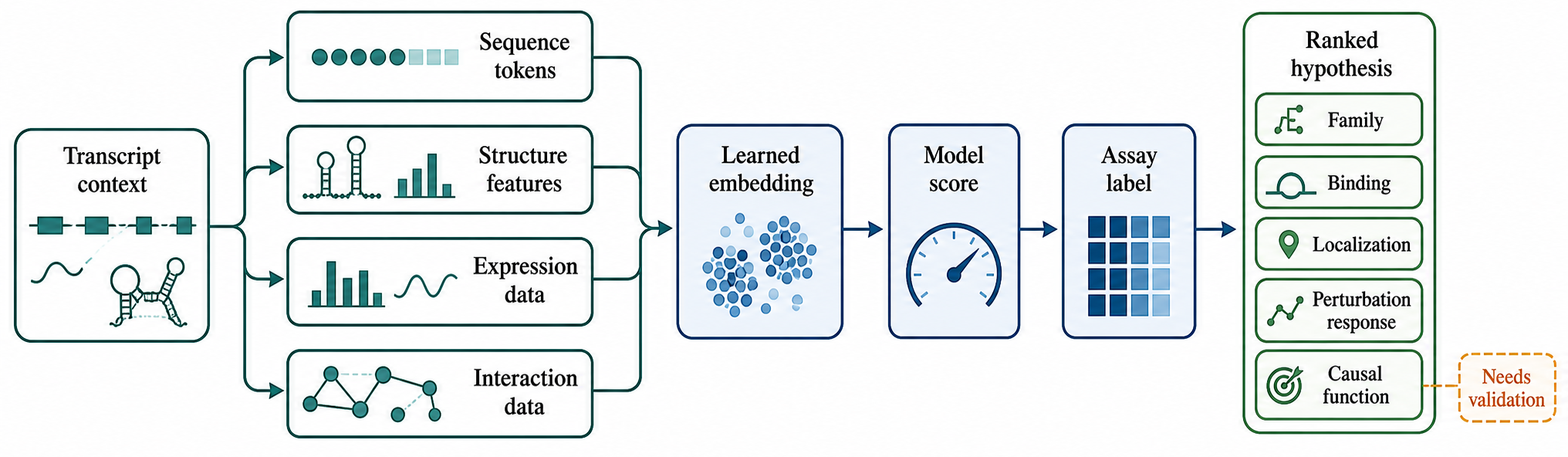
Figure 143.1. From RNA sequence to model score to biological claim. Prevents readers from treating a model embedding or score as direct evidence of function.
The minimum useful output of a sequence-function model is therefore not a score alone. A reusable prediction should specify the molecule, isoform, coordinate system, organism, cell type, input features, output label, training data source, evaluation split, calibration, and intended use. For reader-facing interpretation, the model should state whether the score supports family annotation, physical interaction, expression state, biochemical activity, perturbation response, or clinical association. Chapter 144 treats identifiers, provenance, and versioning in scientific data systems; here the point is biological. RNA models are most valuable when their outputs preserve the distinction between sequence pattern, molecular interaction, and causal function.
Box 143.1. Do Not Upgrade a Prediction Into Function
Evidence ladder for a predicted ncRNA function. Start by naming exactly what the model predicts: family membership, binding propensity, localization, perturbation response, or another label. Then ask which experiment produced that label and what the experiment can actually observe. A CLIP-informed model may support RBP-proximal occupancy; it does not by itself show direct contact or regulation. A co-expression model may support association with a cell state; it does not show that the RNA product causes that state. Upgrade the claim only when new evidence narrows the mechanism: matched perturbation, rescue, motif or structure mutation, orthogonal binding or localization assay, and a phenotype that depends on the RNA product rather than the DNA locus or transcription process. The safest wording is often “prioritizes a candidate for testing” until this ladder is climbed.
Table 143.1. Common RNA AI model inputs, outputs, and claim boundaries. Helps readers classify what a model result can and cannot mean.
| Model input | Downstream output | Biological claim supported | Claim not supported without additional evidence | Typical validation |
|---|---|---|---|---|
| Raw sequence | Family, motif, localization, guide, or activity score | Sequence pattern is compatible with a defined training label | Direct binding, cellular mechanism, or causal function | Homology-aware split, simple sequence baselines, and target assay |
| Sequence plus predicted structure | Accessibility, fold, structural motif, or design score | Structure-dependent recognition is plausible for that context | Populated in-cell ensemble or regulatory consequence | Structure probing, compensatory variants, and binding or activity assay |
| Learned embedding | Classification, ranking, regression, or clustering | Candidate resembles training examples in representation space | Shared mechanism or validated ncRNA function | Family-held-out testing, ablation, calibration, and experimental follow-up |
| CLIP peaks | RBP occupancy or binding-propensity score | Protein-proximal RNA association in the assayed cell state | Direct contact, regulation, or phenotype | Replicate CLIP, motif mutation, in vitro binding, and RBP perturbation |
| Expression profile | State, disease, cell-type, or candidate-priority score | RNA abundance is associated with a condition or program | RNA-product function or direct target relationship | Cell-type control, orthogonal perturbation, rescue, and phenotype assay |
| Perturbation signature | Downstream response, pathway, or target ranking | A transcript or program changes after a defined perturbation | Intended molecule is the direct causal target | Independent perturbation methods, rescue, off-target checks, and time course |
| Multimodal feature set | Integrated interaction, function, or design ranking | Multiple evidence layers converge on a candidate hypothesis | Which layer is causal unless modalities are separated | Modality ablation, matched negatives, orthogonal assays, and prospective test |
Current consensus is cautious. RNA language models and structure-aware models are useful hypothesis generators and feature extractors, especially when paired with strong baselines and realistic splits. They are not replacements for covariance analysis, thermodynamic modeling, structure probing, CLIP, perturbation, or biochemical validation. A model that performs well on a held-out random split may still fail on new families, new cell types, modified RNAs, long transcripts, circular RNAs, repeat-rich transcripts, or low-abundance ncRNAs.
143.2. AI prediction of ncRNA-RBP, ncRNA-chromatin, and ncRNA-target interactions
Interaction prediction is one of the most important and most easily overinterpreted uses of AI in ncRNA biology. A long noncoding RNA may bind an RNA-binding protein, base-pair with an mRNA, associate with chromatin, recruit a chromatin regulator, localize to a nuclear body, or correlate with a gene-expression program. These relationships have different physical meanings. A single word such as “interaction” can hide direct base-pairing, protein-bridged proximity, co-fractionation, transcriptional coupling, or indirect coregulation.
An ncRNA-RBP prediction asks whether a protein associates with an RNA molecule or region. The input may be sequence, predicted structure, motif occurrence, evolutionary conservation, CLIP peaks, RNA abundance, protein abundance, or cellular compartment. RBP models often perform well when the protein recognizes a compact sequence motif and when the assay labels are high quality. They struggle when binding depends on RNA structure, competing proteins, phase-separated compartments, modification state, or indirect capture. A CLIP peak is strong evidence of protein-proximal RNA in a specific experiment, but the peak does not automatically prove that binding changes RNA fate or phenotype.
The training label matters. A model trained on enhanced CLIP, individual-nucleotide-resolution CLIP, photoactivatable-ribonucleoside CLIP, RNA immunoprecipitation, or RNA-centric capture will inherit the biases of those methods. CLIP can have crosslinking preferences, antibody specificity problems, nuclease digestion biases, and cell-state dependencies. RNA immunoprecipitation can capture indirect complexes. RNA-centric pulldown can enrich abundant or sticky proteins. Review literature on large-scale enrichment and identification of RNA-protein complexes emphasizes that the experimental route determines which complexes are recovered [Fan and Qin 2021; PMID: 34227341]. AI models trained on these labels should not report “true binding” without naming the assay layer.
IGF2BP-family proteins and circRNA hypotheses provide a useful example. A recent review discusses circRNAs and IGF2BP3 in Alzheimer’s disease, highlighting a literature in which circular RNAs, RNA-binding proteins, and disease-associated expression changes are connected by proposed mechanisms [Firdous et al. 2026; PMID: 41989644]. A model could rank circRNA-IGF2BP3 associations from sequence motifs, expression, or pull-down data. The stronger biological claim would require evidence that the circRNA exists as a circular molecule, localizes with IGF2BP3 in the relevant cell type, binds directly or through a defined RNP, changes a target RNA or protein output when specifically perturbed, and affects a disease-relevant phenotype. Each step is a distinct label for modeling and validation.
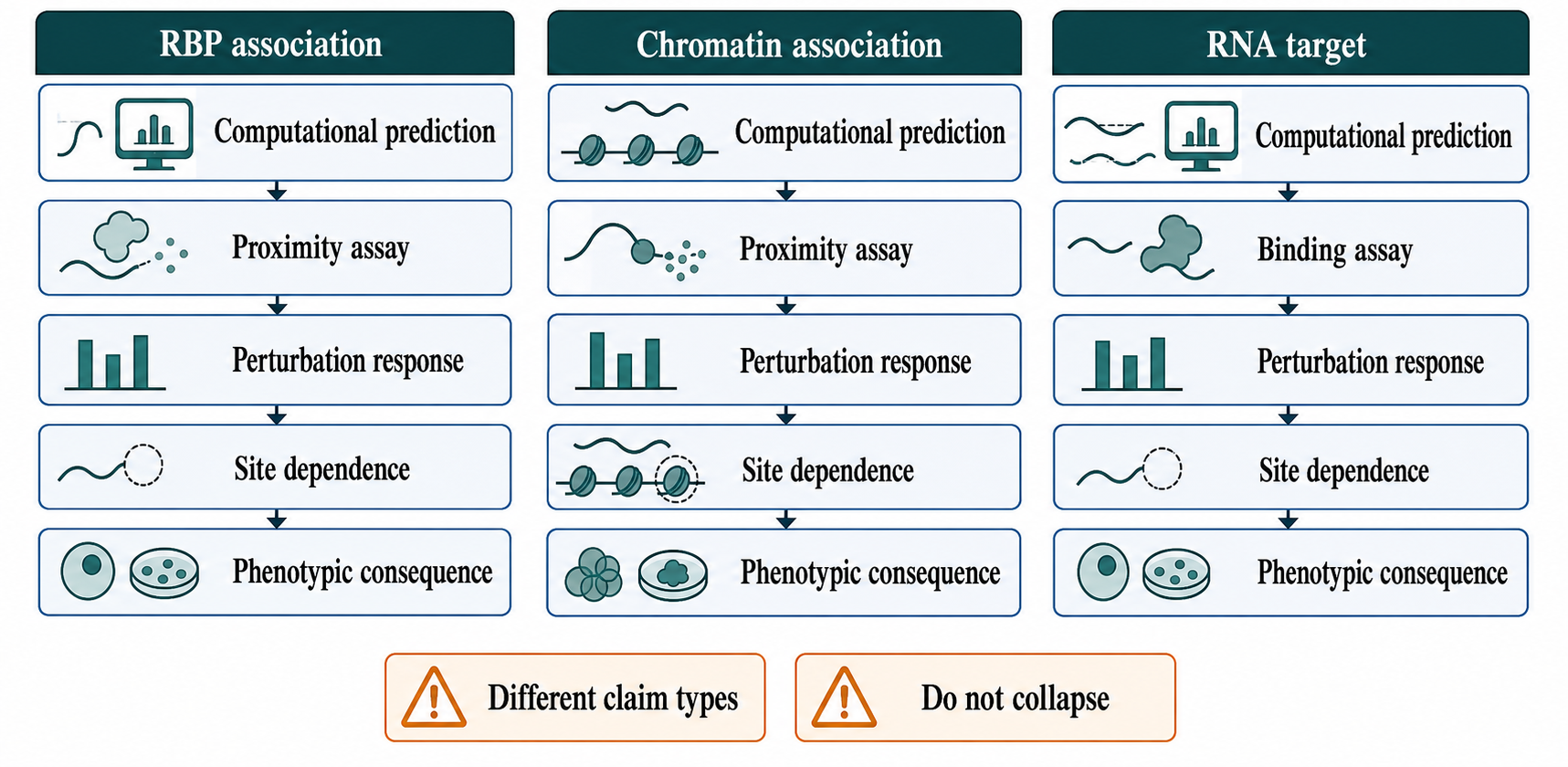
Figure 143.2. Evidence layers for ncRNA interactions. Teaches evidence-layer separation and clarifies why “interaction” is not one claim type.
An ncRNA-chromatin prediction asks whether an RNA associates with a genomic locus, chromatin compartment, histone mark, DNA-binding protein, or chromatin regulator. This class is especially difficult because chromatin-associated RNA can arise from nascent transcription, local tethering, RNA-DNA hybrids, protein-mediated proximity, nuclear body localization, or crosslinking artifacts. Models may use sequence motifs, repeat content, predicted structure, genomic distance from transcription sites, chromatin-state annotations, or data from ChIRP, CHART, RAP, GRID-seq, SPLASH, or related assays. The model output should state whether the predicted relationship is RNA-DNA hybridization, RNA-protein-chromatin proximity, enhancer-promoter contact, or chromatin-state correlation.
The danger is circular evidence. If a model is trained on RNA capture peaks near active promoters, it may learn promoter activity rather than RNA-mediated chromatin regulation. If a model uses histone marks and expression to predict chromatin-associated lncRNAs, high accuracy may reflect active transcription compartments rather than RNA product function. Chapter 96 treats RNA-chromatin evidence standards in depth. For this chapter, the AI-specific rule is simple: a model can rank candidates for targeted experiments, but a chromatin-regulatory claim requires perturbations that distinguish DNA element, transcription process, and RNA product. CRISPR deletion, transcriptional inhibition, RNA depletion, antisense oligonucleotide knockdown, RNA rescue, tethering, and allele-specific analysis do not test the same mechanism.
An ncRNA-target prediction asks whether an ncRNA regulates another RNA or gene product. For small RNAs, the target may be a base-paired mRNA, as discussed in Chapter 142. For lncRNAs and circRNAs, possible targets include mRNAs, miRNAs, RBPs, chromatin loci, enzymes, or nuclear compartments. A model might rank targets using sequence complementarity, co-expression, shared RBP motifs, predicted miRNA-response elements, perturbation RNA-seq, chromatin contact data, or prior knowledge graphs. The OIP5-AS1-MEF2C example is valuable because it identifies an lncRNA-mRNA relationship connected to myogenic gene expression [Yang et al. 2020; PMID: 33270893]. Even in such examples, the model label must specify whether the prediction is physical interaction, expression correlation, translation effect, stability effect, or phenotypic regulation.
Table 143.2. Distinguishing ncRNA-RBP, ncRNA-chromatin, and ncRNA-target prediction tasks. Makes the overloaded word “interaction” precise.
| Task | Possible physical meaning | Common data sources | False-positive modes | Stronger validation |
|---|---|---|---|---|
| RBP motif prediction | Sequence or structural element resembles an RBP preference | Motif libraries, RNAcompete-like data, CLIP peaks, sequence windows | Short motifs occur widely; accessibility and expression may dominate | Motif-mutant RNA, matched controls, and binding or reporter assay |
| CLIP-informed binding prediction | RBP-proximal RNA occupancy in a specific cell state | eCLIP, iCLIP, PAR-CLIP, RIP, expression, structure features | Crosslink bias, antibody effects, abundance, indirect RNP complexes | Independent CLIP, in vitro binding, motif dependence, and RNA fate test |
| RNA-centric protein capture | Protein is recovered with a bait RNA or RNA class | RNA pulldown, antisense capture, mass spectrometry, RNase controls | Sticky proteins, probe artifacts, abundant RNPs, indirect bridging | Reciprocal IP, competitor RNA, domain mutants, and functional perturbation |
| Chromatin-associated RNA prediction | RNA is near a locus, chromatin state, or chromatin regulator | ChIRP, CHART, RAP, GRID-seq, SPLASH, localization, chromatin marks | Nascent transcription, active-promoter correlation, crosslinking artifacts | DNA-element versus RNA-product perturbation, rescue, tethering, allele tests |
| RNA-DNA hybrid prediction | RNA forms or stabilizes an R-loop or RNA-DNA duplex | Sequence complementarity, strand-specific maps, R-loop-enriched assays | GC-rich transcription, mapping ambiguity, protein-bridged proximity | RNase H sensitivity, orthogonal R-loop mapping, and strand-specific perturbation |
| lncRNA-mRNA target prediction | lncRNA affects mRNA binding, stability, translation, or expression | Complementarity, co-expression, perturb RNA-seq, RBP or AGO data | Shared cell state, indirect pathway response, common RBP or miRNA inputs | Direct interaction assay, target-site mutation, rescue, half-life or translation test |
| ceRNA-like network prediction | RNAs may compete for shared miRNAs or RBPs | miRNA target calls, AGO data, expression correlations, perturbation data | Stoichiometry too low, correlation without competition, shared regulation | Abundance stoichiometry, site mutation, miRNA-dependent rescue, dose response |
AI interaction predictors also need negative examples, and negative examples are hard in RNA biology. A missing CLIP peak is not proof of no binding. A missing RNA-chromatin capture signal may reflect low expression, wrong cell type, inefficient capture, or transient contact. A nonresponsive transcript after perturbation may be buffered or condition-specific. Random negatives are often too easy because they differ from positives in abundance, length, genomic context, or assay detectability. More realistic negatives are matched by expression, length, compartment, family, assay coverage, and genomic accessibility. Without careful negatives, a model can learn “detectable RNA” rather than “specific interaction.”
The practical workflow is to separate three outputs. First, a discovery model ranks candidate RNA-protein, RNA-chromatin, or RNA-target relationships. Second, an evidence model annotates which assay layers support the relationship. Third, a causality model or experimental plan asks what perturbation would discriminate competing mechanisms. For example, if an lncRNA score suggests chromatin regulation of a nearby gene, the follow-up could compare promoter deletion, transcription stop insertion, RNA knockdown, and rescue with an exogenous RNA. If an RBP score suggests binding, follow-up could test motif mutation, CLIP validation, protein knockdown, and RNA half-life or localization changes.
Current consensus is that AI interaction prediction is most useful when it makes the evidence layer explicit. A ranked list of predicted ncRNA interactions should not be presented as a validated interaction network. The prediction should preserve assay provenance, cell type, molecule identity, directness, and functional consequence.
143.3. Generative design for guides, aptamers, switches, mRNAs, and therapeutics
Generative RNA design reverses the usual prediction task. Instead of asking what a given RNA does, the designer asks for RNA sequences likely to perform a specified function. The function may be target recognition, ligand binding, switch-like regulation, translation tuning, decay control, delivery compatibility, editing efficiency, or therapeutic potency. The design space is enormous because many sequences can encode similar structures or activities, and because a single sequence must satisfy many constraints simultaneously.
Guide RNA design is the most familiar example. A CRISPR guide, RNA-editing guide, siRNA, antisense oligonucleotide, or splice-switching oligonucleotide must recognize a target sequence with adequate affinity and specificity. An AI model may predict on-target activity from guide sequence, target context, secondary structure, chromatin accessibility for DNA-targeting systems, transcript abundance for RNA-targeting systems, chemical modification pattern, or delivery context. But guide design is not only recognition. A therapeutic guide must avoid off-target binding, immune stimulation, unwanted splice effects, toxic seed-mediated regulation, poor tissue exposure, and manufacturing liabilities. Chapter 82, CRISPR-Cas RNAs, Adaptive Immunity, Anti-CRISPR Biology, and Guide RNA Mechanisms and Chapter 150, Antisense Oligonucleotides, RNase H Gapmers, Splice-Switching Oligos, and Steric Blockers through Chapter 154, RNA Editing and Programmable RNA Therapeutic Products treat specific guide and therapeutic modalities.
Aptamer design asks for an RNA that binds a ligand, protein, cell-surface marker, or small molecule with defined affinity and selectivity. Traditional systematic evolution of ligands by exponential enrichment, or SELEX, searches sequence space experimentally. AI can assist by learning from selection rounds, proposing enriched motifs, predicting structure, or generating new candidate sequences. The hard part is that aptamer function depends on folded ensembles, ionic conditions, ligand-induced conformational change, and counterselection against near ligands or matrix binders. A model trained on enriched pools may learn amplification bias, primer artifacts, or family membership unless the experimental design includes appropriate controls.
Switch design adds a dynamic requirement. A riboswitch, toehold switch, aptazyme, splicing switch, or translation switch must adopt different functional states depending on a ligand, trigger RNA, temperature, protein, or cellular condition. The model must predict not just one stable fold but a regulated ensemble and kinetic path. A toehold switch, for example, often hides a ribosome-binding site or start codon until a trigger RNA opens the structure. A mammalian splicing switch may expose or hide splice regulatory elements. A therapeutic switch may need low leak, high dynamic range, minimal innate immune activation, and robust behavior across cell types. Sequence-only generative models can propose variants, but the designs require reporter assays, structure probing, and cellular validation.
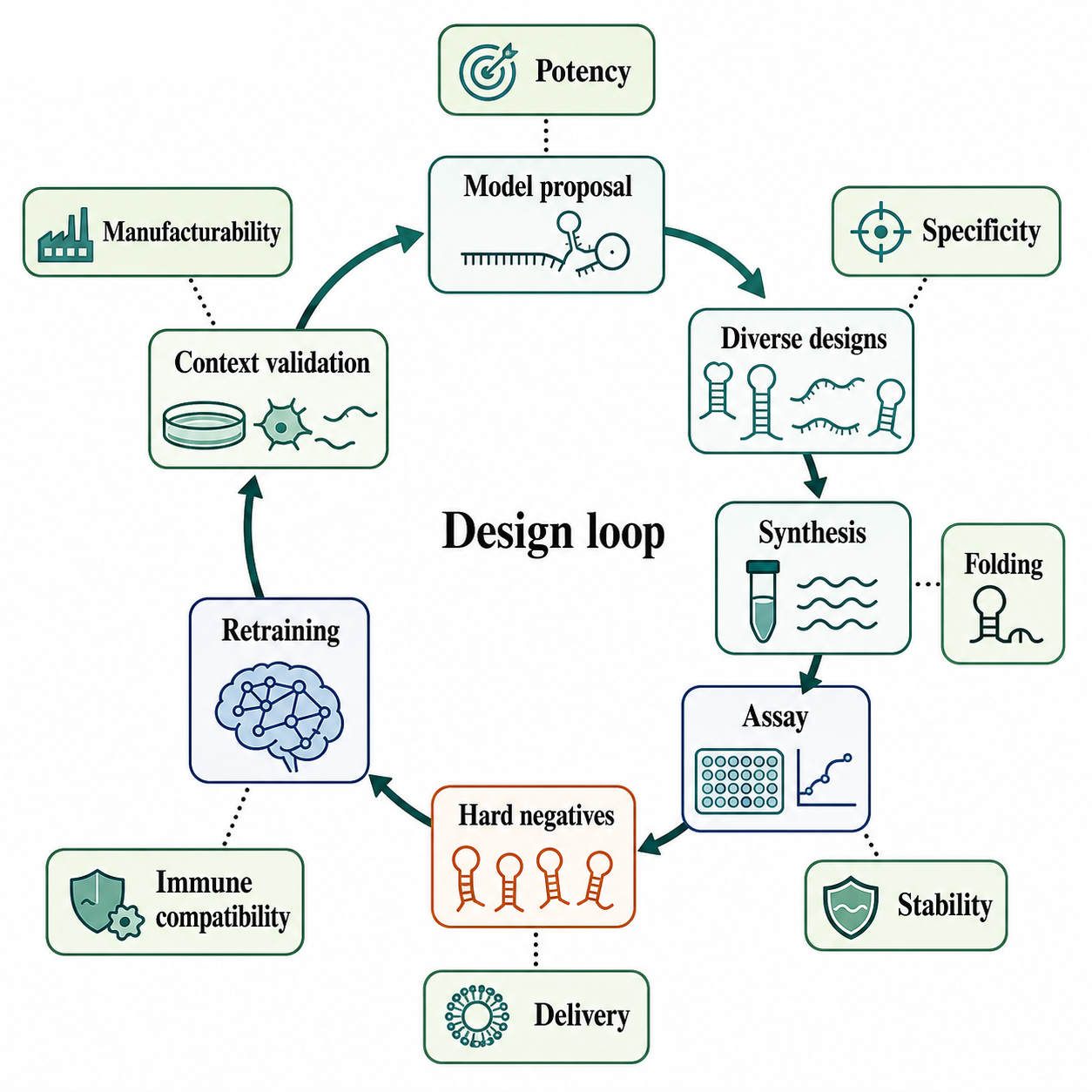
Figure 143.3. Multi-objective generative RNA design loop. Makes clear that generative design is an experimental workflow, not a one-shot sequence generator.
mRNA design is a multi-layer problem because an mRNA is both an information carrier and a regulated molecule. A designed mRNA encodes a protein, but its untranslated regions, coding sequence, codon usage, GC content, RNA structure, modified nucleotides, cap, poly(A) tail, circularization status, purification state, and delivery vehicle influence expression and immune sensing. AI models can optimize codon choice, reduce problematic motifs, tune structure near the 5′ end, predict stability, and rank untranslated regions. Yet the objectives can conflict. A coding sequence that maximizes translation may reduce stability, alter folding, create cryptic splice sites, increase innate immune sensing, or complicate manufacturing. Chapters 36, 72, 153, 156, and 159 provide deeper mechanistic treatment.
Therapeutic RNA design adds pharmacological constraints. A potent sequence in cultured cells may fail because it is degraded in serum, trapped in endosomes, distributed to the wrong tissue, activates Toll-like receptor or RIG-I-like receptor pathways, binds serum proteins, or produces an unacceptable off-target profile. A generative model trained only on in vitro potency cannot infer delivery, biodistribution, or safety without data that cover those axes. The practical design objective is therefore multi-objective and staged: in silico filtering, in vitro biochemistry, cell assays, primary-cell assays, animal exposure and pharmacodynamics, toxicology, and clinical translation.
Box 143.2. Define the Design Contract Before Generation
Design contract before generation. Before asking a model to generate RNA sequences, write down the biological contract the sequence must satisfy. Name the modality, such as guide RNA, aptamer, switch, mRNA, circular RNA, or oligonucleotide; the target molecule; the intended cell or organism; and the assay that will decide success. Separate the primary objective from constraints: potency, specificity, folding state, dynamic range, stability, immune sensing, delivery, manufacturability, and safety. Include negative controls and failure triggers in the first design round, not after the top sequence fails. A useful design batch should contain high-scoring candidates, diversity controls, mechanism probes, and matched inactive variants. Stop optimizing a proxy score when the next experiment or clinical decision would not change. A model can search sequence space, but the contract defines what “better” means.
Table 143.3. Design objectives and failure modes for generated RNA classes. Shows why generative design is multi-objective and context-dependent.
| Designed RNA class | Primary objective | Secondary constraints | Common model shortcut | Required experimental check |
|---|---|---|---|---|
| CRISPR or RNA-editing guide | Efficient target cleavage, editing, repression, or activation | Off-targets, target accessibility, guide chemistry, delivery, cell context | Memorizing target gene, nearby guides, or GC-rich high-activity regions | On-target activity, genome or transcript off-targets, and context-matched dose test |
| siRNA or antisense guide | Knockdown, splice modulation, or allele-selective binding | Seed off-targets, RNA accessibility, nuclease stability, immune activation | Optimizing complementarity while ignoring seed and chemistry liabilities | RNA and protein effect, splice readout, off-target panel, and toxicity assay |
| Aptamer | Selective ligand, protein, or cell-surface binding | Fold ensemble, ions, counterselection, primer effects, matrix binding | Reusing enriched family motifs or amplification artifacts | Quantitative binding, near-ligand counterselection, structure and mutation tests |
| Toehold or riboswitch | Low-leak and high-dynamic-range conditional activity | Kinetics, trigger specificity, burden, host cell, temperature, metabolites | Scoring one stable fold or one reporter condition | Reporter panel with negative triggers, structure probing, and cell-context test |
| mRNA | High and durable protein expression | UTRs, codons, 5′ structure, modifications, stability, innate sensing | Maximizing codon or GC score as a proxy for expression | Translation, RNA half-life, immune markers, and protein quality in relevant cells |
| Circular RNA | Durable expression or translation from a circular molecule | Junction design, purity, internal initiation, stability, innate sensing | Treating the circle as an ordinary linear transcript | Junction validation, linear RNA depletion, translation or activity, and immune assay |
| Therapeutic oligonucleotide | Potent target modulation in the intended tissue | Chemistry, PK/PD, delivery, biodistribution, off-targets, safety | Ranking by in vitro potency alone | Primary-cell or in vivo activity, exposure, off-targets, and tolerability |
The best use of generative AI is often not to produce a single “best” RNA but to propose a diverse panel that spans predicted mechanisms and uncertainties. A panel can include high-confidence designs, designs that test alternative structural hypotheses, designs that probe motif importance, and negative controls. Diversity matters because the model’s top-ranked sequences may share the same hidden failure mode. For example, a set of generated aptamers could all depend on a primer-derived motif; a set of guide RNAs could all share a seed with off-target risk; a set of switches could all work only at one temperature or magnesium concentration.
Closed-loop design connects generation to experiment. In a closed loop, the model proposes sequences, experiments measure activity, the data are added to the training set, and the model proposes the next round. This workflow is powerful when measurements are reliable, sequence diversity is controlled, and uncertainty is used to balance exploitation and exploration. It is weak when the model repeatedly samples near known positives, when labels are confounded by batch effects, or when the assay does not match the final use case. A closed loop for a riboswitch should include negative triggers and cellular context; a closed loop for an mRNA therapeutic should eventually include innate immune and delivery readouts, not only reporter expression.
Generative design also needs explicit stopping rules. A computational score can improve indefinitely while biological benefit plateaus. A design project should define the required activity, selectivity, manufacturability, and safety margins before optimization begins. For therapeutic contexts, the design should include chemistry, formulation, dose, route, and target population assumptions. For synthetic biology contexts, the design should include host organism, growth condition, burden, genetic stability, and containment assumptions. AI does not remove these requirements; it makes them more important because automated search can exploit any poorly specified objective.
Current consensus is that generative RNA design is promising but experimentally bounded. It is strongest when paired with high-throughput assays that directly measure the desired function and weakest when asked to infer a complex therapeutic phenotype from sequence alone.
143.4. Generalization failures, data leakage, and homology-aware benchmarks
A model generalizes when it performs well on biologically new cases, not merely on records that were randomly hidden from the training table. RNA datasets are full of nonindependence. Homologous ncRNAs share sequence and structure. Members of an RBP motif family share recognition patterns. Guide RNAs targeting nearby sites share target context. Aptamer variants from one selection experiment share ancestry. Transcript isoforms share exons. Repeated genomic elements share sequence. CLIP datasets from the same laboratory share processing choices. If these related records are split randomly, test performance can look high even when the model has not learned the intended rule.
Homology-aware benchmarking begins by defining the extrapolation claim. A model for ncRNA family annotation may only need to generalize to new members within known families. A model for novel RNA discovery should generalize to remote homologs or new families. An RBP-binding model may be evaluated on new transcripts for the same RBP, on new cell types for the same RBP, or on RBPs not seen during training. A guide RNA model may need to generalize across target genes, guide chemistries, cell types, delivery systems, or species. Each claim requires a different split.
The split unit should be chosen before model tuning begins. If a project asks whether a model can nominate new lncRNA families, the split unit should be family or locus, not random transcript window. If a project asks whether an RBP model can transfer to a new cell type, all labels from the held-out cell type should be absent from training and model selection. If a project asks whether a guide design model can support a new therapeutic chemistry, the held-out chemistry should not appear in hyperparameter search. If a project asks whether a switch design model can discover a new fold, variants from the same engineered lineage should be kept together. These rules are inconvenient because they reduce the apparent amount of data, but they prevent the evaluation from answering an easier question than the one the user actually cares about.
The most common leakage modes are concrete. Sequence leakage occurs when near-identical or homologous RNAs appear in train and test sets. Locus leakage occurs when transcript isoforms, overlapping windows, or neighboring guide targets are split across sets. Family leakage occurs when members of the same ncRNA family or RBP motif class appear on both sides. Assay leakage occurs when records from the same experiment, batch, or selection round are split randomly. Label leakage occurs when a feature used as input is partly derived from the label, such as using expression changes to predict a function label defined by expression changes. Literature leakage occurs when databases include multiple records derived from the same paper, cell line, or curated example.
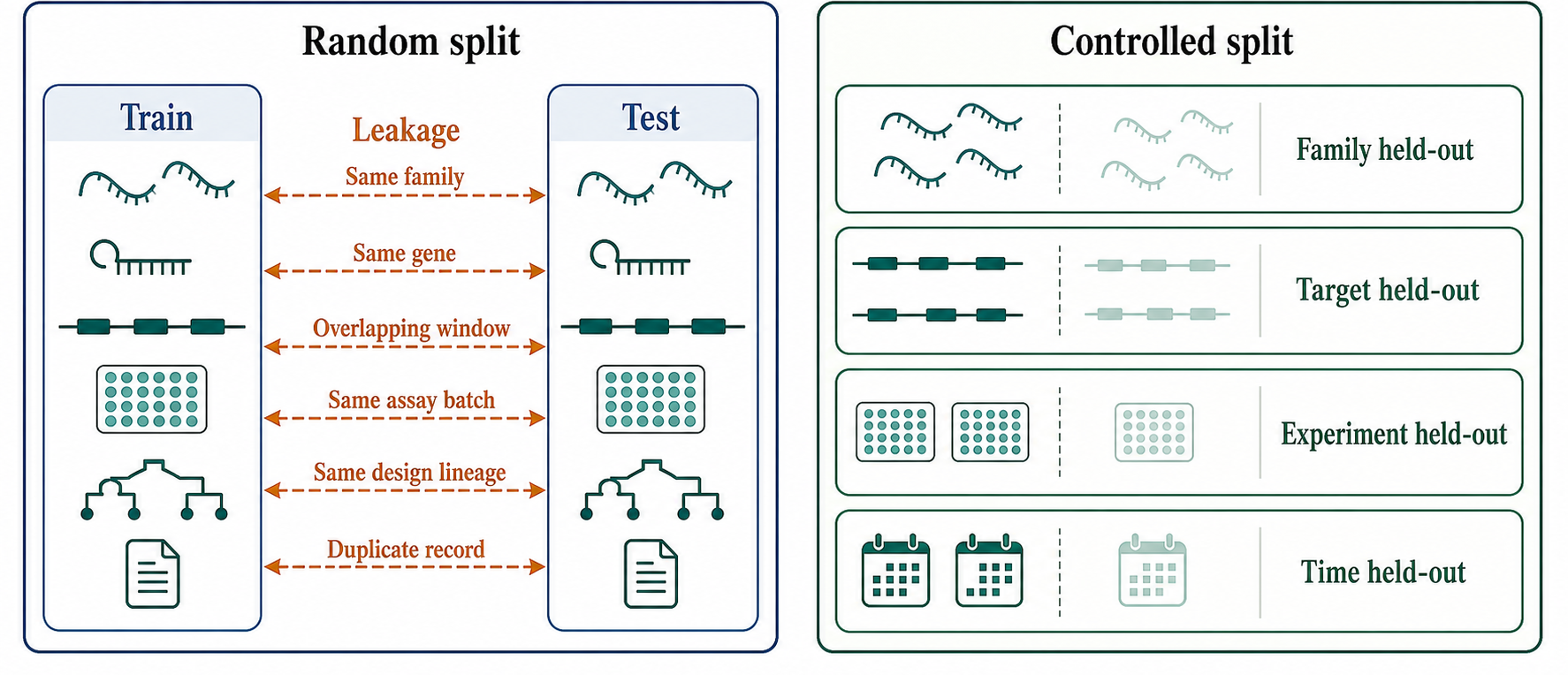
Figure 143.4. Leakage modes in RNA AI benchmarks. Converts an abstract machine-learning flaw into concrete RNA dataset examples.
Random negatives are another source of inflated performance. In RBP prediction, positives may be expressed, mappable, crosslinkable transcripts, while random negatives may include unexpressed or inaccessible transcripts. In lncRNA function prediction, positives may be well-studied, conserved, and highly expressed, while negatives may be unannotated low-expression transcripts. In RNA-chromatin prediction, positives may come from active nuclear compartments, while negatives may come from cytoplasmic or low-coverage RNAs. A model trained on such negatives learns detectability rather than specificity. Matched negatives should control for expression, length, GC content, repeat content, family, compartment, mappability, and assay coverage when possible.
Box 143.3. Matched Negatives Are Biological Controls
Matched negatives are biological controls. A negative example should be hard for the right reason. In RBP prediction, a useful negative might be expressed, mappable, and accessible but lack the motif or structure required for binding. In lncRNA-chromatin prediction, a useful negative might be a nearby nuclear transcript with similar abundance but no locus-specific enrichment. In aptamer or switch design, a useful negative can preserve scaffold, length, and composition while removing the ligand contact or trigger response. Random unexpressed transcripts, unmappable loci, or unrelated sequence families make classifiers look accurate by teaching detectability. Matched negatives are not proof that no interaction exists; matched negatives are controls that force the model to learn specificity rather than convenience.
A homology-aware benchmark does not always make scores lower because the model is worse; it makes the question harder and more honest. If performance drops sharply when homologs are removed, the model may still be useful for annotation within known families, but the model should not be advertised as discovering new mechanisms. If performance drops on a time-split test, the model may depend on database conventions or older assay types. If performance drops on a species split, the model may have learned lineage-specific composition or annotation practice. Failure is informative when the benchmark is designed to reveal which biological boundary was crossed.
RNA structure prediction and design need additional redundancy controls. Many RNA structures in public databases are fragments of the same molecule, homologous ribosomal RNAs, engineered constructs, aptamer variants, or repeated benchmark targets. Nonredundant structural datasets exist because naive structure benchmarks overrepresent well-studied molecules and families. For Chapter 143, the general rule is that structure-aware AI models should report whether training and test RNAs share family, fold, ligand, RBP, organism, or engineered ancestry.
Benchmarks should also evaluate calibration and ranking, not only aggregate accuracy. A model used to nominate ten experimental candidates needs top-k precision, enrichment over baseline, diversity, and uncertainty. A model used to annotate genomes needs sensitivity, specificity, false discovery rate, and family-level performance. A model used for therapeutic design needs prospective validation, off-target assessment, and distribution-shift testing. Area-under-curve metrics can hide poor performance on rare but important classes. Balanced accuracy can hide poor calibration. A high correlation can hide systematic failure for long RNAs, structured RNAs, low-expression RNAs, or modified RNAs.
Table 143.4. Benchmark hazards and mitigations in RNA AI. Gives readers a concrete audit checklist for model papers and internal benchmarks.
| Hazard | RNA-specific example | Effect on measured performance | Mitigation |
|---|---|---|---|
| Homolog leakage | Same ncRNA family, RBP motif family, or structural fold appears in train and test | Model memorizes family identity and overstates discovery of new mechanisms | Cluster by sequence, family, fold, or Rfam-like grouping before splitting |
| Locus or isoform leakage | Same gene isoforms, overlapping windows, or neighboring guide targets cross the split | Test set rewards locus recognition instead of independent prediction | Split by gene, locus, target region, or nonoverlapping genomic block |
| Assay-batch leakage | Same CLIP experiment, SELEX round, lab pipeline, or sequencing batch appears on both sides | Model learns batch chemistry, processing choices, or selection history | Hold out experiments, batches, labs, selection rounds, or collection time |
| Random easy negatives | Positives are expressed and mappable, while negatives include silent or inaccessible RNAs | Classifier detects observability rather than specific binding or function | Match negatives by expression, length, GC content, compartment, mappability, and coverage |
| Expression confounding | RBP targets, disease lncRNAs, or chromatin RNAs are also high-abundance transcripts | Expression-only model approaches reported performance | Include expression-only baselines, expression-matched negatives, and perturbation evidence |
| Label-derived input leakage | Expression or chromatin feature used as input also defines the positive label | Circular features inflate accuracy and obscure biological meaning | Audit feature provenance, remove label-derived inputs, and run modality ablations |
| Engineered-lineage leakage | Aptamer, switch, or guide variants from one design lineage are split randomly | Model interpolates within one family instead of finding new designs | Keep lineages, selection rounds, scaffold families, and close variants together |
| Uncalibrated top-k ranking | Top ten candidate guides or ncRNAs have high scores but unknown false discovery rate | High AUC hides poor candidate triage for experiments | Report top-k precision, enrichment over baselines, diversity, and calibration |
| Missing prospective validation | All results come from retrospective tables with no new model-nominated tests | Utility for discovery or therapeutic design remains unproven | Freeze a plan, nominate new candidates, test baselines, and report failures |
Data leakage is not only a technical problem; it changes biological interpretation. Suppose a model predicts lncRNA function with high accuracy. If the split allowed paralogous transcripts, same-gene isoforms, or disease-study duplicates across train and test sets, the model may have learned family membership or publication bias rather than function. Suppose a model predicts RBP binding. If positives and negatives differ mainly in expression, the model may identify abundant transcripts. Suppose a model designs high-affinity aptamers. If test variants came from the same SELEX family as training variants, the model may interpolate within one motif family rather than discover new binders.
A realistic evaluation report should therefore include the split unit, redundancy thresholds, negative construction, baseline models, ablation results, calibration, out-of-distribution tests, and prospective validation when feasible. Baselines matter. A deep model should be compared with motif scanning, thermodynamic accessibility, covariance or family models, simple k-mer classifiers, expression-only models, and random or matched controls. If a simple GC-content or length baseline performs nearly as well, the biological claim should be downgraded. If the model only beats baselines on random splits, the intended use should be restricted.
Current consensus is that leakage-aware evaluation is mandatory for credible AI claims in RNA biology. The field should treat unrealistic benchmarks as a source of biological false positives, not merely as software evaluation flaws.
143.5. Interpretability, uncertainty, and experimental feedback loops
Interpretability asks why a model made a prediction. In RNA biology, interpretable explanations must connect to molecular features: a motif, a structural element, a base-paired region, an accessible loop, a repeat, a modification site, a localization signal, a codon pattern, or a protein-binding surface. Common techniques include saliency maps, in silico mutagenesis, motif extraction, attention analysis, counterfactual sequence design, feature ablation, and comparison with known motifs or structures. These techniques are useful but not self-validating. A bright saliency region is a hypothesis about what the model used, not proof that the region is biologically causal.
The most useful interpretability experiment is often a designed perturbation. If the model says an RBP prediction depends on a U-rich motif, mutate the motif while preserving nearby structure and expression. If the model says an aptamer’s loop determines ligand binding, mutate the loop, compensatory-pair the stem, and measure binding. If the model says an mRNA expression score depends on 5′ structure, build variants that change local folding while preserving coding sequence. If the model says an lncRNA-chromatin score depends on a repeat module, delete or scramble that module without disrupting transcription, then test localization and target-gene effects. Interpretation becomes mechanistic only when the proposed feature is experimentally challenged.
Uncertainty is equally important. An RNA model should communicate when it is extrapolating beyond training data: a much longer RNA, a heavily modified RNA, a circular RNA, a repeat-rich transcript, a low-complexity sequence, a new organism, a new chemistry, a new cell type, or a new delivery condition. Uncertainty can be estimated with ensembles, dropout approximations, Bayesian layers, conformal prediction, distance in embedding space, or explicit out-of-distribution detectors. Calibration should be checked because a model can be confident and wrong. In discovery biology, calibrated uncertainty helps allocate experiments; in therapeutic design, overconfidence can create safety risk.
Calibration is a practical measurement, not an aesthetic preference. If a model assigns 0.9 probability to many RBP-binding predictions, roughly nine of ten should be correct within a comparable evaluation stratum. If the model is well ranked but poorly calibrated, the top candidates may still be useful for discovery, but the numerical probabilities should not be treated as frequencies. If uncertainty rises for long, structured, or repeat-rich RNAs, that warning should affect experimental design: choose more variants, include orthogonal assays, and avoid presenting a single high-scoring candidate as definitive. In therapeutic settings, uncertainty should also be connected to risk. A model may be uncertain about off-targets, immune activation, delivery, or durability even when it is confident about target binding in a cell-free assay.
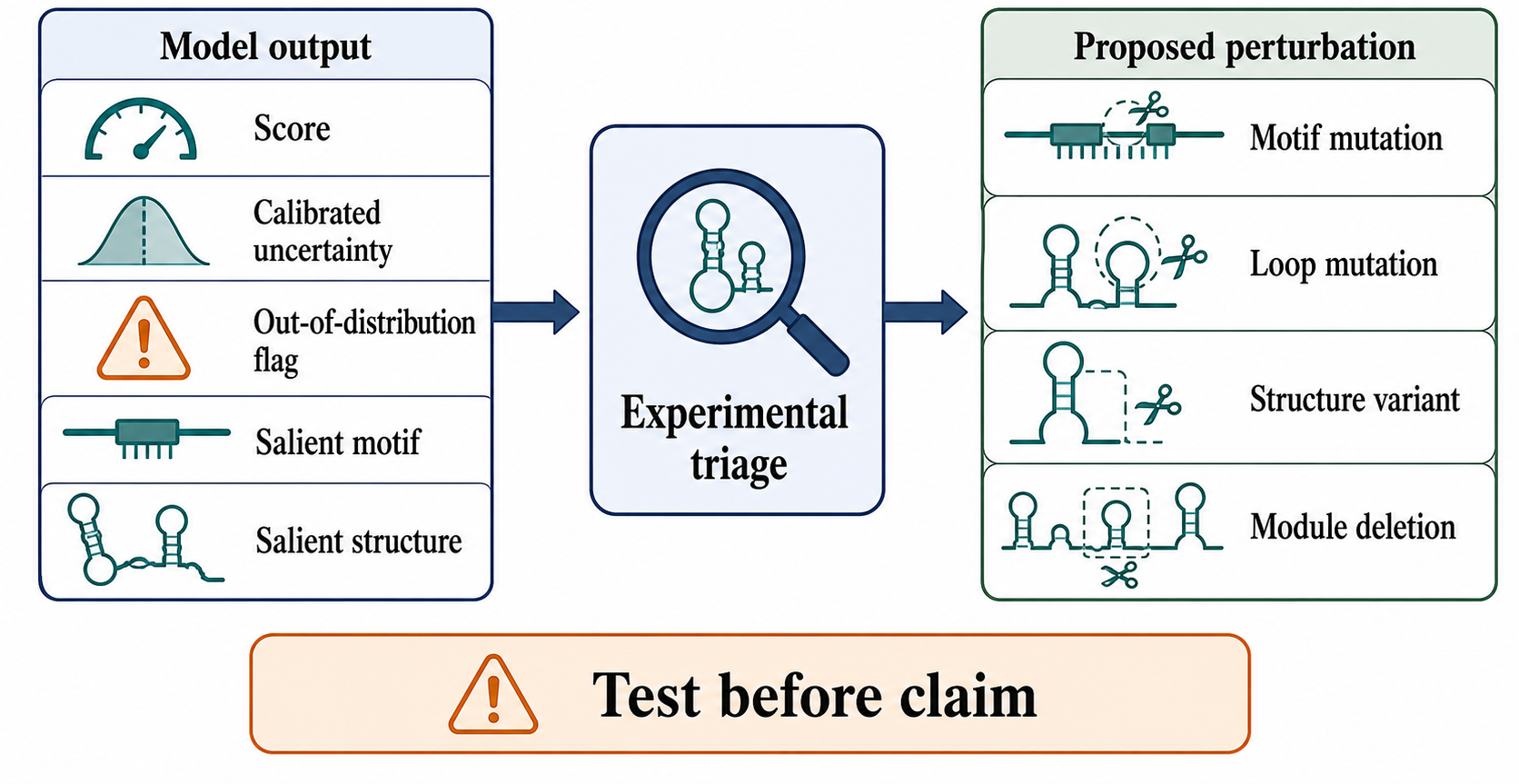
Figure 143.5. Interpretability and uncertainty as experimental triage. Emphasizes that interpretability becomes biological evidence only when tested.
Experimental feedback loops should be designed around the biological decision. For an ncRNA function model, the loop might nominate lncRNAs, perturb them with multiple orthogonal methods, measure RNA product abundance, neighboring-gene transcription, localization, and phenotype, and feed confirmed positives and hard negatives back into the model. For an RBP model, the loop might nominate motif variants, test binding by CLIP or in vitro assays, measure RNA stability or splicing, and retrain on motif-disrupting negatives. For a switch design project, the loop might build a pooled library, measure basal and induced expression, perform structure probing on selected variants, and use uncertainty to choose the next designs.
Feedback loops need hard negatives. A hard negative is similar to a positive in confounding features but lacks the relevant activity. For an RBP model, a hard negative might be expressed and accessible but motif-disrupted. For an aptamer model, a hard negative might preserve the scaffold but lose ligand contact. For an lncRNA-chromatin model, a hard negative might be a nearby transcribed RNA that does not localize to the locus. Hard negatives teach specificity. Without them, the model may improve by learning expression, length, or assay recovery.
The hepatic lncRNA study in liver transplantation is a reminder that disease- or stress-associated ncRNA expression can be biologically useful but not automatically mechanistic [Tu et al. 2023; PMID: 36967627]. AI can prioritize lncRNAs from such data by integrating expression, conservation, predicted interactions, and clinical variables. The follow-up must test whether a candidate RNA product contributes to injury, immune signaling, regeneration, or graft outcome, or whether the RNA is a biomarker of cellular composition and stress. A feedback loop should therefore include cell-type resolution, perturbation, and phenotype measurements, not only improved expression classification.
Interpretability also has a social and curation dimension. A model explanation should be recorded as a claim with provenance, uncertainty, and test status. “The model predicts motif X” is different from “mutating motif X abolishes binding” and different again from “motif X is required for phenotype.” Chapter 144 supplies the database, ontology, identifier, and provenance context needed to record such distinctions. For Chapter 143, the key rule is that model-derived explanations should not be merged with experimental mechanisms unless the evidence supports that upgrade.
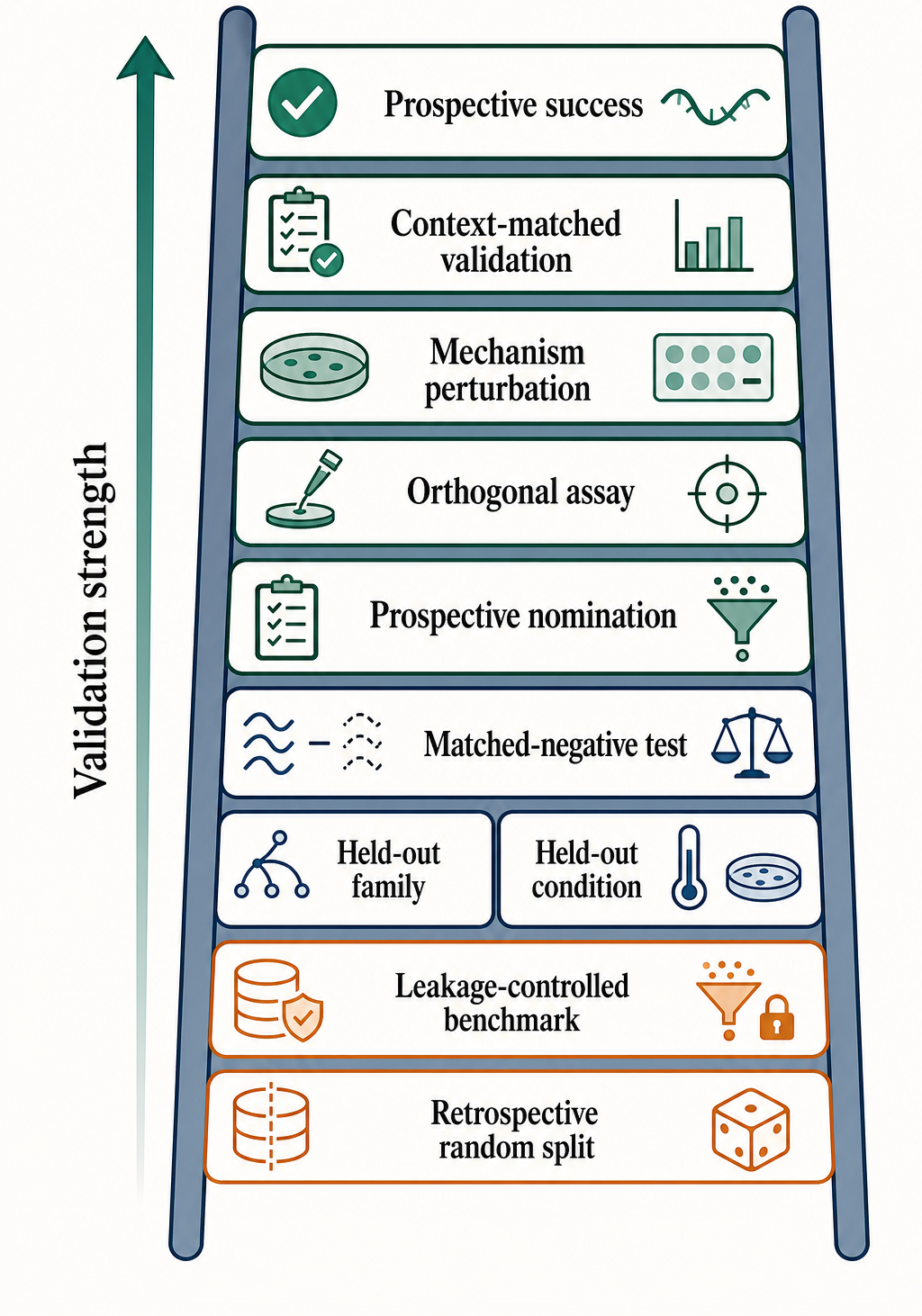
Figure 143.6. Prospective validation ladder for RNA AI. Provides a reusable evaluation rubric for AI-assisted RNA studies.
The strongest AI-RNA studies are prospective. They train or select a model, freeze the evaluation plan, nominate new candidates, test them experimentally, report failures, and update the model only after the prospective test. Retrospective benchmarks remain useful for development, but prospective validation is what shows that the model can guide discovery or design. Prospective tests should include baseline-selected candidates and model-selected candidates, because the question is not whether AI can find anything, but whether it improves decisions over simpler strategies.
Current consensus is that interpretability and uncertainty are not decorative additions. They are required for using AI responsibly in RNA biology because RNA labels are noisy, context-dependent, and often mechanistically indirect. The open questions are practical: how to benchmark explanations, how to quantify uncertainty under biological distribution shift, how to share negative results, how to combine private therapeutic data with public models, and how to design feedback loops that improve mechanistic understanding rather than only optimize assay scores.
Core Mechanisms and Molecular Players
The core molecular players in this chapter are RNA sequences, RNA structures, RNP complexes, chromatin-associated RNAs, guide RNAs, engineered RNAs, and assay labels. AI operates on representations of these entities. A representation can be a raw sequence, a one-hot encoding, a k-mer count vector, a learned embedding, a graph of base pairs, a contact map, a structure ensemble, a transcriptomic profile, or a multimodal feature table. The biological mechanism remains outside the model unless the representation and label are tied to a physical claim.
The central causal chain is: RNA sequence and chemistry constrain folding and molecular recognition; cellular context determines which structures and interactions are populated; interactions alter RNA fate or molecular pathways; perturbations reveal whether the RNA feature is necessary or sufficient for an outcome. AI can model any link in that chain, but the model should not skip links when making claims. A prediction of RBP binding is not automatically a prediction of RNA stability. A prediction of localization is not automatically a prediction of chromatin regulation. A prediction of guide potency is not automatically a prediction of therapeutic effect.
Experimental Foundations and Evidence
The experimental foundations include CLIP-family methods, RNA immunoprecipitation, RNA-centric proteomics, RNA-chromatin capture, high-throughput reporter assays, pooled variant libraries, structure probing, in vitro binding assays, perturb-seq, targeted RNA knockdown, CRISPR-based editing, and biochemical reconstitution. Each method generates labels with a restricted meaning. Models trained on those labels should report the assay layer as part of the prediction.
Strong evidence usually combines orthogonal assays. For an RBP interaction, useful evidence includes physical occupancy, motif or structure dependence, protein perturbation response, and RNA fate change. For an ncRNA-chromatin claim, useful evidence distinguishes DNA element, transcription process, and RNA product. For a design claim, useful evidence includes the intended activity, specificity, robustness, and failure modes under the intended context. The claim register for this chapter encodes these distinctions in reusable form.
Biological Contexts Across Organisms, Cell Types, and Systems
RNA AI models are often trained on mixed datasets, but RNA biology is context-specific. Bacterial small RNAs operate in different transcript architectures and RNP systems than mammalian lncRNAs. Plant small-RNA targeting has different complementarity and cleavage patterns than animal miRNA targeting. Viral RNAs have compact multifunctional elements and host-specific constraints. Therapeutic RNAs encounter delivery, chemistry, and immune-sensing constraints that do not appear in many public reporter datasets. A model’s organism and system context should therefore be treated as part of its claim, not as metadata that can be ignored.
Technology, Computational, Clinical, and Engineering Links
Chapter 143 links informatics to engineering and medicine. In discovery biology, AI ranks ncRNAs and interactions for validation. In structural biology, AI proposes folds and designable motifs. In synthetic biology, AI designs switches, sensors, guides, and expression cassettes. In therapeutics, AI contributes to oligonucleotide and mRNA design, but clinical performance also depends on chemistry, delivery, pharmacology, manufacturing, and safety. The chapter’s main engineering lesson is that the design objective must match the experimental and clinical decision.
Recent Consensus
Recent consensus can be summarized as five principles. First, RNA foundation models are useful representations but not universal functional annotators. Second, interaction prediction must preserve the difference between physical association, proximity, regulation, and causality. Third, generative design needs multi-objective experimental feedback. Fourth, benchmark leakage and unrealistic negatives can make RNA AI results look more general than they are. Fifth, interpretability and uncertainty should guide experiments rather than merely explain a final score.
Open Questions, Controversies, Deprecated Models, and Common Misconceptions
Open questions:
- How to train models that represent modified nucleotides and RNA chemistry?
- How to combine long-range structure with long transcript context?
- How to benchmark RNA-chromatin and lncRNA-target predictions without circular labels?
- How to share negative therapeutic design data?
- How to evaluate foundation models on genuinely new RNA classes?
Common misconceptions:
- “A high AI score validates ncRNA function.” It does not. The score is a model-derived hypothesis whose meaning depends on the label and validation.
- “Deep learning removes the need for homology-aware baselines.” It does not; deep models can exploit redundancy more effectively than simple models.
- “Interpretability maps are mechanisms.” They are candidate explanations until tested by perturbation.
Deprecated or weakened claims:
- Random splits across homologous RNAs, random unexpressed negatives, claims of “function” from expression association alone, and design optimization against a single assay that does not match the intended use.