Chapter 78. Cis-Regulatory RNA Elements, Attenuation, Leader RNAs, Thermosensors, and Metabolite-Responsive Structures
Scope Note
This chapter explains how RNA sequences embedded in the same transcript that they regulate can sense transcription, translation, temperature, metabolites, and proteins. The focus is on bacterial and archaeal leader RNAs, attenuation systems, RNA thermometers, translational switches, and other cis-acting structures that alter expression without needing a separate regulatory RNA. Chapter 79 gives deeper treatment of riboswitch aptamer classes and ligand chemistry; this chapter emphasizes architecture, timing, mechanism, evidence, and design principles shared across cis-regulatory RNA elements.
Executive Summary
Cis-regulatory RNA elements are sequence and structure features that regulate the same RNA molecule on which they reside. In bacteria, the most familiar locations are leader regions upstream of coding sequences, especially the 5′ untranslated regions of operons. Because bacterial transcription and translation are often coupled, a nascent leader RNA can make regulatory decisions while RNA polymerase is still transcribing the downstream genes. A hairpin that forms before the polymerase escapes the leader can terminate transcription; a competing antiterminator hairpin can allow transcription to continue; a structure that hides the Shine-Dalgarno sequence can repress translation; and a structure that melts, binds a ligand, or recruits a protein can expose the ribosome binding site.
Attenuation is a regulatory strategy in which transcription is conditionally stopped after initiation but before the full operon is transcribed. A leader RNA can attenuate transcription by folding into an intrinsic terminator, usually a GC-rich hairpin followed by a U-rich tract in bacteria. Alternative base pairing creates mutually exclusive structures: one conformation forms a terminator and shuts the operon off, while another conformation forms an antiterminator and permits readthrough. The decision can depend on ribosome movement through a short leader peptide open reading frame, uncharged transfer RNA binding to a T-box leader, metabolite binding to an aptamer domain, RNA polymerase pausing, or a regulatory protein. Attenuation is therefore not a single molecular machine but a family of timing-dependent RNA decisions.
RNA thermometers are cis elements whose regulatory state depends on temperature-sensitive base pairing. Many bacterial RNA thermometers repress translation at lower temperature by sequestering the ribosome binding site in a helix and permit translation at higher temperature when that helix loosens. The regulatory input is not temperature in an abstract sense but the physical effect of temperature on RNA base pairing, tertiary contacts, ribosome access, protein binding, RNA decay, and sometimes a partner small RNA. The Yersinia temperature-responsive structurome study by Righetti et al. (2016) and the two-RNA CyaR-ompX example studied by Guanzon et al. (2025) illustrate that thermal regulation can involve both local mRNA unfolding and network-level RNA interactions.
Protein- and metabolite-responsive cis elements expand the same architectural logic. A metabolite can stabilize one fold over another; a protein can mask or remodel an RNA structure; a translating ribosome can mechanically prevent a helix from forming; and an RNA-binding protein can recruit processing or decay machinery. Riboswitches are the most famous metabolite-responsive cis elements, but this chapter uses them mainly as examples of the general design principle: a sensory region must be coupled to an expression platform that changes gene expression. Chapter 79 treats ligand classes, aptamer structures, and riboswitch engineering in greater depth.
The current consensus is that RNA structure is an active regulatory layer, not only a passive consequence of sequence composition. However, a predicted hairpin is not proof of regulation, a ligand-binding assay is not proof of expression control in vivo, and a reporter assay is not proof that the endogenous locus uses the same mechanism. Strong evidence combines comparative conservation, compensatory mutations, biochemical probing, expression measurements, and perturbations that separate RNA sequence, RNA structure, protein binding, transcriptional timing, and translation. Synthetic engineering has made cis-regulatory RNAs useful as biosensors and gene-control devices, but engineered performance is context-dependent because folding kinetics, RNA polymerase speed, ribosome traffic, RNA degradation, and host physiology all influence the final output.
Concept Inventory
- Cis-regulatory RNA element: An RNA sequence or structure that regulates the same RNA molecule on which it is located. In this chapter the term usually refers to leader-region or untranslated-region elements that control transcription, translation, or RNA stability.
- Leader RNA: The portion of a transcript synthesized before the first regulated coding sequence. In bacterial operons, a leader RNA often includes a promoter-proximal region, a 5′ untranslated region, a short leader peptide ORF, a terminator or antiterminator, and one or more protein, metabolite, or tRNA-responsive motifs.
- Attenuation: Conditional premature termination after transcription initiation. The regulatory decision occurs downstream of a promoter but upstream of the main coding region. Attenuation is common in bacterial amino acid biosynthesis, nucleotide metabolism, and stress-responsive systems.
- Intrinsic terminator: A bacterial transcription terminator formed by an RNA hairpin followed by a U-rich tract. The hairpin and weak RNA-DNA hybrid help release RNA polymerase without requiring Rho.
- Antiterminator: An RNA structure or RNA-protein complex that prevents formation or action of a terminator, allowing RNA polymerase to read through into downstream genes.
- Leader peptide ORF: A short open reading frame in a leader RNA. Translation of the leader peptide can report amino acid availability because ribosome stalling at specific codons changes which RNA segments are free to pair.
- T-box leader: A cis-regulatory RNA that senses uncharged tRNA. A T-box usually compares the tRNA anticodon with a specifier codon in the leader and stabilizes an antiterminator when the acceptor end of an uncharged tRNA is available.
- RNA thermometer: A temperature-responsive RNA structure that changes gene expression, often by hiding or exposing a ribosome binding site as temperature changes.
- Ribosome binding site occlusion: Repression caused by RNA structure that masks the Shine-Dalgarno sequence or start codon, reducing 30S ribosomal subunit access in bacteria.
- Expression platform: The portion of a cis-regulatory RNA that directly changes gene expression, such as a terminator, antiterminator, ribosome binding site helix, splice-site-like processing feature, or stability element. In riboswitch terminology it is distinct from the ligand-binding aptamer domain.
- Compensatory mutation: A mutation that restores a disrupted base pair by changing the partner nucleotide. Compensatory rescue is strong evidence that an RNA structure, rather than only a primary sequence, matters for regulation.
What to Know Before Reading This Chapter
Readers should understand that RNA folds as it is synthesized. A newly made bacterial RNA emerges from RNA polymerase from 5′ to 3′. Bases near the 5′ end can pair with nearby downstream bases before later regions have even been transcribed. This co-transcriptional order means that a leader RNA is not simply a final equilibrium structure. It is a kinetic system in which early hairpins, polymerase pauses, ribosome binding, ligand concentration, and RNA-binding proteins can trap or redirect the fold.
Readers should also know how bacterial translation normally begins. The small ribosomal subunit recognizes a Shine-Dalgarno sequence in the mRNA by pairing it with the 3′ end of 16S ribosomal RNA, then positions the start codon in the decoding site. If the Shine-Dalgarno sequence or start codon is buried in a stable RNA helix, translation initiation is reduced. If the helix opens, a ribosome can bind. RNA thermometers and many leader switches exploit this simple physical rule.
Finally, it helps to separate the regulatory input from the regulatory output. Temperature, amino acid starvation, uncharged tRNA accumulation, metabolite concentration, a protein ligand, or ribosome position can be the input. Transcription termination, antitermination, translation initiation, RNA stability, or RNA processing can be the output. A single leader region can link one input to one output, but many natural systems combine several inputs. For example, a leader RNA may require a polymerase pause to allow ligand binding before a terminator forms; another leader may require ribosome stalling to expose an antiterminator; a thermometer may also be modulated by an RNA chaperone or small RNA.
Core Mechanisms and Molecular Players
78.1. Leader RNA architecture and transcription attenuation
Leader RNAs are regulatory transcripts before they are gene products. The phrase “leader RNA” refers to the portion of an RNA that is transcribed upstream of the main coding sequence and can fold, bind factors, or be translated before the downstream genes are fully synthesized. In many bacterial operons the leader is the decision-making region. The promoter starts transcription, but the leader determines whether RNA polymerase continues into the operon or stops early.
The simplest way to understand attenuation is to follow the RNA from left to right. RNA polymerase initiates transcription and produces the first segment of the leader. That segment may form a pause hairpin, a short stem-loop that slows polymerase just long enough for a ribosome, metabolite, tRNA, or protein to interact with the nascent RNA. As polymerase moves farther downstream, alternative segments become available. If one segment pairs with a later segment, an intrinsic terminator may form and transcription stops. If a different segment pairs first, an antiterminator prevents the terminator and transcription continues. The regulatory logic is encoded in mutually exclusive base pairing.
Classic amino acid attenuation illustrates this architecture. A leader peptide ORF contains codons enriched for the amino acid whose biosynthesis operon is being controlled. When the amino acid is abundant, charged tRNAs are available, the ribosome translates the leader peptide without stalling, and the ribosome’s position on the leader RNA favors formation of a terminator hairpin. RNA polymerase terminates before reaching the biosynthetic genes. When the amino acid is scarce, the ribosome stalls at the relevant codons because charged tRNA is limiting. The stalled ribosome covers a different segment of the leader, which allows an antiterminator to form and prevents terminator formation. RNA polymerase reads through into the biosynthetic operon. The RNA does not directly measure free amino acid concentration; it measures the translation consequence of amino acid availability through charged tRNA and ribosome movement.
This ribosome-dependent mechanism depends on coupling between transcription and translation. In bacteria, ribosomes can bind an mRNA while RNA polymerase is still transcribing it. In eukaryotic nuclei, translation is spatially separated from transcription, so this exact attenuation mechanism is not generally available for nuclear mRNAs. Some eukaryotic and archaeal systems use other RNA-based regulatory strategies, but bacterial leader attenuation is especially powerful because the translating ribosome can physically occupy the nascent leader while polymerase is deciding whether to terminate.
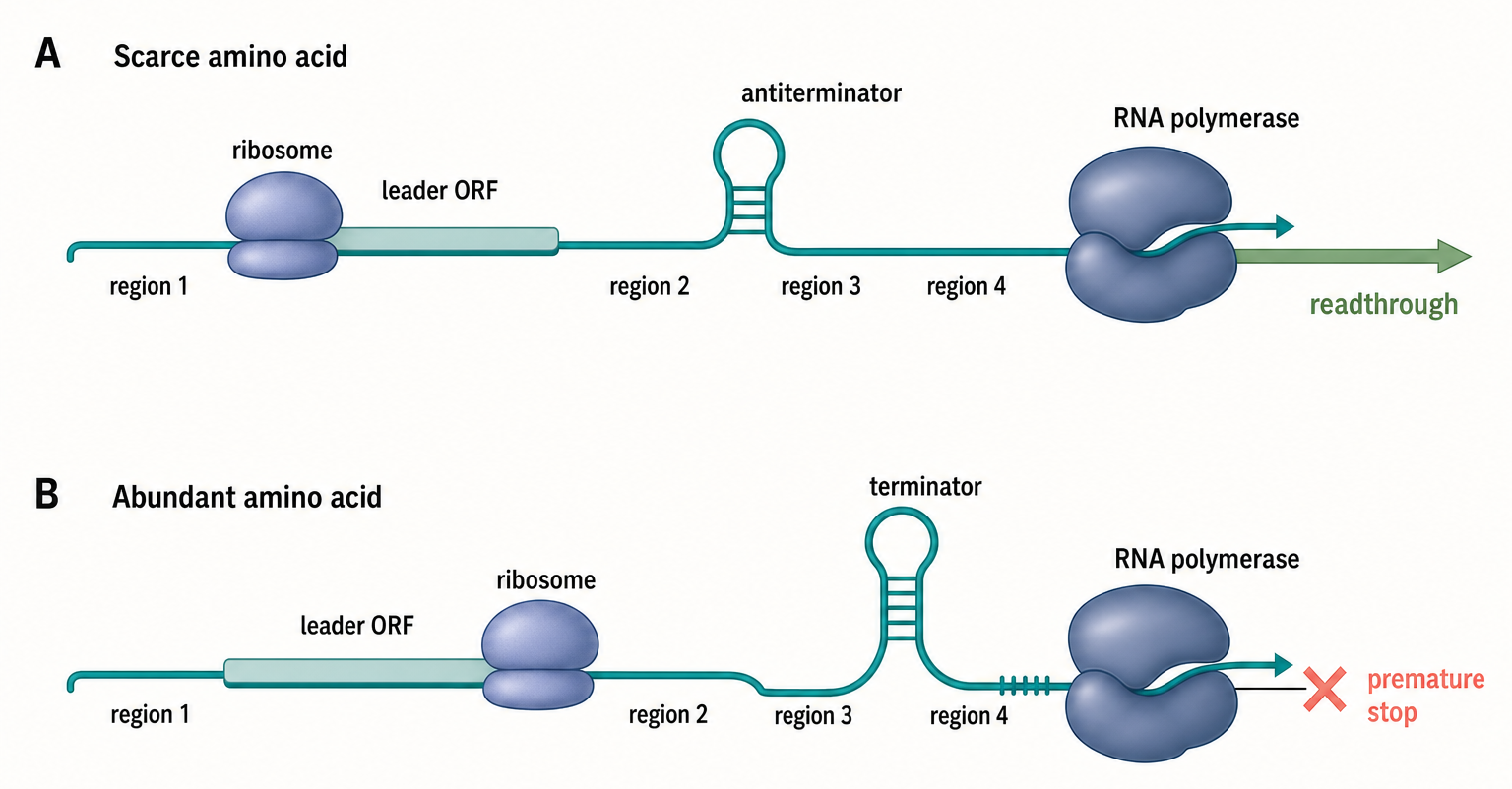
Figure 78.1. Leader attenuation architecture. A nascent bacterial leader RNA can fold into mutually exclusive antiterminator and terminator structures. Ribosome position, tRNA charging state, ligand binding, or protein binding changes which RNA segments are available to pair before RNA polymerase reaches the termination site.
T-box leaders use a different sensor but a similar expression-platform logic. A T-box leader responds to uncharged tRNA rather than to a translating ribosome. The leader contains a specifier codon that pairs with the anticodon of the cognate tRNA, so the RNA identifies which amino acid charging state should be monitored. If the uncharged tRNA acceptor end interacts with the T-box antiterminator, the antiterminator is stabilized and transcription reads through into downstream aminoacyl-tRNA synthetase, transporter, or biosynthetic genes. If tRNA is charged, the aminoacyl group blocks the acceptor-end interaction needed for antitermination, and the terminator forms. This system teaches an important principle: a leader RNA can read a chemical state indirectly through the geometry of a macromolecular ligand.
Not all attenuation is transcriptional. Some leader elements regulate translation by forming structures that hide the ribosome binding site. Others alter RNA stability by exposing or hiding endonuclease sites. A leader can also generate a small RNA after attenuation. Melior et al. (2019) showed that a tryptophan leader attenuation product can function in trans as a small RNA in addition to reflecting attenuation logic at its own locus. That example is useful because it warns against treating leader products as discarded fragments. A prematurely terminated leader transcript may be degraded, recycled, or repurposed as a regulatory RNA depending on sequence, structure, and protein partners.
The evidence for leader attenuation is strongest when several observations line up. A terminator or antiterminator should be genetically required for regulation. Mutations that disrupt the predicted stem should alter expression, and compensatory mutations that restore base pairing should restore regulation. The regulatory input should change the abundance of readthrough transcripts, not only reporter activity. Transcriptional fusion assays can distinguish termination from translation control, while northern blotting, reverse transcription PCR, or sequencing can map the terminated and readthrough RNAs. In vitro transcription can show whether RNA polymerase terminates at the predicted site, but in vitro conditions may miss ribosome coupling, tRNA charging, RNA chaperones, and cellular concentrations of metabolites.
The local reference file for this chapter does not contain the classic primary papers for the trp operon, T-box systems, pyrBI attenuation, or other historically important bacterial leaders. The mechanisms are included here because they are central to the chapter’s scope, but final citation curation should add verified landmark and review sources for those systems.
78.2. RNA thermometers and temperature-responsive structures
An RNA thermometer is a cis-regulatory RNA whose structure changes gene expression in response to temperature. The most common bacterial example is a 5′ untranslated region that forms a helix over the Shine-Dalgarno sequence at a lower temperature. At higher temperature, base pairs near the ribosome binding site become less stable or breathe more often, allowing the 30S ribosomal subunit to bind and initiate translation. The regulatory molecule is not a protein sensor but the RNA’s own temperature-sensitive folding landscape.
Temperature affects RNA in several ways. It weakens base pairing, increases conformational sampling, changes Mg2+-dependent tertiary interactions, alters protein binding, and changes the rates of transcription, translation, and RNA decay. A thermometer must be tuned so that a biologically relevant temperature shift changes the probability of ribosome access or terminator formation. If the helix is too stable, the RNA remains repressed even at inducing temperature. If the helix is too weak, the RNA leaks translation at noninducing temperature. Many thermometers therefore use imperfect base pairs, bulges, short helices, or local structural defects near the Shine-Dalgarno sequence.
The best-known biological roles for RNA thermometers occur in heat-shock responses, virulence regulation, cold adaptation, and environmental transitions. A pathogen entering a warm host can use temperature as a cue to express virulence factors. A bacterium experiencing heat stress can increase translation of chaperones or membrane proteins. However, the presence of a temperature-sensitive hairpin is not by itself evidence for an RNA thermometer. The relevant question is whether the endogenous RNA structure changes in the biologically relevant temperature range and whether that structural change causes expression output.
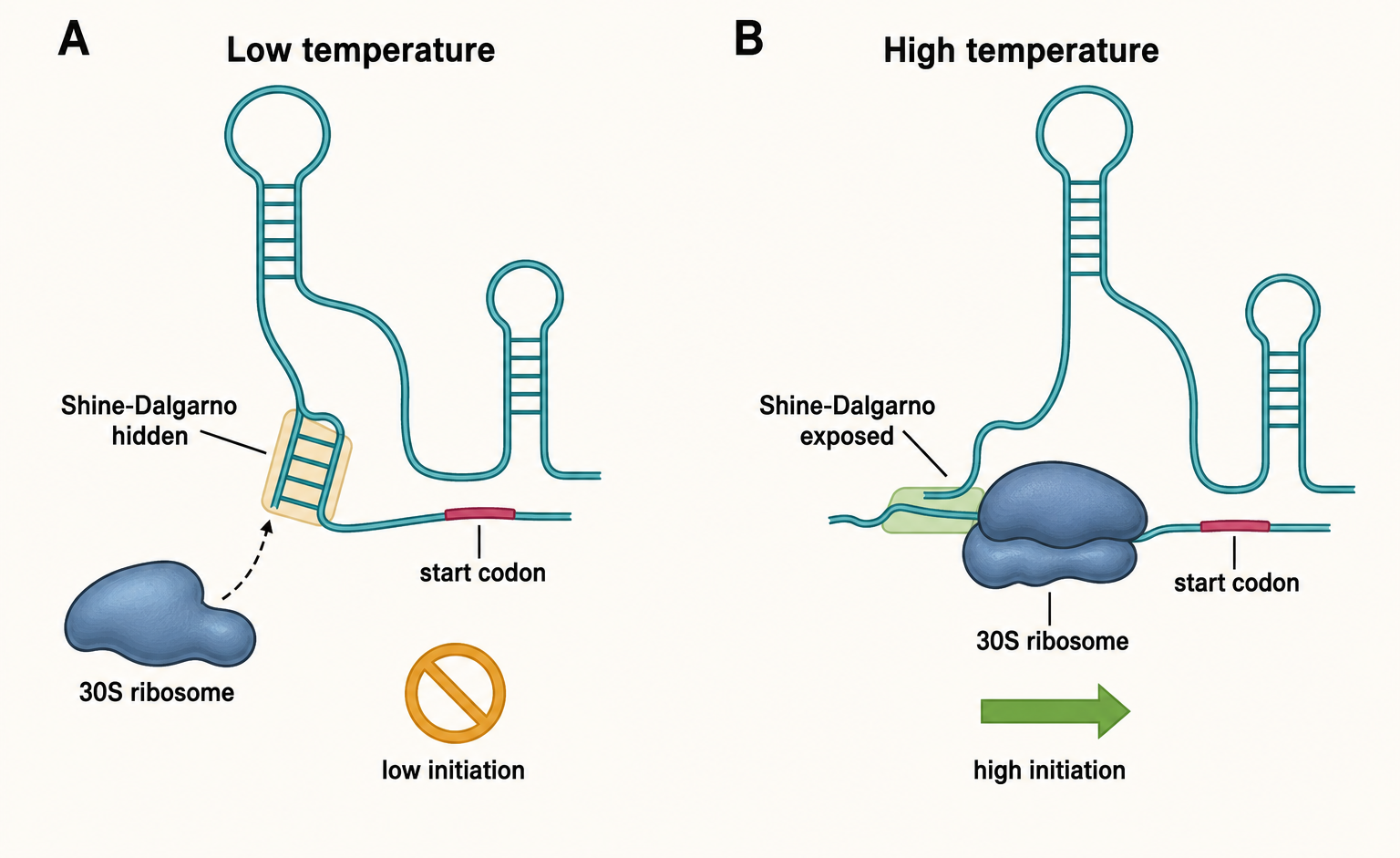
Figure 78.2. RNA thermometer ribosome binding site exposure. A bacterial RNA thermometer can repress translation at lower temperature by sequestering the Shine-Dalgarno sequence in a helix. At higher temperature, local base-pair breathing or partial melting exposes the ribosome binding site and increases initiation.
Righetti et al. (2016) provide an important broader lesson from an in vitro RNA structurome analysis of Yersinia pseudotuberculosis. Instead of testing one candidate thermometer at a time, the study examined temperature-responsive RNA structures on a transcriptome scale. Such work shows that many RNAs can be temperature sensitive, but it also makes interpretation harder. Some structural changes may be regulatory; others may be physical consequences without measurable expression effects. Transcriptome-wide structure probing is therefore a discovery tool, not a final proof of thermometer function.
Guanzon et al. (2025) show that temperature-responsive regulation can involve more than one RNA. In their study, the small RNA CyaR and the mRNA ompX act as two temperature-responsive RNAs in concert. The example expands the idea of a thermometer beyond a single isolated 5′ UTR hairpin. A temperature-responsive mRNA can be embedded in a network with a small RNA, RNA-binding protein, or decay pathway. The cis element still matters, but the output emerges from RNA-RNA interaction, RNA structure, and cellular regulatory context.
Experimental support for an RNA thermometer usually includes temperature-dependent reporter expression, mutational disruption and rescue of the thermometer helix, toeprinting or ribosome binding assays that show temperature-dependent ribosome access, and structure probing at relevant temperatures. A strong experiment changes base pairing while preserving the encoded protein sequence when possible. This matters because mutations in a 5′ leader can alter promoter strength, mRNA stability, transcription start site use, or RNA-binding protein motifs. A reporter fusion can reveal regulatory potential, but the endogenous locus is needed to show physiological function.
Boundary cases are common. Some thermosensitive RNA structures regulate transcription rather than translation. Some apparent thermometers are actually protein-controlled systems whose RNA structure changes secondarily. Some RNAs respond to temperature only outside the organism’s normal range. Some engineered thermometers work in one host and fail in another because the ribosome binding site, RNA degradation rate, growth temperature, and translation machinery differ. The term RNA thermometer should therefore be reserved for cases where temperature-dependent RNA structure is causally linked to expression control.
78.3. Protein- and metabolite-responsive cis elements
Protein- and metabolite-responsive cis elements use the same physical language as attenuation and thermometers: alternative structures compete, and the winning structure changes expression. The difference is the input. A metabolite-responsive element binds a small molecule, ion, coenzyme, nucleotide derivative, amino acid, or related cellular chemical state. A protein-responsive element binds an RNA-binding protein, enzyme, ribosomal protein, regulatory factor, or protein complex. In both cases, binding energy is converted into a change in RNA folding, accessibility, processing, termination, or translation.
Riboswitches are the most familiar metabolite-responsive cis elements. A canonical riboswitch contains an aptamer domain that recognizes a ligand and an expression platform that changes gene expression. Ligand binding can stabilize a terminator, stabilize an antiterminator, hide a ribosome binding site, expose a ribosome binding site, alter splicing or processing in some systems, or change RNA stability. Chapter 79 treats riboswitch classes and ligand recognition in detail. Here the key point is architectural: a sensory domain is useful only if its conformational state is coupled to an expression platform at the right time and concentration.
Metabolite-responsive leader RNAs often operate during transcription, so timing is part of specificity. A ligand may need to bind before RNA polymerase transcribes the terminator. If ligand binding is slow relative to transcription, the RNA may fail to regulate even if the aptamer binds tightly at equilibrium. Conversely, a ligand that binds transiently can have a strong regulatory effect if binding occurs during a short folding window. This kinetic logic explains why in vitro equilibrium affinity is not sufficient to predict in vivo regulatory output. RNA polymerase pausing, transcription speed, ligand concentration, ligand transport, and competing RNA folds all shape the decision.
Protein-responsive cis elements can work by several mechanisms. A regulatory protein can bind a leader RNA and stabilize an antiterminator, preventing premature termination. A protein can bind over a ribosome binding site and repress translation directly. A ribosomal protein can bind its own mRNA leader when excess protein accumulates, coupling ribosome component synthesis to demand. A protein can recruit or block RNases, changing mRNA half-life. A protein can also remodel RNA structure as an RNA chaperone, reducing kinetic traps rather than acting as a simple on-off ligand.
Table 78.1. Inputs, sensors, expression platforms, and outputs. Major cis-regulatory RNA architectures classified by input, sensing feature, output module, and common evidence requirements.
| Regulatory architecture | Input and sensor | Expression platform and output | Key evidence or caveat |
|---|---|---|---|
| Leader peptide attenuation | Amino acid scarcity is sensed through charged tRNA supply and ribosome stalling on a codon-rich leader ORF. | Ribosome position favors either a terminator or antiterminator, causing premature termination or readthrough. | Requires transcription-translation coupling; map terminated and readthrough RNAs and test structural mutants. |
| T-box leader | Uncharged tRNA is sensed through specifier codon-anticodon pairing and acceptor-end interaction. | Uncharged tRNA stabilizes an antiterminator; charged tRNA permits terminator formation. | Senses tRNA charging, not free amino acid directly; control tRNA identity and charging state. |
| Riboswitch-like metabolite sensor | A ligand, ion, cofactor, nucleotide, or amino acid binds a sensory RNA region. | Ligand-stabilized folding changes termination, ribosome binding site access, processing, or stability. | Binding affinity alone is insufficient; show coupling to expression output in the native context. |
| Protein-responsive leader | An RNA-binding protein, ribosomal protein, enzyme, or chaperone binds the leader RNA. | Binding can mask a ribosome binding site, stabilize an antiterminator, recruit or block RNases, or remodel folding. | Crosslinking or binding does not prove regulation; separate transcription, translation, and stability outputs. |
| RNA thermometer | Temperature changes local base-pairing near a ribosome binding site or other regulatory helix. | Lower temperature often occludes the ribosome binding site; higher temperature exposes it and increases initiation. | Thermal structural change must occur in the physiological range and cause endogenous expression output. |
| Stability switch | Ligand, protein, temperature, or translation changes exposure of RNase sites or protective structures. | The switch changes mRNA half-life and can secondarily change protein output. | Measure RNA abundance separately from translation and exclude indirect stress or growth effects. |
The local reference set contains a plant pre-mRNA polyadenylation example in which a downstream cis element and an RNA-binding protein contribute to polyadenylation-site control (Cao Y et al., 2025). That paper is not a bacterial leader RNA study, but it illustrates a general principle: cis elements often act through protein partners, and the boundary between “RNA element” and “protein-dependent regulation” is mechanistic rather than categorical. For Chapter 78, bacterial and archaeal examples require stronger direct references in a later citation pass.
Protein-responsive leader RNAs also require careful interpretation because RNA-binding proteins can have multiple effects. If a protein binds a leader and expression changes, the protein might affect transcription termination, translation initiation, RNA stability, processing, or indirect regulation of another factor. Mutational mapping of the binding site, in vitro binding assays, endogenous expression measurements, and separation of transcriptional from translational reporters help identify the direct output. Crosslinking methods can locate protein-RNA contacts, but crosslinking enrichment alone does not prove that a contact is regulatory.
Metabolite-responsive structures include riboswitches but also broader RNA elements whose ligand responsiveness is less fully understood. Some RNAs respond to ions through folding stability. Some structures bind cofactors or nucleotides weakly and may require protein partners. Some leader regions integrate metabolite availability with translation, such as leader peptide systems that indirectly monitor amino acid charging. A cautious vocabulary helps: “ligand-responsive RNA” should imply a demonstrated effect of ligand on RNA behavior, while “predicted aptamer-like motif” should remain a candidate until binding and regulatory output are shown.
78.4. Translational control through RNA structure
Translational control through RNA structure begins with a physical access problem. In bacterial mRNAs, the ribosome must bind near a Shine-Dalgarno sequence and start codon. If those nucleotides are sequestered in a helix, initiation is reduced. If the helix opens or a competing structure forms, initiation increases. The same principle also applies to other translation-control architectures: internal ribosome entry elements, viral RNA structures, upstream leader structures, and synthetic untranslated regions can tune initiation by altering accessibility, recruitment, scanning, or ribosome positioning.
The causal chain is short but important. First, RNA sequence determines possible base-pairing patterns. Second, transcription, temperature, ligand binding, protein binding, and ribosome movement determine which structures are populated. Third, the populated structure changes how often ribosomes bind or initiate. Fourth, the change in initiation affects protein output and sometimes mRNA stability because translating and untranslated mRNAs are handled differently by decay enzymes. A translational cis element therefore may have both protein-production and RNA-turnover consequences.
RNA thermometers are one example of translational control, but metabolite- and protein-responsive switches can use the same output. A ligand-bound structure may hide the Shine-Dalgarno sequence and turn translation off. In another architecture, ligand binding may prevent formation of an inhibitory helix and turn translation on. A regulatory protein may bind the 5′ UTR and block the ribosome, or it may stabilize a structure that exposes the ribosome binding site. The direction of regulation cannot be inferred from ligand binding alone; the expression platform determines whether binding activates or represses expression.
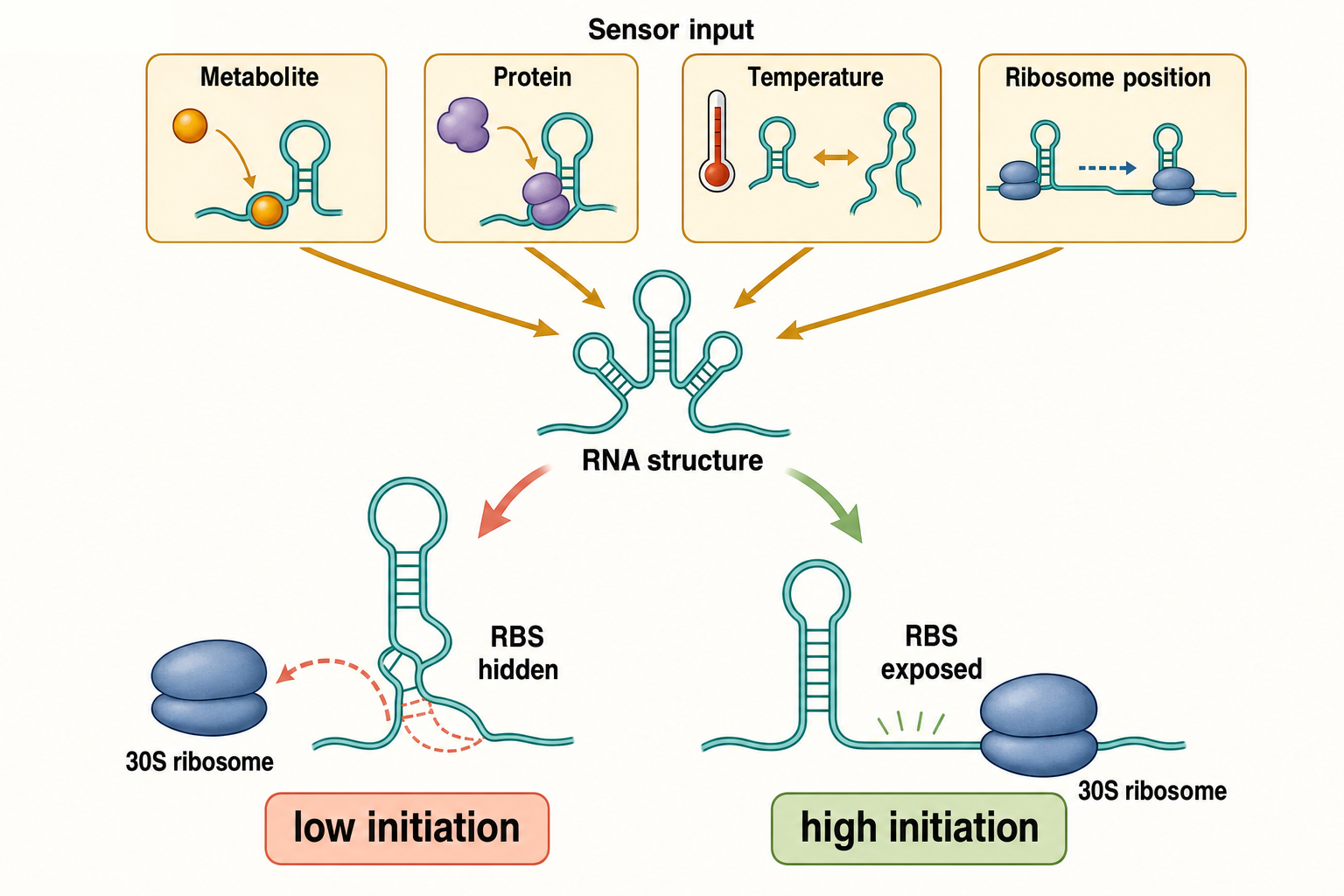
Figure 78.3. Translational occlusion and exposure mechanisms. Different inputs can control the same translational output. A metabolite, protein, temperature shift, or translating ribosome can stabilize structures that hide or expose a ribosome binding site.
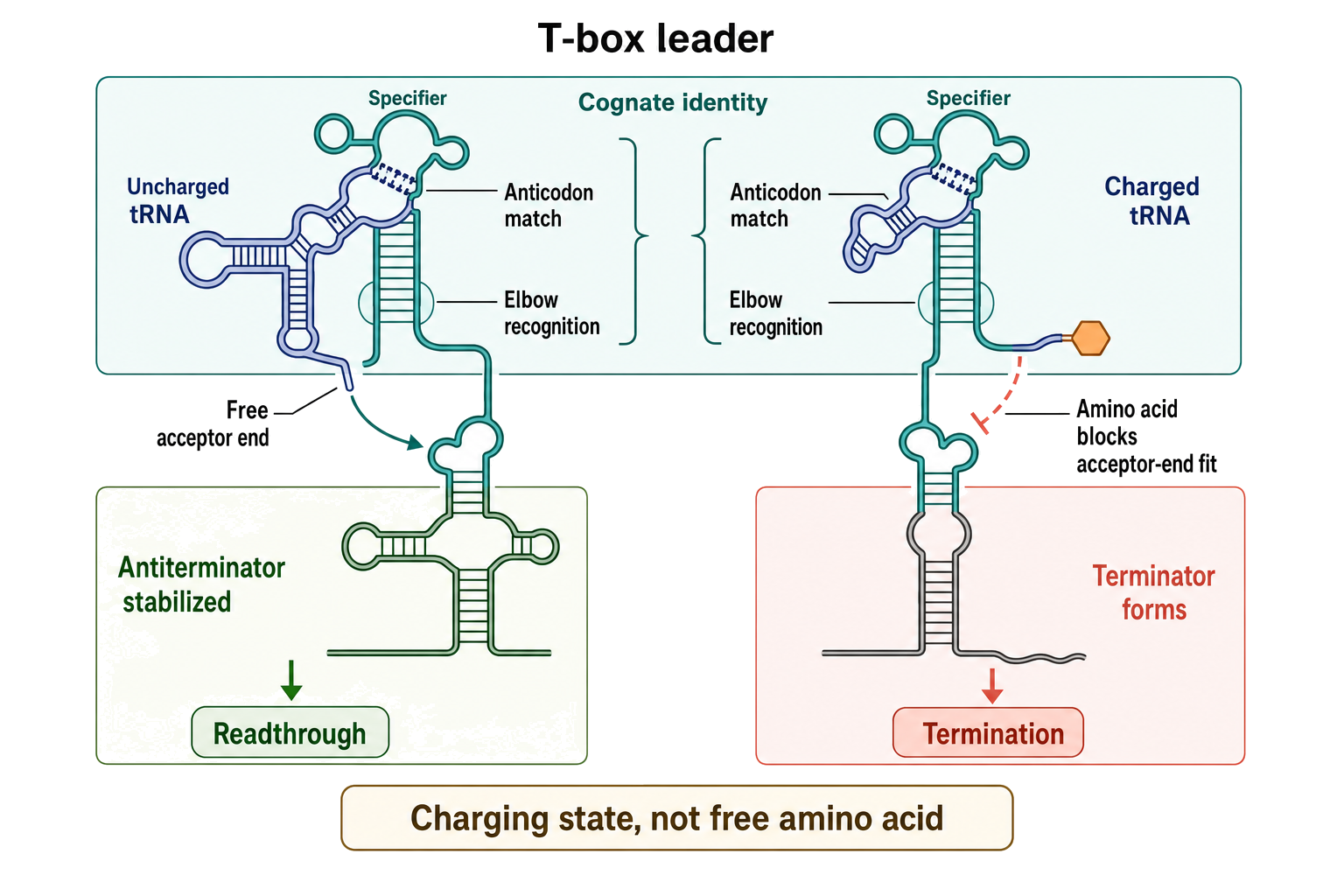
Figure 78.4. T-box leaders directly sense tRNA identity and charging state. Both uncharged and charged cognate tRNAs can identify a T-box leader through anticodon-specifier pairing and other tRNA-shape contacts. Only the free acceptor end of an uncharged tRNA can stabilize the antiterminator interaction; an aminoacyl group on charged tRNA prevents that fit, allowing the competing terminator to form. The leader therefore reads tRNA identity and charging state rather than binding free amino acid directly.
Translational control by RNA structure is not restricted to bacteria. Viral RNAs often use structured leaders, long-range interactions, and conformational switches to balance genome packaging, translation, and replication. Yasin et al. (2024) studied HIV-1 genome structural plasticity in relation to genome packaging and translation, providing a useful example of how one RNA can adopt states that support different life-cycle functions. This viral example is not the same as a bacterial leader thermometer, but it reinforces the general point that RNA structure can coordinate mutually exclusive outputs.
In eukaryotic and therapeutic mRNA design, 5′ UTR and coding-region structures can influence translation efficiency, RNA stability, innate sensing, and manufacturability. Jin et al. (2025) review mRNA vaccine sequence and structure optimization, including the challenge of improving expression without creating unwanted structures or immune-active features. Hedaya et al. (2023) provide an example in which secondary structures that regulate mRNA translation were used to reason about antisense oligonucleotide-mediated modulation. These examples connect cis-regulatory RNA principles to engineered RNA design, while reminding readers that design rules learned in bacteria cannot be transferred wholesale to eukaryotic cells.
Evidence for translational control must separate translation initiation from transcription and RNA abundance. A translational reporter should preserve the leader structure and ribosome binding site context while avoiding promoter differences. Polysome profiling or ribosome profiling can show altered ribosome loading, but these methods must be interpreted with RNA abundance. Toeprinting can detect ribosome initiation complexes at a start codon. Mutational analysis can test whether base pairing over the ribosome binding site is necessary. Compensatory mutations are especially important: if disrupting a helix activates translation and restoring the helix represses translation again, structural control becomes more plausible.
A common misconception is that any stable structure in a 5′ UTR represses translation. Structure location and dynamics matter. A stable hairpin far from the ribosome binding site may have little effect. A moderate helix directly over the Shine-Dalgarno sequence may be strongly regulatory. A structure can even enhance translation by positioning ribosomes, preventing inhibitory long-range pairing, or recruiting a protein. The functional question is not “is the RNA structured?” but “which structure is populated in which condition, and how does that structure affect ribosome behavior?”
78.5. Comparative discovery and synthetic engineering
Comparative discovery starts from the observation that functional RNA structures often conserve base-pairing patterns even when primary sequences diverge. If one species has a G-C pair at a position and another has an A-U pair at the same structural position, the sequence changed but pairing was preserved. Such covariation is strong evidence for conserved RNA secondary structure. Comparative methods use multiple genome alignments, conserved upstream gene context, motif searches, covariance models, and gene-neighborhood information to identify candidate cis-regulatory RNAs.
Leader RNAs are well suited to comparative discovery because they often sit upstream of genes in related metabolic pathways. A conserved structured motif upstream of thiamine biosynthesis genes suggests a possible thiamine-related regulator; a conserved leader upstream of aminoacyl-tRNA synthetase genes suggests a possible tRNA-sensing element; a conserved motif upstream of heat-shock genes suggests possible temperature or stress regulation. The gene context does not prove the input, but it gives a biologically meaningful hypothesis. Covariance then asks whether the RNA structure is maintained across evolution.
Comparative discovery has limits. Some leader elements are short and lineage-specific. Some bacterial genomes are too diverged or too closely related for informative covariance. Horizontal gene transfer can move operons and leaders across species. A conserved sequence may encode a protein-binding site rather than an RNA structure. A conserved RNA structure may regulate RNA stability rather than transcription or translation. Conversely, an RNA element can be functional even when deep conservation is weak, especially if it evolved recently or operates in a narrow ecological niche.
Table 78.2. Evidence ladder for cis-regulatory RNA discovery. Evidence classes for cis-regulatory RNA claims, from prediction and comparative covariance through endogenous expression mapping and compensatory rescue.
| Evidence class | What it supports | Main limitation or next test |
|---|---|---|
| Sequence or structure prediction | Nominates candidate hairpins, terminators, ribosome binding site occlusion, or aptamer-like motifs. | Hypothesis only; cellular folding, timing, and output remain untested. |
| Conserved gene context | Links a motif to a pathway such as amino acid metabolism, heat shock, virulence, or transport. | Context suggests the likely input but does not prove sensing or regulation. |
| Comparative covariance | Supports conserved RNA secondary structure through paired sequence changes across homologs. | Weak for short, young, poorly sampled, or horizontally transferred elements. |
| Structure probing | Maps RNA flexibility or pairing changes with temperature, ligand, genotype, protein, or stress. | Ensemble signals can reflect abundance, protein binding, or reverse-transcription bias. |
| Reporter assay | Shows that a leader can alter transcriptional or translational output in a test construct. | Plasmid and fusion contexts may not reproduce the endogenous locus. |
| Endogenous transcript mapping | Locates terminated leaders, readthrough RNAs, transcript starts, and native isoforms. | Correlation alone is not causal; pair with input perturbation and structural mutants. |
| Toeprinting or ribosome profiling | Tests ribosome binding site accessibility, initiation complexes, or ribosome occupancy. | Normalize to RNA abundance and distinguish initiation control from stability effects. |
| Mutational disruption | Tests whether a predicted stem, loop, binding site, or leader segment is necessary. | Single mutations can alter protein-binding motifs, coding sequence, or RNA decay. |
| Compensatory rescue | Restores base pairing and regulatory output after paired mutations. | Rescue should preserve coding potential, ligand or protein contacts, and local context. |
| Physiological validation | Connects the switch to native nutrient, temperature, virulence, stress, or engineering behavior. | Context-dependent; monitor burden, escape mutations, and indirect fitness effects. |
Synthetic engineering uses the same parts in reverse. A designer can choose a sensor domain, an expression platform, and a coupling strategy. For a transcriptional device, the output may be a terminator or antiterminator. For a translational device, the output may be ribosome binding site exposure. For a stability device, the output may be RNase accessibility. For a diagnostic or biosensor device, the output may be fluorescence, enzymatic activity, sequencing readout, or growth. The design goal is to convert a molecular input into a predictable expression output.
However, natural cis-regulatory RNAs are not plug-and-play parts in a simple electronic circuit sense. Their performance depends on host temperature, ion conditions, transcription rate, RNA polymerase pausing, ribosome traffic, RNA chaperones, RNases, growth rate, metabolic state, copy number, and neighboring sequence. A riboswitch aptamer that binds its ligand in isolation may fail when inserted upstream of a different gene because the expression platform misfolds. A thermometer that works in Escherichia coli may not work in a pathogen with different growth temperature or ribosome binding rules. A synthetic leader can impose a fitness cost that selects escape mutations.
Engineering also raises measurement caveats. A high-copy plasmid reporter can saturate a regulatory protein, alter ligand availability, or change RNA degradation. A fluorescent protein readout has maturation delay, so it may obscure fast transcriptional decisions. Growth selection can enrich cells with mutations in the device rather than cells with the intended regulatory state. RNA structure predictions can guide design, but predicted minimum-free-energy structures do not capture co-transcriptional folding, kinetic traps, cellular proteins, or rare states that dominate regulation.
The most reliable engineering strategy is iterative. First define the biological input and output precisely. Then design or choose a sensor and expression platform. Test the device in a minimal reporter context. Map the RNA structure and regulatory output. Mutate the predicted structural elements and rescue base pairing where possible. Move the device into the intended genomic or transcript context. Measure output across physiologically relevant conditions. Finally, check for stability, escape mutations, burden, and unintended effects on neighboring genes.
Box 78.1. Synthetic design checklist for leader RNA devices
A checklist for engineering cis-regulatory RNA switches: define input, define output, choose sensor, choose expression platform, model folding, test reporter behavior, map structure, validate in intended context, measure burden, and monitor escape mutations.
Comparative discovery and synthetic engineering reinforce each other. Comparative genomics finds natural solutions that reveal design principles, such as mutually exclusive hairpins, ligand-stabilized structures, and ribosome binding site sequestration. Synthetic libraries test which features are sufficient, tunable, or portable. Together they show that cis-regulatory RNA elements are best understood as dynamic sequence-structure-function systems, not as static motifs.
Experimental Foundations and Evidence
The core experimental problem is to prove that an RNA element causes a regulatory output in its native context. Structure prediction is useful for generating hypotheses, but prediction alone is weak evidence. A hairpin drawn from a minimum-free-energy model may not form in the cell, may form only after the regulatory decision has passed, or may be one of several populated conformations. Experimental evidence should therefore connect structure, input, output, and mechanism.
Reporter assays are often the first test. A transcriptional reporter places the leader upstream of a reporter gene in a way that measures readthrough transcription. A translational reporter preserves the leader and translation initiation region so that reporter protein output reflects ribosome access. The distinction matters. If a leader reduces a transcriptional reporter, the element may be terminating transcription. If the leader changes a translational reporter without changing mRNA abundance, translation initiation is more likely. Many systems need both reporters plus direct RNA measurements.
Mutational analysis is the most informative when it tests structure rather than only sequence. A single mutation that disrupts a stem may change expression, but that could reflect loss of a protein-binding motif or altered RNA stability. A compensatory mutation on the opposite side of the stem that restores base pairing and restores regulation is much stronger. Multiple compensatory pairs, especially in conserved stems, support a structural mechanism. Mutations should also avoid changing coding sequences unless the coding change is part of the test.
Biochemical structure probing maps RNA flexibility and base-pairing tendencies. Dimethyl sulfate modifies accessible adenines and cytosines; SHAPE reagents report local nucleotide flexibility; enzymatic probes can prefer single-stranded or double-stranded regions; mutational profiling reads out modification-induced errors by sequencing. Cao et al. (2024) review how RNA structures are identified and connected to RNA function. These methods provide structural evidence, but probing signals are ensemble averages and can be influenced by protein binding, RNA abundance, reverse transcription bias, and cell state.
Transcription-focused assays map the attenuation output directly. In vitro transcription can measure termination efficiency under defined conditions. Native elongation transcript sequencing and related approaches can locate polymerase pause and termination positions. Northern blotting or long-read RNA sequencing can distinguish terminated leader transcripts from full-length readthrough transcripts. For ribosome-dependent attenuation, in vitro transcription alone is incomplete unless translation or ribosome-mimicking components are included. For T-box systems, tRNA charging state and tRNA identity must be controlled.
Translation-focused assays include toeprinting, ribosome profiling, polysome analysis, and start-codon mutagenesis. Toeprinting detects a reverse transcription stop caused by a ribosome initiation complex on the mRNA. Ribosome profiling can show changes in ribosome occupancy, but it must be interpreted with RNA abundance and transcript isoforms. A regulatory leader that changes mRNA stability can indirectly change ribosome profiling signal. Measuring both RNA level and ribosome density helps separate initiation control from RNA abundance.
Biological Contexts Across Bacteria, Archaea, Viruses, and Engineered RNAs
Bacteria provide the richest set of cis-regulatory leader examples because transcription and translation are coupled, operons are common, and leader regions often sit directly upstream of metabolic genes. Amino acid biosynthesis operons use leader peptide attenuation, T-box leaders, or riboswitches to match gene expression to nutrient state. Heat-shock and virulence genes use thermosensitive structures to respond to temperature shifts. Ribosomal protein genes use autoregulatory protein binding to balance ribosome assembly.
Archaea share some bacterial-like RNA regulatory logic but differ in transcription machinery, translation initiation features, RNA-binding proteins, and operon organization. Archaeal leaders can contain structured elements and regulatory motifs, but the specific mechanisms should not be assumed from bacterial examples without direct evidence. Comparative genomics is especially valuable in archaeal systems because many species are experimentally less tractable, but comparative prediction should be followed by biochemical and genetic tests when possible.
Viruses and mobile elements use structured RNA to coordinate mutually exclusive functions such as translation, replication, packaging, and immune evasion. HIV-1 RNA structural plasticity, discussed by Yasin et al. (2024), illustrates how one RNA genome can balance translation and packaging through conformational states. Viral examples show that cis-regulatory RNA principles are not limited to bacterial operons, but viral regulation often involves different proteins, compartments, and life-cycle constraints.
Engineered RNAs use cis-regulatory modules for biosensing, conditional expression, therapeutic control, and synthetic circuits. The same caution applies across applications: a device must be validated in the cell type, growth condition, delivery format, and transcript context in which it will be used. A leader that behaves predictably in a plasmid reporter may behave differently at a chromosomal locus or in a therapeutic RNA. Synthetic RNA design is therefore a measurement problem as much as a sequence-design problem.
Technology, Computational, Clinical, and Engineering Links
Computational prediction helps identify possible cis-regulatory RNA elements, but the model output must be read as a hypothesis. Minimum-free-energy folding predicts a low-energy structure for a sequence under simplified conditions. Partition-function methods estimate ensembles and base-pairing probabilities. Comparative covariance models identify conserved structural features. Machine-learning models can classify candidate motifs or predict regulatory output from sequence libraries. None of these methods by itself proves that a structure forms at the right time in the cell.
High-throughput RNA structure mapping has changed the scale of discovery. Transcriptome-wide probing can identify regions whose structure changes with temperature, ligand, genotype, or stress. Righetti et al. (2016) is a relevant example for temperature-responsive bacterial RNAs. Such datasets are powerful because they reveal candidate elements that would be missed by one-gene studies. They are also artifact-prone because RNA abundance, reverse transcription, protein binding, and cell lysis can change signals. Candidate elements from global maps need targeted validation.
Synthetic biology uses leader RNAs as compact control modules. Transcriptional attenuators can reduce metabolic burden by shutting off pathway genes when products accumulate. Translational switches can restrict protein production to a temperature, ligand, or protein state. RNA thermometers can create temperature-gated expression. Biosensors can connect metabolite binding to a fluorescent or growth output. The design challenge is not just making a switch but making a switch with the desired dynamic range, leakiness, response time, stability, and host compatibility.
Clinical links are indirect but important. Pathogen thermometers and attenuation systems can control virulence gene expression and may affect host adaptation. Antibiotic strategies can in principle target essential RNA regulatory elements, especially riboswitches and translation-control structures, although specificity and resistance remain difficult. Therapeutic mRNA design uses UTR and coding-region structure to tune expression, stability, and immune sensing. Antisense oligonucleotides can alter RNA structures that regulate translation, as illustrated by Hedaya et al. (2023), but off-target structure effects and cell-type-specific delivery complicate interpretation.
Box 78.2. Common overinterpretations in cis-regulatory RNA studies
Common interpretation errors include treating predicted structures as proven regulators, ligand binding as expression control, reporter output as endogenous mechanism, temperature sensitivity as thermometer function, and crosslinking as regulatory causality.
Recent Consensus
The current consensus is that cis-regulatory RNA elements are widespread, mechanistically diverse, and best interpreted through coupled folding and expression. Leader RNAs are not passive spacers between promoters and coding sequences. They can encode sensors, timers, terminators, antiterminators, ribosome access gates, protein-binding sites, and decay-control features. Bacterial systems provide many of the clearest examples because regulatory decisions can occur while transcription and translation are physically coupled.
There is also consensus that RNA structure-function claims require multiple evidence classes. Comparative conservation supports structure. Biochemical probing supports folding. Reporter assays support regulatory potential. Endogenous transcript mapping supports native output. Mutational disruption and compensatory rescue support causality. Biochemical ligand or protein binding supports sensing. Strong claims usually combine several of these observations.
For RNA thermometers, recent work supports a broader view than one hairpin melting over one ribosome binding site. Many RNAs are temperature responsive, and some temperature-dependent outputs involve small RNAs, RNA-binding proteins, RNA decay, or transcriptome-scale remodeling. The narrower term RNA thermometer remains most appropriate when a temperature-dependent RNA structure directly controls expression.
For engineering, the consensus is pragmatic. Natural RNA modules provide useful parts and design principles, but portability is limited. Successful synthetic devices must be tested in their intended context, and design models must account for co-transcriptional folding, host factors, kinetics, and evolutionary stability.
Open Questions, Controversies, Deprecated Models, and Common Misconceptions
Open questions:
- Which temperature-responsive or ligand-responsive structures discovered in global surveys alter biological output at endogenous concentrations and physiological timescales? RNA molecules are physical polymers, so many structures will change with temperature or ligand conditions even when they are not dedicated regulatory elements.
- How often do leader transcripts become functional molecules after attenuation? The attenuation-derived rnTrpL small RNA described by Melior et al. (2019) suggests that some leader products can act beyond their original cis context. Whether this is rare, common in particular bacterial groups, or underrecognized remains an area for further curation and experimentation.
- Prediction? RNA folding algorithms and comparative models are powerful, but they still struggle with co-transcriptional kinetics, pseudoknots, protein-assisted folding, ligand-dependent rare states, and cellular crowding. Predicting regulatory output requires more than predicting a static structure.
Common misconceptions:
- “A predicted hairpin upstream of a gene is a regulatory RNA.” A predicted hairpin is a candidate. Regulation requires evidence that the structure forms and changes expression.
- “Attenuation always uses a leader peptide.” Leader peptide attenuation is important, but attenuation can also be controlled by tRNA, metabolites, proteins, RNA polymerase pausing, and other RNA structures.
- “RNA thermometers simply melt at high temperature.” Many thermometers involve partial unfolding, altered breathing, protein or small RNA interactions, and changes in ribosome access rather than complete melting.
- “Ligand binding tells the direction of regulation.” Ligand binding can activate or repress expression depending on the expression platform.
- “Engineered RNA switches are modular in any host.” RNA devices are context-dependent; neighboring sequence, transcription, translation, decay, and host physiology often determine performance.