Chapter 40. Aminoacyl-tRNA Synthetases: Catalysis, Identity, Editing, Evolution, and Engineering
Scope Note
This chapter owns the comparative enzymology of aminoacyl-tRNA synthetases (aaRSs): amino-acid activation, transfer to tRNA, substrate discrimination, editing, exceptional charging pathways, evolutionary diversification, quantitative assays, disease mechanisms, inhibitors, and engineered orthogonal pairs. Chapter 39 owns tRNA transcription, maturation, identity-element context, and quality control before and around charging; 66 owns codon interpretation, tRNA supply, wobble, and ribosomal decoding after charging. This chapter explains how an aaRS physically connects those layers and why the accuracy, regulation, and engineerability of that connection cannot be reduced to an anticodon lookup table.
Executive Summary
Aminoacyl-tRNA synthetases create aminoacyl-tRNAs, the adaptors that assign amino acids to codons during translation. In the canonical two-step reaction, an aaRS uses ATP to activate an amino acid as an aminoacyl-adenylate and then transfers the aminoacyl group to the terminal adenosine of a tRNA. Pyrophosphate hydrolysis helps pull activation forward, but ATP consumption alone does not prove that a tRNA was correctly charged. The enzyme must select the intended amino acid, recognize the appropriate tRNA population, carry out transfer, reject or hydrolyze errors, and release a product that can enter translation.
The aaRS family is divided into two ancient structural classes. Class I enzymes contain a Rossmann-like catalytic fold with signature HIGH and KMSKS regions and commonly approach the tRNA acceptor stem from the minor-groove side. Class II enzymes use an antiparallel beta-sheet catalytic core with three conserved motifs and commonly approach from the major-groove side. These are productive comparative rules, not universal geometric laws. Each class contains distinctive oligomeric states, editing insertions, anticodon-binding domains, accessory domains, and exceptions. Initial acyl transfer may favor the 2’- or 3’-hydroxyl of A76 depending on enzyme class and family, followed in some cases by transesterification before elongation-factor binding.
Specificity is distributed across two substrates. Amino-acid selection depends on active-site complementarity, induced fit, water exclusion, and sometimes editing. tRNA selection depends on identity elements in the acceptor stem, discriminator base, anticodon, variable arm, tertiary structure, and modifications, together with antideterminants that suppress wrong recognition. The G3:U70 pair of many tRNA^Ala molecules is a classic identity element: moving this acceptor-stem feature can redirect alanine identity without changing an anticodon. Recognition therefore operates as a combinatorial energetic network rather than a single positive label.
Editing provides a second discrimination layer where binding chemistry alone cannot separate close amino-acid analogues. Pre-transfer editing destroys a noncognate aminoacyl-adenylate before tRNA acylation; post-transfer editing hydrolyzes a misacylated tRNA, often in a spatially separate domain reached by translocation of the tRNA 3’ end. Free-standing trans-editing proteins correct errors outside the synthetase that produced them. Editing is selective rather than universal: some synthetases achieve sufficient accuracy by initial selection, some rely strongly on editing, and some cellular contexts tolerate or regulate limited mistranslation. Editing defects can cause proteotoxicity and neurodegeneration, but the phenotypic threshold depends on which codons, proteins, tissues, stresses, and compensatory quality-control systems are affected.
Not every amino acid is attached by a direct one-enzyme route. Many bacteria and archaea first misacylate a noncognate tRNA with glutamate or aspartate and then convert the tRNA-bound side chain to glutamine or asparagine through amidotransferases. Selenocysteine synthesis is tRNA dependent and differs between bacterial and archaeal/eukaryotic systems. Pyrrolysyl-tRNA synthetase supplies a naturally evolved entry point for code expansion. These pathways show that an aminoacyl-tRNA can be both a translation substrate and a metabolic intermediate; accuracy may be maintained by channeling and by exclusion of intermediates from elongation factors rather than by direct charging alone.
aaRS repertoires have been remodeled by duplication, domain accretion, horizontal transfer, endosymbiosis, organellar import, dual targeting, and lineage-specific loss. Human cells encode separate cytosolic and mitochondrial systems for many amino-acid identities, but the correspondence is not always a simple duplicated pair. Eukaryotic cytosolic aaRSs can reside in a multisynthetase complex and can acquire regulatory, signaling, extracellular, or immune functions. Disease variants therefore require mechanism-specific interpretation: reduced charging, faulty editing, impaired localization or complex assembly, toxic neomorphic interactions, and altered signaling are distinct causal models.
Engineering reuses the same specificity logic. An orthogonal aaRS-tRNA pair must minimize charging of host tRNAs by the engineered enzyme and charging of the engineered tRNA by host enzymes, while still supporting processing, localization, elongation-factor binding, decoding, and acceptable fidelity. Positive selection for desired incorporation is insufficient unless accompanied by counterselection and proteome-level tests for unwanted amino acids, codons, and tRNAs. Recoded genomes can free codons and reduce competing decoding, and synthetic-amino-acid dependence can strengthen biocontainment, but orthogonality and containment are quantitative phenotypes that can erode through mutation, substrate substitution, environmental rescue, or horizontal transfer.
Concept Inventory
- Aminoacylation or tRNA charging: covalent attachment of an amino acid to the 3’ terminal adenosine of tRNA.
- Aminoacyl-adenylate: enzyme-bound activated intermediate formed from amino acid and ATP, with release of pyrophosphate.
- Aminoacyl-tRNA: tRNA carrying an ester-linked amino acid at A76; it is a translation substrate and, in indirect pathways, can also be a metabolic intermediate.
- Class I and class II aaRSs: two ancient catalytic superfamilies defined by mutually exclusive core architectures and sequence motifs, not by amino-acid chemistry alone.
- tRNA identity element: a nucleotide, base pair, modification, or structural feature that contributes positively to recognition and charging by a cognate synthetase.
- Antideterminant: a tRNA feature that disfavors recognition by a noncognate synthetase.
- Editing: hydrolysis of an incorrect activated amino acid or misacylated tRNA before the error reaches translation.
- Orthogonal pair: engineered aaRS and tRNA designed to interact with each other but minimally with the host charging network.
What to Know Before Reading This Chapter
A mature tRNA usually terminates in 5’-CCA-3’. The ribose of A76 supplies 2’- and 3’-hydroxyl groups to which an amino acid can be esterified. The amino acid is later transferred to a growing peptide by the ribosome, while codon selection is driven primarily by the anticodon and its interactions with messenger RNA. This division of labor creates a crucial upstream requirement: the charging system must ensure that the amino acid attached to a tRNA matches the meaning assigned to that tRNA’s codon set. The ribosome generally cannot inspect the side chain and reconstruct whether the synthetase made the correct choice.
The phrase “cognate tRNA” means a tRNA normally assigned to a particular amino acid, whereas “noncognate” denotes a wrong pairing for the context. “Near-cognate” can describe a chemically similar amino acid, a related tRNA, or a near-matching codon, so the substrate class should be stated explicitly. Chapter 39 explains how precursors acquire mature ends, modifications, and cellular location. Chapter 66 explains how charged tRNAs compete in decoding. Here, the tRNA is treated as a structured enzyme substrate whose sequence, shape, modification state, and aminoacylation status must be defined experimentally.
40.1. The two-step aminoacylation reaction and class I and class II enzyme architectures
Activation couples amino-acid chemistry to ATP cleavage
The canonical cycle begins when an aaRS binds an amino acid and ATP and forms an enzyme-bound aminoacyl-adenylate, written aa-AMP, with release of pyrophosphate. The carbonyl carbon of the amino acid is activated in a mixed anhydride, making it susceptible to attack by a ribose hydroxyl. In cells, inorganic pyrophosphatase converts pyrophosphate to phosphate and helps make the overall process strongly favorable. The aaRS then binds or repositions its tRNA, brings A76 into the synthetic active site, transfers the aminoacyl group to the ribose, releases AMP, and eventually releases aminoacyl-tRNA.
The two chemical transformations should not be confused with two obligatory binding orders. Some synthetases can form aa-AMP without tRNA; others use tRNA to organize the active site or accelerate activation. ATP-pyrophosphate exchange reports reversible amino-acid activation but does not establish net tRNA charging. AMP formation can include futile activation and editing cycles. A direct charging assay must show amino acid attached to tRNA or a validated chemical consequence of that attachment.
Two structural classes solve the same reaction differently
Class I aaRSs possess a Rossmann-like catalytic fold and characteristic HIGH and KMSKS sequence regions. They are often monomeric and frequently approach the acceptor stem from its minor-groove side. Class II aaRSs have a catalytic core built around an antiparallel beta sheet with three conserved motifs, are frequently dimeric or multimeric, and often approach from the major-groove side. The classes also differ in the initial ribose hydroxyl that many members acylate: class I enzymes commonly favor the 2’-hydroxyl and class II enzymes commonly favor the 3’-hydroxyl, although family-specific exceptions prevent this from being a classification test by itself.
The division is ancient but not a simple split of ten amino acids into two interchangeable designs. Lysyl-tRNA synthetase provides a striking boundary case because unrelated class I and class II versions occur in nature. Glycyl-tRNA synthetases occur in architecturally distinct forms. Phenylalanyl-tRNA synthetase is an atypical class II heterotetramer, and tyrosyl- and tryptophanyl-tRNA synthetases are class I homodimers in many organisms. Editing modules can be insertions within a catalytic fold, appended domains, separate subunits, or free proteins. Anticodon-binding domains and oligomeric interfaces further diversify how a conserved chemical core engages a large RNA substrate.
Catalysis is a conformational itinerary
Static structures identify contacts, but the reaction requires movement. Amino acid and ATP binding can close active-site loops; the tRNA acceptor end can move between synthetic and editing sites; products must dissociate; and oligomeric subunits may contribute across an interface. A crystal or cryo-electron microscopy structure with an analogue can define a plausible state, yet it cannot by itself assign the rate-limiting step or prove the order of intermediates. Pre-steady-state kinetics, substrate analogues, mutagenesis, and structural ensembles are needed to connect snapshots into a catalytic itinerary.
Figure Figure 40.1 compares the shared two-step chemistry with the two catalytic architectures, and Table Table 40.1 separates reaction observables that are often conflated.
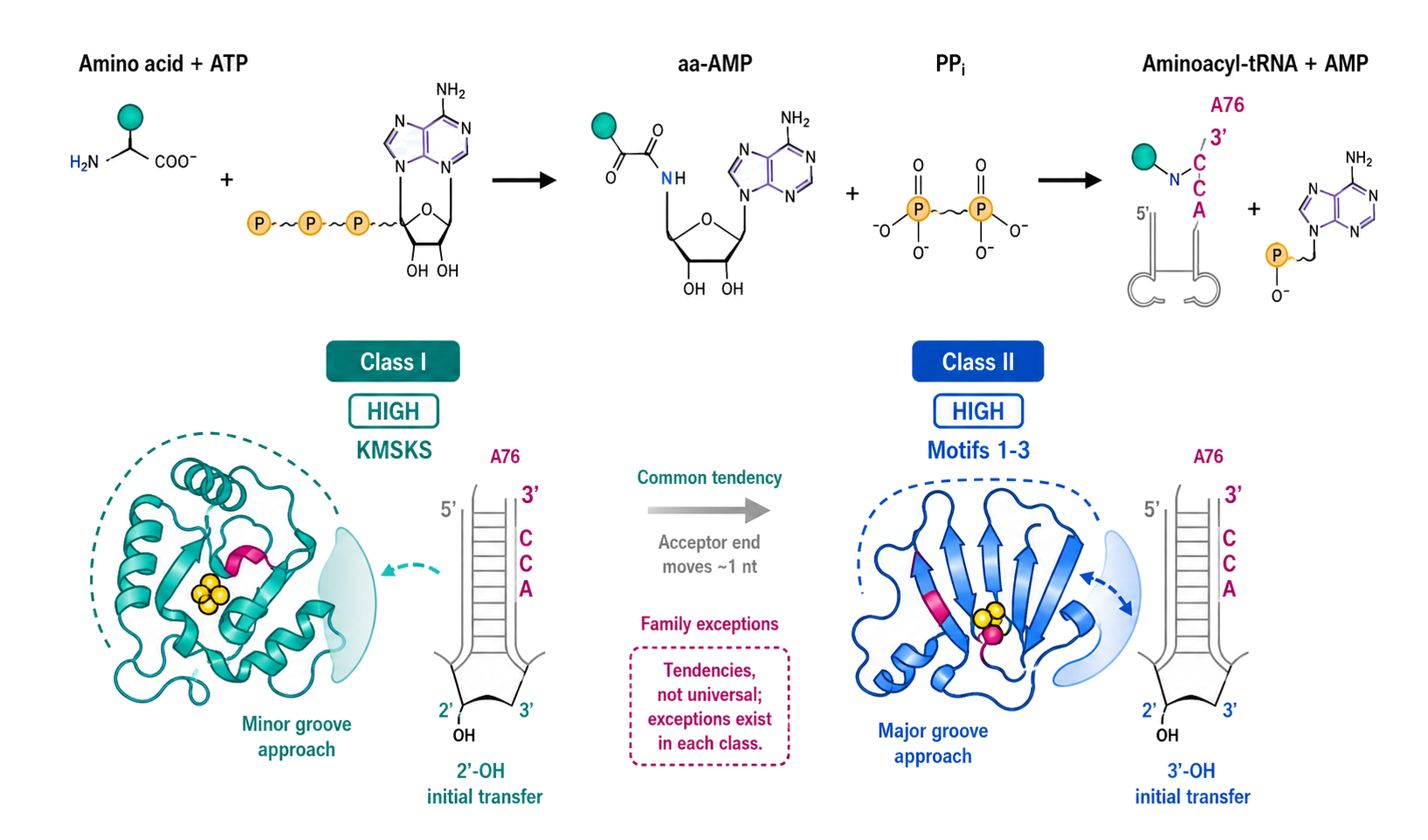
Figure 40.1. One reaction, two ancient catalytic architectures. “Both aaRS classes activate an amino acid and transfer it to tRNA, but they use unrelated catalytic cores and typically approach A76 from different faces. Groove and hydroxyl preferences are comparative tendencies with family-specific exceptions.”
Table 40.1. What common aaRS assays directly establish. Activation, aminoacylation, deacylation, editing, binding, and product-release assays observe different aminoacyl-tRNA-synthetase steps; activity in one assay does not establish accuracy or cellular function.
| Observable | Directly supports | Does not by itself establish | Essential control |
|---|---|---|---|
| ATP-pyrophosphate exchange | Reversible amino-acid activation | Net transfer to tRNA | No-enzyme and substrate-specificity series |
| AMP production | Activation plus productive or futile cycles | Correct aminoacyl-tRNA identity | Direct product assay |
| Radiolabeled amino acid on recovered tRNA | Net amino-acid association with tRNA | Exact tRNA identity in a mixture or protein incorporation | Deacylation and recovery controls |
| Single-turnover product trace | Rate through first observed product | Repeated-turnover rate limitation | Active enzyme and tRNA competence |
| Cellular suppression reporter | Integrated incorporation phenotype | Which amino acid, tRNA, or mechanistic step caused signal | LC-MS product identity and no-substrate control |
40.2. Amino-acid selection, tRNA identity elements, anticodon recognition, and specificity
Specificity is a product of selection at several steps
An aaRS must discriminate among amino acids present at overlapping concentrations and among many tRNAs sharing the same L-shaped scaffold. Amino-acid selectivity arises from steric fit, hydrogen bonding, electrostatics, desolvation, conformational closure, and kinetic partitioning between productive chemistry and rejection. Large chemical differences can often be resolved at initial binding or activation. Small differences are harder: isoleucine and valine differ by one methylene group, and serine, threonine, alanine, glycine, cysteine, and nonproteinogenic metabolites can challenge different enzymes. The experimentally relevant fidelity is therefore not simply a dissociation constant. It is the ratio of productive fluxes through the complete pathway at physiological substrate concentrations, including editing where present.
tRNA identity is distributed across the molecule
Identity elements are features whose mutation changes recognition or charging. They include acceptor-stem base pairs, the discriminator nucleotide at position 73, anticodon bases, the variable arm, tertiary-core features, and modifications. Antideterminants make inappropriate charging less favorable. A nucleotide can contribute through direct contact, by shaping a local helix, or by changing the energetic cost of adopting the bound conformation. Consequently, loss of charging after mutation does not automatically prove direct recognition; a structure-preserving compensatory mutation or a complex structure can distinguish contact from folding effects.
The G3:U70 wobble pair in many tRNA^Ala acceptor stems is the classic demonstration that the anticodon is not the universal identity tag. Introducing the pair into suitable non-alanine tRNA contexts can confer alanine acceptance, revealing an “operational” code near the amino-acid attachment end. Other systems place greater weight on anticodon recognition. Arginyl-, glutaminyl-, and methionyl-tRNA synthetases commonly read anticodon features strongly, whereas alanyl-tRNA synthetase can charge substrates with little or no anticodon contribution. The rule is therefore family- and lineage-specific, not “anticodon important” versus “anticodon irrelevant”.
Identity is a network property in cells
A tRNA mutation is tested against the entire cellular network, not one purified enzyme. It can change processing, modification, localization, stability, elongation-factor binding, or ribosomal decoding in addition to charging. Modifications may be positive determinants, antideterminants, or structural supports. Synthetase abundance and competing tRNA concentrations can change apparent specificity. A tRNA accepted efficiently in vitro may still be poorly charged in vivo because it is incompletely matured or sequestered; conversely, mass action can reveal weak cross-reactions under overexpression.
Identity-swap experiments are strongest when they compare catalytic efficiencies for cognate and noncognate pairs, verify tRNA folding and modification state, and test the predicted amino acid in the final protein. Figure Figure 40.2 presents identity as a distributed recognition surface rather than a barcode. Table Table 40.2 pairs common identity claims with discriminating evidence.
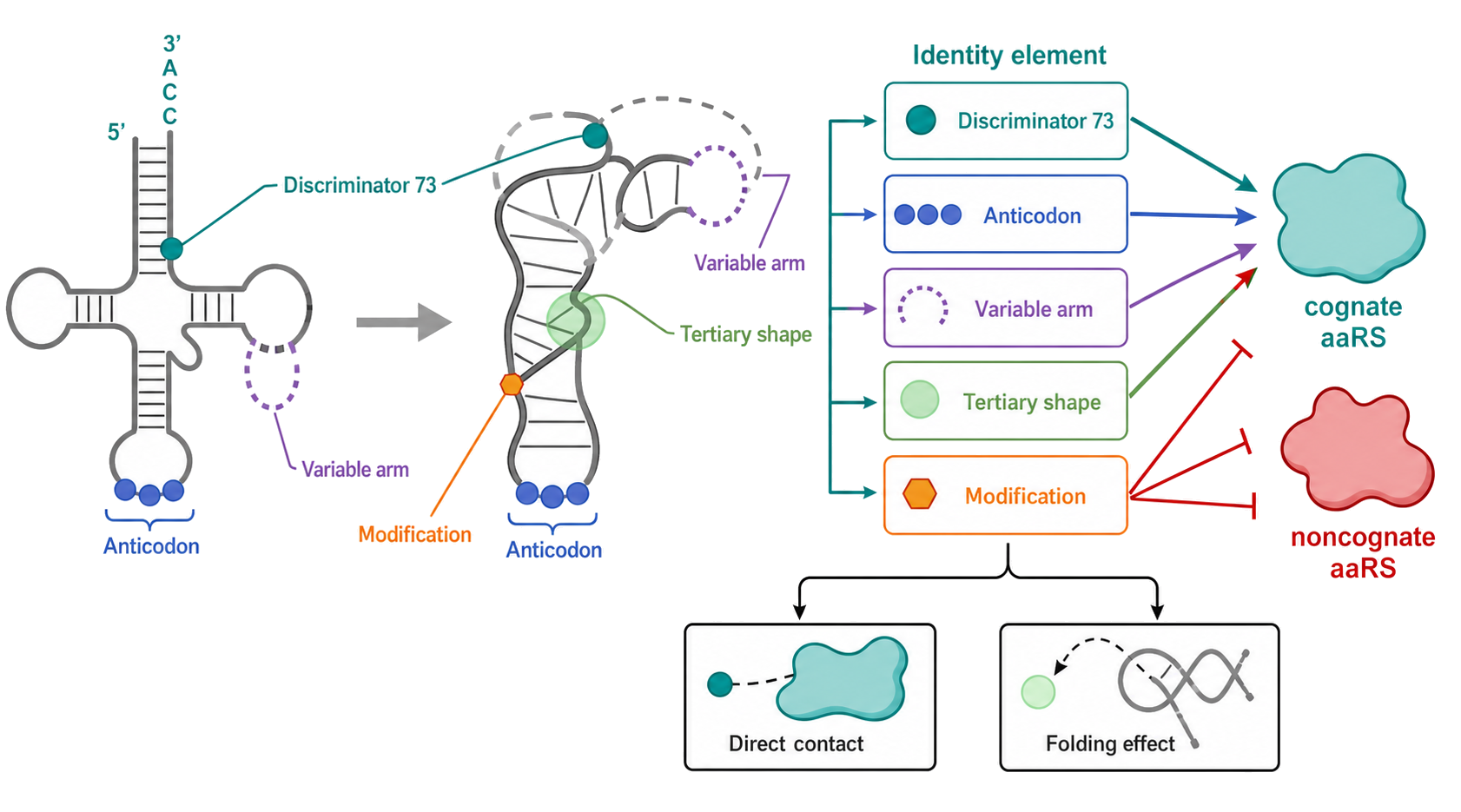
Figure 40.2. tRNA identity is a distributed energetic network. “A synthetase reads a family-specific combination of tRNA features. The same feature can alter direct contact, RNA conformation, or exclusion of a competing synthetase.”
Table 40.2. tRNA identity claims and discriminating evidence. tRNA-identity claims require discriminating mutations, reciprocal transplantation, kinetic comparison, and orthogonal binding or structural evidence; loss of charging can also reflect misfolding or global substrate damage.
| Claim | Strong experiment | Alternative explanation | Orthogonal check |
|---|---|---|---|
| A base is a direct identity contact | Complex structure plus position-specific substitution | Mutation altered fold | Compensatory structure-preserving mutant |
| An element is sufficient to transfer identity | Introduce element into a defined noncognate scaffold | Overexpression creates weak mass-action charging | Catalytic-efficiency matrix at matched concentrations |
| Anticodon is dispensable | Anticodon variants retain charging | Assay lacks sensitivity to modest loss | Cellular charging and incorporation |
| Modification is an identity element | Purified modified and unmodified tRNA differ | Global folding or stability changed | Structural probing and modification rescue |
| Pair is orthogonal | Reciprocal host-versus-engineered matrix | Untested host tRNA cross-reaction | Proteome-wide incorporation analysis |
40.3. Pre-transfer and post-transfer editing, trans-editing factors, and mistranslation thresholds
Initial selection has a chemical ceiling
When a noncognate amino acid lacks a group present in the cognate substrate, an active site cannot form a repulsive contact with the missing atom. This “smaller substrate” problem explains why isoleucyl-tRNA synthetase can activate valine often enough to require proofreading. Initial selection rejects much of the wrong substrate flux, but editing reduces the residual error. The familiar double-sieve model captures an important design: a synthetic site excludes amino acids that are too large, whereas an editing site admits and hydrolyzes smaller or otherwise incorrect products while excluding the correctly sized aminoacyl group. Real enzymes use additional chemical recognition, conformational gating, and kinetic partitioning, so the sieve is a mechanistic abstraction rather than a literal universal pore.
Pre-transfer and post-transfer routes intercept different intermediates
Pre-transfer editing hydrolyzes a noncognate aa-AMP before the amino acid is transferred to tRNA. Hydrolysis can occur in the synthetic active site, after movement to a separate editing site, or through tRNA-dependent pathways whose structural details differ among families. Post-transfer editing acts after misacylation. The tRNA 3’ end moves from the synthetic site to an editing domain, where the ester bond of the wrong aminoacyl-tRNA is hydrolyzed. CP1 editing domains in class I isoleucyl-, leucyl-, and valyl-tRNA synthetases and editing domains of class II threonyl- and phenylalanyl-tRNA synthetases illustrate independent architectural solutions.
Editing consumes time and ATP when activation has already occurred. Increasing proofreading can improve accuracy but reduce throughput; weakening it can increase mistranslation. The correct phenotype is therefore an operating range rather than maximal hydrolysis. An editing assay should distinguish noncognate aa-AMP hydrolysis, deacylation of purified mischarged tRNA, and net suppression of mistranslation. ATP consumption without product assignment cannot distinguish productive charging from futile proofreading.
Trans-editing completes a distributed quality-control network
Free-standing factors such as AlaX-family proteins, D-aminoacyl-tRNA deacylase, and Animalia-specific tRNA deacylases hydrolyze particular mischarged products outside the aaRS that generated them. Trans-editing can compensate for weak cis-editing, police errors generated by indirect pathways, or remove amino acids placed on tRNA by noncanonical chemistry. The factor must still avoid hydrolyzing correctly charged tRNAs. Subcellular localization and access to elongation-factor-bound products therefore matter as much as catalytic specificity.
Error thresholds depend on biological context
The ribosome mainly validates codon-anticodon geometry, so a misacylated tRNA can systematically substitute the wrong amino acid at every codon read by that tRNA. In the sticky mouse, an editing-defective alanyl-tRNA synthetase causes serine-for-alanine mistranslation, protein misfolding, and neurodegeneration, establishing a causal path from an editing lesion to tissue pathology. That result does not define one universal lethal error rate. Proteome composition, protein turnover, stress responses, cell division, tissue longevity, and the chemical severity of a substitution all influence tolerance. Some microbes also use regulated mistranslation under stress, but adaptive benefit must be demonstrated rather than inferred from increased error.
Figure Figure 40.3 follows incorrect substrate flux through selection, cis-editing, trans-editing, elongation-factor capture, and the proteome. Table Table 40.3 distinguishes editing assays. Box Box 40.1 gives an evidence ladder for a proposed fidelity defect.
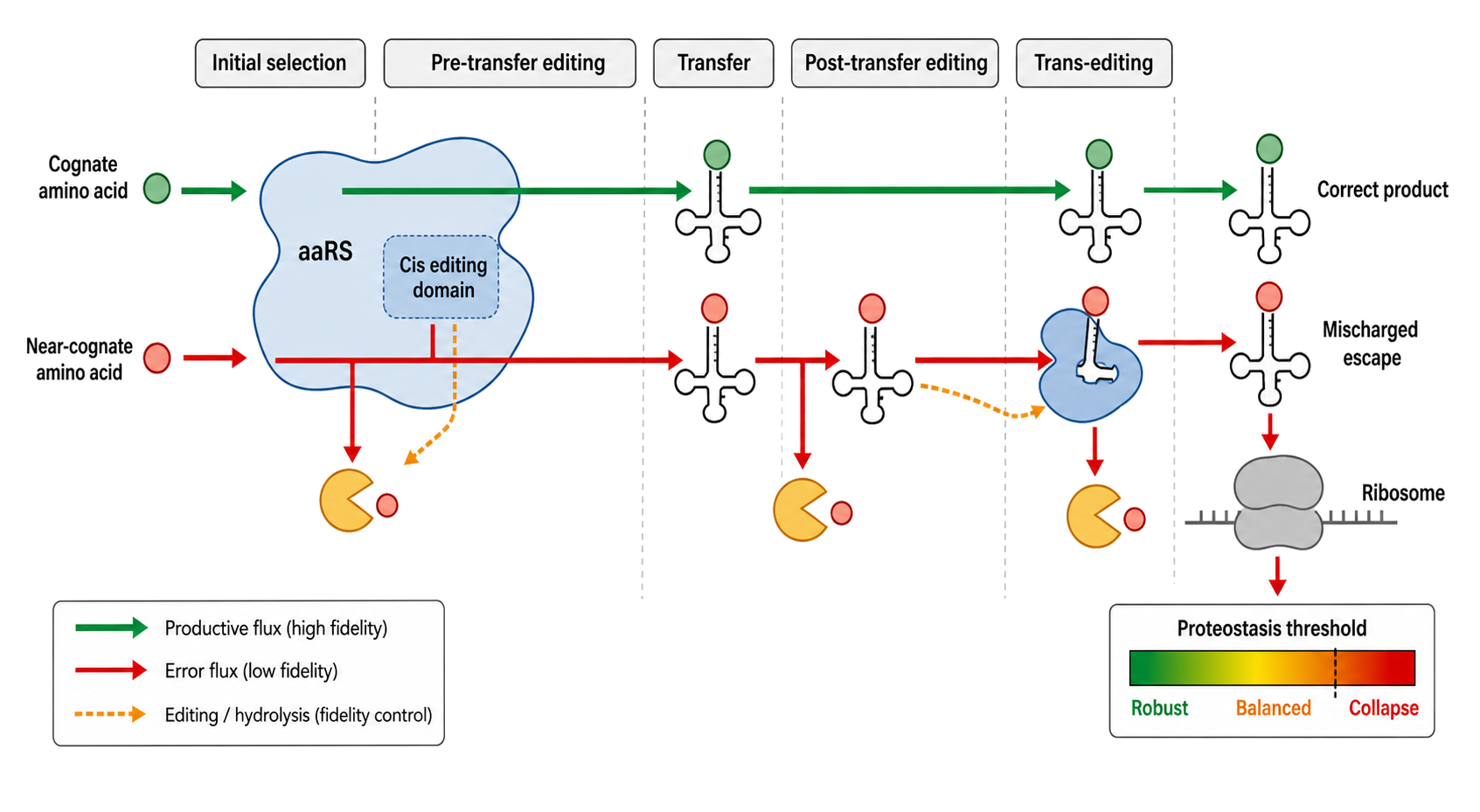
Figure 40.3. Fidelity is a branched flux-control system. “Fidelity emerges from kinetic partitioning at several checkpoints. Editing reduces but does not mathematically abolish error, and biological consequence depends on the substitutions and cellular context.”
Table 40.3. Editing routes and assay logic. Pre-transfer, post-transfer, and trans-editing routes begin with different substrates and produce different products; assay design must exclude spontaneous hydrolysis, contaminating enzymes, and misassigned intermediates.
| Route | Starting substrate | Product measured | Frequent confounder |
|---|---|---|---|
| Initial selection | Amino acid, ATP, enzyme | Cognate versus noncognate activation flux | Binding affinity substituted for catalytic flux |
| Pre-transfer editing | Noncognate aa-AMP | Hydrolysis before tRNA acylation | ATP consumption assigned to productive charging |
| Cis post-transfer editing | Purified misacylated tRNA and aaRS | Deacylated tRNA | Spontaneous ester hydrolysis |
| Trans-editing | Purified misacylated tRNA and free factor | Substrate-specific deacylation | Contaminating synthetase or nuclease |
| Cellular error | Translation system | Site-specific amino-acid substitution | Reporter expression or protein stability |
Box 40.1. Evidence ladder for an editing-defect claim
- Required sequence: define noncognate substrate; show normal or measured activation; measure pre-transfer hydrolysis; prepare and validate misacylated tRNA; measure post-transfer deacylation; verify cellular substitution by mass spectrometry; connect error to proteostasis or phenotype; rescue with editing-competent separation-of-function construct.
- Misconception prevented: Any increase in amino-acid misincorporation proves failure of one aaRS editing domain.
40.4. Indirect aminoacylation, transamidation, selenocysteine, and other exceptional pathways
A misacylated tRNA can be a committed biosynthetic intermediate
Many organisms lack a dedicated glutaminyl-tRNA synthetase, asparaginyl-tRNA synthetase, or both. A nondiscriminating glutamyl-tRNA synthetase can attach glutamate to tRNA^Gln, after which GatCAB amidotransferase converts the tRNA-bound glutamate side chain to glutamine. An analogous route uses nondiscriminating aspartyl-tRNA synthetase and amidotransferase to produce Asn-tRNA^Asn. The initial product is “misacylated” relative to the final genetic code but correct as a pathway intermediate. Calling it an error without naming the pathway confuses chemistry with biological fate.
Accuracy is protected by substrate discrimination and physical organization. The nondiscriminating synthetase must accept the target tRNA, the amidotransferase must recognize the misacylated intermediate, and elongation factors must avoid delivering that intermediate to the ribosome. Synthetase-amidotransferase assemblies called transamidosomes can favor channeling, but evidence for a stable complex does not prove that every intermediate is transferred without equilibrating with solution. Kinetic trapping, factor competition, and cellular localization must be tested.
Selenocysteine uses tRNA as a metabolic scaffold
Selenocysteine is encoded by context-dependent recoding of UGA and is synthesized on its tRNA. In bacteria, seryl-tRNA synthetase first charges tRNA^Sec with serine and selenocysteine synthase converts the attached serine to selenocysteine. In archaea and eukaryotes, phosphoseryl-tRNA kinase converts Ser-tRNA^Sec to phosphoseryl-tRNA^Sec, and SepSecS then forms Sec-tRNA^Sec. Specialized elongation factors and messenger-RNA signals deliver the product for selenoprotein synthesis. The pathway illustrates why aminoacylation, amino-acid metabolism, and decoding must be separated experimentally: detecting Ser-tRNA^Sec is not evidence that selenocysteine incorporation is complete.
Direct exceptions reveal new evolutionary and engineering options
Pyrrolysyl-tRNA synthetase directly charges tRNA^Pyl with pyrrolysine in organisms that use the twenty-second genetically encoded amino acid. Its distinctive tRNA recognition and limited cross-reactivity in common hosts made PylRS/tRNA^Pyl a major platform for genetic-code expansion. Recent work also shows that global tRNA shape can function as an identity feature for archaeal PylRS systems, cautioning against engineering by anticodon and active-site mutations alone.
Other boundary cases include duplicated synthetases with altered specificity, indirect cysteine pathways in some archaea, and misacylated tRNAs used outside translation. Figure Figure 40.4 compares direct charging, transamidation, and tRNA-dependent selenocysteine synthesis. Table Table 40.4 identifies which intermediate each assay must resolve.
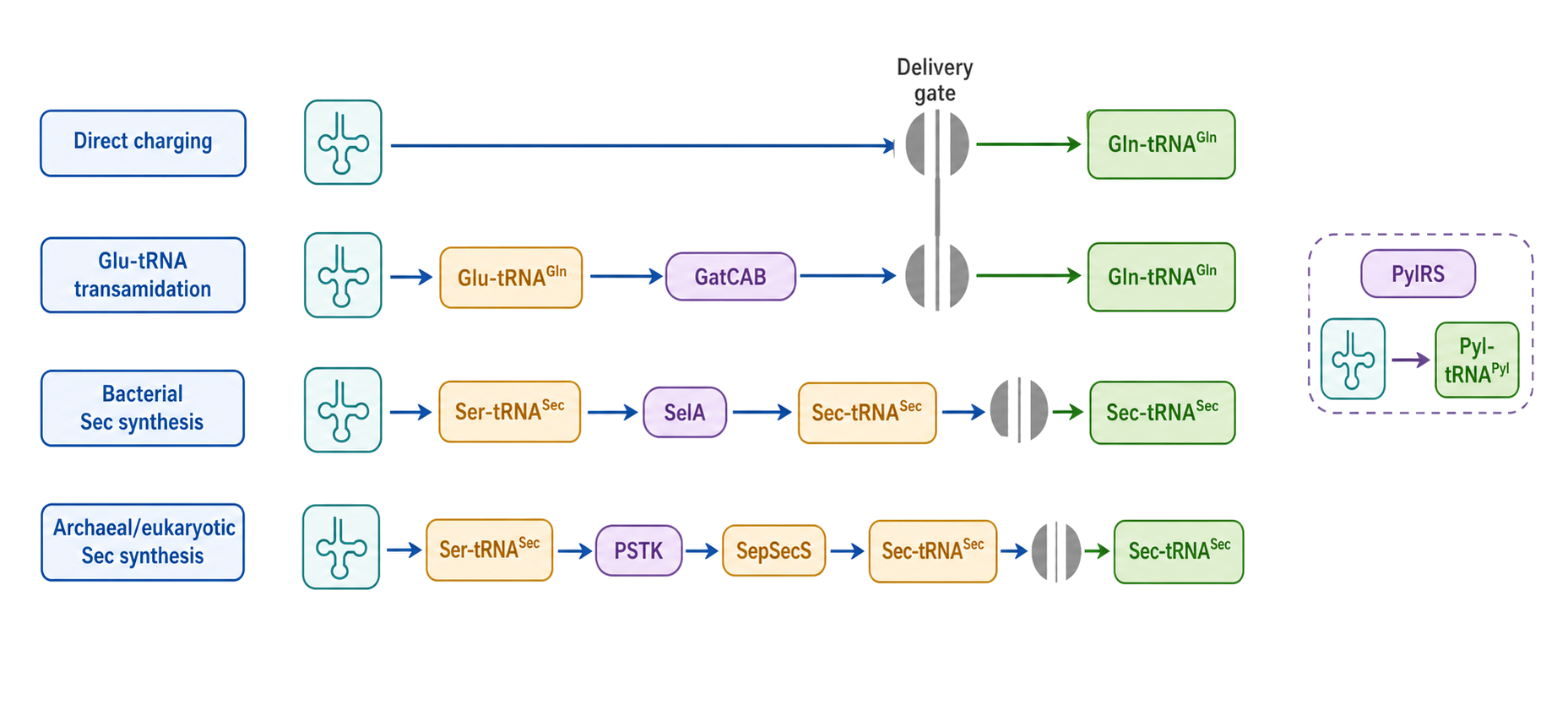
Figure 40.4. Direct and indirect paths to translation-ready aminoacyl-tRNA. “Some noncognate aminoacyl-tRNAs are committed biosynthetic intermediates rather than errors. Accuracy depends on conversion and selective delivery, not direct charging alone.”
Table 40.4. Exceptional pathways require intermediate-resolved assays. Indirect aminoacylation pathways pass through defined misacylated intermediates and conversion enzymes; detecting only the final aminoacyl-tRNA cannot establish the route or exclude direct charging.
| Final product | Initial charged species | Conversion enzyme | Intermediate-exclusion question |
|---|---|---|---|
| Gln-tRNA^Gln | Glu-tRNA^Gln | GatCAB or related amidotransferase | Does elongation factor reject Glu-tRNA^Gln? |
| Asn-tRNA^Asn | Asp-tRNA^Asn | GatCAB or GatDE, depending on lineage | Is Asp-tRNA^Asn channeled or freely diffusible? |
| Bacterial Sec-tRNA^Sec | Ser-tRNA^Sec | SelA | When does specialized delivery factor bind? |
| Archaeal/eukaryotic Sec-tRNA^Sec | Ser-tRNA^Sec then phosphoseryl-tRNA^Sec | PSTK then SepSecS | Are both intermediates excluded from ordinary elongation? |
| Pyl-tRNA^Pyl | Pyrrolysine plus tRNA^Pyl | PylRS | Does the host charging network cross-react? |
40.5. Evolution, horizontal transfer, organellar systems, parasites, and aaRS complexes
Ancient cores and mobile histories coexist
The two aaRS classes probably diverged early, but present-day phylogenies are not a simple mirror of organismal descent. Gene duplication, loss, nonorthologous replacement, horizontal transfer, domain fusion, and specificity change have repeatedly remodeled the family. A synthetase tree can therefore disagree with a ribosomal tree without implying analytical failure. Class membership provides a deep structural constraint; individual enzyme histories can be much more mobile.
Horizontal transfer is especially plausible when a replacement enzyme can recognize resident tRNAs or arrives with compatible tRNA determinants. The result can be patchy distributions, such as the occurrence of unrelated class I and class II lysyl-tRNA synthetases. Paralogous catalytic domains have also been recruited into editing factors and tRNA-dependent amino-acid biosynthetic enzymes. An aaRS-like sequence should not be annotated as a charging enzyme from the catalytic fold alone; the active-site residues, tRNA-binding modules, cellular context, and biochemical product matter.
Organelles create mixed-origin charging networks
Mitochondria and plastids inherited translation systems from bacterial ancestors but subsequently lost many genes and import most proteins from the nucleus. Some eukaryotes encode separate cytosolic and organellar synthetases; others use dual-targeted enzymes, import a cytosolic tRNA or synthetase, or retain indirect charging pathways. Organelle-specific tRNAs can have reduced or unusual structural features, requiring compensatory recognition by their synthetases. Plant mitochondria illustrate a particularly dynamic boundary: tRNA gene loss, tRNA import, enzyme targeting, and indirect aminoacylation vary among lineages.
Human mitochondrial aaRSs are nuclear encoded, synthesized in the cytosol, and imported. A variant can impair catalytic activity, tRNA recognition, protein stability, oligomerization, or mitochondrial targeting. Demonstrating reduced activity with a bacterial or cytosolic tRNA is not sufficient; the relevant mitochondrial enzyme, tRNA, modification state, and compartmental concentration should be tested. Conversely, a normal steady-state charging rate in vitro does not exclude a targeting or assembly defect in cells.
Parasites expose divergence and selectivity
Parasites can contain cytosolic and organellar translation systems with aaRS repertoires that differ from those of human hosts. Apicomplexans add the apicoplast, a plastid-derived organelle, to cytosolic and mitochondrial contexts. Divergent active sites, editing domains, targeting sequences, and pathway dependencies provide drug opportunities, but a protein’s phylogenetic distance is only a starting hypothesis for selectivity. The intended compartment must be reached, and human cytosolic and mitochondrial homologues must both be considered.
Eukaryotic aaRSs participate in higher-order assemblies
Several metazoan cytosolic aaRSs and aaRS-interacting multifunctional proteins assemble into the multisynthetase complex. The complex can organize translation-related activities and sequester proteins that are released or repurposed after signaling-dependent modification. Other aaRSs form smaller assemblies or associate transiently with ribosomes, membranes, messenger RNAs, or signaling factors. Complex membership is not a universal property of aaRSs, and a co-immunoprecipitation does not establish a stable stoichiometric machine. Cross-linking, quantitative proteomics, structural analysis, localization, and perturbation are needed to distinguish constitutive architecture from condition-dependent proximity.
Figure Figure 40.5 maps gene history, compartment targeting, and complex assembly onto the same catalytic family.
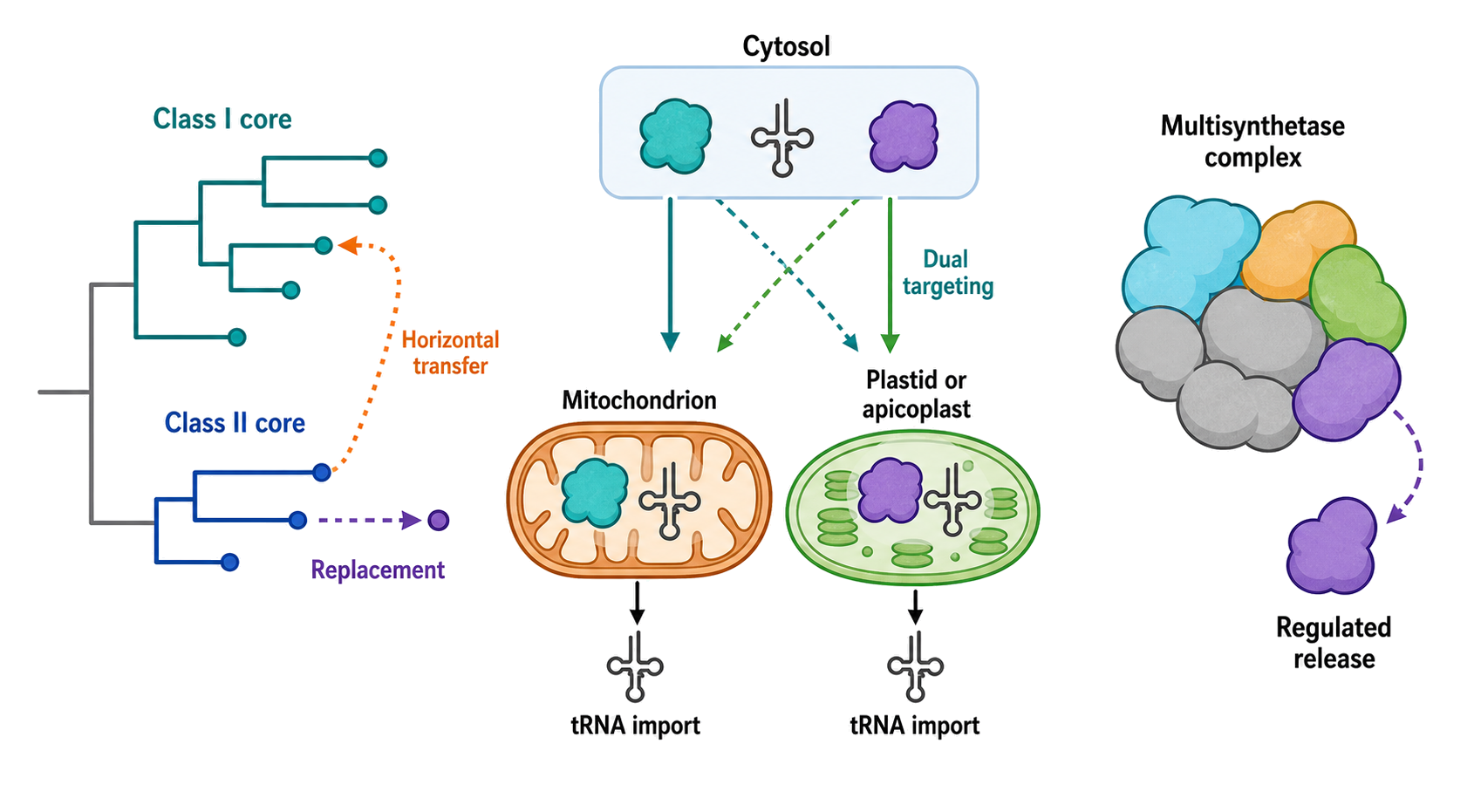
Figure 40.5. Evolution and compartmentation remodel a conserved enzyme family. “Deep catalytic classes coexist with mobile gene histories and compartment-specific solutions. One sequence label does not specify cellular location, tRNA repertoire, or complex membership.”
40.6. Kinetics, structures, binding and charging assays, active fractions, and model interpretation
Match the observable to the chemical step
An aaRS cycle contains amino acid binding, ATP binding, activation, pyrophosphate release or exchange, tRNA binding, transfer, editing, AMP release, aminoacyl-tRNA release, and enzyme reset. Different assays observe different subsets. ATP-pyrophosphate exchange measures reversible activation. Radiolabeled amino-acid incorporation or mass-sensitive analysis of isolated tRNA can measure net charging. AMP-coupled assays report activation plus any repeated futile cycles. Deacylation assays begin with a defined mischarged tRNA and report editing. Ribosomal reporters integrate charging with delivery and decoding. No single assay identifies all rate constants.
Steady-state k_cat and K_M values summarize repeated turnover under a stated mechanism and concentration regime. K_M is not generally a binding dissociation constant. Single-turnover experiments with active enzyme in excess over tRNA can isolate events through first product formation, while pre-steady-state bursts can estimate active enzyme or reveal a step after chemistry that limits repeated turnover. The enzyme concentration must refer to active sites, not total protein. Misfolding, partial cofactor occupancy, inactive oligomers, and purification damage can reduce active fraction and create falsely low turnover numbers. General quantitative principles and model diagnostics are developed in 124.
Charging assays preserve a labile ester bond
The aminoacyl-tRNA ester is unstable at alkaline pH and can hydrolyze during extraction, storage, or electrophoresis. Acidic extraction and acid-urea polyacrylamide gel electrophoresis can separate charged from deacylated tRNA for selected species, provided mobility differences are calibrated and deacylated controls are included. Radioactive amino acids offer sensitive direct flux measurements but require correction for tRNA recovery and free label. Modern liquid chromatography-mass spectrometry and sequencing-compatible approaches can expand molecular coverage, yet modifications, isodecoder mapping, ligation bias, and incomplete chemical conversion remain relevant. The Arabidopsis charging landscape shows the systems-level value of measuring aminoacylation rather than inferring it from abundance.
A correct endpoint can conceal wrong kinetics. If a sample slowly reaches full charging, the defect could lie in binding, activation, transfer, or release. Conversely, low endpoint amplitude can indicate an inactive tRNA fraction rather than a slow chemical step. Time courses, enzyme and substrate titrations, independent tRNA quality measurements, and rescue with refolding or modification are therefore essential.
Structures constrain mechanisms but do not time them
Structures of free enzyme, substrate complexes, transition-state analogues, editing intermediates, and product states reveal contacts and conformational options. Cryo-electron microscopy is useful for large complexes, while crystallography has supplied atomic views of many catalytic and editing states. Hydrogen-deuterium exchange, limited proteolysis, fluorescence, and molecular simulation can probe dynamics. However, analogue chemistry can stabilize a state not dominant during turnover, mutations can alter the landscape they are intended to trap, and crystal contacts can restrict flexible tRNA domains. A mechanistic assignment is strongest when structure predicts a perturbation and kinetics verifies the affected step.
Specificity must be measured as competing flux
Comparing K_M values alone can misstate discrimination. Under a simple low-substrate regime, k_cat/K_M provides a specificity measure for productive flux, but editing and branched pathways require expanded models. Physiological fidelity also depends on amino-acid and tRNA concentrations. A twofold intrinsic preference can become decisive at one concentration ratio and irrelevant at another. Competition experiments, product identity by mass spectrometry, editing measurements, and cellular proteomics can connect enzyme-level selectivity to mistranslation.
Figure Figure 40.6 aligns observables with steps in the catalytic and editing cycle. Table Table 40.5 is a reporting checklist, and Box Box 40.2 diagnoses an apparent charging defect.
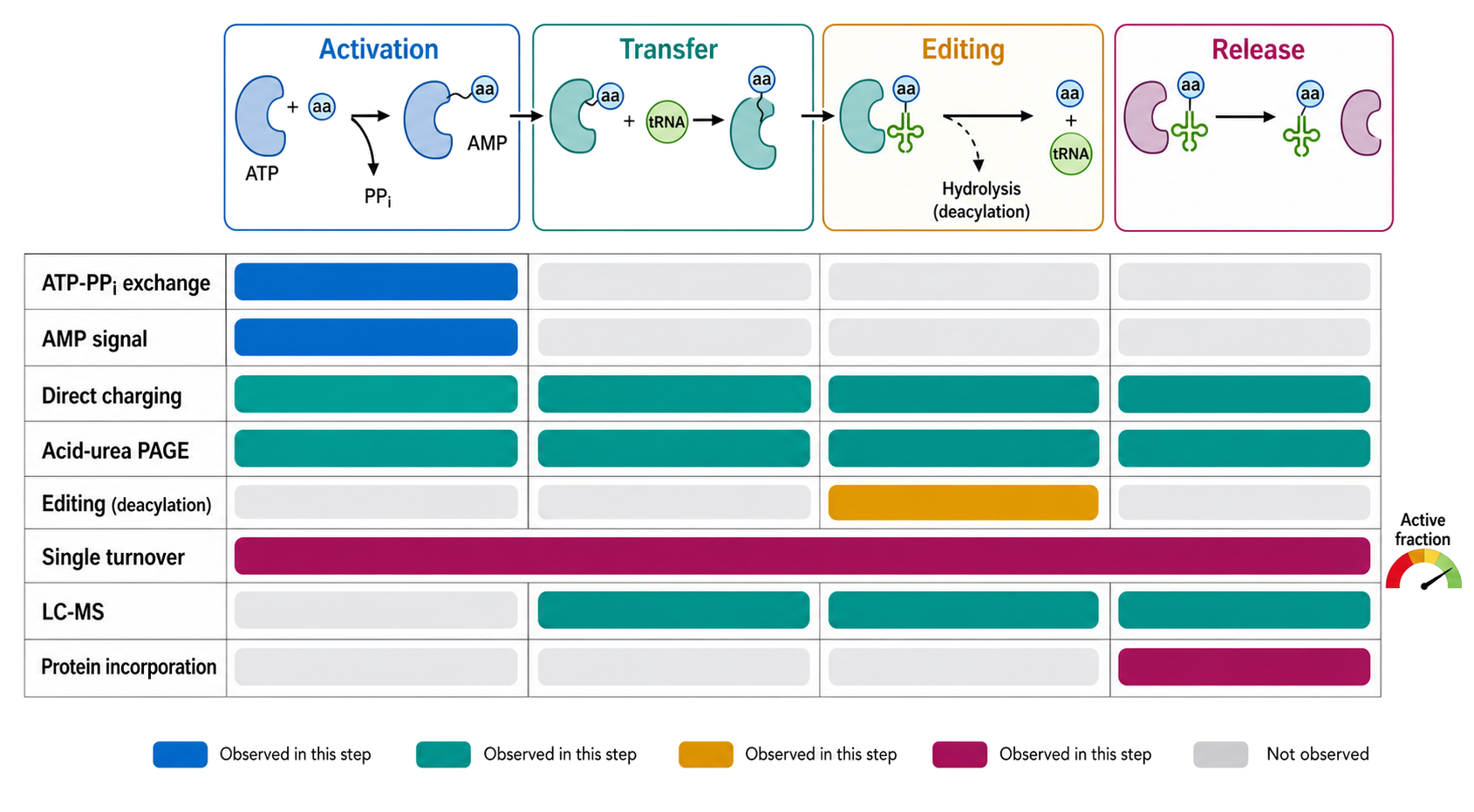
Figure 40.6. Assays observe different slices of an aaRS cycle. “An assay reports only the steps connected to its physical signal. Activation, net charging, editing, and protein incorporation require different measurements and controls.”
Table 40.5. Minimum reporting fields for aaRS mechanism and kinetics. Mechanistic and kinetic reports should state enzyme and substrate identity, active fraction, concentrations, reaction regime, fitted model, uncertainty, controls, and product definition so values remain comparable and interpretable.
| Domain | Required fields | Reason |
|---|---|---|
| Enzyme | Species, compartment, construct, oligomeric state, cofactors, nominal and active concentration | Defines catalytic material |
| tRNA | Sequence, ends, modifications, purification, folding, active fraction | Defines RNA substrate |
| Reaction | Amino acid, ATP, ions, pH, temperature, order and time | Controls rates and ester stability |
| Observable | Chemical species or coupled signal, calibration, time resolution | Maps signal to mechanism |
| Regime | Steady state, single turnover, pre-steady state, endpoint, competition | Defines parameter meaning |
| Model | Reaction scheme, fitted/shared/fixed parameters, residuals, uncertainty | Prevents curve shape from replacing mechanism |
| Product | Aminoacyl-tRNA identity or incorporated residue | Separates activation, charging, and decoding |
Box 40.2. Diagnose low apparent tRNA charging
- Required questions: Was extraction acidic? Is A76 and CCA intact? Is the tRNA correctly folded and modified? What fraction charges under forcing conditions? Is enzyme active-site concentration known? Does activation occur? Does the endpoint or rate change with enzyme, tRNA, ATP, amino acid, magnesium, or time? Does an orthogonal assay agree?
- Misconception prevented: Low charged fraction automatically means a low catalytic rate constant in vivo.
40.7. Regulation, noncanonical functions, disease variants, inhibitors, and antimicrobial selectivity
Charging connects amino-acid supply to translation
Uncharged tRNA is not merely failed product. In bacteria, specific uncharged tRNAs can stabilize T-box antiterminator states or contribute to RelA-dependent stringent signaling at ribosomes. In eukaryotes, uncharged tRNA activates the GCN2 kinase, which phosphorylates eIF2alpha and remodels translation during amino-acid limitation. These sensing systems are treated in their regulatory chapters; the aaRS-specific point is causal: reduced charging changes the signaling ligand. Total tRNA abundance cannot substitute for aminoacylation measurements.
aaRS expression and localization are themselves regulated. Phosphorylation, acetylation, proteolysis, alternative splicing, expression of paralogues, and assembly into complexes can alter catalytic availability or expose noncanonical domains. Some aaRSs bind their own messenger RNAs or other RNA elements, creating feedback between tRNA demand and enzyme synthesis. EPRS1 participates in the interferon-gamma-activated inhibitor of translation (GAIT) complex after regulated release from the multisynthetase complex, illustrating a documented route from a translation enzyme to transcript-selective regulation. This example should not be generalized to every aaRS.
Noncanonical functions require function-specific evidence
Metazoan aaRSs and fragments have been implicated in angiogenesis, immunity, stress signaling, cell migration, and extracellular communication. Domain accretion and regulated proteolysis can separate these activities from aminoacylation. The evidence hierarchy begins by showing that the activity persists when charging is selectively disabled or is rescued by a noncatalytic construct; it then tests physiological concentration, localization, binding partners, and organismal consequence. Overexpressed aaRS protein can perturb translation indirectly, and extracellular effects can arise from cell damage, so neither condition alone demonstrates an evolved signaling role.
Disease mechanisms are not all loss of charging
aaRS variants cause or contribute to peripheral neuropathies, leukodystrophies, epileptic encephalopathies, mitochondrial disorders, and multisystem disease. Biallelic loss-of-function variants often reduce enzyme abundance or aminoacylation, whereas several dominant neuropathy-associated cytosolic aaRS alleles show toxic gain-of-function or altered interaction models that cannot be explained by simple haploinsufficiency. Mitochondrial disease phenotypes also depend on tissue energy demand and on the affected mitochondrial tRNA set.
Variant interpretation should establish allele phase and expression, measure protein stability and localization, test the relevant tRNA substrate, separate activation from transfer and editing, quantify cellular charging, and connect the biochemical defect to translation and phenotype. A rescue by wild-type enzyme supports loss of function but may not correct a dominant toxic interaction. A normal bulk aminoacylation assay does not exclude editing defects, substrate-specific defects, or noncanonical mechanisms.
Inhibitors exploit conserved chemistry and lineage-specific differences
aaRSs are attractive antimicrobial and antiparasitic targets because their activity is essential and because active-site and editing-site differences can permit selectivity. Mupirocin inhibits bacterial isoleucyl-tRNA synthetase; resistance can arise from target mutations or acquisition of resistant IleRS forms. Tavaborole forms a covalent adduct with tRNA in the leucyl-tRNA synthetase editing site, trapping the enzyme-product complex and demonstrating that editing domains are druggable. Halofuginone inhibits prolyl-tRNA synthetase and illustrates both therapeutic potential and the danger of interpreting amino-acid-starvation signaling as a pathogen-selective effect.
Selectivity must be evaluated against human cytosolic and mitochondrial enzymes, not only one purified host homologue. Whole-cell potency additionally depends on uptake, efflux, metabolism, target abundance, pathway bypass, and compartment access. Resistance mapping can validate target engagement but can also expose pre-existing routes around the inhibitor. Figure Figure 40.7 connects regulatory and disease entry points to distinct mechanistic assays. Table Table 40.6 compares inhibitor mechanisms and failure modes.
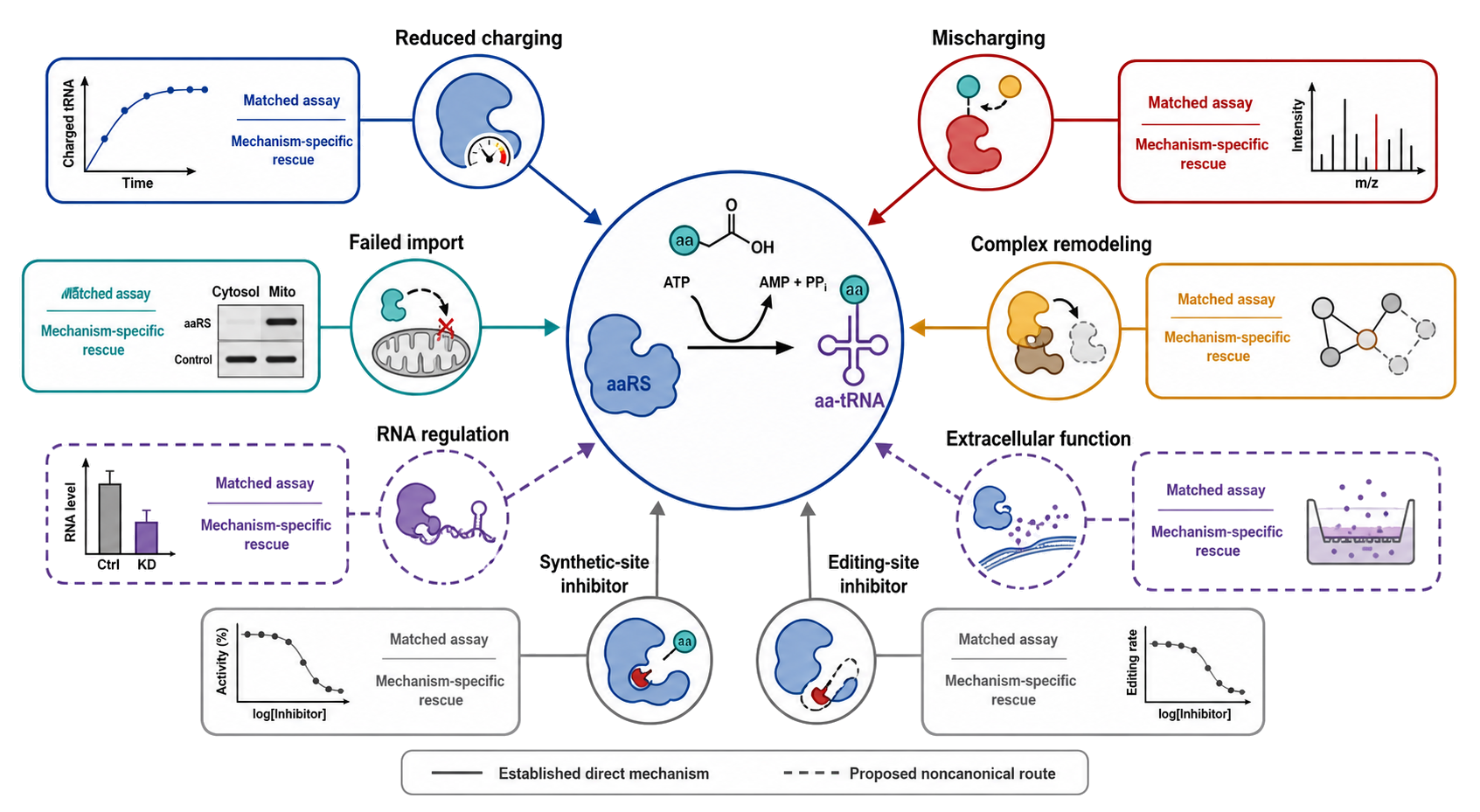
Figure 40.7. Distinct aaRS perturbations require distinct mechanistic tests. “The same gene or drug can enter biology through charging, editing, localization, assembly, or signaling. Mechanism-specific assays prevent every phenotype from being called reduced aminoacylation.”
Table 40.6. Inhibitor mechanisms, selectivity questions, and resistance. Aminoacyl-tRNA-synthetase inhibitors can target active sites, editing domains, tRNA interfaces, or auxiliary pockets; useful selectivity and resistance analysis must account for host homologs, uptake, metabolism, and pathway bypass.
| Example or site | Mechanistic action | Selectivity requirement | Plausible resistance or failure |
|---|---|---|---|
| Mupirocin-IleRS | Competes at bacterial IleRS synthetic site | Spare human cytosolic and mitochondrial systems | Resistant IleRS allele or acquired gene; permeability |
| Tavaborole-LeuRS | Traps tRNA adduct in editing site | Exploit pathogen editing-site geometry | Target mutation or altered exposure |
| Halofuginone-ProRS | Inhibits prolyl-tRNA synthetase and induces amino-acid-starvation signaling | Separate desired pathway modulation from host toxicity | Substrate competition, pathway adaptation, systemic toxicity |
| Parasite aaRS | Synthetic or editing-site inhibition in one compartment | Reach cytosol, mitochondrion, or apicoplast and spare host | Compartment delivery, efflux, target mutation, bypass |
40.8. Orthogonal synthetase-tRNA pairs, genetic-code expansion, directed evolution, and biosafety
Orthogonality is reciprocal and quantitative
An orthogonal translation system contains an engineered tRNA that is charged efficiently by its partner aaRS but poorly by host synthetases, and an engineered aaRS that charges the engineered tRNA but poorly charges host tRNAs. These are reciprocal requirements. The pair must also be orthogonal at the amino-acid level: the aaRS should prefer the intended noncanonical substrate over cellular amino acids. Finally, the charged tRNA must be accepted by elongation factors and the ribosome and must decode the intended codon without unacceptable near-codon reading. Orthogonality is therefore a matrix of competing reactions, not a binary label.
Pyrrolysyl and archaeal tyrosyl systems are widely used because their tRNAs and enzymes can be comparatively insulated in bacterial or eukaryotic hosts. Host transfer is not automatic. Promoter recognition, tRNA processing, nuclear export, subcellular localization, modifications, expression balance, codon competition, and release-factor activity can change performance. Chapter 39 owns tRNA maturation constraints, 66 owns decoding competition, and 153 owns therapeutic sequence and translation engineering. This chapter owns the enzymatic specificity connecting them.
Directed evolution must select against plausible errors
Typical aaRS campaigns diversify amino-acid-binding residues and use positive selection to retain variants that incorporate the desired substrate at a reporter codon. Negative selection removes variants that suppress the codon when the desired substrate is absent. This design can miss polyspecificity: a variant may accept the desired amino acid and several endogenous metabolites, or it may charge host tRNAs without affecting the selected reporter strongly. Alternating positive and negative selections, varying substrate concentration, screening close analogues, and measuring incorporation sites by mass spectrometry improve confidence. Translation-independent selection can reduce dependence on reporter decoding and cellular fitness, but it still requires later validation in the intended host.
Code expansion redistributes competition
Amber suppression is convenient but competes with termination and can read natural stop codons. Sense-codon reassignment competes with endogenous tRNAs unless the host genome and translation apparatus are recoded. Quadruplet codons, unnatural base pairs, and orthogonal ribosomes provide additional channels, each with new frameshifting or fidelity risks. Genome-wide codon compression can remove assignments and create room for multiple noncanonical amino acids. A 61-codon Escherichia coli design demonstrated large-scale codon removal, and subsequent sense-codon reassignment supported viral resistance and synthetic polymer production. These achievements do not mean every released codon is free of fitness costs or evolutionary escape.
Biosafety is an engineered failure-rate problem
Synthetic auxotrophy can make essential proteins depend on a noncanonical amino acid, creating a barrier to growth outside controlled conditions. Independent studies engineered such dependence through recoded genomes and protein design. The relevant metric is escape frequency across population size, time, environments, and plausible rescue routes. Containment can fail through mutation of the essential site, acceptance of an environmental analogue, reversion of aaRS specificity, uptake of a bypass gene, cross-feeding, or horizontal transfer. Multiple independent barriers and long-duration evolution tests are stronger than one short plating assay.
For therapeutic or in vivo applications, biosafety also includes immune recognition, dose-dependent mistranslation, off-target stop suppression, persistence of engineered components, tissue distribution, and germline or microbiome exposure. Proteome-wide mass spectrometry, ribosome profiling, charged-tRNA analysis, transcript-specific termination assays, and longitudinal phenotype measurements test different parts of this risk. Figure Figure 40.8 shows the orthogonality matrix and validation funnel; Table Table 40.7 pairs engineering failures with decisive tests.
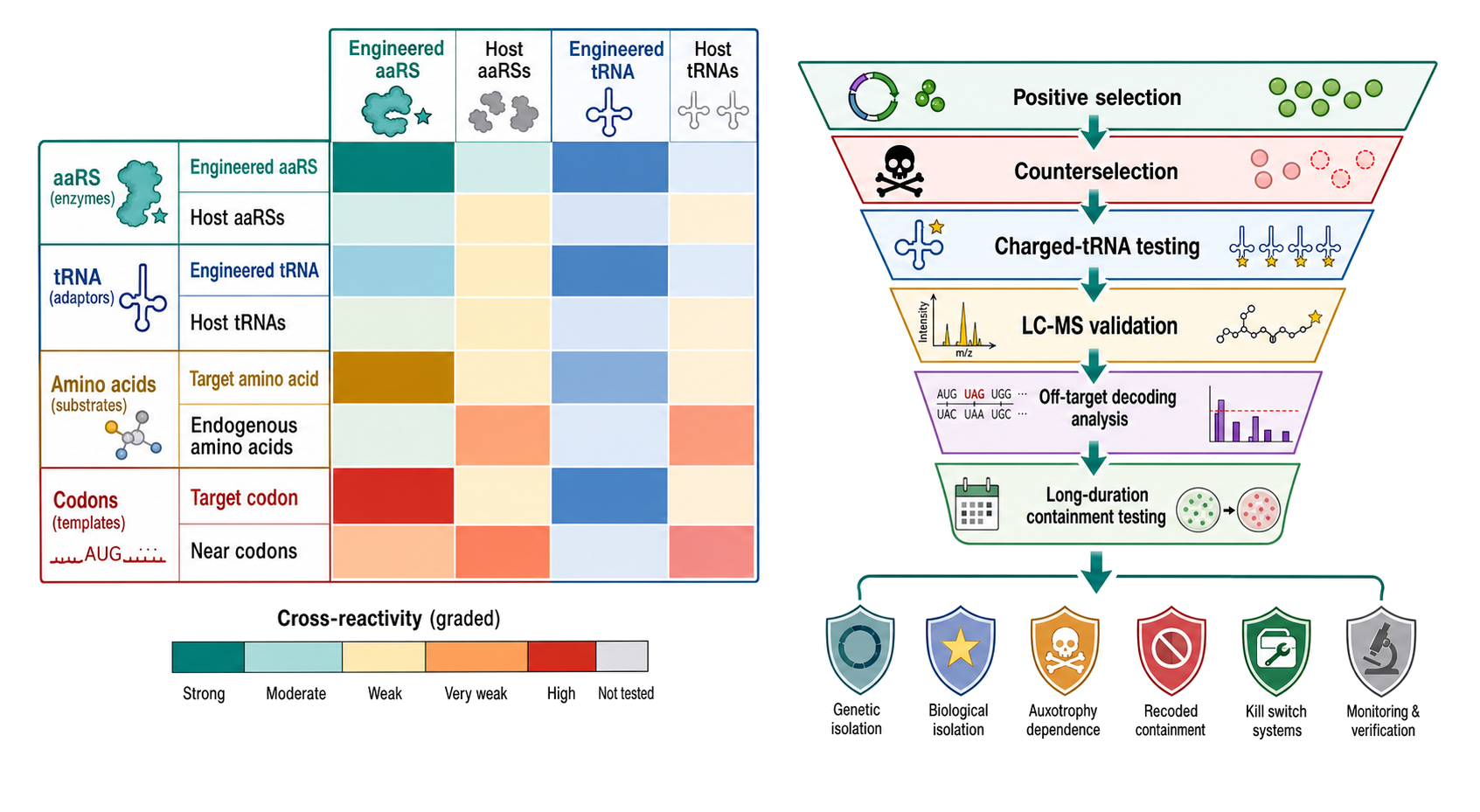
Figure 40.8. Orthogonality is a matrix followed by a validation funnel. “An engineered pair is orthogonal only across enzyme, tRNA, amino-acid, and codon dimensions in the intended host. Selection enriches candidates; direct product and escape measurements establish performance.”
Table 40.7. Engineering failure modes and decisive tests. Engineered synthetase-tRNA pairs can appear successful through endogenous charging, poor orthogonality, low-fidelity incorporation, or reporter artifacts; direct amino-acid and site assignment provides the decisive test.
| Failure mode | Misleading success signal | Decisive test | Mitigation |
|---|---|---|---|
| Endogenous amino-acid acceptance | Reporter grows with intended substrate present | LC-MS with and without close analogues | Counterselection and active-site redesign |
| Host tRNA charging | Target reporter is efficient | Host-tRNA charging matrix and proteomics | Engineer tRNA-binding interface |
| Host enzyme charges engineered tRNA | aaRS deletion abolishes most signal but not all | Charging assay without engineered aaRS | Add antideterminants or change scaffold |
| Natural stop-codon readthrough | Strong amber suppression | Transcriptome-scale termination profiling | Recoding, lower tRNA dose, context design |
| Near-codon decoding or frameshift | Correct target peptide detected | Ribosome profiling and off-target reporters | Anticodon-loop and ribosome engineering |
| Containment escape | No colonies in one short assay | Large-population, long-duration, multi-environment bound | Multiple independent barriers |
Experimental Foundations and Evidence
The strongest mechanistic studies triangulate chemistry, RNA identity, structure, and biological consequence. Activation assays establish aa-AMP formation; direct charging and deacylation assays assign tRNA products; pre-steady-state kinetics order steps; structures and targeted substitutions identify candidate contacts; mass spectrometry verifies the amino acid incorporated into protein; charged-tRNA measurements establish the cellular intermediate; and genetics tests whether the proposed defect causes a phenotype. Each method excludes only some alternatives. A structure cannot supply flux, an ATPase-like coupled signal cannot assign product, and a reporter cannot by itself locate the defect within charging, delivery, decoding, or protein stability.
Comparative claims require matched substrates and conditions. Different tRNA transcripts can vary in ends, modifications, folding, and active fraction. Different enzyme preparations can vary in oligomeric state and activity. Physiological conclusions require relevant amino-acid and tRNA concentrations, especially when comparing cognate with noncognate flux. Evidence for channeling requires more than co-purification, and evidence for noncanonical signaling requires separation from translation stress. These controls turn an attractive model into a reusable mechanism.
Biological Contexts Across Organisms, Cell Types, and Perturbations
Bacteria use aaRS activity both to sustain translation and to signal amino-acid limitation through charged-tRNA balance. Archaea preserve distinctive indirect routes and supply widely used orthogonal engineering components. Eukaryotic cells add compartment-specific systems, protein complexes, signaling functions, and tissue-specific disease. Plants combine cytosolic, plastid, and mitochondrial charging networks with extensive organellar RNA import and quality control. Parasites can expose divergent enzymes in several compartments, creating both therapeutic opportunities and delivery constraints.
Stress changes substrate concentrations, tRNA charging, enzyme modification, localization, and proteostasis simultaneously. An observed rise in uncharged tRNA can reflect amino-acid shortage, enzyme inhibition, tRNA damage, defective maturation, or increased translational demand. Time-resolved perturbations and rescue with amino acid, wild-type enzyme, corrected tRNA, or pathway-specific inhibitor help identify the causal entry point.
Technology, Computational, Clinical, and Engineering Links
aaRS sequence models and structures support active-site prediction, variant interpretation, inhibitor design, and orthogonal-pair engineering. Computational docking or protein design can rank candidates, but catalytic specificity is an ensemble and kinetic property: transition-state stabilization, water placement, conformational gating, editing, and intracellular substrate competition are difficult to infer from one static score. Experimental cycles should therefore measure cognate activity, close analogues, host tRNA cross-reactivity, active fraction, and final incorporation identity.
Clinically, aaRS assays can classify variants and establish target engagement, but translation enzymes have narrow systemic safety margins. For antimicrobials, the relevant selectivity panel includes pathogen enzyme, human cytosolic enzyme, human mitochondrial enzyme, and whole-cell compartments. For engineered translation therapies, manufacturing purity and sequence correctness do not establish functional fidelity; cellular charging, off-target decoding, immune sensing, and tissue-specific expression must also be evaluated.
Recent Consensus
Current consensus treats aaRSs as an ancient but evolutionarily dynamic enzyme family whose primary function is to generate aminoacyl-tRNAs with sufficient rate and accuracy for translation. The two-class framework remains foundational, while family-specific architectures and exceptions prevent simplistic class-wide rules. tRNA identity is combinatorial, and anticodon recognition ranges from dominant to dispensable depending on the system. Editing is a distributed network of initial selection, cis-editing, and trans-editing rather than a universal second active site.
It is also established that indirect charging routes are normal components of accurate translation, not primitive mistakes, and that organellar and horizontally transferred systems must be interpreted lineage by lineage. Human aaRSs participate in disease and signaling through several mechanisms, so reduced aminoacylation should be tested rather than assumed. Genetic-code expansion can install diverse chemistries, but current best practice treats orthogonality, fidelity, host compatibility, and containment as measured quantities.
Open Questions, Controversies, Deprecated Models, and Common Misconceptions
Open questions:
- Which conformational transitions dominate specificity and rate for each aaRS under cellular substrate concentrations, and how often do purified-enzyme rate limitations change in crowded or compartmentalized environments?
- How extensively are misacylated intermediates physically channeled in vivo, and when is elongation-factor exclusion sufficient without stable transamidosome assembly?
- What mistranslation spectra and frequencies are tolerated by different tissues, developmental stages, microbes, and stresses before adaptive plasticity becomes proteotoxicity?
- Which disease-associated aaRS variants act primarily through loss of charging, faulty editing, localization, complex assembly, or toxic interactions, and which mechanisms can coexist in one allele?
- How durable are orthogonal specificity and synthetic-amino-acid containment over long evolution in complex environments?
Controversies:
- Proposed noncanonical aaRS functions differ greatly in evidential maturity. Some have separation-of-function genetics and physiological validation; others rely mainly on overexpression, proximity, or extracellular addition.
- Stable substrate channeling is clear for some reconstituted assemblies, but the fraction of flux that is obligatorily channeled in cells remains pathway- and condition-dependent.
Deprecated or weakened claims:
- The view that one aaRS corresponds directly and universally to one amino acid ignores indirect aminoacylation, duplicated or missing enzymes, organellar systems, and aaRS-like paralogues.
- The view that tRNA identity is specified principally by the anticodon has been replaced by a distributed, family-specific recognition model.
Common misconceptions:
- “ATP consumption proves correct tRNA charging.” Activation and futile editing also consume ATP; the aminoacyl-tRNA product and amino-acid identity must be measured.
- “All class I enzymes acylate A76 at 2’-OH and all class II enzymes at 3’-OH.” These are broad tendencies with family-specific exceptions and subsequent transesterification.
- “A noncognate amino acid on tRNA is always an error.” Glu-tRNA^Gln, Asp-tRNA^Asn, Ser-tRNA^Sec, and related species can be required biosynthetic intermediates.
- “The ribosome corrects mischarging.” The ribosome mainly evaluates codon-anticodon pairing and generally cannot recover the intended amino acid from a misacylated tRNA.
- “Normal endpoint charging excludes an aaRS disease mechanism.” Editing, kinetics, localization, complex assembly, substrate specificity, and noncanonical functions can be defective despite a normal endpoint.
- “An orthogonal pair has no cross-reactivity.” Orthogonality is finite, host-dependent, concentration-dependent, and must be tested against amino acids, tRNAs, and codons.