Chapter 165. RNA Frontiers: Unsolved Biology, Emerging Capabilities, Reproducibility, and Field Standards
Scope Note
This epilogue surveys questions that remain unresolved after the book’s mechanistic, technological, and clinical chapters. It asks where RNA science is limited by missing biology, incomplete measurement, weak causal inference, or inadequate standards. The emphasis is scientific: RNA origins and chemistry, folding and catalysis, regulation across biological contexts, emerging experimental and computational capabilities, and the evidence needed to decide whether a frontier claim is durable. Ethical, regulatory, and dual-use governance is treated in Chapter 163; this epilogue focuses on scientific questions and the evidence needed to resolve them.
Executive Summary
RNA science has moved from cataloging transcripts toward measuring molecules in place, watching them change through time, perturbing them at scale, and designing new sequences. Yet increased resolution does not automatically produce causal understanding. Many signals still collapse distinct molecular species; many models learn correlations that fail outside their training distribution; and many apparent mechanisms depend on cell type, developmental state, organism, assay, or perturbation regime. A frontier is therefore best defined not by novelty but by a gap between what can be detected or predicted and what can be explained and reproduced.
Some gaps are ancient. How plausible prebiotic chemistry generated activated ribonucleotides, selected homochirality, assembled polymers, and coupled replication to compartments remains unresolved. Modern RNA structure presents parallel problems: an RNA usually occupies an ensemble rather than a single fold, and cellular proteins, ions, transcription, translation, and modification reshape that ensemble. Other gaps concern biological scale. The field still cannot predict most RNA lifetimes, locations, interaction partners, or phenotypic effects directly from sequence across organisms and cell states.
Experimental progress is strongest when methods are combined. Single-molecule measurements expose heterogeneity hidden by bulk averages; spatial and in situ methods preserve anatomical context; time-resolved labeling separates synthesis from decay; perturbational assays test necessity and sufficiency; and orthogonal biochemical or structural measurements constrain interpretation. Computational models can connect these modalities and propose sequences or mechanisms, but their scientific value depends on explicit inputs, representative evaluation, uncertainty calibration, and experimental tests that can falsify predictions.
The durable frontier is thus an evidence program. Reference materials, minimum metadata, interlaboratory comparisons, benchmark designs resistant to leakage, negative controls, and expert interpretation turn promising demonstrations into cumulative science. Standards should constrain claims enough to make results comparable without freezing useful methodological innovation.
Concept Inventory
- Frontier question: a biologically important question for which available observations or predictions do not yet support a stable causal explanation.
- Molecular ensemble: the distribution of conformations and interaction states occupied by an RNA under specified conditions.
- Molecular recognition: selective association of an RNA with ions, metabolites, nucleic acids, proteins, membranes, or other partners through sequence, structure, dynamics, and chemical modification.
- Context dependence: variation in RNA behavior caused by compartment, cell state, organism, environment, developmental stage, genotype, or experimental system.
- Orthogonal validation: testing a claim with a method whose principal measurement chemistry and artifacts differ from those of the original assay.
- Perturbational evidence: evidence produced by changing an RNA, regulator, interaction, or condition and measuring the consequence.
- Causal prediction: a prediction about the effect of an intervention, distinguished from prediction of an associated state or label.
- Benchmark: a versioned evaluation task with defined inputs, targets, splits, metrics, and intended use.
- Reproducibility: consistency of results or conclusions across repeated technical, biological, computational, or conceptual tests.
What to Know Before Reading This Chapter
RNA is a polymer whose bases encode sequence information while its backbone, base-pairing, stacking, ions, solvent, and binding partners determine physical behavior. Transcription, processing, translation, localization, and decay are coupled rather than isolated stages. Most RNA assays observe proxies: complementary DNA fragments, fluorescence, chemical reactivity, ionic current, enriched complexes, or reporter output. The recurring task in this chapter is to map such a proxy to the weakest justified biological claim and then identify the evidence required for a stronger one.
Four distinctions are essential. Detection is not function; association is not causation; a predicted structure is not necessarily the dominant cellular structure; and performance on one benchmark is not general biological competence. These distinctions do not diminish new technologies. They specify how those technologies become explanatory.
165.1. Emerging RNA technologies and unsolved biology
An emerging RNA technology creates access to a molecule, state, interaction, or intervention that was previously difficult to observe or control. Direct RNA sequencing attempts to read native RNA without obligatory conversion to complementary DNA. Long-read sequencing links distant transcript features within individual molecules. Spatial transcriptomics and multiplexed imaging preserve tissue position. Chemical probing and crosslinking map structure or interactions. Programmable editors and therapeutic RNAs change RNA sequence, abundance, translation, or recognition. Each capability is valuable, but each measures a defined physical signal rather than biology in the abstract.
A nanopore current trace, for example, is influenced by several nucleotides within the pore, sequence context, RNA velocity, structure, chemical modification, and platform chemistry. Calling a modified base from the trace is therefore an inference that requires matched controls, appropriate training data, calibration, and preferably an orthogonal chemical or biochemical assay. Similarly, a spatial transcriptomic spot may contain RNA from several cells, damaged cells, extracellular material, or ambient contamination. Higher coordinate precision does not by itself establish which cell produced an RNA or whether that RNA is functional.
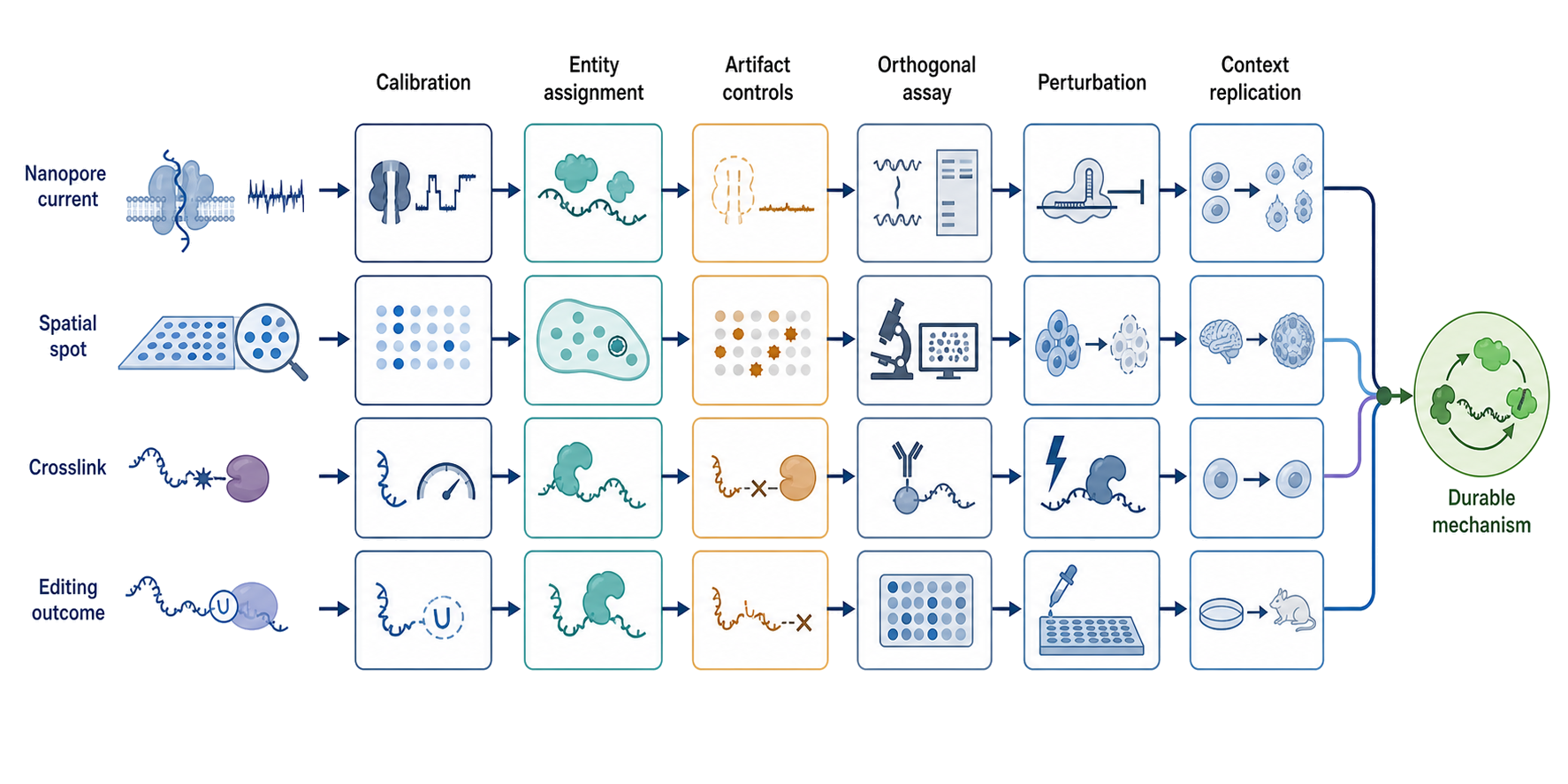
Figure 165.7. From New Signal to Durable RNA Mechanism. Emerging platforms become mechanistic tools only when their signals are assigned to defined molecules, plausible artifacts are controlled, and intervention tests discriminate competing explanations.
The same discipline applies to new RNA entities. Circular RNAs, extracellular RNAs, glycosylated RNAs, noncanonical translation products, and low-abundance isoforms have expanded the field’s vocabulary. The first question is molecular definition: what covalent structure, termini, sequence boundaries, modification state, and cellular location distinguish the proposed entity? For a circular RNA, resistance to exonuclease or a back-splice junction is supportive but can be confounded by structured linear RNA, template switching, or mapping artifacts. Functional claims require perturbations that discriminate the circle from overlapping linear transcripts, followed by rescue or mechanistic measurements appropriate to the proposed role. Reviews of circular RNA therapeutics emphasize both the engineering opportunity and the need to separate stable circular products from heterogeneous manufacturing or cellular by-products (Liu_2022_CircularRNAFrontier).
Emerging interventions likewise reveal unsolved delivery and cell-biology problems. RNA base editors can change transcript sequence without permanently altering genomic DNA, but the useful outcome depends on editor expression, guide specificity, target occupancy, editing window, bystander edits, innate sensing, and the turnover of edited RNA (Song_2024_RNABaseEditors). Synthetic messenger RNA, self-amplifying RNA, circular RNA, small interfering RNA, and antisense oligonucleotides face different tradeoffs among production, stability, translation, dose, tissue distribution, endosomal escape, and immune activation. A formulation that works in cultured hepatocytes does not establish delivery to neurons, immune cells, tumors, or airway epithelium.
Table 165.5. Emerging Capability, Measured Object, and Decisive Next Evidence. New capabilities differ in what they physically observe, so each requires method-specific controls before detection or prediction can be promoted to mechanism or utility.
| Capability | Physical signal | Immediate claim | Common overclaim | Decisive next evidence |
|---|---|---|---|---|
| Direct RNA sequencing | Nanopore current | Signal compatible with sequence or modification | Native molecule is fully resolved | Matched controls and orthogonal chemistry |
| Spatial transcriptomics | Captured or imaged RNA coordinates | RNA detected in a region | Producing cell and function are known | Cell assignment, perturbation, and validation |
| RNA editing | Changed RNA base signal | Edit detected at a target | Safe therapeutic correction | Specificity, target engagement, phenotype, and safety |
Many frontier claims fail because the experiment does not distinguish access from explanation. Detecting an RNA in a disease sample may make it a biomarker candidate, but it does not show that the RNA drives disease. Binding between an RNA and a protein may identify physical proximity without demonstrating regulation. A perturbation may produce a phenotype through off-target activity, compensation, innate immune activation, or disruption of an overlapping element. Strong inference combines molecularly specific perturbation, dose and time dependence, rescue, orthogonal readouts, and a model that predicts consequences beyond the original observation.
Box 165.4. Detection, Association, and Mechanism Are Different Claims
- Section: Section 165.1
- Box text: Detection states that an assay observed a signal compatible with a defined RNA. Association states that the signal covaries with a condition, phenotype, location, or partner. Mechanism states that a specified molecular process produces a consequence. Move from detection to association only with adequate sampling and confounder control. Move from association to mechanism only with specific perturbation, target engagement, time order, orthogonal measurement, rescue when feasible, and rejection of plausible alternatives. Use the weakest term justified by the evidence.
The most important unsolved problems cut across technology classes. The field lacks general rules that predict which transcripts become functional isoforms, how RNA modifications alter molecules at physiological stoichiometry, how ribonucleoprotein assemblies select partners in crowded cells, how RNA localization is coupled to translation and decay, and which extracellular RNAs mediate signaling rather than accompany secretion or damage. Technology can expose candidate states at greater scale, but causal resolution usually comes from pairing that scale with selective perturbation and mechanistic reconstitution.
An epilogue should therefore resist lists of fashionable methods. The durable question is what newly observable variable makes a previously untestable model falsifiable. Chapters Chapter 122-Chapter 139 provide assay-specific details; Chapters Chapter 153-Chapter 162 treat therapeutic intervention and delivery; Chapter 147 and Chapter 148 treat engineering; Chapter 121 and Chapter 146 provide disease and systems synthesis; and Chapter 163 treats clinical translation and governance. The remaining sections ask where even combined methods have not yet closed the explanatory gap.
165.2. Unresolved RNA origins, chemistry, folding, dynamics, catalysis, and molecular recognition
The RNA-world hypothesis proposes that RNA or RNA-like polymers once combined hereditary information with catalysis before modern DNA-protein biology became dominant. The hypothesis is attractive because extant ribozymes catalyze phosphoryl-transfer and peptide-bond-related reactions, ribosomal RNA forms the catalytic center of the ribosome, and nucleotide-derived cofactors connect contemporary metabolism to ancient chemistry. These observations establish chemical possibility and evolutionary continuity; they do not reconstruct a complete path from geochemistry to Darwinian evolution.
Several transitions remain experimentally difficult. Prebiotic synthesis must produce relevant building blocks in compatible environments, activate them without modern enzymes, favor productive linkages, manage hydrolysis, and supply sufficiently pure substrates. Polymerization must generate sequences long and diverse enough for function while avoiding dead-end products. Replication must copy structured templates with adequate fidelity and strand separation. Compartments must retain useful polymers while permitting nutrient exchange and division. Demonstrating each step under a different optimized condition is not equivalent to demonstrating a continuous, geochemically plausible system.
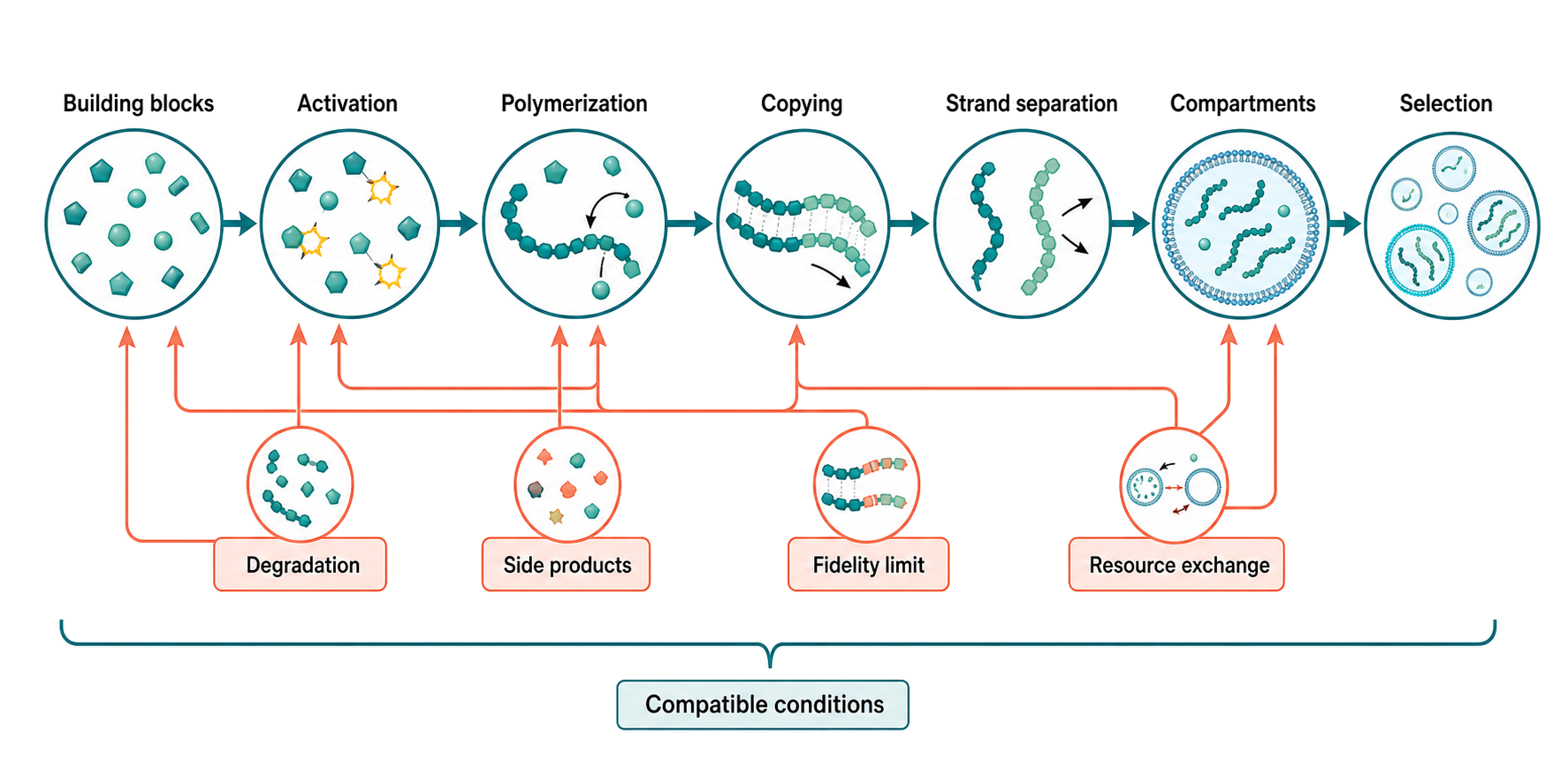
Figure 165.8. Unresolved Transitions from Prebiotic Chemistry to Evolvable RNA Systems. An origin scenario must connect productive chemistry, replication, compartment behavior, and selection under mutually compatible environmental conditions.
Chemical alternatives complicate the story constructively. Early polymers may have used mixed backbones, different sugars, noncanonical bases, or heterogeneous chirality before selection favored modern ribose and phosphodiester linkages. Such alternatives are not evidence against an RNA-centered origin; they widen the search space and require experiments that test transitions between chemical systems. A convincing scenario should explain not only how a polymer can form but why its products support templating, catalysis, compartment compatibility, and eventual biochemical takeover.
Modern folding retains a related problem of pathway dependence. An RNA sequence does not map to one immutable structure. It occupies an ensemble whose populations depend on temperature, ions, ligands, modifications, molecular crowding, and binding partners. Cotranscriptional folding adds direction and time: the 5-prime region emerges before downstream nucleotides and can form structures that guide or trap later folding. In cells, helicases, ribosomes, chaperones, nucleases, and ribonucleoproteins consume energy or bind selectively, so the observed ensemble may not be at thermodynamic equilibrium.
The mechanistic challenge is to connect ensemble populations and transition rates to biological outcomes. A rare conformation can matter if it gates ligand binding, cleavage, splicing, or protein assembly. Conversely, a prominent in vitro structure may be biologically irrelevant if it is displaced during transcription or translation. Chemical probing reports nucleotide accessibility averaged over molecules and time, unless experiments add single-molecule or mutational-correlation information. Cryogenic electron microscopy can resolve states of a selected complex, but sample preparation and classification may miss flexible or transient states. Molecular simulation offers atomistic hypotheses, yet force fields, ion treatment, sampling, and starting structures limit inference.
Table 165.6. Measurements of RNA Ensembles and Their Boundaries. No single method recovers all state populations, transition rates, molecular interactions, and cellular context of an RNA ensemble.
| Method | Primary observable | Ensemble information | Main boundary | Orthogonal partner |
|---|---|---|---|---|
| Chemical probing | Nucleotide reactivity | Average accessibility | Chemistry and ensemble averaging | Mutational correlation or structure |
| Single-molecule fluorescence | Labeled distance or state transitions | Kinetics and heterogeneity | Label and observation window | Biochemical activity |
| Molecular simulation | Computed trajectories | Atomistic hypothesis | Force field and sampling | Probing or kinetic experiment |
Catalysis poses a scale-bridging question. A ribozyme’s rate depends on folding, metal-ion organization, acid-base chemistry, substrate alignment, and product release. Measurements of a single-turnover cleavage reaction can establish chemical competence but not turnover, regulation, or fitness in a cellular or prebiotic setting. Engineering experiments can select highly active ribozymes under laboratory conditions, but selection conditions determine which solutions are accessible. Natural ribozymes also operate within proteins, membranes, transcriptional programs, and quality-control pathways.
Molecular recognition is equally conditional. RNA recognizes partners through base pairing, shape, electrostatics, hydration, stacking, conformational selection, and induced fit. Specificity may arise from kinetic discrimination rather than equilibrium affinity. A metabolite-binding riboswitch, for example, must bind within a transcriptional or translational time window; high affinity measured after equilibrium may not predict regulatory output. RNA-binding proteins often recognize combinations of short sequence motifs, local structure, RNA length, modification, and neighboring proteins. Crosslinking maps can locate proximity but favor particular amino acids and nucleotides and do not yield affinity or regulatory consequence by themselves (Ramanathan_2018_RNAProteinInteractions).
The frontier is a predictive, experimentally testable mapping from sequence and chemical environment to ensembles, kinetics, recognition, catalysis, and function. Chapters Chapter 15-Chapter 26 explain current structural and catalytic foundations. Progress beyond them will require measurements that resolve heterogeneous states, perturbations that shift defined ensemble populations, and models that predict both successful and failed recognition across contexts.
165.3. Unresolved RNA regulation across compartments, cell states, development, organisms, and evolution
RNA regulation is often drawn as a linear path from transcription to decay. In living systems, these processes overlap. Nascent RNA folding influences processing; processing determines exported isoforms; localization changes exposure to ribosomes and nucleases; translation alters structure and stability; stress reorganizes ribonucleoprotein complexes; and decay intermediates can generate regulatory molecules. The unresolved problem is not identifying additional regulators one at a time. It is learning how coupled processes produce a context-specific RNA fate.
Compartment is an active variable. Nuclear speckles, nucleoli, transcription sites, nuclear pores, cytoplasmic granules, organelle surfaces, neuronal processes, germ granules, and extracellular vesicles contain different enzymes, binding partners, ionic conditions, and transport constraints. Localization can concentrate reactants and separate incompatible processes, but microscopy colocalization does not prove a functional compartment. Apparent puncta can arise from optical resolution, overexpression, fixation, or aggregation. Claims about biomolecular condensates require evidence that assembly properties, molecular exchange, composition, and perturbation are linked to a biological function rather than merely correlated with it.
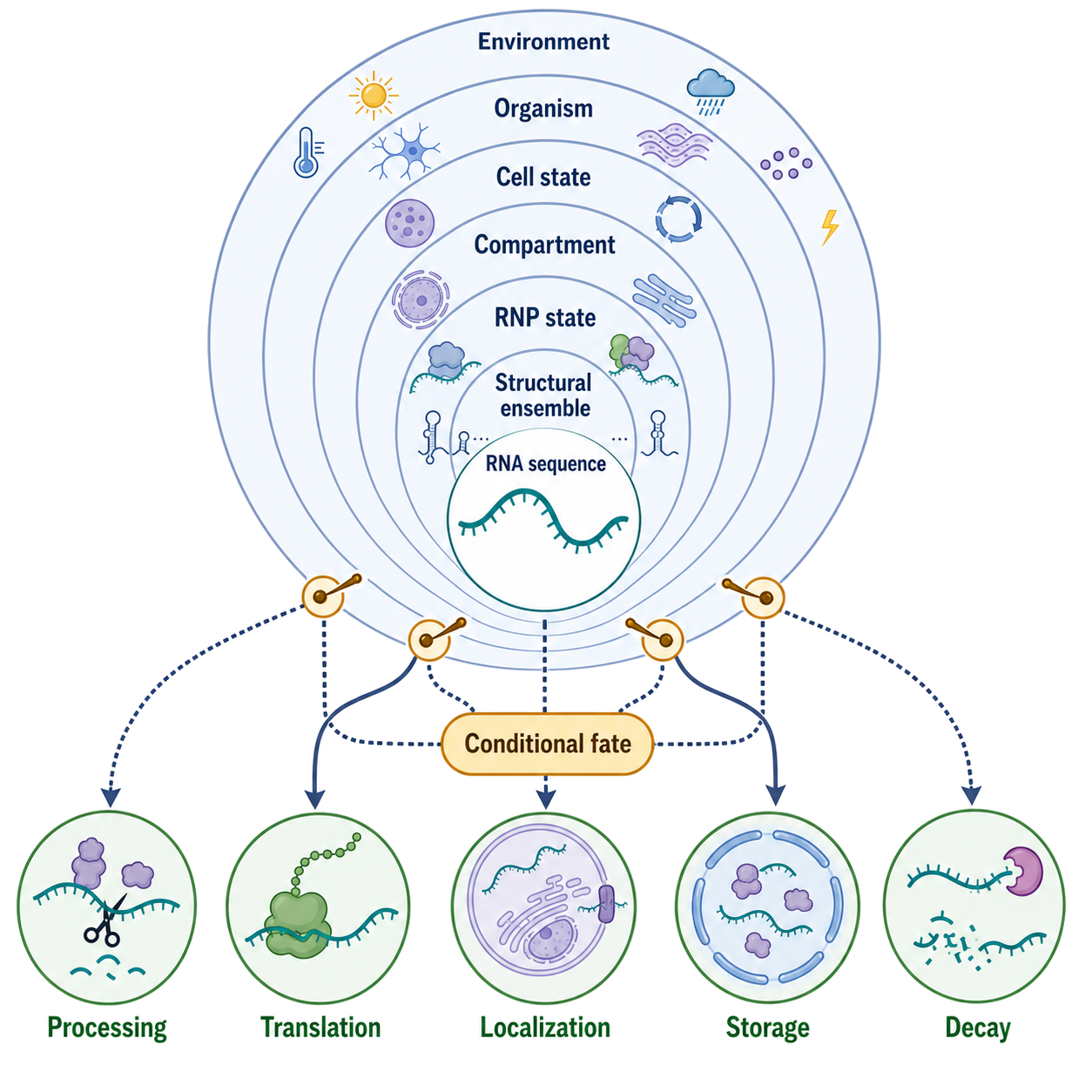
Figure 165.9. Conditional RNA Fate Across Biological Scales. RNA fate emerges from coupled molecular processes whose probabilities change across compartments, cell states, organisms, and environments.
Cell state adds another axis. A transcript’s abundance can change because synthesis, processing, export, localization, translation, or degradation changed. Single-cell RNA sequencing usually samples only part of the RNA population and may confound biological absence with dropout. Dissociation can induce stress programs, ambient RNA can contaminate droplets, and doublets can mimic hybrid states. Benchmarking of doublet detection and spatial integration demonstrates that computational conclusions depend on dataset composition, ground truth, and evaluation design (Xi_2021_DoubletBenchmark; Li_2022_SpatialIntegrationBenchmark). Time, lineage, perturbation, and orthogonal protein or imaging data are needed to distinguish stable identities from transient responses and technical mixtures.
Developmental regulation is especially hard because perturbing an RNA regulator can change the abundance or timing of cell states themselves. A bulk comparison may then attribute compositional change to regulation within a cell type. Lineage tracing, temporally controlled perturbations, and matched multimodal measurement can separate these explanations. Even then, developmental systems contain hysteresis: an early RNA event may alter a later state after the initiating RNA is gone. Causal interpretation must match the time scale of the mechanism.
Comparative biology prevents human or mammalian examples from becoming universal rules. Bacteria couple transcription and translation; eukaryotes usually separate them spatially. Archaea combine features that do not fit a simple intermediate category. Plants, fungi, protists, and diverse animals differ in small-RNA pathways, RNA editing, trans-splicing, organellar expression, dosage compensation, and surveillance. Viruses compress regulation into small genomes and exploit host RNA machinery while evolving unusual structures and replication strategies. A mechanism conserved at the level of function may use nonorthologous components; a conserved protein may regulate different targets.
Evolutionary explanations also require restraint. Sequence conservation can support functional constraint, but rapidly evolving or lineage-specific RNAs can be functional. Transcription alone is weak evidence of selected function. Knockout phenotypes may reflect overlapping DNA elements or transcriptional activity rather than the mature RNA product. Conversely, absence of a laboratory phenotype does not establish nonfunction if relevant environments, life stages, or genetic backgrounds were not tested. Comparative evidence is strongest when covariation, conserved structure, synteny, biochemical activity, and organismal phenotype converge.
Box 165.5. A Context Matrix for RNA Generalization
- Section: Section 165.3
- Box text: Before generalizing, record the RNA species or isoform, molecular state, compartment, cell type, developmental stage, organism, genotype, environment, assay, and perturbation. Then ask which dimensions were varied independently. A mechanism shown in one cultured cell line under overexpression may be a valid local mechanism, but it is not yet a general rule for primary tissue, another organism, or physiological expression. Boundary tests are positive scientific results because they define where the mechanism stops.
Environment integrates these axes. Nutrient availability, temperature, oxygen, infection, toxins, circadian time, and social or ecological interactions alter transcription and RNA fate. A regulatory network inferred in rich laboratory medium may fail in a host or fluctuating environment. Human cohort associations may differ with ancestry, age, sex chromosomes, medication, diet, or exposure. Rather than treating context dependence as inconvenient noise, frontier studies should define the range over which a mechanism is expected to operate and deliberately test boundary conditions.
The long-term goal is a conditional theory of RNA fate: given an RNA species, its molecular state, compartment, cellular history, organism, and environment, predict which processing, interaction, translation, localization, or decay path is likely and how an intervention will change it. Chapters Chapter 34-Chapter 101 provide the component mechanisms. The frontier lies in integrating them without erasing the contexts that make each mechanism true.
165.4. Experimental frontiers in single-molecule, in situ, time-resolved, perturbational, and integrative measurement
Bulk measurements are averages over molecules, cells, and time. Those averages can be mechanistically misleading when a small subpopulation drives an event, when states interconvert, or when mutually exclusive states are collapsed into one mean. Single-molecule methods address this problem by observing individual fluorescence trajectories, sequencing individual molecules, or recording forces and currents. They can reveal dwell times, bursts, rare intermediates, and molecule-to-molecule heterogeneity. Their limitations include labeling perturbation, restricted observation windows, surface effects, photophysics, low throughput, and difficult linkage to tissue physiology.
In situ methods preserve location. Multiplexed hybridization and imaging can map many RNA species within cells or tissues; spatial capture methods can survey broader transcriptomes with coarser or platform-dependent resolution. The key inferential step is assigning molecules to cells, subcellular domains, or extracellular space. Segmentation errors, optical crowding, probe efficiency, tissue autofluorescence, diffusion, permeabilization, and spot deconvolution can alter the map. Tissue detection of viral RNA illustrates why reverse-transcription quantitative PCR, RNA in situ hybridization, and protein immunohistochemistry answer related but nonidentical questions (McHenry_2022_SARSCoV2TissueDiagnostics).
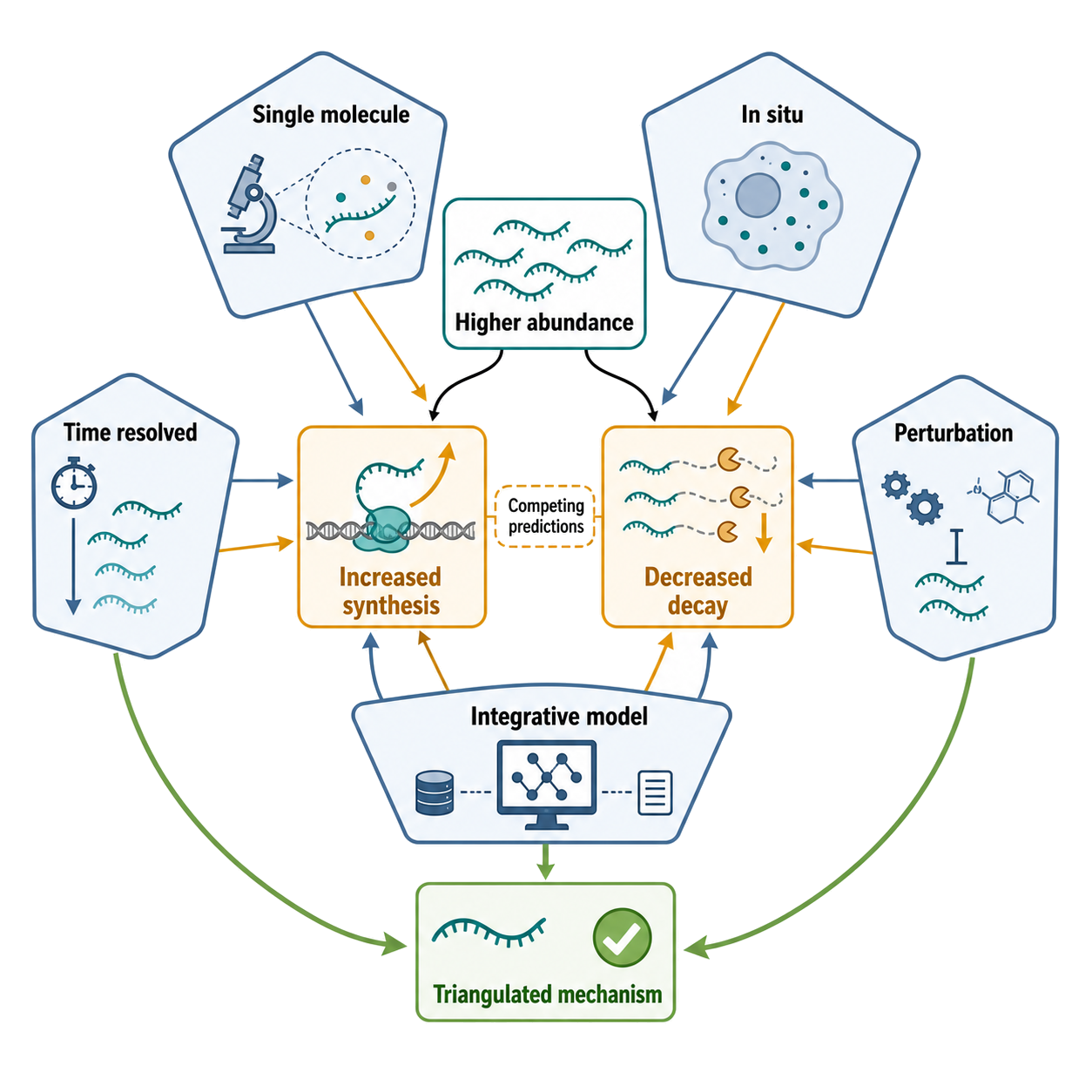
Figure 165.10. Experimental Triangulation of an RNA Mechanism. Orthogonal measurements are most informative when selected to make competing mechanistic models predict different outcomes.
Time-resolved measurements distinguish rates from levels. Metabolic labeling, pulse-chase designs, transcriptional inhibition, inducible perturbation, live-cell imaging, and dense longitudinal sampling can estimate synthesis, processing, transport, and decay. Each method perturbs the system or imposes a model. Transcriptional inhibitors can trigger stress and affect decay; nucleotide analogs can alter metabolism; pseudotime orders cells computationally but is not direct elapsed time. Rate inference is credible when the labeling chemistry, sampling interval, kinetic model, and relevant steady-state assumptions are tested.
Perturbation supplies causal leverage. CRISPR interference or activation, RNA-targeting nucleases, antisense oligonucleotides, RNA interference, degrader systems, base editors, and synthetic rescue constructs can test whether an RNA or interaction is necessary and sufficient. No perturbation is self-interpreting. Guide or oligonucleotide sequence can produce off-target effects; delivery can activate innate immunity; prolonged perturbation can induce compensation; deletion can disrupt DNA regulatory elements; and overexpression can create nonphysiological localization or stoichiometry. Multiple independent reagents, acute timing, dose-response, rescue, and direct measurement of target engagement reduce these ambiguities.
Table 165.7. Perturbation Failure Modes and Controls. Perturbations support causal inference only after specificity, target engagement, timing, dose, compensation, and rescue are addressed.
| Perturbation | Intended target | Alternative explanation | Minimum controls | Rescue |
|---|---|---|---|---|
| RNA interference | Target RNA abundance | Seed off-target or innate sensing | Independent reagents and target engagement | Resistant physiological construct |
| Genomic deletion | RNA-producing locus | Overlapping DNA element or transcription | Acute RNA-specific perturbation | Locus-aware rescue |
| Base editor | Selected RNA nucleotide | Bystander or off-target editing | Edit spectrum, dose, time, and phenotype | Corrected or specificity-matched control |
Integrative measurement combines modalities because each resolves different variables. Pairing transcript abundance with chromatin accessibility, protein abundance, lineage information, spatial location, perturbation identity, or structural probing can discriminate competing models. Yet integration can introduce new artifacts when cells are measured in separate aliquots, anchors are chosen from circular labels, or one abundant modality dominates a shared latent space. A joint embedding is a statistical representation, not proof that two molecular layers share a causal mechanism.
The strongest frontier experiments are designed around model discrimination. Suppose two explanations predict the same steady-state increase in an RNA: increased transcription or decreased degradation. A time-resolved label can distinguish synthesis and decay; nascent RNA imaging can localize transcriptional bursts; perturbation of a candidate nuclease can test degradation; and rescue can connect the nuclease-RNA interaction to phenotype. The value lies not in accumulating modalities but in choosing measurements that force the explanations to diverge.
Scale creates an additional challenge. High-throughput perturbation and spatial assays may produce millions of observations while sacrificing per-observation depth, validated reagents, or complete metadata. Pilot experiments should define detectable effect sizes and failure modes before scaling. Reference samples, spike-ins, positive and negative controls, randomized processing, batch-aware designs, and preregistered primary outcomes are as important at the frontier as new instrumentation.
Experimental frontiers will converge when the same RNA can be followed from synthesis through folding, interaction, localization, translation, and decay within a known cell history. Current methods observe fragments of that trajectory. Chapters Chapter 122-Chapter 139 explain the available tools; the future task is to link their outputs while preserving measurement uncertainty and material identity.
165.5. Computational frontiers in multimodal modeling, causal prediction, RNA design, and experimental validation
Computational RNA models accept different objects as input: sequence, multiple-sequence alignment, chemical probing data, molecular structure, expression matrices, images, perturbation labels, clinical covariates, or combinations of these. Their outputs may be base pairs, three-dimensional coordinates, binding sites, cell states, variant effects, expression responses, or designed sequences. A model should be evaluated against the biological question corresponding to its output, not against a convenient proxy alone.
Multimodal models aim to connect layers that are measured with different noise and resolution. For example, a model might connect RNA sequence to structure, structure to protein binding, binding to localization, and localization to phenotype. Missing data are not random: rare cell types, unstable RNAs, difficult tissues, negative experiments, and nonmodel organisms are systematically underrepresented. A model can therefore learn the sampling process or annotation conventions instead of biology. Evaluation should hold out meaningful biological axes such as RNA family, organism, laboratory, tissue, perturbation, or time, rather than only random records.
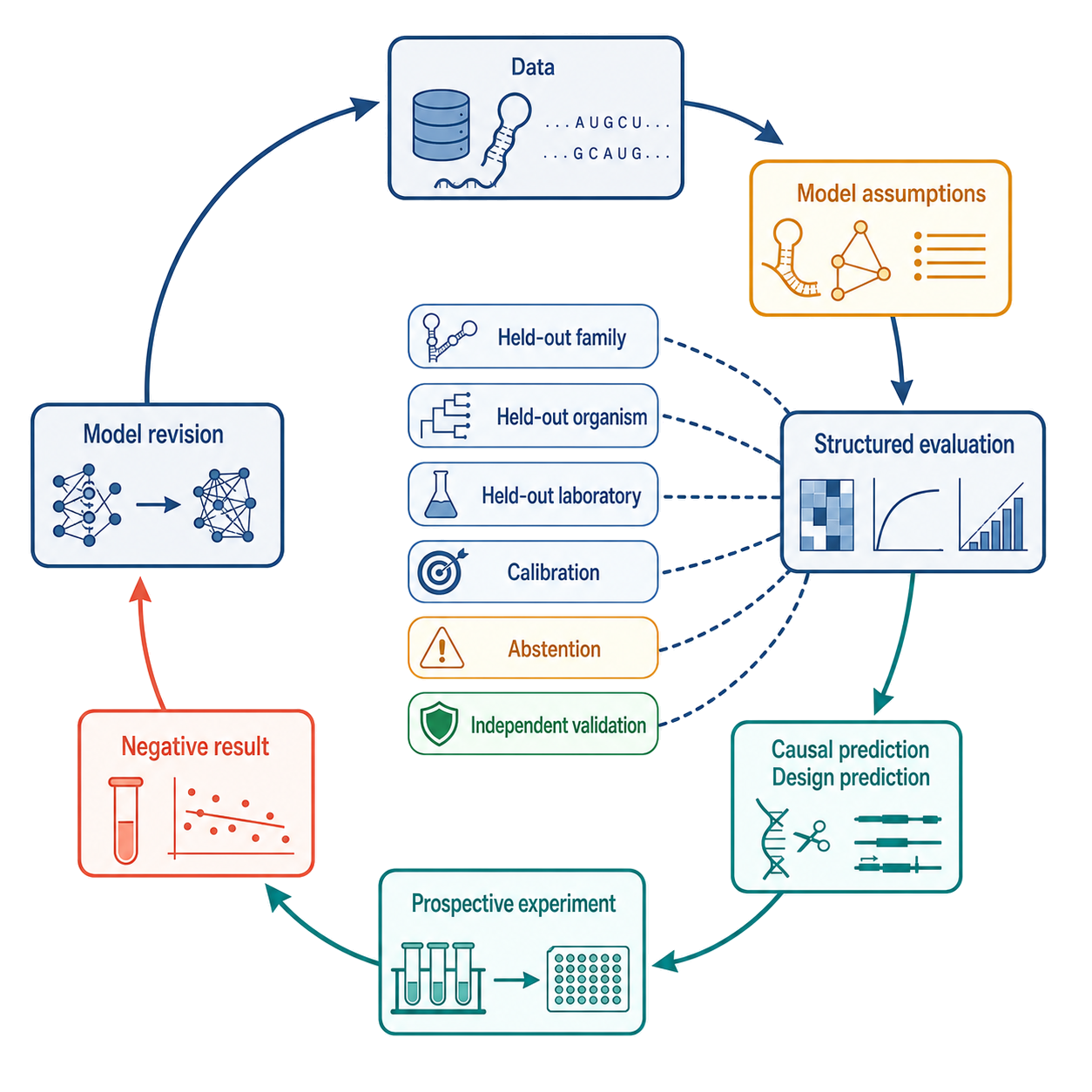
Figure 165.11. Closed-Loop Computational RNA Science. Computation advances RNA science when predictions create falsifiable experiments and both successes and failures update the model.
Causal prediction asks what will happen after an intervention. Observational expression data can predict labels or coexpression without identifying intervention effects. Perturbation data improve causal leverage, but guide efficiency, viability selection, compensatory responses, and incomplete coverage remain limitations. A credible causal model should state the intervention, target population, outcome, time horizon, and assumptions connecting observed perturbations to the proposed use. Predictions outside those conditions should carry greater uncertainty or trigger abstention.
RNA design reverses the usual prediction problem. Instead of estimating phenotype from sequence, it seeks a sequence that satisfies structural, biochemical, cellular, manufacturing, and safety constraints. Multiple sequences may satisfy one target structure but differ in ensemble behavior, unintended motifs, innate immune recognition, synthesis yield, translation, decay, or off-target complementarity. Optimization against a differentiable score can exploit weaknesses in the predictor. Designed RNAs must therefore be tested by independent assays that were not merely components of the design objective.
Table 165.8. Computational Claim-to-Validation Matrix. Evaluation should match the biological claim, with splits and prospective experiments chosen to test the intended type of generalization.
| Output | Biological split | Leakage risk | Uncertainty check | Prospective validation |
|---|---|---|---|---|
| RNA structure | Family or fold | Homologous sequence | Calibration by family | Compensatory mutations and probing |
| Cell-state label | Donor, tissue, laboratory | Shared markers or donors | Subgroup calibration | Blinded orthogonal annotation |
| Designed RNA | Design family and objective | Predictor optimization | Ensemble and shift checks | Independent molecular and cellular assays |
Machine learning is scientifically useful when it creates discriminating predictions. A structure model can propose base pairs to mutate and compensatory changes that should restore folding. A variant model can predict which splice junction changes after a nucleotide substitution. A design model can nominate sequences expected to preserve protein output while changing innate sensing or stability. Experiments should include failures and quantitative outcomes, because selective validation of attractive predictions inflates apparent performance.
Uncertainty has several sources. Aleatoric uncertainty reflects irreducible variability or noisy outcomes; epistemic uncertainty reflects limited data or model knowledge; distribution shift occurs when the new case differs from training or evaluation data. A numerical confidence score is meaningful only if calibrated for the relevant population and task. Ensemble agreement does not guarantee correctness when all models share training data or assumptions. Explanations such as attention maps or saliency can suggest model sensitivity but do not independently establish mechanism.
Box 165.6. Benchmark Performance Is Not Biological Competence
- Section: Section 165.5
- Box text: Inspect the unit of splitting, homology and duplicate removal, donor and laboratory overlap, label provenance, allowed external data, distribution shift, subgroup performance, calibration, and abstention. Ask whether the metric measures the intended biological decision or only a proxy. A model can be useful within a benchmark while remaining untested for new families, organisms, tissues, chemistries, or interventions. Prospective experiments should include hard negatives and failed predictions, not only selected successes.
Benchmarks can overstate progress through leakage. Homologous RNAs, nearly identical transcript isoforms, samples from the same donor, or labels derived from the same database may appear in both training and test sets. Random splits then measure interpolation or memorization. Benchmark labels can also be incomplete: an RNA structure is condition-specific, a cell type depends on annotation granularity, and a functional RNA may be characterized in only one organism or tissue. Transparent split rules, versioned labels, hard negatives, subgroup performance, calibration, and independent prospective tests make scores interpretable.
Scientific artificial intelligence remains part of RNA methodology, not an autonomous source of biological truth. The model’s input, assumptions, output, failure modes, and experimental validation must remain visible. Chapters Chapter 140-Chapter 152 cover computational foundations and databases; Chapter 145 treats variant and molecular-QTL integration. The frontier is reached when computation changes which experiments can be conceived and when experiments, including negative results, change the model in return.
165.6. Reproducibility, standards, benchmarks, and expert review across frontier claims
Reproducibility has several levels. Technical repeatability asks whether the same material and procedure produce similar measurements. Biological replication asks whether the conclusion holds in independent specimens, batches, donors, genotypes, environments, or laboratories. Computational reproducibility asks whether data and code regenerate an analysis with specified versions and parameters. Conceptual robustness asks whether a claim survives a different measurement principle. An RNA abundance change may be technically repeatable yet fail biological replication, depend on one normalization method, or lack support from localization, protein, or functional assays.
Standards make these distinctions testable. Minimum metadata should describe sample source, collection, storage, RNA integrity, extraction, library or probe chemistry, controls, batch structure, instrument and software versions, reference genome and annotation, filtering, statistical model, and exclusions. Method-specific standards may also require probe or primer sequences, spike-ins, calibration curves, edit or delivery chemistry, dose, target engagement, and safety measurements. Missing metadata do not automatically invalidate a result, but they restrict comparison and reuse.
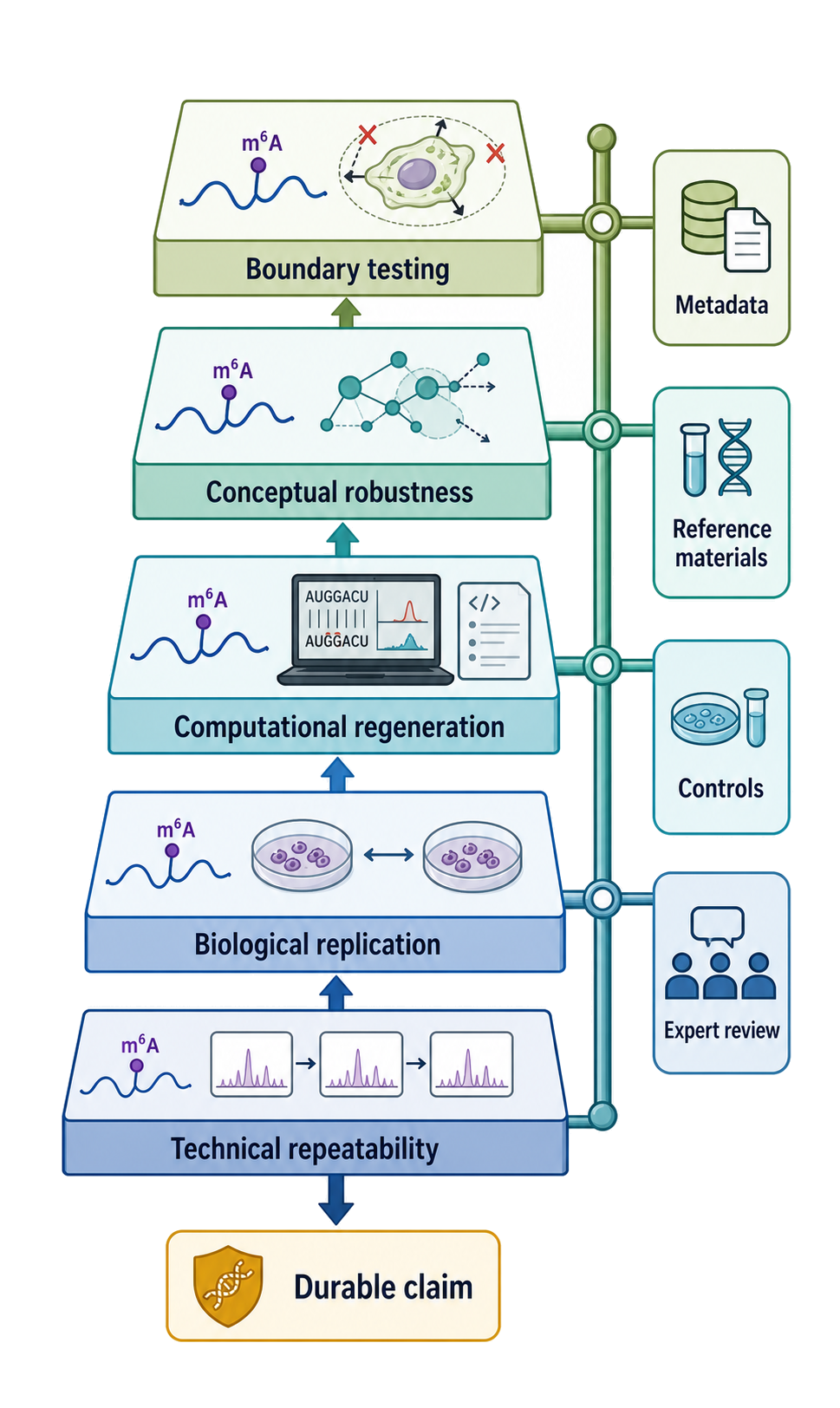
Figure 165.12. Reproducibility Ladder for Frontier Claims. Reproducibility is multidimensional; a technically stable signal becomes durable only after independent biological and conceptual tests.
Reference materials convert qualitative agreement into measurable performance. Synthetic spike-ins can test dynamic range and recovery but may not reproduce extraction or structure of endogenous RNA. Cell lines and pooled samples improve continuity but may not represent tissues. Community reference datasets can compare analysis methods, yet their labels, annotation releases, and intended use must be versioned. Interlaboratory studies are especially informative because they expose variability in handling, reagents, instruments, operator decisions, and analysis pipelines that single-site replication cannot reveal.
Benchmarks are standards for evaluation. A valid benchmark defines inputs, target labels, permitted external information, splits, metrics, uncertainty handling, and intended use. For frontier methods, the benchmark should contain boundary cases and negative controls rather than only clean positives. A spatial deconvolution method should be tested across technologies and tissue architectures; a structure predictor should face new families and alternative conformations; an editor should be evaluated for off-target and bystander activity; a therapeutic delivery claim should include biodistribution and cell-type-specific target engagement rather than bulk organ signal.
Expert review remains necessary because no checklist anticipates every biological context. Experts should examine whether the measured entity matches the claim, whether controls address plausible alternatives, whether statistical uncertainty is distinct from biological uncertainty, and whether generalization exceeds the evidence. Expert disagreement can be informative when it identifies ambiguous nomenclature, incompatible assays, or unstated boundary conditions. Consensus should document the evidence that changed judgments rather than hide disagreement behind an average score.
Reproducibility does not mean that every biological result must be numerically identical. Development, microbiomes, outbred populations, stochastic expression, and ecological variation create legitimate heterogeneity. The goal is to explain variation sufficiently to predict when a conclusion should hold. Likewise, a standard should not prohibit innovation. It should define the information and controls necessary to compare a new method with existing ones.
Field standards mature through cycles: identify a recurrent failure, define a reporting or reference requirement, test it across laboratories and systems, revise it when it fails, and connect compliance to peer review, databases, and funding or regulatory expectations. This cycle is most urgent for modification mapping, direct RNA sequencing, spatial and single-cell analysis, structure probing, RNA design, editing, delivery, and clinical biomarkers, where platforms and interpretations change quickly.
The book closes with a practical principle. Frontier claims become reliable when the chain from molecule to measurement, inference, perturbation, replication, and boundary condition is explicit. Novelty opens a question; standards and critical experiments determine whether the answer becomes shared knowledge.
Recent Consensus
RNA molecules are dynamic, context-dependent members of coupled regulatory systems rather than passive sequence records. No single assay captures sequence, structure, interaction, localization, abundance, translation, and function simultaneously. Strong conclusions therefore combine orthogonal measurements with specific perturbations. Single-cell, spatial, long-read, direct RNA, time-resolved, and high-throughput perturbational methods are expanding accessible biology, while their artifacts and inference limits remain active research topics. Computational models can prioritize mechanisms and design RNAs, but evaluation must control for biological leakage, distribution shift, incomplete labels, and optimization against imperfect predictors. Reproducibility requires method-specific metadata, reference materials, transparent analysis, independent biological replication, and expert interpretation.
Open Questions, Controversies, Deprecated Models, and Common Misconceptions
Open questions:
- Which prebiotic environments could support a continuous path from building-block synthesis through nonenzymatic replication, compartmentalization, and selection?
- Can sequence and cellular context jointly predict RNA conformational ensembles and kinetic transitions at useful accuracy?
- Which low-abundance, circular, modified, extracellular, or lineage-specific RNAs have direct functions rather than marking other processes?
- How can a single RNA molecule be followed through synthesis, processing, folding, interaction, localization, translation, and decay in intact tissue?
- Which perturbational datasets and evaluation designs are sufficient for causal prediction across cell types and organisms?
- How should standards remain comparable while sequencing, imaging, editing, and design platforms change rapidly?
Controversies:
- The prevalence and functional significance of many proposed RNA modifications, unconventional RNA entities, condensates, and long noncoding RNA mechanisms remain method- and context-dependent.
- Competing origin-of-life scenarios differ in starting chemistry, environmental plausibility, compartment models, and how readily they connect to modern RNA biology.
- Large predictive models can display impressive benchmark performance while their mechanistic interpretability and out-of-distribution reliability remain unsettled.
Deprecated or weakened claims:
- A single minimum-free-energy structure is an adequate universal representation of a functional RNA.
- Transcript detection alone demonstrates a selected biological function.
- Random train-test splits are sufficient for evaluating generalization across RNA families, organisms, tissues, or laboratories.
Common misconceptions:
- “Higher resolution automatically produces a more causal result.” Higher resolution can expose heterogeneity, but causality still requires perturbation, controls, time order, and model discrimination.
- “An RNA structure measured in vitro is the structure used in every cell.” RNA ensembles change with ions, ligands, proteins, transcription, translation, modification, and compartment.
- “A spatially localized RNA must have a localization-dependent function.” Localization can be incidental or artifactual; function requires selective disruption and mechanistic consequence.
- “A designed RNA that scores well computationally is optimized biologically.” A design can exploit predictor errors and must be tested for molecular, cellular, manufacturing, and safety properties.
- “Failure to reproduce always means the original result was false.” Failure can expose hidden context, material differences, low power, or technical variation; the discrepancy must be investigated rather than assigned automatically.
- “Standards make frontier research conservative.” Good standards identify what was measured and permit valid comparison while leaving room for new instruments, chemistries, and hypotheses.