Chapter 151. siRNA Drug Design, Screening, GalNAc Conjugates, LNP-siRNA, and RNAi Therapeutics
Scope Note
Small interfering RNA (siRNA) therapeutics use the endogenous RNA interference pathway to guide Argonaute-containing silencing complexes to a disease-relevant messenger RNA and reduce production of a harmful or unwanted protein. This chapter treats siRNA as a drug modality rather than only as a laboratory knockdown reagent. It connects sequence design, strand selection, off-target biology, Argonaute loading, chemical stabilization, GalNAc conjugates, lipid nanoparticle delivery, screening logic, approved products, durability, biomarkers, clinical endpoints, and regulatory evidence. The emphasis is mechanistic and translational: what the molecule is, how it reaches the cytosol, how it loads into RNA-induced silencing complex (RISC), how it silences, how design choices alter safety and duration, and why liver delivery has succeeded earlier than most extrahepatic applications.
Executive Summary
Therapeutic siRNAs are short duplex RNAs, usually about 21 to 23 nucleotides per strand, that exploit RNA interference to reduce expression of a selected transcript. The active guide strand loads into Argonaute; the passenger strand should be discarded; and the guide directs RNA-induced silencing complex (RISC) to complementary target RNA. With extensive guide-target complementarity, human AGO2 cleaves the target RNA near the center of the duplex.
Drug design begins with sequence rules. A useful siRNA must load into AGO2, avoid broad seed-mediated repression, survive extracellular and endosomal exposure, and remain compatible with its delivery system. Thermodynamic asymmetry is central: the strand whose 5′ end is less stably paired is preferentially selected as the guide. Designers tune terminal base-pairing, discourage passenger-strand loading, reduce internal structures and repeats, and screen multiple candidates because simple rules do not fully predict intracellular performance.
Off-target risk is not a side issue. A therapeutic siRNA can repress unintended transcripts through a miRNA-like seed mechanism if guide nucleotides 2-8 pair with accessible sites. Seed toxicity occurs when a seed disproportionately represses survival genes or regulatory networks. Transcriptome-wide profiling, seed-match enrichment, modified-seed chemistries, passenger-strand suppression, dose minimization, and orthogonal rescue experiments are therefore part of therapeutic development.
Intracellular pharmacology controls duration. Only a small fraction of internalized siRNA reaches the cytosol and loads into Argonaute, yet loaded guide strands can persist and each RISC can cleave multiple target RNAs. RISC occupancy, target transcript turnover, target protein half-life, tissue exposure, and cell turnover determine how long silencing lasts after one dose.
Chemical stabilization and delivery are the enabling technologies. 2′-O-methyl, 2′-fluoro, phosphorothioate, and other modifications can increase nuclease resistance and reduce immune stimulation, but placement matters because the 5′ phosphate, seed region, central cleavage geometry, and AGO contacts impose constraints. GalNAc conjugates target the asialoglycoprotein receptor on hepatocytes and have made subcutaneous liver-directed siRNA therapy practical. LNP-siRNA protects the duplex and promotes endosomal escape after intravenous dosing, but infusion reactions, formulation complexity, and tissue distribution remain important boundaries. Extrahepatic delivery remains difficult.
The clinical evidence base is strongest for liver-expressed targets with measurable biomarkers. Approved or widely cited examples include patisiran, givosiran, lumasiran, nedosiran, inclisiran, and vutrisiran, but this chapter’s local bibliography lacks regulatory source blocks. Approval dates, label-specific indications, and current status claims therefore require later regulatory citation audit. The durable lesson is that siRNA therapeutics work best when target tissue is accessible, target biology is validated, biomarkers are close to mechanism, and safety can be monitored over repeated dosing.
Concept Inventory
- siRNA: a short double-stranded RNA trigger that directs RNA interference. In therapeutics, the term usually means a chemically synthesized and often chemically modified duplex designed to silence one selected mRNA.
- RNA interference: a conserved small-RNA-guided silencing process in which Argonaute proteins use a guide RNA to recognize target RNAs. Therapeutic siRNA uses the post-transcriptional branch of this pathway.
- Guide strand: the strand retained in Argonaute and used for target recognition. For many drug programs the guide strand is antisense to the target mRNA.
- Passenger strand: the strand intended to be removed during RISC loading. Passenger-strand loading can create unintended off-target activity.
- Thermodynamic asymmetry: a bias created by unequal stability at the two duplex ends; the strand with the less stable 5′ end is more likely to become the guide.
- Seed region: guide-strand nucleotides, commonly positions 2-8, that can mediate miRNA-like partial targeting. The seed is useful for recognition but hazardous for off-target repression.
- Seed toxicity: reduced cell viability or tissue safety caused by seed-mediated repression of unintended transcripts, often through cumulative weak interactions rather than one perfectly matched off-target.
- RISC: RNA-induced silencing complex, the Argonaute-centered effector complex that binds a guide RNA and represses or cleaves targets.
- GalNAc conjugate: an oligonucleotide covalently linked to N-acetylgalactosamine ligands that bind the hepatocyte asialoglycoprotein receptor.
- LNP-siRNA: an siRNA formulated in lipid nanoparticles to protect the duplex, support tissue distribution, and promote endosomal escape.
What to Know Before Reading This Chapter
Readers should know that mRNA is the RNA copy used by ribosomes to make protein, that base pairing is directional and sequence-specific, and that RNA drugs are constrained by delivery, stability, immunogenicity, and target biology. Chapter 87 explains natural and experimental RNA interference; Chapter 84 explains miRNA-like seed targeting; Chapter 149 explains oligonucleotide chemistry; Chapter 156 explains lipid nanoparticles; and Chapter 158 explains clinical pharmacology and regulatory science. This chapter repeats the minimal background needed for independent reading, because therapeutic siRNA design makes little sense if sequence rules, cellular uptake, Argonaute loading, and clinical endpoint selection are treated as separate topics.
151.1. siRNA Sequence Rules, Thermodynamic Asymmetry, and Strand Selection
A therapeutic siRNA begins as a physical molecule: two short nucleic-acid strands annealed into an A-form-like duplex. One strand is designed to be complementary to the target messenger RNA and to remain in Argonaute as the guide. The other strand, the passenger strand, helps form the duplex during delivery and loading but should not guide biologically meaningful repression. This asymmetry between the two strands is the first design problem. A duplex that loads the wrong strand may silence the wrong transcriptome even if the intended guide sequence is perfectly chosen.
The canonical sequence-design window is constrained by the RNA interference machinery. Natural Dicer products and many synthetic siRNAs are roughly 21 to 23 nucleotides long and often contain short 3′ overhangs, although therapeutic designs may use blunt ends or modified architectures depending on chemistry and delivery. The guide strand must fit into Argonaute so that the 5′ nucleotide is anchored, the seed region is presented for target scanning, and the central nucleotides can form a cleavage-competent duplex with the target RNA. The passenger strand must be compatible with loading and release. These constraints make siRNA design different from designing a generic complementary oligonucleotide.
Thermodynamic asymmetry provides the classic rule for strand selection. If one end of the duplex is less stably paired than the other, the strand whose 5′ end lies at the less stable end tends to be selected as the guide. In practical terms, designers often prefer a relatively weak A:U-rich pairing at the intended guide 5′ end and a more stable pairing at the passenger 5′ end. This is not a magic switch. Argonaute isoforms, loading cofactors, chemical modifications, duplex length, 5′ phosphorylation or phosphate mimicry, and cellular context can alter the outcome. Still, thermodynamic asymmetry is the most teachable link between base-pair chemistry and drug-like strand bias.
Figure 151.1 summarizes the design logic. A candidate duplex is not judged only by predicted binding to the intended target. The designer examines terminal stability, guide 5′ nucleotide preferences, GC content, internal repeats, immune-stimulatory motifs, splice isoform coverage, single-nucleotide variant sensitivity, passenger-strand seed risk, and compatibility with chemical modifications. The target site itself should be present in the disease-relevant transcript isoforms and accessible enough for RISC engagement. A site that lies in an exon shared by pathogenic and normal isoforms may be appropriate when total gene silencing is intended, but inappropriate when allele-specific or isoform-specific silencing is required.
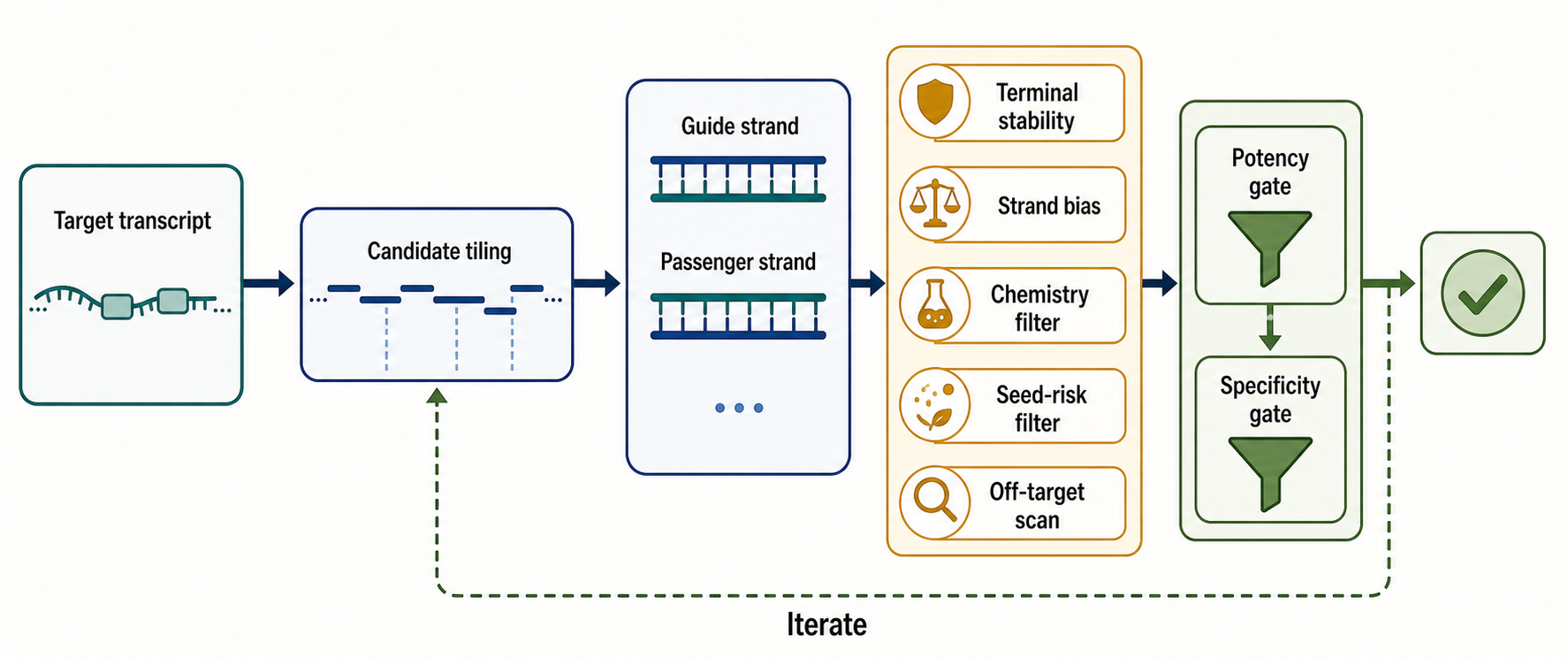
Figure 151.1. Sequence-to-candidate workflow for therapeutic siRNA design. Figure 151.1. Therapeutic siRNA design is an iterative sequence-to-molecule workflow. A candidate must match the intended transcript, favor guide-strand loading, avoid strong passenger activity and high-risk seed motifs, tolerate stabilizing chemistry, and remain potent after delivery-relevant testing.
Many empirical sequence rules are best understood as risk filters, not deterministic laws. Very high GC content can increase duplex stability and hinder passenger release or reduce target-site accessibility. Very low GC content can weaken target recognition or create unstable duplexes. Runs of identical nucleotides can complicate synthesis, promote mispriming in assays, or create seed motifs enriched in unintended transcripts. Internal complementarity within either strand can create alternative structures. Immunostimulatory motifs, especially in less modified RNAs, can activate endosomal Toll-like receptors or cytosolic RNA sensors. None of these filters alone defines success, but together they reduce the number of weak or dangerous candidates entering expensive testing.
The molecular example of PCSK9-directed siRNA illustrates why sequence and tissue context are inseparable. PCSK9 is produced mainly by hepatocytes and secreted into blood, where it regulates low-density lipoprotein receptor abundance. A hepatocyte-targeted siRNA can lower PCSK9 production at the source, and plasma LDL cholesterol provides a measurable downstream biomarker. A PCSK9 site chosen without attention to transcript isoforms, human genetic variation, and hepatocyte delivery would not be a therapeutic design; it would be only a complementary sequence. The chapter-local reference file contains a verified 2026 method paper on refined liquid-phase assembly and comparative validation of GalNAc-siRNA conjugates in PCSK9 targeting, which supports the use of PCSK9 as a GalNAc-siRNA design and validation example [Dmitriev_NA_2026_GalNAc_siRNA_PCSK9].
Table 151.1 separates common design variables from their biological consequences. The important lesson is that a variable can affect more than one layer. A 2′-O-methyl modification in the seed region may reduce off-target repression but can also change potency. A terminal base-pair change may improve guide selection but alter duplex stability. A target-site choice may improve isoform coverage but create vulnerability to a common variant. Therapeutic design therefore uses iterative profiling rather than a single “best sequence” calculation.
Table 151.1. siRNA sequence-design variables and consequences. Table 151.1. siRNA design variables are coupled. A change that improves guide selection or stability can alter potency, off-targeting, immune stimulation, or manufacturability.
| Variable | Preferred design direction | Biological rationale | Major caveat | Assay or check |
|---|---|---|---|---|
| Terminal stability | Make the intended guide 5′ end less stably paired than the passenger 5′ end. | Thermodynamic asymmetry biases guide-strand loading into Argonaute. | Strand choice is also affected by chemistry, duplex architecture, and loading context. | Strand-specific AGO loading or guide-versus-passenger activity assay. |
| Guide 5′ nucleotide and phosphate state | Preserve AGO-compatible 5′ recognition, using phosphorylation or a phosphate mimic when required. | The guide 5′ end anchors in Argonaute and orients the seed for target search. | Blocking or mistuning the 5′ end can reduce loading even when target complementarity is strong. | AGO loading, target-cleavage, and potency assays under final chemistry. |
| GC content | Keep GC content in a moderate range and avoid unusually stable or unstable duplexes. | Balanced stability supports duplex handling, passenger release, and target pairing. | Optimal GC range is sequence- and chemistry-dependent, not a universal cutoff. | Candidate panel dose-response against endogenous target RNA. |
| Seed sequence | Avoid guide seeds predicted to repress many essential or stress-sensitive transcripts. | Guide nucleotides 2-8 can mediate miRNA-like off-target repression. | Seed pairing risk depends on site context, transcript abundance, and dose. | Seed-burden scoring plus RNA-seq seed-enrichment analysis. |
| Passenger seed | Reduce passenger loading and avoid high-risk passenger-seed motifs. | Low-level passenger activity can silence unintended transcript sets. | Passenger signatures may appear only at high exposure or in sensitive cell types. | Strand-specific RISC profiling and passenger-seed transcriptome checks. |
| Target-site isoform coverage | Choose a site present in the disease-relevant transcript isoforms intended for silencing. | RISC can only cleave transcripts that contain the selected accessible site. | Total-gene, isoform-specific, and allele-specific goals require different site choices. | Transcript annotation review and disease-cell RNA expression confirmation. |
| Common variants and paralogs | Avoid target sites disrupted by common variants or shared with unintended paralogs unless deliberately targeting them. | Patient sequence variation or gene-family similarity can reduce efficacy or create unintended cleavage. | Reference-transcript specificity can fail in real patient transcriptomes. | Population variant search and perfect or near-perfect off-target scan. |
| Repeats and immune motifs | Avoid problematic homopolymers, repetitive words, and sequence motifs likely to trigger innate sensing. | These features can complicate synthesis, assay interpretation, or RNA-sensing responses. | Modification and delivery can mitigate but not erase sequence-driven risk. | Synthesis QC, cytokine panel, and chemistry-matched controls. |
| Modification tolerance | Test potency and specificity under the final or near-final modification pattern. | Stabilizing chemistry can change AGO loading, seed behavior, and target cleavage. | A potent unmodified research siRNA may not remain potent as a therapeutic construct. | Final-chemistry potency, off-target, immune, and stability assays. |
Strand selection is also a safety issue because the passenger strand has its own seed. Even low-level passenger loading can matter if a high dose is used or if the passenger seed resembles many regulatory miRNA seeds. Designers often weaken the passenger 5′ loading potential, introduce modification patterns that discourage passenger activity, and profile both guide- and passenger-seed off-target signatures. The strongest candidates show intended guide activity at low concentration, minimal passenger activity, and a wide separation between efficacious exposure and exposures that perturb unrelated transcripts.
Allele-specific and variant-sensitive siRNAs add another layer of sequence logic. If a pathogenic allele differs from the wild-type allele by one nucleotide, the designer may place the mismatch in a position where AGO2 cleavage or binding is strongly discriminated. Central mismatches can reduce cleavage, while seed mismatches can reduce binding, but the optimal placement depends on the target, sequence context, and required selectivity. Allele-specific silencing is attractive for dominant toxic gain-of-function diseases, but the evidentiary bar is high because partial wild-type knockdown may still occur in patients.
Do not overgeneralize the phrase “perfectly complementary.” A therapeutic guide may be fully complementary to a chosen target site in the reference transcript, but real patient transcriptomes include isoforms, RNA editing, single-nucleotide variants, paralogs, pseudogenes, and repetitive regions. A design that is perfect against one sequence record can be imperfect in the patient population or unexpectedly complementary to another transcript. Sequence rules therefore depend on current annotation and population genetics, not only on Watson-Crick pairing.
151.2. Seed Toxicity, Off-Target Modeling, and Transcriptome-Wide Safety Assays
An siRNA has two targeting modes. The desired therapeutic mode is extensive guide pairing to the intended mRNA, followed by AGO2-mediated cleavage. The undesired but biologically plausible mode is miRNA-like repression through the seed region. In this second mode, guide nucleotides 2-8 can bind short complementary sites in many transcripts, especially in 3′ untranslated regions, and produce modest repression of each target. Because many weak changes can converge on cell survival, differentiation, immune activation, or stress pathways, seed-mediated off-targeting can be clinically important even when no single off-target transcript is dramatically silenced.
Seed toxicity is the most consequential form of this problem. The term does not mean that the seed region is chemically poisonous. It means that a particular seed sequence can repress a network of transcripts whose combined loss harms cells or tissues. In cell culture screens, some seeds repeatedly reduce viability across many targets because the seed, not the intended gene knockdown, drives the phenotype. In drug development, the analogous hazard is a guide seed that perturbs essential or stress-sensitive transcripts in hepatocytes, kidney cells, immune cells, neurons, or other exposed tissues. A candidate with exquisite on-target potency can still fail if the seed signature is toxic.
Off-target modeling starts with sequence matching but cannot stop there. A simple model counts transcripts containing seed-complementary words. More useful models consider site location, local AU-richness, conservation, transcript abundance, RNA-binding protein occupancy, secondary structure, and cumulative site number. The model must also distinguish guide-seed and passenger-seed risk. For therapeutic use, the output is not a binary yes-or-no prediction; it is a prioritization of candidates for transcriptome-wide testing and dose-response analysis.
Figure 151.2 presents the evidence ladder. A candidate siRNA is first checked in silico for perfect and near-perfect unintended matches, then screened for seed-site enrichment among downregulated transcripts, then tested in cells and tissues with dose-response transcriptomics. The strongest off-target case is a coherent pattern: downregulated genes are enriched for the candidate seed, the pattern appears before secondary toxicity, the pattern scales with exposure, and a seed-modified or sequence-independent control reduces the signature. The weakest case is a late RNA-seq profile from dying cells, because cell death itself changes thousands of transcripts.
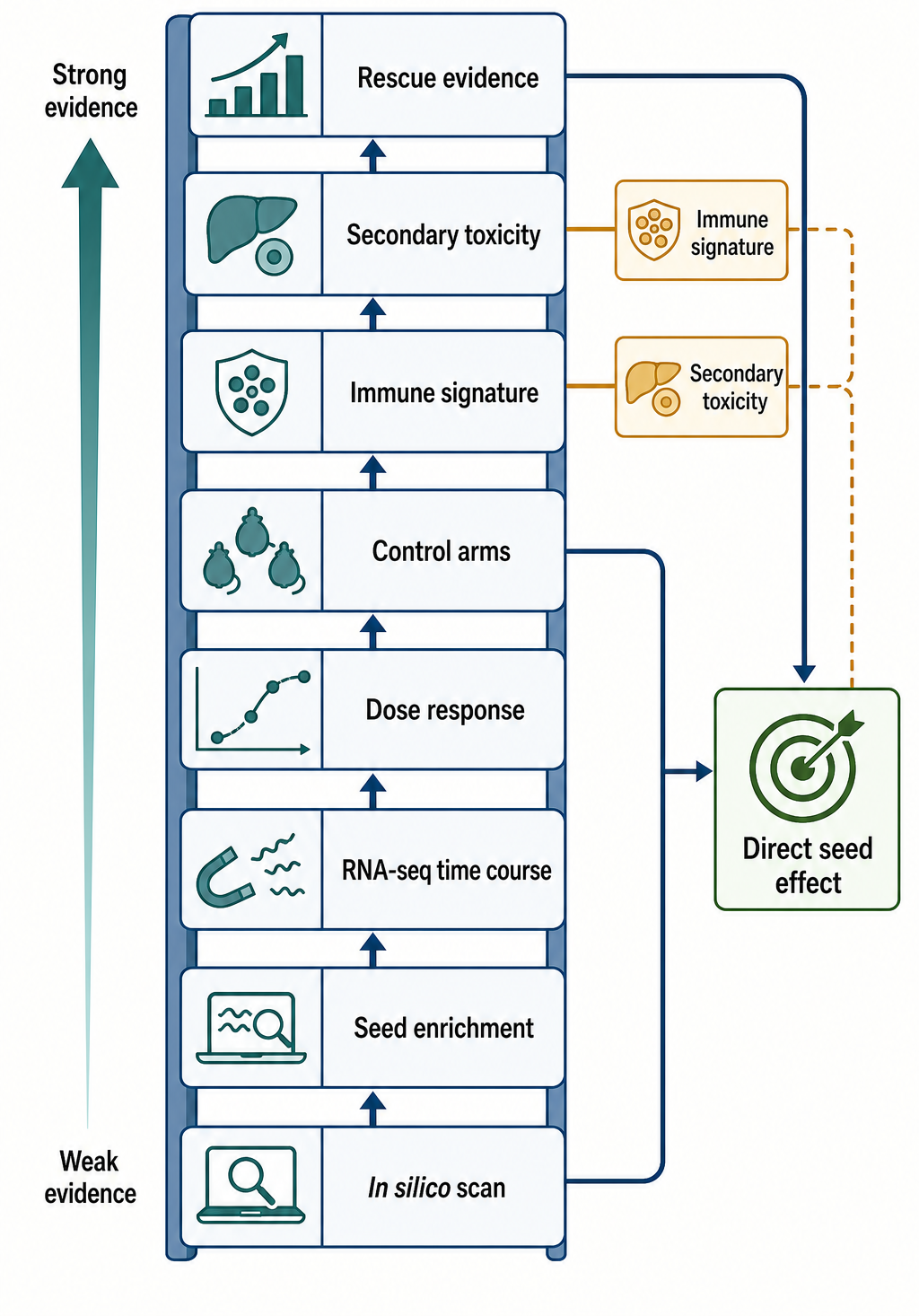
Figure 151.2. Evidence ladder for seed off-target and seed-toxicity assessment. Figure 151.2. Seed off-target assessment requires convergent evidence. Early dose-dependent downregulation of seed-matched transcripts supports direct miRNA-like repression, whereas late transcriptome collapse in dying cells is weak evidence for direct targeting.
Transcriptome-wide safety assays are not merely “RNA-seq after dosing.” They require careful design. The test system should express the intended target and the plausible off-target transcriptome. Time points should capture early direct repression before downstream compensation dominates. Doses should include a pharmacologically relevant range and higher exposures that reveal safety margins. Controls should include non-targeting siRNAs with comparable chemistry, seed-family controls when available, delivery-only controls for LNPs or conjugates, and positive controls that verify RNAi competence. Replicates and batch handling matter because modest seed effects can be obscured by technical variation.
Table 151.2 defines common off-target assay readouts and their interpretation. Differential expression identifies perturbed transcripts but does not alone prove direct targeting. Seed enrichment among downregulated transcripts supports miRNA-like direct repression. Proteomics can show whether transcript changes propagate to protein loss, but protein half-lives can delay the signal. Cell viability assays reveal toxicity but are late and nonspecific. Rescue assays, in which the intended target is restored or an siRNA-resistant target transcript is supplied, can distinguish on-target biology from off-target phenotypes in preclinical systems. No single assay replaces the set.
Table 151.2. Off-target and safety assays for siRNA candidates. Table 151.2. Off-target assessment is strongest when sequence prediction, transcriptome data, immune controls, and functional rescue agree.
| Assay | Direct readout | Strongest inference | Common artifact | Useful control |
|---|---|---|---|---|
| In silico perfect-match search | Extensive complementarity to annotated transcripts. | Flags unintended transcripts that could be AGO2-cleaved. | Outdated annotations, missed isoforms, or missing population variants can hide risk. | Current transcriptome annotation, paralog search, and population-variant scan. |
| Seed-site enrichment | Overrepresentation of guide- or passenger-seed sites among downregulated RNAs. | Supports direct miRNA-like off-target repression. | Late stress or cell-death profiles can mimic broad seed effects. | Early time points, dose response, and seed-modified comparator. |
| RNA-seq time course | Transcript abundance changes across exposure and recovery. | Separates early direct repression from downstream pathway response. | Batch effects, delivery stress, and dying cells can dominate the profile. | Chemistry-matched non-targeting siRNA and delivery-only controls. |
| Proteomics | Protein abundance after target or off-target RNA changes. | Shows whether RNA-level perturbations propagate to protein or pathway effects. | Stable proteins can delay or mask effects; low-abundance proteins may be missed. | Matched RNA-seq, target-protein assay, and time-course sampling. |
| Viability assay | Cell growth, metabolic activity, or survival after siRNA exposure. | Detects toxic seeds, essential-target effects, or delivery toxicity when interpreted with sequence data. | High transfection dose or vehicle toxicity can create nonspecific loss of viability. | Dose titration, multiple siRNAs, delivery control, and rescue experiment. |
| Cytokine or innate immune panel | Interferon-stimulated genes, cytokines, or immune-cell activation markers. | Identifies RNA cargo, impurity, or vehicle-driven immune activation. | Species and cell-type differences can misrepresent human immune sensing. | Relevant human cells, modified RNA comparator, and delivery-only control. |
| Rescue assay | Phenotype after restoring the intended target or using an siRNA-resistant transcript. | Supports on-target mechanism when rescue is specific and expression is controlled. | Overexpression can create nonphysiological pathway behavior. | Silent-mutation rescue at near-endogenous expression. |
| Passenger-strand profiling | Passenger guide abundance or passenger-seed repression signature. | Detects unintended passenger loading and activity. | Low-level passenger loading can be difficult to detect directly. | Strand-specific qPCR, AGO immunoprecipitation, and passenger-seed controls. |
Box 151.1. Reading a Seed Signature
Do not call every transcriptome change after siRNA exposure a direct off-target effect. A strong seed-off-target interpretation has several converging features: downregulated transcripts are enriched for sites complementary to the guide or passenger seed; the pattern appears before broad stress or cell death; the effect scales with active exposure; and a seed-altered comparator weakens the same signature while preserving on-target knockdown. A weak interpretation relies only on a late RNA-seq profile from unhealthy cells or on a computational seed count without expression data. Immune activation can also confuse the analysis because interferon-stimulated genes and inflammatory pathways can dominate the transcriptome. The practical question is not whether any off-target transcript changes exist, but whether the candidate has a reproducible, exposure-linked seed burden at doses near the intended therapeutic window.
Chemical modification can reduce off-targeting, especially in the seed. 2′-O-methyl substitution at selected seed positions has been used to reduce miRNA-like repression for some siRNAs, and other sugar or backbone changes can tune binding. The mechanism is straightforward: AGO-bound guide recognition depends on the geometry and energetics of seed pairing, so altering one or more ribose positions can weaken short seed-only interactions more than extensive on-target pairing. The caveat is equally important. If modification disrupts AGO loading, target cleavage geometry, or guide stability, potency falls. Off-target mitigation must therefore be tested with potency retained, not assumed from chemistry.
Perfect-match off-targets are rarer than seed off-targets but more dangerous when present. A guide with extensive complementarity to an unintended transcript can direct AGO2 cleavage just as efficiently as it cleaves the intended target. Near-perfect complementarity in paralogs, pseudogenes, or shared domains can also matter. For therapeutic candidates, current transcript annotations, disease-relevant isoforms, and population variants should be searched systematically. For targets in gene families, the specificity problem may be intrinsic: a conserved catalytic domain sequence might be a poor target site if selective knockdown is required.
Immune activation can masquerade as off-target gene regulation. Unmodified or insufficiently shielded RNA can activate endosomal TLR7 or TLR8, cytosolic sensors, or double-stranded RNA response pathways. The resulting interferon-stimulated gene expression can be misread as direct siRNA off-targeting. Conversely, a seed-mediated repression event can trigger stress pathways that resemble innate immunity. Assay interpretation therefore needs immune markers, cytokine measurements, and chemistry or delivery controls. Chapter 108 treats RNA sensing pathways in detail, but the practical rule here is simple: a transcriptome profile is not interpretable until delivery, innate sensing, seed effects, and on-target biology are separated.
Screening programs historically used siRNA libraries to infer gene function. Therapeutic programs use some of the same reagents but a different standard. A screen can tolerate multiple siRNAs per gene, statistical aggregation, and follow-up validation because the goal is discovery. A drug candidate cannot average away off-target effects across a pool; one molecular species is administered to patients. This distinction explains why “the siRNA knocked down the target in a screen” is weak evidence for therapeutic suitability. Drug design requires a named molecule, defined chemistry, reproducible synthesis, safety margins, and a clinical rationale.
The chapter-local references are insufficient for a fully sourced history of seed toxicity and off-target modeling.
151.3. AGO Loading, Intracellular Trafficking, RISC Kinetics, and Duration of Silencing
Delivery brings an siRNA close to the cell; pharmacology begins when a guide strand reaches Argonaute in the cytosol. Most administered siRNA molecules never become active RISC. Some remain extracellular, some bind serum proteins, some are taken up but retained in endosomes or lysosomes, some are degraded, and some reach nonproductive compartments. The small fraction that escapes into the cytosol and loads into Argonaute can nevertheless produce strong silencing because loaded RISC is catalytic and long-lived relative to many free oligonucleotide pools.
The intracellular pathway can be described in steps. First, the formulation or conjugate binds a cell-surface receptor or membrane surface. GalNAc-siRNAs bind the asialoglycoprotein receptor on hepatocytes; LNP-siRNA particles are taken up by endocytic routes influenced by apolipoproteins, lipid composition, and tissue vasculature. Second, internalized material enters endosomes. Third, a small amount of siRNA escapes the endosomal system into the cytosol. Fourth, the duplex encounters RNAi loading machinery and Argonaute. Fifth, the passenger strand is removed or sliced, leaving a guide-loaded RISC. Sixth, RISC finds target RNA, pairs extensively, cleaves the target, and can then act again.
Figure 151.3 links trafficking to pharmacodynamics. Endosomal escape is a narrow bottleneck, but it is not the only bottleneck. A highly efficient escape event will not help if the guide is a poor Argonaute ligand. Strong Argonaute loading will not help if the target protein is stable for weeks and the clinical endpoint depends on protein depletion. Durable tissue exposure will not help if the target tissue divides rapidly and dilutes loaded RISC. The observed time course of biomarker reduction is therefore a composite of delivery, loading, target RNA turnover, protein turnover, and tissue biology.
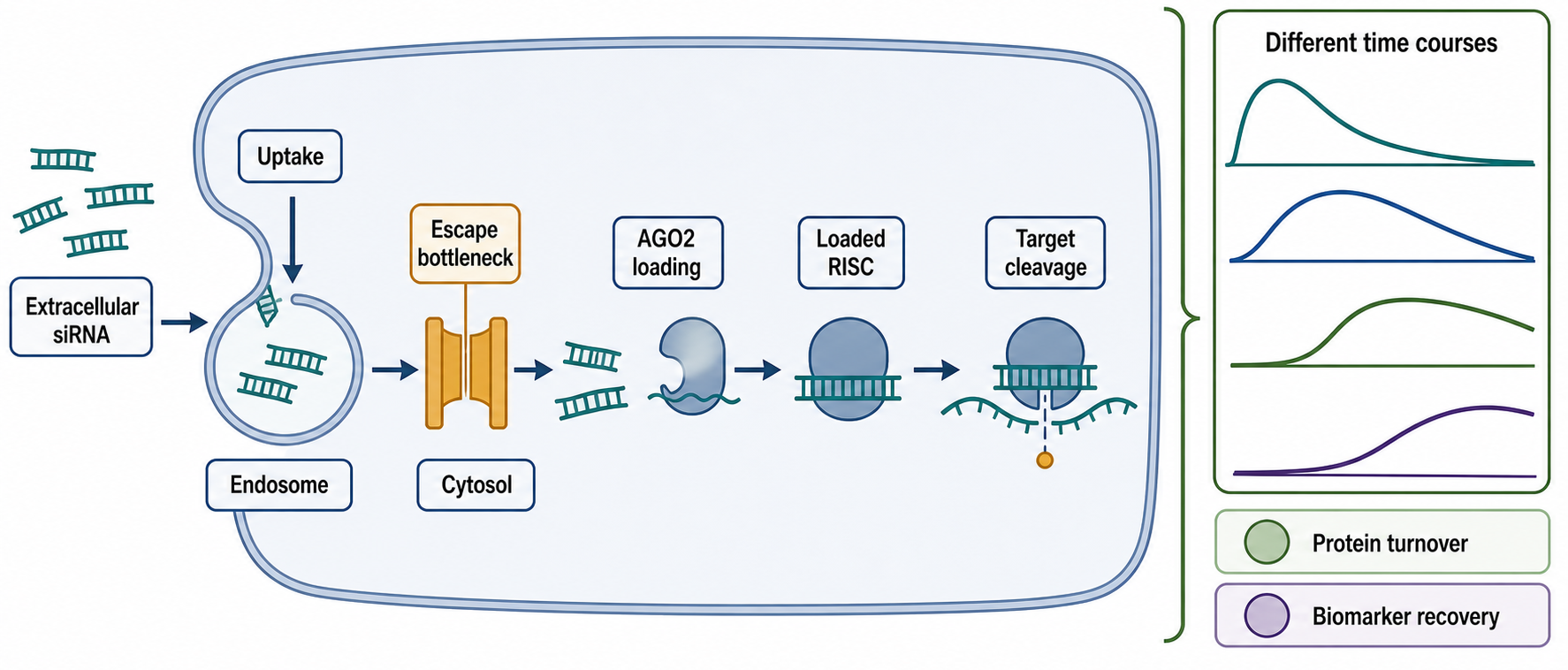
Figure 151.3. Intracellular trafficking and pharmacodynamic duration. Figure 151.3. Productive siRNA pharmacology is gated by cytosolic escape and Argonaute loading. Durable silencing can persist after plasma drug declines because guide-loaded RISC and downstream protein turnover determine the observed pharmacodynamic curve.
Box 151.2. Productive Delivery Means Loaded RISC
Useful delivery evidence forms a mechanistic ladder. Total drug in plasma shows exposure, not target-cell entry. Total drug in tissue shows biodistribution, not necessarily productive delivery. Microscopy or fractionation can show uptake, but much of the signal may be trapped in endosomes or lysosomes. Cytosolic availability is closer to mechanism, yet it still does not prove that the guide has loaded correctly. Strand-specific Argonaute association, target mRNA reduction at the predicted site, target-protein reduction, and a coherent biomarker time course are stronger evidence that delivery has produced active RNA interference. This distinction matters when comparing GalNAc conjugates, LNPs, and extrahepatic carriers. A platform that gives high tissue concentration but little loaded RISC may look impressive analytically while failing pharmacologically.
AGO2 is the central effector for cleavage-competent siRNA silencing in humans. The guide 5′ end binds a pocket in Argonaute, the seed region is organized for target search, and extensive pairing with the target positions the scissile phosphate near the AGO2 catalytic center. Cleavage usually occurs opposite guide positions 10 and 11. After cleavage, the target fragments are degraded by cellular RNA decay pathways. The guide remains associated with AGO2 and can engage additional target molecules. This catalytic reuse is one reason siRNA pharmacodynamics can be potent at low intracellular guide abundance.
RISC kinetics are not simply equilibrium binding. Target association requires scanning and seed nucleation; productive cleavage requires propagation of pairing through the central region; product release must occur for catalytic turnover. Chemical modifications can influence each stage. A modification tolerated in the seed may slow target association; a modification near the cleavage site may reduce slicing; a terminal modification may improve stability while preserving loading. Drug design often relies on empirical patterns because small changes in guide chemistry can have nonlinear effects on RISC behavior.
Duration of silencing differs from plasma half-life. Free siRNA in plasma may clear quickly, especially for receptor-targeted conjugates, while intracellular guide-loaded RISC persists. GalNAc-siRNA drugs can show long pharmacodynamic duration after intermittent subcutaneous dosing because hepatocytes internalize the conjugate, a fraction loads into RISC, and the target protein pool recovers only as mRNA and protein production resume. LNP-siRNA may produce a different exposure profile, with infusion-related peak exposure and tissue distribution shaped by nanoparticle clearance. In both cases, the clinically relevant duration is the biomarker or endpoint time course, not only the amount of intact siRNA in blood.
Target biology strongly affects apparent potency. Silencing an mRNA encoding a short-lived secreted protein can produce rapid plasma biomarker change. Silencing a target with a stable protein, a large extracellular depot, or slow tissue turnover may require repeated dosing and delayed endpoint assessment. Transthyretin, PCSK9, ALAS1, and HAO1 programs illustrate why liver-expressed targets with measurable circulating or urinary biomarkers have been attractive: the site of production is accessible, and the pharmacodynamic readout is close to the mechanism. This does not mean liver targets are biologically easy, but it reduces uncertainty compared with diseases where the target cell is rare, inaccessible, or hard to sample.
Intracellular trafficking also shapes safety. LNPs and conjugates can expose different cell types, trigger different innate immune responses, and distribute differently within liver cell populations. Hepatocytes are not the only liver cells; Kupffer cells, sinusoidal endothelial cells, stellate cells, and immune cells can respond to delivery vehicles or RNA cargo. A hepatocyte-targeted conjugate reduces but does not eliminate the need to monitor non-hepatocyte exposure, especially at high dose or in diseased livers where receptor expression, endocytosis, and inflammation may differ from healthy tissue.
Resistance to siRNA at the cellular level can arise in several ways. The target transcript can acquire a sequence change in the target site, especially in viral or tumor contexts with strong selection and high genetic variability. Alternative splicing or alternative polyadenylation can remove or reduce the target site. Disease biology can bypass the target pathway, making knockdown pharmacologically insufficient. Reduced uptake, altered receptor expression, or changed endosomal trafficking can reduce intracellular delivery. For inherited liver diseases with stable germline target sequences, classic sequence resistance may be less prominent than inadequate exposure, compensatory metabolism, or endpoint mismatch.
The evidence basis for RISC loading and duration includes biochemical Argonaute studies, cell-based reporter assays, target cleavage mapping, pharmacokinetic and pharmacodynamic modeling, animal tissue measurements, and clinical biomarker time courses. Each method has limits. Reporter assays can exaggerate accessibility. Total tissue siRNA concentration does not equal loaded guide concentration. Plasma biomarkers may lag mRNA cleavage. Clinical endpoint improvement may require more than target knockdown. A mature development program connects these layers rather than treating one assay as definitive.
151.4. Chemical Stabilization, Conjugates, and Nuclease or Immune Tuning
Unmodified RNA is usually a poor systemic drug. It is polyanionic, nuclease-sensitive, rapidly cleared, and recognizable by innate immune sensors. Therapeutic siRNAs solve these problems by combining sequence design, chemical modification, and delivery. The chemistry must protect the molecule without disabling RNA interference. This creates a design grammar: some positions tolerate extensive modification; other positions are constrained by Argonaute contacts, guide 5′ recognition, seed pairing, or cleavage geometry.
Common stabilizing modifications include 2′-O-methyl and 2′-fluoro sugar substitutions, phosphorothioate backbone linkages near termini or selected positions, and terminal caps or conjugation handles. A 2′-O-methyl group replaces the ribose 2′-hydroxyl hydrogen with a methyl group, increasing nuclease resistance and often reducing immune stimulation. A 2′-fluoro substitution changes ribose electronics and stability. A phosphorothioate linkage replaces a nonbridging phosphate oxygen with sulfur, increasing nuclease resistance and protein binding but potentially altering distribution and toxicity. These modifications are familiar from broader oligonucleotide chemistry in Chapter 149, but siRNA placement rules are shaped by Argonaute.
The guide 5′ end is special. Argonaute recognizes a 5′ phosphate or phosphate-like state, and guide-strand loading depends on correct orientation. Some therapeutic designs use a 5′ phosphate mimic or rely on intracellular phosphorylation, but the design must ensure that the active guide has the proper 5′ chemistry. The seed region is also special because seed contacts mediate both intended target search and unintended miRNA-like off-targeting. The central guide positions are special because they align target cleavage. Chemistry is therefore not a uniform coat of protection; it is a position-specific pattern.
Figure 151.4 shows a simplified modification map. Terminal and passenger-strand modifications can improve stability and reduce passenger loading. Seed-region modifications can reduce off-target repression when carefully chosen. Central-region modifications must preserve AGO2 slicing geometry. Conjugation sites must not prevent duplex loading or receptor engagement. Actual drug candidates use proprietary and empirically optimized patterns, but the conceptual map helps explain why “more modified” is not automatically better.
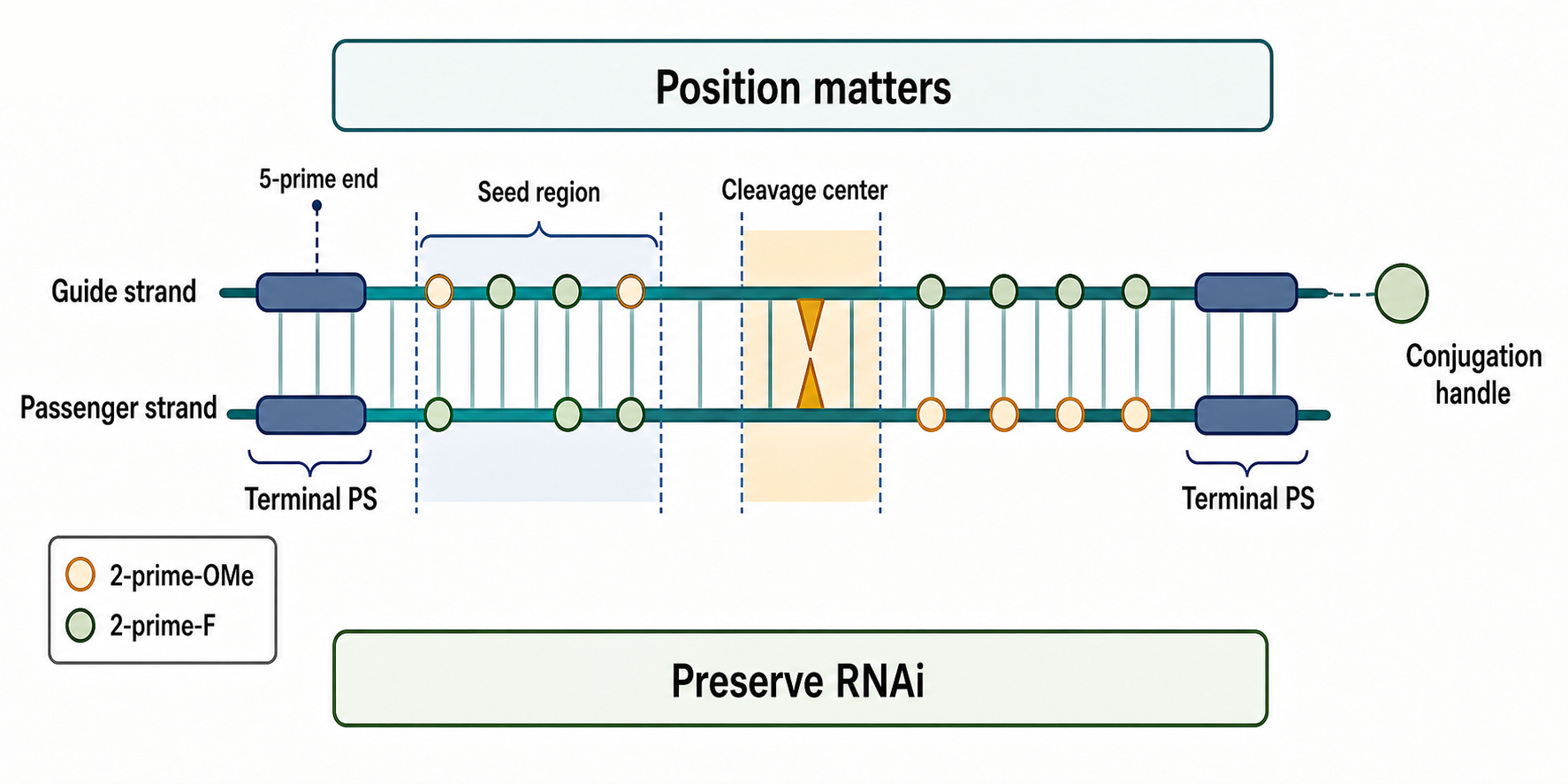
Figure 151.4. Position-specific chemistry map of a modified siRNA duplex. Figure 151.4. Chemical stabilization must preserve RNAi mechanism. Terminal and passenger modifications can improve stability and strand bias, seed modifications can reduce off-target repression, and central guide positions must maintain AGO2-compatible cleavage geometry.
Immune tuning is a major purpose of chemistry. Endosomal TLR7 and TLR8 recognize uridine-rich and guanosine/uridine-rich single-stranded RNA features; cytosolic pathways can respond to double-stranded RNA, blunt ends, triphosphate ends, or other nonself patterns depending on structure and context. Chemical modifications and delivery shielding can reduce these responses. However, immune silence is not guaranteed. LNP components, impurities, duplex length, sequence motifs, and tissue inflammation can all influence innate responses. Preclinical immune assays should use relevant human cells when possible because species differences in RNA sensing can be substantial.
Nuclease protection must be balanced against clearance and distribution. Highly stabilized oligonucleotides can persist longer but may accumulate in tissues or bind proteins differently. Phosphorothioate content, for example, can increase plasma protein binding in some oligonucleotide classes; in siRNA drugs it is usually used more selectively than in many antisense gapmers. Conjugates alter the dominant distribution mechanism by engaging receptors. LNPs alter it by packaging the RNA in a particle whose lipid composition determines circulation, uptake, and endosomal escape behavior.
Conjugation turns an siRNA into a targeted ligand-drug construct. The best-established therapeutic example is GalNAc, but the general principle applies to peptides, antibodies, aptamers, lipids, and other ligands. A conjugate must satisfy three linked requirements. The ligand must bind a receptor present on the intended cell type. The complex must internalize through a route that gives some cytosolic access. The siRNA must remain intact and capable of loading after release or processing. High-affinity binding alone is not enough; a receptor that internalizes to a degradative compartment with little escape may be a poor delivery receptor.
Manufacturing and analytical control are part of chemical design. Therapeutic siRNAs are defined products with strand identity, modification pattern, conjugate stoichiometry, impurity profile, duplex integrity, residual solvents, endotoxin limits, and stability specifications. A small sequence or stereochemical impurity can matter if it loads into Argonaute or changes immune recognition. The chapter-local Dmitriev et al. 2026 reference is useful here because it focuses on refined liquid-phase assembly and comparative validation of GalNAc-siRNA conjugates in PCSK9 targeting, illustrating that conjugate synthesis and biological validation are connected rather than separate tasks [Dmitriev_NA_2026_GalNAc_siRNA_PCSK9].
Chemical stabilization also interacts with screening. A potent unmodified research siRNA may fail after therapeutic modification because the active geometry changes. Conversely, a moderately potent research sequence may become a strong drug candidate after stabilization and conjugation improve intracellular exposure. Screening should therefore include chemistry-relevant candidates early enough to avoid optimizing a molecule that cannot become the final drug. This is one of the major differences between academic knockdown and therapeutic discovery.
Boundary cases matter. Some local delivery applications, such as ocular or inhaled siRNA programs, may use different modification and formulation logic than systemic liver-targeted drugs. Some targets may require partial knockdown rather than maximal suppression because the protein has physiological functions. Some disease settings may tolerate transient immune activation, while chronic preventive dosing demands a much wider safety margin. Chemistry is a tool for shaping this therapeutic window, not a universal solution.
151.5. GalNAc, LNP-siRNA, and Extrahepatic Delivery Strategies
Delivery is the reason siRNA therapeutics developed first in the liver. The liver is highly vascularized, filters blood, expresses abundant uptake receptors, and secretes many disease-relevant proteins with measurable plasma biomarkers. Hepatocytes express the asialoglycoprotein receptor (ASGPR), which binds terminal galactose and N-acetylgalactosamine residues. Triantennary GalNAc ligands exploit this receptor to deliver conjugated oligonucleotides into hepatocytes after subcutaneous injection. This receptor-ligand system turned hepatocyte siRNA delivery from a formulation problem into a modular conjugate strategy.
GalNAc-siRNA delivery proceeds by receptor binding, endocytosis, trafficking through endosomal compartments, and limited cytosolic escape. ASGPR recycles efficiently, allowing repeated uptake. The siRNA conjugate is small compared with an LNP, can be dosed subcutaneously, and often supports infrequent dosing because loaded RISC persists. The main biological boundary is tissue specificity: GalNAc is a hepatocyte-targeting strategy, not a general solution for muscle, brain, lung, immune cells, or tumors. In patients with severe liver disease, receptor expression and hepatocyte function may also differ from the healthy state.
LNP-siRNA uses a different physical logic. A lipid nanoparticle packages siRNA with ionizable or cationic lipids, helper lipids, cholesterol, and polyethylene glycol-lipid components. The particle protects siRNA in circulation and can promote endosomal escape after uptake. The first approved siRNA drug, patisiran, is widely used as the anchor example of LNP-siRNA translation, but the local Chapter 151 bibliography does not currently include a verified patisiran regulatory or formulation reference.
Table 151.3 compares GalNAc-siRNA, LNP-siRNA, and emerging extrahepatic strategies. The comparison should not be read as a ranking. GalNAc is elegant for hepatocytes but narrow in tissue scope. LNPs can carry different RNA cargos and can be tuned, but formulation complexity, infusion reactions, complement activation, and non-hepatocyte uptake must be managed. Extrahepatic conjugates may offer tissue precision, but receptor selection, endosomal escape, dose, and safety are still limiting. Local administration can bypass some systemic barriers, but it restricts indications to accessible tissues.
Table 151.3. Delivery platform comparison for therapeutic siRNA. Table 151.3. siRNA delivery platforms solve different problems. GalNAc is mature for hepatocytes, LNPs provide particle-based protection and escape, and extrahepatic strategies remain tissue-specific development problems.
| Platform | Main uptake principle | Typical route | Strengths | Limiting risks | Best-fit target contexts |
|---|---|---|---|---|---|
| GalNAc-siRNA | Triantennary GalNAc engages hepatocyte ASGPR and enters by receptor-mediated endocytosis. | Subcutaneous systemic dosing. | Mature, modular, liver-directed strategy with convenient dosing potential. | Primarily hepatocyte-limited; receptor biology, liver disease state, and endosomal escape still matter. | Hepatocyte-produced targets with target-proximal blood or urine biomarkers. |
| LNP-siRNA | Lipid nanoparticle protects duplex RNA and uses particle uptake plus ionizable-lipid-assisted escape. | Commonly intravenous infusion for established siRNA examples. | Provides cargo protection and engineered endosomal escape logic. | Infusion reactions, complement or cytokine activation, biodistribution, and formulation comparability. | Liver or clearance-organ-accessible targets where particle exposure is justified. |
| Local ocular delivery | Places siRNA directly near ocular tissues. | Intravitreal, subretinal, or topical route depending on indication. | Reduces systemic exposure and can achieve high local concentration. | Ocular inflammation, compartment barriers, and limited access to some retinal cell types. | Eye diseases with accessible tissue, local dosing feasibility, and ocular biomarkers. |
| Inhaled delivery | Deposits siRNA formulation on airway or lung surfaces. | Inhalation or nebulized local delivery. | Targets lung exposure while limiting some systemic distribution. | Mucus clearance, macrophage uptake, epithelial barriers, and local inflammation. | Airway or lung epithelial targets with measurable local pharmacodynamics. |
| Intrathecal delivery | Delivers siRNA into cerebrospinal-fluid spaces to bypass much of the blood-brain barrier. | Intrathecal injection or infusion. | Gives CNS-adjacent exposure unavailable to many systemic platforms. | Uneven tissue penetration, meningeal or nerve-root toxicity, and difficult endpoint measurement. | CNS targets where CSF delivery, biomarker sampling, and risk tolerance are justified. |
| Antibody or peptide conjugates | Uses a cell-surface antigen or receptor to internalize an siRNA conjugate. | Systemic or local, depending on target tissue and ligand. | Potential route to extrahepatic cell selectivity. | Receptor heterogeneity, poor cytosolic escape, immunogenicity, and dose burden. | Tissues with a validated internalizing receptor and strong disease rationale. |
| Polymer or exosome-like systems | Carrier-mediated protection, altered biodistribution, and uptake. | Experimental systemic or local delivery. | Tunable formulation space for tissues not served by GalNAc. | Heterogeneity, clearance, immune activation, scale-up, and reproducibility. | Exploratory extrahepatic programs needing new carrier biology. |
Endosomal escape remains a unifying problem. Cellular uptake is easy to overestimate because microscopy or tissue concentration can show internalized siRNA that is trapped in endosomes or lysosomes. Productive delivery requires cytosolic availability. For LNPs, ionizable lipids are designed to become protonated in acidic endosomes and destabilize membranes or promote fusion-like events. For conjugates, escape is less visibly engineered and may be inefficient but sufficient when receptor uptake is high and RISC is catalytic. Improving endosomal escape without increasing toxicity is one of the central delivery challenges for all RNA therapeutics.
Extrahepatic delivery strategies can be grouped by route and targeting principle. Local administration places siRNA near the tissue, as in ocular, intrathecal, inhaled, or intratumoral approaches. Receptor-targeted conjugates try to use cell-specific uptake systems analogous to ASGPR but in other tissues. Antibody-oligonucleotide conjugates aim to combine protein targeting with siRNA activity. Peptide or lipid conjugates may improve uptake in muscle, immune cells, or tumors. Exosome-like or polymeric systems attempt to alter biodistribution and endosomal escape. Each strategy must prove not only tissue accumulation but also loaded guide formation and target knockdown in the relevant cells.
The blood-brain barrier illustrates why delivery cannot be reduced to potency. A guide that silences a neuronal transcript in cultured cells may be irrelevant if systemic dosing cannot reach neurons. Intrathecal dosing can access cerebrospinal fluid but must still reach the correct cells and avoid meningeal, immune, or dorsal-root toxicity. Similarly, lung delivery by inhalation must navigate mucus, airway clearance, epithelial barriers, macrophage uptake, and local inflammation. Tumor delivery must deal with heterogeneous vasculature, stromal barriers, variable receptor expression, and genetic evolution. These are tissue biology problems as much as formulation problems.
Biomarker access influences delivery development. For liver targets, plasma proteins, metabolites, or urinary products often provide convenient readouts. For extrahepatic targets, target engagement may require tissue biopsies, imaging, cerebrospinal fluid biomarkers, bronchoalveolar sampling, or functional endpoints that are slower and noisier. A delivery strategy may appear weak because the biomarker is insensitive, or appear strong because the measured compartment is not the disease compartment. Therapeutic design should specify the target cell, expected exposure route, molecular biomarker, and clinical endpoint before candidate selection.
Safety boundaries also differ by delivery system. GalNAc conjugates can produce injection-site reactions and target-related toxicities, and they require monitoring for liver, kidney, metabolic, or pathway-specific effects depending on target. LNPs can cause infusion reactions, complement or cytokine responses, and dose-limiting lipid-related toxicities. Extrahepatic systems may expose unexpected cell types or accumulate in clearance organs. Repeated dosing adds immunogenicity, accumulation, anti-drug antibody, and chronic pharmacology concerns. A single successful knockdown experiment does not answer these questions.
The current consensus is that hepatocyte delivery is clinically mature relative to most extrahepatic siRNA delivery. This consensus should not be misread as a permanent limitation of RNAi. It reflects the match between liver biology, ASGPR targeting, validated secreted targets, and measurable biomarkers. Extrahepatic delivery is advancing, but each tissue requires its own receptor biology, route, safety framework, and endpoint strategy. Chapter 157 provides broader delivery comparisons, and Chapter 156 treats LNP composition and endosomal escape in more detail.
151.6. Screening Versus Therapeutic Design
RNAi screening and siRNA therapeutic design share a technology but not a success criterion. A pooled or arrayed siRNA screen asks which genes influence a phenotype under an experimental condition. It usually uses multiple reagents per gene, statistical hit calling, and secondary validation. A therapeutic program asks whether one defined molecule can be manufactured, delivered, repeatedly dosed, and shown to improve a disease-relevant endpoint with acceptable safety. Confusing these goals leads to weak candidate selection.
In a discovery screen, off-target effects are controlled statistically. If several independent siRNAs against the same gene produce the same phenotype, confidence increases. If the phenotype is rescued by restoring the gene or reproduced by CRISPR or pharmacological inhibition, confidence increases further. In a drug program, those controls are still useful for target validation, but the final candidate must be evaluated as a chemical entity. The guide sequence, passenger sequence, modification pattern, conjugate, formulation, impurity profile, and dose all become part of the evidence.
Figure 151.5 contrasts the two workflows. Screening begins broad: many genes, many reagents, a phenotype, and hit triage. Therapeutic design begins narrow after target validation: many sequences against one target, chemistry optimization, delivery selection, pharmacology, toxicology, manufacturing, and clinical translation. The workflows can feed each other. A screen may identify a target; therapeutic design may produce tool siRNAs that refine biology. But the decision gates differ.
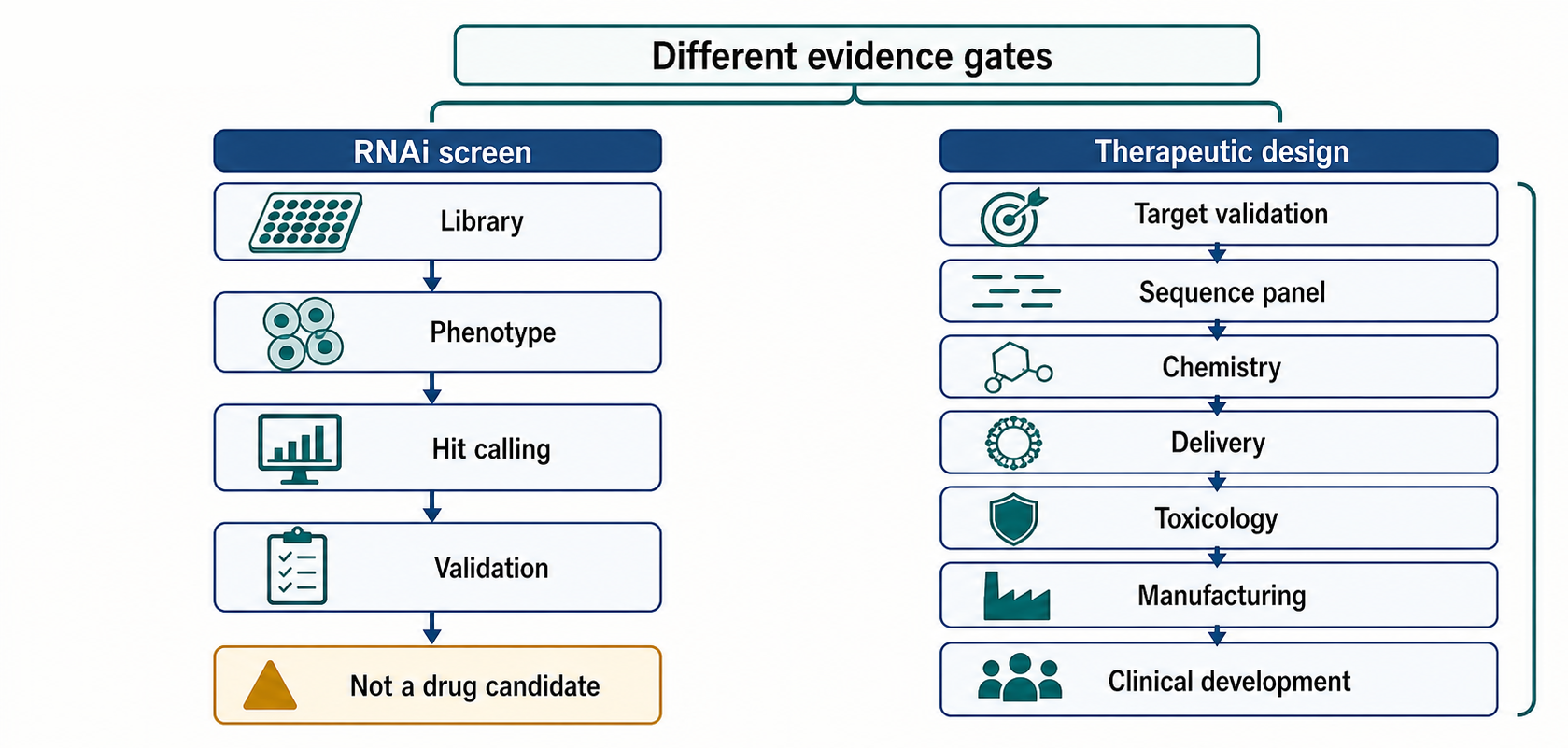
Figure 151.5. RNAi screening workflow versus therapeutic siRNA design workflow. Figure 151.5. RNAi screens and siRNA therapeutics share RNAi biology but use different evidence gates. Screens identify genes and hypotheses; therapeutic design produces one defined, manufacturable, deliverable molecule with a safety and efficacy package.
Target validation is the bridge. A therapeutic target should have disease rationale, human genetic or clinical support when possible, a plausible safety window, and a biomarker that reports target engagement. Liver-secreted proteins are attractive because knockdown can be measured in blood. Enzymes in toxic metabolite pathways are attractive when metabolite reduction is directly linked to disease. Intracellular structural proteins, transcription factors, or broadly essential genes are harder because partial knockdown, tissue specificity, and long-term consequences may be uncertain.
Candidate selection usually tests many siRNAs per target. Designers tile accessible regions, avoid common variants and problematic motifs, tune thermodynamic asymmetry, and screen in cell systems that express the relevant transcript. Early potency assays may use quantitative PCR, branched-DNA assays, reporter constructs, or protein measurements. Later assays must measure endogenous target knockdown under final or near-final chemistry and delivery conditions. A candidate that performs only in a reporter assay but not against endogenous transcript is not ready for translational development.
The best therapeutic candidate is not always the most potent sequence in vitro. Potency must be considered with specificity, chemical stability, manufacturability, delivery, target-site conservation, and safety margin. A slightly less potent sequence with a safer seed, better modification tolerance, and lower passenger-strand loading may be superior. Dose matters because off-target and immune effects often increase with exposure. A sequence that achieves sufficient knockdown at a lower dose can have a better therapeutic index than a maximal knockdown sequence that requires high exposure.
Screening assays also contain artifacts. Transfection reagents can perturb membranes and innate immunity. High siRNA concentrations can saturate RNAi machinery or exaggerate off-targeting. Cell lines may lack the tissue-specific uptake, metabolism, or transcript isoforms of the intended patient tissue. Pooled screens can suffer from variable representation, barcode dropout, and growth-rate biases. Arrayed screens can suffer from plate effects and transfection variability. These artifacts do not make RNAi screening invalid, but they make direct translation from screen hit to drug candidate unsafe.
Therapeutic design uses orthogonal validation. If target knockdown produces the intended disease-relevant effect, the same effect should ideally appear with multiple siRNAs, genetic reduction of the target, or a pharmacological inhibitor when available. Rescue with siRNA-resistant target mRNA can show that a phenotype is on-target in cells. In animals, target engagement should correlate with the biomarker or phenotype across dose and time. In humans, early clinical trials often prioritize pharmacodynamic biomarkers before definitive clinical endpoints.
Table 151.4 lists decision gates from target to clinical candidate. A program can fail at any gate. A target may be biologically valid but undeliverable. A sequence may be potent but seed-toxic. A conjugate may work in mice but not in humans because receptor biology or dose scaling differs. A biomarker may change without clinical benefit. Manufacturing may reveal impurity or stability problems. Regulatory reviewers evaluate the whole chain, not only the knockdown graph.
Table 151.4. Therapeutic siRNA decision gates from target to clinical candidate. Table 151.4. A therapeutic siRNA candidate advances only when target biology, molecular design, delivery, safety, manufacturability, and clinical endpoint strategy are all coherent.
| Gate | Key question | Evidence required | Failure mode | Downstream consequence |
|---|---|---|---|---|
| Target validation | Would reducing this RNA or protein plausibly improve disease with an acceptable safety window? | Human genetics, disease biology, orthogonal knockdown, pathway biomarkers, and safety rationale. | Target is essential, compensatory biology dominates, or disease mechanism is weak. | Program stops or shifts to a more restricted tissue, dose, or patient population. |
| Sequence panel | Is there a potent, strand-biased, variant-aware guide against the intended transcript? | Multiple candidates tested against endogenous target RNA with guide/passenger activity checks. | Weak potency, passenger loading, variant-sensitive site, or paralog cross-reactivity. | Redesign target site, alter chemistry, or abandon the target region. |
| Off-target safety | Are perfect-match, seed, passenger, immune, and stress signatures acceptable at active exposures? | In silico scans, dose-response transcriptomics, seed enrichment, immune panels, and rescue logic. | Seed toxicity, passenger activity, cytokine induction, or broad secondary stress. | Candidate is dropped, seed or passenger design is changed, or dose margin narrows. |
| Chemistry | Does the final modification and conjugation pattern preserve RNAi while improving stability and tolerability? | Final-chemistry potency, nuclease stability, immune assays, strand identity, and impurity profile. | AGO loading loss, cleavage impairment, problematic protein binding, or synthesis impurity. | Chemistry is reoptimized; bridging studies or new analytical controls are needed. |
| Delivery | Does the platform reach target cells and generate active guide-loaded RISC? | Tissue exposure, target mRNA and protein knockdown, delivery controls, and route-specific safety. | Uptake without escape, wrong-cell exposure, species mismatch, or dose-limiting vehicle toxicity. | Switch platform or route, narrow indication, or stop development. |
| Biomarker | Is target engagement measurable close to the disease mechanism? | Validated assay, dose-time relationship, baseline variability, and link to pathway biology. | Biomarker is noisy, distal, or measured in the wrong compartment. | Dose selection and early clinical interpretation become uncertain. |
| Toxicology | Is repeated dosing tolerated with monitorable and reversible risk? | Species-relevant toxicology, immune monitoring, chemistry and delivery safety, and recovery data. | Target-organ toxicity, chronic accumulation, reproductive risk, or poor reversibility. | Dose limit, monitoring plan, patient exclusion, or program termination. |
| CMC | Can a defined siRNA product be manufactured consistently? | Strand identity, modification map, conjugate stoichiometry, duplex integrity, impurities, endotoxin, and stability. | Batch variability, degradation, impurity loading, or formulation comparability failure. | Reformulation, process changes, bridging evidence, or regulatory delay. |
| Clinical endpoint | Does molecular knockdown translate into patient-relevant benefit? | Endpoint or surrogate justification, trial design, comparator logic, and risk-management plan. | Biomarker changes without clinical benefit or unacceptable long-term risk. | Indication narrows, trial design changes, or development stops. |
Computational design has become more important but remains bounded by biology. Models can score target accessibility, thermodynamic asymmetry, seed off-target burden, modification tolerance, and population variants. Machine-learning models can integrate historical potency and safety data. These tools reduce search space and expose risks, but they are trained on biased datasets and may not extrapolate to new chemistries or tissues. A model that ranks in vitro potency is not automatically a model of clinical efficacy.
The practical rule is to keep discovery, candidate optimization, and clinical translation as linked but distinct evidence domains. Screens identify biology. Therapeutic design creates a defined molecule. Preclinical pharmacology tests exposure, target engagement, safety, and reversibility. Clinical development tests whether target engagement improves patients. When a chapter, paper, or pitch collapses these domains into “RNAi silences the gene, therefore it is a therapy,” the missing steps are the main risk.
151.7. Approved Drugs, Durability, Resistance, Biomarkers, Clinical Endpoints, and Regulation
The approved-siRNA era changed the field from possibility to modality. The first broadly recognized approval anchor is patisiran, an LNP-formulated siRNA for transthyretin amyloidosis. Subsequent liver-directed RNAi drugs used GalNAc conjugates or related stabilized designs for targets such as ALAS1, HAO1, PCSK9, TTR, and LDHA-pathway primary hyperoxaluria programs. These examples show that siRNA drugs can produce durable, clinically useful target reduction in humans.
Figure 151.6 places approved and exemplar siRNA drugs on a modality map by target, delivery system, biomarker, and endpoint type. The pattern is instructive. Many successful programs target hepatocyte-expressed genes and use blood or urine biomarkers close to the mechanism: transthyretin protein, aminolevulinic acid and porphobilinogen pathway markers, oxalate-related metabolites, PCSK9 and LDL cholesterol, or analogous target-proximal measures. The closer the biomarker is to the silenced transcript’s biological function, the easier it is to establish dose-response and durability. Clinical benefit still requires endpoint evidence, but biomarker clarity accelerates development.
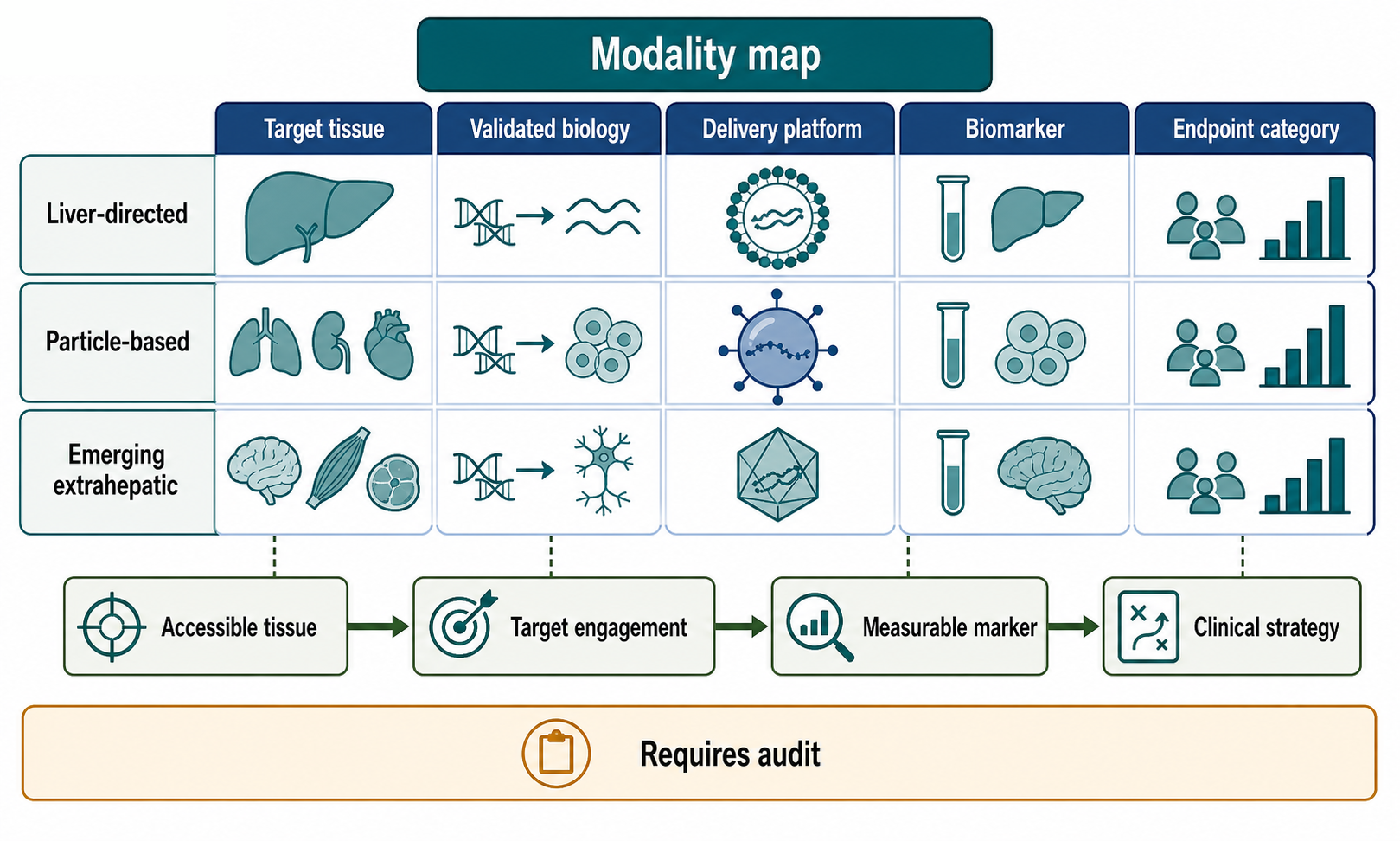
Figure 151.6. Clinical siRNA modality map by target, delivery, biomarker, and endpoint. Figure 151.6. Clinically successful siRNA programs align target tissue access, validated disease mechanism, measurable target engagement, and endpoint strategy. Final product names, labels, and indications require regulatory-source verification before final artwork.
Durability is one of the major clinical advantages of siRNA therapy. A patient may receive a dose every month, every three months, every six months, or another schedule depending on the drug, target, and indication. Durability arises from several layers: stabilized chemistry, receptor-mediated tissue uptake, intracellular guide persistence, catalytic RISC action, and slow recovery of the target protein or pathway. It is not a generic property of every siRNA. A poorly delivered extrahepatic siRNA, a rapidly dividing target cell population, or a target with compensatory induction may show shorter or less reliable pharmacodynamics.
Biomarkers are not interchangeable with clinical endpoints. LDL cholesterol lowering is a pharmacodynamic biomarker linked to cardiovascular risk, but outcome trials may still be needed to establish event reduction for a specific intervention and population. Transthyretin reduction is close to mechanism in ATTR amyloidosis, but neurological or cardiac endpoints, quality of life, functional measures, and survival are distinct clinical questions. Oxalate reduction in primary hyperoxaluria is mechanistically meaningful, but kidney outcomes and long-term systemic deposition matter. A regulator may accept a biomarker as a surrogate in one context and require clinical outcomes in another.
Box 151.3. Biomarker, Surrogate, Endpoint
Four evidence levels are often blurred in discussions of siRNA trials. Target engagement means the intended RNA or protein is reduced in the relevant tissue or compartment. A pathway biomarker shows that the biological system has responded, such as a metabolite, plasma protein, or downstream lipid measure changing after knockdown. A surrogate endpoint is a biomarker accepted, in a defined context, as reasonably likely or established to predict clinical benefit. A clinical endpoint measures how patients feel, function, survive, or avoid disease events. The same molecule can be strong at one level and uncertain at another. For example, robust PCSK9 knockdown and LDL cholesterol lowering are pharmacodynamically meaningful, but cardiovascular outcome interpretation depends on population, comparator, duration, and regulatory context. The chain from RNA cleavage to patient benefit must be argued, not assumed.
Resistance has different meanings across siRNA indications. In viral infection or cancer, target-site mutation and clonal selection can undermine an siRNA. In inherited metabolic disease, the germline target sequence is stable, so resistance may instead mean biological escape through compensatory pathways, inadequate tissue exposure, anti-drug immunity, altered receptor function, or disease progression independent of the target. For secreted liver proteins, incomplete response may reflect insufficient knockdown, high baseline production, target protein half-life, or downstream pathology that no longer responds to target reduction.
Safety evaluation includes on-target and off-target risks. On-target risk occurs when the target protein has normal physiological functions. Silencing a toxic gain-of-function protein may be beneficial, but silencing a metabolic enzyme can shift pathway flux and create new metabolite changes. Off-target risk includes seed-mediated transcript repression, passenger-strand activity, immune activation, delivery-system toxicity, tissue accumulation, and impurities. Chronic administration requires attention to cumulative exposure, reversibility, reproductive risk, drug-drug interactions, and special populations such as children, pregnancy, renal impairment, or severe liver disease.
Regulatory review treats an siRNA as a defined therapeutic product. Reviewers evaluate chemistry, manufacturing, and controls; pharmacology; toxicology; immunogenicity; off-target assessment; dose selection; clinical pharmacokinetics and pharmacodynamics; endpoint justification; risk management; and postmarketing commitments. For conjugates and LNPs, the delivery system is not an inert excipient. The ligand or nanoparticle affects distribution, safety, and manufacturing comparability. A change in formulation, lipid composition, conjugation chemistry, or impurity profile can require bridging evidence.
Clinical trial design depends on indication. Rare metabolic diseases may use enriched populations, target-proximal biomarkers, natural history comparisons, and functional endpoints suited to small cohorts. Common chronic diseases may require large outcome trials, long follow-up, and comparison with established therapies. For a drug like an siRNA that produces long-lasting knockdown, stopping rules and reversibility are important: if an adverse effect emerges, pharmacodynamic recovery may take time. Dosing interval convenience is valuable but does not replace safety monitoring.
Approved drugs also teach humility. Early success has been concentrated in target classes and tissues where delivery, biomarker, and disease rationale align. That success should not be generalized to every transcript. Knocking down any mRNA is technically possible in a transfected cell line; making a durable, safe, manufacturable, clinically useful drug is a narrower achievement. The approved examples are proof of modality, not proof that every disease gene is an siRNA target.
Recent Consensus
The recent consensus is that therapeutic siRNA is a validated drug modality for selected targets, especially hepatocyte-expressed genes with strong disease biology and measurable pharmacodynamic biomarkers. Effective siRNA drugs are not designed by sequence complementarity alone. Sequence design, chemical stabilization, Argonaute loading, delivery, off-target profiling, biomarker selection, manufacturing control, and regulatory evidence now form one development logic. GalNAc conjugates have made subcutaneous liver-directed siRNA practical; LNP-siRNA remains important as an approved delivery precedent and as a mechanistic foundation for particle-based RNA delivery; extrahepatic delivery is active but less mature than hepatocyte delivery.
There is also broad agreement that the major safety hazards are mechanistically understandable even when they remain hard to predict perfectly. Passenger-strand loading can create unintended repression. Seed-mediated off-targeting can occur without extensive complementarity and can become seed toxicity when many weakly repressed transcripts converge on cell survival or tissue stress pathways. Innate immune activation can arise from the RNA cargo, the delivery vehicle, impurities, or tissue inflammation. Durable pharmacodynamics usually reflects productive cytosolic escape and guide-loaded RISC persistence rather than prolonged plasma exposure. For clinical programs, the strongest evidence chain links a defined molecule to tissue exposure, loaded guide activity, target mRNA reduction, protein or pathway biomarker change, and a justified clinical endpoint.
Current practice therefore treats siRNA drug design as a platform with context-specific boundaries. GalNAc is mature for hepatocytes through ASGPR uptake, but it is not a general tag for every tissue. LNPs can protect RNA and support endosomal escape, but formulation-related immune, infusion, biodistribution, and comparability risks are part of the product. Approved and advanced examples support the modality most clearly where target tissue access, target biology, biomarker interpretation, dose interval, and safety monitoring align.
Open Questions, Controversies, Deprecated Models, and Common Misconceptions
Open questions:
- How can extrahepatic delivery be made reliable? The field needs delivery systems that reach muscle, central nervous system, lung, kidney, immune cells, tumors, and other tissues with enough cytosolic siRNA to load RISC while preserving safety over repeated dosing. Each tissue poses different barriers: vascular access, extracellular matrix, mucus, the blood-brain barrier, renal filtration, macrophage uptake, receptor heterogeneity, endosomal escape, and local inflammation. A successful strategy may not be one universal carrier, but a collection of receptor-targeted, local, formulation, and conjugate systems matched to disease biology.
- Safety prediction remains unsettled. Human transcriptomes, disease states, genetic backgrounds, receptor expression, and immune tone vary. Seed signatures observed in cell culture may overpredict or underpredict tissue toxicity. Animal models may not reproduce human RNA-sensing pathways, ASGPR biology, tumor evolution, or chronic disease physiology. Computational off-target scores and machine-learning potency models are useful triage tools, but they do not replace empirical testing of guide and passenger activity, dose-response transcriptomics, innate immune markers, delivery-only controls, toxicology, and reversibility. The same caution applies to biomarkers: a target-proximal biomarker can support dose selection, but clinical benefit still depends on disease mechanism, endpoint validity, and patient context.
- For deeper treatment, Chapter 87 explains endogenous and experimental RNA interference, Chapter 84 covers miRNA seed targeting and repression mechanisms, Chapter 136 covers RNAi screening design, Chapter 149 covers oligonucleotide modifications and artificial backbones, Chapter 156 covers LNP biology, Chapter 157 compares delivery strategies, and Chapter 158 treats pharmacokinetics, toxicology, and regulatory science for RNA drugs. Chapter 151 should be read as the bridge between small-RNA mechanism and clinical siRNA drug development.
Common misconceptions:
- “A screen hit is not a therapeutic candidate; high-throughput RNAi screening identifies gene-function hypotheses, whereas a drug candidate is one defined molecule with chemistry, delivery, manufacturability, toxicology, pharmacology, and endpoint evidence.” Target knockdown is not the same as clinical benefit; a biomarker change must be connected to patient-relevant outcomes. Lack of cytokine induction does not prove absence of off-target biology, and absence of perfect-match off-targets does not remove seed risk. Conversely, any transcriptome perturbation after dosing is not automatically direct seed toxicity, because delivery stress, immune activation, on-target pathway biology, and late secondary cell injury can all reshape RNA abundance.
Deprecated or weakened claims:
- Several older or overgeneralized models should be retired. It is too simple to describe an siRNA as an antisense oligonucleotide with a second strand attached; the duplex must load Argonaute and use RNAi chemistry. It is also too simple to assume that a perfectly complementary guide is specific, because seed-mediated repression, passenger loading, paralogous sequences, isoforms, pseudogenes, and patient variants can create unintended activity. GalNAc should not be treated as a universal delivery solution; it is primarily a hepatocyte-targeting ligand. LNP uptake should not be equated with productive delivery; endosomal escape and loaded-guide formation are the meaningful intracellular gates. Long dosing intervals should not be interpreted as absence of drug action between doses, because persistent intracellular RISC activity can continue after plasma siRNA is low.