Chapter 154. RNA Editing and Programmable RNA Therapeutic Products
Scope Note
This chapter owns product architecture and translational evidence for medicines that edit, cleave, repair, or regulate RNA through guide-directed recognition. Its center of gravity is therapeutic use of endogenous adenosine deaminase acting on RNA (ADAR), engineered adenosine or cytidine deaminases, CRISPR-associated RNA effectors, and spliceosome-mediated RNA trans-splicing products that replace transcript segments. It compares payload design, dose and expression control, reversibility and durability, specificity, preclinical models, biomarkers, patient selection, delivery format, manufacturing, and clinical evidence. Chapter 50 owns endogenous ADAR/APOBEC biology, editing chemistry, general guide design, and foundational detection principles; Chapter 27 owns spliceosome assembly, catalysis, fidelity, and natural trans-splicing chemistry; Chapter 28 owns alternative and therapeutically redirected cis-splicing; and Chapter 104 provides comparative non-animal eukaryote contexts for natural trans-splicing. Chapter 155 owns aptamer, Spiegelmer, ribozyme, aptazyme, and catalytic-RNA therapeutic products.
Executive Summary
RNA editing therapeutics change the sequence interpretation or regulatory state of RNA without intentionally altering genomic DNA. ADAR-recruiting oligonucleotides create a guide-target duplex that positions an endogenous deaminase; delivered-editor products supply an engineered deaminase as protein, messenger RNA, or a longer-lived expression cassette. Cas13-derived products add guide-programmed cleavage, binding-only regulation, or base editing through recruited catalytic domains. These architectures share a therapeutic question but not a single risk profile: what molecular components reach the target cells, how long are they active, which intended and unintended RNA events occur, and whether those events produce clinically meaningful benefit.
Spliceosome-mediated RNA trans-splicing adds a different form of sequence repair. A pre-trans-splicing molecule binds an endogenous pre-mRNA and supplies a replacement 5′ segment, 3′ segment, or internal exon cassette. The cellular spliceosome must join target and therapeutic RNA at the intended junction while the engineered reaction competes with ordinary cis-splicing. This strategy can replace kilobases and address many mutations within the replaced region with one product, but it introduces distinctive liabilities: inefficient target-RNA encounter, alternative on-target splice sites, fusion to unintended transcripts, incomplete double trans-splicing, and vector- or assay-derived junction artifacts. A valid product claim therefore requires both intended junctions where applicable, full-length product confirmation, corrected protein and function, and an unbiased search for aberrant fusion products.
The phrase transient RNA editing can conceal several different clocks. Drug concentration can fall before edited transcripts turn over; corrected or toxic proteins can persist after edited RNA disappears; vector expression can continue producing new transient edits; and an immune or developmental consequence can outlast every administered RNA molecule. Product design therefore treats dose, reversibility, and durability as measured properties of guide exposure, editor expression, edited RNA, protein, cell state, and clinical phenotype. A reversible molecular event is not automatically a reversible treatment outcome.
Translation requires an evidence chain from molecular correction to patient benefit. Targeted sequencing must be paired with artifact controls and orthogonal confirmation. Corrected protein, pathway rescue, and disease-relevant phenotype establish biological meaning. Preclinical models must expose species-specific differences in target sequence, ADAR abundance, immunity, delivery, and disease progression rather than merely reproduce a convenient editing percentage. Biomarkers and patient-selection rules must connect the editable genotype and transcript to a tissue-accessible pharmacodynamic readout. Delivery and manufacturing are treated here only as product-specific decisions; their general mechanisms and platform comparisons belong to Chapter 156, Chapter 157, and Chapter 163.
Concept Inventory
- RNA editing therapeutic: a medicine designed to change a specified RNA sequence or RNA-dependent output after transcription without intentionally changing genomic DNA.
- A-to-I editing: hydrolytic deamination of adenosine to inosine in RNA. Inosine commonly pairs like guanosine, so A-to-I editing can recode codons, alter splice signals, change RNA structure, or modify RNA-protein interactions.
- C-to-U editing: deamination of cytidine to uridine in RNA. Therapeutic versions may use APOBEC-family activity or engineered deaminases, but cytidine deaminases have strong context and off-target concerns.
- Guide RNA: a nucleic acid component that directs a protein, enzyme, or endogenous activity to a target RNA by base pairing. Therapeutic guides include antisense-like ADAR-recruiting oligonucleotides, CRISPR RNAs, and engineered recruitment scaffolds.
- Circular ADAR-recruiting guide RNA (cadRNA): a long antisense ADAR guide whose covalently closed backbone resists exonucleolytic decay. In one experimentally validated architecture, self-cleaving twister ribozymes generate termini that endogenous RtcB ligates in cells; circular guide persistence does not make any individual edited RNA permanent.
- Off-target editing: editing at an unintended RNA site. It includes guide-dependent sites with partial complementarity and guide-independent bystander edits caused by recruited or overexpressed enzyme activity.
- Bystander edit: an unintended base conversion within the intended guide-target duplex or editor activity window; it is on the intended transcript but can still be biologically harmful.
- Molecular reversibility: disappearance of drug, editor activity, or edited RNA after treatment stops. Molecular reversibility does not guarantee that protein, cell-state, tissue, or clinical effects reverse on the same schedule.
- Edit durability: persistence of the intended edit and downstream biological effect, determined jointly by dosing, payload expression, RNA turnover, protein turnover, cell renewal, and disease biology.
- Translational biomarker: a measurement connecting exposure or molecular editing to corrected protein, pathway activity, tissue function, or clinical benefit.
- Programmable RNA therapeutic product: a medicine whose target recognition or effector output is substantially specified by a guide RNA, guide-like oligonucleotide, or retargetable RNA-binding architecture.
- Spliceosome-mediated RNA trans-splicing: an engineered reaction in which the cellular spliceosome joins exons from a therapeutic RNA and an endogenous pre-mRNA rather than joining only exons from the same precursor.
- Pre-trans-splicing molecule: an engineered RNA containing a target-binding domain, splice elements appropriate to the replacement direction, and a therapeutic exon or coding cargo.
- Exon replacement: transcript repair in which a trans-splicing molecule supplies a 5′ region, 3′ region, or internal exon segment to form a chimeric corrected RNA while retaining part of the endogenous transcript.
- Aberrant fusion junction: an unintended splice junction between the therapeutic RNA and an alternative site in the intended target or a different RNA; the term does not include only sequencing artifacts, although artifacts can mimic such junctions.
What to Know Before Reading This Chapter
RNA therapeutics in Chapters 149 to 153 introduce how chemistry, delivery, and pharmacology shape the biological meaning of a sequence. This chapter assumes familiarity with antisense pairing, oligonucleotide modifications, messenger RNA translation, and innate immune sensing. Chapter 50 provides the enzyme chemistry and general editing-assay foundation, while Chapter 51 shows how natural editing systems separate guide recognition, catalytic machinery, and transcript context. A reader should keep three distinctions in view.
First, RNA editing is not the same as DNA editing. RNA editing changes RNA molecules that already exist or will be newly transcribed during the exposure window. Effects can fade as edited RNA decays, as the guide clears, or as the enzyme returns to baseline localization and activity. That reversibility can be an advantage when permanent genome editing would be risky, but it also means that chronic diseases may require repeat dosing or durable expression of an editing component.
Second, recognition and reaction are different evidence claims. A guide can hybridize to a transcript without recruiting a productive enzyme, and an editor can be expressed without reaching the target RNA compartment. Therapeutic claims therefore require target engagement, product formation, dose response, biological rescue, and off-target analysis.
Third, programmable does not mean automatically specific. A guide sequence is a design handle, not a guarantee. RNA structure, RNA-binding proteins, subcellular localization, enzyme abundance, nucleotide context, population variation, chemical modifications, dose, and innate immune sensors all modify what the product actually does in cells.
154.1. ADAR-recruiting oligonucleotides and programmable deamination product design
ADAR- and APOBEC-based therapeutic programs turn an editing reaction into a medicine by choosing the corrected RNA product, patient population, guide or enzyme architecture, dosage form, tissue, exposure window, pharmacodynamic readout, and stopping rules for safety. Chapter 50 explains endogenous enzyme biology, substrate recognition, editing chemistry, general guide design, specificity mechanisms, and editing-detection principles. The product question here is which architecture can deliver a clinically useful edit with a manufacturable component set and an acceptable exposure-to-risk ratio.
Several platform architectures follow from the same principle. One architecture delivers only a guide RNA and relies on endogenous ADAR proteins already present in the target tissue. This avoids delivering an exogenous editing enzyme, which may reduce immunogenicity and dose burden, but it makes efficacy dependent on tissue-specific ADAR expression, isoform localization, interferon state, and competition with endogenous double-stranded RNAs. A second architecture delivers a guide fused to a recruiting domain or chemical feature that improves ADAR engagement. A third architecture delivers an engineered deaminase protein or mRNA encoding it, often fused to an RNA-binding domain, which can increase editing potency but also raises risks of broader transcriptome-wide editing.
Direct evidence now spans several product forms but remains stage-specific. RESTORE 2.0 used fully chemically stabilized, stereo-random oligonucleotides and reported editing after GalNAc-mediated uptake in primary human hepatocytes and after lipid-nanoparticle delivery in mice; this is peer-reviewed platform and preclinical evidence, not clinical outcome evidence (Pfeiffer et al. 2025, PMID: 41044092). Circular ADAR-recruiting guides produced editing in cultured human cell lines and after adeno-associated-virus serotype 8 (AAV8) delivery to mouse liver (Katrekar et al. 2022, PMID: 35145312). Direct delivery of a TadA-derived deaminase-antisense conjugate has also been reported, but the July 2025 record is a non-peer-reviewed preprint demonstrated in cell systems and should not be treated as in vivo or clinical validation (Eggert et al. 2025, PMID: 40672232).
The circular-guide study makes guide architecture mechanistically explicit. Its 100- or 200-nucleotide antisense domains were flanked by self-cleaving twister ribozymes; cleavage exposed termini that endogenous RtcB ligated to produce a covalently closed cadRNA in cells. Circularization increased guide persistence and sustained editing at 48 and 96 hours relative to matched linear designs, while ADAR1 knockdown reduced reporter correction, supporting dependence on endogenous ADAR1 in that system. In vitro-transcribed ribozyme-flanked precursors also circularized after delivery to HEK293FT and K562 cells. These results show that guide stabilization can raise productive exposure without supplying an editor protein, but they do not show that every target cell has sufficient ADAR activity or that a nonviral cadRNA formulation has achieved in vivo delivery (Katrekar et al. 2022, PMID: 35145312).
The in vivo evidence was likewise architecture- and model-specific. Systemic AAV8 expression of cadRNAs yielded up to 53% Pcsk9 RNA editing in C57BL/6J mouse liver eight weeks after dosing. In an Idua-W392X Hurler-syndrome mouse model, AAV8 cadRNA produced 7–17% correction of the premature stop codon at two weeks and approximately 33% less hepatic glycosaminoglycan accumulation than a scrambled-guide control. The latter is tissue-level biochemical rescue in a small mouse experiment, not a human efficacy result. Because AAV8 continued to express the guide, the eight-week result demonstrates sustained vector-driven guide exposure and repeated formation of edited transcripts rather than the lifetime of one edited RNA molecule (Katrekar et al. 2022, PMID: 35145312).
Table 154.1. RNA Editing Therapeutic Architectures. Table 154.1. Editing architecture determines which components must be delivered, which cellular activities the product depends on, how dose can be stopped or repeated, and which specificity liabilities require measurement.
| Architecture | Payload and dependence | Duration and dominant evidence need |
|---|---|---|
| Endogenous ADAR-recruiting oligonucleotide | Chemically specified guide creates an editable duplex and depends on target-cell ADAR abundance, localization, and state. | Usually guide-exposure limited; show tissue editing, target-region bystanders, off-transcript editing, corrected protein, and repeat-dose feasibility. |
| Circular ADAR-recruiting guide | Covalently closed antisense guide recruits endogenous ADAR; the validated cadRNA example used twister-ribozyme cleavage and endogenous RtcB ligation, with direct RNA delivery tested in cultured cells and AAV8 expression used in mice. | Circularization extends guide exposure, while vector expression can extend guide production; distinguish both from edited-RNA lifetime and test long-duplex bystanders, target knockdown, translation, innate sensing, and tissue delivery. |
| ADAR-enhanced recruiting guide | Guide includes a recruitment motif, scaffold, or chemical feature intended to improve productive ADAR engagement. | Recruitment can increase potency but alter duplex or immune behavior; compare final chemistry with unenhanced and nonproductive controls. |
| Supplied engineered deaminase | Protein, messenger RNA, ribonucleoprotein, or vector supplies an editor whose activity is less dependent on endogenous ADAR. | Duration ranges from a protein pulse to persistent vector expression; measure enzyme-background editing, tissue expression, immunity, and washout. |
| Cytidine-deaminase RNA editor | Guide or RNA-binding domain positions a cytidine deaminase for C-to-U output. | Demonstrate RNA-restricted activity, intended editing window, off-target cytidine deamination, and absence of unacceptable DNA activity. |
| CRISPR deaminase-fusion editor | CRISPR guide, RNA-binding effector, and catalytic domain jointly determine recognition and active-window geometry. | Larger payload complicates delivery; measure guide off-targets, bystanders, enzyme background, effector persistence, and anti-effector immunity. |
The mechanistic steps are simple to state but difficult to optimize. The therapeutic molecule must enter the relevant cells, escape the uptake compartment if needed, and reach the RNA compartment where the target transcript resides. The guide must hybridize to the target before the transcript is degraded, translated, spliced, exported, or sequestered in an RNP. An ADAR molecule must bind the duplex, sample the target adenosine, catalyze deamination, and release the product. The edited RNA must then produce the intended biological output, such as a restored protein sequence, altered splice choice, changed RNA stability, or reduced pathogenic activity. Failure at any step can make a chemically well-designed guide ineffective.
ADAR-based correction is attractive for dominant and recessive genetic diseases when a single adenosine correction can create a meaningful protein change. It is also attractive for transient pharmacology. A temporary RNA edit can tune a pathway during a disease flare, viral infection, or treatment window, and then decay after dosing stops. The same feature is a limitation for diseases requiring lifelong correction in slowly dividing or difficult-to-dose tissues. Repeated dosing can be feasible for some oligonucleotide chemistries and tissues, but repeated exposure raises cumulative safety, immunogenicity, and cost questions.
APOBEC-related product designs pursue cytidine-to-uridine conversion for targets that cannot be addressed by A-to-I editing. Modality selection must account for enzyme delivery, RNA restriction, editing window, tissue exposure, immunogenicity, and a genotoxicity assessment capable of excluding unacceptable DNA activity. The endogenous roles and substrate diversity of APOBEC-family enzymes are treated in Chapter 50; a product dossier must demonstrate the behavior of the actual engineered enzyme, guide, delivery system, dose, and tissue context.
For both ADAR and APOBEC approaches, editing efficiency must be interpreted at multiple levels. A high percentage of edited RNA molecules at a target site may still be biologically weak if the transcript is rare, the protein is long-lived, or the corrected isoform is not translated. Conversely, modest editing can be clinically meaningful if the corrected protein has high activity, if partial restoration is enough, or if the edit disables a toxic gain-of-function transcript. Editing percentage is therefore a molecular biomarker, not a complete pharmacodynamic endpoint.
The evidence basis for editing therapeutics combines biochemical and transcriptomic assays. Targeted sequencing can estimate the fraction of reads carrying the intended base change, but sequencing errors, reverse-transcription artifacts, PCR jackpotting, and mapping ambiguity must be controlled. RNA-seq can survey broader transcriptome changes, but lowly expressed off-targets may be missed. Long-read and direct RNA methods can help connect editing to isoforms, phasing, and transcript context, although these methods have their own error profiles. Protein-level rescue, cellular phenotype correction, and animal disease models are needed to show that the edit matters biologically.
Boundary cases matter. A-to-I editing in untranslated regions may alter RNA structure, miRNA targeting, or RBP binding without changing a codon. Editing in pre-mRNA may alter splice signals before the mature mRNA is formed. Editing in repetitive double-stranded RNA may be a marker of innate immune state rather than a therapeutic event. Editing a pathogenic transcript may also edit the wild-type allele if both alleles share the guide-binding region. Allele-selective designs must exploit a linked variant, a mutation-specific target base, or a disease-specific transcript structure; otherwise they should not be described as allele selective.
Do not overgeneralize from endogenous ADAR biology. Endogenous ADAR editing at natural sites does not prove that an artificial guide can recruit ADAR safely to a chosen disease transcript. Natural ADAR substrates often reside in long duplexes or structured repetitive regions, and endogenous editing patterns are shaped by cell type, developmental state, stress, and subcellular compartment. Therapeutic editing creates a new substrate in a pharmacological context, so each target needs its own evidence.
Verified reviews support the architecture-level comparison of ADAR- and APOBEC-related editing products, but direct product evidence is not interchangeable across guides, enzymes, tissues, and delivery formats. Named candidate claims therefore require target-specific primary, pharmacology, safety, and clinical sources before final release. The absence of such a source should remain visible rather than being filled by extrapolation from endogenous enzyme biology.
154.2. Cas13 and guide-directed programmable RNA product architectures
CRISPR and other guide-RNA therapeutic products couple a programmable recognition component to an effector delivered as protein, ribonucleoprotein, mRNA, vector, or cell-encoded system. General guide-recognition and editing principles belong to Chapter 50, while CRISPR ancestry is treated in Chapter 82. Product selection must specify whether the intended output is cleavage, base conversion, binding-only regulation, or recruitment of another RNA-modifying activity because each output changes payload, potency assay, off-target search space, durability, and clinical monitoring.
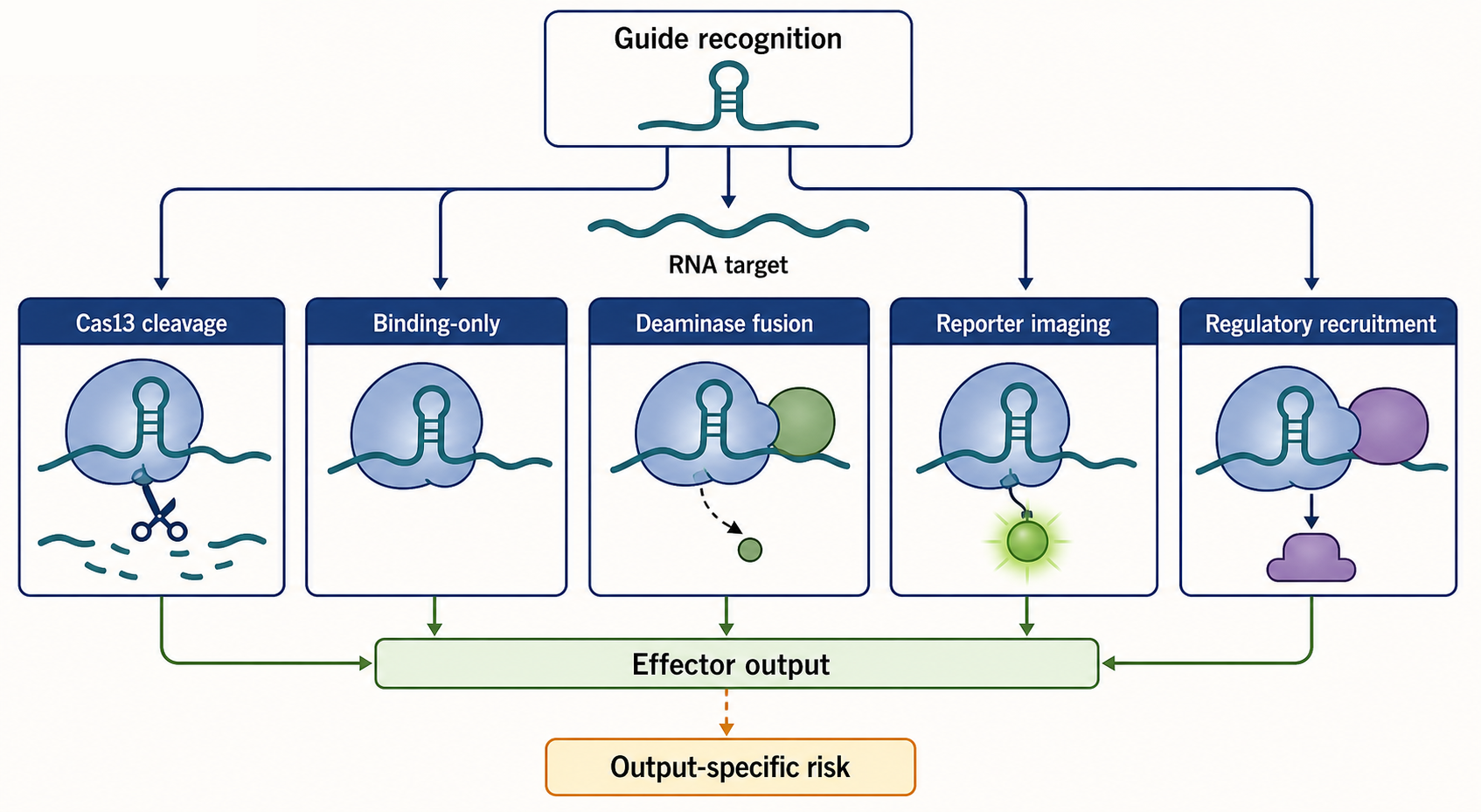
Figure 154.2. Cas13 and Guide-Directed RNA Product Architectures. Figure 154.2. Guide-directed RNA platforms can share a recognition logic while producing different molecular outputs. The selected effector architecture changes payload size, potency measurement, collateral or off-target liabilities, persistence, and clinical monitoring.
The therapeutic advantage of CRISPR-style platforms is modularity. Changing the guide can retarget the system without redesigning the whole protein. This modularity supports rapid screening of guides, multiplex targeting, and disease-specific customization. It also allows an engineering strategy familiar from DNA editing: separate recognition, catalytic activity, and delivery format, then improve each module. A catalytically inactive or cleavage-impaired Cas13 can be used as a programmable RNA-binding scaffold. Fusing an ADAR deaminase domain to such a scaffold can create an A-to-I editor guided by CRISPR base pairing rather than by a free antisense guide alone. Fusing other domains can recruit decay, stabilization, localization, or translation-control activities.
The same modularity creates a payload problem. A protein effector plus guide RNA is larger and more complex than a short antisense oligonucleotide. Delivery may require viral vectors, lipid nanoparticles, mRNA encoding the protein, purified RNPs, or split systems. Viral vectors can support longer expression but raise durability and immunogenicity concerns. mRNA or RNP delivery can be more transient but may require high doses or repeated administration. The intended disease tissue strongly constrains which architecture is plausible. Liver, eye, muscle, central nervous system, lung, and hematopoietic cells differ in uptake routes, immune surveillance, vector tolerance, and acceptable duration of expression.
CRISPR RNA cleavage is conceptually similar to RNA interference or antisense-mediated knockdown in that the disease transcript is reduced rather than corrected. It may be useful when a toxic RNA or viral RNA should be destroyed. Cas13 cleavage, however, is not automatically interchangeable with siRNA. Cas13 proteins have distinct guide constraints, target accessibility dependencies, and in some systems collateral cleavage activity after target recognition. Collateral cleavage can be useful in diagnostics, but therapeutic collateral activity would be a toxicity concern unless engineered, controlled, or shown to be negligible in the treated context.
CRISPR-based RNA base editors promise transcript correction without double-strand DNA breaks and without permanent genomic change. A common design logic uses a catalytically impaired RNA-targeting Cas protein to position a deaminase near a selected base in the target RNA. The guide defines a binding window, while the enzyme defines an editing window. The editable bases within that window are not all equivalent. Neighboring sequence, RNA structure, guide-target mismatches, protein geometry, and enzyme preferences determine which nucleotide is edited. Therefore a “single-base” editor must be evaluated for bystander editing within the target transcript as well as off-target editing elsewhere.
Guide-RNA editing platforms also include systems outside Cas13. Engineered PUF proteins, designer RNA-binding proteins, and compact RNA-binding domains can be linked to editing enzymes or regulatory modules. These systems may offer smaller payloads or different specificity rules, but they often lack the mature guide-design ecosystem that CRISPR platforms gained from genome editing and diagnostics. For a therapeutic program, novelty of a scaffold is less important than whether the scaffold gives reproducible target engagement, a narrow activity window, manufacturable components, and safety assays that regulators can interpret.
The evidence ladder for CRISPR RNA platforms begins with in vitro binding and activity, but it cannot end there. Cell assays must show guide-dependent action at endogenous transcript abundance. Transcriptome-wide analyses must distinguish intended target editing or cleavage from stress responses, interferon activation, global RNA decay, and expression changes secondary to cell toxicity. Animal studies must measure biodistribution of both guide and effector, duration of expression, immune responses to the protein, and reversibility after dosing stops. Clinical development must then define pharmacodynamic biomarkers that report the RNA change and downstream disease biology.
Durability is a central design choice. A viral vector expressing a Cas13 editor can provide prolonged activity in nondividing cells, which may help chronic disease. It also makes off-target activity persistent and may complicate dose cessation. A transient mRNA, RNP, or oligonucleotide guide can give a narrower exposure window, but the edit or knockdown will fade as the drug and edited RNA are cleared. Re-dosing may be acceptable for liver or eye indications, but less acceptable for tissues where delivery is invasive or immune memory limits repeat exposure.
Compact Cas13 systems have direct peer-reviewed platform evidence for programmable RNA editing, but that evidence establishes method feasibility rather than a clinically validated therapeutic product (Xu et al. 2021, PMID: 33941935). Product-specific evidence remains uneven. A research platform does not establish that a named disease program has adequate tissue exposure, safety, or clinical activity. This distinction is especially important when a platform paper is discussed beside a therapeutic candidate. Chapter 50 owns general guide and editing-mechanism evidence, whereas the product comparison here asks whether the actual guide, effector, formulation, dose, and monitoring plan form a coherent medicine.
154.3. Engineered RNA trans-splicing and transcript-repair products
Spliceosome-mediated RNA trans-splicing repairs a transcript by joining RNA segments from two precursor molecules. In ordinary cis-splicing, a spliceosome recognizes splice sites and a branch point within one pre-mRNA and ligates neighboring exons from that molecule. In therapeutic trans-splicing, an engineered pre-trans-splicing molecule (PTM), also called an RNA trans-splicing molecule (RTM), base-pairs with an intronic region of an endogenous target pre-mRNA and presents splice elements and replacement cargo to the same catalytic machinery. The product is a chimeric RNA whose retained segment comes from the target gene and whose repaired segment comes from the therapeutic molecule. Chapter 27 owns spliceosome assembly, the two transesterification reactions, fidelity, and natural trans-splicing chemistry. This section owns the engineering and therapeutic evidence needed to turn that chemistry into a product.
A PTM has three functional modules. The target-binding domain is an antisense sequence complementary to a selected region of the target pre-mRNA, usually within an intron near the intended splice junction. The splicing module supplies a donor or acceptor splice site and, where required, a branch point, polypyrimidine tract, spacer, or auxiliary sequence that makes the engineered junction recognizable to the spliceosome. The cargo module supplies the wild-type or otherwise therapeutic exon sequence, coding region, untranslated-region segment, or functional protein domain. Promoter, terminator, polyadenylation, stabilizing, and nuclear-retention features belong to the expression product rather than to the trans-splicing reaction itself, but they can determine how much PTM reaches the nucleus and how long it overlaps the target pre-mRNA. A binding domain is therefore not a free-standing guide: its position, length, accessibility, and relationship to the engineered splice elements jointly determine productive geometry.
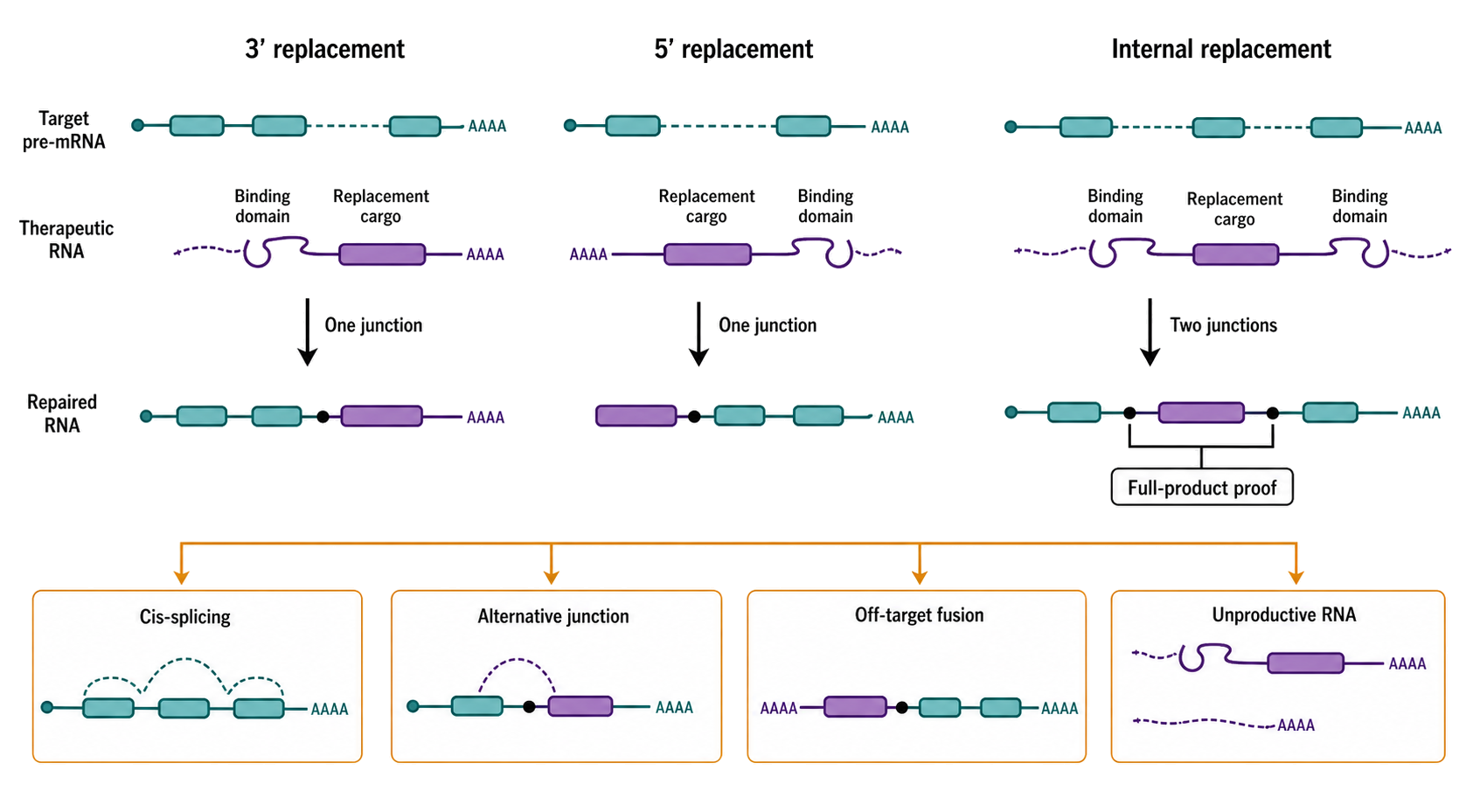
Figure 154.8. Therapeutic Trans-Splicing Architectures and Competing Outcomes. Figure 154.8. A therapeutic pre-trans-splicing molecule must encounter an accessible target pre-mRNA and win kinetic competition with cis-splicing. Replacement direction determines which endogenous segment is retained and whether one or two intended junctions must be phased on the same full-length RNA.
Three replacement architectures change which RNA segment is retained. In 3′ exon replacement, the endogenous upstream exons and a target 5′ splice donor are joined to a PTM that supplies an acceptor module and downstream replacement exons. One PTM can therefore replace every mutation downstream of the chosen junction, provided the resulting transcript preserves coding frame, isoform logic, and regulatory information. In 5′ exon replacement, the PTM supplies upstream replacement exons and a 5′ splice donor that joins an endogenous downstream acceptor; early work demonstrated 5′ replacement of CFTR sequence and showed that binding position and PTM intron design could change activity substantially (Mansfield et al. 2003, PMID: 13130143). Internal exon replacement requires two coordinated trans-splicing reactions so that a PTM segment is joined to the endogenous transcript at both its upstream and downstream boundaries. It can preserve both endogenous ends but is harder to drive efficiently because two binding arms and two splice reactions must succeed on the same product. A fluorescence screen demonstrated internal replacement in a COL17A1 model, but that work remains a research-platform demonstration rather than therapeutic efficacy evidence (Koller et al. 2011, PMID: 21685452).
These architectures are mutation-spanning rather than necessarily mutation-specific. A 3′ replacement cassette positioned upstream of many pathogenic variants can repair all variants in the replaced region without redesigning a guide for every single nucleotide. This is attractive for large genes whose full coding sequence strains vector capacity. The advantage has limits. A junction too far upstream enlarges the cargo and can remove endogenous alternative exons or RNA-regulatory information; a junction too far downstream narrows the eligible mutation set. An internal cassette requires two productive junctions, and a 5′ replacement must supply the translation start and upstream regulatory context correctly. Transcript isoforms, tissue-specific exon use, reading frame, nonsense-mediated decay, and encoded protein domains must be mapped before claiming that one PTM covers a patient population.
Target recognition occurs in a moving nuclear substrate rather than on an isolated mature mRNA. The PTM must enter the nucleus, encounter the target while the selected intron is still present, and bind a sequence not occluded by RNA structure, transcriptional RNPs, or spliceosome assembly. Introns with short residence times leave a narrow encounter window. Highly expressed targets provide more substrate molecules but can exceed PTM supply; lowly expressed targets can make junction detection easy to overstate with amplification while yielding too little corrected protein. Target accessibility cannot be predicted from antisense complementarity alone. Binding-domain libraries, endogenous pre-mRNA assays, structure-informed design, and perturbation of local splicing elements are empirical ways to identify productive regions. Untargeted PTMs have sometimes generated measurable trans-splicing, which underscores that binding improves probability but does not wholly define specificity (Dooley et al. 2018, PMID: 30195768).
The intended trans reaction competes with cis-splicing. A target pre-mRNA can splice normally or aberrantly before the PTM engages; the PTM can splice at a cryptic site, self-splice, be degraded, or join an unintended target. Stronger binding can increase local concentration yet also mask a needed target splice signal or stabilize an unproductive RNA structure. Antisense oligonucleotides that suppress competing cis splice sites can increase trans-splicing in some experimental systems, but they add another product component and can create new isoforms (Koller et al. 2015, PMID: 25569093). Efficiency must therefore be expressed relative to the relevant molecular denominator: intended full trans-spliced product compared with residual cis product, alternative on-target products, unproductive PTM, and all target transcripts. Reporter fluorescence alone usually reports successful protein reconstitution under an engineered abundance ratio and should not be equated with endogenous correction efficiency.
The molecular sequence for a 3′ replacement product illustrates the causal steps. First, the therapeutic expression cassette or delivered RNA produces a stable PTM in the target-cell nucleus. Second, the binding domain hybridizes to an accessible target intron during the target pre-mRNA lifetime. Third, the target donor and PTM acceptor are assembled into a productive spliceosome rather than their cis or cryptic alternatives. Fourth, the spliceosome forms the target-to-cargo junction and releases a repaired RNA. Fifth, the repaired RNA completes processing, export, and translation. Sixth, the protein folds, localizes, and restores the relevant function. Each step needs its own assay. An accurate junction is insufficient if the transcript is truncated, retained in the nucleus, degraded by surveillance, or translated into a mislocalized protein.
Preclinical evidence spans reporter systems, patient-derived cells, tissue models, and animals, but it is not uniformly mature. The original SMaRT study demonstrated targeted chimeric RNA formation in extract, cultured cells, and xenograft tumors and established feasibility rather than clinical correction (Puttaraju et al. 1999, PMID: 10096291). COL7A1 studies have shown 3′ or 5′ replacement in patient-derived keratinocytes, restoration of type VII collagen, and deposition at the basement-membrane zone in skin equivalents (Tockner et al. 2016, PMID: 27434145; Mayr et al. 2022, PMID: 35163654). Rhodopsin and CEP290 studies provide retinal cell and animal proof-of-concept for selected constructs (Berger et al. 2015, PMID: 25619725; Dooley et al. 2018). A 2025 CTNNB1 study optimized PTMs and demonstrated RNA and protein rescue in cell systems; it did not establish in vivo delivery or clinical efficacy (Maruna et al. 2025, PMID: 40896583). These examples support mechanistic and preclinical feasibility while leaving tissue exposure, dose, durability, and product-level safety unresolved for most targets.
Delivery determines whether a trans-splicing architecture can exploit its theoretical mutation coverage. A directly delivered PTM RNA must survive extracellular and intracellular degradation, reach the target cells, escape uptake compartments where relevant, and enter the nucleus. A DNA or viral vector can provide sustained nuclear PTM transcription and may fit a replacement segment that is smaller than the full therapeutic gene. That format converts a transient RNA reaction into a potentially durable gene-therapy exposure: vector genomes and PTM expression can persist, new trans-spliced molecules can be generated continuously, and aberrant junction risk accumulates over the expression interval. Local subretinal or ex vivo skin delivery can reduce some systemic exposure but raises procedure, distribution, and cell-coverage constraints. Systemic delivery faces tissue barriers and cell-type heterogeneity addressed more generally in Chapter 156 and Chapter 157.
Dose is the intracellular ratio and temporal overlap of PTM and target pre-mRNA, not merely vector genomes or micrograms administered. Too little PTM limits productive encounters; increasing expression can raise intended junctions but may also increase PTM self-products, use of cryptic splice sites, and off-target fusion opportunities. Target transcription, intron half-life, cell division, vector persistence, RNA turnover, and corrected-protein lifetime determine durability. A structural protein deposited in extracellular matrix can outlast the corrected RNA, whereas a rapidly turning-over enzyme may require continuous production. A dose-ranging study should measure PTM abundance, target pre-mRNA, residual cis product, intended trans product, aberrant junctions, corrected protein, function, and recovery after expression declines. Different tissues require different thresholds and cannot inherit a universal trans-splicing percentage.
Specificity has a junction-centered form. An alternative on-target junction joins the PTM to the wrong donor or acceptor within the intended gene. An off-target junction joins the PTM cargo to another pre-mRNA with partial binding-domain complementarity or a splice site that is favorable even without stable antisense binding. A partial internal-replacement product contains only one of the two intended junctions. Vector-derived RNA can donate sequence through cryptic splicing, and read-through or rearranged vector transcripts can mimic the expected product. These events can introduce frameshifts, premature stops, ectopic protein domains, dominant-negative proteins, or novel peptides. Low abundance does not make an event biologically irrelevant if it occurs in a critical cell type or produces a stable toxic protein. RNA-level surveys must be followed by protein and tissue interpretation.
Table 154.7. Evidence Matrix for Therapeutic RNA Trans-Splicing. Table 154.7. Trans-splicing evidence progresses from target and PTM exposure through intended junctions and intact repaired RNA to protein and function. Each layer has technical mimics and cannot substitute for the next.
| Product claim | Primary measurement | Required controls and confirmation | Remaining limitation |
|---|---|---|---|
| PTM reaches target-cell nucleus | PTM abundance, localization, and target pre-mRNA abundance over time | Tissue and cell-type localization, vector or RNA input control, nuclear/cytoplasmic fraction quality | Colocalization does not prove binding or productive splicing |
| Intended junction forms | Junction-specific qPCR or ddPCR and amplicon sequencing | DNase and no-RT controls; target-only, PTM-only, mixed-RNA, binding-domain-dead, splice-site-dead, cargo-only, and vector-only controls | RT template switching or PCR recombination can still mimic a rare junction |
| Internal replacement is complete | Both junctions phased on one long amplicon or intact long read | Independent primer sets, targeted long-read or native-RNA confirmation, partial-product quantification | Long-read depth, truncation, chimera, and alignment bias remain |
| Product is correctly processed | Full exon order, reading frame, ends, isoform identity, export, and stability | Residual cis product, alternative on-target junctions, Northern or orthogonal size assay | Correct RNA architecture does not guarantee useful protein |
| Specificity is acceptable | Unbiased and candidate-guided junction discovery across dose, time, and relevant tissues | Nonbinding and splice-dead PTMs, baseline natural chimeric-RNA map, genomic DNA and vector-rearrangement analysis | Very rare events in inaccessible tissues can remain below detection |
| Correct protein is restored | Protein size, sequence where feasible, abundance, localization, and biochemical activity | PTM controls, target-null and disease controls, dose-response concordance with intact RNA | Protein restoration does not establish disease-level benefit |
| Function is rescued | Disease-relevant cellular, tissue, or animal phenotype | Isogenic or patient controls, orthogonal rescue, toxicity and delivery-vehicle controls | Preclinical rescue may not predict clinical efficacy or durability |
| Clinical activity is established | Human molecular, protein, functional, safety, and clinical outcome evidence | Prespecified endpoints, tissue-relevance justification, long-term follow-up | A registered or recruiting trial without posted results supplies design, not outcome evidence |
Junction-specific quantitative PCR or digital PCR is a sensitive first measurement because one primer or probe can cross the intended target-cargo boundary. For internal replacement, however, separate detection of the upstream and downstream junctions does not prove that both junctions occur on the same RNA molecule. A long amplicon, targeted long-read sequencing, capture of intact RNA, or another full-product assay is needed to phase both junctions with all retained and replacement exons. Short-read RNA sequencing can discover abundant unexpected junctions, whereas long-read or hybrid sequencing helps distinguish full products, non-colinear RNAs, circular RNAs, and isoforms (Chen et al. 2023, PMID: 37497782). Direct RNA sequencing avoids reverse transcription but has lower depth and its own error and end-capture biases. No one platform is sufficient for a low-frequency, safety-critical junction search.
Apparent chimeric junctions are unusually vulnerable to technical artifacts. Reverse transcriptase can switch templates between abundant target and PTM RNAs, and PCR can recombine partially extended products. Residual vector DNA can be amplified if primers lie within the expression cassette, while vector rearrangement or genomic integration can create a DNA template that resembles RNA repair. Controls should include rigorous DNase treatment, no-reverse-transcriptase reactions, target-only and PTM-only samples, co-mixed RNAs that were never present in the same cell, binding-domain-scrambled or deleted PTMs, splice-site-dead PTMs, cargo-only and vector-only controls, independent primer sets, and confirmation from an unamplified or differently prepared RNA library when possible. Genomic DNA analysis is required when a stable vector is used. Junction sequence, full transcript, and protein rescue should agree before an amplified band is called transcript repair.
Functional confirmation follows the RNA. A repaired open reading frame should produce a protein of the expected size, allele or cargo sequence, abundance, localization, and biochemical activity. COL7A1 correction, for example, is more persuasive when type VII collagen is deposited at the proper basement-membrane zone than when a junction alone is detected. CFTR correction requires ion transport; a retinal structural protein requires correct outer-segment localization or a relevant retinal phenotype; an enzyme replacement requires catalytic and pathway rescue. Rescue should disappear with a splice-site-dead or nonbinding PTM and should track the intended junction across dose and time. If protein appears without the intended full RNA product, cryptic translation, vector expression, or another splice product must be considered.
Box 154.5. When an RNA Fusion Counts as Therapeutic Transcript Repair
A junction is necessary, not sufficient. First exclude residual vector DNA, reverse-transcription template switching, PCR recombination, circular RNA, genomic rearrangement, and mapping error. Quantify the intended junction against residual cis and aberrant splice products. For internal replacement, phase both intended junctions on the same intact RNA. Confirm retained and replacement exons, reading frame, transcript ends, isoform identity, and export. Then show protein of the expected size, localization, and activity, followed by disease-relevant rescue. A recruiting trial, reporter signal, or amplified junction alone does not establish therapeutic transcript repair.
Trans-splicing should be chosen against alternatives rather than because it is technically programmable. ADAR recruitment changes one or a few addressable nucleotides with a comparatively small guide payload but cannot replace a kilobase exon block. Cas13-derived systems can cleave, recruit editors, or assist RNA-fragment trans-splicing, as demonstrated by the research-stage CRAFT platform, but they add a microbial effector and its delivery and immunity questions (Fiflis et al. 2024, PMID: 38485709). Splice-switching oligonucleotides redirect cis-splicing without donating a large replacement cargo and may be preferable when exon inclusion or skipping alone restores function; Chapter 28 owns that biology. Messenger RNA replacement supplies a complete coding template independently of endogenous pre-mRNA abundance and splice timing but may require repeat delivery and lacks native transcriptional coupling. Genome editing can provide durable DNA correction but introduces permanent genomic and nuclease-associated risks. Trans-splicing is most compelling when mutation-spanning replacement, native expression context, and a compact partial-gene payload outweigh limited efficiency and junction-specific liabilities.
Clinical maturity must be stated without promotional compression. The peer-reviewed literature above is predominantly platform and preclinical evidence. A 2024 review described the translation of RNA exon editing and disclosed author ownership interests in the developing company; it is useful for architecture and field status but is not independent product-outcome evidence (Doi et al. 2024, PMID: 39281698). ClinicalTrials.gov lists NCT06467344, the STELLAR Phase 1/2 open-label single-ascending-dose study of a one-time subretinal AAV product encoding an ABCA4 RNA exon editor, as recruiting with an estimated enrollment of 15 and no posted results as checked 2026-07-14. That official record establishes clinical-stage testing, product description, route, design, and safety-focused endpoints. It does not establish editing in human retina, corrected ABCA4 protein, efficacy, uncommon toxicity, or comparative benefit. Company announcements and meeting reports should remain clearly labeled non-peer-reviewed until full data are publicly available.
The ownership handoffs prevent three common conflations. Chapter 27 explains how spliceosomes and natural trans-splicing work; a mechanistic possibility is not a therapeutic product. Chapter 28 explains alternative splice-site choice and splice-switching; changing cis-splicing is not the same as donating replacement exon cargo. Chapter 104 supplies comparative contexts in which trans-splicing and spliced-leader systems occur naturally across non-animal eukaryotes; evolutionary prevalence does not validate a human therapeutic construct. This chapter retains the product-level question: whether a specific PTM, delivery format, dose, tissue, full-product assay, off-target-junction analysis, protein rescue, and evidence stage together justify a therapeutic claim.
154.4. Transient expression, dose control, reversibility, and edit durability
Transient expression means that a supplied editor protein or editor-encoding RNA is present for a limited interval. It does not mean that every molecular and biological consequence ends when the payload clears. An editing product has at least six coupled time scales: guide exposure, editor exposure, edited-transcript lifetime, corrected or toxic protein lifetime, persistence of an altered cell state, and duration of clinical effect. A seventh time scale appears when delivery uses a vector or stable genetic cassette, because production of the guide or editor can persist even though each edited RNA molecule is short-lived. Product descriptions should name which component is transient and provide measured time courses rather than attaching the word reversible to the whole modality.
Dose control starts with the physical product. A chemically synthesized ADAR-recruiting oligonucleotide is dosed as a defined molecular species, and its exposure is set by route, chemistry, tissue uptake, distribution, and clearance. An editor messenger RNA must first reach the cytosol, be translated, and produce active protein; dose-response therefore includes both RNA pharmacokinetics and editor-expression kinetics. A ribonucleoprotein supplies preformed effector and guide but may have a short intracellular residence time. A viral vector is dosed once or infrequently, yet its effective editor dose is the expression produced per transduced cell over time. Equal administered masses across these formats are not comparable biological doses.
The molecular dose-response chain has several links. Increasing dose may raise the fraction of target cells exposed, the intracellular concentration within exposed cells, or both. Guide occupancy must then compete with transcript synthesis and turnover. Editing percentage can plateau because the accessible target pool has been exhausted, endogenous ADAR is limiting, target RNA structure blocks additional guide binding, or highly exposed cells are already maximally edited while other cells remain unreachable. A bulk tissue average can therefore hide a bimodal response in which a small cell subset is strongly edited and most target cells are untreated. Single-cell or spatial measurements are valuable when disease benefit requires correction across a particular lineage rather than a high organ-wide mean.
Durability is disease-specific. A brief edit can be appropriate when the target pathway needs temporary suppression or when a transient protein pulse triggers durable repair. Chronic loss-of-function disease usually requires recurrent production of corrected protein. The required editing percentage depends on protein function, turnover, secretion, cellular autonomy, and the therapeutic threshold. A secreted enzyme made by a minority of corrected cells may cross-correct neighboring cells, whereas a structural protein may need correction in a large fraction of the affected lineage. A toxic gain-of-function transcript may require deeper and more uniform suppression than a haploinsufficiency phenotype requires restoration. Durability targets should therefore be derived from disease biology rather than copied from another RNA modality.
Reversibility has operational consequences. A repeat-dosed oligonucleotide can sometimes be withheld after a safety signal, but tissue stores may continue releasing active drug and existing edited RNA or protein may remain. A transient editor messenger RNA can stop producing protein quickly, yet immune priming or tissue injury may persist. Vector expression may not have a practical pharmacological off-switch unless the product includes a validated control mechanism or the treated cells can be removed. A clinical protocol should define expected washout, how editing and protein effects will be followed after dosing stops, and which findings trigger a pause, dose reduction, or permanent discontinuation.
Box 154.1. Reversibility Has More Than One Clock
Reversibility has more than one clock. The exposure clock asks how long the guide, editor protein, editor messenger RNA, vector, or carrier remains active. The RNA clock asks how long edited transcripts persist and whether new unedited transcripts replace them. The protein clock asks whether the corrected or toxic protein is short-lived or stable. The cell-state clock asks whether editing changed differentiation, immunity, survival, or tissue repair. The clinical clock asks whether benefit or harm recedes after dosing stops. A transient guide can create a long-lived protein effect, and a durable vector can create new transient edits every day. Treat reversible as a measured property at each layer.
Repeat dosing changes both benefit and risk. Successive doses may maintain a trough of corrected transcripts or protein, but they also add cumulative oligonucleotide, lipid, conjugate, or protein-effector exposure. Adaptive immunity can make a microbial editor or viral vector less effective or less safe on later administration. Innate sensing and complement activation can depend on formulation impurities and infusion conditions as much as on guide sequence. Conversely, a durable expression format can avoid frequent procedures while extending the period during which low-frequency off-target events accumulate. The relevant comparison is not simply transient versus durable; it is the total benefit-risk profile under the intended lifetime regimen.
Time-course experiments should separate these clocks. At minimum, investigators should measure guide or payload concentration, editor RNA and protein when supplied, on-target editing, selected off-target classes, corrected protein, disease-relevant function, and recovery after exposure ends. Sampling only at peak editing cannot show reversibility; sampling only after washout can miss peak toxicity. Dose-ranging studies should include subtherapeutic, pharmacologically active, and higher exposures, with matched vehicle, guide-only, editor-only, and catalytically inactive controls when the architecture permits. These data provide the pharmacokinetic-pharmacodynamic model needed to choose a first-in-human schedule.
Published duration results illustrate why the causal clock must be named. The original cadRNA study measured 53% Pcsk9 editing in mouse liver eight weeks after AAV8 dosing while the circular guide remained expressed; this establishes persistent vector-driven editing activity, not persistence of one edited transcript (Katrekar et al. 2022, PMID: 35145312). Circular guides later produced editing over weeks in nonhuman primates and functional correction in a humanized Hurler mouse model, again from vector expression cassettes (Yi et al. 2023, PMID: 37872590). A subsequent Duchenne muscular dystrophy study reported dystrophin restoration and motor improvement for at least 1.5 years after one AAV-delivered circular-guide dose in nonhuman primates; the same report included only three treated humans, so its human findings are early uncontrolled evidence rather than a general estimate of efficacy or safety (Guo et al. 2026, PMID: 42269605).
Do not infer an optimal schedule from molecular half-life alone. An oligonucleotide with long tissue residence may produce intermittent intracellular activity, and a short-lived edited RNA can continually regenerate while guide remains present. A stable corrected protein can maintain benefit after editing declines. Conversely, an apparently durable editing percentage may reflect selective survival of edited cells or loss of unedited cells rather than persistent molecular activity. Longitudinal cell-composition controls, protein measurements, and functional assays are needed to distinguish these explanations.
The deeper pharmacology of LNP trafficking, ionizable lipids, endosomal escape, and biodistribution belongs to Chapter 156. Conjugates, polymers, peptides, vectors, extracellular vesicles, and tissue-by-modality selection belong to Chapter 157. This section retains only the editing-specific requirement to connect each delivery format to editor exposure, controllability, washout, repeat dosing, and the duration of intended and unintended editing.
154.5. On-target editing, bystander edits, off-targets, pharmacology, and safety
Specificity is the governing safety problem for programmable RNA products. A guide-directed therapy makes an intended molecular event more likely at one RNA site, but the cell contains many RNAs with partial complementarity, repeated motifs, related paralogs, edited pseudogenes, splice isoforms, and transient structures. A safety claim must therefore define the search space. For an RNA editing guide, the relevant search space includes mature mRNAs, pre-mRNAs, retained introns, noncoding RNAs, mitochondrial or organellar transcripts when accessible, viral RNAs in infected cells, and abundant repetitive RNAs that may recruit endogenous editing enzymes.
Off-target events fall into several classes. Guide-dependent off-targets occur when the guide binds an unintended RNA well enough to recruit an enzyme or effector. Bystander edits occur within the intended target duplex but at nearby editable bases. Enzyme-dependent background edits occur when an overexpressed or mislocalized editing enzyme acts on endogenous substrates without guide dependence. Indirect transcriptome changes occur when the intended edit changes a pathway, causes stress, activates innate immunity, or kills a subset of cells. These classes require different assays and should not be collapsed into one “off-target” number.
Table 154.2. Specificity and Safety Assay Matrix. Table 154.2. Guide-dependent off-targets, bystanders, enzyme background, indirect responses, and immune activation require different controls and cannot be resolved by one transcriptome assay.
| Safety question | Primary assays and controls | Interpretation caveat |
|---|---|---|
| Guide-dependent off-target editing or cleavage | Transcriptome-wide and candidate-site sequencing, guide engagement when available, untreated and scrambled-guide controls, dose and time series, and patient-variant-aware analysis. | Low-expression transcripts, isoform errors, and mapping artifacts can hide or mimic events; binding and product formation are different claims. |
| Bystander edits within the target region | Deep targeted sequencing, long-read phasing when isoforms or alleles matter, and editing-window mapping across guide designs. | The event is on the intended transcript but can alter another codon, splice signal, untranslated-region element, or RNA-binding site; low off-transcript counts do not exclude it, and loop or mismatch engineering is target-specific. |
| Enzyme-background editing | Editor-only or no-guide control, catalytically inactive control when informative, baseline natural-editing map, and expression-matched time course. | Supplied or mislocalized enzyme can change endogenous substrates independently of guide complementarity. |
| Indirect transcriptome and pathway response | RNA sequencing, proteomics, viability, cell-composition, pathway, and rescue assays with matched time points. | Secondary changes can reflect successful correction, toxicity, interferon signaling, or selective loss of a cell population. |
| Innate and delivery-vehicle response | Cytokines, interferon-stimulated genes, PKR and OAS/RNase L readouts, complement, histology, clinical chemistry, and vehicle and impurity controls. | The signal can originate from RNA structure, chemistry, contaminants, carrier, route, or tissue injury rather than guide specificity. |
| Protein-effector immunity and persistence | Anti-effector antibody and cellular immunity assays, editor RNA and protein time courses, vector biodistribution, and repeat-dose monitoring. | A reversible RNA edit can coexist with durable editor expression or immune memory. |
Guide specificity begins with sequence design. Designers usually avoid long perfect complementarity to unintended transcripts, especially in seed-like regions or positions known to dominate binding. They consider RNA isoforms, allele-specific variants, common population polymorphisms, and disease mutations. A guide that is specific in one genome build or cell line may not be specific in a patient carrying a common variant in the target or in an off-target transcript. For therapeutic use, guide design should therefore be evaluated against population variation and disease-relevant transcript annotations, not only against a single reference transcript.
RNA structure and RNP occupancy can override sequence predictions. A perfectly complementary target site hidden by a stable structure or bound protein may be less available than a partially matched off-target in an accessible UTR. Conversely, an editing guide can remodel local structure, create a double-stranded RNA segment, or recruit proteins that were not present before treatment. Empirical specificity assays remain necessary even when computational screening appears favorable. A good design workflow uses computational exclusion to reduce obvious risks and experimental assays to test the remaining biological uncertainty.
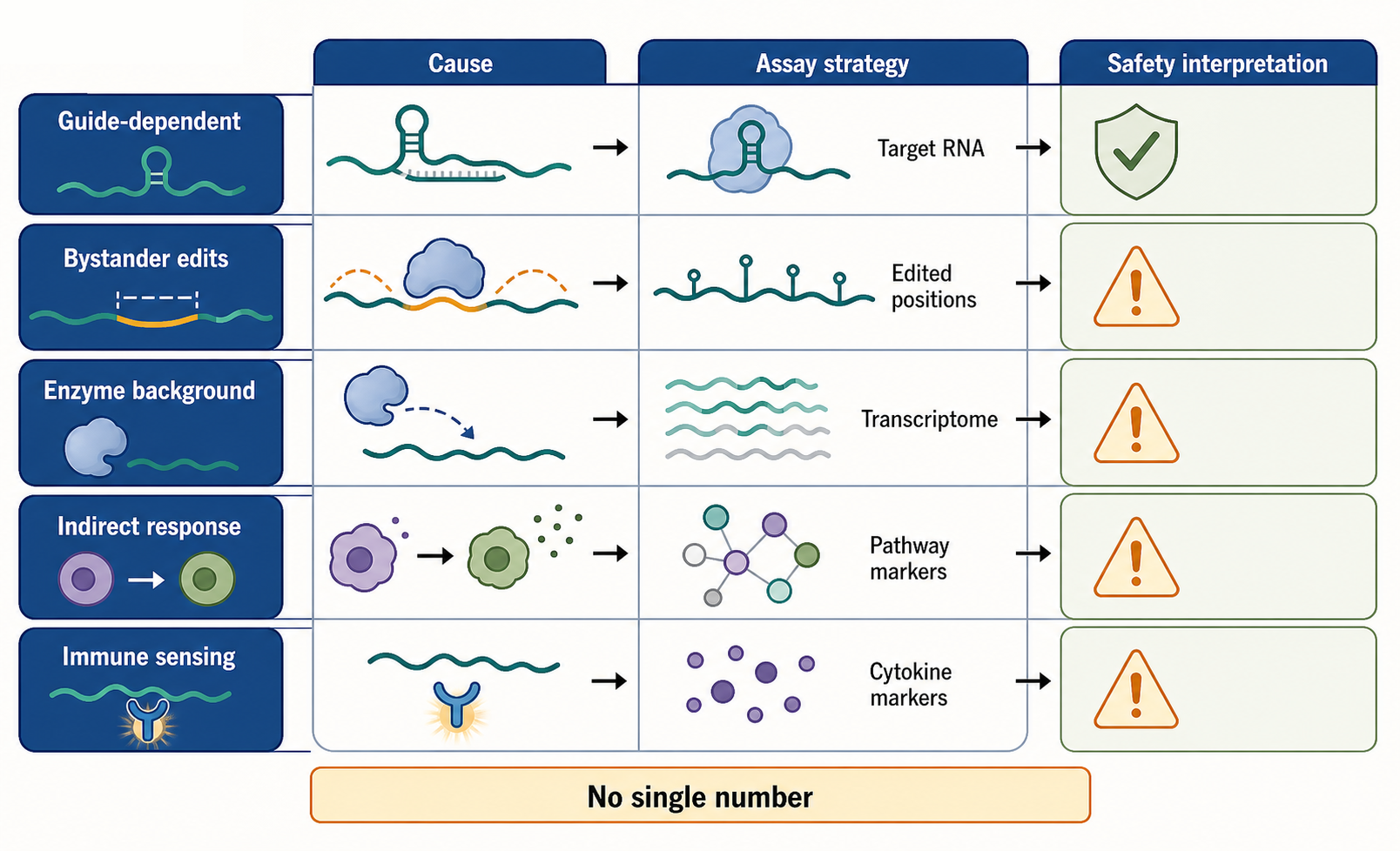
Figure 154.3. Editing-Liability Taxonomy and Assay Logic. Figure 154.3. RNA editing safety cannot be summarized by one off-target number. A guide can have few off-transcript sites yet create many bystander edits in the intended duplex, and each liability class has a different cause, control, assay strategy, and biological interpretation.
Sequencing-based off-target measurement must be interpreted carefully. RNA-seq can detect A-to-G or C-to-U mismatches relative to the genome, but natural RNA editing, single-nucleotide variants, mapping errors, allele-specific expression, and reverse-transcription artifacts can mimic editing. A matched untreated sample, a guide-only control, an enzyme-only control when relevant, biological replicates, and orthogonal validation are needed. Targeted amplicon sequencing can provide depth at candidate off-target sites but will miss unexpected sites. Unbiased transcriptome-wide methods can discover broader patterns but lose sensitivity for rare transcripts. Direct RNA sequencing avoids reverse transcription but currently has different error modes and may require careful model calibration for base changes.
For guide oligonucleotides, the hybridization-dependent search should also follow the intended tissue exposure. Updated Oligonucleotide Safety Working Group recommendations combine in silico complementarity searches, relevant-cell testing, transcriptomics, experimental verification, exposure-margin interpretation, and biological assessment of unavoidable candidates (Andersson et al. 2025, PMID: 39912803). Those recommendations were developed across antisense and small-interfering oligonucleotide classes rather than specifically for editing guides, so editor-specific bystanders and enzyme-background editing still require additional assays.
The cadRNA study illustrates why transcriptome-wide specificity and target-transcript specificity must be reported separately. In HEK293FT cells, RNA sequencing detected two to three orders of magnitude fewer differential A-to-I sites with cadRNAs than in an earlier comparison that co-delivered ADAR2, but more than 80% of the detected sites were additional adenosines within the intended RAB7A transcript. Introducing interspersed loops into the long guide-target duplex reduced these bystander edits while preserving on-target activity for the tested designs. This result is a target-specific engineering demonstration, not a universal loop-spacing rule or acceptable safety threshold. Some tested long guides also reduced target-transcript abundance, consistent with an RNA-interference-like effect, and the study did not close the separate question of whether persistent guide binding inhibits translation. A favorable transcriptome-wide count therefore cannot substitute for deep target-region sequencing, target-RNA abundance, protein output, and target-specific optimization (Katrekar et al. 2022, PMID: 35145312).
Safety also includes immunogenicity and innate sensing. Editing guides, CRISPR guide RNAs, and editor-encoding messenger RNAs can be recognized by Toll-like receptors, RIG-I-like receptors, protein kinase R, oligoadenylate synthetase pathways, and other RNA-sensing systems depending on length, structure, chemistry, contaminants, delivery vehicle, and tissue. Some chemical modifications reduce immune recognition but may also change hybridization, editing, nuclease resistance, protein interactions, and manufacturing impurity profiles. For enzyme-encoding platforms, the editor or CRISPR effector can itself be immunogenic, especially when derived from bacteria or archaea.
In the AAV8 cadRNA mouse-liver experiment, selected short-term measurements showed increased MDA5 and PKR transcript levels relative to an AAV8 control, whereas those differences were not detected in the later selected-gene measurements. This time dependence, the limited marker panel, and the small preclinical groups do not establish immune safety; they support vehicle-matched sampling at multiple times and continued monitoring when a stable circular guide accumulates under persistent expression (Katrekar et al. 2022, PMID: 35145312).
Reversibility is a major advantage of RNA-level therapeutics, but reversibility is not binary. An edited RNA molecule persists until it is degraded or diluted, and the protein made from that RNA may persist longer. A durable vector expressing a guide or editor may keep producing new edits even though each edited RNA is transient. An immune response triggered during dosing may outlast the RNA drug. A developmental treatment window may produce lasting benefit or harm even after the molecular edit disappears. Reversibility should therefore be specified at the level of drug exposure, RNA product, protein product, cell state, tissue physiology, and clinical effect.
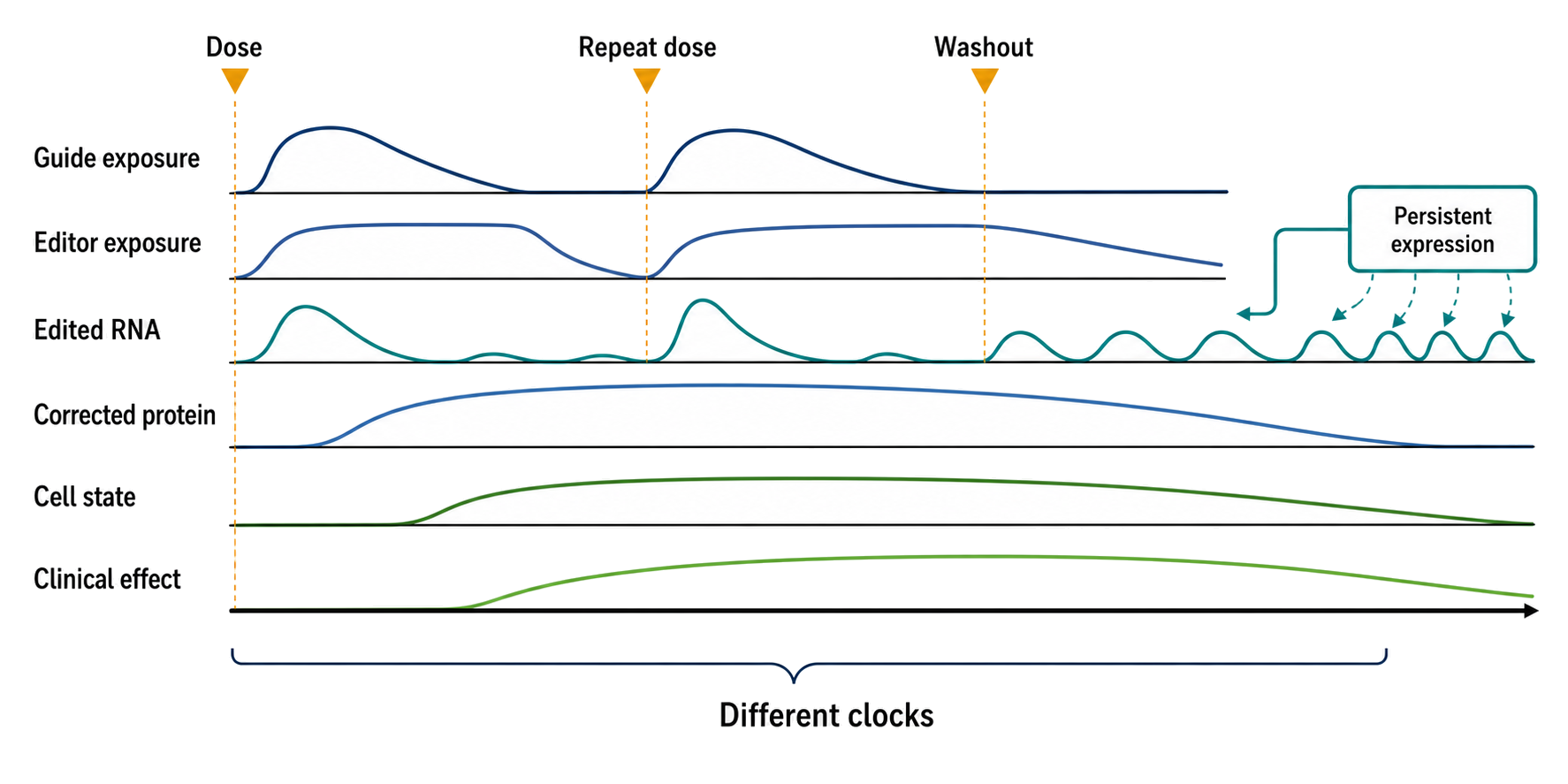
Figure 154.6. The Multiple Clocks of an RNA Editing Product. Figure 154.6. An RNA edit is transient only with respect to a specified layer. Product exposure, editor expression, edited RNA, protein, cell state, and clinical effect can rise and fall on different schedules.
Durability must match disease biology. A short-lived edit may be sufficient for an acute viral infection, transient inflammatory state, or episodic toxin exposure. A chronic genetic disease may need repeated dosing, long-lived expression, or editing in long-lived cells. A central nervous system disease may tolerate infrequent intrathecal administration if the pharmacodynamic effect lasts months, while a systemic disease may need a subcutaneous or intravenous route compatible with repeated use. The therapeutic index depends on the ratio between beneficial duration and harmful duration.
Resistance is usually discussed for antivirals and oncology, but it also applies to guide-directed RNA products. A viral or tumor RNA target can mutate away from a guide, shift isoform use, alter transcriptional state, change endocytic trafficking, or select cells with reduced uptake. A host transcript can be alternatively spliced, edited endogenously, or functionally replaced by a paralog. Combination guides and conserved target selection can reduce escape, but multiplexing increases manufacturing, dose allocation, and off-target complexity.
Specificity evidence should include negative knowledge. If a guide edits a paralogous transcript at low levels, the record should state whether that transcript is expressed in the treated tissue, whether the edited codon is conserved, whether the protein change is likely functional, and whether the off-target edit increases with dose or duration. A small off-target fraction in a critical neuronal transcript may matter more than a larger fraction in a nonexpressed or rapidly degraded transcript. Safety interpretation is contextual, not a universal threshold.
A common misconception is that RNA editing is safe because it is not permanent. Transience reduces some risks of genome editing, especially inherited DNA changes and lifelong nuclease activity, but it does not eliminate toxicity. A transient RNA edit can still create a toxic protein, suppress an essential transcript, activate innate immunity, or injure a tissue during a sensitive period. The safety case must be built from measured exposure, molecular specificity, biological reversibility, and clinical monitoring.
154.6. Preclinical models, biomarkers, patient selection, and clinical evidence
Preclinical evidence for an RNA editing product must answer more than whether editing is possible in a convenient cell line. The model must represent the intended human target sequence and isoform, the target cell and RNA compartment, disease-relevant ADAR or editor activity, the delivery route, and a phenotype that can be connected to clinical benefit. A model can be strong for one question and weak for another. A biochemical assay is appropriate for guide-enzyme geometry; a patient-derived cell can test the pathogenic transcript and cellular rescue; an organoid can add tissue architecture; an animal can test distribution, tolerability, and integrated physiology. No single model establishes the whole translational case.
The first model tier usually uses engineered reporter and endogenous-target cell assays. Reporters are valuable for screening guide windows, mismatches, deaminase geometry, and payload formats, but high reporter expression and exposed target sequences can exaggerate activity. Endogenous assays place the target in native isoforms and RNA-protein complexes. Isogenic controls that differ only at the disease variant help separate edit-dependent rescue from clonal background. Catalytically inactive editor, scrambled-guide, guide-only, and editor-only controls distinguish recruitment, enzyme background, delivery stress, and nonspecific effects. These controls should accompany dose and time courses rather than appear only at one optimized condition.
Patient-derived cells and induced pluripotent stem cell models become especially valuable when the mutation, haplotype, splice isoform, cell lineage, or disease state changes editability. Differentiated neurons, cardiomyocytes, retinal cells, muscle cells, or hepatocyte-like cells can reveal lineage-specific expression, RNA structure, and toxicity that transformed lines conceal. Organoids and multicellular cultures can test whether the targeted lineage is reached and whether corrected cells restore a tissue-level function. Their limitations remain substantial: maturation state may be incomplete, cell proportions may differ from adult tissue, and delivery from culture medium may not reproduce an anatomical barrier.
Animal models divide into pharmacology models and disease-efficacy models. If the human guide does not match the animal ortholog or the editable base is absent, a species-matched surrogate can test platform distribution and safety but cannot directly validate the final clinical sequence. A humanized target model can test the intended guide-target interaction but may not reproduce human ADAR abundance, immunity, or disease history. Larger animals can improve procedure, biodistribution, and toxicology assessment, yet they still require explicit target-sequence and enzyme-context comparisons. Reports should state which product component is identical to the clinical candidate and which is a surrogate.
The evidence is empirical rather than interchangeable across models. A 2025 comparison of primary human hepatocytes, liver-derived cell lines, induced-pluripotent-stem-cell hepatocytes, three-dimensional liver systems, and nonhuman primates found that primary-hepatocyte spheroids and liver microtissues more closely represented human liver expression and editing capacity for the tested editing oligonucleotide; the result supports model qualification for that liver context, not a universal hierarchy for every tissue or target (Aguila et al. 2025, PMID: 41285838). AAV-mediated LEAPER 2.0 studies in nonhuman primates and a humanized Hurler mouse separately show how target-sequence, delivery, bystander, and functional-rescue questions can require different model components (Yi et al. 2023, PMID: 37872590).
The first cadRNA mouse experiments separated two additional questions. Wild-type C57BL/6J mice targeted at liver Pcsk9 tested editing magnitude and duration in a readily transduced organ. The Idua-W392X knock-in, which models a nonsense lesion analogous to the common human IDUA-W402X variant, added a disease-linked biochemical endpoint through hepatic glycosaminoglycan accumulation. The latter model supports the causal sequence from guide expression to RNA correction and partial tissue biochemical rescue, but it does not validate the final human guide-target sequence, delivery beyond AAV8-transduced liver, repeat dosing, systemic disease correction, or clinical benefit (Katrekar et al. 2022, PMID: 35145312).
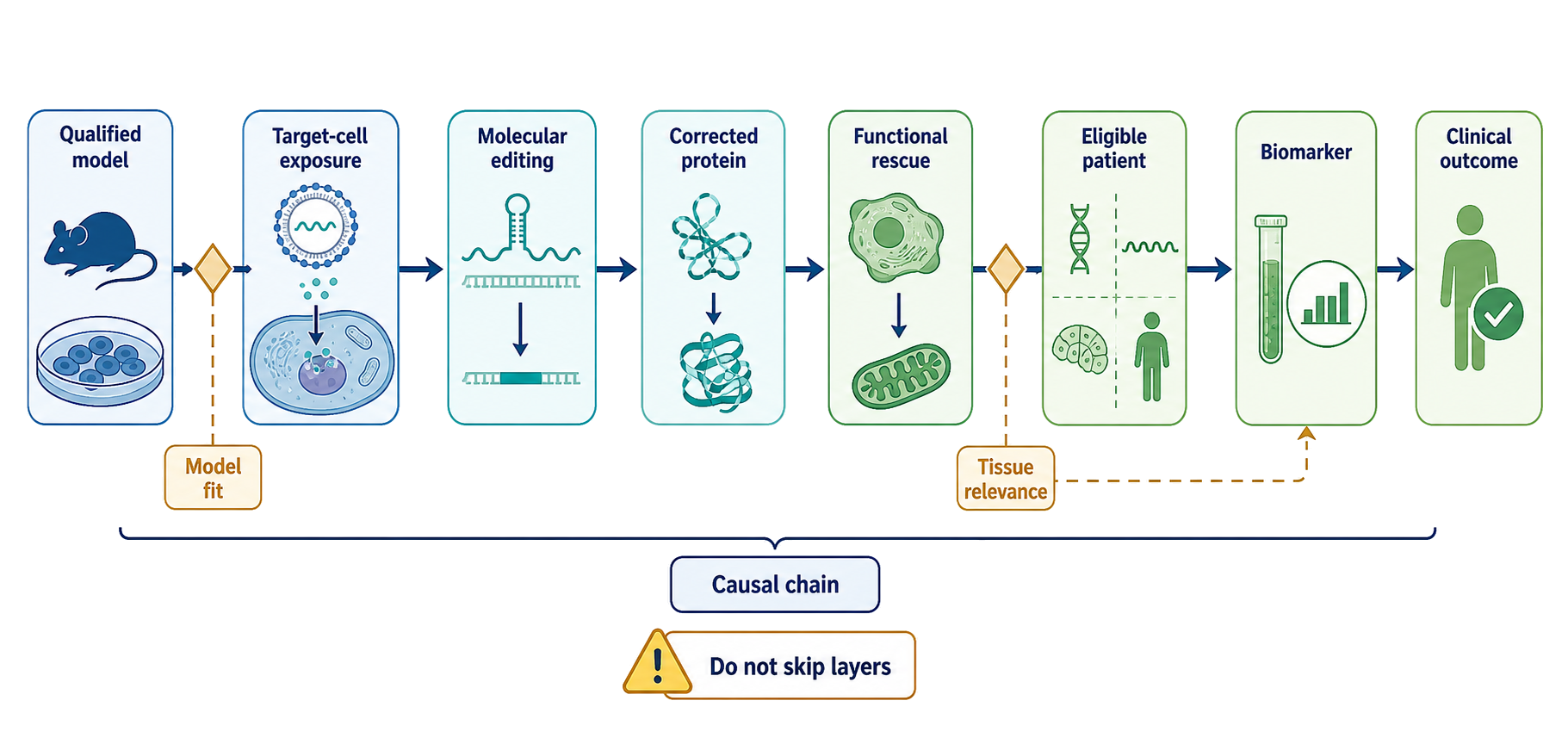
Figure 154.7. Translational Evidence Chain for RNA Editing Products. Figure 154.7. RNA editing translation requires a causal chain from a qualified model and target-cell exposure through guide-dependent molecular action, biological rescue, eligible patients, and a clinically interpretable outcome.
A biomarker strategy should link four levels: exposure, molecular action, biological rescue, and disease response. Exposure biomarkers may measure guide, editor messenger RNA, editor protein, vector genomes, or delivery-carrier distribution. Molecular pharmacodynamic biomarkers measure on-target editing or cleavage in the relevant transcript and specify whether a sampled tissue is the disease site or only a surrogate. Biological-response biomarkers measure corrected protein, enzyme activity, restored signaling, toxic-protein reduction, or a cell-state change. Clinical-response measures assess function, symptoms, events, or survival. A strong program does not assume that a blood editing signal represents editing in brain, muscle, retina, lung, or tumor.
Editing percentage must be interpreted with transcript abundance and cell composition. Ten percent editing in bulk tissue can mean ten percent editing in nearly every target cell, complete editing in one tenth of cells, or editing in abundant nontarget cells while the disease-critical lineage remains untreated. The same percentage can produce different protein rescue depending on whether edited transcripts are translated, whether the protein is stable, and whether function is cell autonomous. When feasible, cell-resolved editing, corrected-protein measurement, and tissue-function assays should accompany the bulk molecular endpoint.
Box 154.4. Editing Percentage Is Not Efficacy
Editing percentage is not efficacy. A bulk value can represent modest editing in nearly every relevant cell, complete editing in a small subset, or editing in cells that do not drive disease. Reads may include isoforms that do not make the required protein, and a sequence correction may not overcome nonsense-mediated decay or irreversible tissue damage. Interpret editing with target-cell distribution, allele and isoform identity, corrected protein, pathway rescue, and disease function. Molecular editing is an essential pharmacodynamic measurement, but it is one link in the evidence chain rather than a substitute for the chain.
Patient selection begins with an editable molecular lesion. The pathogenic variant must create an addressable base conversion or guide-directed output, be present in the expressed disease-relevant isoform, and occur in cells that the product can reach. Zygosity and allele context matter: correction of a recessive loss-of-function allele differs from suppression of a dominant toxic transcript, and a guide can affect both mutant and wild-type alleles unless a distinguishing sequence or structure is available. Common variants in the guide-binding region can change potency or create off-targets. Enrollment assays should confirm genotype, transcript expression where accessible, and any haplotype information used to support allele-selective claims.
Disease stage is another selection variable. Editing can restore a protein without reversing tissue already lost to degeneration, fibrosis, developmental mispatterning, or inflammation. Earlier treatment may offer more recoverable substrate but can increase uncertainty about long-term exposure and pediatric risk. Later treatment may allow clearer natural-history comparison while limiting achievable benefit. A product-development plan should define whether the intended effect is prevention, stabilization, partial restoration, or acute pathway control and choose endpoints appropriate to that claim.
Table 154.5. Model, Biomarker, and Patient-Selection Matrix. Table 154.5. Each development stage must specify what is represented, what is measured, and what remains uncertain before its result can support patient selection or clinical dose choice.
| Evidence setting | Strongest question answered | Required qualification and limitation |
|---|---|---|
| Reporter screen | Guide window, editable base, mismatch tolerance, and relative architecture activity. | Overexpression and exposed sequence can exaggerate editing; confirm on endogenous transcript and final chemistry. |
| Endogenous cell assay | Guide-dependent editing in native isoforms and RNA-protein context. | Transformed cells may not represent target lineage, ADAR state, delivery barrier, or disease phenotype. |
| Patient-derived or isogenic differentiated cell | Variant, haplotype, allele, lineage, corrected protein, and cellular rescue. | Maturation, tissue architecture, systemic exposure, and long-term safety remain incomplete. |
| Organoid or multicellular tissue model | Cell-type reach, spatial heterogeneity, tissue function, and effects across interacting lineages. | Culture delivery and developmental state can differ from the human anatomical barrier. |
| Humanized-target animal | Intended human guide-target interaction plus integrated exposure and physiology. | Human target sequence does not make animal ADAR, immunity, disease history, or delivery human. |
| Species-surrogate animal | Platform delivery, procedure, repeat dosing, and selected safety questions. | A different guide or target cannot validate final-guide potency and specificity; unchanged and surrogate components must be stated. |
| Early clinical sampling | Human tolerability, exposure, molecular editing, corrected protein, biomarker response, and dose range. | Surrogate tissues need justification, and molecular editing does not substitute for disease-relevant benefit. |
Clinical evidence should preserve the preclinical causal chain. Early studies primarily establish exposure, tolerability, molecular action, and a plausible dose range. If the disease tissue can be sampled safely, on-target editing and corrected protein provide direct pharmacodynamic evidence. When the tissue cannot be sampled, the surrogate biomarker needs biological justification, and uncertainty about tissue exposure should remain explicit. Dose escalation should consider delayed RNA and protein effects, cumulative exposure under repeat dosing, anti-effector immunity, and the possibility that maximal editing is not the safest or most useful dose.
Published human and registered-trial evidence must be kept separate. Guo et al. reported a first-in-human AAV circular-guide study in three people with Duchenne muscular dystrophy, alongside patient-derived cells and nonhuman-primate experiments; the small, uncontrolled human series is important early evidence but cannot establish population-level efficacy, uncommon toxicity, or comparative benefit (Guo et al. 2026, PMID: 42269605). Separately, as of 2026-07-13, ClinicalTrials.gov listed the RepAIR1 study of subcutaneous AIR-001 in adults with PiZZ alpha-1 antitrypsin deficiency as a recruiting, open-label Phase 1 single-ascending-dose and multiple-dose study with an estimated enrollment of 54 and no posted results. NCT07431112 therefore supports current trial existence, design, and recruitment status only; it supplies no outcome claim.
Rare disease development creates a tension between small populations and heterogeneous molecular eligibility. A sequence-programmable platform can in principle generate guides for many variants, but each guide changes hybridization, bystander edits, off-target candidates, chemistry, potency, and sometimes manufacturing controls. A platform-level evidence package can support shared features, yet it cannot erase variant-specific risk. Individualized or n-of-1 development requires disciplined bridging rules for what can be inherited from the platform and what must be retested for each guide. The broader trial, access, regulatory, and lifecycle framework belongs to Chapter 163.
Negative and discordant results are informative. Strong molecular editing without protein rescue may reveal nonsense-mediated decay, isoform mismatch, poor translation, or a protein threshold higher than predicted. Protein rescue without phenotypic benefit may show irreversible disease, an incorrect causal model, or insufficient correction in the critical lineage. Apparent phenotypic benefit without guide-dependent molecular action may reflect delivery-vehicle effects, immune modulation, batch differences, or model noise. A credible translational package reports these breaks in the chain instead of presenting editing percentage as a self-sufficient efficacy result.
The clinical maturity of RNA editing products varies by architecture, target, and tissue, and the local bibliography is stronger for platform reviews and method demonstrations than for product-specific clinical outcomes. Product names, development status, and trial results are time-sensitive and require verified, current regulatory or trial records before inclusion. This chapter therefore teaches the evidence framework without implying that every platform class has demonstrated clinical efficacy.
154.7. Delivery, manufacturing, regulation, and product-class comparison
Programmable RNA editing is often described by its information logic, but patients receive a physical product. The product may be a chemically synthesized editing oligonucleotide, a guide-effector ribonucleoprotein, messenger RNA encoding an editor, a viral vector, a lipid nanoparticle formulation, a receptor-directed conjugate, or an ex vivo edited cell product. Delivery determines which cells receive the guide and editor. Manufacturing determines which molecular species are administered. Immunogenicity and toxicology determine whether the exposure is tolerated. Regulatory evidence must connect the actual product configuration to its claimed mechanism and risks.
Delivery begins with route. Local routes such as intravitreal, intrathecal, intratumoral, inhaled, or topical administration can reduce systemic exposure and concentrate drug near a target tissue, but they require procedures and may not reach all affected cells. Systemic routes such as subcutaneous or intravenous administration can support repeat dosing but expose blood, liver, kidney, spleen, endothelium, and immune cells. Conjugates can exploit receptor-mediated uptake for editing oligonucleotides, while nanoparticles can package editor messenger RNA and guides. Viral vectors can reach some tissues efficiently but create long-lived expression and immune constraints. Chapter 156 owns LNP composition, trafficking, escape, and biodistribution; Chapter 157 owns non-LNP carrier and tissue-by-modality comparison.
Circular guides also show why molecular architecture and dosage form should not be conflated. Ribozyme-flanked cadRNA precursors circularized and edited after direct RNA transfection in cultured cells, whereas the in vivo Katrekar experiments used AAV8 expression cassettes. The cell result establishes a possible nonviral molecular format, not in vivo biodistribution or therapeutic exposure; the mouse result establishes liver-directed vector expression, not general delivery of a guide-only RNA drug. Each format therefore needs its own manufacturing, pharmacokinetic, innate-sensing, and stopping-rule evidence (Katrekar et al. 2022, PMID: 35145312).
Manufacturing requirements differ sharply across editing architectures. A short guide oligonucleotide resembles antisense or siRNA manufacturing, with attention to sequence identity, stereochemistry when applicable, chain-length distribution, depurination, truncated products, residual solvents, endotoxin, and impurity profiles. An editor messenger RNA adds template DNA, in vitro transcription, capping, poly(A) control, double-stranded RNA impurities, modified nucleotides, encapsulation, and protein-expression potency. A purified ribonucleoprotein adds effector identity, guide loading, aggregation, catalytic activity, and stoichiometry. A viral-vector editor adds vector-genome integrity, empty particles, replication-competent contaminants, and expression consistency. An ex vivo cell product adds cell identity, viability, edit distribution, phenotype, and release criteria.
Table 154.6. Editing Product-Format Controls. Table 154.6. The same intended edit can require different quality, potency, pharmacology, and follow-up evidence when guide and editor are administered in different physical forms.
| Product format | Product-specific quality and potency controls | Duration and safety emphasis |
|---|---|---|
| Editing oligonucleotide | Sequence and chemical identity, chain-length and impurity profile, hybridization or structure where relevant, and guide-dependent editing potency. | Tissue residence, repeat dosing, innate sensing, bystanders, guide off-targets, and recovery after dose cessation. |
| Editor messenger RNA plus guide | Template and RNA identity, cap and poly(A), double-stranded RNA impurities, formulation, editor expression, and guide-dependent editing. | Payload and protein time courses, carrier response, enzyme-background editing, repeat-dose immunity, and corrected-protein duration. |
| Ribonucleoprotein | Effector identity and aggregation, guide identity and loading, component stoichiometry, catalytic integrity, and target-dependent output. | Short exposure can aid controllability but does not remove delivery, acute immune, off-target, or persistent protein-effect risks. |
| Viral-vector expression | Vector-genome integrity, particle quality, expression cassette, replication-competent contaminants, biodistribution, and cellular editing potency; for genetically encoded circular guides, verify ribozyme processing and circularization. | Persistent guide or editor production, anti-vector immunity, innate sensing, shedding, long-term bystander and off-target accumulation, and follow-up; vector-driven editing duration is not edited-RNA half-life. |
| Ex vivo edited cell | Cell identity, viability, phenotype, edit distribution, residual process materials, and cell-based potency. | Clonal or cell-population heterogeneity, engraftment, expansion, persistence, trafficking, and product lifecycle monitoring. |
Immunogenicity is both a liability and a measurement problem. RNA molecules can stimulate innate immune sensors if they have certain lengths, triphosphate ends, double-stranded regions, uridine-rich motifs, or contaminants. Delivery vehicles can activate complement, inflammasomes, cytokines, or anti-polymer responses. Protein effectors from microbial CRISPR systems can be recognized by preexisting or treatment-induced adaptive immunity. Chemical modifications can reduce some sensing but may create new protein-binding or clearance behaviors. Immunogenicity studies should measure cytokines, complement, anti-drug antibodies when relevant, tissue histology, clinical chemistry, and functional consequences rather than relying on one marker.
Regulatory evaluation asks whether product quality attributes support the claimed mechanism. Potency assays for an editing oligonucleotide should measure guide-dependent editing under conditions relevant to the product and may need an orthogonal hybridization or identity assay. An editor-encoding messenger RNA requires evidence that both the RNA and expressed protein produce the expected activity. A CRISPR ribonucleoprotein requires guide identity, guide loading, effector integrity, and guide-dependent output. A release assay that measures only RNA mass or purity is not enough to establish biological potency, although it remains necessary for quality control.
Clinical pharmacology must connect administered dose to payload exposure, editing, corrected protein, pathway restoration, and disease response. The biomarker should be accessible in the treated tissue or supported as a justified surrogate. Blood measurements may not represent central nervous system, eye, muscle, lung, or tumor exposure. When the product supplies both guide and editor, discordant pharmacokinetics can create an activity window different from either component alone. Sampling schedules should be designed around the expected peak and decline of molecular editing, not only around plasma concentration.
Safety monitoring should be mechanism-specific. ADAR and APOBEC platforms need on-target bystander, guide-dependent off-target, enzyme-background, immune, and—where relevant—DNA-activity assessment. CRISPR RNA platforms need guide-dependent and effector-dependent off-targets, collateral activity where relevant, anti-effector immunity, and expression-duration measurements. Cross-platform toxicology should include the delivery vehicle, impurities, degradation products, translated editor, altered proteins produced by editing, and consequences of reducing or modifying the target transcript.
Regulatory classification is complex because programmable RNA product is an umbrella term rather than one regulatory class. A chemically synthesized editing guide may resemble an oligonucleotide drug. Messenger RNA encoding an editor combines messenger RNA quality attributes with gene-editing-like specificity questions. A viral vector expressing an RNA editor inherits gene-therapy concerns about biodistribution, persistence, shedding, and long-term follow-up. An ex vivo edited cell is evaluated as a cell product whose identity and edit distribution must be controlled. RNA-level action alone does not determine the regulatory path.
Authoritative guidance supports this format-specific approach. FDA’s 2024 final guidance on clinical pharmacology for oligonucleotide therapeutics addresses dose and exposure-response analysis, immunogenicity, organ impairment, QTc, and interaction questions for synthetic oligonucleotide products. FDA’s 2020 gene-therapy IND CMC guidance addresses identity, quality, purity, strength including potency, manufacturing, and testing for vector-containing products, while the 2026 final CMC-flexibilities guidance applies to cellular and gene-therapy products at the biologics-license stage. These documents support regulatory evidence categories; they do not decide whether a particular RNA editing product is safe, effective, or assigned to a specific center or pathway.
The main translational boundary is benefit over existing modalities. If an antisense oligonucleotide can splice-correct a transcript safely, an RNA editor must justify its added components and off-target search space. If an siRNA can silence a toxic transcript with suitable delivery and duration, Cas13 cleavage must offer a material advantage. Permanent DNA editing may be preferable when one treatment can safely correct a stable cell population; RNA editing may be preferable when dose titration, cessation, allele context, or avoidance of DNA alteration matters. Aptamer and catalytic-RNA product comparisons are developed separately in Chapter 155. Cross-modality clinical pathways, equity, individualized development, and lifecycle regulation belong to Chapter 163.
Recent Consensus
The current consensus is that programmable RNA editing and transcript repair have strong mechanistic rationales but must be judged as product- and tissue-specific pharmacology problems. Endogenous-ADAR recruitment can reduce exogenous protein payload, yet potency depends on target-cell ADAR state and delivery. Delivered deaminases and Cas13-derived effectors broaden possible outputs but add payload, immune, persistence, and enzyme-background risks. Spliceosome-mediated trans-splicing can replace larger transcript segments and preserve endogenous expression context, but it competes with cis-splicing and adds alternative-junction, off-target-fusion, and full-product-confirmation requirements. The distinction from permanent DNA editing is real but does not establish safety by itself. A credible therapeutic package connects dose and payload exposure to on-target molecular action, corrected protein or functional rescue, disease-relevant benefit, and a specificity assessment matched to the exact architecture.
Open Questions, Controversies, Deprecated Models, and Common Misconceptions
Open questions:
- Can endogenous ADAR recruitment achieve sufficient editing in hard-to-reach tissues without enzyme delivery?
- Can cytidine RNA editors be made specific enough for chronic use?
- How best to quantify low-frequency off-target edits in clinically relevant tissues?
- How should the long-term consequences of repeated transient RNA editing be modeled?
- What is the best balance between transient and durable expression for CRISPR RNA platforms, given immune memory and collateral-activity risks?
- Which preclinical models most reliably predict editing, durability, and safety in inaccessible human tissues?
- When can a surrogate-tissue editing biomarker support dose selection for a disease in another organ?
- How much platform evidence can be shared across sequence-customized or individualized editing guides?
- Which binding-domain, splice-site, and cargo features best predict productive trans-splicing on an endogenous pre-mRNA rather than a reporter?
- How sensitively can rare off-target fusion junctions and partial internal-replacement products be detected in inaccessible human tissues over persistent vector expression?
- What evidence is sufficient to bridge one exon-replacement cassette across many pathogenic variants within the replaced region?
Common misconceptions:
- “RNA editing is automatically safer than DNA editing.” RNA editing avoids permanent DNA alteration, but safety still depends on delivery, off-target editing, immune activation, duration, and tissue context.
- “CRISPR RNA targeting is a single modality.” CRISPR RNA platforms differ by effector, guide, substrate, collateral activity, delivery, and persistence.
- “Off-target analysis is complete after one RNA-seq experiment.” Off-target analysis depends on tissue, dose, timing, depth, chemistry, and orthogonal validation.
- “Programmable means predictable without empirical pharmacology.” Programmability helps design but does not replace delivery, exposure, potency, safety, and durability studies.
- “A high bulk-tissue editing percentage proves that the disease-relevant cells were corrected.” Bulk averages can conceal cell-type restriction, uneven delivery, isoform mismatch, or complete editing in a small cell subset.
- “A low transcriptome-wide off-target count proves that an editing guide is precise.” Transcriptome-wide analyses can miss low-abundance sites and do not quantify bystander edits within the intended guide-target duplex; both search spaces require dedicated assays.
- “Transient editor expression guarantees a transient treatment effect.” Corrected protein, immune memory, cell-state changes, tissue injury, or vector expression can outlast the supplied editor RNA or protein.
- “A junction-specific RT-PCR band proves transcript repair.” Reverse-transcription template switching, PCR recombination, vector DNA, and partial products can mimic a junction; full-product, protein, functional, and artifact controls are required.
- “Two intended junctions detected separately prove internal exon replacement.” The junctions must be phased on the same full-length RNA molecule and connected to the intended protein product.
- “A trans-splicing product is clinically validated because a trial is recruiting.” A registry establishes study existence and design, not molecular activity, benefit, or safety outcomes.
Deprecated or weakened claims:
- It is obsolete to treat guide complementarity as the only determinant of editing specificity. It is also misleading to describe all RNA editing as reversible without specifying persistence of the guide, editor, edited transcript, downstream protein, cell state, and clinical effect. An editing percentage measured at one time point is no longer an adequate stand-alone description of pharmacology or efficacy.