Chapter 97. R-Loops, RNA-DNA Hybrids, DNA G-Quadruplex Crosstalk, and Genome Stability
Scope Note
R-loops are three-stranded nucleic acid structures in which an RNA strand hybridizes with one strand of DNA and leaves the complementary DNA strand single stranded. RNA-DNA hybrids also occur in contexts that are not classical co-transcriptional R-loops, including Okazaki fragment priming, antisense oligonucleotide action, mitochondrial replication, retroelement intermediates, and cytoplasmic products of genome damage. This chapter uses the term G-quadruplex specifically for a DNA G-quadruplex formed on, or coupled to, a guanine-rich genomic strand in an R-loop or replication context. It does not own general RNA G-quadruplex, RNA triplex, or Z-RNA biology, which is treated in Chapter 53. The chapter instead asks how RNA-DNA hybrids and DNA G-quadruplexes become coupled, measurable, and sometimes dangerous nucleic-acid states connecting transcription, replication, recombination, DNA repair, innate immunity, repeat instability, cancer, and neurological disease.
Executive Summary
An R-loop forms when RNA invades duplex DNA or remains paired to the DNA template after transcription, producing an RNA-DNA hybrid and a displaced DNA strand. Formation is favored by negative supercoiling behind RNA polymerase, high transcription, G-rich or GC-skewed sequences, slow ribonucleoprotein assembly, stalled polymerases, topological stress, and local DNA structures such as G-quadruplexes. R-loops are not automatically pathological. Cells use RNA-DNA hybrids in immunoglobulin class switch recombination, mitochondrial replication, some transcription termination and promoter regulation pathways, telomere biology, and repair-associated signaling. The same physical state can also expose single-stranded DNA, block replication forks, promote transcription-associated mutagenesis, and misdirect repair when it persists at the wrong locus or time.
Resolution pathways include RNase H1 and RNase H2, helicases such as senataxin, DDX5, DDX21, DHX9, PIF1-family helicases, and several RNA biogenesis factors that prevent hybrid formation by packaging nascent RNA. Topoisomerases suppress R-loops by relieving transcription-induced torsional stress, while RNA processing and export factors reduce the time nascent RNA remains available for reannealing to DNA. RNA-DNA hybrid recognition proteins can be protective, regulatory, or harmful depending on whether binding recruits resolution, stabilizes a functional structure, or shields a damaging hybrid from clearance.
Mapping R-loops is technically difficult. The widely used S9.6 antibody recognizes RNA-DNA hybrids but has sequence, structure, and RNA-binding biases, and extraction can create or destroy hybrids. RNase H sensitivity, strand specificity, orthogonal probes, spike-ins, genetic perturbations, and locus-specific validation are therefore essential. A high-confidence causal claim about an R-loop requires more than overlap between an S9.6 peak and a phenotype. The strongest claims combine biochemical specificity, local perturbation, temporal order, rescue by hybrid resolution, and evidence that the proposed hybrid is the relevant molecular intermediate.
Concept Inventory
- R-loop: a three-stranded structure containing an RNA-DNA hybrid and displaced single-stranded DNA. In transcriptional R-loops, the RNA usually derives from the same locus and pairs with the template DNA strand, although antisense and trans-acting RNAs can also form hybrids.
- RNA-DNA hybrid: a two-stranded duplex composed of one RNA strand and one DNA strand. Every R-loop contains an RNA-DNA hybrid, but not every RNA-DNA hybrid is an R-loop because some hybrids occur without a displaced genomic DNA strand.
- Displaced DNA strand: the DNA strand not paired with RNA in an R-loop. It is often single stranded and can be vulnerable to nucleases, deamination, G-quadruplex folding, damage, or aberrant protein binding.
- DNA G-quadruplex: a guanine-rich DNA structure based on stacked G-quartets stabilized by monovalent cations, especially potassium. In this chapter, a DNA G-quadruplex can stabilize an R-loop by preventing reannealing of the displaced DNA strand. RNA G-quadruplexes are distinct RNA conformers whose formation, occupancy, mapping, and functions are owned by Chapter 53.
- RNase H pathway: enzymatic removal of RNA from RNA-DNA hybrids. RNase H1 cleaves RNA in longer hybrids and functions in mitochondria and nuclei; RNase H2 removes single ribonucleotides embedded in DNA and can process some short hybrid contexts.
- Transcription-replication conflict: a collision or interference event between transcription machinery and DNA replication machinery. R-loops can cause, amplify, or mark these conflicts.
- Antibody-dependent hybrid mapping: a family of methods using S9.6 or other binders to enrich RNA-DNA hybrids. These methods require RNase H controls and orthogonal validation because binders can enrich off-target RNA structures or extraction artifacts.
What to Know Before Reading This Chapter
The reader should know that DNA is normally a double helix whose two strands can separate locally during transcription, replication, repair, recombination, and chromatin remodeling. RNA polymerase reads the DNA template strand and synthesizes RNA, creating a transient RNA-DNA hybrid inside the transcription bubble. That short hybrid is part of ordinary transcription and is not, by itself, what most genome-stability papers mean by an R-loop. A pathological or regulatory R-loop usually means a longer, more stable RNA-DNA hybrid outside the protected polymerase active site, together with a displaced DNA strand.
The chapter also assumes familiarity with replication forks, DNA double-strand break repair, homologous recombination, nonhomologous end joining, topoisomerases, RNA processing, and chromatin. Where these ideas matter for R-loop biology, the mechanism is restated locally. For example, a replication fork is a moving protein-DNA machine that unwinds DNA and copies each strand. If a stable RNA-DNA hybrid or G-quadruplex lies in the path of the fork, polymerase movement can slow or collapse, creating a lesion that must be repaired.
97.1. R-loop formation, stabilization, resolution, and mapping methods
R-loop formation begins with an opportunity for RNA and DNA to base pair. During transcription, the nascent RNA is born near its template DNA strand, and the transcription bubble already contains a short RNA-DNA hybrid. Most transcripts are rapidly separated from DNA by RNA polymerase movement, RNA processing factors, RNA-binding proteins, and topological relaxation. An R-loop becomes likely when the RNA remains near the DNA long enough to reanneal behind the polymerase or when an RNA approaches homologous DNA from outside the local transcription complex.
Box 97.1. What Counts as an R-loop?
An RNA-DNA hybrid is a duplex made from one RNA strand and one DNA strand. An R-loop is a more specific three-stranded state: the RNA pairs with one genomic DNA strand, and the other DNA strand is displaced. This boundary matters because several biological hybrids are not usually called R-loops. The short hybrid inside RNA polymerase is part of the normal transcription bubble. A DNA-like antisense oligonucleotide paired to a target RNA recruits RNase H1 but does not displace a genomic DNA strand. Okazaki fragment primers, mitochondrial replication intermediates, retroelement reverse-transcription products, and cytoplasmic RNA-DNA hybrids also need context-specific names. Before calling a structure an R-loop, ask three questions: Is there an RNA-DNA hybrid? Is one strand of a DNA duplex displaced? Is the RNA source, strand orientation, and genomic locus known well enough to define the structure?
Several physical features favor R-loop formation. Negative supercoiling behind elongating RNA polymerase unwinds duplex DNA and lowers the energetic cost of RNA invasion. GC skew, especially G-rich RNA paired with a C-rich DNA template, can produce unusually stable RNA-DNA hybrids. A displaced G-rich nontemplate strand may fold into a G-quadruplex, which reduces the chance that the two DNA strands reanneal. Long genes, highly transcribed genes, pause sites, terminators, promoters, CpG islands, ribosomal DNA, immunoglobulin switch regions, telomeres, and repetitive sequences can therefore be enriched for R-loops, although enrichment depends strongly on cell type, transcription state, chromatin, and mapping method.
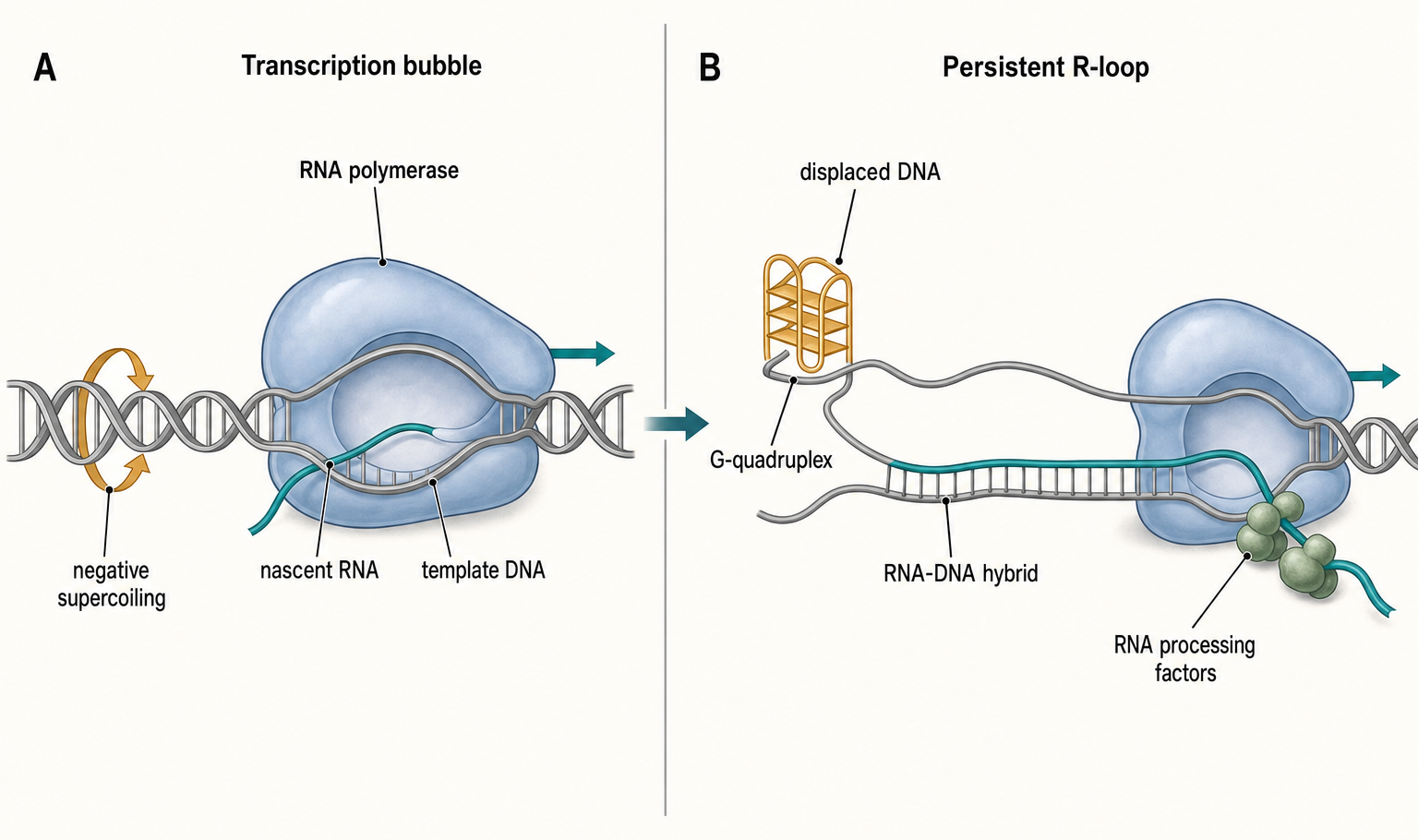
Figure 97.1. Formation and stabilization of an R-loop. Help readers distinguish a short transcription-bubble hybrid from a longer R-loop and understand why topology, sequence, and nascent RNA packaging affect stability.
R-loop stabilization is not the same as formation. Stabilization can occur after a hybrid forms because the displaced DNA strand is protected, folded, bound by protein, damaged, or topologically trapped. G-quadruplexes are a prominent example. A G-rich displaced strand can form stacked guanine tetrads, preventing rapid reannealing with the template strand. Proteins that bind G-quadruplexes, single-stranded DNA, or RNA-DNA hybrids can either help resolve these structures or make them longer lived. Topoisomerase I deficiency, impaired messenger ribonucleoprotein assembly, defective splicing, slowed RNA export, or helicase loss can also increase hybrid persistence by changing DNA topology or leaving nascent RNA exposed.
G-quadruplexes and R-loops often appear together in genomic regions with guanine-rich sequences, but the relationship is not universal. A G-quadruplex can promote an R-loop by stabilizing the displaced DNA strand, and an R-loop can promote a G-quadruplex by creating single-stranded G-rich DNA. In other contexts, a protein that resolves G-quadruplexes may suppress both structures, making it difficult to decide which structure causes a phenotype. This distinction matters in highly transcribed guanine-rich loci, where topoisomerase I, helicases, and RNA processing factors can affect genome stability through both hybrid-dependent and hybrid-independent mechanisms. Yadav et al. (2016) provide a useful caution because topoisomerase I suppression of instability at a guanine-rich sequence was not limited to prevention of RNA-DNA hybrid accumulation.
97.2. RNA-DNA hybrid recognition proteins and RNase H pathways
Cells recognize RNA-DNA hybrids through enzymes, helicases, RNA-binding proteins, DNA repair factors, and engineered probes. RNase H1 and RNase H2 are the central catalytic activities that remove RNA from DNA. RNase H1 cleaves RNA in RNA-DNA hybrids and is especially important for longer hybrids, including mitochondrial replication intermediates and nuclear R-loops. RNase H2 has a specialized role in removing single ribonucleotides misincorporated into DNA, but it can also act in short hybrid contexts. These enzymes are not interchangeable in vivo because their substrate requirements, localization, partner proteins, and developmental requirements differ.
RNase H activity illustrates why “hybrid removal” is not a single pathway. RNase H1 can suppress R-loop accumulation when overexpressed in nuclei, and catalytically inactive RNase H1 hybrid-binding domains can be used as imaging probes. However, overexpression can perturb normal hybrids, change transcription or replication indirectly, and mask locus-specific functions. RNase H2 defects cause genome instability and inflammatory disease because ribonucleotides embedded in DNA and unresolved hybrid-like structures can trigger repair and immune sensing pathways. Antisense oligonucleotide therapeutics also exploit RNase H1: a DNA-like oligonucleotide binds a target RNA and recruits RNase H1 to cleave the RNA strand, demonstrating that RNA-DNA hybrid recognition can be a therapeutic mechanism rather than only a genome-stability hazard.
Table 97.1. Major R-loop prevention, recognition, and resolution factors. Prevent readers from treating all R-loop suppressors as direct hybrid helicases.
| Factor or pathway | Substrate or recognized feature | Likely action | Example biological context | Interpretation caveat |
|---|---|---|---|---|
| RNase H1 | Longer RNA-DNA hybrids in nuclei, mitochondria, and engineered RNA-oligonucleotide duplexes | Cleaves the RNA strand of the hybrid and can remove persistent hybrids | Nuclear R-loop suppression, mitochondrial hybrid processing, and RNase H-recruiting antisense oligonucleotides | Overexpression is a broad perturbation and does not prove that a natural locus contains a classical R-loop |
| RNase H2 | Single ribonucleotides embedded in DNA and some short hybrid contexts | Initiates ribonucleotide excision repair and limits hybrid-like genome lesions | Genome instability and inflammatory disease when RNase H2 is defective | RNase H2 disease biology should not be reduced to accumulation of long co-transcriptional R-loops |
| Senataxin/SETX | Transcription-associated hybrids, paused polymerase complexes, and conflict-prone loci | Helicase or translocase activity coupled to termination, hybrid clearance, and repair pathway choice | Transcription termination, transcription-replication conflicts, and SETX-linked neurological disease | SETX phenotypes can reflect R-loop metabolism, transcription regulation, DNA repair, or combined defects |
| DDX5 | Hybrid-associated chromatin sites and RNA-protein assemblies | RNA helicase or RNP remodeling activity that reduces hybrid-associated signals at selected loci | Genome-wide resolution-factor studies and RNA-processing-linked genome integrity | Reduced R-loop signal after DDX5 perturbation does not make every affected site a direct DDX5 hybrid substrate |
| DDX21 | Nucleolar, ribosomal-DNA, and transcription-associated RNA or DNA structures | Remodels structured RNA, RNPs, and hybrid-prone transcription environments | Nucleolar transcription stress and R-loop-associated genome maintenance | Effects may arise through rRNA transcription and nucleolar organization rather than direct hybrid unwinding |
| DHX9 | RNA-DNA hybrids, structured RNA, G-quadruplex-prone regions, and RNP complexes | Broad helicase or remodeling activity that can reduce hybrid persistence and associated replication stress | Repetitive or guanine-rich loci where RNA structures and DNA structures coincide | Broad substrate specificity makes hybrid-specific causality difficult without structure-specific assays |
| PIF1-family helicases | G-quadruplexes, telomeric or guanine-rich DNA, and fork-blocking hybrid-associated structures | Unwinds G-quadruplexes and other obstacles that can stabilize R-loops or impede forks | Telomeres, highly transcribed G-rich loci, and replication barriers | A phenotype can be driven by G-quadruplex persistence rather than by the RNA-DNA hybrid itself |
| Topoisomerase I | Transcription-induced negative supercoiling and torsional stress behind RNA polymerase | Relaxes DNA topology and lowers the opportunity for nascent RNA to reinvade DNA | Highly transcribed guanine-rich sequences and transcription-associated genome instability | Suppression of instability is not restricted to preventing RNA-DNA hybrid accumulation |
| THO/TREX and RNA processing/export factors | Exposed nascent RNA, incompletely packaged mRNPs, and delayed transcript export | Package, process, terminate, export, or degrade RNA before it can reanneal to DNA | Yeast and mammalian RNA-biogenesis defects that increase R-loop burden | Loss of processing factors changes transcription, RNA fate, and cell state, so increased hybrids can be indirect |
| BRCA1-BARD1-associated resolution or repair coupling | Hybrid-marked transcription-replication conflicts and stalled replication forks | Coordinates hybrid resolution, damage signaling, and homologous-recombination-linked repair decisions | BRCA-pathway replication stress and SETX-associated conflict resolution | Local bibliography flags recent SETX-BRCA1-BARD1 mechanism details for expert verification |
Helicases and translocases provide a second major class of resolution factors. Senataxin, encoded by SETX in humans, is an RNA-DNA hybrid-associated helicase implicated in transcription termination, replication stress responses, and neurological disease. Reviews and recent primary studies describe roles for senataxin-containing complexes in resolving transcription-replication conflicts and cooperating with BRCA1-BARD1. DDX5, DDX21, DHX9, Aquarius, PIF1-family helicases, FANCM, and other factors have been linked to R-loop metabolism, although their mechanisms differ. Some unwind RNA-DNA hybrids directly in vitro; others remodel ribonucleoprotein complexes, DNA structures, or chromatin in ways that indirectly reduce R-loops.
Prevention is as important as resolution. Nascent RNA that is quickly capped, spliced, packaged, terminated, exported, or degraded has less opportunity to invade DNA. THO/TREX complex defects, impaired splicing, altered cleavage and polyadenylation, deficient RNA decay, or defective transcription termination can all increase R-loops. The general lesson is that RNA biogenesis factors act as genome-integrity factors because they control whether RNA remains an exposed complement to DNA. Luna et al. (2024) frame this as a hidden role of RNA metabolism in maintaining genome integrity.
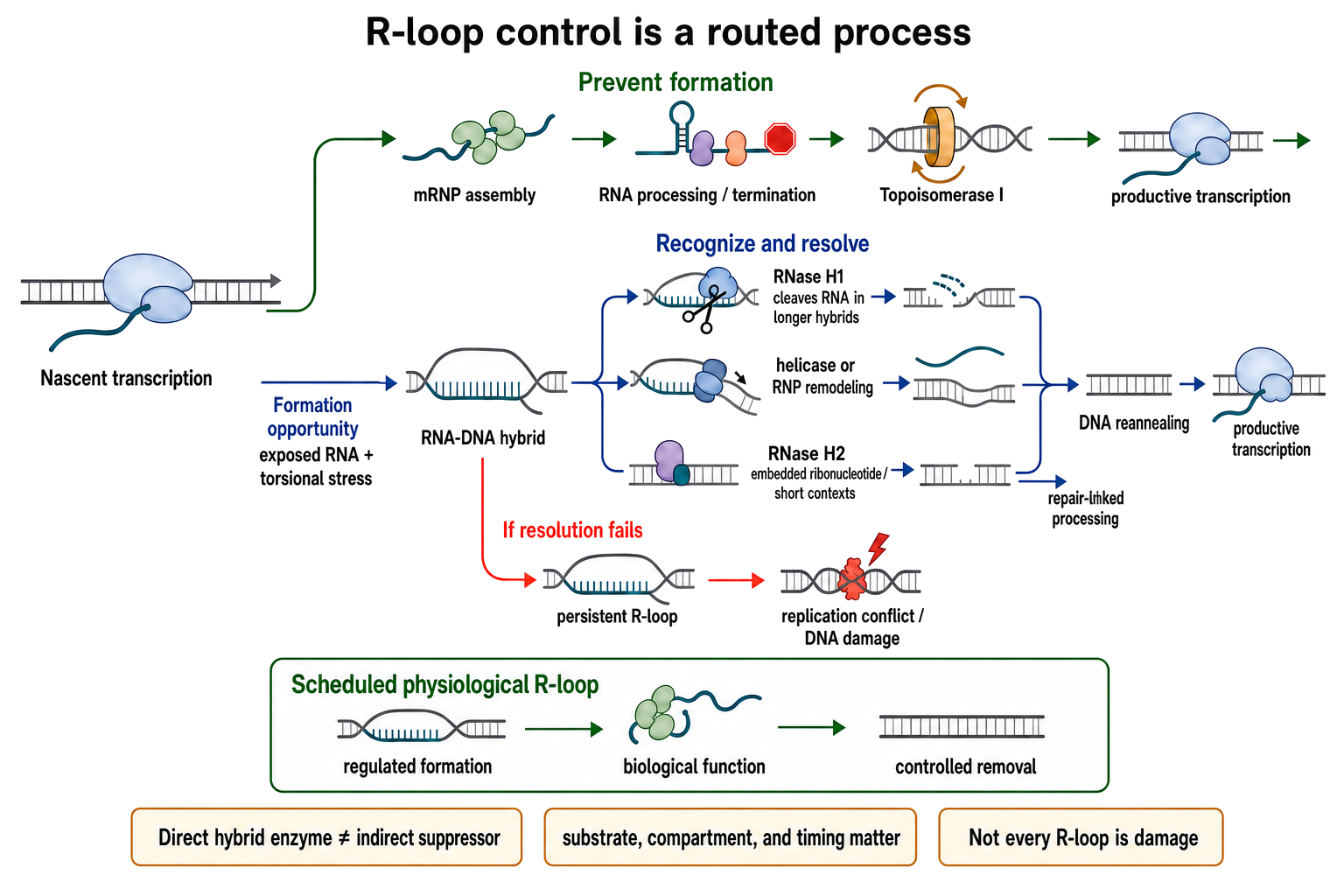
Figure 97.5. R-loop prevention, recognition, and resolution pathways. “R-loop control is a routed process. Cotranscriptional RNA packaging, processing, termination, and topological relaxation reduce formation opportunities; RNase H1, RNase H2, helicase or RNP remodeling, and repair-linked processing act on different substrates or contexts after a hybrid or lesion appears. Failed resolution can lead to persistent R-loops and genome damage, whereas scheduled physiological R-loops follow regulated formation and controlled removal.”
Mapping methods and their limits
R-loop mapping is a measurement problem as much as a biological problem. The most familiar method is DNA-RNA immunoprecipitation followed by sequencing, usually called DRIP-seq. Genomic DNA is extracted, fragmented, immunoprecipitated with the S9.6 antibody, and sequenced. If the signal disappears after RNase H treatment, the enriched material is interpreted as RNA-DNA hybrid dependent. DRIPc-seq modifies this logic by sequencing the RNA component and improving strand information. Sanz and Chedin (2019) provide a detailed protocol for high-resolution, strand-specific S9.6-based mapping.
S9.6-based methods are powerful but not definitive. The antibody can bind some double-stranded RNA and structured RNA, and its affinity varies with sequence and hybrid length. Sample preparation can create hybrids by allowing RNA to anneal to denatured DNA or destroy hybrids by shearing, heating, nuclease contamination, or harsh extraction. Fragmentation resolution can make a peak appear at a promoter or terminator even when the molecular hybrid lies nearby. Crosslinking can preserve transient states but can also introduce accessibility bias. Therefore, an S9.6 peak should be read as evidence for an enriched hybrid-like signal under the specific protocol, not as direct proof of an in vivo R-loop of known length, strand, and function.
Box 97.2. Reading an R-loop Map
A genome-wide peak is best read as a candidate hybrid-associated signal, not as a finished molecular model. A careful interpretation asks whether the signal is RNase H-sensitive, whether the RNA strand and DNA strand are known, and whether an independent method detects the same locus. The next question is what the assay actually measured. S9.6 enrichment, catalytically inactive RNase H binding, bisulfite sensitivity, and S1 nuclease sensitivity report overlapping but different features. Controls should address purified-substrate specificity, spike-in behavior, matched input, extraction conditions, transcription level, and cell-cycle state. For an important locus, the strongest follow-up combines strand-resolved mapping with local perturbation: alter the transcript, sequence feature, or resolution factor; then test whether hybrid signal and phenotype change together. A peak without these controls can still be useful, but it should be described as an atlas signal rather than proof of a causal R-loop.
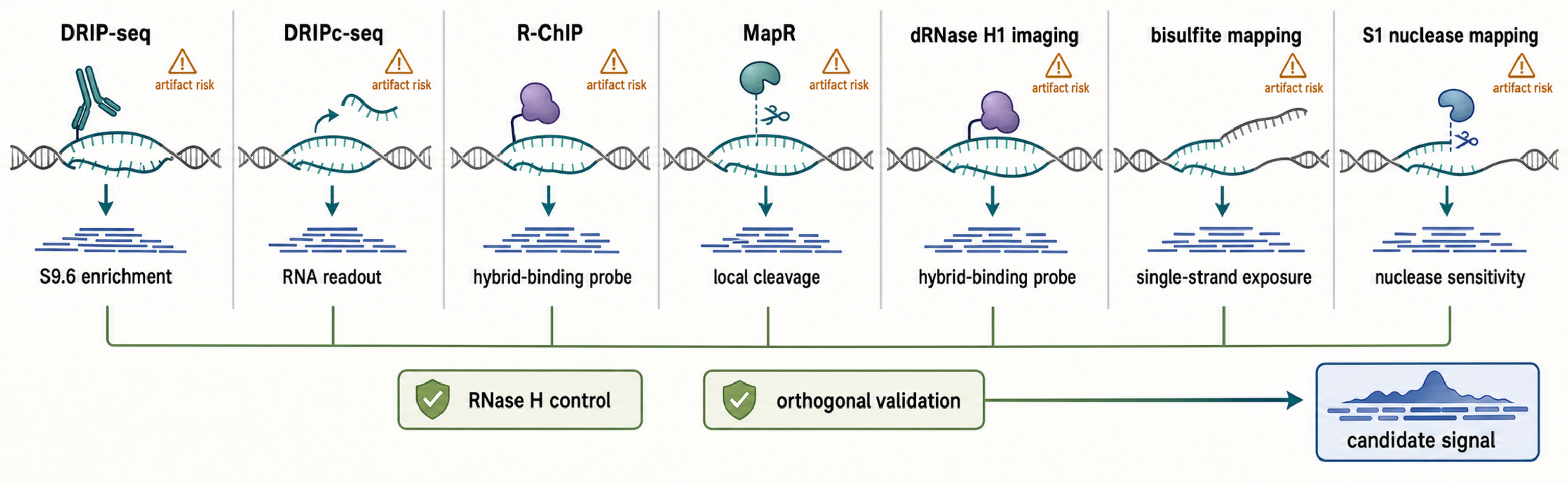
Figure 97.2. R-loop mapping methods and artifacts. Teach that different assays detect different molecular features and that RNase H sensitivity plus orthogonal validation are required.
Orthogonal methods reduce but do not remove uncertainty. R-ChIP uses a catalytically inactive RNase H domain tethered to chromatin profiling machinery, providing a hybrid-binding probe with different biases from S9.6. MapR and related approaches use hybrid recognition fused to micrococcal nuclease or other mapping enzymes. Bisulfite-based methods infer displaced single-stranded DNA because cytosine deamination is more efficient on single-stranded DNA than on duplex DNA. S1 nuclease-sensitive approaches similarly exploit exposed single-stranded DNA. Imaging with catalytically inactive RNase H1 can reveal nuclear, mitochondrial, or cytoplasmic hybrids, but fixation, probe expression level, and accessibility affect signal. The strongest mapping studies combine at least two approaches, include RNase H-sensitive controls, preserve strand information, and validate important loci by targeted assays.
97.3. R-loops in transcription, replication, recombination, and repair
R-loops in Transcription and Termination
R-loops influence transcription at several levels. Promoter-proximal R-loops can correlate with open chromatin, CpG island promoters, and transcription initiation. In some cases, they may help maintain a chromatin state or pause configuration. In other cases, they are byproducts of high transcription, promoter architecture, or local GC skew. Distinguishing these alternatives requires temporal experiments: if an R-loop appears after transcription begins and disappears when transcription stops, it may be a consequence; if targeted removal changes initiation or chromatin without globally changing transcription, it is more plausibly regulatory.
Termination is another context in which R-loops can be functional. At some loci, RNA-DNA hybrids contribute to pausing, cleavage, or recruitment of termination factors. Xu et al. (2023) reported R-loop-dependent promoter-proximal termination that protects genome stability, showing that a hybrid can serve as a controlled signal rather than only a lesion. Similar logic applies to some noncoding RNA loci and repeat regions: a local hybrid can mark a transcript for termination or processing, but persistent hybrids can also block polymerase recycling and generate DNA damage.
Transcription-associated recombination is an older term for recombination stimulated by transcription. R-loops provide a mechanistic bridge because the displaced DNA strand can become damaged or engage repair factors, while the hybrid can obstruct replication. However, not all transcription-associated recombination is R-loop dependent. High transcription changes chromatin, topological stress, DNA accessibility, replication timing, and repair factor recruitment. A rigorous claim must show that hybrid removal reduces the recombination phenotype without simply lowering transcription or changing cell-cycle state.
R-loops in Replication, Recombination, and Repair
Replication forks are sensitive to stable nucleic acid structures. When a fork encounters an R-loop, the obstacle can be the RNA-DNA hybrid, the displaced single-stranded DNA, a G-quadruplex on the displaced strand, a protein bound to the hybrid, or a paused transcription complex associated with the structure. Head-on collisions between replication and transcription are especially risky because the replication machinery meets the transcription complex and the hybrid from the opposite direction. Co-directional conflicts can also be harmful if the fork catches a paused polymerase or a stabilized R-loop.
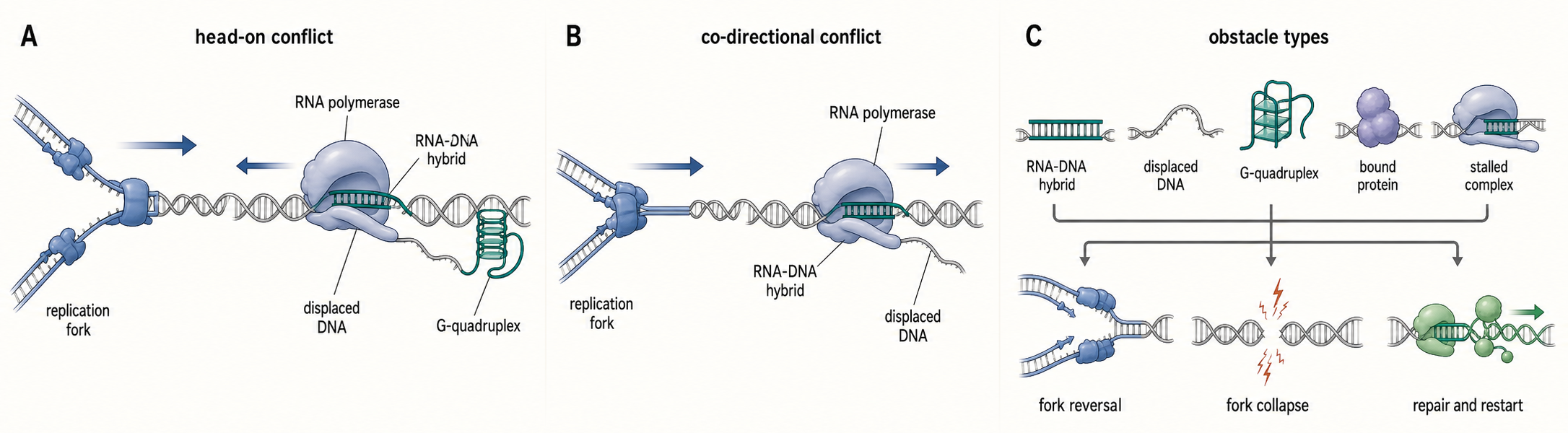
Figure 97.3. R-loops at transcription-replication conflicts. Make clear that the replication obstacle can be the hybrid, a bound protein complex, the displaced strand, a G-quadruplex, or a stalled transcription complex.
Replication stress creates repair choices. A fork stalled at an R-loop can restart, reverse, collapse into a double-strand break, or recruit homologous recombination. BRCA1, BRCA2, BARD1, Fanconi anemia factors, ATR signaling, and hybrid-resolving helicases are repeatedly connected to these events. SETX-BRCA1-BARD1 involvement in transcription-replication conflicts illustrates a pathway in which hybrid resolution is linked to repair pathway choice. Dutta et al. (2026), if retained after expert review of the local bibliography, should be cited for this specific recent mechanism. Final bibliography item: verify and add additional primary and review coverage for SETX-BRCA1-BARD1 mechanisms, because the local reference list contains a future-dated entry that needs expert bibliographic review before final use.
R-loops can be substrates, signals, or hazards in DNA repair. At double-strand breaks, local transcription or damage-induced RNA can form RNA-DNA hybrids near the break. These hybrids may recruit repair factors, help process DNA ends, or provide templates for RNA-templated repair in specialized systems. They may also delay repair, promote mutagenic processing, or interfere with end joining. The same duality appears at telomeres, where telomeric repeat-containing RNA, called TERRA, can form hybrids with telomeric DNA. TERRA R-loops can participate in telomere regulation, especially in recombination-based telomere maintenance, but excessive telomeric hybrids can promote fragility and replication stress.
Recombination outcomes depend on context. In immunoglobulin class switch recombination, transcription through switch regions produces R-loops that expose single-stranded DNA to activation-induced cytidine deaminase. This is a physiological use of R-loop-associated single-stranded DNA, not an accident. In other loci, exposed single-stranded DNA can be deaminated by APOBEC enzymes, cleaved by nucleases, or processed by repair pathways that create mutations. McCann et al. (2023) connect APOBEC3B with R-loops and transcription-associated mutagenesis in cancer, providing a disease-relevant example of how hybrid metabolism can influence mutational processes.
97.4. R-loops in immunity, repeat expansions, cancer, and neurological disease
Immunity, Cytoplasmic Hybrids, and Inflammation
Innate immune systems detect nucleic acids in the wrong molecular form or compartment. RNA-DNA hybrids can become immunostimulatory when they accumulate outside normal nuclear or mitochondrial contexts. Crossley et al. (2023) reported that R-loop-derived cytoplasmic RNA-DNA hybrids can activate an immune response. This finding connects genome instability to inflammatory signaling: a nuclear problem can generate nucleic acid material that appears to cytoplasmic sensors as a danger signal.
The immune relevance of R-loops must be separated from several neighboring mechanisms. Cytosolic DNA can activate cGAS-STING; double-stranded RNA can activate RIG-I-like receptors, PKR, OAS/RNase L, or other antiviral pathways; mitochondrial nucleic acids can trigger inflammatory signaling when released during stress. RNA-DNA hybrids may intersect with these pathways, but a hybrid signal should not be inferred merely because an interferon-stimulated gene program appears. The causal chain should identify the hybrid species, its compartment, the sensor or adaptor, and the response. RNase H-sensitive loss of immune activation is stronger evidence than simple co-occurrence of DNA damage and interferon signaling.
RNase H2 defects illustrate another connection between hybrid metabolism and autoinflammation. RNase H2 removes ribonucleotides embedded in DNA; when this repair fails, genome instability and nucleic acid sensing can result. The disease mechanism is not simply “too many R-loops” in the classical transcriptional sense. It includes ribonucleotide excision repair failure, DNA damage, aberrant nucleic acid species, and immune activation. This is an important boundary case: RNA-DNA hybrid enzymology contributes to immune disease even when the relevant substrate may be a single ribonucleotide in DNA rather than a long co-transcriptional R-loop.
Repeat Expansions, Neurological Disease, and Cancer
Repetitive sequences are fertile ground for R-loops because they can be highly transcribed, GC-rich, structure-forming, or difficult to replicate. Repeat expansion disorders, including some ataxias, amyotrophic lateral sclerosis/frontotemporal dementia-related repeat loci, fragile X-related loci, and other microsatellite diseases, often involve unusual DNA and RNA structures. R-loops can contribute to repeat instability by exposing single-stranded DNA, stabilizing slipped-strand intermediates, blocking replication, or changing repair pathway engagement. RNA structures produced by repeat transcripts can also sequester proteins or undergo repeat-associated non-AUG translation, so an R-loop is only one layer of repeat-expansion pathobiology.
Neurological disease links are strongest where a hybrid-processing factor is genetically implicated or where a repeat locus shows hybrid-dependent instability. SETX mutations cause forms of ataxia and motor neuron disease, and senataxin biology is therefore central to discussions of RNA-DNA hybrids in neurons. Neurons face long transcription units, high transcriptional complexity, oxidative stress, and limited regenerative capacity, all of which can make transcription-associated genome stress consequential. Still, neurological phenotypes cannot be assigned to R-loops without careful evidence because RNA processing defects, DNA repair defects, mitochondrial dysfunction, and protein aggregation can coexist.
Cancer cells often show replication stress, oncogene-driven transcription, DNA repair defects, altered RNA processing, and abnormal topoisomerase activity. These conditions can increase R-loop burden or change the consequences of normal hybrids. R-loops can contribute to genome instability by promoting fork stalling, double-strand breaks, copy-number changes, chromosomal rearrangements, and mutation clusters. They can also create vulnerabilities. Tumors with BRCA1/2 pathway defects, Fanconi anemia pathway defects, topoisomerase dependence, or altered RNA helicase activity may be unusually sensitive to additional R-loop stress or to agents that stabilize DNA structures.
Cancer relevance should not be overgeneralized. Many studies detect increased S9.6 signal in cancer cells after drug treatment or gene knockdown, but the signal may reflect apoptosis, replication stress, transcription collapse, nucleolar stress, mitochondrial hybrids, or extraction artifacts. A useful cancer claim identifies the lesion, the pathway defect, and the therapeutic window. For example, APOBEC3B-associated transcriptional mutagenesis is a more precise claim than a broad statement that “R-loops cause cancer.” R-loops are one mechanistic route through which altered transcription and repair can shape cancer genomes.
Box 97.3. Disease Claims Need a Causal Chain
Disease papers often detect increased R-loop markers after mutation, drug treatment, oncogene activation, or DNA damage. That observation is a starting point, not a mechanism. A causal disease model should identify the structure, locus or compartment, cell type, upstream defect, downstream lesion, and alternative explanations. For repeat expansion disease, the alternatives include slipped-strand DNA, RNA foci, toxic repeat RNA, G-quadruplexes, and repeat-associated non-AUG translation. For cancer, alternatives include replication stress, end resection, apoptosis, transcription collapse, and broad repair failure. For autoinflammation, alternatives include cytosolic DNA, double-stranded RNA, mitochondrial nucleic acids, and ribonucleotides embedded in DNA. The most convincing studies show temporal order and rescue: reducing the specific hybrid, ideally at the relevant locus or compartment, reduces the proposed DNA damage, mutational, immune, or cellular phenotype without simply suppressing transcription or killing the cells.
G-quadruplexes and Hybrid-Structure Crosstalk
G-quadruplexes are not R-loops, but the two structures often influence each other. A guanine-rich DNA strand can fold into a G-quadruplex when it is single stranded, and the displaced strand of an R-loop provides exactly that opportunity. Conversely, a stable G-quadruplex can hold the nontemplate strand away from the template strand, making RNA-DNA hybrid persistence more favorable. This positive feedback is most relevant at guanine-rich promoters, immunoglobulin switch regions, telomeres, ribosomal DNA, and some repeats.
Proteins that bind or unwind G-quadruplexes can therefore alter R-loop phenotypes. PIF1-family helicases, DHX36, FANCJ, BLM, WRN, and other DNA or RNA helicases have been linked to G-quadruplex metabolism. Their depletion may increase apparent R-loops, not because each enzyme is a direct RNA-DNA hybrid helicase, but because unresolved G-quadruplexes stabilize displaced DNA or stall polymerases. Similarly, G-quadruplex-stabilizing ligands can increase genome instability and hybrid-associated signals. Interpretation requires assays that separate RNA-DNA hybrid abundance from G-quadruplex abundance and from general replication stress.
Table 97.2. Disease and genome-stability contexts for RNA-DNA hybrids. Summarize where R-loops are physiological, pathological, or still uncertain, while listing competing mechanisms.
| Context | Proposed hybrid role | Evidence types | Non-R-loop alternatives | Citation or curation status |
|---|---|---|---|---|
| Immunoglobulin class switch recombination | Switch-region transcription can create R-loops that expose single-stranded DNA to activation-induced cytidine deaminase | Locus-specific transcription, deamination, recombination, and hybrid-perturbation evidence | G-quadruplexes, transcription-induced topology, double-strand break repair, and switch-region sequence architecture | Final reference item recorded in chapter references and claims |
| Telomeres and TERRA | TERRA hybrids can participate in telomere regulation and recombination-based telomere maintenance, while excess hybrids can promote fragility | Telomeric hybrid mapping, TERRA perturbation, telomere damage markers, and review synthesis | Telomeric G-quadruplexes, shelterin state, telomerase activity, and replication timing | Supported by Fernandes2021, with deeper primary curation still useful |
| Cytoplasmic immune activation | R-loop-derived RNA-DNA hybrids can appear outside normal nuclear or mitochondrial contexts and trigger immune responses | RNase H-sensitive hybrid detection, imaging, compartment analysis, and immune-response readouts | Cytosolic DNA through cGAS-STING, double-stranded RNA through antiviral sensors, and released mitochondrial nucleic acids | Supported by Crossley2023 |
| RNase H2-associated autoinflammation | Failure to remove ribonucleotides in DNA or related hybrid-like lesions can connect genome damage to innate immune activation | Human genetics, ribonucleotide excision repair assays, DNA damage markers, and inflammatory phenotypes | Embedded ribonucleotides, cytosolic DNA, repair intermediates, and replication stress independent of long R-loops | Final reference item recorded for RNase H2 and Aicardi-Goutieres syndrome coverage |
| Repeat expansion loci | Hybrids may expose single-stranded DNA, stabilize slipped intermediates, block forks, or alter repair pathway engagement | Locus mapping, RNase H perturbation, repeat-instability assays, and disease-cell models | Hairpins, slipped-strand DNA, G-quadruplexes, repeat RNA toxicity, RNA foci, and repeat-associated non-AUG translation | Final reference item recorded for repeat-expansion R-loop references |
| APOBEC3B-associated cancer mutagenesis | R-loop-associated single-stranded DNA can provide a substrate or context for transcription-associated deamination | Genome-wide hybrid analysis, APOBEC3B perturbation, mutation-pattern analysis, and cancer-cell assays | Replication-stress single-stranded DNA, end resection, transcription bubbles, and global DNA repair defects | Supported by McCann2023 |
| BRCA-pathway replication stress | Persistent hybrids at transcription-replication conflicts can contribute to fork stalling, repair signaling, and repair-pathway choice | Fork assays, DNA damage markers, genetic perturbation, RNase H rescue, and review synthesis | BRCA-dependent fork protection defects, chromatin changes, transcription stress, and homologous recombination defects unrelated to hybrids | Supported by Petermann2022 and Yang2023; SETX-BRCA1-BARD1 mechanism needs expert verification |
| Neurological disease linked to SETX | Defective handling of transcription-associated hybrids may stress long neuronal transcription units and conflict-prone loci | SETX genetics, cell models, hybrid mapping, DNA damage markers, and rescue experiments | RNA processing defects, mitochondrial dysfunction, DNA repair defects, oxidative stress, and protein aggregation | Supported by helicase review synthesis; disease-specific citation curation remains needed |
The most important conceptual boundary is that a genomic locus may contain several coupled structures. A guanine-rich transcribed repeat can form an RNA-DNA hybrid, a DNA G-quadruplex, an RNA G-quadruplex in the transcript, a slipped-strand DNA structure, and a protein-bound transcription-pause complex. Removing RNase H-sensitive signal may not remove DNA-G-quadruplex-driven fork stalling; stabilizing a G-quadruplex may increase R-loops as a secondary consequence. The chapter therefore treats “R-loop-G4 crosstalk” as a mechanistic hypothesis that requires structure-specific experiments, not as a single named pathway. General RNA G4 evidence—including the distinction between sequence potential, in vitro folding, and in-cell occupancy—is handed to Chapter 53.
97.5. Artifacts, antibody biases, and causal evidence standards
Experimental foundations and evidence
The experimental foundation of R-loop biology rests on four evidence classes. The first is biochemical evidence: purified RNA-DNA hybrids are recognized or cleaved by S9.6, RNase H, hybrid-binding domains, or helicases. This evidence establishes molecular capability but not genomic location or physiological relevance. The second is genomic mapping: DRIP-seq, DRIPc-seq, R-ChIP, MapR, bisulfite-based single-strand mapping, and related methods localize hybrid-associated signals. This evidence establishes candidate loci but is sensitive to extraction, resolution, and binding bias.
The third evidence class is perturbation. Overexpressing RNase H1, depleting RNase H enzymes, mutating helicases, altering topoisomerases, blocking splicing, or changing transcription can increase or decrease hybrid signals and phenotypes. Perturbation is essential but can be nonspecific because every global change to transcription, replication, chromatin, or cell-cycle progression changes opportunities for R-loop formation. The fourth class is locus-specific causal validation. This includes targeted RNase H recruitment, strand-specific transcript perturbation, reporter systems, time-resolved induction, rescue with catalytically active versus inactive enzymes, and direct measurement of DNA damage or repair at the same locus.
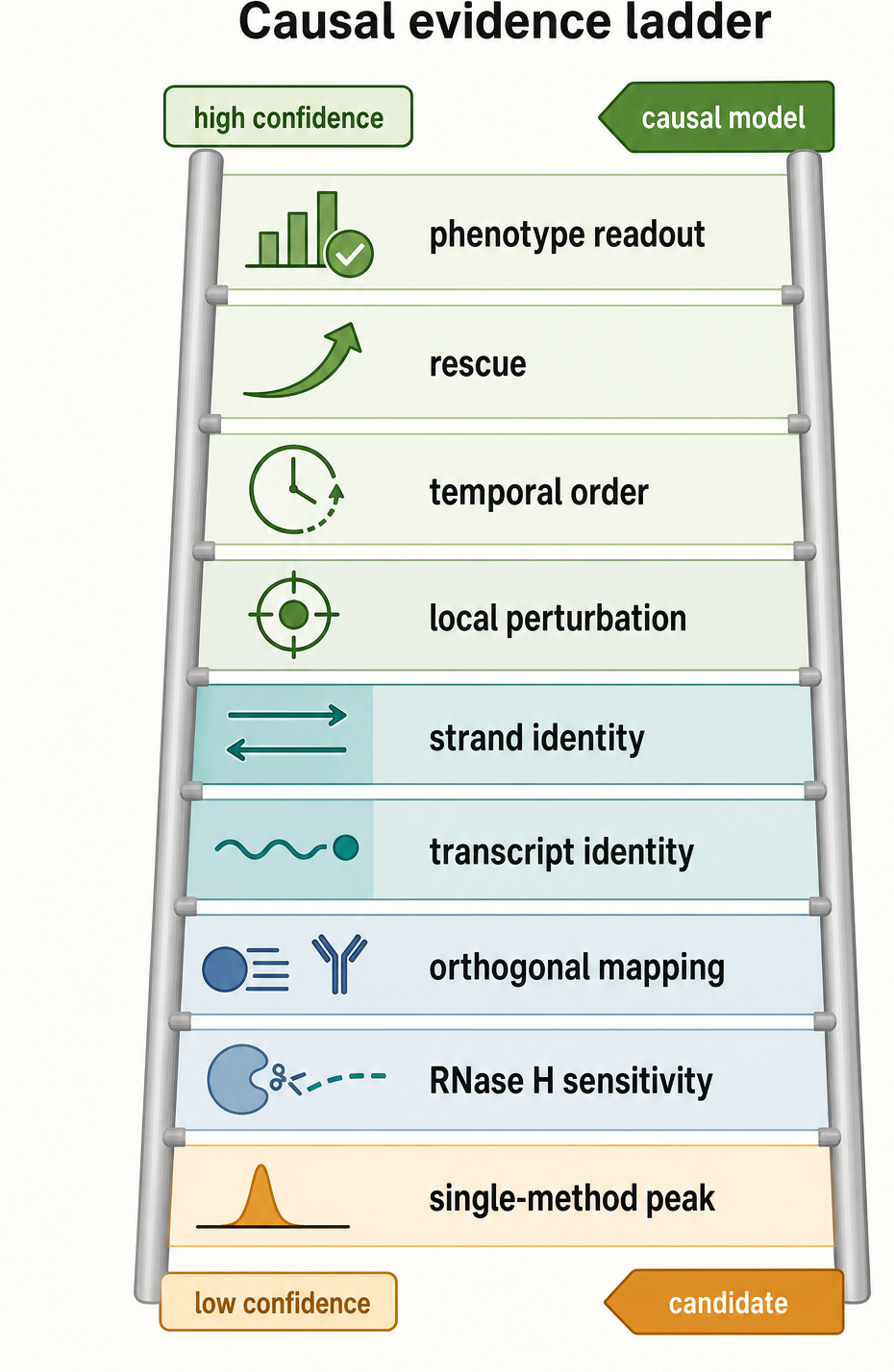
Figure 97.4. Causal evidence ladder for R-loop claims. Give readers a reusable framework for evaluating R-loop claims in genome-stability and disease papers.
A strong causal standard combines these classes. The ideal study maps a hybrid with strand information, shows RNase H sensitivity, validates the locus by an orthogonal method, perturbs the candidate transcript or sequence feature, demonstrates a temporally downstream phenotype, rescues the phenotype by local hybrid resolution, and controls for transcription abundance. Few genome-wide studies meet this full standard at every peak. Therefore, broad maps should be interpreted as atlases of candidate hybrid-associated regions, while mechanistic conclusions should rely on focused validation.
Antibody bias deserves special attention. S9.6 was transformative because it made genome-wide hybrid enrichment feasible, but it is not a neutral sensor. It can recognize double-stranded RNA, shows sequence and length preferences, and can be affected by nucleic acid modifications or protein occupancy. RNase H treatment is a necessary control, but not sufficient by itself if RNase H changes sample structure, releases proteins, or fails to digest protected hybrids. Spike-ins, purified substrate controls, matched input, strand-specific sequencing, and probe comparison should become routine, especially when claims involve disease mechanisms or therapeutic targets.
Artifacts also arise from biology outside the proposed locus. Mitochondria contain RNA-DNA hybrids during replication and transcription. Nucleoli produce abundant structured RNA and repeated ribosomal DNA transcription. Apoptotic or stressed cells release nucleic acids and change nuclease access. Fixation and lysis conditions can redistribute RNA. A genome-wide peak or imaging signal must therefore be interpreted in relation to cell state, compartment, and sample preparation. The safest language distinguishes “hybrid-associated signal” from “R-loop” until the displaced DNA strand, RNA source, and locus-specific context are demonstrated.
Biological Contexts Across Systems
In bacteria, transcription and replication occur in the same compartment, and highly transcribed genes can create conflicts with replication. RNase H enzymes and topoisomerases suppress harmful hybrids, while some regulatory RNAs can interact with DNA or transcription complexes. Bacterial systems are useful because genetic and biochemical mechanisms are tractable, but bacterial chromatin, transcript processing, and nuclear compartmentalization differ from eukaryotes.
In budding yeast and fission yeast, R-loop studies have clarified links among RNA biogenesis, topological stress, transcription-replication conflict, and recombination. Yeast mutants in THO/TREX, RNase H, topoisomerase, helicase, and repair pathways have been central to the field. These models show that R-loop phenotypes are often synthetic: a hybrid that is tolerated in one genetic background becomes damaging when replication stress, repair defects, or transcriptional burden increase.
In mammalian cells, R-loops are embedded in chromatin regulation, long genes, enhancer and promoter activity, splicing, DNA damage response pathways, immune signaling, and cell differentiation. Mammalian genomes also contain many repeats and transposable elements, making mapping interpretation more difficult. Human disease relevance comes from genetic disorders of hybrid-processing factors, cancer genome instability, immune activation, and repeat expansion loci. The same complexity that makes mammalian R-loops biologically important also makes causal inference harder.
Trypanosomatids, including Leishmania, provide a useful comparative example because transcription organization, replication timing, and genome architecture differ from classical mammalian models. Damasceno et al. (2025) report that RNase H1-acted-on R-loops influence DNA replication timing and genome stability in Leishmania. This supports the broader principle that RNA-DNA hybrids can shape replication programs, but it should not be imported uncritically into mammalian systems without accounting for organism-specific genome organization.
Technology, Computational, Clinical, and Engineering Links
Computational prediction of R-loop-prone loci uses sequence features such as GC skew, G-richness, transcription orientation, repeat content, predicted G-quadruplex motifs, promoter marks, and replication timing. These predictions are useful for prioritization but cannot replace empirical mapping. A predicted R-loop-forming sequence may never form a stable hybrid in a particular cell type because chromatin, transcription level, topology, and resolution factors dominate. Conversely, a locus without obvious G-richness may form hybrids because of transcriptional pausing or RNA processing defects.
Therapeutic relevance falls into two categories. First, disease may be driven or modified by harmful hybrids. In that setting, possible interventions include changing transcription, restoring resolution pathways, targeting repair vulnerabilities, or modulating G-quadruplex stability. Second, therapy may deliberately create RNA-DNA hybrids. RNase H-recruiting antisense oligonucleotides pair with target RNAs and use RNase H1 to degrade the RNA strand. These drugs exploit hybrid enzymology in a controlled way. They do not imply that genomic R-loops are beneficial, but they show that hybrid recognition can be engineered.
Genome engineering and epigenome editing provide experimental tools. Catalytically inactive RNase H domains, CRISPR-based tethering, and locus-specific recruitment of resolution enzymes can test whether local hybrid removal changes transcription, repair, or replication. These tools must be designed carefully because tethered proteins can block polymerases or recruit repair factors independently of catalytic activity. The best experiments use inactive controls, unrelated locus controls, transcript abundance controls, and direct hybrid measurement.
Recent Consensus
Recent reviews converge on several points. R-loops and RNA-DNA hybrids are normal nucleic acid structures with both physiological and pathological roles. Their abundance is controlled by transcription, topology, RNA processing, RNase H enzymes, helicases, chromatin, and replication state. Genome instability arises when hybrids persist at vulnerable loci, collide with replication, expose single-stranded DNA, or misdirect repair. G-quadruplexes frequently interact with R-loops but should be analyzed as distinct structures. Mapping methods are informative but biased, and RNase H-sensitive, orthogonally validated signals are more reliable than single-method peaks.
The consensus is also methodological. R-loop biology has moved beyond cataloging S9.6 peaks. The central questions now ask which RNA forms the hybrid, which DNA strand is displaced, which protein recognizes or resolves the structure, when the hybrid forms relative to transcription and replication, and whether the hybrid is causal for the phenotype. This shift is essential for disease studies because genome instability, immune activation, and cancer phenotypes have many upstream causes.
Open Questions, Controversies, Deprecated Models, and Common Misconceptions
Open questions:
- How many mapped R-loops are functional? Some promoter and terminator R-loops may regulate transcription or chromatin, but many signals may reflect byproducts of transcription.
- how cells choose between resolving a hybrid and using it as a signal. The same RNase H-sensitive structure may recruit termination machinery at one locus, recombination enzymes at another, and immune signaling after mislocalization.
Controversies:
- A third unresolved area is the structural grammar of R-loop-G-quadruplex coupling. Sequence predicts potential, but proteins, salt conditions, torsion, chromatin, and transcription dynamics determine whether structures form in cells. Another controversy concerns disease causality. R-loops are attractive explanations for neurological disease, cancer, and inflammation because they connect RNA metabolism to DNA damage, but many disease proteins have multiple functions. SETX, BRCA1, topoisomerases, and RNA helicases affect transcription, repair, chromatin, and replication beyond R-loop resolution.
Common misconceptions:
- “Every RNA-DNA hybrid is an R-loop.” R-loops are specific three-stranded structures with an RNA-DNA hybrid and displaced DNA strand; many assays detect broader hybrid signals.
- “An S9.6 peak is not automatically a harmful lesion.” RNase H1 overexpression rescue does not prove that the original defect was a natural R-loop rather than a broader hybrid-sensitive state. G-quadruplex stabilization does not prove that R-loops caused the phenotype. Interferon activation after DNA damage does not prove that RNA-DNA hybrids are the immune ligand. Each claim must specify the molecular structure, the locus or compartment, the evidence class, and the causal step.