Chapter 147. RNA Synthetic Biology: Switches, Sensors, Circuits, Cell-Free Systems, and Engineered Organisms
Scope Note
This chapter treats RNA synthetic biology as the engineering of RNA molecules, RNA-guided complexes, and RNA-centered systems to sense inputs, compute regulatory decisions, and produce useful outputs in living cells, cell-free reactions, diagnostics, and engineered organisms. The chapter emphasizes mechanism, measurement, and failure modes rather than presenting RNA devices as interchangeable parts. It owns device and circuit integration after a functional RNA part has been discovered; the reusable in vitro selection and SELEX workflow belongs to Chapter 137. It treats therapeutic use as one application of engineered RNA systems, not as a synonym for RNA engineering; therapeutic product chemistry, modality-specific pharmacology, delivery, manufacturing, and clinical translation are developed in Chapters 149-163.
Executive Summary
RNA synthetic biology uses the sequence programmability, folding behavior, and interaction specificity of RNA to build regulatory devices. A toehold switch hides a ribosome-binding site and start codon until an input RNA opens the structure by strand displacement. A riboregulator more broadly uses RNA-RNA pairing, RNA structure, or RNA-protein recruitment to alter transcription, translation, processing, localization, or decay. A synthetic riboswitch couples ligand binding by an aptamer to an expression platform, whereas an aptazyme couples ligand binding to ribozyme cleavage. CRISPR-based control extends RNA programmability by using guide RNAs to direct Cas proteins or catalytically inactive Cas proteins to DNA or RNA targets, where the complex can repress, activate, edit, image, cleave, or recruit effectors. Cell-free RNA systems move these devices into extract-based or reconstituted reactions that can be freeze-dried, transported, and used as biosensors or diagnostics. RNA circuits combine devices into feedback, feedforward, logic, memory-like, or pulse-generating architectures, but real circuits are constrained by folding kinetics, host burden, off-target interactions, nuclease exposure, resource competition, mutations, and measurement artifacts. The strongest designs therefore combine sequence design, empirical library screening, quantitative modeling, orthogonality testing, standards, and design-build-test-learn cycles.
Concept Inventory
- RNA synthetic biology: intentional engineering of RNA molecules and RNA-guided molecular systems to create predictable sensing, regulation, computation, or production behavior.
- Toehold switch: a cis-acting RNA translational switch in which an input RNA binds an exposed single-stranded toehold, opens a hairpin, and reveals a translation initiation region.
- Riboregulator: any engineered RNA regulator that changes gene expression by RNA structure, RNA-RNA pairing, RNA-protein recruitment, RNA cleavage, processing, or stability.
- Synthetic riboswitch: an engineered ligand-responsive RNA in which aptamer binding changes an expression platform, such as a terminator, ribosome-binding site, splice site, or ribozyme.
- Aptazyme: an allosteric ribozyme in which ligand binding changes self-cleavage, thereby controlling RNA stability or processing.
- Guide RNA engineering: sequence and structural design of CRISPR guide RNAs or scaffold RNAs to alter target choice, effector recruitment, expression dynamics, multiplexing, or conditional activity.
- Cell-free RNA system: a biochemical reaction outside living cells that supports RNA detection, transcription, translation, CRISPR activity, or RNA circuit behavior.
- RNA circuit burden: fitness or performance cost caused by engineered RNA devices consuming polymerases, ribosomes, nucleotides, Cas proteins, chaperones, degradation capacity, or cellular regulatory bandwidth.
- Orthogonality: the degree to which an engineered RNA device avoids unintended interaction with host RNAs, proteins, metabolites, and other synthetic devices.
What to Know Before Reading This Chapter
This chapter assumes basic familiarity with base pairing, RNA secondary structure, transcription, translation initiation, riboswitches, ribozymes, and CRISPR-Cas guide RNA mechanisms. Readers should keep three physical facts in mind. First, RNA sequence is not only information; the same bases determine folding, interaction, nuclease exposure, and protein binding. Second, many RNA devices operate co-transcriptionally, so the order in which a transcript emerges from RNA polymerase can determine which structure forms. Third, synthetic circuits are implemented in material systems with limited resources, degradation, noise, and evolution. A design that works in a thermodynamic sketch can fail when polymerase speed, ribosome loading, Mg2+ concentration, temperature, host strain, or mutation rate changes.
147.1. Toehold switches, riboregulators, and synthetic riboswitches
RNA synthetic biology begins with a simple engineering promise: RNA molecules can recognize other molecules by sequence, shape, or chemistry, and that recognition can be connected to a change in gene expression. A toehold switch is a canonical example. In a bacterial translational toehold switch, the 5′ untranslated region of an mRNA is engineered to form a hairpin that sequesters the ribosome-binding site and often the start codon. A separate input RNA contains a sequence complementary to the switch. When the input RNA binds a single-stranded landing pad called the toehold, base pairing proceeds through branch migration and opens the inhibitory hairpin. The ribosome-binding site becomes accessible, translation initiates, and a reporter or functional protein is produced. The device is therefore an RNA input-output module: RNA input, RNA structural change, protein output.
The prerequisite concept is strand displacement. In DNA and RNA nanotechnology, a toehold is an unpaired sequence that allows one nucleic acid strand to initiate pairing with another. The first few base pairs lower the kinetic barrier, and further base-pair exchange can remodel a larger structure. A toehold switch applies this principle to a transcript that controls translation. The switch is not simply a complementary antisense RNA; it is a designed metastable structure whose inactive state must be stable enough to prevent leak but openable enough to respond to the trigger. Strong secondary structure can reduce background expression, but overly stable structure can slow activation. A long toehold can improve sensitivity, but it can also increase nonspecific binding and reduce design space.
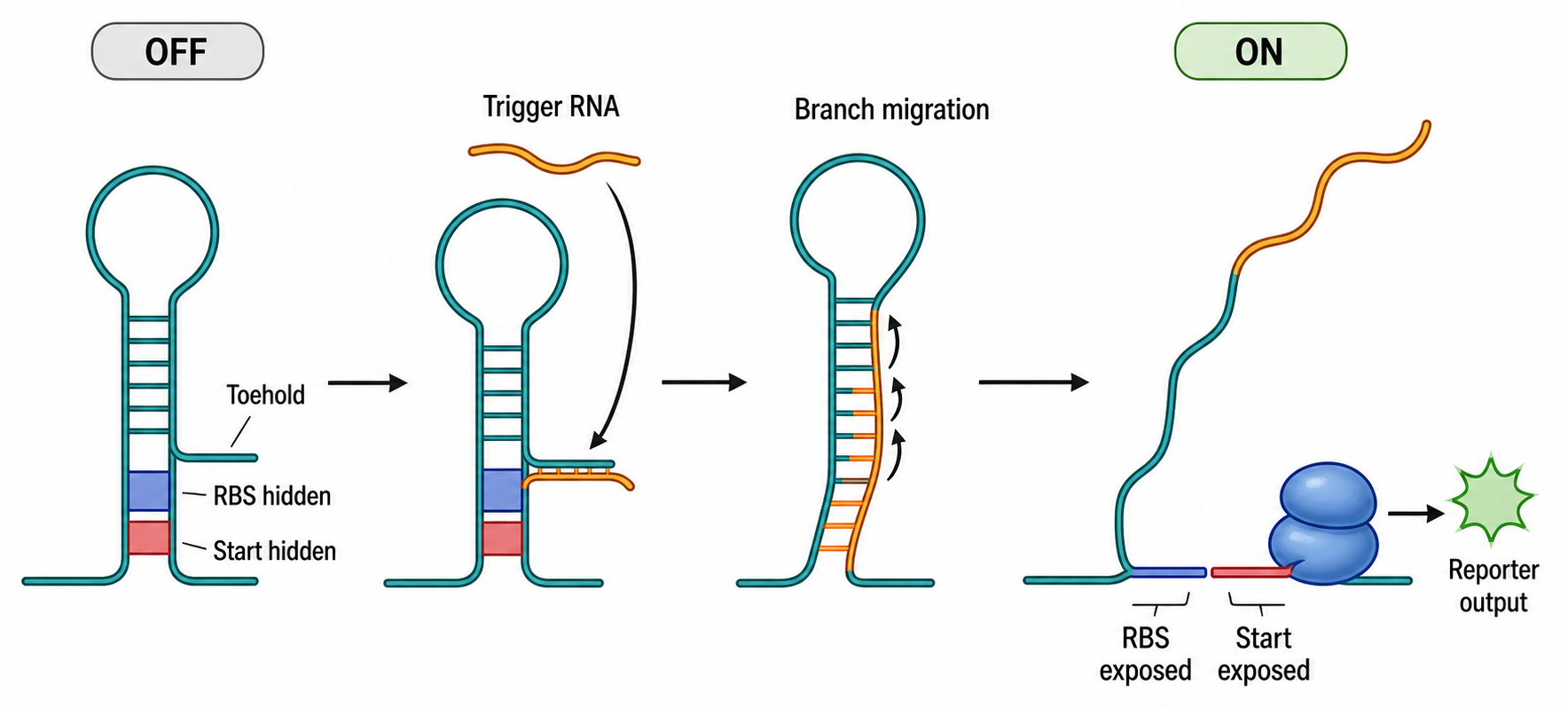
Figure 147.1. Toehold Switch Activation by RNA Strand Displacement. A toehold switch links sequence recognition to translation. The trigger RNA first binds an exposed toehold and then opens a designed hairpin, exposing the initiation region so that ribosomes can translate the downstream coding sequence.
Riboregulator is the broader term for RNA devices that regulate expression through RNA. A cis-acting riboregulator is located on the same transcript it controls, such as a leader sequence that hides a ribosome-binding site. A trans-acting riboregulator is a separate RNA that binds the target transcript, analogous to natural bacterial small RNAs. Engineered riboregulators can activate translation by exposing a ribosome-binding site, repress translation by occluding it, change transcription termination by stabilizing or disrupting a terminator, recruit RNA-binding proteins, or alter transcript decay. Natural bacterial small RNAs show why this design space is powerful: short base-pairing regions can connect environmental signals to many mRNA targets, but target access, RNA chaperones such as Hfq, and RNase recruitment strongly shape the outcome. Synthetic devices borrow the logic but must be evaluated in the host context rather than only in isolated folding predictions.
Synthetic riboswitches use a different input class. A riboswitch is an RNA element in which an aptamer domain binds a ligand and an expression platform converts ligand binding into a regulatory output. Natural riboswitches often sense metabolites and regulate transcription termination, translation initiation, splicing, or RNA stability. A synthetic riboswitch can be built by selecting or designing an aptamer for a small molecule, protein, or nucleic acid and coupling that aptamer to an output structure. For example, an aptamer that changes conformation upon ligand binding can be placed near a ribosome-binding site so that ligand binding exposes or hides the initiation region. In eukaryotic cells, synthetic riboswitches can influence splicing, polyadenylation, RNA export, or translation, but the device must survive different RNA-processing pathways and compartmental environments.
Table 147.1. RNA Device Classes and Regulatory Outputs. RNA synthetic biology uses several device classes that share RNA programmability but differ in input chemistry, mechanism, regulatory output, and validation requirements.
| Device class | Input and mechanism | Regulatory output and validation caveat |
|---|---|---|
| Toehold switch | Input RNA binds an exposed toehold and opens an inhibitory hairpin by strand displacement. | Activates translation by exposing a ribosome-binding site and start codon; validate leak, dynamic range, response time, and near-cognate trigger specificity. |
| Trans riboregulator | Separate engineered RNA pairs with a target transcript or recruits RNA-binding factors, RNases, or translation machinery. | Activates or represses translation, termination, processing, or decay; performance depends on target accessibility, RNA chaperones, RNases, and host context. |
| Synthetic riboswitch | Ligand binding by an aptamer changes an expression platform such as a terminator, ribosome-binding region, splice element, or stability module. | Converts small-molecule or macromolecular recognition into expression control; dose-response tests must separate true regulation from ligand toxicity or growth effects. |
| Aptazyme | Ligand-bound aptamer alters ribozyme self-cleavage through a communication module. | Controls RNA stability or processing through cleavage; ion conditions, transcript context, and cellular RNA surveillance can change portability. |
| CRISPR guide regulator | Guide RNA directs dCas, Cas13, or an effector-fused Cas protein to a DNA or RNA target. | Represses, activates, cleaves, edits, reports, or recruits effectors; evaluate target accessibility, guide processing, Cas abundance, off-target effects, and shared-effector saturation. |
| Cell-free RNA sensor | Toehold, riboswitch, aptazyme, or CRISPR module operates in an extract-based or reconstituted reaction. | Produces reporter translation, fluorescence, color, or lateral-flow signal; buffer performance must be retested with sample workflow, matrix inhibitors, storage, and field conditions. |
Aptazymes add catalysis to the same architecture. An aptazyme is a ribozyme whose self-cleavage activity is controlled by ligand binding to an aptamer. The most common engineering pattern links an aptamer to a hammerhead or hepatitis delta virus-like ribozyme through a communication module. If the ligand stabilizes the active ribozyme fold, the RNA cleaves itself and is degraded or processed. If the ligand disrupts the active fold, the transcript remains intact. The design challenge is not only selecting an aptamer and a ribozyme; it is tuning the communication module so that ligand binding changes the ribozyme’s catalytic conformation over the relevant concentration range. Aptazymes are attractive because cleavage is a direct RNA-level output and can be portable across coding sequences, but they can be sensitive to ion concentration, transcript context, and differences between in vitro and cellular folding.
Evidence for RNA device function usually combines reporter assays, sequence variants, dose-response curves, RNA abundance measurements, and sometimes structure probing. Reporter fluorescence or luminescence is useful because it turns regulatory output into a measurable signal. However, a reporter readout cannot by itself distinguish improved translation from increased transcript abundance, slower protein degradation, altered growth, or selection for mutants. A strong mechanistic test compares active and inactive device variants, measures target RNA abundance, measures output protein, and tests whether disrupting and restoring predicted base pairs has the predicted effect. For toehold switches, input specificity should be tested against near-cognate RNAs because a diagnostic trigger may differ by only a few nucleotides from background sequences. For riboswitches and aptazymes, dose-response curves should distinguish ligand-dependent control from ligand toxicity or growth effects.
RNA device design has a useful but limited computational foundation. Secondary-structure algorithms can predict whether a ribosome-binding site is likely to be buried or exposed. Inverse folding tools can search for sequences that fold into a target structure. Thermodynamic models can estimate free-energy gaps between off and on states. These tools are valuable for reducing the search space, but they do not fully capture co-transcriptional folding, ribosome binding kinetics, protein cofactors, degradation pathways, temperature shifts, or intracellular metabolite backgrounds. Therefore many successful riboregulator programs use a hybrid strategy: design many plausible variants, screen them empirically, learn sequence-to-function rules from the measurements, and retest refined devices in the intended host and growth condition.
Do not overgeneralize from “RNA is programmable” to “RNA devices are modular in every context.” A toehold switch that works upstream of one coding sequence can fail upstream of another because the beginning of the coding sequence participates in the switch structure. A riboswitch that works in a plasmid reporter can fail after genomic integration because copy number, transcription rate, and mRNA half-life change. An aptazyme that functions in yeast may not carry over to mammalian cells because nuclear processing, RNA surveillance, and compartmentalization differ. The reliable lesson is narrower: RNA devices can be engineered because base pairing and ligand recognition are partly predictable, but their performance is a property of the whole transcript, host, and measurement system.
Box 147.1. Programmable Does Not Mean Portable
RNA devices are programmable because sequence and structure can be designed, but their behavior must still be validated in the transcript, host, reaction, and application context where the device will be used.
147.2. CRISPR-based control and guide RNA engineering
CRISPR-based control extends RNA synthetic biology by coupling guide RNA programmability to protein effectors. A CRISPR guide RNA is a structured RNA or RNA complex that directs a CRISPR-associated protein to a nucleic-acid target by base pairing. In genome editing, the best-known output is nuclease cleavage. In synthetic regulation, catalytically inactive or altered CRISPR proteins are often used as programmable binders, repressors, activators, editors, sensors, or recruiters. The guide RNA provides target recognition; the Cas protein supplies binding, unwinding, cleavage, or effector recruitment; and the engineered circuit determines when and where the guide or effector is active.
The simplest control mode is CRISPR interference, often abbreviated CRISPRi. In bacterial or eukaryotic CRISPRi, a catalytically inactive Cas protein such as dCas9 is guided to a DNA sequence near a promoter or within a transcribed region. Binding blocks RNA polymerase initiation or elongation without cutting DNA. CRISPR activation, or CRISPRa, uses guide-directed recruitment of activation domains or transcriptional machinery to increase transcription. These systems are RNA-guided transcriptional regulators. The guide RNA does not encode a protein, but its spacer sequence determines which gene is repressed or activated. In circuit terms, guide RNAs can be outputs of promoters, inputs to dCas proteins, and intermediates in layered logic.
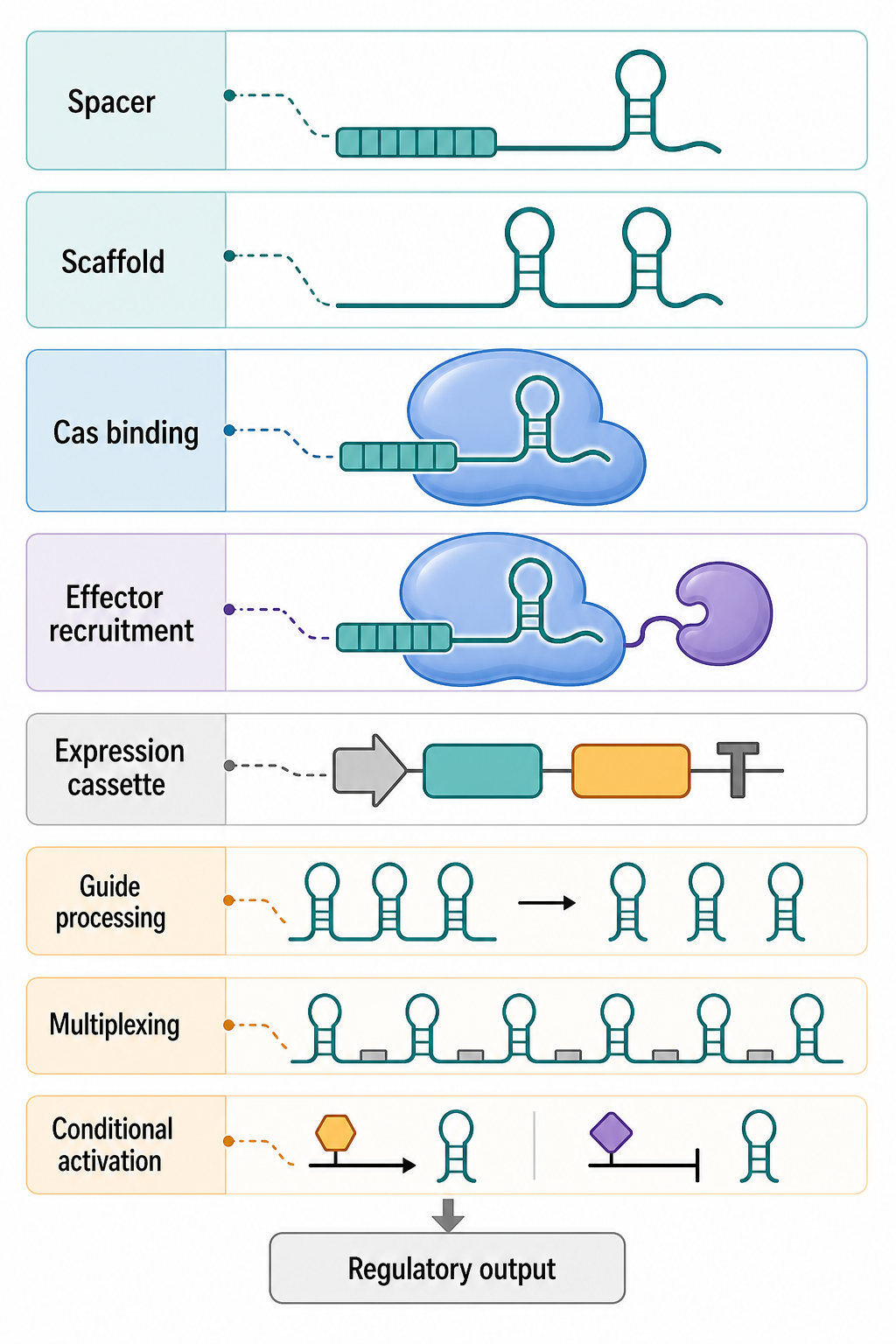
Figure 147.2. Guide RNA Engineering Layers in CRISPR Control. A CRISPR guide RNA is an engineered molecule, not only a target address. Spacer sequence, scaffold, expression mode, processing, and effector recruitment each influence regulatory output.
Guide RNA engineering has several layers. The spacer is designed for target complementarity and specificity. The scaffold is designed to bind the Cas protein and, in some systems, to recruit accessory domains. Expression cassettes are designed to produce the guide with the correct ends and abundance. Chemical or structural modifications can tune guide stability in some contexts. Multiplex arrays can express several guides from one transcript, with processing by endogenous RNases, ribozymes, tRNAs, Csy4-like nucleases, or Cas proteins. Conditional guides can be made by sequestering the spacer or scaffold until an input RNA, ligand, light-responsive element, or protein interaction reveals the active structure.
CRISPR control can also act directly on RNA. Cas13-family systems use guide RNAs to recognize RNA targets and can cleave transcripts, report target presence, or recruit RNA-modifying and regulatory domains when catalytically altered. RNA-targeting CRISPR control is mechanistically distinct from DNA-targeting CRISPRi because the target molecule turns over, has structures and RNA-binding proteins, and may exist in different compartments. A Cas13 guide that works against a naked in vitro target may perform differently in cells if the target site is buried in secondary structure or occupied by ribosomes. In mammalian systems, RNA-targeting and RNA-editing platforms must also be interpreted against the background of innate immune sensing, delivery limits, and endogenous RNA decay.
CRISPR guide RNAs can be components of RNA circuits rather than only reagents for perturbation. A promoter can express guide A, guide A can repress promoter B, promoter B can express guide C, and guide C can activate or repress another node. Such circuits can implement logic-like behaviors, cascades, toggles, or pulse responses. The key engineering attraction is orthogonal programmability: new connections can be made by changing guide spacer sequences without redesigning protein-DNA recognition domains. The key engineering risk is resource sharing. All guide RNAs may compete for the same dCas protein, and all dCas-guide complexes may compete for DNA binding, nuclear localization, or degradation pathways. Apparent logic can collapse when one guide saturates the effector or when guide expression levels differ across orders of magnitude.
CRISPR control also illustrates the difference between targeting and regulation. A guide can bind a sequence without producing a useful regulatory effect if the binding site is inaccessible, too far from a promoter, rapidly displaced, or buffered by downstream networks. Conversely, a guide with partial complementarity can create off-target effects that are invisible in a single reporter assay but important in transcriptome-wide or genome-wide measurements. In DNA-targeting systems, off-target binding can affect expression even without nuclease cleavage. In RNA-targeting systems, off-target binding may alter decay, translation, localization, or editing. Evidence for specificity therefore requires appropriate negative controls, near-match guides, transcriptome or genome-wide readouts when the application requires them, and rescue experiments when a phenotype is attributed to a single target.
Guide RNA expression is itself an RNA-biogenesis problem. In bacteria, guide expression must account for promoter strength, transcript ends, RNase activity, plasmid copy number, and competition with endogenous RNAs. In eukaryotes, guide RNAs are often transcribed by RNA polymerase III promoters such as U6, but these promoters constrain the first nucleotide, termination signals, and transcript modifications. RNA polymerase II guide expression can add cell-type specificity but requires processing strategies to generate functional guide ends. For therapeutic or cell-engineering uses, vector size, delivery route, immunogenicity, and persistence become part of the design. A guide is therefore not an abstract address string; it is a physical RNA molecule embedded in a production and surveillance environment.
Programmable CRISPR control is often presented as more modular than riboregulation because guide-target pairing can be retargeted by changing a spacer. That claim is partly true but incomplete. The spacer is modular, but the phenotype is not only a function of the spacer. It also depends on protospacer-adjacent motifs or Cas-specific target constraints, chromatin, transcription state, target RNA structure, Cas abundance, guide processing, cellular toxicity, and circuit topology. A practical design rule is to separate three evaluations: biochemical programmability of guide-target recognition, regulatory efficacy at the intended locus or transcript, and system-level behavior after the guide is placed in a circuit or organism.
147.3. Cell-free RNA systems, biosensors, and diagnostics
Cell-free RNA synthetic biology moves RNA devices into biochemical reactions outside living cells. A cell-free system can be a crude extract containing transcription, translation, energy regeneration, ribosomes, enzymes, and metabolites, or a more defined reconstituted system with purified components. The basic advantage is separation from growth. In a living cell, a circuit competes with replication, metabolism, stress responses, mutation, and population dynamics. In a cell-free reaction, the designer can add DNA or RNA templates, purified inputs, Cas proteins, nucleases, riboregulators, and reporters at chosen concentrations. This makes cell-free systems useful for prototyping, teaching, biosensing, diagnostics, and field-deployable reactions.
For RNA devices, a cell-free transcription-translation reaction provides a controlled way to ask whether an RNA input activates a toehold switch, whether a riboswitch responds to a ligand, or whether a CRISPR detector recognizes a target. A common diagnostic architecture places a toehold switch upstream of a reporter gene and designs the trigger sequence to match a pathogen RNA. The sample-derived RNA or amplified product activates translation only if the sequence is present. Another architecture uses CRISPR-associated enzymes that become activated upon guide-directed recognition of a nucleic-acid target and then produce a fluorescent or lateral-flow signal through collateral cleavage or reporter processing. These approaches are not interchangeable: a toehold diagnostic usually couples target recognition to translation of a reporter, whereas a CRISPR diagnostic often couples target recognition to enzyme activation and reporter cleavage.
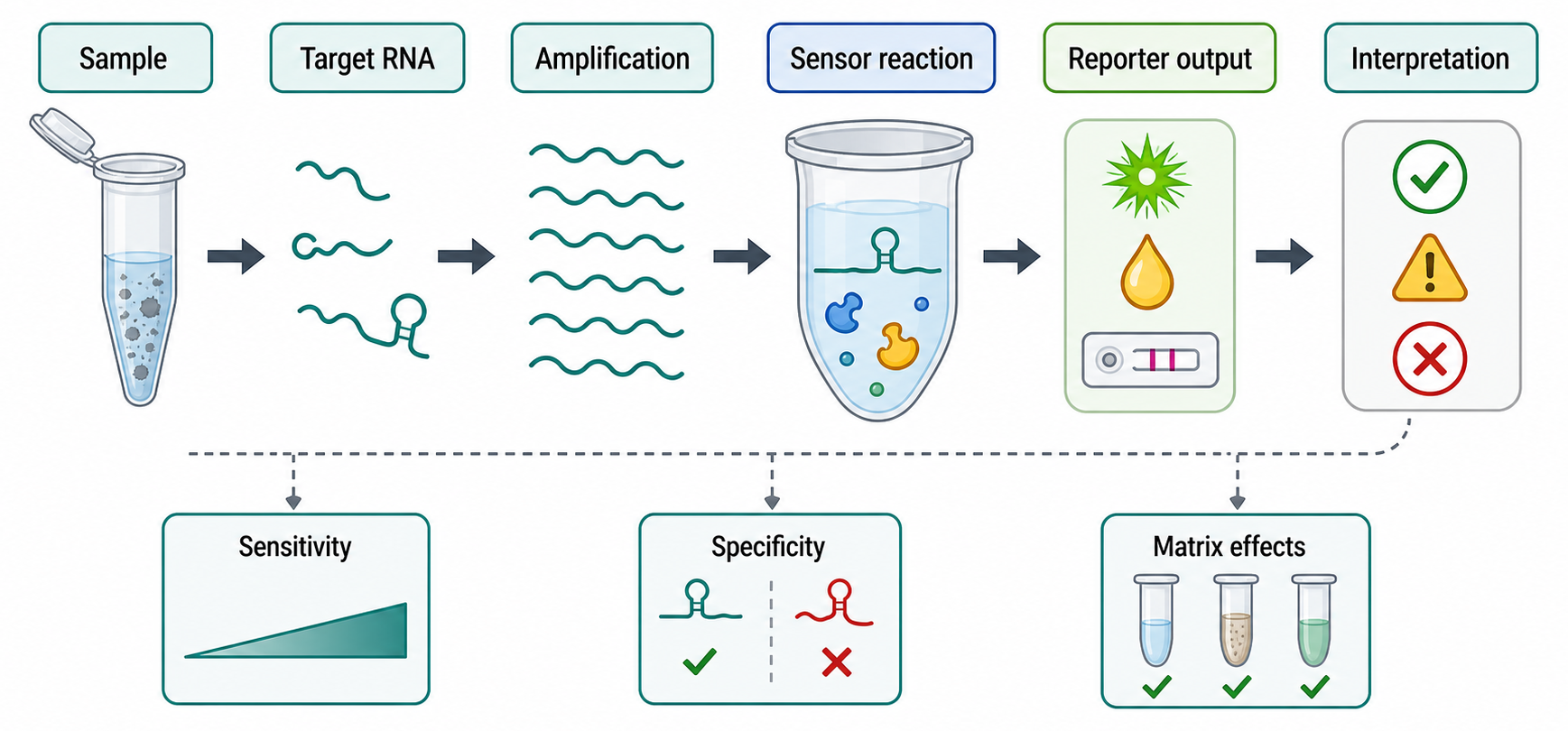
Figure 147.3. Cell-Free RNA Biosensor Workflow. Cell-free RNA diagnostics convert a sample-derived nucleic-acid or chemical input into a reporter signal, but each workflow step can control the final limit of detection and false-positive or false-negative rate.
Cell-free systems are especially important for field use because reactions can be freeze-dried. Freeze-drying can stabilize enzymes, ribosomes, nucleic acids, salts, and reporter substrates in a form that is transported without continuous cold chain. Rehydration with a sample or processed sample starts the reaction. The field-deployable promise is real but conditional. Sample preparation remains a major bottleneck, especially when the target RNA is rare, degraded, inhibited by sample components, or embedded in complex matrices such as blood, saliva, wastewater, soil, or plant tissue. Amplification can improve sensitivity but adds contamination risk, primer constraints, and workflow complexity. Direct detection can simplify the workflow but may require higher target abundance or more sensitive reporters.
Table 147.2. Evidence Layers for RNA Biosensors and Diagnostics. A deployable RNA biosensor requires evidence beyond target recognition in buffer; sample workflow and operating conditions can dominate real-world performance.
| Evidence layer | What the layer tests | Readout and caveat |
|---|---|---|
| Target-recognition mechanism | Whether the designed toehold, riboswitch, aptazyme, or CRISPR module responds to the intended molecular input. | Synthetic target titration and inactive-device controls show mechanism; this does not establish sample performance. |
| Analytical sensitivity | Lowest target amount detected under controlled reaction conditions. | Limit-of-detection curves, time-to-signal, and background reporter measurements are required; amplification can improve sensitivity while adding contamination and primer constraints. |
| Analytical specificity | Whether near-neighbor sequences, host nucleic acids, related organisms, or matrix components trigger false positives. | Near-cognate panels and negative biological samples test specificity; retargeting can alter RNA folding, collateral background, or off-target recognition. |
| Sample preparation and matrix compatibility | Whether target release, extraction, lysis, dilution, and inhibitors are compatible with the RNA reaction. | Spiked and real-sample matrices reveal polymerase, nuclease, ribosome, or Cas inhibition that is invisible in buffer. |
| Operational robustness | Whether freeze-dried or portable reactions tolerate storage, temperature shifts, user handling, and reagent lots. | Stability studies, rehydration tests, timed workflows, and lot comparisons are needed before claiming field deployability. |
| Clinical or environmental validity | Whether the result tracks infection, exposure, disease state, contamination level, or a regulatory threshold in real samples. | Blinded sample panels and application-specific decision thresholds are needed; analytical detection alone does not prove validity. |
| Reproducibility and release readiness | Whether different operators, days, extract lots, templates, and instruments produce comparable results. | Report construct identity, reagent composition, controls, replicate structure, normalization, and contamination checks, especially for clinical or regulated use. |
The evidence basis for cell-free sensors must separate analytical sensitivity, analytical specificity, clinical or environmental validity, and operational robustness. Analytical sensitivity asks how few target molecules can be detected under controlled conditions. Analytical specificity asks whether near-neighbor sequences, host nucleic acids, or related organisms produce false positives. Clinical validity asks whether the assay result correlates with infection, exposure, disease state, or regulatory threshold in real samples. Operational robustness asks whether the assay survives temperature variation, storage time, user handling, reagent lot differences, and matrix inhibitors. A laboratory demonstration that detects a synthetic RNA fragment in buffer is therefore only the first evidence layer. A deployable diagnostic needs a chain of evidence from molecular recognition to sample workflow and decision threshold.
Box 147.2. Minimal Evidence Ladder for a Cell-Free RNA Diagnostic
A cell-free RNA diagnostic claim becomes stronger as evidence moves from purified target recognition to blinded, matrix-matched, decision-relevant testing.
Cell-free expression also exposes RNA circuit parameters that are hard to infer in cells. Because DNA template concentration, RNA input concentration, magnesium, potassium, nucleotide pools, and extract composition can be varied systematically, cell-free reactions can map dose-response curves and resource competition. A toehold switch can be tested against a panel of trigger concentrations. A CRISPR detector can be titrated for guide, target, and Cas protein. A riboregulator can be tested with and without RNase inhibitors. These measurements provide useful design data, but the results do not automatically transfer to living cells. Cellular compartments, degradation, growth dilution, transcriptional feedback, and selection are absent or altered. Cell-free systems are best treated as an intermediate evidence environment, not as a universal substitute for cellular validation.
Biosensors are broader than diagnostics. A biosensor converts a biological or chemical input into a measurable output. RNA-based biosensors can detect metabolites, metal ions, temperature changes, pH-linked states, pathogen sequences, toxins, or host transcripts. Some biosensors are deployed in cell-free paper reactions. Others are encoded in living cells that sense gut inflammation, environmental pollutants, quorum signals, or disease-associated metabolites. The choice between cell-free and cellular sensing depends on the application. Cell-free systems are attractive when containment, storage, and rapid readout dominate. Living sensors are attractive when the input exists inside a biological niche over time and the sensor must integrate exposure or produce a therapeutic output.
Boundary cases matter. A cell-free RNA detector can be called “programmable” because the target-recognition sequence is easily changed, but changing a target sequence can change secondary structure, amplification efficiency, collateral background, or off-target recognition. A field assay can be called “equipment-free” while still requiring sample preparation, temperature control, timed handling, or interpretation by a reader. A biosensor can be highly sensitive in buffer but fail in real samples because inhibitors suppress polymerases or nucleases. These are not minor implementation details; they determine whether the technology can be used outside a specialized laboratory.
Cell-free RNA systems connect directly to RNA manufacturing and analytics. In vitro transcription supplies many RNA templates, and the same enzymology that produces therapeutic mRNA can produce sensor RNAs, guide RNAs, and circuit components. Purity matters because double-stranded RNA contaminants, truncated transcripts, uncapped RNAs, or carryover DNA can alter sensor behavior or immune activation depending on the application. For educational or environmental biosensors, the tolerance may be broad. For clinical diagnostics or therapeutic manufacturing, reagent identity, contamination control, release testing, and regulatory documentation become central design constraints. Deeper treatment of in vitro transcription and release analytics appears in Chapter 159.
147.4. RNA circuits, feedback, burden, and evolutionary stability
An RNA circuit is a set of interacting RNA devices and molecular components that produces a dynamic output from one or more inputs. The word circuit should not be taken too literally. Unlike electronic circuits, RNA circuits are made from molecules that fold, bind, degrade, mutate, diffuse, and compete for enzymes. A simple RNA circuit might contain one toehold switch that reports a pathogen sequence. A more complex circuit might contain multiple riboregulators arranged as AND, OR, NOT, or threshold logic; CRISPR guide RNAs that repress or activate target promoters; aptazymes that tune transcript half-life; and feedback loops that stabilize output. The central design problem is to make the intended signal flow dominate over unintended molecular interactions.
Logic gates in RNA circuits are built by arranging dependencies. An AND gate produces output only when two inputs are present. This can be implemented by splitting activation across two RNA interactions, requiring one input to expose a second input-binding site, or placing two regulatory steps in series. An OR gate produces output when either of two inputs activates a common output. A NOT gate represses output when an input RNA or guide RNA is present. In practice, RNA logic is graded rather than perfectly Boolean. Inputs vary continuously, devices leak, and outputs have thresholds. A useful circuit description should therefore report transfer functions, dynamic range, leak, response time, and noise rather than only a truth table.
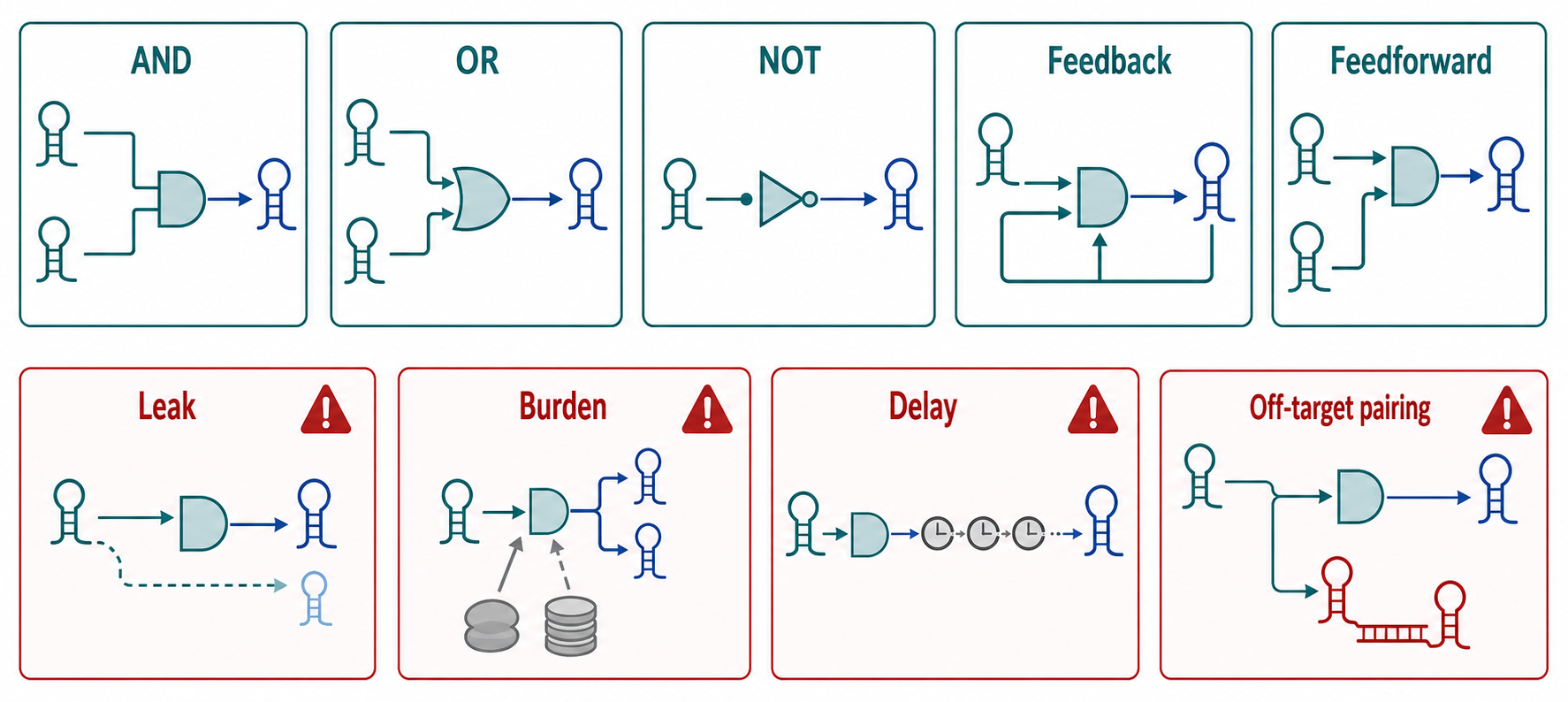
Figure 147.4. RNA Circuit Motifs and Failure Modes. RNA circuits implement logic through molecular dependencies, but graded transfer functions, leak, burden, and kinetic delays determine whether a nominal motif performs as intended.
Feedback is one of the most important differences between a device and a circuit. Negative feedback can reduce output variability by making high output suppress itself. Positive feedback can amplify small inputs, create switch-like behavior, or support memory-like states. Feedforward loops can filter transient inputs or generate pulses. RNA components can implement these motifs through translational control, guide RNA expression, RNA stability, or RNA-guided transcriptional regulation. The same motifs can also produce failure. Positive feedback may lock a circuit into an unintended state. Negative feedback may oscillate if delays are long. Feedforward filtering may reject real signals if response kinetics are too slow. Circuit topology must therefore be evaluated together with kinetic parameters.
Burden is the cost that an engineered system imposes on its host or reaction. In living cells, burden can arise from high transcription of synthetic RNAs, translation of reporter or effector proteins, sequestration of ribosomes, depletion of nucleotides, competition for RNA polymerase, saturation of dCas or Cas13 proteins, activation of stress responses, or toxicity of outputs. Burden matters because it changes circuit behavior and creates evolutionary pressure. A cell with a mutation that disables a burdensome circuit may grow faster and overtake the population. In cell-free systems, burden appears as resource depletion rather than heritable selection: one circuit component may consume transcriptional capacity or energy, reducing the output of another component.
Table 147.3. Circuit Failure Modes, Measurements, and Mitigations. RNA circuit failures can be mechanistic, physiological, or evolutionary; each failure mode requires a matching measurement rather than a generic reporter assay.
| Failure mode | Diagnostic measurement | Mitigation or interpretation caveat |
|---|---|---|
| Leak or background expression | No-input controls, inactive-device variants, time courses, and RNA/protein output measurements. | Stabilize the off state or reduce basal expression, but excessive stability can slow activation or reduce dynamic range. |
| Resource burden and effector saturation | Growth curves, burden reporters, unrelated reporter controls, Cas or template titrations, and cell-free resource tests. | Lower expression, integrate constructs, split loads, or add feedback; mitigation can reduce maximum output or change dynamics. |
| Off-target pairing or guide binding | Near-match input panels, transcriptome-wide or genome-wide assays where needed, and rescue experiments. | Redesign spacers, toeholds, and insulators; single-reporter specificity does not exclude broader cellular effects. |
| Noise and population heterogeneity | Flow cytometry distributions, live-cell imaging, single-molecule assays, or replicated cell-free reactions. | Feedback, promoter tuning, and copy-number control can reduce variability; mean fluorescence can hide silent and high-output subpopulations. |
| Kinetic mismatch and delayed response | Input-pulse experiments, response and recovery time measurements, and time-resolved transfer functions. | Tune RNA half-life, protein degradation, and circuit topology; feedback and feedforward motifs can oscillate or miss short inputs. |
| Evolutionary loss or recombination | Serial passage, retained-function assays, sequencing of failed populations, and plasmid-versus-genome comparisons. | Reduce burden, remove repeats, use genomic integration, and retest under application conditions; redundancy can add new recombination targets. |
| Host stress or output toxicity | Stress markers, growth-rate measurements, host transcriptome or proteome checks, and empty-vector controls. | Lower toxic outputs or change host and reaction context; toxicity can mimic regulation by changing growth or reporter accumulation. |
| Cell-free resource depletion | Template, RNA input, energy mix, magnesium, potassium, and extract-lot titrations. | Balance component concentrations and reaction duration; no heritable selection occurs, but competing reactions still drain shared capacity. |
Noise is cell-to-cell or reaction-to-reaction variability that cannot be explained by the intended input alone. RNA circuits are noisy because transcription often occurs in bursts, RNA degradation is stochastic, plasmid copy number varies, cell size and growth stage differ, and molecular components are present in small numbers. Noise can be harmful when a diagnostic or therapeutic circuit needs a precise threshold. Noise can be useful when a population benefits from bet-hedging or when a circuit intentionally produces heterogeneous states. Evidence for noise requires single-cell measurements, time-lapse data, flow cytometry distributions, single-molecule imaging, or carefully replicated cell-free reactions. Mean fluorescence alone can hide a mixture of silent and highly active cells.
Evolutionary stability is the tendency of an engineered circuit to keep its function over generations. RNA circuits can fail by mutation in promoters, device sequences, guide spacers, coding regions, plasmid origins, or host suppressor genes. Recombination can delete repeated guide arrays or repeated regulatory parts. Selection can favor lower copy number, reduced expression, or loss of toxic outputs. Even without mutation, physiological adaptation can change expression over time as cells alter growth rate or stress responses. Stability testing should therefore include serial passage, sequencing of failed populations, retention of function under relevant conditions, and comparison between plasmid and genomic implementations.
Orthogonality is helpful but often overstated. An orthogonal RNA device has minimal unintended interactions with host molecules and with other synthetic devices. Orthogonality can be improved by choosing sequences absent from the host transcriptome, using engineered RNA-binding proteins, separating guide families, insulating parts with terminators or ribozymes, and avoiding repeated sequences. However, no RNA in a cell is perfectly isolated. RNases, ribosomes, RNA chaperones, innate immune sensors, and RNA-binding proteins interact with broad classes of transcripts. A practical orthogonality test asks whether the circuit perturbs growth, host transcriptomes, proteomes, stress markers, or unrelated reporters at the expression levels used.
Designers use several strategies to control burden and instability. Genomic integration can reduce copy-number variation, though it may lower output. Lower-expression promoters can improve stability if the output remains sufficient. Degradation tags can reduce protein accumulation, but they consume proteolysis capacity and can change dynamics. RNA insulators and standardized UTRs can reduce context dependence. Feedback can stabilize expression against resource variation. Kill switches or dependency circuits can reduce escape, although they introduce their own evolutionary targets. Measurement standards, including growth curves, empty-vector controls, burden reporters, and sequencing of retained constructs, are part of circuit design rather than optional quality checks.
A common misconception is that a circuit that performs a logical function in one strain, plasmid, and medium has an intrinsic truth table. In reality, the truth table is an experimental phenotype measured under defined conditions. Changing temperature, growth medium, carbon source, host strain, copy number, or input timing can change leak, threshold, dynamic range, and even output sign. RNA circuits should therefore be described with context: organism, strain, construct architecture, growth condition, input delivery, measurement time, reporter maturation, and data-processing method. This context is the difference between a reusable engineering result and an anecdotal demonstration.
147.5. Engineered organisms, containment, and applications
RNA synthetic biology is often tested in plasmids and cell-free reactions, but many intended applications use engineered organisms. Engineered bacteria, yeasts, mammalian cells, plants, phages, and microbial consortia can carry RNA devices that sense environments, regulate metabolism, report disease states, deliver therapeutics, or control population behavior. The organism is not a passive chassis. It supplies transcription, processing, translation, degradation, compartmentalization, immune recognition, metabolism, growth, and evolution. A device that is simple in a cell-free reaction becomes part of a living physiology when placed in an organism.
Biomedical applications include living diagnostics, therapeutic cell circuits, engineered probiotics, viral-vector control, and ex vivo cell manufacturing. For example, an engineered bacterium might sense an inflammatory metabolite in the gut and produce a reporter or therapeutic molecule. A mammalian cell therapy might use RNA-guided transcriptional regulation or synthetic RNA switches to control cytokine expression. A viral vector might use target sites for tissue-specific microRNAs to restrict expression away from vulnerable tissues, although microRNA target-site detargeting belongs to a broader RNA-regulatory toolkit rather than only synthetic riboregulator design. In each case, the RNA device must be evaluated for efficacy, specificity, durability, safety, and interaction with host immunity.
Ecological and environmental applications include biosensors for pollutants, engineered microbes that respond to soil or water signals, phage-based control of bacterial populations, plant synthetic biology, and biomanufacturing organisms with RNA-controlled pathways. These applications require a wider evidence frame than a bench assay. The relevant environment may include fluctuating temperature, nutrient limitation, microbial competition, horizontal gene transfer, predation, biofilms, and chemical inhibitors. RNA stability and expression can change across these conditions. A device intended for a well-mixed flask may fail in a biofilm because diffusion, oxygen gradients, and growth states differ. A sensor intended for soil may be confounded by adsorption, inhibitors, and heterogeneous exposure.
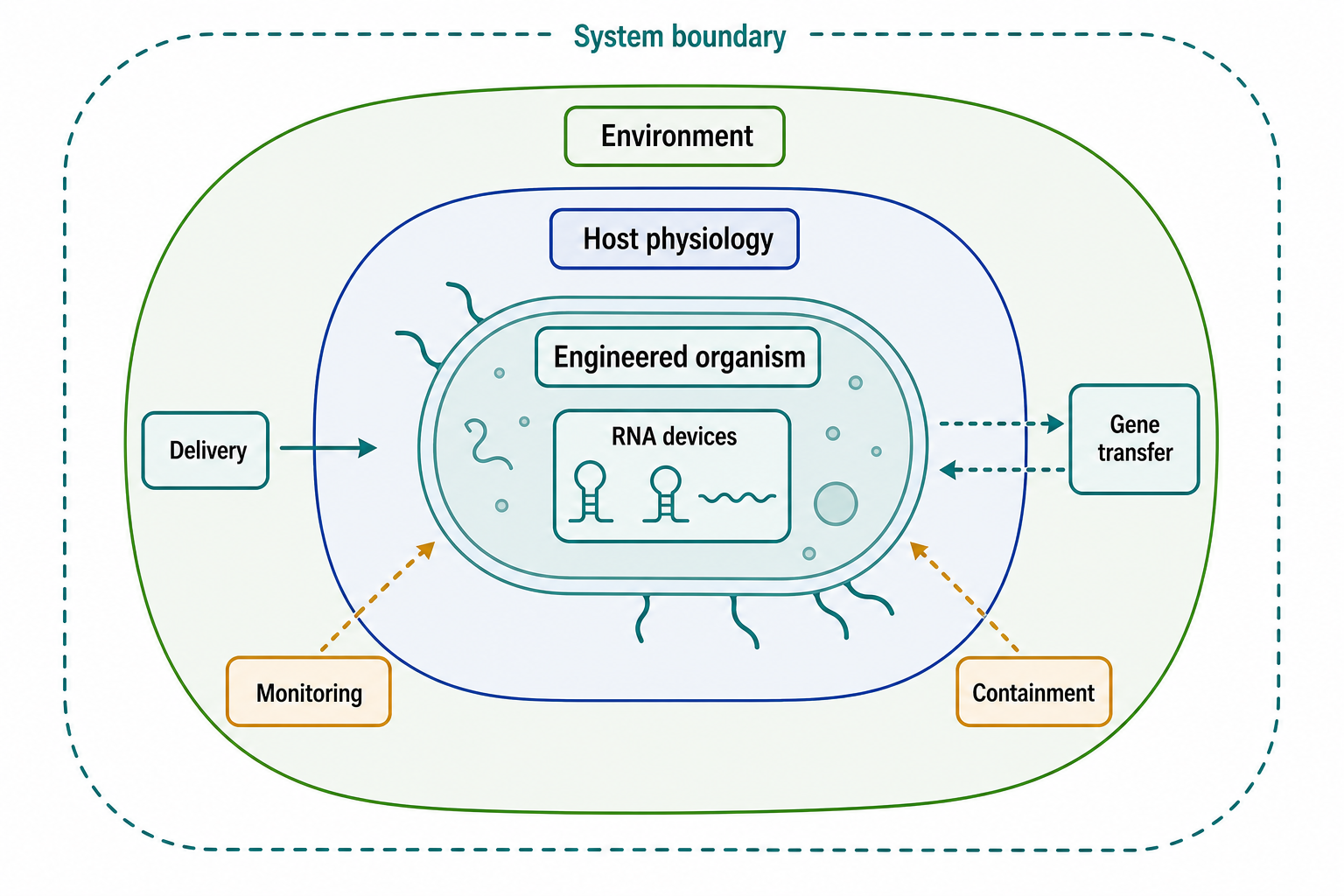
Figure 147.5. Engineered Organism System Boundary. RNA devices in engineered organisms must be evaluated within the organism and deployment environment, not only as isolated molecular parts.
Containment is the set of strategies that reduce unwanted survival, spread, gene transfer, or activity of engineered organisms. Physical containment uses barriers, equipment, and procedures. Biological containment uses genetic dependencies, auxotrophy, kill switches, toxin-antitoxin logic, recoded genomes, controlled essential genes, or environmental dependencies. RNA synthetic biology can contribute to containment by sensing permissive conditions and controlling essential genes or toxins through RNA devices. For example, a riboregulator might permit growth only when a supplied small molecule is present, or a CRISPR-based module might repress an essential gene outside a defined condition. The design must be tested for escape mutations, incomplete killing, environmental robustness, and burden.
Table 147.4. Containment Strategies and Escape Routes. Containment strategies should be evaluated by quantitative escape frequency, robustness under deployment conditions, and plausible routes to failure.
| Containment strategy | Mechanism and evidence metric | Plausible escape routes and caveats |
|---|---|---|
| Physical containment | Barriers, equipment, procedures, waste treatment, and access controls reduce exposure and release. | Procedural failure or accidental release can bypass physical controls; physical containment does not make the organism genetically constrained. |
| Auxotrophy or nutrient dependency | Engineered organism requires a supplied metabolite or genetic function absent from the deployment environment. | Environmental rescue, cross-feeding, reversion, suppressor mutation, or horizontal gene transfer can restore growth. |
| Conditional dependency circuit | RNA device or regulatory circuit permits an essential function only under a defined input, host niche, or supplied molecule. | Sensor mutation, promoter escape, target bypass, or an unexpected environmental substitute can make the dependency permissive. |
| Kill switch or toxin-antitoxin module | Nonpermissive conditions activate killing, remove antitoxin, or repress an essential survival function. | Toxin loss, antitoxin overexpression, promoter silencing, incomplete killing, and selection against burdensome modules can produce survivors. |
| CRISPR-based containment | Guide-Cas module represses or cleaves an essential target outside the allowed condition. | Guide mutation, Cas loss, protospacer or PAM escape, target amplification, and off-target toxicity can disable or distort containment. |
| Recoded genome or synthetic dependency | Essential physiology depends on nonstandard genetic code, synthetic amino acid, or engineered translation constraint. | High engineering cost, compensatory evolution, incomplete dependency, and gene-transfer consequences require direct testing. |
| Multilayer containment | Independent physical, genetic, ecological, and monitoring layers are combined to reduce total escape probability. | Layers can recombine, interact, increase burden, or fail under shared stress; quantify escape frequency under deployment-relevant conditions. |
| Monitoring and recovery plan | Shedding, persistence, gene-transfer, environmental sampling, and inactivation procedures are tracked after use. | Monitoring detects failure but is not itself a molecular barrier; sampling design must match the clinical or ecological exposure route. |
Containment claims should be graded by escape frequency and context, not by the presence of a named module. A kill switch that reduces survival by several orders of magnitude in a laboratory strain under one condition may still allow rare escape mutants. A dependency circuit may fail if the environment supplies a substitute metabolite. A CRISPR-based containment module may be inactivated by guide mutation, effector loss, promoter silencing, or target mutation. Redundant containment can improve robustness, but repeated parts can recombine and multiple modules can increase burden. For environmental release or clinical use, containment evaluation must include appropriate regulatory guidance, ecological modeling, and real-world stress testing.
Engineered organisms also raise questions of horizontal gene transfer and community effects. Plasmids, phage, natural transformation, conjugation, and mobile elements can move genetic material between organisms. RNA devices themselves are not usually mobile by default, but the DNA encoding them can be. A guide RNA cassette, riboregulator, or biosensor can have different effects if transferred into another strain with different targets or resources. Ecological applications must therefore consider genetic context, transfer routes, selection, and monitoring. Biomedical applications must consider microbiome interactions, shedding, immune responses, and patient-to-patient variability.
In therapeutic settings, RNA devices intersect with pharmacology. A living cell circuit has dose, distribution, persistence, clearance, immunogenicity, and reversibility. For ex vivo engineered cells, the product can be characterized before administration, but the circuit will still experience patient-specific environments. For in vivo engineered organisms, delivery and containment become coupled: the organism must reach the intended site, perform its function, and avoid unwanted persistence or spread. RNA-based control can add conditional regulation, but it does not remove the need for toxicology, biodistribution, manufacturing controls, and clinical monitoring.
The strongest application programs treat RNA devices as components of a full system. A biosensor includes sample access, signal transduction, output detection, calibration, and decision rules. A therapeutic organism includes delivery, colonization or persistence, circuit function, safety switches, immune interaction, and clearance. An environmental organism includes deployment, survival, gene flow, ecological impact, recovery or inactivation, and governance. In all cases, the relevant evidence extends beyond molecular mechanism. The engineered RNA must be shown to work in the organism, the organism must be shown to work in the intended environment, and the full system must be shown to satisfy safety and reproducibility requirements.
Box 147.3. Engineered Organism Deployment Claim Checklist
Claims about engineered organisms should name the system boundary, the intended operating environment, and the evidence that connects RNA-device behavior to safety and function.
147.6. Design-build-test-learn cycles and standards
Design-build-test-learn, often abbreviated DBTL, is the iterative engineering cycle used to improve synthetic biological systems. In the design step, a team specifies the desired input, output, host, operating condition, performance metrics, and safety constraints. In the build step, DNA templates, RNA devices, guide RNAs, strains, cell-free reactions, or delivery formats are constructed. In the test step, performance is measured with controls and metadata. In the learn step, the results update the model, design rules, or library choices. For RNA synthetic biology, DBTL is necessary because first-principles prediction is incomplete. Folding and base pairing are predictable enough to guide design, but cellular context is complex enough that empirical iteration remains central.
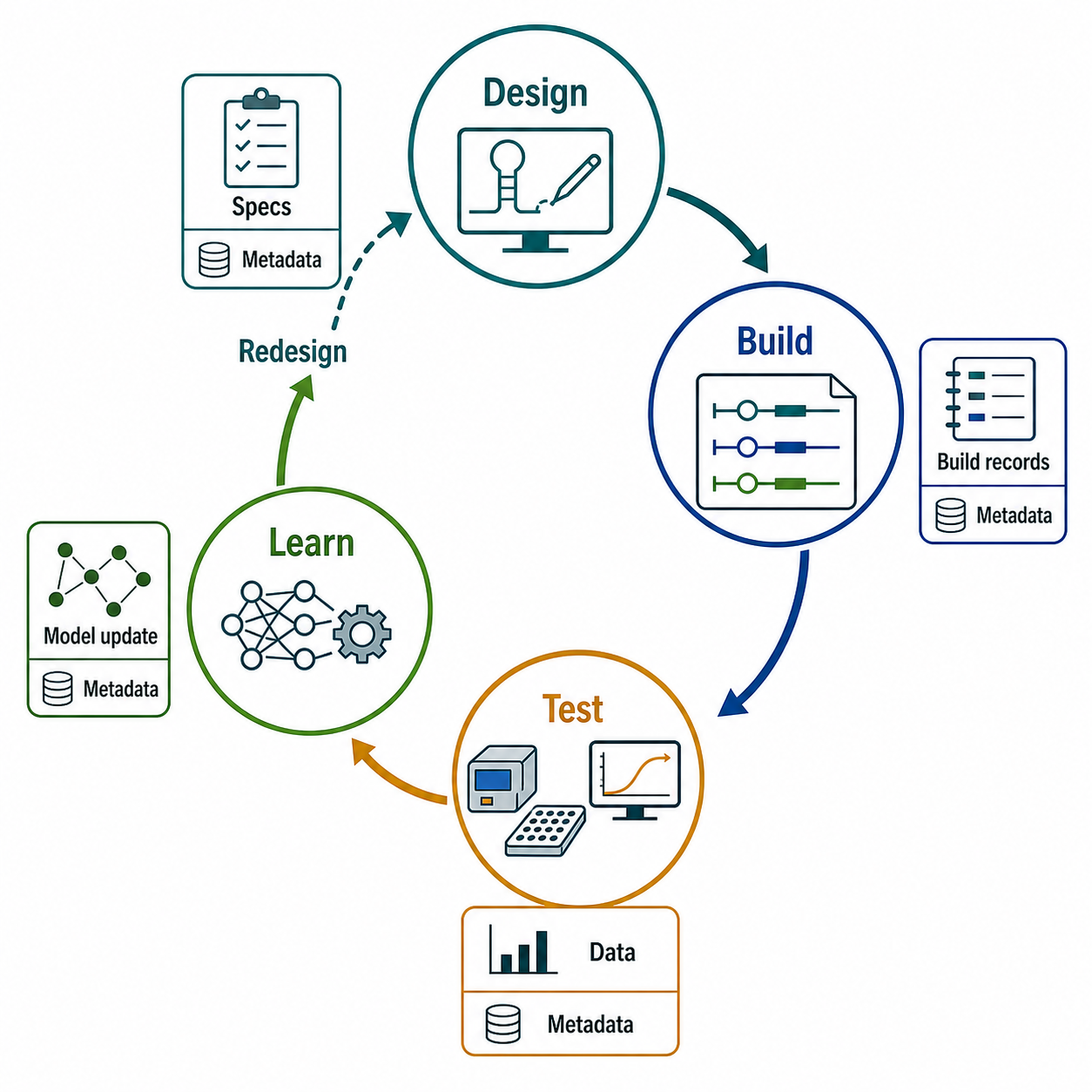
Figure 147.6. DBTL Cycle for RNA Synthetic Biology. Design-build-test-learn cycles convert incomplete RNA design rules into improved devices by linking sequence-level builds to quantitative measurements and model updates.
A good design specification begins with the physical input. Is the input an RNA sequence, a small molecule, a temperature shift, a protein, a metabolite, a cell state, or a pathogen genome? What concentration range is biologically relevant? Is the input transient or sustained? Does the input occur in a living cell, a lysate, a patient sample, or an environmental matrix? The output must be specified with equal care. A fluorescent reporter may be acceptable for prototyping but not for a deployable diagnostic. A therapeutic output may require a narrow dose window. A containment output may require a low escape frequency rather than a high mean repression level. Without such specifications, circuit optimization can improve a convenient metric while failing the real application.
Measurement standards are a recurring weak point in RNA device engineering. Fluorescence values depend on instrument settings, cell size, growth rate, autofluorescence, reporter maturation, and gating. RNA abundance measurements depend on extraction efficiency, reverse transcription, amplification bias, normalization, and RNA stability. Cell-free reaction outputs depend on extract lot, storage, freeze-thaw history, temperature, and energy mix. CRISPR control outputs depend on guide expression, effector abundance, target context, and off-target assays. Reproducible studies report construct sequences, host strains, growth or reaction conditions, input preparation, time points, normalization, negative and positive controls, replicate structure, and analysis code where appropriate.
Standards in RNA synthetic biology include part documentation, sequence-level descriptions, units, reference materials, calibration protocols, and data formats. A toehold switch record should include the full leader sequence, trigger sequence, coding-sequence context, promoter, plasmid or genomic location, host strain, growth condition, measured leak, dynamic range, response time, and specificity panel. A guide RNA record should include spacer, scaffold, expression cassette, Cas variant, target coordinates, target constraints, off-target design method, and measured effect. A cell-free biosensor record should include extract source, reagent composition, template concentration, input preparation, storage condition, limit of detection, specificity panel, and matrix tests. These details are not administrative overhead; they are the information required to interpret and reuse the result.
Design automation and machine learning can accelerate DBTL, but only when the training data and evaluation task match the intended use. Models can learn sequence features associated with high dynamic range toehold switches, guide RNA efficacy, or riboswitch behavior. They can propose libraries that cover promising sequence space more efficiently than random mutation. They can help identify failure modes, such as unintended secondary structures or off-target complementarity. The limitations are equally important. A model trained on one host, reporter, temperature, or library design may not generalize. Data sets enriched for successful devices can underrepresent failures. Measurements from plasmid reporters may not predict genomic integrations or therapeutic contexts. Design automation should therefore be coupled to held-out validation, negative examples, and mechanistic interpretation.
Reproducibility also requires naming and provenance. An RNA device should not be identified only by a nickname. The same name can refer to different sequence variants, promoter contexts, or host implementations. Sequence files should define the exact construct, including promoters, terminators, ribozyme insulators, linkers, guide scaffolds, and coding sequences. Versioned data records should connect constructs to measurements and analysis scripts. For diagnostics and regulated applications, lot traceability and reagent identity become part of the scientific record. For environmental or biomedical engineered organisms, strain identity and genome sequence verification are essential.
A practical DBTL workflow for RNA circuits usually begins with a small number of mechanistically interpretable prototypes, then expands to libraries after the measurement system is stable. Early designs test whether the intended mechanism is possible. Libraries explore sequence variants, thresholds, and context effects. Models integrate the results. Final candidates are retested under application-relevant conditions, including burden, specificity, stability, and safety assays. This staged approach reduces the risk of optimizing a noisy or misleading assay. It also preserves mechanistic insight: a high-performing sequence from a black-box screen is more useful when the designer knows why it works and when it will fail.
Recent Consensus
The current consensus is that RNA is one of the most useful substrates for synthetic biological control because it combines predictable base pairing, ligand-binding potential, rapid turnover, and direct access to transcriptional, translational, processing, and CRISPR-guided regulation. Toehold switches and other riboregulators have shown that synthetic RNA structures can convert nucleic-acid inputs into gene-expression outputs. Synthetic riboswitches and aptazymes have shown that ligand-responsive RNA control can be engineered, although portability is uneven. CRISPR systems have made RNA-guided targeting a general regulatory principle across DNA and RNA targets. Cell-free systems have made RNA devices easier to prototype and have supported portable biosensor and diagnostic formats.
Open Questions, Controversies, Deprecated Models, and Common Misconceptions
Open questions:
- How predictable can engineered RNA device behavior become when folding and interaction models still miss co-transcriptional kinetics, cellular proteins, degradation, crowding, and compartmentalization?
- How portable are RNA devices across host organisms, cell states, and deployment contexts?
- How can large RNA circuits be scaled without resource competition, off-target interactions, or evolutionary instability?
- What safety evidence is needed for clinical, ecological, and dual-use RNA engineering applications?
Common misconceptions:
- “Sequence programmable means function programmable.” Base pairing can target a sequence, but function depends on accessibility, kinetics, abundance, and context.
- “A low-leak reporter proves a switch has no biological activity in other outputs or hosts.” Reporter leakiness is context-specific and may not predict other genes, host strains, environments, or deployment settings.
- “Cell-free success proves cellular success, and cellular success proves field or clinical success.” Each context adds delivery, resource, toxicity, evolution, immune, manufacturing, and environmental constraints.
- “CRISPR guide retargeting is unconstrained because guides are easy to redesign.” Guide RNAs still have scaffold, expression, specificity, off-target, and resource constraints.
- “A kill-switch label proves containment.” Containment requires quantitative escape, robustness, mutation, transfer, and deployment data.