Chapter 44. Specialized Ribosomes, Ribosome Heterogeneity, and Ribosome-Associated Regulation
Scope Note
This chapter explains what biologists mean by ribosome heterogeneity and specialized ribosomes, how heterogeneous ribosome composition can arise, and what evidence is needed before a compositional difference is interpreted as transcript-selective translational control. Chapter 42 covers rRNA transcription, processing, and modification, and Chapter 43 covers ribosome assembly. This chapter starts after the assembly problem and asks whether all mature ribosomes in a cell are functionally equivalent, how rRNA variants, rRNA modifications, ribosomal protein paralogs, ribosome-associated RNAs, and ribosome-bound quality-control factors diversify translating particles, and how these claims should be tested in development, stress, and disease.
Executive Summary
Ribosomes are ribonucleoprotein machines, not single invariant objects. A cell can contain ribosomes that differ in rRNA sequence, rRNA processing history, rRNA modification state, ribosomal protein paralog composition, ribosomal protein occupancy, bound regulatory factors, subcellular location, age, damage state, or association with specific mRNA classes. Ribosome heterogeneity is the observation of such nonuniformity. Ribosome specialization is a stronger claim: a ribosome subtype must cause a distinct functional output, such as preferential translation of a defined mRNA class, altered decoding behavior, different sensitivity to stress, or selective recruitment to a quality-control pathway.
The field has moved from a simple “one ribosome translates all mRNAs equivalently” assumption toward a more nuanced view. The mature ribosome core is highly conserved and most translation depends on broadly shared ribosomal functions. At the same time, many organisms encode rRNA variants, ribosomal protein paralogs, and rRNA modification enzymes whose expression or activity varies across cell types, developmental stages, stress states, and diseases. Ribosomes also carry transiently associated factors such as noncoding RNAs, RNA-binding proteins, nascent-chain sensors, Argonaute-containing complexes, and quality-control factors. The difficult scientific question is not whether heterogeneity exists. The difficult question is which differences are causal, which are consequences of altered biogenesis or stress, and which are artifacts of purification, sequencing, mapping, or normalization.
Strong evidence for specialized ribosomes requires several layers. First, the ribosome subtype must be measured directly, preferably with orthogonal RNA and protein methods. Second, the subtype must be shown to be present in translating particles rather than only in pre-ribosomal particles, damaged ribosomes, or contaminating complexes. Third, transcript-specific effects must be measured with methods such as ribosome profiling, polysome fractionation, reporter assays, nascent proteomics, or biochemical translation systems. Fourth, causality must be tested by perturbing the ribosomal feature and rescuing the effect without globally collapsing ribosome biogenesis or cell fitness. Finally, the mechanism should be specified: altered initiation on structured 5′ UTRs, changed internal ribosome entry site use, altered decoding, modification-dependent factor binding, selective quality-control recruitment, or another defined route.
Current consensus is cautious. Ribosome heterogeneity is well supported in many systems; broad claims of programmable ribosome specialization are unevenly supported. Development, gametogenesis, tissue differentiation, immune activation, hypertrophy, mitochondrial stress, and cancer are plausible contexts because translation programs change rapidly and ribosome biogenesis is regulated. However, ribosomal protein expression changes, rRNA modification changes, or ribosome-associated factor enrichment do not by themselves prove that a special ribosome population selects special mRNAs. Many disease and cancer claims remain correlative because proliferating cells remodel nucleoli, ribosome biogenesis, translation initiation, and stress pathways at the same time. This chapter therefore treats specialized ribosomes as an important but evidence-sensitive concept.
Concept Inventory
- Ribosome heterogeneity: measurable variation among ribosomal particles within or between cells. The variation may involve rRNA sequence, rRNA modification, ribosomal protein composition, associated RNAs, associated proteins, localization, age, damage, or functional state. Heterogeneity is an observation, not automatically a mechanism.
- Specialized ribosome: a ribosome subtype whose composition or state causes a distinct biological activity. The activity may be selective translation of particular mRNAs, altered decoding, changed response to stress or antibiotics, localization-specific translation, or preferential engagement of quality control. A specialized ribosome claim is stronger than a heterogeneity claim.
- rRNA variants: sequence-different rRNA molecules encoded by multiple rRNA gene copies, paralogous rRNA loci, allelic variants, or organellar genomes. In bacteria, rRNA operons may differ subtly. In eukaryotes, rDNA repeats are numerous and difficult to map uniquely. rRNA variant claims require careful separation of genomic copy variation, transcript abundance, mature ribosome incorporation, and sequencing artifacts.
- rRNA modification heterogeneity: variation in the fraction of rRNA molecules carrying specific chemical modifications. Examples include 2′-O-methylation, pseudouridylation, base methylation, and organelle-specific rRNA modifications. Modification heterogeneity can arise from regulated guide RNAs or enzymes, incomplete modification, stress, disease, or assembly defects.
- Ribosomal protein paralogs: related proteins encoded by distinct genes that can occupy similar or partly overlapping ribosomal positions. Paralog use can be constitutive, tissue-specific, developmental, stress-induced, or species-specific. A paralog being present in a ribosome does not prove transcript selectivity; the paralog may affect assembly, stability, localization, or extraribosomal functions.
- Extraribosomal functions: activities of ribosomal proteins outside the mature translating ribosome. Some ribosomal proteins participate in p53 signaling, transcriptional regulation, RNA processing, or other pathways. Extraribosomal claims must distinguish free proteins from ribosome-incorporated proteins.
- Ribosome-associated noncoding RNAs: noncoding RNAs that bind ribosomes or ribosomal subunits and can influence translation, ribosome availability, or stress responses. Binding can be direct or indirect, stable or transient, and functional or incidental.
- Ribosome-associated quality control: the set of pathways that sense ribosomes stalled on problematic mRNAs or nascent chains and then recycle ribosomes, degrade mRNA, and target incomplete polypeptides for degradation. This chapter discusses quality-control coupling because regulatory factors bound to ribosomes can make ribosome populations look heterogeneous even when the ribosome core is unchanged.
What to Know Before Reading This Chapter
The reader should know the basic architecture of the ribosome. In bacteria, the 70S ribosome contains a 30S small subunit with 16S rRNA and a 50S large subunit with 23S and 5S rRNAs. In eukaryotic cytosol, the 80S ribosome contains a 40S small subunit with 18S rRNA and a 60S large subunit with 28S, 5.8S, and 5S rRNAs. The small subunit decodes mRNA codons by positioning transfer RNA anticodons; the large subunit catalyzes peptide-bond formation and guides the nascent polypeptide through an exit tunnel.
The reader should also distinguish ribosome assembly from ribosome function. A ribosome population can differ because assembly is incomplete, because defective particles accumulate, because mature particles differ in composition, or because translating ribosomes are temporarily bound by regulators. Only the mature translating population is relevant to most specialized-ribosome claims. Chapter 43 explains assembly intermediates and quality-control checkpoints; this chapter focuses on variation among mature or functionally engaged ribosomes while repeatedly asking whether an observed difference reflects productive specialization or defective biogenesis.
Finally, the reader should understand that translation regulation often occurs through mRNA-specific factors rather than ribosome-specific factors. Translation initiation factors, RNA-binding proteins, microRNAs, upstream open reading frames, codon usage, poly(A)-tail state, mRNA localization, and stress granule dynamics can all alter translation without changing the ribosome core. A specialized-ribosome model must therefore be tested against simpler explanations based on mRNA regulation or general ribosome abundance.
44.1. Ribosome heterogeneity concepts and evidence standards
The term ribosome heterogeneity describes ribosome nonuniformity. It does not specify whether the nonuniformity is adaptive, neutral, pathological, or technical. A heterogeneous ribosome pool may contain newly made ribosomes, older ribosomes, modified and undermodified ribosomes, ribosomes carrying different protein paralogs, ribosomes bound to regulatory RNAs, and ribosomes trapped in quality-control states. This broad usage is useful because it encourages measurement, but it can also hide a major inference gap. Observing a difference in ribosome composition does not establish that the ribosome population has a specialized translational program.
Table 44.1. Methods for Ribosome Heterogeneity and Their Failure Modes. Methods used to study ribosome heterogeneity differ in primary readout, strength, and susceptibility to specific artifacts.
| Method | Primary readout | Strength | Major artifact or limitation |
|---|---|---|---|
| rRNA variant sequencing | Sequence differences in rRNA reads | Can detect candidate rRNA variants | Repetitive rDNA mapping, modification-induced miscalls, processing intermediates |
| Direct RNA sequencing | Native RNA signal across rRNA or mRNA | Avoids reverse transcription for some analyses | Signal ambiguity among sequence, structure, and modification; long-read artifacts |
| Nucleoside mass spectrometry | Chemical modification abundance | High chemical confidence | Loss of site resolution unless paired with mapping |
| Ribosome proteomics | Ribosomal protein composition | Can quantify paralogs and associated factors | Shared peptides, peripheral protein loss, immature-particle contamination |
| Tagged-ribosome purification | Ribosomes containing tagged component | Enables subtype-specific assays | Tag effects, expression bias, incomplete capture |
| Polysome fractionation | mRNAs or factors in translating fractions | Separates broad translation states | Stalled particles and contaminants can co-sediment |
| Ribosome profiling | Ribosome-protected mRNA fragments | Transcriptome-wide occupancy with reading-frame information | Occupancy is not protein output; digestion and drug artifacts |
| Reporter assay | Candidate cis-element response | Tests defined mRNA features | Artificial context and copy-number effects |
Ribosome specialization is the causal subset of heterogeneity. A specialized ribosome should have a defined feature and a defined output. For example, a ribosome carrying one ribosomal protein paralog might preferentially translate a set of mRNAs required for spermatogenesis. A ribosome with altered rRNA methylation near a functional site might change initiation efficiency on structured mRNAs. A bacterial ribosome with repaired or cleaved rRNA might differ in antibiotic sensitivity or quality-control behavior. Each statement contains a component, a system, an output, and a mechanism to test. Reviews by Miller and colleagues, Norris and colleagues, and Gay and colleagues converge on this distinction: heterogeneity is common, while specialization requires direct causal work.
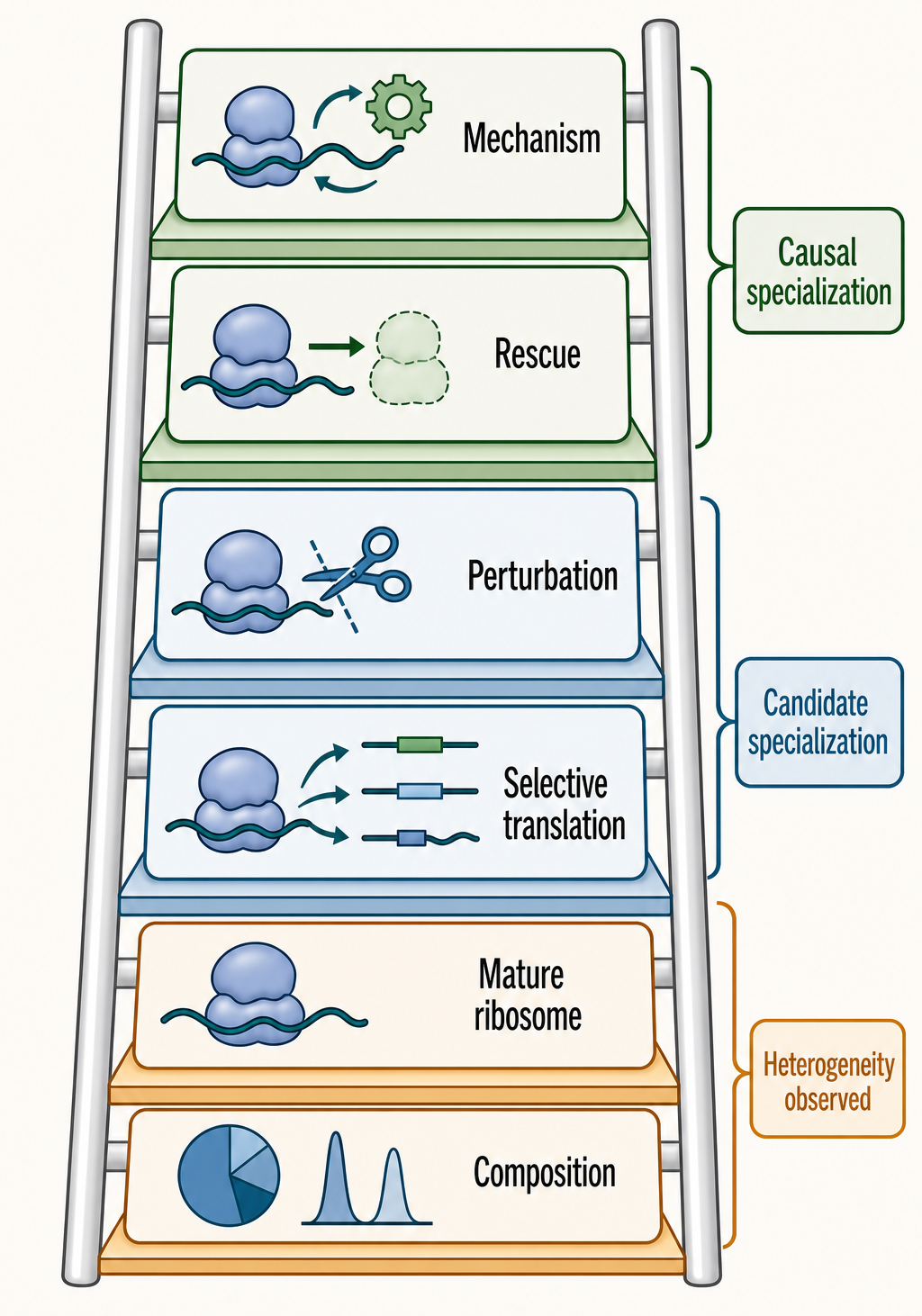
Figure 44.1. Evidence Ladder for Specialized Ribosomes. A compositional difference among ribosomes is a heterogeneity claim. A specialized-ribosome claim requires a causal chain from ribosomal feature to mature ribosome incorporation, selective translation or regulatory output, perturbation, rescue, and mechanism.
The evidence ladder begins with compositional measurement. For rRNA, one can use rRNA variant sequencing, primer extension, modification mapping, direct RNA sequencing, mass spectrometry of nucleosides, or targeted assays. For ribosomal proteins, one can use quantitative proteomics, tagged paralog purification, ribosome immunoprecipitation, or structural approaches. For associated factors, one can use crosslinking, affinity purification, proximity labeling, polysome fractionation, or ribosome profiling. A strong study should show that the feature is present on ribosomal subunits or translating ribosomes, not only in total lysate or nucleolar particles.
The next layer is translational specificity. A ribosome subtype might simply reduce global translation if it damages the ribosome, or it might change a particular step for a defined mRNA class. Ribosome profiling can identify ribosome-protected fragments across transcripts, but Ribo-seq measures ribosome occupancy, not protein output by itself. Occupancy can rise because initiation increases, elongation slows, ribosomes stall, or mRNA decay changes. Polysome profiling gives a coarser view of mRNAs in heavy translating fractions, but heavy fractions can include stalled or aggregated ribosomes. Reporter assays test candidate cis-elements but can be distorted by construct context. Nascent proteomics and pulse labeling can show protein synthesis outputs but often lack codon-level information. Causal specialization is strongest when these methods agree.
Perturbation and rescue are the decisive steps. If a ribosomal protein paralog is proposed to select a transcript class, replacing that paralog should alter translation of those transcripts, and restoring the paralog should rescue the output. If an rRNA modification is proposed to direct selective translation, an enzyme or guide RNA perturbation should change the modification and the translational phenotype without simply preventing ribosome assembly. If a ribosome-associated noncoding RNA is proposed to tune translation, the RNA should physically bind relevant ribosomes, perturbation should change translation, and rescue should depend on the ribosome-binding element. The strongest mechanism would then explain how the ribosomal feature communicates with an mRNA feature, translation factor, tRNA, nascent chain, or quality-control pathway.
Table 44.2. Claim Strength Scale. Four labels describe increasing levels of evidence for ribosome heterogeneity and specialization.
| Label | Required evidence | Appropriate language |
|---|---|---|
| Heterogeneity observed | Ribosome-associated difference measured | “ribosome heterogeneity” |
| Candidate specialization | Heterogeneity plus correlated translation output | “candidate specialized ribosome” |
| Causal specialization | Mature incorporation, specificity, perturbation, rescue, mechanism | “specialized ribosome” |
| Defective ribosome state | Damage, stalled state, assembly failure, or repair state | “defective”, “stalled”, “repair-associated”, or “quality-control-engaged” ribosome |
Misconception note: “specialized ribosome” should not be used as a label for any ribosome-related phenotype. A cell with fewer ribosomes is not necessarily using specialized ribosomes. A cancer cell with high rRNA transcription is not necessarily using specialized ribosomes. A ribosomal protein with an extraribosomal signaling role is not necessarily part of a specialized ribosome. A ribosome population enriched for a regulatory factor may reflect transient pathway engagement rather than a stable ribosome subtype.
44.2. rRNA variants, paralogs, and modification heterogeneity
rRNA is often taught as a uniform structural scaffold, but most organisms encode rRNA through repeated genes, multiple operons, organellar genomes, or related loci. rRNA variants are rRNA molecules that differ in sequence. In bacteria, different rRNA operons can encode small sequence differences. In eukaryotes, the ribosomal DNA repeat array is large, repetitive, and difficult to assemble, so variant detection is technically challenging. In mitochondria, organellar rRNAs are encoded separately from nuclear rDNA and have specialized structures and modifications. The key question is not merely whether an rRNA sequence variant exists in the genome. The key question is whether that rRNA variant is transcribed, processed, incorporated into mature ribosomes, and functionally different.
Mature rRNA also carries many chemical modifications. Eukaryotic cytosolic rRNAs are heavily modified by small nucleolar RNA-guided 2′-O-methylation and pseudouridylation, plus enzyme-guided base modifications. Mitochondrial rRNAs have their own modification systems, including methylations that influence mitoribosome assembly and function. Lopez Sanchez and colleagues review mitochondrial rRNA methylation as a distinct organellar problem. General RNA modification detection reviews and database resources are useful for method awareness, but not every modification review is directly about rRNA specialization. final reference item notes: add direct, site-resolved rRNA modification heterogeneity references for cytosolic rRNA, including partial 2′-O-methylation, pseudouridine stoichiometry, snoRNA perturbation, and translation phenotypes.
Modification heterogeneity matters because ribosomal functional centers are RNA-rich. The decoding center, peptidyl-transferase center, intersubunit bridges, factor-binding surfaces, and exit tunnel neighborhood all depend on rRNA architecture. A missing or partial modification could affect local conformation, ion coordination, ligand binding, subunit joining, translation-factor interaction, or ribosome assembly. However, the causal routes are not interchangeable. A modification enzyme knockout may alter ribosome biogenesis, cellular stress, and mature ribosome function simultaneously. A translation phenotype after enzyme depletion therefore requires separation of assembly defects from mature-ribosome activity.
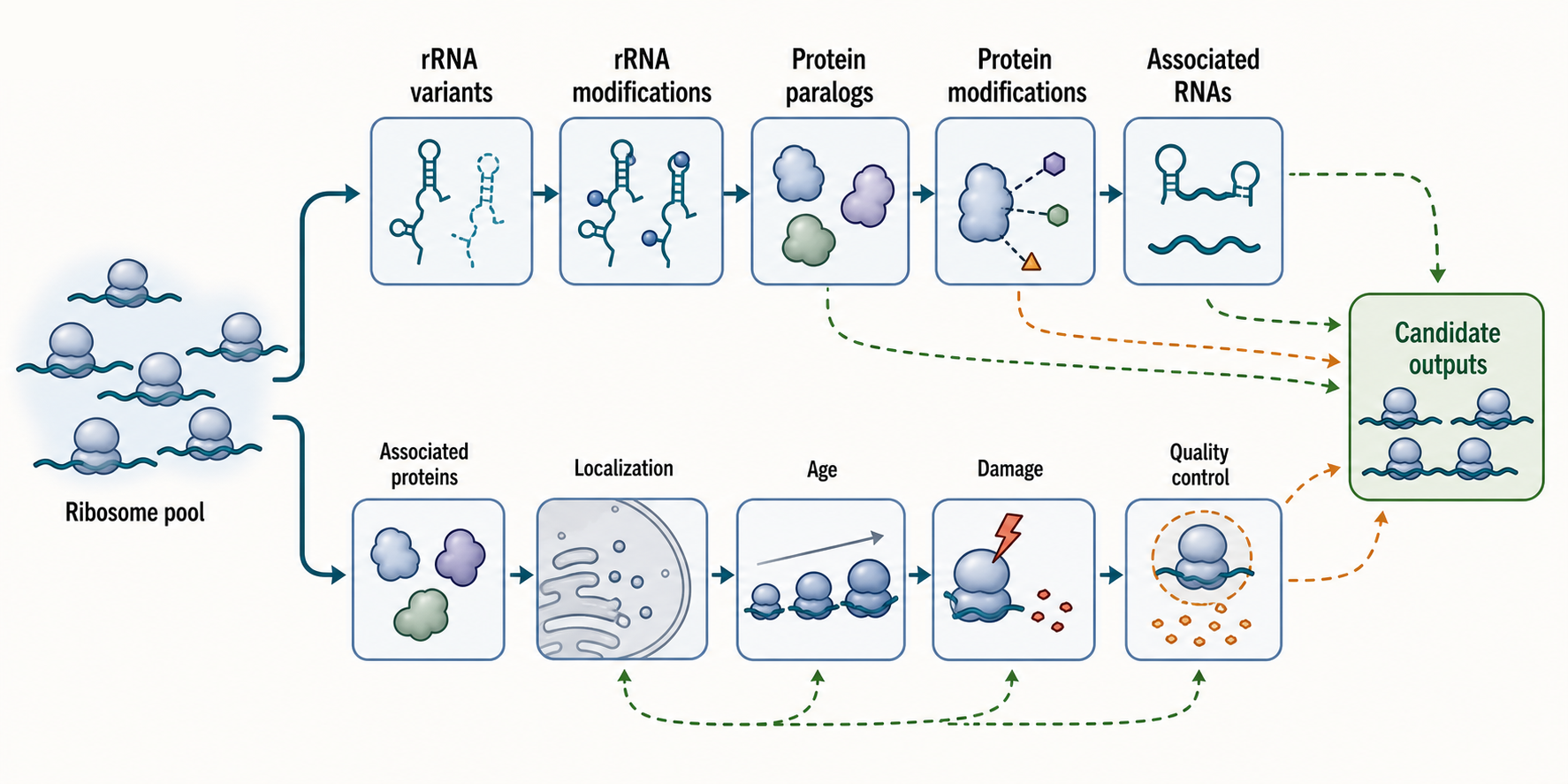
Figure 44.2. Routes to Ribosome Heterogeneity. Ribosome heterogeneity includes stable compositional differences and transient functional states. Only a subset of these routes creates specialized ribosomes with selective translational outputs.
Skeletal muscle provides a useful contemporary example because muscle fibers can remodel ribosome biogenesis and translation during growth and hypertrophic stimuli. Cui and colleagues report rRNA epitranscriptome and myonuclear small nucleolar RNA landscape changes in skeletal muscle fibers under hypertrophic stimulation. This kind of study supports the idea that rRNA modification landscapes are regulated in differentiated tissues. It does not, by itself, prove that each altered rRNA modification creates a transcript-selective ribosome. The next experiment would need to connect a specific modification state to a specific mature ribosome population and then to a defined translational output.
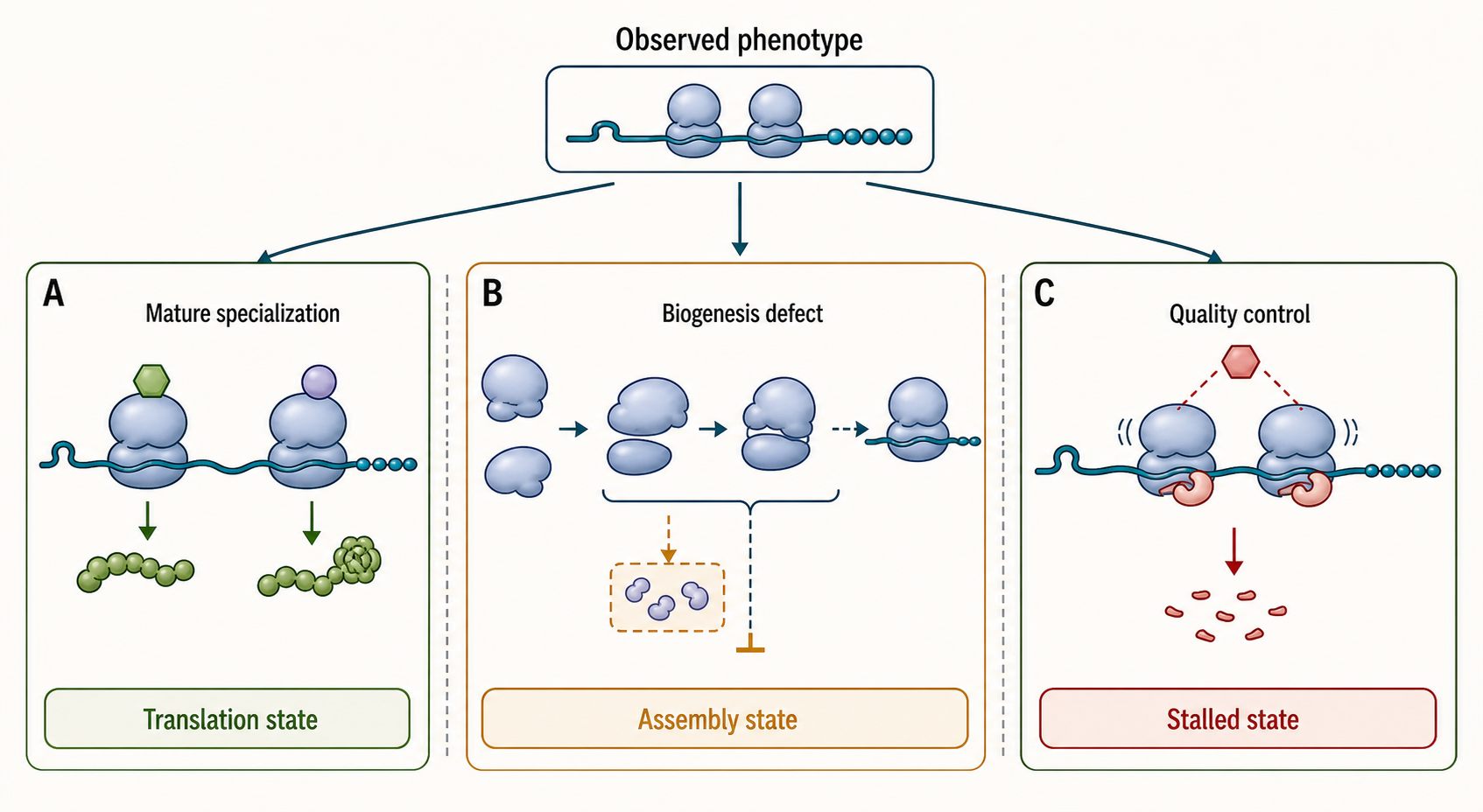
Figure 44.3. Three Interpretations of the Same Ribosome Phenotype. Similar biochemical observations can reflect mature-ribosome specialization, defective biogenesis, or ribosome-associated quality control. Interpretation requires assays that separate assembly state, mature translation, and stalled-ribosome surveillance.
Bacterial rRNA cleavage and repair show another form of rRNA-state heterogeneity. MazF is a bacterial toxin that can cleave RNA, including rRNA under certain conditions. Temmel and colleagues showed that the RNA ligase RtcB can reverse MazF-induced ribosome heterogeneity in Escherichia coli. This example is important because it makes heterogeneity concrete: ribosomes can differ because an rRNA damage or cleavage event has occurred, and an RNA repair system can restore a population. The biological interpretation is different from developmental specialization. A repaired toxin-cleaved ribosome is part of stress physiology and quality maintenance, not necessarily a programmed transcript-selective ribosome.
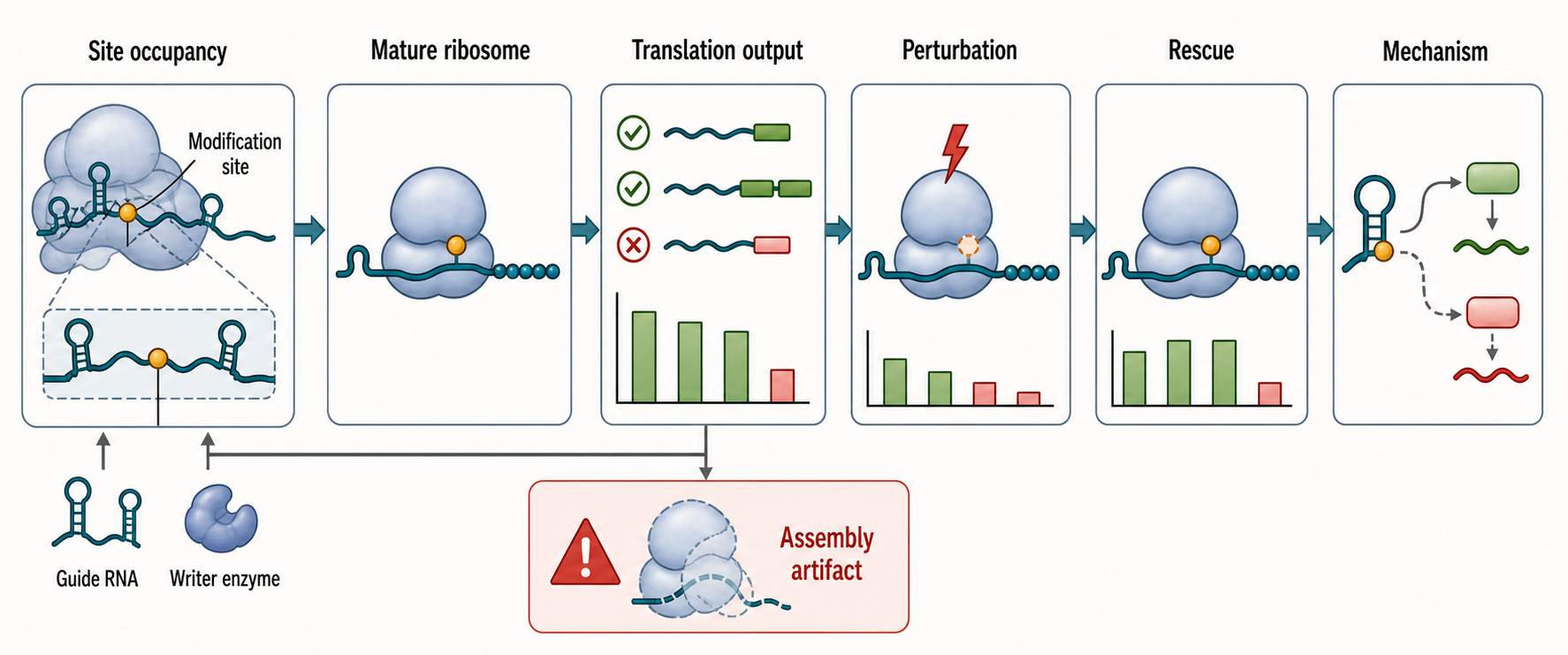
Figure 44.4. rRNA Modification Heterogeneity Workflow. rRNA modification heterogeneity becomes mechanistic only when site occupancy, mature-ribosome incorporation, functional output, and rescue are connected.
Evidence standards for rRNA variants and modifications are especially demanding because rRNA is abundant, repetitive, structured, and chemically modified. Short-read mapping to rDNA repeats can misassign variants. Reverse transcriptase stops can reflect structure or modification rather than sequence. Direct RNA sequencing can detect native RNA signals, but models for modification calling must be calibrated and can confuse sequence, structure, and modification effects. Nucleoside mass spectrometry gives accurate chemical information but can lose site resolution unless paired with mapping. Strong claims combine genomic context, mature-ribosome purification, site-specific measurement, stoichiometry, perturbation, rescue, and functional translation assays.
44.3. Ribosomal protein variation and extraribosomal claims
Ribosomal proteins are structural and functional components of ribosomal subunits. Many ribosomal proteins contact rRNA, stabilize ribosome architecture, participate in subunit joining, shape factor-binding sites, or line the mRNA and tRNA paths. Ribosomal protein variation can occur through paralogs, post-translational modification, differential stoichiometry, regulated incorporation, damage, or association of extra factors near ribosomal protein surfaces. The term “ribosomal protein paralog” refers to related proteins encoded by distinct genes that can potentially occupy similar positions in the ribosome.
Paralog variation is one of the most intuitive routes to specialized ribosomes. If two related proteins occupy the same ribosomal position but expose different surfaces, they could alter binding of mRNAs, initiation factors, nascent-chain factors, localization machinery, or regulatory proteins. The Drosophila melanogaster eRpL22 system illustrates the logic. Mageeney and Ware reported specialized eRpL22 paralog-specific ribosomes that regulate specific mRNA translation during spermatogenesis. This is the kind of case that motivates the field because a developmentally restricted paralog can be linked to a defined biological program and translational output.
The same example also teaches caution. A ribosomal protein paralog could influence translation through at least four routes. First, it could be incorporated into mature ribosomes and directly alter translational selectivity. Second, it could alter assembly efficiency so that a cell type has a different number or quality of ribosomes. Third, it could have an extraribosomal function in mRNA regulation, transcription, or signaling. Fourth, its expression could mark a developmental state whose translation program is controlled mainly by other factors. A specialized-ribosome interpretation is strongest when mature paralog-containing ribosomes are isolated, their mRNA occupancy is measured, and paralog replacement or rescue changes the relevant translational program.
Extraribosomal functions complicate interpretation. Some ribosomal proteins can exist outside ribosomes and participate in nucleolar stress signaling, p53 pathway regulation, RNA processing, transcriptional control, or other cellular processes. These functions can be biologically important, but they are not specialized-ribosome functions unless the protein acts as part of a ribosome. A ribosomal protein knockdown may reduce ribosome assembly, trigger nucleolar stress, alter cell cycle progression, and change translation all at once. Therefore, “ribosomal protein X regulates mRNA Y” is not enough. The experiment must show whether ribosomal incorporation is required.
Post-translational modification of ribosomal proteins is another possible route to heterogeneity. Phosphorylation, methylation, acetylation, ubiquitination, or other modifications could change ribosome interactions with factors or quality-control pathways. final reference item notes: add direct ribosomal protein post-translational modification references for site-specific occupancy, mature-ribosome incorporation, and translation effects. The current Chapter 44 reference set supports broad heterogeneity concepts through review anchors but does not provide enough direct support for a detailed ribosomal protein modification catalog.
Ribosomal protein stoichiometry claims require special care. Mass spectrometry can detect substoichiometric ribosomal proteins, but sample preparation can strip peripheral proteins, enrich immature particles, or mix ribosomes with nonribosomal complexes. Tagged ribosomal protein purification can bias the recovered population toward ribosomes containing the tag. Antibody specificity can be limiting for paralogs. Structural approaches can show whether a protein density is present, but low occupancy and conformational flexibility can complicate interpretation. The best studies quantify mature ribosome incorporation relative to rRNA and multiple ribosomal proteins, not only total protein abundance.
Box 44.1. How to Write a Rigorous Specialized-Ribosome Claim
- Name the ribosomal feature.
- State the organism, cell type, and condition.
- Show mature-ribosome incorporation.
- Define the mRNA class or regulatory output.
- Distinguish initiation, elongation, termination, mRNA decay, and protein output.
- Perturb and rescue the ribosomal feature.
- Exclude assembly defects and extraribosomal functions.
44.4. Developmental, tissue, and stress-associated specialization
Development is an attractive context for ribosome specialization because cell identity changes require coordinated protein synthesis. Stem cells, differentiating cells, germ cells, neurons, immune cells, muscle fibers, and embryonic tissues often differ in ribosome biogenesis, translation-factor abundance, mRNA localization, and stress sensitivity. Norris and colleagues review ribosome heterogeneity and specialization in development and emphasize that developmental transitions provide both plausible mechanisms and difficult confounders. A differentiating cell changes many processes at once; ribosome composition may be one contributor rather than the sole driver.
Tissue-associated heterogeneity can arise in several ways. A tissue may express different ribosomal protein paralogs. It may regulate small nucleolar RNAs and rRNA modification enzymes. It may contain organelle-rich cells with high mitochondrial translation demands. It may experience mechanical, metabolic, immune, or oxidative stress that alters ribosome biogenesis. It may localize translation to subcellular compartments, such as neuronal processes or muscle regions. Each route creates a different testable model. A tissue-specific rRNA modification predicts a site-specific chemical difference in mature ribosomes. A tissue-specific ribosomal protein paralog predicts altered ribosomal protein composition. A localization model predicts spatially restricted ribosome populations and locally translated mRNAs.
Stress-associated ribosome heterogeneity is even more diverse. Stress can reduce global translation initiation, induce ribosome hibernation or preservation states, alter rRNA processing, change rRNA modification, promote ribosome damage, recruit quality-control factors, or select for translation of stress-response mRNAs. Some ribosome changes may be adaptive. Others may be damage signatures. In bacteria, ribosome-targeting antibiotics, toxins, RNA repair, and stress responses can generate heterogeneous ribosome pools. Temmel and colleagues’ RtcB-MazF example shows that stress-linked rRNA damage and repair can reshape ribosome populations. Hindley and colleagues report heterogeneity in responses to ribosome-targeting antibiotics mediated by bacterial RNA repair. These bacterial cases fit a stress-survival and repair framework rather than a simple developmental specialization framework.
Mitochondrial and cytosolic stress can also couple ribosomes to quality-control decisions. Desai and colleagues showed that elongational stalling activates mitoribosome-associated quality control. This finding is not a classic specialized-ribosome claim, because the central feature is a stalled translation state. Yet it belongs in this chapter because ribosome-associated factors and stalled ribosome states create functionally distinct ribosome populations. A stalled mitoribosome is no longer equivalent to a freely elongating mitoribosome; it has become a platform for quality-control recruitment.
Age-associated changes add another layer. Lee and colleagues report Pelota-mediated ribosome-associated quality control counteracting aging and age-associated pathologies across species. Pelota, a Dom34-like factor in eukaryotes, participates in ribosome rescue pathways when translation stalls or ribosomes encounter problematic mRNAs. The aging context illustrates why ribosome heterogeneity should include functional states as well as static composition. Older or stressed cells may accumulate stalled, damaged, collided, or quality-control-engaged ribosomes. Treating these as “specialized ribosomes” would be misleading unless the term is explicitly limited to quality-control specialization.
44.5. Ribosome-associated regulators and quality-control coupling
Many regulatory proteins and RNAs act at the ribosome without being permanent ribosomal components. These ribosome-associated regulators can change translation and can make ribosome populations appear heterogeneous. Ribosome-associated noncoding RNAs, or rancRNAs, are one class. Pecoraro and colleagues review rancRNAs as noncoding RNAs that adjust translation and shape proteomes. Such RNAs may bind ribosomal subunits, complete ribosomes, or translating polysomes; they may inhibit translation globally, alter translation of selected messages, influence stress responses, or act as scaffolds.
A rancRNA claim needs the same causal discipline as a ribosomal-protein claim. The RNA should be shown to associate with ribosomes under physiological conditions. The binding site should be mapped or at least constrained. Depletion or overexpression should alter translation in a way that is not simply caused by toxicity or RNA overload. Rescue should require the ribosome-interacting region. If a particular mRNA class is affected, the model should explain how the ribosome-associated RNA communicates with mRNA features or translation factors. Without these tests, an RNA enriched in polysome fractions may simply be a translated mRNA fragment, a sticky abundant RNA, a stress-granule contaminant, or an indirect interactor.
RNA-binding proteins and noncoding RNAs remodel translation at several levels. Ho and colleagues review translational remodeling by RNA-binding proteins and noncoding RNAs. Many of these factors act through mRNA untranslated regions, RNA modifications, microRNA pathways, initiation-factor recruitment, or mRNA decay. Some also associate with ribosomes. The distinction matters. If an RNA-binding protein recruits a specific mRNA to ordinary ribosomes, the regulatory unit is primarily an mRNP. If the same protein binds a ribosomal surface and changes ribosome behavior across multiple messages, the regulatory unit includes a ribosome-associated state. Experiments should identify which architecture is operating.
Quality-control coupling is a major source of ribosome-associated regulation. Ribosomes stall on truncated mRNAs, strong secondary structures, rare-codon clusters, polybasic nascent peptides, damaged mRNAs, problematic nascent chains, or failed termination contexts. Stalled ribosomes can collide, recruit rescue factors, trigger mRNA decay, and route nascent polypeptides to degradation. Gao and colleagues review Argonaute-dependent ribosome-associated protein quality control. Argonaute proteins are best known for small-RNA-guided gene silencing, but Argonaute-dependent pathways can intersect with ribosome-associated surveillance, connecting RNA targeting to protein quality control.
Hopfler and colleagues provide a mechanistic example in tubulin autoregulation, where ribosome-associated mRNA degradation is coupled to the translation of tubulin mRNA. This kind of mechanism is not about a permanently altered ribosome core. It is about a translating ribosome creating a signal that links nascent-chain or mRNA context to mRNA decay. Zhang and colleagues report that ribosomes can modulate transcriptome abundance through generalized frameshift and out-of-frame mRNA decay. These examples show that ribosomes are regulatory platforms: translation can determine mRNA fate, and mRNA fate can reshape apparent translation output.
Bacteria add a distinct coupling between transcription and translation. In bacteria, translating ribosomes can follow RNA polymerase on nascent mRNAs, coupling mRNA synthesis with protein synthesis. Blaha and Wade review transcription-translation coupling in bacteria. This coupling can affect mRNA folding, termination, RNA surveillance, and response to stress. It also complicates specialized-ribosome claims in bacteria because ribosome position may reflect transcription dynamics, mRNA accessibility, or nascent RNA quality rather than ribosome subtype.
44.6. Disease links and cancer claims
Disease links arise from three overlapping categories. First, mutations or dysregulation of ribosome biogenesis factors can produce ribosomopathies, developmental syndromes, mitochondrial disease, or tissue-specific defects. Second, altered ribosome composition or modification may change translation in disease-relevant ways. Third, ribosome-associated quality-control failure can allow stalled translation, defective proteins, or proteotoxic stress to accumulate. Bressman and colleagues ask whether RNA exosomopathies can cause ribosome heterogeneity, illustrating how RNA-processing disease can intersect with ribosome composition and quality.
Cancer is a particularly active but difficult area. Cancer cells often increase ribosome biogenesis, nucleolar activity, rRNA transcription, translation initiation, and anabolic metabolism. They also experience oncogene-driven stress, hypoxia, nutrient limitation, immune pressure, and therapy-induced stress. Any of these changes can alter rRNA modification, ribosomal protein expression, ribosome-associated factors, or quality-control pathways. Miller and colleagues review specialized ribosomes in health and disease, including cancer-related claims. The central caution is that high ribosome production or altered translation in cancer does not automatically imply specialized ribosomes.
A strong cancer claim should identify a ribosomal feature, a cancer context, a translational target set, and a causal mechanism. For example, a specific rRNA modification enzyme might be elevated in a tumor type; loss of the enzyme might change modification at a ribosomal site; that change might selectively affect translation of mRNAs with structured leaders; rescue with a catalytically active enzyme might restore translation and tumor phenotypes. Without this chain, the observation may still be important but should be described as ribosome biogenesis remodeling, translation remodeling, or a candidate specialized-ribosome mechanism rather than a proven specialized-ribosome program.
Ribosomal protein disease claims have an additional ambiguity because ribosomal proteins can act inside and outside ribosomes. A mutation may impair ribosome assembly, produce haploinsufficiency, activate p53, alter translation of selected mRNAs, or create extraribosomal signaling defects. These routes can coexist. Disease interpretation should avoid forcing all phenotypes into one mechanism. For example, a ribosomal protein lesion in a developmental disorder may reduce ribosome number in a sensitive tissue, alter translation of a specific mRNA class, and produce nucleolar stress. Each route needs separate evidence.
Mitochondrial disease and metabolic disease provide related but distinct contexts. Mitoribosome stalling and quality control affect synthesis of oxidative phosphorylation proteins. Ribosome-associated stress-surveillance regulators have been studied by single-cell perturbation in type 2 diabetes contexts. final reference item notes: verify the direct relevance and experimental system details of before using it for specific disease claims. The current draft uses it only as a pointer that ribosomal stress-surveillance can be explored in metabolic disease models.
Box 44.2. Why Cancer Translation Remodeling Is Not Automatically Ribosome Specialization
Cancer cells alter nucleoli, rRNA transcription, ribosome biogenesis, translation initiation, metabolism, stress responses, and mRNA programs simultaneously. A specialized-ribosome cancer claim requires a defined ribosomal feature, a target mRNA set, causal perturbation, rescue, and a disease-relevant mechanism.
44.7. Methods, artifacts, and causality standards
Ribosome heterogeneity studies are method-sensitive because ribosomes are abundant, large, structured, repetitive, and often studied after harsh biochemical fractionation. The most common artifact is population mixing. A ribosome pellet, polysome fraction, or affinity-purified sample can contain mature translating ribosomes, stalled ribosomes, immature particles, subunit fragments, ribosome-associated factors, nonribosomal RNPs, and damaged complexes. If the study asks about mature specialized ribosomes, the sample must be validated for maturity and translational engagement.
Sequencing artifacts are also common. rRNA variants are difficult to map because rDNA repeats and rRNA operons are similar. rRNA modifications alter reverse transcription and nanopore signals, creating false variant calls if the model does not distinguish sequence from modification. Long-read methods can produce foldback or chimeric artifacts; Heinz and colleagues discuss foldback artifacts in long reads. Although that reference is not ribosome-specific, it is relevant as a reminder that long-read evidence for RNA isoforms or variants requires artifact detection. final reference item notes: add ribosome-specific long-read rRNA variant benchmarking before final release.
Ribosome profiling artifacts deserve special emphasis. Ribo-seq depends on nuclease digestion, footprint size selection, mapping, periodicity, and normalization. Different ribosome states can protect different footprint lengths. Stalled ribosomes can be overrepresented. mRNA abundance changes can masquerade as translational efficiency changes if RNA-seq controls are weak. rRNA contamination can reduce usable reads. Drugs used to freeze ribosomes can alter occupancy. Strong specialized-ribosome Ribo-seq studies should purify the ribosome subtype carefully, include input controls, examine footprint periodicity, control for mRNA abundance, and validate representative targets with independent assays.
Proteomics artifacts include incomplete extraction, differential peptide detectability, paralog ambiguity, and contamination by free ribosomal proteins. A peptide shared between paralogs cannot assign paralog-specific ribosome incorporation. A tagged paralog can perturb expression or assembly. A substoichiometric protein signal can mean partial occupancy, sample loss, immature particles, or contamination. Quantitative claims should use unique peptides where possible, internal standards or label-based quantification, rRNA-normalized ribosome amounts, and orthogonal validation.
Box 44.3. rRNA Modification Claims Need Site, Stoichiometry, and Function
An altered modification enzyme is not equivalent to an altered mature ribosome. For a rigorous claim, the rRNA site must be measured, modification stoichiometry must be shown to change in mature ribosomes, assembly must be preserved, and a translation phenotype must be rescued.
Causality standards should be explicit. A minimal heterogeneity claim needs direct measurement of a ribosomal difference. A minimal specialization claim needs heterogeneity plus a functional difference. A strong specialization claim needs heterogeneity, mature-ribosome incorporation, transcript or pathway specificity, perturbation, rescue, and mechanism. A disease claim needs the same chain plus disease-relevant cell type, genetics or clinical association, and separation from general growth defects. A therapeutic claim needs even more: targetability, specificity, pharmacology, safety, and biomarkers. This chapter uses the term “candidate specialized ribosome” when composition and functional correlation are present but causal mechanism remains incomplete.
Recent Consensus
The current consensus is that ribosome heterogeneity is real and biologically widespread, but specialized ribosomes are not a single settled mechanism. rRNA variants, rRNA modifications, ribosomal protein paralogs, ribosome-associated noncoding RNAs, and quality-control-engaged ribosomes all contribute to nonuniform ribosome populations. Development, stress, tissue specialization, mitochondrial biology, and cancer are plausible contexts. Reviews by, and support a cautious view: ribosomes can participate in selective regulation, but each proposed specialized-ribosome mechanism requires direct evidence.
Open Questions, Controversies, Deprecated Models, and Common Misconceptions
Open questions:
- How many rRNA variants are incorporated into mature ribosomes in normal tissues?
- Which rRNA modification changes are stoichiometric enough to alter ribosome behavior?
- How often ribosomal protein paralogs create transcript-selective ribosomes rather than assembly or extraribosomal phenotypes?
- Whether cancer-associated ribosome changes are drivers, adaptations, or consequences of altered growth?
Common misconceptions:
- “All ribosome-associated factors define specialized ribosomes.” In reality, many factors bind transiently to ordinary ribosomes during initiation, elongation, termination, rescue, decay, or quality control.
- “Altered translation after ribosomal protein depletion proves selective ribosomes.” Depletion can trigger assembly defects, nucleolar stress, p53 activation, and global growth changes.
- “RRNA modification changes are automatically epitranscriptomic regulatory codes.” Some modifications may tune function, but others may reflect assembly state, enzyme availability, stress, or measurement limits.