Chapter 87. siRNA and RNA Interference in Antiviral Defense, Heterochromatin, and Experimental Knockdown
Scope Note
Small interfering RNAs (siRNAs) are short double-stranded-RNA-derived guides that connect sequence recognition to gene silencing. This chapter explains how Dicer enzymes generate siRNAs, how Argonaute proteins load guide strands into RNA-induced silencing complexes, and how slicing-competent Argonautes cleave complementary targets. It then follows siRNA logic into three biological and experimental arenas: antiviral defense, RNA-directed chromatin silencing, and laboratory knockdown. The chapter closes by extracting therapeutic lessons from natural RNA interference (RNAi) pathways without treating clinical siRNA drug design as the main subject, which is covered more fully in Chapter 151.
Executive Summary
RNA interference is a sequence-directed silencing system in which a small RNA guide recruits an Argonaute protein to a complementary nucleic acid target. In the strict siRNA pathway, long double-stranded RNA or a designed duplex is processed into a short RNA duplex, one strand is retained as the guide, and the guide-programmed Argonaute recognizes a target RNA by base pairing. If the guide and target are sufficiently complementary and the Argonaute protein contains an active catalytic center, the target RNA can be sliced across from the guide’s central region. This mechanism differs from typical animal microRNA repression, where partial pairing commonly causes translational repression and deadenylation rather than direct cleavage.
The biological uses of siRNA pathways are diverse. In many plants and insects, viral double-stranded RNA is a prominent substrate for Dicer, and virus-derived siRNAs are loaded into Argonautes that restrict infection. In nematodes, RNA-dependent RNA polymerases amplify silencing signals and make secondary siRNAs, allowing systemic and sometimes inherited responses. In mammals, the relationship between RNAi and antiviral defense is more contested. Mammalian cells clearly possess functional RNAi machinery, but interferon-stimulated innate immunity, ADAR editing, viral suppressors, and developmental context complicate claims that canonical RNAi is a dominant antiviral pathway in adult mammalian somatic cells. Recent bird and mammal studies therefore should be read as system-specific evidence rather than as proof of a single vertebrate rule.
siRNA-related pathways also act at chromatin. In fission yeast and plants, small RNAs guide repressive chromatin marks to repetitive or transposon-derived loci by recognizing nascent transcripts. Plant RNA-directed DNA methylation (RdDM) uses specialized polymerases, small RNAs, Argonaute proteins, and de novo methyltransferases to place cytosine methylation. Mammalian repetitive-element silencing includes RNA-guided and RNA-associated mechanisms, but it is not a simple copy of fission yeast or plant siRNA-directed heterochromatin. The correct comparison is mechanistic analogy, not identity.
Experimental RNAi takes advantage of this guide-target logic to reduce gene expression, but an siRNA phenotype is not automatically a target-gene phenotype. Off-target repression can arise from microRNA-like seed pairing, unintended slicing of partially related transcripts, immune stimulation by duplex RNA, saturation of endogenous small-RNA pathways, toxicity from delivery reagents, and clonal or selection effects in stable shRNA experiments. Strong RNAi experiments therefore use multiple independent siRNAs, dose minimization, transcript and protein validation, seed-aware controls, and rescue with an RNAi-resistant transgene. Therapeutic siRNA programs have learned related lessons: delivery, chemical stabilization, strand selection, immune avoidance, tissue distribution, and allele or isoform specificity often determine whether the elegant intracellular mechanism becomes a useful medicine.
Concept Inventory
- siRNA: a short interfering RNA, usually about 21-24 nucleotides in many canonical systems, derived from double-stranded RNA and able to guide Argonaute-mediated repression or cleavage of complementary targets.
- RNAi: RNA interference, the broader process by which small RNAs guide sequence-specific gene silencing through Argonaute-family proteins.
- Dicer: an RNase III-family enzyme that measures and cleaves double-stranded RNA into short duplex products with characteristic termini.
- RISC: RNA-induced silencing complex, the Argonaute-centered effector complex containing a small RNA guide.
- Guide strand: the strand retained in Argonaute and used for target recognition.
- Passenger strand: the strand discarded during RISC maturation.
- Slicing: endonucleolytic cleavage of a target RNA by a catalytically active Argonaute, usually when guide-target complementarity is extensive.
- Virus-derived siRNA: a small RNA generated from viral RNA or viral replication-associated double-stranded RNA.
- RNA-directed DNA methylation: a plant pathway in which small RNAs help guide cytosine methylation and transcriptional silencing.
- Rescue experiment: an experiment in which the RNAi-induced phenotype is reversed by expressing an RNAi-resistant version of the target gene, strengthening causal inference.
What to Know Before Reading This Chapter
Readers should be comfortable with the central dogma, RNA strand polarity, base pairing, nuclease activity, and the difference between transcriptional and post-transcriptional regulation. A double-stranded RNA molecule contains two complementary RNA strands running in opposite directions. An RNase III enzyme cleaves both strands of a double-stranded substrate. An Argonaute protein is a nucleic-acid-guided effector: it uses a bound small RNA as a recognition code. Heterochromatin is a compact, repressive chromatin state enriched for marks such as histone H3 lysine 9 methylation or DNA methylation, depending on organism and locus. These definitions matter because siRNA pathways connect an RNA structure, a protein complex, and a cellular outcome; confusing those levels leads to common errors.
This chapter uses synthetic siRNA knockdown in cultured mammalian cells as a running experimental example, plant antiviral RNAi as a running defense example, and fission yeast or plant RNA-directed silencing as chromatin examples. The chapter distinguishes canonical mechanisms from variants. Not every small RNA made from double-stranded RNA is a therapeutic siRNA, not every RNAi phenotype reflects slicing, and not every RNA-associated heterochromatin mechanism is an siRNA pathway.
87.1. Dicer products, Argonaute slicing, and RISC assembly
Dicer Products and the Logic of Small-RNA Generation
The core molecular problem solved by RNAi is how a cell converts a long or structured RNA substrate into a guide short enough to fit inside Argonaute yet specific enough to identify a target sequence. Dicer-family proteins solve the size problem. Dicer enzymes bind double-stranded RNA and cleave it at defined distances from a terminus or structural feature. The products are short duplexes with strand identities that will later be evaluated by Argonaute-loading machinery. Many canonical siRNA duplexes are about 21 nucleotides in animals and 21-24 nucleotides in plants, but size varies by Dicer paralog, organism, and pathway.
The molecular shape of a Dicer product is important because Argonaute does not load arbitrary RNA fragments with equal efficiency. A typical Dicer product has a duplex region, termini compatible with Argonaute loading, and strand ends that can bias which strand becomes the guide. In thermodynamic asymmetry models, the strand whose 5′ end is less stably paired is more likely to become the guide because loading proteins can more easily position that end into the Argonaute MID domain. This rule is useful for experimental siRNA design, but it is not a law independent of protein context. Dicer cofactors, duplex mismatches, 5′ nucleotide identity, chemical modifications, and Argonaute preferences can alter strand selection.
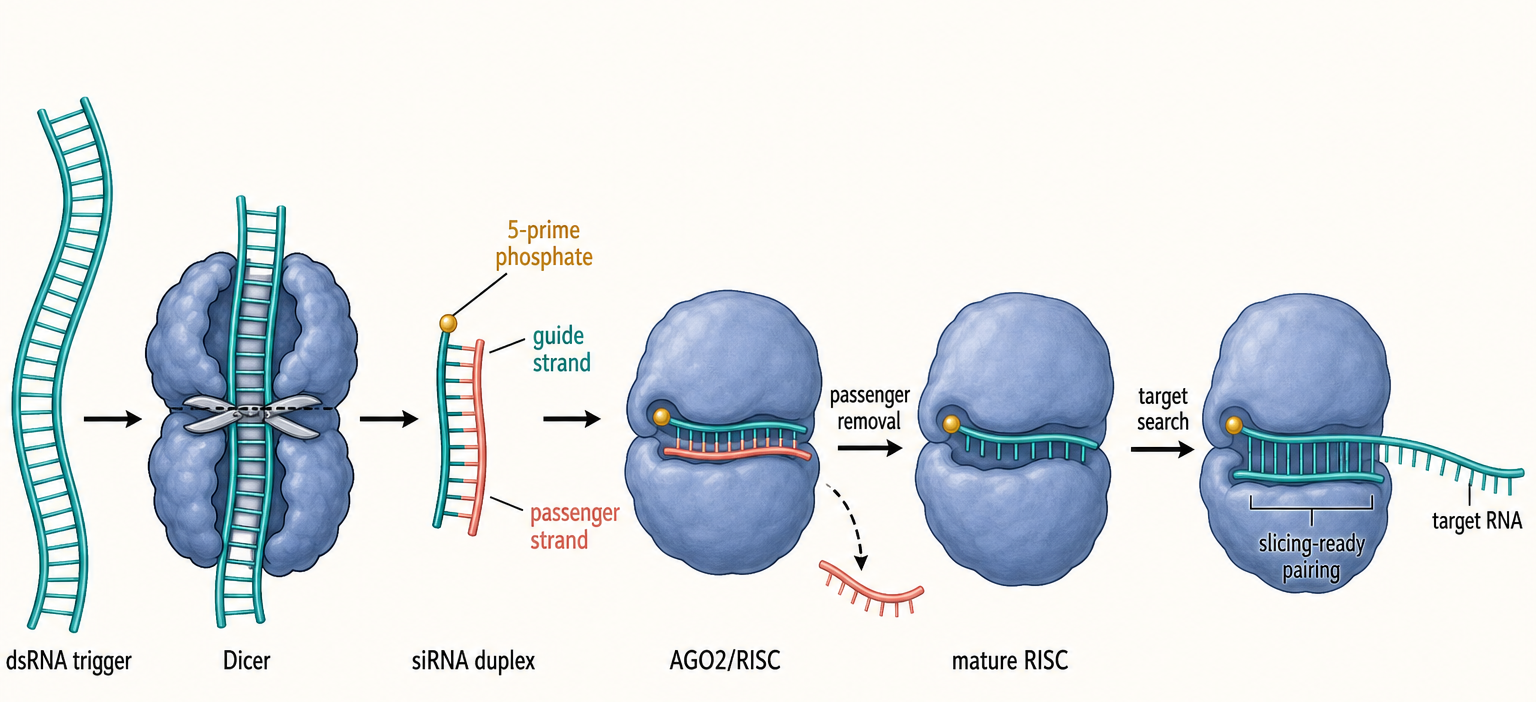
Figure 87.1. Dicer processing and RISC assembly. Dicer converts long double-stranded RNA or an introduced duplex into a short duplex whose strand asymmetry and end features guide Argonaute loading; passenger removal produces a guide-loaded RNA-induced silencing complex that searches for complementary targets.
Dicer products can have several origins. Endogenous siRNAs may come from inverted repeats, overlapping sense-antisense transcripts, transposon-derived sequences, or RNA-dependent RNA polymerase products. Viral siRNAs may come from viral replication intermediates, structured viral RNAs, convergent transcripts, or host-amplified viral fragments. Experimental siRNAs are introduced directly as duplexes, whereas short hairpin RNAs (shRNAs) are expressed as transcripts that fold back on themselves and enter processing pathways. These routes converge on Argonaute loading, but the upstream biogenesis steps affect abundance, subcellular location, immune detection, and off-target risk.
RISC Assembly, Argonaute Loading, and Passenger-Strand Removal
The RNA-induced silencing complex is not a single universal particle. In its minimal useful definition, RISC is an Argonaute protein loaded with a small RNA guide and able to recognize targets by base pairing. In cells, RISC assembly includes chaperones, Dicer-associated factors, duplex-loading intermediates, and quality-control steps. Animal AGO2 provides the clearest slicing example. AGO2 contains PAZ, MID, PIWI, and N-terminal domains. The PAZ domain helps bind the guide’s 3′ end, the MID domain recognizes the guide’s 5′ phosphate, and the PIWI domain adopts an RNase H-like fold that can cleave target RNA when the catalytic residues and geometry are appropriate.
Passenger-strand removal is the transition from a duplex-loaded state to an active guide-loaded state. If the passenger strand is extensively paired to the guide and the Argonaute is catalytically active, passenger-strand cleavage can help mature the complex. In other cases, the passenger strand is unwound and discarded without slicing. Either route produces an Argonaute complex in which the guide is available for target search. This maturation step is a source of specificity because passenger retention, wrong-strand loading, or unstable guide retention can redirect silencing.
Target recognition begins with nucleation. The guide seed region, often positions 2-8 from the guide 5′ end in animal Argonautes, is preorganized for base pairing and can rapidly scan accessible RNAs. For siRNA-mediated slicing, seed pairing is not enough. Productive cleavage requires extensive complementarity that positions the target phosphodiester bond opposite the guide’s central nucleotides, commonly around positions 10 and 11. Once AGO2 slices the target, the cleavage fragments are degraded by cellular exonucleases. The guide-loaded Argonaute can then participate in additional rounds of target cleavage.
Table 87.1. Guide-target pairing outcomes. Guide-target pairing architecture helps determine Argonaute loading and cleavage or repression outcomes, but pathway identity and direct targeting require loading, target, and functional evidence rather than sequence complementarity alone.
| Pairing pattern | Typical Argonaute/pathway | Primary outcome | Strongest evidence | Common misinterpretation |
|---|---|---|---|---|
| Extensive siRNA-target complementarity | Slicing-competent AGO2/RISC or pathway-specific AGO | Target RNA cleavage near guide positions 10-11 followed by decay | Biochemistry, structural RISC studies, and 5′ cleavage mapping | Any reduced RNA abundance is assumed to be direct slicing |
| Seed-dominant microRNA-like pairing | Animal AGO-loaded guide acting like a miRNA | Modest repression or destabilization of many partially matched transcripts | Seed-aware transcriptome shifts and reporter-site tests | A 21-nt siRNA is assumed to be uniquely specific |
| Plant 24-nt siRNA-guided nascent transcript recognition | Plant AGO4/AGO6-associated RdDM pathway | DNA methylation and transcriptional silencing at repeats or transposons | Plant genetics, AGO-bound 24-nt siRNAs, bisulfite sequencing, chromatin assays | The guide is assumed to pair directly with naked DNA |
| Passenger-strand off-target loading | Unintended passenger-loaded AGO/RISC | Off-target repression or slicing from the discarded strand sequence | Strand-specific AGO loading, target derepression, and redesign or rescue tests | The passenger strand is assumed to be completely inert |
Post-Transcriptional Silencing Is Not the Only RNAi Outcome
The most familiar experimental RNAi outcome is reduced mRNA abundance after target slicing or destabilization. Biological RNAi pathways, however, also produce translational repression, RNA decay without direct slicing, transcriptional silencing, DNA methylation, and heterochromatin formation. The outcome depends on the Argonaute protein, the guide-target pairing pattern, the target molecule, and the cellular compartment. Cytoplasmic AGO2 loaded with a perfectly complementary synthetic siRNA is optimized for mRNA slicing. A plant AGO loaded with a 24-nucleotide siRNA can recruit chromatin silencing machinery to a nascent transcript. A worm secondary siRNA pathway can amplify and transmit a silencing signal after the initiating trigger is gone.
This diversity creates a useful rule for reading RNAi papers: identify the substrate, the guide, the Argonaute, the target, and the measured output separately. A small-RNA sequencing peak suggests guide production, not necessarily target repression. Reduced RNA abundance suggests silencing, not necessarily slicing. A chromatin mark at a target locus suggests transcriptional repression, not necessarily direct recognition of DNA. Evidence becomes stronger when a study connects guide production, Argonaute association, target pairing, target cleavage or chromatin recruitment, and genetic dependence on pathway components.
Experimental Foundations and Evidence
How the Field Recognizes an siRNA Pathway
The strongest evidence for an siRNA pathway combines genetics, biochemistry, and sequencing. Small-RNA sequencing can reveal a population of 21-24 nucleotide RNAs matching a trigger, virus, transposon, or gene. Dicer mutants or knockdowns can test whether those small RNAs require Dicer processing. Argonaute immunoprecipitation can show whether the small RNAs are loaded into effector proteins. Cleavage mapping, such as 5′ rapid amplification of cDNA ends, can detect target fragments with termini expected from Argonaute slicing. Reporter assays can test whether a candidate guide is sufficient to repress a target. Genetic rescue can test whether restoring a depleted pathway protein restores silencing.
Each evidence type has limitations. Small-RNA sequencing is sensitive to cloning bias, RNA stability, and mapping ambiguity in repetitive regions. Dicer dependence can be indirect if Dicer loss changes development or antiviral state. Argonaute binding does not prove that a target is regulated. Reporter assays can overstate effects because reporters are more accessible or abundant than endogenous targets. Cleavage mapping can miss low-frequency events or confuse secondary degradation with primary slicing if controls are weak. The safest interpretation comes from converging evidence.
Table 87.2. Evidence ladder for calling an siRNA pathway. Small-RNA sequencing, Dicer dependence, Argonaute loading, cleavage mapping, reporters, rescue, and biological outcomes occupy successive evidence levels; each supports a narrower claim than a complete siRNA mechanism.
| Evidence level | Assay | What it supports | What it cannot prove alone | Best control |
|---|---|---|---|---|
| Small-RNA sequencing | Size-selected small-RNA-seq with strand and genome mapping | Production of 21-24 nt RNAs from a trigger, virus, repeat, or target | Argonaute loading, target regulation, or antiviral function | Matched uninfected or untriggered sample plus mapping-bias and repeat controls |
| Dicer dependence | Dicer or Dicer-like mutant, knockdown, or complementation test | Dicer-family processing contributes to guide production or silencing | Direct Argonaute effector action; indirect developmental effects remain possible | Independent alleles or RNAi-resistant rescue with matched viability checks |
| Argonaute loading | AGO immunoprecipitation followed by small-RNA profiling | Candidate guides enter an effector Argonaute complex | The AGO-bound guide regulates the proposed target | Input and mock-IP controls plus loading-defective or catalytic AGO comparison |
| Cleavage mapping | 5′ RACE, degradome, or mapped cleavage termini | Target cleavage at the position expected for slicing | Cleavage frequency, causality, or exclusion of secondary decay | Target-site mutants, catalytic AGO controls, and early time-course sampling |
| Reporter repression | Matched reporter carrying candidate target or seed sites | A guide-target sequence can confer repression in cells | Endogenous target accessibility or physiological relevance | Seed-mutant and central-mismatch reporters with expression-matched controls |
| Pathway-genetic rescue | Restore depleted Dicer, AGO, RdDM, or target component | The pathway component is causally required for the phenotype | Every downstream expression change is direct | Wild-type rescue compared with catalytic-dead or loading-defective rescue |
| Viral replication or chromatin outcome | Viral titer or RNA load; ChIP, bisulfite sequencing, or transcription assay | Silencing has biological consequence at infection or chromatin level | That siRNAs are the sole cause of the outcome | Pathway mutants plus complementation and interferon or chromatin-state controls |
87.2. Antiviral RNAi and host-defense diversity
Antiviral RNAi in Plants and Insects
Plants and insects provide the clearest textbook examples of antiviral RNAi. RNA viruses often generate double-stranded RNA during replication, and DNA viruses can generate structured or overlapping transcripts. These viral RNAs can be recognized by Dicer-like enzymes. The resulting virus-derived siRNAs are loaded into Argonautes and guide repression of viral RNAs. Viruses, in turn, encode suppressors of RNA silencing that bind double-stranded RNA, inhibit Dicer, block Argonaute loading, interfere with amplification, or otherwise reduce the antiviral effect. The existence of viral suppressors is powerful evolutionary evidence that RNA silencing can impose selective pressure on viruses.
In plants, antiviral RNAi is embedded in a broader small-RNA network that also controls transposons and development. Multiple Dicer-like proteins and Argonautes can contribute to antiviral defense. RNA-dependent RNA polymerases can amplify viral sequences into additional double-stranded substrates, producing secondary siRNAs that spread silencing beyond the initial trigger. Mobile silencing signals can move between plant cells, making antiviral RNAi both cell-autonomous and systemic. This systemic feature helps explain why plant antiviral defense is not simply a local degradation reaction.
In insects, Dicer-2 and Argonaute-2 are central antiviral RNAi factors in several well-studied systems, including flies and mosquito vectors. Insect antiviral RNAi is biologically important because many medically relevant arboviruses replicate in insects before infecting vertebrates. Small-RNA profiles in infected insects often show virus-derived siRNAs of characteristic sizes and polarities. Genetic depletion of Dicer-2, AGO2, or associated factors can increase viral replication. The strength and shape of the response vary across insect orders, tissues, viruses, and developmental stages, which is why recent insect-focused reviews emphasize diversity rather than a single insect rule.
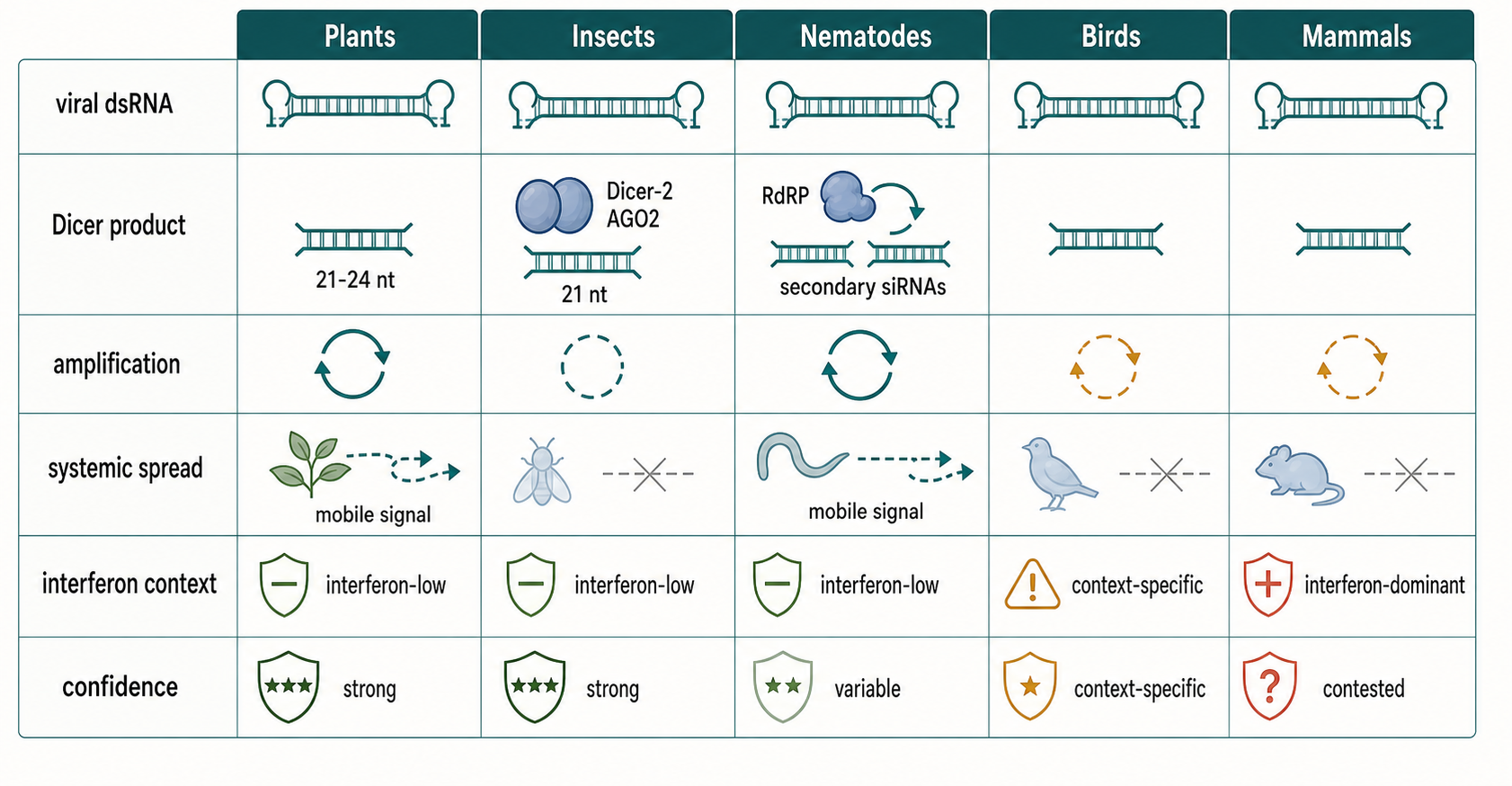
Figure 87.2. Antiviral RNAi diversity across host lineages. Antiviral RNA interference is lineage-specific: plants and many invertebrates use distinct Dicer, Argonaute, amplification, and systemic-spread architectures, whereas evidence for a dominant mammalian antiviral RNAi pathway is context-dependent and must be separated from interferon responses.
Antiviral RNAi in Nematodes, Birds, and Mammals
Nematodes illustrate another defense architecture. Caenorhabditis elegans can use primary small RNAs and RNA-dependent RNA polymerase-generated secondary siRNAs to amplify silencing. This amplification gives RNAi unusual potency and can support systemic or inherited effects. The pathway is not only a laboratory convenience; it overlaps with pathogen defense, transposon regulation, and endogenous gene control. Recent work linking inositol hexaphosphate pathways to RNAi and pathogen defense emphasizes that RNAi potency depends on cell physiology as well as on guide-target complementarity.
Vertebrates are more complicated. Mammalian cells have Dicer and Argonaute proteins, and synthetic siRNAs can silence genes efficiently. Yet mammalian antiviral defense is dominated in many contexts by interferon-centered innate immunity, including RIG-I-like receptors, double-stranded RNA-activated protein kinase, oligoadenylate synthetase/RNase L, Toll-like receptors in endosomes, and many interferon-stimulated genes. Long double-stranded RNA in mammalian somatic cells often activates these pathways before it can function as a clean Dicer substrate. ADAR1 editing of double-stranded RNA can further change the availability and immunological identity of RNA duplexes. Viral proteins can suppress both interferon responses and RNAi-like processes.
The literature therefore contains several positions. One view is that antiviral RNAi is a major ancestral defense that remains prominent in plants, invertebrates, and some vertebrate cells but is often masked in adult mammalian somatic cells by interferon pathways. A stricter view is that canonical antiviral RNAi has limited physiological impact in most mammalian cells under normal infection conditions. A broader evolutionary view treats RNAi, interferon, ADAR editing, and other double-stranded RNA responses as related but differently expanded solutions to the problem of distinguishing self from viral RNA. Recent bird evidence for coronavirus and influenza virus-derived siRNAs and recent mammalian studies reporting limited benefit from enhanced RNAi should be read as context-specific tests of these models, not as final closure.
The practical lesson is that “antiviral RNAi” must name the organism, cell type, virus, developmental state, and immune background. A small-RNA signal in infected cells is not enough. A convincing antiviral claim needs evidence that the small RNAs reduce viral replication, that Dicer and Argonaute or a defined alternative Dicer-dependent pathway are required, and that the effect is separable from interferon and other innate immune pathways.
Box 87.1. Evidence Standard for an Antiviral RNAi Claim
To argue that an infected cell uses antiviral RNAi, a study should connect small-RNA production to a functional antiviral outcome.
- Define the system: organism, cell type, developmental stage, virus, and immune background.
- Show virus-derived small RNAs with pathway-appropriate size, polarity, and genomic distribution rather than a random degradation profile.
- Test Dicer or Dicer-like dependence and show that candidate guides enter an Argonaute effector complex.
- Link guides to targets by target-site complementarity, cleavage mapping, reporter tests, or target-site viral escape and reversion.
- Show biological consequence with viral RNA load, infectious titer, spread, pathology, or host survival.
- Separate RNAi from interferon, PKR, OAS/RNase L, Toll-like receptor, ADAR, and delivery-stress effects when those pathways exist in the system.
The strongest papers combine several of these criteria. A virus-derived siRNA peak is evidence for small-RNA production; it is not, by itself, evidence that RNAi restricts the virus.
Biological Contexts Across Organisms
87.3. Heterochromatin formation and RNA-directed silencing
RNA-Directed Heterochromatin and Transcriptional Silencing
RNAi was first famous as a post-transcriptional silencing pathway, but small RNAs can also guide repression at chromatin. The general logic is that a small RNA bound to an Argonaute-containing complex recognizes a nascent transcript or transcript-associated locus, and this recognition recruits chromatin modifiers. The target is not naked DNA read directly by base pairing. The target is usually an RNA made from the locus or an RNA tethered near the locus. This distinction is essential because it explains how RNA guides can influence chromatin while still using RNA-RNA complementarity.
Box 87.2. How an RNA Guide Can Influence Chromatin Without Reading Naked DNA
Small-RNA-directed chromatin silencing is often misunderstood as direct base pairing between an siRNA and double-stranded genomic DNA. The more useful model is a recruitment chain:
- A repeat, transposon, viral remnant, or target locus is transcribed.
- A pathway generates small RNA guides from related sequence.
- An Argonaute-containing complex uses guide RNA complementarity to recognize a nascent transcript, scaffold transcript, or transcript-associated locus.
- Protein partners recruit chromatin modifiers, methyltransferases, histone methylation machinery, or silencing adaptors.
- The chromatin mark changes transcription, repeat activity, or local genome regulation.
This logic works differently in different organisms. Fission yeast emphasizes repeat transcripts, RNA-dependent RNA polymerase, Dicer, Argonaute, and H3K9 methylation. Plant RNA-directed DNA methylation uses Pol IV, Pol V, 24-nucleotide siRNAs, Argonautes, and de novo cytosine methylation. Mammalian repeat repression can involve RNA, but many mammalian mechanisms rely on KRAB zinc finger proteins, HUSH, piRNA pathways in germ cells, long noncoding RNAs, DNA methylation, and histone modifiers rather than a simple plant-like RdDM circuit.
In fission yeast, small RNAs derived from centromeric repeats help recruit machinery that deposits histone H3 lysine 9 methylation and builds heterochromatin. Transcription of repeats creates RNA substrates, RNA-dependent RNA polymerase helps generate double-stranded RNA, Dicer produces siRNAs, and Argonaute-containing complexes guide repressive chromatin formation. The pathway contains feedback: heterochromatin promotes further recruitment of silencing factors, and transcription of repeats provides the RNA that keeps the system sequence-specific. This is a central example of RNA-guided epigenetic regulation because it links repeat transcription, small-RNA biogenesis, and chromatin modification in one circuit.
In plants, RNA-directed DNA methylation is more elaborate. Specialized RNA polymerases called Pol IV and Pol V participate in producing siRNA precursors and scaffold transcripts. Dicer-like proteins generate 24-nucleotide siRNAs, Argonaute proteins bind those siRNAs, and de novo DNA methyltransferases place cytosine methylation at target loci. RdDM is especially important at transposons, repeats, and some regulatory regions. It intersects with plant development and antiviral defense because transposons, viruses, and repetitive elements all create nucleic-acid patterns that require containment. Plant RdDM should not be reduced to “RNAi turns genes off”; it is a chromatin-targeting system with distinct polymerases, guide sizes, methylation outputs, and locus-specific consequences.
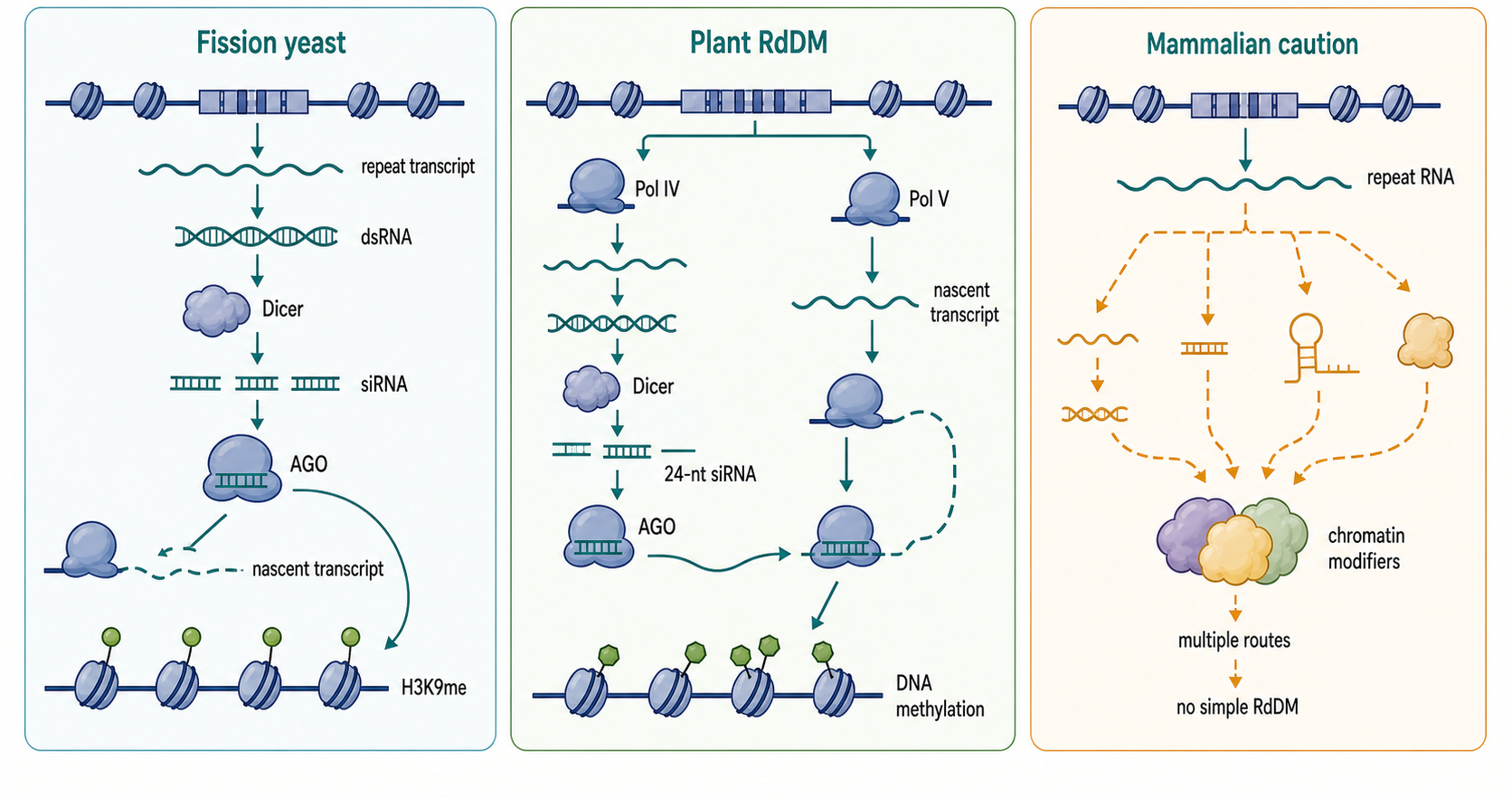
Figure 87.3. RNA-directed chromatin silencing. Small RNAs guide chromatin repression through different lineage-specific systems, including H3K9 methylation in fission yeast and RNA-directed DNA methylation in plants; mammalian RNA-associated repeat repression should not be reduced to the same siRNA mechanism without direct evidence.
Mammalian repetitive-element silencing also involves RNA, but the mechanistic map is different. Mammalian cells use DNA methylation, H3K9 methylation, KRAB zinc finger proteins, piRNA pathways in the germline, HUSH complex activity, long noncoding RNAs, and RNA-binding factors to repress repeats. Some RNA-associated mechanisms resemble RNA-directed silencing in their use of transcript recognition or repeat-derived RNA, but mammalian heterochromatin should not be described as a straightforward siRNA-RdDM system. The current consensus is more cautious: RNA can help recruit, stabilize, or regulate heterochromatin at repetitive elements, but organism-specific protein complexes and developmental contexts determine the pathway.
Endogenous siRNAs and the Boundary with Other Small-RNA Classes
Endogenous siRNAs occupy a boundary zone between miRNAs, piRNAs, and transcriptional silencing RNAs. Like miRNAs, they can load Argonaute proteins and repress transcripts. Unlike most animal miRNAs, siRNAs are often derived from long double-stranded RNA and can pair extensively with targets. Like piRNAs, some siRNAs protect genomes from transposons and repetitive elements, but piRNAs are Dicer-independent and bind PIWI-clade Argonautes. Like chromatin-associated RNAs, siRNAs can affect transcriptional states, but not all chromatin-associated silencing uses siRNAs.
This boundary matters for annotation. A 22-nucleotide small RNA in a sequencing dataset is not automatically an siRNA; its biogenesis, Argonaute partner, genomic source, and target behavior must be tested. A repeat-mapping small RNA may be a degradation fragment, a piRNA, an siRNA, or a product of another pathway. Ambiguous naming is especially common in non-model organisms where Dicer and Argonaute families have expanded or diverged. Comparative studies should therefore report the criteria used to call a small RNA an siRNA.
Technology, Computational, Clinical, and Engineering Links
87.4. Experimental RNAi design, off-targets, and rescue logic
Experimental Knockdown Design
Experimental RNAi uses synthetic siRNAs or expressed shRNAs to reduce gene expression and infer gene function. A typical cultured-cell experiment introduces a chemically synthesized siRNA duplex complementary to a target mRNA. The intended guide strand loads into AGO2, directs target slicing or repression, and lowers target mRNA and protein levels. The investigator then asks whether a cellular phenotype changes. This design is powerful because it is fast, programmable, and compatible with pooled or arrayed screening. It is also vulnerable because the phenotype is downstream of many events besides specific target depletion.
A good siRNA design begins with target selection. The chosen sequence should be unique to the intended transcript or transcript family, avoid common variants when universal knockdown is desired, avoid unintended complementarity to unrelated transcripts, and consider isoforms. If a gene has multiple isoforms, an siRNA in a shared exon tests total gene function, whereas an isoform-specific siRNA tests a narrower hypothesis. The design should also favor correct strand loading and avoid motifs known to activate innate immune receptors. Chemical modifications may reduce immune stimulation and seed-mediated off-target effects, but modifications can also reduce potency if they interfere with Argonaute loading or target cleavage.
shRNA experiments add additional variables. A short hairpin expressed from a vector must be transcribed, processed, exported or localized appropriately, and loaded into Argonaute. Strong shRNA expression can saturate endogenous miRNA machinery and cause toxicity. Stable shRNA selection can enrich cells that adapt to partial target depletion or lose effective hairpin expression. Inducible systems reduce some problems but introduce others, including leakiness and variable induction. Pooled shRNA screens require special attention to library representation, bottlenecks, guide-level statistics, and validation of individual hits.
Table 87.3. Experimental RNAi controls and failure modes. Seed off-targeting, passenger loading, innate immune activation, delivery toxicity, pathway saturation, incomplete depletion, and clonal adaptation have distinct warning signs and controls; unresolved artifacts limit phenotype attribution.
| Failure mode | Mechanism | Warning sign | Recommended control | Interpretation if unresolved |
|---|---|---|---|---|
| Seed off-target | Guide seed pairs with unintended 3′ UTR sites | Seed-enriched transcriptome signature or rescue failure | Low-dose testing, seed-matched controls, multiple nonoverlapping siRNAs | Phenotype remains candidate-level, not gene-specific |
| Wrong-strand loading | Passenger strand loads into AGO and acts as a guide | Passenger reads in AGO IP or opposite-strand seed signature | Strand-bias design, guide-strand modifications, strand-specific loading assay | Target identity and off-target profile are ambiguous |
| Immune activation | Duplex RNA, motifs, or delivery triggers TLR, RIG-I-like, PKR, or interferon pathways | Interferon-stimulated genes, cytokines, stress response, broad antiviral state | Chemically modified low-dose siRNA, innate-marker panel, reagent and sequence controls | Phenotype may reflect innate immune stimulation |
| Delivery toxicity | Transfection reagent, electroporation, or carrier stresses cells | Viability loss, morphology change, or same effect with reagent alone | Reagent-only control, dose titration, orthogonal delivery, viability assay | Knockdown phenotype is confounded by cell stress |
| Pathway saturation | High siRNA or shRNA burden overloads endogenous small-RNA machinery | Toxicity, miRNA disruption, expression-level dependence | Lower dose or weaker promoter, inducible expression, endogenous-miRNA readout | Global RISC perturbation may dominate the phenotype |
| Incomplete knockdown | Residual RNA or long-lived protein preserves function | Weak mRNA or protein depletion and inconsistent phenotype timing | qPCR and immunoblot validation, time course, orthogonal CRISPR or degron test | Negative result does not prove dispensability |
| Clonal adaptation in stable shRNA lines | Selection enriches compensatory clones or reduced hairpin expression | Clone-specific effects, growth skew, or loss of knockdown over passages | Multiple clones, pooled validation, inducible acute knockdown, rescue | Phenotype may reflect adaptation rather than acute target loss |
Off-Targets, Immune Effects, and Rescue Logic
An RNAi off-target is any effect not caused by the intended reduction of the intended target. The most common sequence-driven off-target mechanism in mammalian siRNA experiments is microRNA-like seed repression. Even if an siRNA cannot slice an unintended transcript, its seed region can pair with 3′ untranslated regions and modestly repress many mRNAs. Because gene networks are sensitive, modest repression of several unintended targets can create a phenotype. Off-target slicing can occur when an unintended transcript has extensive complementarity. Wrong-strand loading can create a second set of targets if the passenger strand enters Argonaute.
Non-sequence-specific artifacts are equally important. Double-stranded RNA can activate innate immune pathways, particularly when delivered at high dose or with immunostimulatory motifs. Transfection reagents can stress cells. Knockdown of essential genes can cause secondary transcriptional collapse, making late time points hard to interpret. In pooled screens, differential growth can distort guide abundance. In antiviral experiments, an siRNA can appear to restrict a virus because it stimulates interferon rather than because it slices viral RNA. These artifacts do not make RNAi unreliable; they make control design essential.
The rescue experiment is the central causal test. In a rescue, the investigator expresses a version of the target gene that encodes the same protein but contains silent mutations or an altered untranslated region that prevents recognition by the siRNA. If the phenotype disappears when the RNAi-resistant target is restored, the case for an on-target mechanism becomes much stronger. Rescue is not always simple. The rescue construct must be expressed at near-physiological levels, include relevant isoforms or regulatory regions when necessary, and avoid overexpression artifacts. A rescue that only partially restores function can still be meaningful if target depletion is partial or if expression timing differs from the endogenous gene.
Box 87.3. Rescue Experiment Checklist for RNAi Knockdown
A rescue experiment is strongest when the rescue construct restores the intended target function without reintroducing siRNA sensitivity or creating a new perturbation.
- Change the siRNA recognition sequence without changing the encoded protein, or use an untranslated-region design when the original siRNA targets a UTR.
- Rescue the relevant isoform, domain composition, localization signal, and regulatory context whenever the phenotype depends on them.
- Express the rescue construct near the endogenous expression range; strong overexpression can create a false rescue or a new phenotype.
- Verify the full chain: target mRNA depletion, target protein depletion when measurable, rescue-protein expression, and restoration of the phenotype.
- Include controls such as empty vector, nonrescuing mutant, catalytic-dead mutant when appropriate, and an siRNA that does not target the rescue sequence.
- Interpret partial rescue explicitly. Partial rescue can reflect partial knockdown, incomplete regulatory elements, expression timing, dosage mismatch, or a phenotype with both on-target and off-target components.
Failure to rescue does not automatically disprove the target-gene hypothesis. It may mean the rescue construct is expressed incorrectly, lacks the relevant isoform or regulatory element, appears too late, or perturbs the pathway by overexpression.
Multiple independent siRNAs are another key safeguard. If several siRNAs targeting different regions of the same mRNA produce the same phenotype and reduce target expression, an on-target interpretation becomes more plausible. However, multiple siRNAs can share seed effects or converge on related off-target pathways, so agreement is not absolute proof. Dose-response experiments help because on-target knockdown may occur at lower concentrations than off-target stress. Transcriptome profiling can reveal broad seed signatures or immune activation. Orthogonal perturbations, such as CRISPR knockout, CRISPR interference, degrons, antibodies, or small-molecule inhibitors, provide further confidence when they produce a consistent phenotype through independent mechanisms.
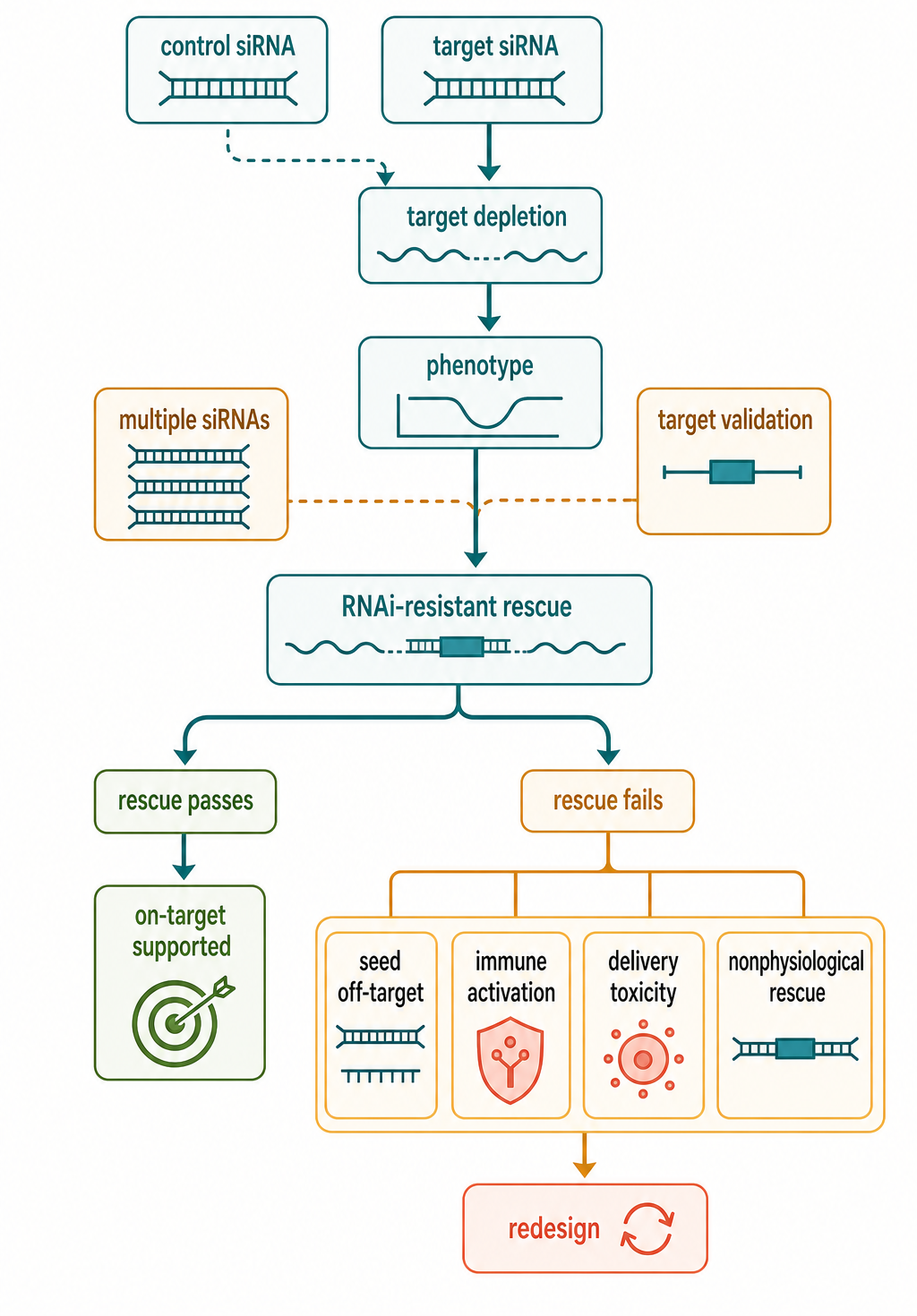
Figure 87.4. Rescue logic for RNAi phenotype interpretation. An RNAi phenotype is most credible when target depletion is verified, independent duplexes agree, and an RNAi-resistant rescue restores the phenotype; discordance redirects interpretation toward seed off-targets, immune activation, or nonphysiological rescue.
87.5. Therapeutic lessons from biological RNAi pathways
Therapeutic siRNA programs exploit the same intracellular principle as experimental knockdown: a guide strand directs an Argonaute complex to a target RNA. The difficult parts are extracellular and physiological. A therapeutic siRNA must survive nucleases, avoid rapid renal clearance when appropriate, reach the right tissue, enter the right cells, escape endosomes, load the intended strand into Argonaute, avoid dangerous immune activation, and silence the target long enough to produce benefit without intolerable toxicity. These challenges explain why clinically successful siRNA drugs are not merely unmodified duplexes.
Natural RNAi pathways teach several lessons. First, strand selection matters because the wrong strand can create off-target pharmacology. Second, guide chemistry matters because small changes in sugar, backbone, or base modifications can alter nuclease resistance, immune sensing, protein binding, and Argonaute compatibility. Third, delivery context controls tissue specificity. GalNAc-conjugated siRNAs work well for hepatocyte targets because the asialoglycoprotein receptor provides an efficient liver uptake route; lipid nanoparticles and other carriers open different tissue possibilities but bring distinct biodistribution and inflammatory profiles. Fourth, biology constrains target choice. A target transcript must be accessible, expressed in the relevant cells, and safely reducible. Complete knockdown is not always desirable.
Antiviral siRNA therapy has special hurdles. Viral genomes mutate, so a single siRNA target can escape unless the target is highly conserved or multiple guides are used. Viral replication can occur in tissues that are hard to deliver to. Timing matters because an acute viral infection may progress faster than a therapy can be delivered and loaded. Innate immune activation can be beneficial, harmful, or confounding depending on disease context. The same concerns apply to agricultural and vector-control uses of RNAi: uptake, stability, species specificity, resistance evolution, environmental exposure, and regulatory assessment are central, not peripheral.
The therapeutic lesson is therefore not that natural RNAi makes all RNA targets easy. The lesson is that cells already contain a programmable silencing engine, and successful medicines must respect both its molecular preferences and the organism-level barriers around it.
Recent Consensus
Several consensus points are now stable. Dicer-generated siRNAs and Argonaute-loaded RISC complexes provide a conserved logic for sequence-directed RNA silencing. Slicing-competent Argonautes cleave highly complementary RNA targets, whereas partial pairing can produce microRNA-like repression and off-target effects. Antiviral RNAi is well established in plants and many insects, with virus-derived siRNAs and viral suppressors providing strong evidence for biological relevance. RNA-directed chromatin silencing is mechanistically clear in fission yeast and plants, although the components and outputs differ. Experimental RNAi remains a valuable functional tool when used with careful design, low doses, multiple guides, validation, and rescue.
The consensus is more qualified in vertebrate antiviral immunity and mammalian heterochromatin. Mammalian cells can perform RNAi, but canonical RNAi is not the dominant antiviral response in many adult somatic contexts where interferon and other double-stranded RNA pathways prevail. Mammalian repeat silencing involves RNA-associated mechanisms, but these are not simply plant RdDM or fission yeast siRNA pathways transplanted into mammals. Therapeutic siRNA success has validated the druggability of RNAi, especially in liver-targeted programs, while also showing that delivery and safety engineering are often the rate-limiting steps.
Open Questions, Controversies, Deprecated Models, and Common Misconceptions
Open questions:
- What determines how widely antiviral RNAi contributes to vertebrate antiviral defense under physiological infection conditions? The answer may differ between embryonic cells, stem cells, differentiated somatic cells, birds, mammals, and immune-compromised backgrounds.
- how RNA-associated chromatin pathways in mammals should be classified. Some mechanisms are genuinely guide-like, whereas others use RNA as a scaffold, decoy, nascent transcript, or regulatory input without an siRNA guide.
- how best to predict off-target effects from sequence and chemical structure. Seed rules are helpful, but cellular RNA accessibility, Argonaute occupancy, RNA-binding proteins, and dose all change outcomes.
Common misconceptions:
- “RNAi is not synonymous with any decrease in RNA abundance after adding double-stranded RNA.” SiRNAs are not automatically specific because they are 21 nucleotides long. A virus-derived small RNA profile does not by itself prove antiviral function. Heterochromatin at a repeat locus does not by itself prove direct RNA-guided DNA recognition. A rescue experiment is stronger than a second siRNA alone, but rescue can mislead if expression is nonphysiological. Therapeutic siRNA approval does not mean intracellular delivery is solved for all tissues.