Chapter 110. RNA in Adaptive Immunity, Inflammation, Autoimmunity, and Immune-Cell Differentiation
Scope Note
This chapter explains how RNA-centered regulation shapes immune-cell identity, inflammatory signaling, antigen-receptor biology, autoimmune disease, and immune-directed technologies. The focus is not only on immune genes that happen to be transcribed, but on RNA as a regulated molecular layer: splicing decisions, untranslated regions, RNA decay, microRNAs, long noncoding RNAs, RNA modifications, RNA surveillance pathways, antigen-receptor transcript processing, and RNA-based therapeutics. Chapter 109 treats interferon-stimulated antiviral RNA pathways and self-nonself discrimination in greater depth; this chapter follows those mechanisms into adaptive immunity, inflammatory disease, cell differentiation, biomarkers, vaccines, and immunotherapy.
Executive Summary
Immune-cell differentiation is a transcriptional process, but it is not only a transcriptional process. T cells, B cells, macrophages, and dendritic cells convert receptor engagement, cytokines, antigen exposure, tissue signals, and metabolic state into RNA-processing programs. These programs determine which isoforms are made, how long transcripts persist, which proteins are translated, and which RNAs are sensed as danger signals. Alternative splicing rewires receptors, signaling proteins, transcription factors, and effector molecules during activation and lineage choice. MicroRNAs dampen or stabilize immune programs by tuning networks of target mRNAs. Long noncoding RNAs participate in chromatin regulation, transcriptional scaffolding, post-transcriptional control, and inflammatory feedback, although many lncRNA claims remain context-dependent and require careful perturbation evidence.
Inflammation adds a second RNA problem: immune cells must distinguish meaningful pathogen- or damage-associated RNA from the enormous background of host RNA. Endosomal Toll-like receptors, cytosolic RNA sensors, RNA-binding proteins such as Ro60-associated systems, RNA modification pathways, and RNA decay pathways contribute to this surveillance. When self RNA is mislocalized, under-modified, bound by autoantibodies, released from dying cells, or packaged into extracellular vesicles, RNA can contribute to autoimmunity and autoinflammation. The strongest disease links arise when RNA species, immune complexes, genetic defects in RNA handling, and cytokine outputs are connected by mechanistic evidence rather than by expression correlation alone.
Adaptive immunity also contains unusually direct links between RNA processing and receptor diversification. Immunoglobulin heavy-chain transcripts use alternative splicing and alternative polyadenylation to switch between membrane-bound B cell receptors and secreted antibody forms. Activation-induced cytidine deaminase targets DNA during somatic hypermutation and class-switch recombination, but the targeting logic is embedded in transcription, RNA-processing environments, R-loop formation, and repair coupling. T cell receptor diversity arises primarily from DNA recombination, yet mature T cell function depends strongly on regulated transcript isoforms and noncoding RNA networks.
RNA-based interventions now deliberately exploit these immune principles. Modified mRNA vaccines and self-amplifying or circular RNA platforms must balance antigen expression, innate sensing, delivery, reactogenicity, and adaptive immune quality. RNA medicines can encode cytokines, tumor antigens, antibodies, genome editors, or immunomodulators; they can also silence immune targets. RNA biomarkers from blood, tissue, extracellular vesicles, single-cell profiles, BCR/TCR repertoires, and inflammatory signatures can stratify disease and therapy response, but biomarkers require validation across cell composition, sampling time, ancestry, treatment, and assay platform.
Concept Inventory
- Adaptive immune RNA regulation: post-transcriptional and RNA-mediated control in lymphocytes after antigen recognition and costimulation. It includes pre-mRNA splicing, transcript stability, translation, localization, RNA modification, and noncoding RNA activity. In this chapter, “RNA regulation” does not mean every change in RNA abundance; it means a process in which RNA biogenesis, processing, sensing, or function changes immune behavior.
- Inflammatory RNA surveillance: cellular systems that detect, remodel, sequester, modify, or degrade RNA species associated with infection, cellular stress, tissue damage, or mislocalized self material. Surveillance can be protective, as in antiviral sensing, or pathogenic, as in self-RNA-driven autoimmunity.
- Immune-cell differentiation: the acquisition of a stable or semi-stable functional state, such as naive, effector, memory, plasma cell, regulatory T cell, inflammatory macrophage, tolerogenic dendritic cell, or tissue-resident macrophage. Differentiation is often described by transcription factors, but RNA-processing factors and noncoding RNAs determine how those transcriptional programs are implemented.
- Antigen receptor diversification: the generation and refinement of diverse B cell and T cell receptors. The core diversification reactions are DNA-based V(D)J recombination, somatic hypermutation, and class-switch recombination, but RNA processing controls receptor transcript forms, secreted versus membrane antibody output, repertoire measurement, and some targeting environments.
What to Know Before Reading This Chapter
The reader should know that T cells recognize antigen mainly through T cell receptors, B cells recognize antigen through B cell receptors and can become antibody-secreting plasma cells, macrophages and dendritic cells integrate innate sensing with antigen presentation, and cytokines are soluble proteins that coordinate immune-cell states. The reader should also know the central RNA-processing steps: pre-mRNA splicing removes introns and joins exons; polyadenylation defines many mRNA 3′ ends; microRNAs guide Argonaute proteins to partially complementary target RNAs; long noncoding RNAs are transcripts longer than about 200 nucleotides that are not primarily translated; and RNA modifications such as N6-methyladenosine can change RNA fate.
A useful running example is a dendritic cell that encounters viral RNA in tissue. Receptors and signaling pathways induce cytokine transcription, but the magnitude and duration of the response depend on mRNA stability, splicing of signaling adaptors, microRNA feedback, RNA modification, translation, and RNA decay. The dendritic cell then shapes T cell differentiation through antigen presentation and cytokines. A second running example is a B cell that changes from expressing a membrane immunoglobulin receptor to secreting antibody. That transition requires differentiation signals and transcriptional changes, but it also depends on alternative RNA processing of immunoglobulin heavy-chain transcripts.
110.1. RNA regulation in T cells, B cells, macrophages, and dendritic cells
Immune cells use RNA regulation because immune decisions must be fast, reversible, and context-specific. Transcriptional induction alone is too slow and too coarse to explain the first minutes of receptor signaling, the graded production of cytokines, the transition from proliferation to effector function, or the resolution of inflammation. Pre-existing mRNAs can be translated rapidly; unstable cytokine mRNAs can be degraded when danger signals disappear; alternative splicing can alter receptor and signaling isoforms without requiring new genes; and noncoding RNAs can tune many targets at once. These mechanisms are especially important because immune cells move between tissues and encounter changing combinations of antigen, cytokines, microbial products, metabolites, and cell-cell contacts.
In T cells, antigen recognition through the T cell receptor is coupled to costimulation and cytokine exposure. The resulting program includes induction of interleukins, chemokine receptors, cytotoxic effector molecules, metabolic enzymes, and lineage-defining transcription factors. RNA processing helps decide whether an activated T cell becomes a short-lived effector cell, a memory cell, a helper subset, or a regulatory T cell. Alternative splicing affects receptors and signaling proteins; mRNA decay controls cytokine pulse duration; miRNAs such as the miR-17-92 family, miR-155, miR-146a, and lineage-associated miRNAs adjust thresholds for activation and differentiation; and lncRNAs participate in transcriptional and chromatin programs in ways that are often cell-state specific. Reviews of lncRNA biology in T lymphocytes emphasize that some lncRNAs have convincing mechanistic evidence, whereas many others remain expression markers until perturbation, rescue, and target definition are performed.
B cells add a distinctive RNA layer because receptor expression and antibody secretion require processing of immunoglobulin transcripts. Naive B cells express membrane-bound immunoglobulin as part of the B cell receptor. After antigen stimulation, T cell help, and germinal-center selection, B cells may proliferate, undergo somatic hypermutation, switch antibody class, differentiate into memory B cells, or become plasma cells. These transitions involve changes in transcription factors such as PAX5, BCL6, IRF4, and PRDM1, but they also require altered splicing, polyadenylation, RNA stability, and translation. The same immunoglobulin heavy-chain transcription unit can yield membrane-bound or secreted forms depending on splice and cleavage choices, making B cells a clear example in which RNA processing is not a downstream detail but a core part of immune function.
Macrophages and dendritic cells are often grouped as innate immune cells, but they are also essential for adaptive immunity because they present antigen, produce polarizing cytokines, clear debris, and shape tissue inflammation. Macrophage states such as inflammatory, wound-healing, lipid-associated, tumor-associated, and tissue-resident programs cannot be reduced to a single M1/M2 axis. RNA regulation contributes to this diversity by controlling cytokine mRNAs, inflammasome-related transcripts, metabolic enzymes, antigen-presentation components, and secreted vesicle cargo. Tumor-associated macrophages and tumor cells exchange extracellular vesicles containing noncoding RNAs, which can alter immune suppression, angiogenesis, and therapy response in the tumor microenvironment, although vesicle studies require strong controls for vesicle purity, cell source, uptake, and dose.
Dendritic cells must convert RNA sensing into antigen presentation without destroying tissue tolerance. Plasmacytoid dendritic cells are specialized for type I interferon production, whereas conventional dendritic cell subsets differ in antigen uptake, cross-presentation, migration, and T cell priming. Endosomal RNA recognition, cytosolic RNA sensing, and post-transcriptional cytokine regulation determine how dendritic cells instruct T helper differentiation, cytotoxic T cell priming, and tolerance. RNA modifications, including N6-methyladenosine, have been linked to dendritic-cell activation, antigen presentation, and inflammatory output, but effects depend on which writer, reader, eraser, transcript, and cell state are tested.
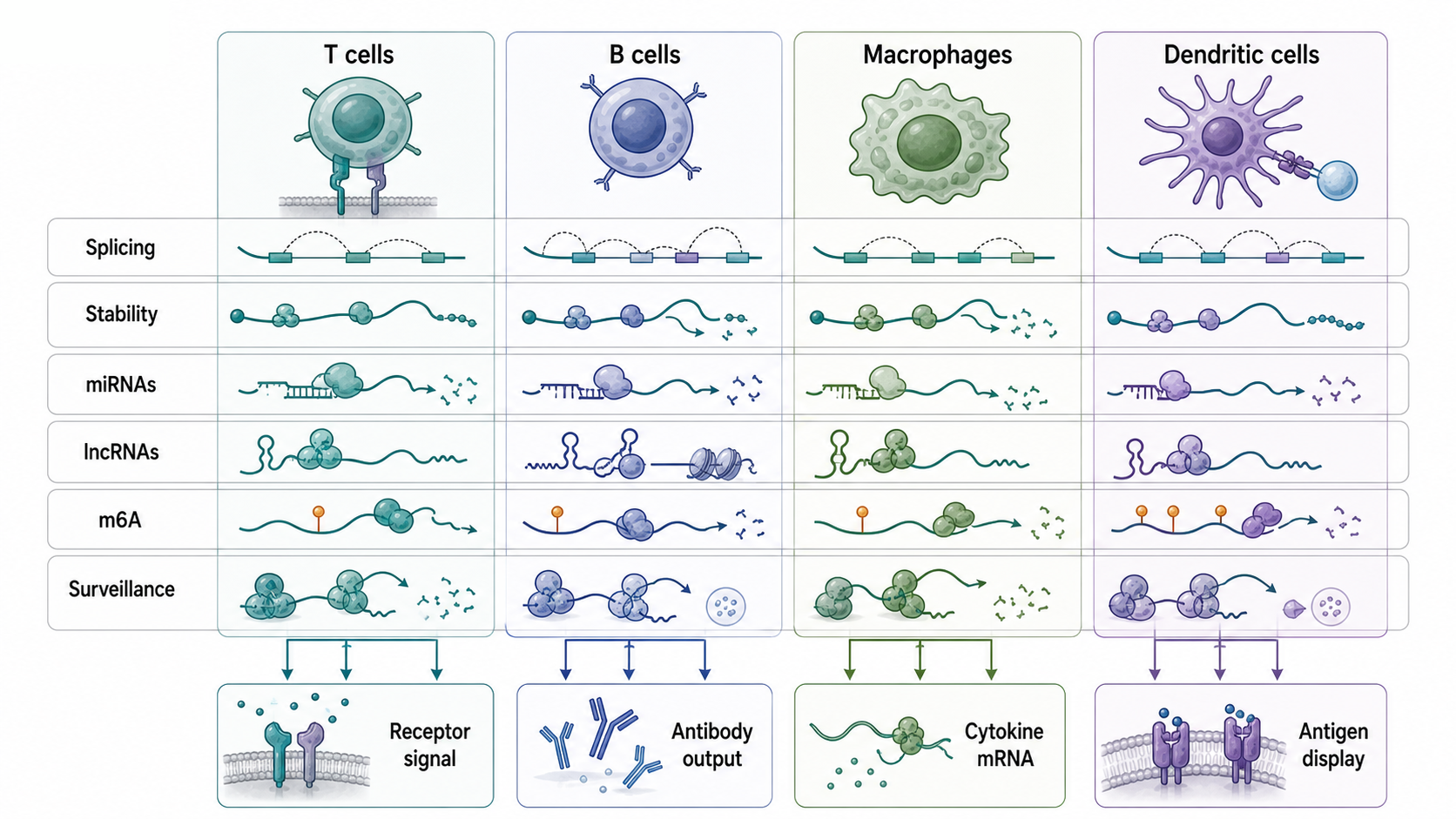
Figure 110.1. RNA regulatory layers across immune-cell classes. T cells, B cells, macrophages, and dendritic cells use common RNA-regulatory layers, including splicing, stability control, microRNAs, long noncoding RNAs, modification, and surveillance, but the regulated transcripts and immune consequences remain cell- and state-specific.
The main evidence for immune-cell RNA regulation comes from combining perturbation with transcript-resolved assays. Bulk RNA-seq shows abundance changes but often cannot separate cell composition from regulation within a cell type. Single-cell RNA-seq resolves cell states but has limited isoform sensitivity and can miss low-abundance regulators. Splicing-sensitive long-read or targeted assays identify isoforms but need validation at protein and function levels. Small-RNA sequencing, Argonaute CLIP, and reporter assays support miRNA target claims. RNA modification mapping and genetic perturbation of modification enzymes can connect marks to phenotype, but antibody-based mapping artifacts and indirect effects remain important caveats. For immune differentiation, a strong claim usually requires a defined cell population, a controlled stimulus, transcript-level measurement, perturbation of the RNA regulator, and an immune functional readout such as cytokine production, antigen presentation, proliferation, cytotoxicity, antibody secretion, or disease severity.
110.2. Alternative splicing, miRNAs, lncRNAs, and immune differentiation
Alternative splicing allows one gene to produce multiple RNA isoforms by including or excluding exons, selecting alternative splice sites, or retaining introns. In immune cells, splicing can change extracellular domains, signaling motifs, localization sequences, stability determinants, and regulatory regions. This matters because immune proteins often work as modular receptors and signaling adaptors. A splice change that removes an inhibitory domain, creates a soluble receptor, changes a cytoplasmic tail, or alters a 3′ untranslated region can change immune behavior even when total gene expression appears unchanged. Splicing is therefore a differentiation mechanism, not merely an annotation complication.
T cell activation is accompanied by widespread splicing changes. Some changes reflect proliferation and metabolic reprogramming; others alter signaling and effector pathways. The best-supported immune splicing claims connect a specific isoform to protein output and function. A common failure mode is to observe a percent-spliced-in change by RNA-seq and infer immune function without measuring the protein isoform or testing the splice event. The same caution applies to cancer-immunity studies, where alternative splicing can generate tumor neoantigens, alter checkpoint molecules, or affect immune infiltration, but not every tumor-associated isoform is immunologically presented or functionally selected.
miRNAs are short regulatory RNAs loaded into Argonaute-containing silencing complexes. In animals, miRNAs usually bind partially complementary sites in target mRNAs and reduce protein output through translational repression and mRNA decay. In immune cells, miRNAs often act as threshold setters. miR-155 is induced in many inflammatory and lymphocyte activation contexts and can promote immune activation while also creating disease risk when dysregulated. miR-146a participates in negative feedback on innate signaling pathways. miR-17-92 supports lymphocyte proliferation and differentiation in selected contexts. These examples show a general principle: a miRNA rarely controls a single linear pathway; it shapes a network by modestly changing many targets. Strong miRNA evidence therefore combines expression timing, target-site validation, loss- and gain-of-function, rescue of relevant targets, and cell-state-specific phenotypes.
lncRNAs are more heterogeneous than miRNAs. A lncRNA can act near its site of transcription by influencing chromatin, enhancer activity, transcriptional interference, or local RNA processing. A lncRNA can also act elsewhere as a scaffold, decoy, guide, or regulator of RNA-binding proteins, although such mechanistic labels should be used cautiously. Immune lncRNAs have been reported in T cells, B cells, macrophages, dendritic cells, sepsis, cancer, and autoimmune disease. The central boundary case is that lncRNA expression is often exquisitely cell-state specific, making lncRNAs useful markers even when their causal function is uncertain. For this textbook, an immune lncRNA is treated as mechanistic only when perturbation changes an immune phenotype and the result is separated from effects of the DNA locus, promoter, neighboring genes, and general transcriptional disruption.
Box 110.1. From RNA Expression to Immune Mechanism
Render-ready box content
An immune RNA claim moves from marker to mechanism only when the study links four levels. First, define the cell state and stimulus: naive CD4 T cell, Th17-polarizing culture, germinal-center B cell, or inflammatory macrophage are not interchangeable. Second, identify the RNA event with an assay suited to that event, such as isoform-resolved sequencing for splicing, Argonaute binding plus target-site evidence for miRNA action, or locus-aware perturbation for lncRNAs. Third, perturb the specific RNA, isoform, target site, or processing factor rather than relying on correlated expression. Fourth, measure an immune function: cytokine output, antigen presentation, proliferation, cytotoxicity, antibody secretion, migration, or disease severity. A heat-map cluster can nominate a regulator, but the causal claim begins when RNA change, molecular target, and immune phenotype survive perturbation and rescue.
Table 110.1. RNA regulator classes in immune differentiation. Alternative splicing, microRNAs, long noncoding RNAs, RNA modifications, and RNA-binding proteins regulate immune differentiation through different molecular actions; cell-state association is weaker than perturbation and rescue evidence.
| Regulator class | Typical molecular action | Immune-cell examples | Strongest evidence type | Common overinterpretation |
|---|---|---|---|---|
| Alternative splicing | Changes exon use, splice sites, intron retention, protein domains, localization signals, or 3′ UTRs. | Activated T cells with signaling isoform shifts; tumor isoforms that may create candidate neoantigens; receptor and adaptor isoforms in lymphocyte differentiation. | Isoform-resolved RNA assay plus protein or reporter validation and immune functional perturbation. | Inferring immune function from percent-spliced-in changes without protein output or phenotype. |
| Alternative polyadenylation | Selects cleavage and poly(A) sites to change 3′ ends, membrane exons, coding potential, or transcript stability. | Immunoglobulin heavy-chain processing switches B cells from membrane BCR expression toward secreted antibody output during plasma-cell differentiation. | Transcript-end mapping, perturbation of processing factors or cis elements, and antibody secretion or receptor-expression readout. | Describing antibody class switching or membrane-to-secreted output as ordinary RNA splicing alone. |
| miRNAs | Argonaute-guided repression tunes many target mRNAs through modest effects on translation and decay. | miR-155 in inflammatory and lymphocyte activation programs; miR-146a in feedback restraint; miR-17-92 in selected lymphocyte proliferation contexts. | Time-resolved expression, target-site validation, loss and gain of function, rescue, and cell-state-specific immune phenotypes. | Treating one miRNA as a single-target on/off switch for a whole immune pathway. |
| lncRNAs | Regulate chromatin, transcription, RNA-binding proteins, or post-transcriptional programs, often in cell-state-specific contexts. | T cell lncRNAs linked to activation programs; macrophage and dendritic-cell lncRNAs reported in sepsis, cancer, and autoimmune states. | Perturbation and rescue that separate RNA transcript function from promoter, enhancer, locus, and neighboring-gene effects. | Treating differential lncRNA expression as proof of causal immune regulation. |
| RNA modifications | Alter RNA stability, translation, immune sensing, or reader-protein recruitment depending on transcript and cell state. | m6A-linked effects on dendritic-cell activation, macrophage inflammatory output, T cell homeostasis, and sepsis-associated phenotypes. | Modification mapping plus writer, reader, or eraser perturbation tied to a specific transcript and immune readout. | Assuming global enzyme knockout phenotypes identify the modified transcript that drives immunity. |
| RNA-binding proteins and decay factors | Bind AU-rich elements, splice regions, or structured RNAs to regulate cytokine mRNA decay, localization, splicing, and translation. | AU-rich cytokine mRNAs in macrophages and T cells; inflammatory shutdown or persistence controlled by stability factors such as TTP-like and HuR-like activities. | CLIP or binding evidence, transcript half-life measurement, regulator perturbation, and cytokine or disease-severity phenotype. | Calling any RBP-bound transcript a regulated functional target without decay, translation, or phenotype evidence. |
RNA modification adds another differentiation layer. N6-methyladenosine, commonly abbreviated m6A, is installed by writer complexes, interpreted by reader proteins, and removed by demethylases in some contexts. In immune cells, m6A-linked regulation has been associated with mRNA stability, translation, dendritic-cell maturation, macrophage inflammatory responses, T cell homeostasis, and sepsis biology. The mechanistic difficulty is that changing a writer or reader protein can affect many transcripts and many cell states. A precise claim should specify the modified transcript, the mapping method, the reader or decay pathway, and the functional immune output.
Immune differentiation also depends on RNA-binding proteins. Proteins that bind AU-rich elements, introns, splice sites, or structured RNA elements regulate cytokine mRNA decay, transcript localization, and translation. For example, inflammatory cytokine mRNAs often contain AU-rich elements in their 3′ untranslated regions, allowing rapid degradation or stabilization depending on signaling. This architecture lets a macrophage or T cell produce a burst of cytokine after stimulation and then shut the response down. Failure to resolve the response can produce chronic inflammation; premature decay can weaken host defense.
The evidence hierarchy for RNA-mediated differentiation is stricter than a heat map of immune-cell expression. The strongest studies start with a defined differentiation transition, such as naive CD4 T cell to Th17 cell, germinal-center B cell to plasma cell, monocyte to inflammatory macrophage, or precursor to dendritic-cell subset. They then identify an RNA-processing change, perturb the responsible RNA regulator or isoform, and measure lineage markers plus function. Single-cell multi-omics can place the event in a developmental trajectory, but trajectory inference alone does not prove causality. Rescue experiments, allele-specific edits, splice-switching oligonucleotides, and transcript-specific reporters are useful because they can separate RNA mechanism from broad developmental disruption.
110.3. RNA surveillance in inflammation and autoimmunity
Inflammation depends on sensing molecules that indicate infection, damage, or cellular stress. RNA is a powerful signal because many pathogens produce RNA forms or RNA locations that host cells restrict, including double-stranded RNA, uncapped or improperly capped RNA, 5′ triphosphate RNA, viral replication intermediates, and unusual RNA-protein complexes. At the same time, host cells contain abundant mRNA, rRNA, tRNA, small RNAs, repeat-derived transcripts, mitochondrial RNA, and noncoding RNAs. RNA surveillance must therefore combine molecular features, subcellular localization, modification status, binding proteins, and degradation pathways. The immune system does not ask whether an RNA is foreign in the abstract; it evaluates whether an RNA appears in the wrong compartment, structure, modification state, or complex.
Endosomal Toll-like receptors detect RNA taken up from outside the cytosol, especially in immune cells specialized for nucleic-acid sensing. TLR7 and TLR8 recognize single-stranded RNA features and are important in antiviral defense, vaccine adjuvanticity, and autoimmunity. Cytosolic RNA sensors, including RIG-I-like receptors, respond to RNA structures and termini associated with viral replication or mislocalized endogenous RNA. Other RNA-binding proteins and restriction systems remodel or degrade RNA before sensors are activated. The evolutionary review literature emphasizes that RNA surveillance systems differ across animal lineages, so human and mouse immune phenotypes cannot always be mapped one-to-one.
Autoimmunity emerges when self material is repeatedly presented as a danger signal in a context that supports adaptive immune activation. RNA can contribute through several routes. Self RNA can form immune complexes with autoantibodies and enter endosomes, stimulating RNA-sensing Toll-like receptors. Defects in nucleases, RNA editing, RNA modification, or RNA-binding proteins can increase immunostimulatory self RNA. Cell death can release RNA-protein complexes from nuclei, cytosol, or organelles. Microbial translocation can introduce RNA-containing material that cross-reacts with or amplifies anti-RNA immune responses. Reviews of RNA sensing at the intersection of autoimmunity and autoinflammation treat these mechanisms as convergent rather than mutually exclusive.
Box 110.2. When Self RNA Becomes an Inflammatory Ligand
Render-ready box content
Self RNA becomes inflammatory when at least three conditions align: an accessible route, a sensor-compatible molecular feature, and a permissive immune context. A host RNA trapped inside a normal RNP and cleared after cell turnover is usually tolerated. The same or similar RNA may become stimulatory when packaged in immune complexes, protected from nucleases, released during cell death, delivered to endosomes, under-modified, edited incorrectly, unusually structured, or carried by vesicles that reach dendritic cells or B cells. Evidence should therefore show more than RNA abundance. Ask whether the RNA species was characterized, whether RNase treatment reduces activity, whether uptake route and compartment were tested, whether TLR7, TLR8, RIG-I-like receptors, or other candidate sensors are required, and whether the cytokine or autoantibody phenotype occurs in the relevant cell type. Without that chain, an interferon signature remains compatible with many non-RNA explanations.
Systemic lupus erythematosus illustrates the danger of overgeneralization and the usefulness of mechanistic RNA thinking. Lupus is associated with autoantibodies to nucleic-acid-associated complexes, type I interferon signatures, immune-complex deposition, and tissue inflammation. RNA-containing immune complexes can help activate plasmacytoid dendritic cells and B cells, but lupus is not simply “caused by RNA.” Genetic background, B cell tolerance, T cell help, complement, nucleases, sex-biased immune regulation, tissue injury, and environmental triggers all influence disease. Primary work showing that viral 5′ triphosphate RNA can aggravate lupus nephritis in mice supports the principle that immunostimulatory RNA can amplify disease, but it does not mean every RNA species has the same pathogenic role.
Ro60-associated biology provides a second example. Ro60 is an RNA-binding autoantigen associated with rheumatic autoimmune diseases and with quality-control functions for misfolded or damaged RNAs. Ro60-related systems connect RNA processing, RNA-protein complex formation, and autoimmune recognition. The teaching point is that autoantigens are often not random proteins; they may be molecules from RNA-processing, ribonucleoprotein, chromatin, or stress-response systems that become visible to the immune system during cell death, infection, tissue injury, or impaired clearance.
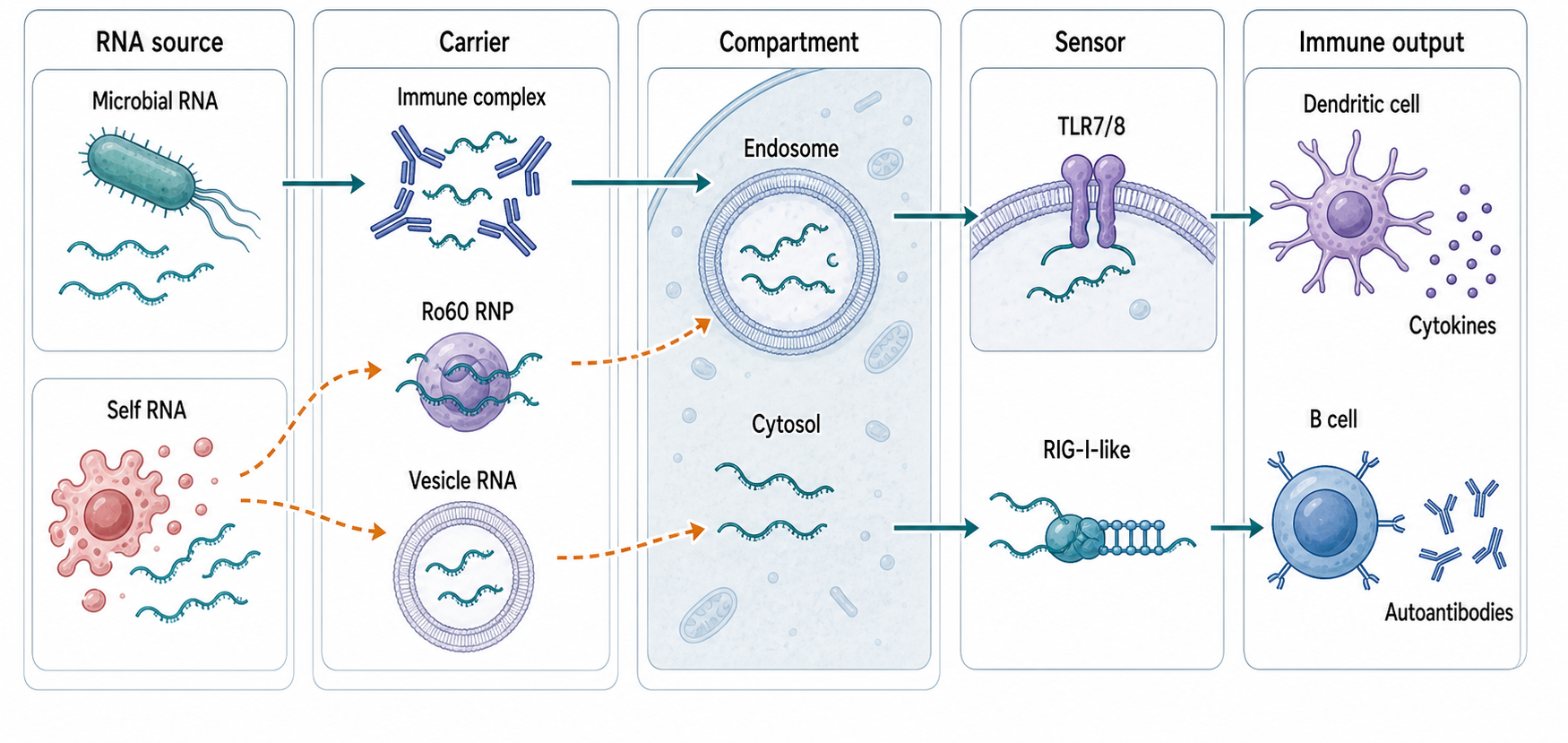
Figure 110.2. Routes from self or microbial RNA to inflammation and autoimmunity. Self or microbial RNA becomes inflammatory through the combination of source, carrier, compartment, receptor, and responding cell; immune complexes, dying-cell debris, and Ro60-associated RNPs can amplify dendritic-cell and B-cell feedback loops.
Recent primary studies expand the surveillance map. Proton-sensitive TRIM25-linked recognition of exogenous RNA has been proposed as a mechanism connecting endosomal or vesicular context to RNA sensing. Chromosome missegregation can induce RNA-sensing pathways that augment antitumor immunity, connecting genome instability, mislocalized nucleic acids, and immune activation. Gut pathobiont translocation has been linked to Th17 and IgG3 anti-RNA-directed autoimmunity in mouse and human settings. These studies are important because they move beyond static disease-associated expression profiles toward mechanisms that connect RNA source, cellular route, immune sensor, cell type, cytokine output, and adaptive response. Each remains context-dependent and should not be flattened into a universal RNA-autoimmunity model.
RNA surveillance evidence can be misleading when assay output is treated as direct sensing. Increased interferon-stimulated genes may reflect RNA sensing, DNA sensing, cytokine exposure, cell stress, or altered cell composition. Detection of extracellular RNA does not prove that the RNA entered the relevant immune compartment. Autoantibody binding to an RNA-protein complex does not prove that RNA is the stimulatory ligand unless RNase sensitivity, receptor dependence, and uptake route are tested. Conversely, negative results can occur because RNA was degraded during sample preparation or because the relevant RNA modification, length, structure, or carrier protein was lost. Careful inflammation studies therefore pair molecular characterization of the RNA with receptor perturbation, compartment analysis, and functional immune readouts.
110.4. Antigen receptor diversification and RNA-processing links
Antigen receptors are diversified mainly through DNA-level mechanisms, but RNA processing is inseparable from their expression, measurement, and some targeting environments. In developing lymphocytes, V(D)J recombination assembles immunoglobulin and T cell receptor genes. In activated B cells, somatic hypermutation introduces point mutations into immunoglobulin variable regions, and class-switch recombination changes the constant region used by the antibody. These reactions are not RNA splicing reactions. However, transcription through receptor loci, RNA-processing choices, R-loops, splicing of receptor transcripts, and transcript capture by sequencing all shape how receptor diversity becomes immune function.
The immunoglobulin heavy-chain locus is the clearest RNA-processing example. A mature B cell can produce membrane-bound immunoglobulin that anchors the B cell receptor or secreted immunoglobulin that functions as antibody. The difference depends on alternative processing of the same transcription unit: use of membrane exons and splicing supports receptor expression, whereas alternative cleavage and polyadenylation upstream of membrane exons supports secreted antibody production. During plasma-cell differentiation, this processing shift is coupled to high immunoglobulin transcription, unfolded-protein response, and secretory capacity. A change in RNA processing therefore alters the physical form of the antigen receptor output without changing antigen specificity.
Somatic hypermutation and class-switch recombination require activation-induced cytidine deaminase, abbreviated AID. AID acts on DNA cytidines, but its access to immunoglobulin loci is linked to transcription, single-stranded DNA exposure, RNA polymerase behavior, RNA-processing factors, and R-loop-prone switch regions. This is a boundary case that should be taught carefully: AID is not an RNA-editing enzyme in this context, and class switching is not RNA splicing. RNA-linked processes help create and regulate the substrate environment for DNA diversification and help process the resulting transcripts.
T cell receptor diversification is also DNA-based, but T cell receptor transcript analysis has become a major RNA-derived readout. Single-cell TCR sequencing links receptor clonotype to transcriptome, allowing researchers to ask whether a clone is naive, exhausted, cytotoxic, regulatory, tissue-resident, or proliferating. The same logic applies to single-cell BCR sequencing, which can reconstruct antigen-specific B cell dynamics after infection or vaccination. These methods are powerful because they connect clonal history to cell state, but they also have pitfalls. PCR bias, primer coverage, dropout, doublets, sequencing depth, and transcript abundance can distort repertoire estimates. A clonotype enriched in a tissue is not automatically antigen-specific unless paired with antigen binding, expansion logic, or functional validation.
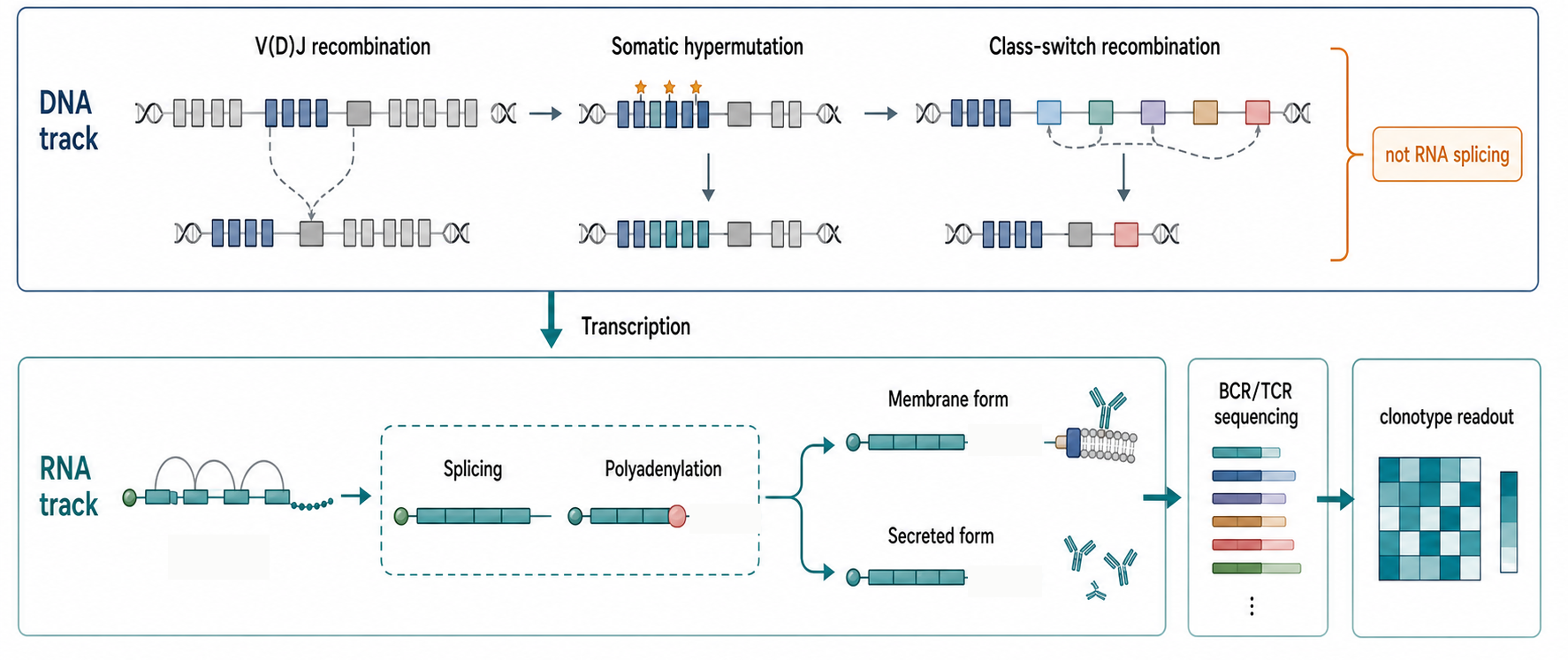
Figure 110.3. DNA diversification and RNA-processing links at antigen receptor loci. V(D)J recombination, somatic hypermutation, and class-switch recombination are DNA-level diversification reactions, whereas splicing, polyadenylation, and repertoire sequencing act on the resulting transcripts and do not generate the underlying DNA diversity.
RNA processing also affects immune repertoires indirectly through cell survival and selection. Splicing factors, nonsense-mediated decay, mRNA stability pathways, and translation control influence whether developing lymphocytes survive checkpoints, whether activated clones proliferate, and whether plasma cells sustain antibody secretion. Aberrant splicing or RNA surveillance can expose neoantigens in cancer, change immune checkpoint expression, or alter antigen-presentation pathways. The evidence must separate receptor diversification itself from downstream selection of clones. A change in repertoire after perturbing an RNA-processing factor may reflect altered V(D)J recombination, altered survival, altered proliferation, altered antigen presentation, or altered measurement efficiency.
Methodologically, antigen receptor studies sit at the intersection of RNA biology and immunology. BCR and TCR sequencing often begins from RNA because receptor transcripts are abundant and reveal productive receptor expression. Full-length transcript approaches can capture paired heavy-light or alpha-beta chains, while short-read approaches often focus on complementarity-determining region 3. Transcript abundance can sometimes approximate clonal expansion, but it is not the same as cell number. Integration with surface protein, antigen bait, chromatin accessibility, cytokine secretion, and spatial location turns receptor RNA data into stronger biological inference.
110.5. Immunotherapies, vaccines, and biomarkers
RNA-based immunotherapy uses the immune system’s sensitivity to RNA as both an opportunity and a constraint. A therapeutic RNA can encode an antigen, cytokine, antibody, receptor, genome editor, or immunomodulatory protein. An RNA can also silence a target by RNA interference or alter splicing with an oligonucleotide. For immune applications, the RNA molecule must reach the correct cells, persist long enough to produce the desired effect, avoid excessive innate sensing, and generate the intended adaptive response. Delivery vehicle, RNA sequence, nucleoside modification, purity, cap, poly(A) tail, untranslated regions, dose, route, and tissue context all influence outcome.
mRNA vaccines are the most visible example. In a typical mRNA vaccine, an in vitro transcribed RNA encodes an antigen and is delivered by a lipid nanoparticle or another formulation. Host cells translate the antigen, antigen-presenting cells present peptides to T cells, B cells receive help, and antibody and memory responses develop. The RNA and delivery system also stimulate innate immunity, which can improve adaptive priming but can cause reactogenicity or suppress translation if excessive. Nucleoside modification can reduce recognition by selected RNA sensors and improve translation, as shown by landmark work on modified RNA and Toll-like receptor recognition. Current vaccine reviews emphasize design, delivery, infectious-disease applications, and expanding platforms such as self-amplifying RNA and circular RNA.
Table 110.2. RNA immune technologies and design constraints. RNA vaccines, self-amplifying and circular RNAs, cytokine RNAs, silencing, splice modulation, and biomarkers differ in intended immune mechanism, design, delivery, and safety boundaries; platform labels do not determine biological outcome.
| Platform | Intended immune mechanism | RNA design variables | Delivery variables | Major evidence or safety caveat |
|---|---|---|---|---|
| Modified mRNA vaccine | Encode antigen for host-cell translation, antigen presentation, T cell help, antibody production, and memory formation. | Antigen sequence, codon usage, cap quality, UTRs, poly(A) tail, nucleoside modification, purity, and dose. | Lipid nanoparticle or other formulation; route determines draining tissue, innate activation, and antigen-presenting-cell exposure. | Innate sensing supports priming but excessive sensing can reduce translation or increase reactogenicity. |
| Self-amplifying RNA vaccine | Encode antigen plus replicase activity to extend antigen expression from lower RNA input. | Replicase backbone, antigen cassette, untranslated regions, innate-sensing tuning, and replication-competent RNA integrity. | LNP, polymer, viral-replicon-derived, or other delivery systems matched to expression duration and tissue targeting. | Longer expression may improve dose sparing but complicates reactogenicity, control of duration, and platform comparability. |
| Circular RNA vaccine | Use covalently closed RNA to prolong expression and resist exonuclease decay. | Circularization junction, internal ribosome entry or cap-independent translation element, antigen ORF, purification, and innate-sensing profile. | Usually formulated for cellular uptake with LNP-like or polymeric carriers. | Promising stability and durability claims require direct comparison with matched linear RNA and careful impurity control. |
| Personalized cancer RNA vaccine | Encode tumor neoantigens or shared tumor antigens to prime or boost antitumor T cell responses. | Neoantigen selection, epitope order, HLA context, antigen length, UTRs, modification state, and combination with checkpoint blockade. | LNP, dendritic-cell loading, intranodal, intradermal, or systemic approaches depending on trial design. | Predicted neoantigens are not necessarily processed, presented, immunogenic, or clinically protective. |
| Cytokine-encoding RNA | Drive transient local expression of immunomodulators such as IL-12 to reshape antitumor or inflammatory responses. | Cytokine ORF, expression duration, modified nucleosides, regulatory UTRs, and dose ceiling. | Local injection, tumor-targeted particles, extracellular vesicles, or oncolytic formulations. | Systemic cytokine exposure can be toxic, so localization and expression kinetics are central safety constraints. |
| RNA silencing or splice modulation | Reduce immune-pathway transcripts or redirect splicing to dampen disease programs or modify cell therapy products. | siRNA guide sequence, off-target profile, chemical modification, antisense chemistry, splice-site target, and knockdown duration. | Cell-type targeting by conjugates, LNPs, ex vivo electroporation, or local delivery. | Target engagement does not prove clinical immune benefit without pathway, cell-state, and safety readouts. |
| Immune RNA biomarkers | Classify immune activity, disease subtype, prognosis, therapy response, or clonal expansion. | Transcript signature, miRNA, lncRNA, circular RNA, extracellular-vesicle RNA, or BCR/TCR repertoire feature. | Blood, tissue, single-cell, spatial, extracellular-vesicle, or repertoire-sequencing assay with locked preprocessing. | RNA abundance can reflect cell composition, sampling time, treatment, batch effects, or tissue injury rather than mechanism. |
Cancer immunotherapy adds additional RNA strategies. Personalized cancer vaccines can encode patient-specific neoantigens identified by tumor sequencing. RNA can encode cytokines such as interleukin-12, but cytokine expression must be controlled because systemic exposure can be toxic. Preclinical studies have delivered IL-12 mRNA or self-replicating IL-12 RNA using extracellular vesicles or oncolytic nanoparticles to promote antitumor immunity. RNA can also support ex vivo cell therapies by transiently expressing receptors, genome editors, or regulatory proteins in T cells, natural killer cells, or antigen-presenting cells. The therapeutic question is not merely whether RNA produces a protein, but whether the protein appears in the right cell, at the right dose, for the right duration, with an acceptable innate immune profile.
Vaccines beyond mRNA also depend on RNA biology. Viral vector vaccines produce RNA transcripts in host cells after vector delivery; live-attenuated and inactivated viral vaccines present viral RNA-associated innate signals; and protein or particle vaccines often include adjuvants that converge on cytokine and antigen-presentation RNA programs. Reviews of chikungunya and viral-vector vaccine platforms illustrate that platform choice changes the balance of antigen expression, innate immune activation, manufacturing, safety, and regulatory evaluation. This chapter treats those platforms as RNA-relevant when RNA production, RNA sensing, transcript design, or RNA-regulated immune differentiation is central to the mechanism.
Biomarkers are the other applied face of immune RNA biology. Blood transcriptomic signatures can report interferon activity, inflammatory state, treatment response, or immune-cell composition. Single-cell RNA-seq can identify pathogenic cell states in autoimmune disease or exhausted T cell states in tumors. miRNAs, lncRNAs, circular RNAs, and extracellular-vesicle RNAs are candidate biomarkers because they can be cell-state specific or stable in biofluids. BCR and TCR transcript sequencing can track clonal expansion after infection, vaccination, autoimmunity, or immunotherapy. However, biomarker development has a high false-discovery risk. A useful immune RNA biomarker must survive independent validation, batch correction, demographic variation, medication effects, sampling time, cell-composition differences, and platform transfer.
Box 110.3. Biomarker, Mechanism, or Therapeutic Target?
Render-ready box content
Use three labels separately. A biomarker is an RNA feature that helps classify or predict an immune state. It may be useful even if it is not causal. A mechanism is a causal pathway in which changing an RNA species, RNA-processing event, or RNA regulator changes immune behavior through a defined molecular step. A therapeutic target is a mechanism with a feasible intervention window, delivery route, dose range, and safety margin. Many immune RNA papers begin with biomarkers: a blood interferon signature, extracellular miRNA, lncRNA, circRNA, or BCR/TCR repertoire feature. To promote a biomarker to mechanism, require perturbation and rescue in the relevant cell context. To promote a mechanism to target, require pharmacology, cell-type access, off-target assessment, and evidence that altering the pathway improves disease or vaccine outcome without unacceptable immune suppression or inflammation.
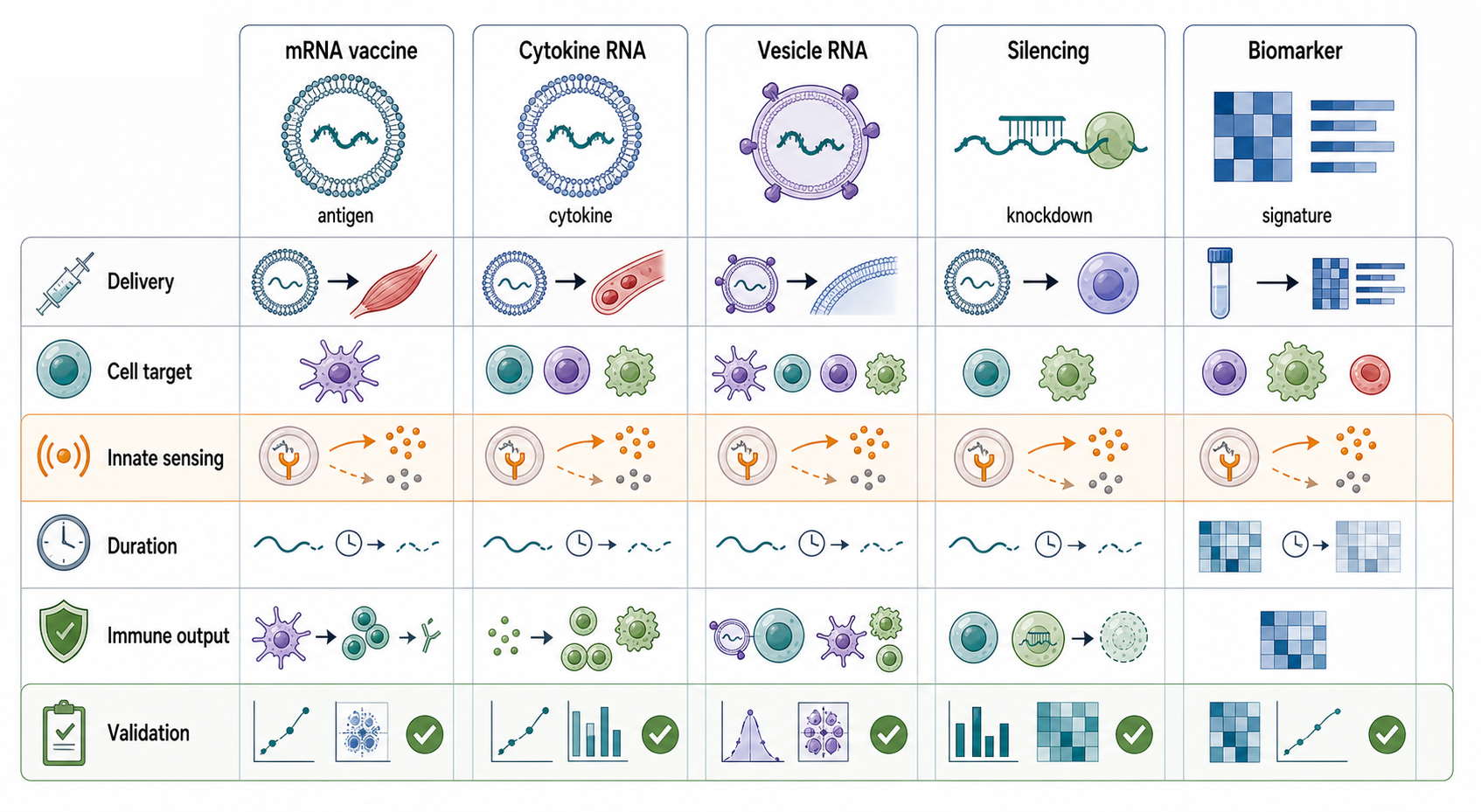
Figure 110.4. RNA technologies in immune intervention and measurement. Messenger-RNA vaccines, cytokine-encoding RNAs, vesicle cargoes, silencing or splice therapeutics, and RNA biomarkers share design decisions about delivery, target cell, innate sensing, expression duration, immune output, and validation readout.
RNA immunotherapies and biomarkers share a measurement problem: RNA abundance is easier to measure than immune mechanism. A transcript signature may predict response without revealing the causal driver. A vaccine-induced RNA signature may mark innate activation but not long-term protection. An extracellular miRNA may be released by dying cells rather than actively secreted as a signal. A lncRNA may distinguish disease subtypes without being a therapeutic target. The practical standard is therefore tiered. Discovery signatures can be broad and exploratory. Clinical biomarkers need predefined assays, locked models, external cohorts, and performance metrics. Therapeutic targets need perturbation evidence, dose-response, delivery feasibility, and safety assessment.
Recent Consensus
The current consensus is that RNA regulation is integral to immune-cell function across adaptive and innate compartments. T cells, B cells, macrophages, and dendritic cells all use post-transcriptional regulation to tune activation, differentiation, and inflammatory output. miRNAs are well-established network regulators, especially when target and phenotype evidence are combined. lncRNAs are important but unevenly validated; many lncRNAs remain markers or candidate regulators until locus effects, transcript effects, and downstream mechanisms are separated. RNA modification is a rapidly growing immune-regulatory field, but transcript-specific mechanisms should be distinguished from global perturbation phenotypes.
Inflammatory RNA surveillance is also accepted as a major bridge between host defense and disease. Pathogen RNA, mislocalized self RNA, immune-complexed RNA, modified or under-modified RNA, and extracellular RNA can all influence inflammation. Autoimmune and autoinflammatory diseases often combine multiple defects in clearance, tolerance, sensing, and cytokine regulation. Antigen receptor diversification remains fundamentally DNA-based, but receptor transcript processing and RNA-based repertoire methods are central to B cell and T cell biology. RNA vaccines and immunotherapies are now established clinical and translational platforms, with continuing debate over delivery, durability, safety, and how to tune innate sensing for different indications.
Open Questions, Controversies, Deprecated Models, and Common Misconceptions
Open questions:
- How much of immune-cell lncRNA biology reflects functional transcripts rather than regulatory DNA elements, enhancer transcription, or cell-state markers?
- how RNA modification pathways choose specific immune transcripts during infection, sepsis, autoimmunity, or vaccination.
- how self RNA crosses compartment boundaries during chronic disease and which routes are most important in human tissues. The field also lacks a complete quantitative model linking vaccine RNA chemistry, delivery, innate sensing, antigen expression, germinal-center quality, T cell memory, and adverse events.
Common misconceptions:
- “MiRNA or lncRNA expression can be generalized without qualification.” Differential expression is not proof of regulation.
- “Class-switch recombination is RNA splicing.” The switch is a DNA recombination event, while RNA processing controls transcript forms and contributes to the transcriptional environment.
- “Every interferon signature is direct RNA sensing.” Interferon signatures can arise from DNA sensing, cytokine signaling, infection state, cell damage, or indirect network responses.
- “Mouse inflammatory RNA phenotypes are automatically human.” Mouse models are essential but differ from human tissues in receptors, cell states, kinetics, and disease contexts.
- “Extracellular vesicle RNA is functional cargo.” Functional cargo claims require vesicle identity, uptake, dose, delivery to the relevant compartment, and recipient-cell effect.