Chapter 100. Telomerase RNA, TERRA, Telomeric Chromatin, and Telomere-Length Control
Scope Note
Telomeres are specialized chromosome ends composed of repetitive DNA, protective protein complexes, chromatin marks, and telomere-derived RNAs. In vertebrates the canonical repeat is 5′ TTAGGG 3′ on the G-rich strand, ending in a single-stranded 3′ overhang that can fold back into a protective loop. This chapter focuses on the RNA layer of telomere biology: telomerase RNA as the template and scaffold for telomerase, telomeric repeat-containing RNA as a long noncoding RNA produced from chromosome ends, telomeric RNA-DNA hybrids and telomeric chromatin, and the consequences for telomere-length control in aging, cancer, alternative lengthening of telomeres, and inherited telomere syndromes.
Executive Summary
Telomere maintenance depends on both DNA-end protection and RNA-guided DNA synthesis. Telomerase is a ribonucleoprotein reverse transcriptase. Its protein catalytic subunit, TERT, copies a short template sequence embedded in telomerase RNA to add telomeric repeats to chromosome ends. Telomerase RNA is therefore not a passive cofactor: it carries the template, helps set repeat-addition boundaries, folds into domains that bind TERT and accessory proteins, and undergoes species-specific biogenesis pathways that determine RNP abundance, localization, and activity. Human telomerase RNA, encoded by TERC, is processed and stabilized by H/ACA small nucleolar RNP factors and assembled with dyskerin and other maturation proteins before active telomerase reaches telomeres.
TERRA, telomeric repeat-containing RNA, is transcribed from subtelomeric promoters into telomeric repeats. TERRA molecules are heterogeneous in length, chromosome-end source, processing, and localization. Some TERRA remains near telomeres, some associates with chromatin or telomeric proteins, and some can form RNA-DNA hybrids with the C-rich telomeric strand. TERRA can inhibit or regulate telomerase access, influence telomeric chromatin, participate in DNA damage signaling, and support recombination-associated telomere maintenance in alternative lengthening of telomeres. These functions are context-dependent rather than universal. TERRA abundance, localization, and hybrid formation vary with telomere length, cell cycle, chromatin state, DNA damage, and whether cells use telomerase or ALT.
Telomeric RNA-DNA hybrids are neither automatically harmful nor automatically protective. At chromosome ends, R-loops can impede replication, promote fragility, stimulate recombination, alter end resection, or help maintain telomeric chromatin depending on timing and cellular background. TERRA G-quadruplexes and telomeric DNA structures can further stabilize or remodel these interactions. Shelterin proteins protect telomeres from being mistaken for DNA breaks, while subtelomeric heterochromatin, DNA methylation, histone marks, and nucleosome organization tune transcription and telomere position effects. The current consensus is that telomere RNAs form a regulatory layer integrated with DNA-end protection, replication, repair, and chromatin rather than a separate pathway.
Telomere-length control has clinical consequences. Short telomeres limit replicative potential and contribute to tissue failure in inherited telomere syndromes, while many cancers reactivate telomerase or use ALT to avoid telomere-driven crisis. Telomerase RNA mutations, TERT mutations, shelterin defects, and telomere-processing defects can cause disorders such as dyskeratosis congenita, bone marrow failure, pulmonary fibrosis, and liver disease. Therapeutic strategies include telomerase inhibition, telomerase-directed immunotherapy, targeting ALT-associated recombination, manipulating telomeric RNA structures, and using telomere length as a biomarker. Measurement is difficult: average telomere length can obscure the shortest telomeres, assay platforms are not interchangeable, tumor heterogeneity complicates telomere-maintenance classification, and TERRA or RNA-DNA hybrid assays require stringent strand, locus, and RNase controls.
Concept Inventory
- Telomerase RNA: the RNA component of telomerase. It contains the template used by TERT to synthesize telomeric DNA repeats and additional structural domains required for RNP assembly, stability, localization, and catalytic function.
- TERT: telomerase reverse transcriptase, the protein catalytic subunit that copies the telomerase RNA template. TERT is limiting or repressed in most human somatic cells but active in germ cells, many stem cells, and most cancers.
- TERRA: telomeric repeat-containing RNA, a heterogeneous long noncoding RNA transcribed from subtelomeric regions through telomeric repeats. TERRA can associate with telomeres, telomeric proteins, chromatin modifiers, and RNA-DNA hybrids.
- Shelterin: a telomere-binding protein complex that protects chromosome ends and regulates access by telomerase, nucleases, repair factors, and replication machinery. Human shelterin includes TRF1, TRF2, POT1, TIN2, TPP1, and RAP1.
- Telomeric R-loop: a three-stranded nucleic acid structure in which TERRA or another telomeric RNA hybridizes to telomeric DNA and displaces one DNA strand. Telomeric R-loops require careful detection because antibody-based hybrid assays can be biased by structure and sequence.
- Alternative lengthening of telomeres: a telomerase-independent telomere maintenance mechanism based on recombination, break-induced replication-like synthesis, telomeric DNA exchange, and ALT-associated nuclear bodies. ALT-positive cells often show elevated telomeric recombination and altered TERRA or telomeric R-loop behavior.
- Inherited telomere syndrome: a disorder caused by germline defects in telomere maintenance. Manifestations include bone marrow failure, pulmonary fibrosis, liver disease, immune defects, mucocutaneous features, and cancer predisposition, depending on gene, allele, inheritance, and tissue reserve.
What to Know Before Reading This Chapter
Telomeres solve two linked problems. First, linear chromosome ends resemble DNA double-strand breaks, so cells must protect natural ends from inappropriate repair. Second, conventional DNA polymerases cannot fully replicate chromosome termini after primer removal, so repeated cell divisions tend to shorten telomeres. Shelterin solves much of the end-protection problem by binding telomeric DNA and blocking ATM signaling, ATR signaling, nonhomologous end joining, excessive resection, and unwanted recombination. Telomerase solves the end-replication problem in cells where extension is permitted.
The RNA terms in this chapter refer to different molecules. Telomerase RNA is part of an enzyme and provides a template for DNA synthesis. TERRA is a transcript made from telomeric and subtelomeric chromatin and can act locally or at other chromosome ends. A telomeric RNA-DNA hybrid is a structure formed when telomeric RNA base-pairs with telomeric DNA. These categories overlap only in sequence content: telomerase RNA contains an internal template complementary to telomeric DNA, whereas TERRA contains telomeric repeat tracts copied from chromosome ends.
The evidence base combines biochemistry, genetics, cell biology, genomics, and clinical observation. Telomerase activity can be measured in extracts, but activity in an extract is not the same as regulated extension of one telomere in a living nucleus. TERRA can be detected by RNA-FISH or sequencing, but repetitive sequence and subtelomeric polymorphism make locus assignment difficult. Telomere length can be measured in many ways, but each method emphasizes different features: mean length, distribution, shortest telomeres, single chromosome ends, or single-cell variation.
100.1. Telomerase RNA structure, biogenesis, and RNP assembly
Telomerase is a reverse transcriptase that carries its own RNA template. In human cells, the template region of telomerase RNA aligns with the 3′ G-rich telomeric overhang so TERT can add TTAGGG repeats. After one repeat is copied, the enzyme can reposition the DNA substrate and copy the template again. This repeat-addition processivity depends on protein domains in TERT, RNA structural domains in telomerase RNA, and telomere-associated recruitment factors such as the TPP1-POT1 part of shelterin. The basic biochemical point is simple but important: the DNA sequence added to chromosome ends is encoded by RNA, and mutations in the RNA template can change the sequence synthesized by telomerase.
Box 100.1. Do Not Merge the Telomeric RNA Objects
Telomerase RNA, TERRA, and telomeric RNA-DNA hybrids are related by telomere sequence but are not the same object. Telomerase RNA is an enzyme component: its internal template is copied by TERT to synthesize telomeric DNA. TERRA is a family of long noncoding RNAs transcribed from subtelomeric promoters into telomeric repeats; TERRA molecules can be soluble, chromatin-associated, telomere-localized, or redistributed after damage. A telomeric RNA-DNA hybrid is a physical structure formed when an RNA strand base-pairs with telomeric DNA. A strong claim should name which RNA is being measured, where the RNA comes from, whether the RNA is free or hybridized, and what endpoint changed. “TERRA increased” does not by itself prove telomerase inhibition, R-loop formation, ALT activation, or telomere shortening.
Human telomerase RNA is much larger than the short template it contains. It includes a template/pseudoknot domain needed for catalysis, a conserved region 4/5 domain that helps activate TERT, and an H/ACA-like region that recruits dyskerin and related proteins for stability and maturation. Accessory proteins support folding, nuclear trafficking, Cajal body association, and RNP assembly. The exact architecture differs among ciliates, yeasts, vertebrates, and plants, so “telomerase RNA” is a functional category rather than a single conserved RNA length or secondary structure. The conserved task is to supply the template and organize the catalytic RNP; the surrounding biogenesis modules have evolved substantially.
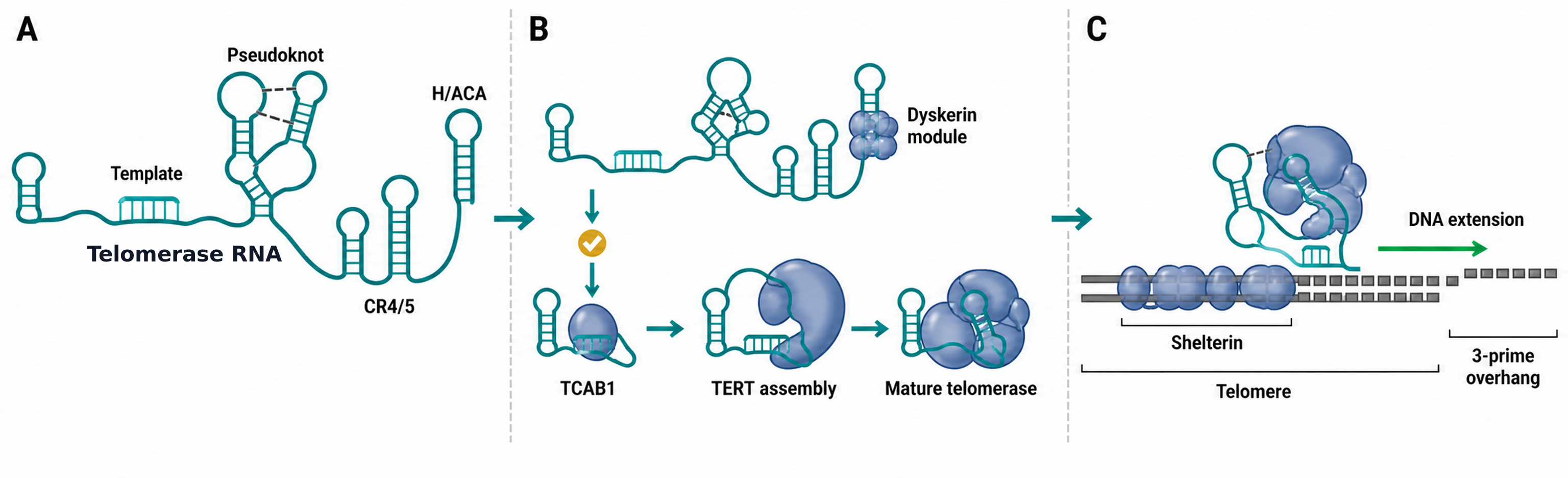
Figure 100.1. Telomerase RNA as template, scaffold, and maturation substrate. Teach that telomerase RNA is both a sequence template and a folded RNP scaffold whose maturation controls active telomerase dosage.
Biogenesis is a major control point. Human TERC is transcribed by RNA polymerase II, processed into a stable noncoding RNA, and assembled with the H/ACA RNP protein dyskerin, NOP10, NHP2, and GAR1. TCAB1 helps localize telomerase RNA to Cajal bodies, which are nuclear compartments involved in RNP maturation and trafficking. TERT expression is strongly regulated at transcriptional, splicing, localization, and degradation levels, so telomerase activity usually requires both enough TERT and enough mature telomerase RNA. Mutations in telomerase RNA, dyskerin, TCAB1, or other maturation factors can reduce telomerase dosage even when the catalytic protein is intact.
Assembly is not merely a housekeeping event. A partially assembled RNP may contain telomerase RNA but lack catalytic competence, telomere recruitment, or proper nuclear localization. Conversely, telomerase can be active in extracts yet fail to extend telomeres if recruitment or end-state regulation is defective. Shelterin helps determine which telomeres are extendable. Short telomeres tend to be more permissive for telomerase access, while long telomeres recruit more negative regulatory shelterin signals. In human cells, TPP1 provides a recruitment and processivity interface for telomerase, whereas POT1 helps manage the single-stranded overhang and protects it from ATR activation.
The local references for this chapter are strongest for TERRA, telomeric R-loops, telomere chromatin, telomere disease, and telomerase inhibition. Final bibliography item: add direct, verified telomerase RNA structure and assembly references, including structural studies of human telomerase, H/ACA telomerase RNA biogenesis, TCAB1/Cajal body trafficking, and disease-causing TERC or accessory-factor mutations.
100.2. TERRA transcription, processing, localization, and functions
TERRA is produced when RNA polymerase II initiates in subtelomeric regions and transcribes toward chromosome ends through telomeric repeats. Because each chromosome end has distinct subtelomeric sequence, TERRA is not a single gene product. It is a family of related long noncoding RNAs whose telomeric repeat tracts are similar but whose subtelomeric segments can encode locus information. Some TERRA molecules are polyadenylated and some are not; some are chromatin-associated and some are more soluble; some remain near their site of transcription and others can act in trans at different telomeres. Luke and Lingner (2009) is a foundational review anchor for the discovery and early framework of TERRA biology, while Kyriacou and Lingner (2024) reviews TERRA as a mediator of telomere damage, rescue, and signaling.
Subtelomeric chromatin strongly influences TERRA transcription. DNA methylation, histone marks, telomere length, and shelterin occupancy can change promoter accessibility and elongation into telomeric repeats. Oliva-Rico et al. (2022) reports that subtelomeric chromatin methylation can modify TERRA expression and disturb telomere homeostasis, providing a direct example of epigenetic control over telomeric RNA output. This relationship is bidirectional in many models: chromatin affects TERRA production, and TERRA can help recruit or stabilize chromatin states at telomeres. The evidence is context-specific because subtelomeric repeats and epigenetic states vary among chromosome ends and cell types.
TERRA localization is regulated rather than incidental. Bettin et al. (2024) reports that TERRA transcripts localize at long telomeres and regulate telomerase access to chromosome ends. This result supports a model in which TERRA contributes to length homeostasis: longer telomeres can accumulate TERRA or TERRA-associated states that reduce telomerase action, while shorter telomeres become more permissive. The model should not be simplified to “TERRA always inhibits telomerase.” TERRA can inhibit telomerase enzymatically in some assays, but in cells TERRA can also participate in chromatin regulation, damage signaling, and recombination-associated maintenance.
Table 100.1. Molecular routes by which TERRA affects telomeres. Separate TERRA transcription, localization, RNA structure, hybrid formation, and functional consequence.
| Route | Molecular object | Likely context | Evidence needed | Common overinterpretation |
|---|---|---|---|---|
| Telomerase inhibition or access control | TERRA repeat tracts interacting with telomerase components, telomeric DNA substrates, or shelterin-regulated chromosome ends | Long telomeres or telomerase-positive cells where extension is selectively restrained | TERRA localization or perturbation paired with telomerase recruitment, enzyme activity, and telomere extension endpoints | Treating TERRA as a universal telomerase poison in every cell state |
| Long-telomere localization | Chromosome-end-associated TERRA foci and subtelomeric sequence that can identify transcript source | Length-homeostasis models in which longer telomeres become less permissive for telomerase | Locus-aware RNA detection, telomere length at the same ends, and telomerase-access readouts | Assuming any increase in total TERRA marks all long telomeres equally |
| Chromatin regulation | Subtelomeric promoters, DNA methylation, histone marks, shelterin occupancy, and chromatin-associated TERRA | Telomere position effects, subtelomeric heterochromatin, cancer chromatin states, or methylation perturbation | Chromatin-state measurement before and after RNA or epigenetic perturbation, with telomere-length and damage controls | Inferring TERRA function from chromatin correlation alone |
| Telomeric RNA-DNA hybrid formation | TERRA base-paired with the C-rich telomeric DNA strand, leaving a displaced G-rich strand | Replication stress, telomere fragility, hybrid persistence, or regulated end-state transitions | DRIP-family signal with RNase H sensitivity, strand-aware RNA controls, and linked telomere damage or replication phenotypes | Equating any telomeric hybrid signal with pathological R-loop accumulation |
| Damage signaling | TERRA or TERRA-derived hybrids at uncapped, shortened, or otherwise damaged telomeres | Dysfunctional telomeres, senescence, DNA damage responses, and repair-factor recruitment | Telomere dysfunction foci, repair-factor localization, RNA or hybrid perturbation, and recovery or worsening of end-protection markers | Treating TERRA accumulation as the primary cause of all telomere damage |
| ALT-associated recombination | TERRA, telomeric R-loops, G-quadruplexes, and recombination-prone telomeric chromatin | Telomerase-negative cancers that use alternative lengthening of telomeres | C-circles, ALT-associated PML bodies, telomeric recombination markers, hybrid perturbation, and telomere synthesis readouts | Calling a tumor ALT-positive from long or heterogeneous telomeres alone |
| G-quadruplex-mediated protein or ligand interactions | G-rich TERRA structures that bind proteins or respond to G-quadruplex ligands | ALT models, telomeric hybrid modulation, telomere replication stress, or RNA-structure-focused intervention | Structure-sensitive probing or ligand response plus specificity controls for non-telomeric G-quadruplexes | Assuming a G-quadruplex ligand effect is telomere-specific without genome-wide controls |
| Soluble versus chromatin-associated TERRA pools | Nuclear TERRA transcripts distributed among soluble RNPs, chromatin-bound RNA, and telomere-localized foci | Cell-cycle changes, RNA processing differences, DNA damage, or altered subtelomeric transcription | Fractionation, RNA-FISH, strand-specific RNA assays, and matched telomere-localization measurements | Using total TERRA abundance as a substitute for local telomere action |
Processing and turnover affect interpretation. TERRA can be sensitive to RNA decay pathways, RNA-binding proteins, cell-cycle changes, and DNA damage responses. G-rich telomeric repeat RNA can form RNA G-quadruplexes, structures in which guanine-rich sequences stack into planar tetrads. Varshney et al. (2020), although not telomere-specific, is useful for the general biology of DNA and RNA G-quadruplexes. In telomere biology, G-quadruplex formation can affect TERRA structure, protein binding, hybrid formation, and ligand sensitivity. Dinoi et al. (2025) directly connects TERRA G-quadruplex modulation with telomeric DNA:RNA hybrids and ALT mechanisms.
TERRA functions are best described as a set of molecular routes. One route is telomerase regulation: TERRA can bind telomerase components, compete with telomeric DNA substrates, or mark long telomeres as less favorable for extension. A second route is chromatin regulation: TERRA can associate with telomeric proteins or chromatin modifiers and help maintain heterochromatic features. A third route is damage and repair signaling: TERRA can accumulate or relocalize at damaged telomeres and influence repair-factor recruitment. A fourth route is RNA-DNA hybrid formation: TERRA can base-pair with telomeric DNA and alter replication, resection, or recombination.
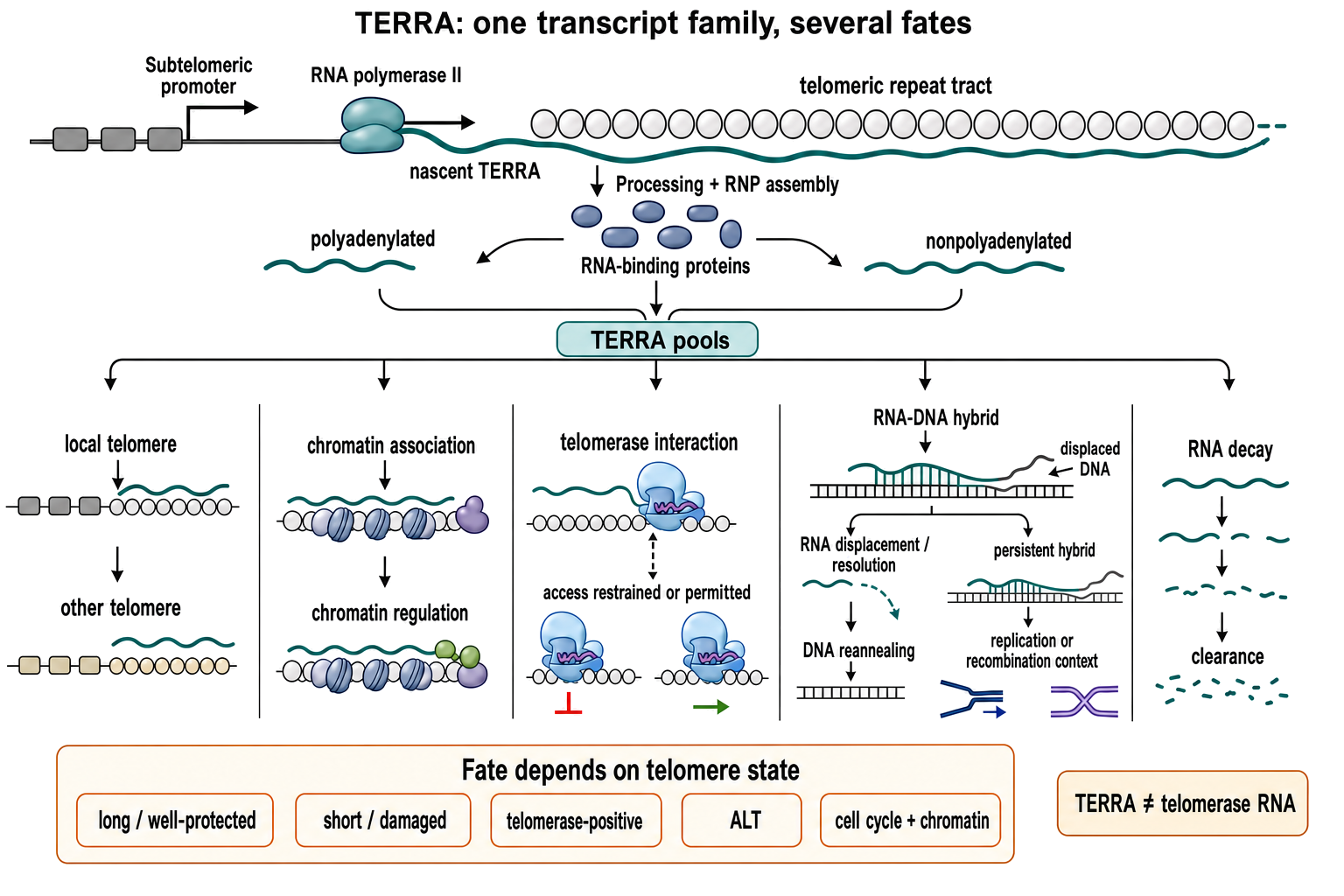
Figure 100.5. TERRA biogenesis and alternative fates at a telomere. “TERRA biogenesis and alternative fates. RNA polymerase II transcription from subtelomeric promoters produces heterogeneous TERRA molecules that enter polyadenylated or nonpolyadenylated RNP pools. Individual molecules can remain at the source telomere, redistribute to another end, associate with chromatin, interact with telomerase, form an RNA-DNA hybrid that is resolved or persists, or enter RNA decay. Telomere length and damage state, telomerase or ALT context, cell cycle, and chromatin determine which routes are favored.”
100.3. Telomeric repeat RNA-DNA hybrids and telomeric chromatin
An R-loop contains an RNA-DNA hybrid and a displaced single DNA strand. At telomeres, TERRA can hybridize with the C-rich telomeric DNA strand, leaving the G-rich strand displaced. This structure is favored by complementarity between UUAGGG-containing TERRA and the telomeric DNA template strand, by guanine-rich secondary structures, and by local chromatin and replication states. Petermann et al. (2022) provides a broad consensus framework for R-loop formation, resolution, and physiological relevance; Fernandes et al. (2021) focuses on the formation of TERRA R-loops at chromosome ends.
Telomeric R-loops can have opposing consequences. If a telomeric hybrid blocks replication-fork progression, it can create fragility, telomere loss, or DNA damage signaling. If the hybrid protects a dysfunctional telomere from excessive resection, it can temporarily reduce end degradation. Pires et al. (2023) reports that RNA-DNA hybrids can prevent resection at dysfunctional telomeres, illustrating a protective side of hybrid formation. Fernandes and Lingner (2023) reports that the THO complex counteracts TERRA R-loop-mediated telomere fragility in telomerase-positive cells and telomeric recombination in ALT-positive cells, illustrating how RNA processing and export machinery can restrain telomeric hybrid toxicity.
Box 100.2. Reading a Telomeric R-Loop Claim
Start by separating hybrid detection from biological consequence. A telomeric DRIP signal, RNA-FISH focus, or RNase H-sensitive phenotype indicates a possible RNA-DNA hybrid layer, but it does not specify whether the hybrid helps or harms the telomere. Ask five questions. First, is the signal reduced by RNase H under conditions that preserve comparable DNA input and telomeric sequence recovery? Second, is the relevant RNA strand measured with controls for DNA contamination and repeat mapping? Third, does perturbing the hybrid change a linked endpoint such as replication fragility, end resection, telomerase recruitment, ALT recombination, or telomere dysfunction foci? Fourth, does the cell use telomerase, ALT, or neither? Fifth, is the effect local to telomeres or part of a broader genome-wide R-loop response? Without these qualifiers, “R-loops accumulate at telomeres” is an observation, not a mechanism.
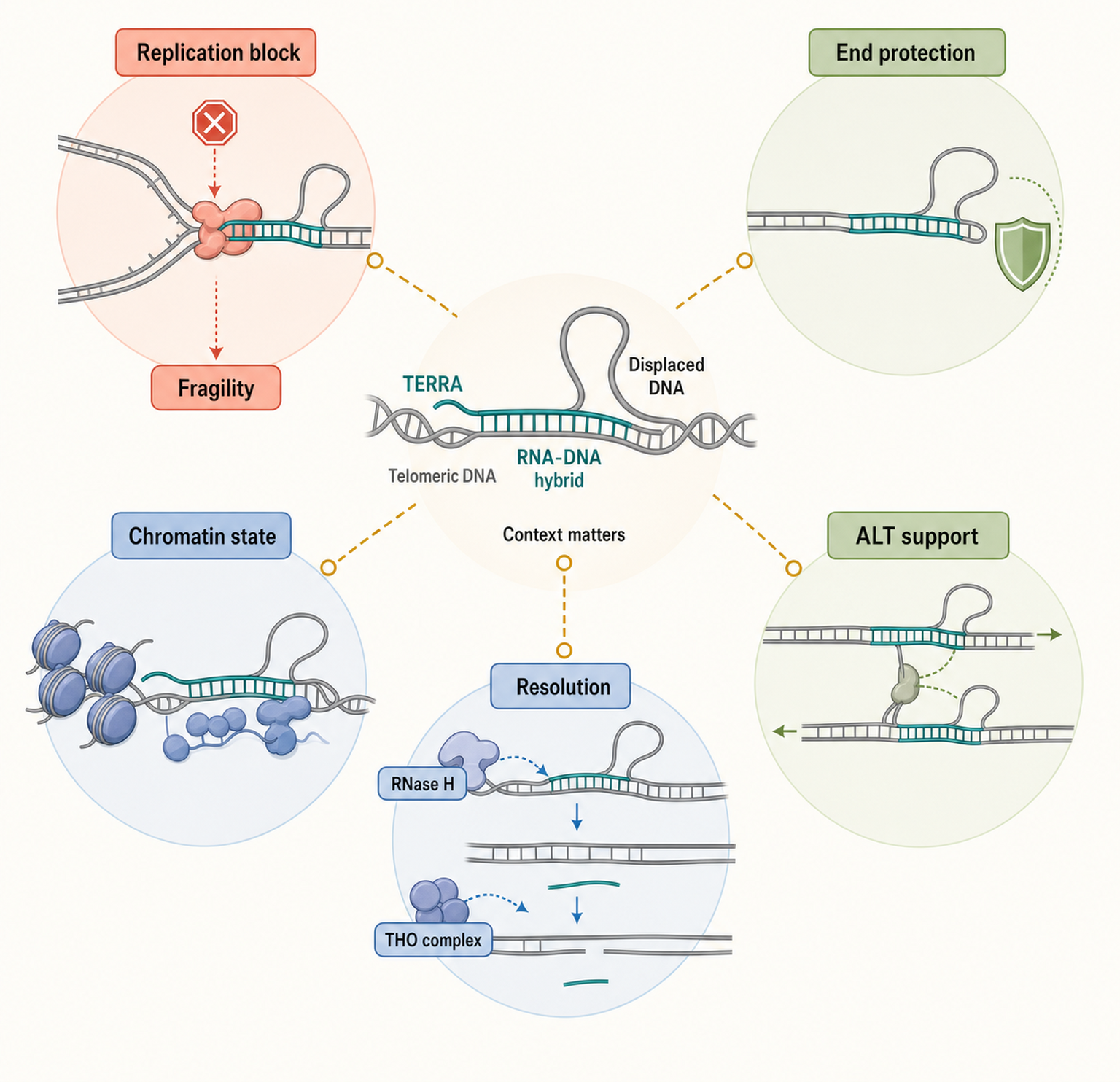
Figure 100.2. Context-dependent outcomes of TERRA RNA-DNA hybrids. Prevent overgeneralization by showing why telomeric R-loops can be damaging, protective, or regulatory depending on context.
ALT cells show why context matters. Alternative lengthening of telomeres relies on recombination-based copying rather than telomerase. ALT-positive cells often have telomere clustering, ALT-associated PML bodies, C-circles, elevated telomeric sister-chromatid exchange, and mutations in chromatin remodelers such as ATRX or DAXX. TERRA and telomeric R-loops can support recombination or break-induced replication-like synthesis in this setting, but excessive or unresolved hybrids can still be damaging. Dinoi et al. (2025) links TERRA G-quadruplex ligands to telomeric hybrids and ALT mechanisms, supporting the idea that RNA structure can tune recombination-associated telomere maintenance.
Telomeric chromatin is unusual because repetitive DNA, nucleosomes, shelterin, subtelomeric heterochromatin, and transcription coexist at chromosome ends. Telomeres are not simply silent caps. TERRA transcription demonstrates that at least some telomeric chromatin is permissive to RNA polymerase II, while shelterin prevents chromosome ends from entering ordinary DNA repair pathways. Subtelomeric DNA methylation and histone marks can influence TERRA promoter activity, telomere position effects, and local compaction. Price et al. (2026) reports epigenetic control of telomeric RNA maintaining heterochromatin in telomerase-driven cancers, a recent example connecting telomeric RNA output and cancer chromatin state.
The measurement problem is severe at telomeres. DRIP-based assays can enrich RNA-DNA hybrids but require RNase H sensitivity controls, strand-aware interpretation, and caution around G-rich repetitive sequences. RNA-FISH can show TERRA foci but not always locus of origin or hybrid status. Sequencing reads from telomeric repeats are hard to place uniquely. Chromatin assays in subtelomeres suffer from copy-number variation, low mappability, and incomplete reference assembly. Strong studies combine orthogonal assays: TERRA abundance, hybrid detection, RNase H perturbation, telomere damage markers, replication-fragility readouts, telomere length or recombination assays, and cell-type-specific controls.
100.4. Telomerase, ALT, aging, cancer, and inherited telomere syndromes
Telomere shortening is a molecular clock only in a qualified sense. Many human somatic cells repress TERT, so telomeres shorten with cell division and eventually trigger senescence or crisis when one or more telomeres become too short or uncapped. However, telomere length at birth varies, different tissues divide at different rates, inflammation and oxidative stress can accelerate attrition, and the shortest telomeres often matter more than the mean. Hsieh et al. (2025) reports that TERRA increases in aged human cells, connecting telomeric transcription with aging-associated telomere states. Aguado et al. (2020) reviews telomere transcription in aging and is useful for framing TERRA as part of aging-associated telomere regulation rather than a simple biomarker.
Cancer cells must overcome telomere-driven limits. Most cancers reactivate telomerase, often through TERT promoter mutations, epigenetic changes, gene amplification, rearrangements, or lineage-specific transcriptional programs. A minority of cancers use ALT, especially certain sarcomas, gliomas, pancreatic neuroendocrine tumors, and other tumors with chromatin-remodeling defects. Telomerase-positive and ALT-positive cancers both maintain telomere length, but their vulnerabilities differ. Telomerase-positive cancers depend on the telomerase RNP and access to telomeres. ALT-positive cancers depend more on recombination, replication stress management, telomeric chromatin state, and DNA repair factors.
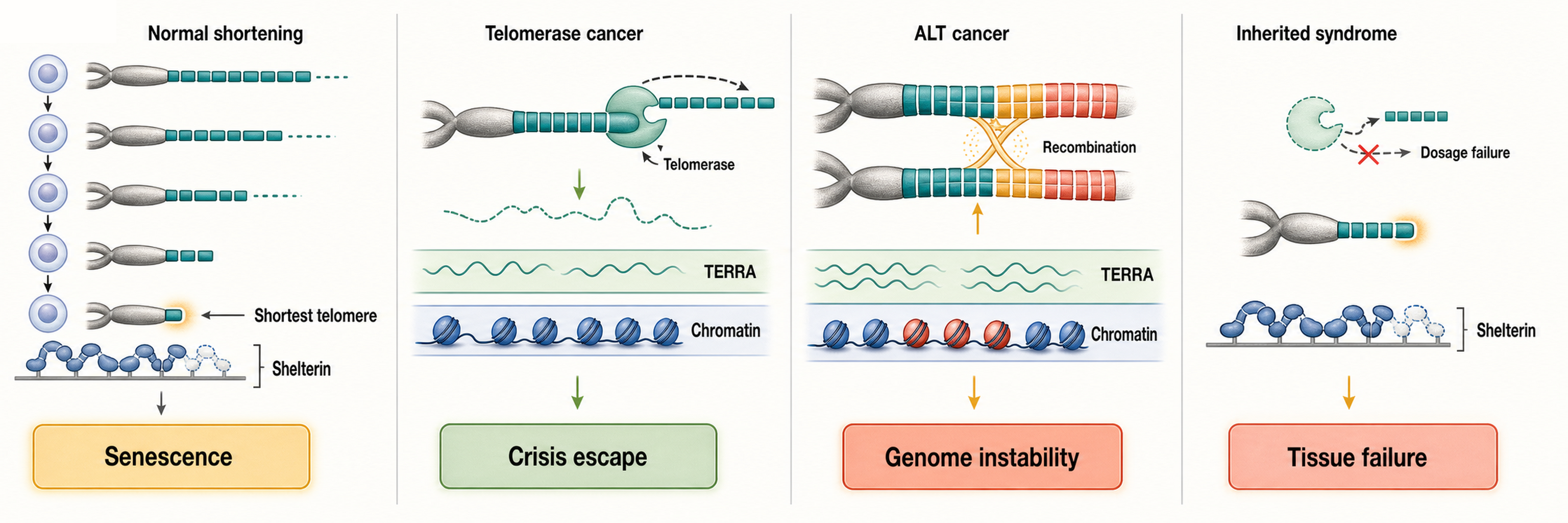
Figure 100.3. Telomere maintenance routes in aging, cancer, ALT, and inherited syndromes. Connect molecular mechanisms to clinical and cellular outcomes without reducing telomere biology to a simple clock.
Inherited telomere syndromes show the cost of insufficient telomere maintenance. Germline mutations in TERC, TERT, dyskerin pathway genes, shelterin components, or telomere-processing factors can reduce telomerase activity, impair telomere protection, or disrupt telomere replication. Clinical outcomes include dyskeratosis congenita, Hoyeraal-Hreidarsson syndrome, aplastic anemia, idiopathic pulmonary fibrosis, liver disease, immune dysfunction, and cancer predisposition. Anticipation can occur because short telomeres are inherited along with the mutation, causing earlier or more severe disease in later generations. These disorders are not only “premature aging” syndromes; they are tissue-reserve disorders in which high-turnover or injury-prone organs fail when stem and progenitor cells cannot maintain telomeres.
Telomerase RNA is central to these diseases because dosage and template integrity matter. A heterozygous loss-of-function TERC allele can reduce telomerase RNA abundance enough to produce progressive telomere shortening over generations. A template-region mutation can, in principle, direct synthesis of abnormal repeats, although disease mechanisms depend on allele behavior and cellular context. Accessory-factor mutations can destabilize telomerase RNA without changing its sequence. Final bibliography item: add direct clinical genetics references for TERC, TERT, DKC1, RTEL1, PARN, NAF1, shelterin genes, and telomere syndrome genotype-phenotype relationships.
TERRA and telomeric chromatin complicate disease interpretation. A short telomere can induce DNA damage signaling even if average telomere length appears only modestly reduced. A tumor can contain both telomerase activity and ALT-like features in subclones or transitional states. TERRA abundance can change with telomere damage, aging, chromatin state, and cancer type, but TERRA alone is not a diagnostic substitute for telomere maintenance mechanism. The mechanistic claim must name the level: telomerase activity, TERRA transcription, telomeric R-loop accumulation, ALT recombination, telomere length distribution, or telomere uncapping.
Box 100.3. Clinical Telomere Claims Need the Endpoint
Clinical telomere statements should name the endpoint being inferred. Age-adjusted short telomeres in blood can support a suspected inherited telomere syndrome when the phenotype, family history, and cell type fit, but the same measurement is not a general-purpose biological age score. Telomerase activity in a tumor extract shows that active enzyme is detectable; it does not prove that every chromosome end is being extended. A TERT promoter mutation suggests a route to TERT expression, not a telomere-length value. ALT classification requires recombination-associated evidence such as C-circles, ALT-associated PML bodies, telomeric exchange, and heterogeneous telomere lengths, not long telomeres alone. TERRA abundance or telomeric hybrid signal can clarify mechanism, but neither is a stand-alone diagnosis. Pair each molecular readout with assay platform, cell type, disease context, and the clinical decision it is meant to support.
100.5. Therapeutic targeting and measurement caveats
Telomerase is an attractive cancer target because most normal somatic tissues have low telomerase activity while many cancers require telomere maintenance. Imetelstat is an oligonucleotide inhibitor that binds the telomerase RNA template region and blocks telomerase activity. Lennox et al. (2024) reviews imetelstat mechanism, clinical, and translational science. The pharmacologic logic is direct: an RNA-targeting oligonucleotide prevents the telomerase RNP from copying its RNA template. The biological response is delayed compared with kinase inhibition because cancer cells may need many divisions before telomeres become critically short, although noncanonical effects and hematologic context can influence clinical outcomes.
Other therapeutic strategies target telomere biology indirectly. Telomerase-directed vaccines and adoptive T-cell approaches try to exploit TERT as a tumor antigen. Small molecules can stabilize telomeric G-quadruplexes, alter telomerase access, or stress telomere replication. ALT-targeting strategies focus on recombination factors, replication stress response, ATR signaling, DNA repair dependencies, or telomeric RNA-DNA hybrid regulation. TERRA G-quadruplex ligands and hybrid-modulating approaches are mechanistically interesting, but they must be evaluated for specificity because guanine-rich structures and RNA-DNA hybrids occur throughout the genome and transcriptome. Final bibliography item: add direct references for telomerase immunotherapy, G-quadruplex ligands at telomeres, and ALT-selective therapeutic vulnerabilities.
Table 100.2. Telomere and telomeric RNA measurement caveats. Make assay dependence explicit so readers do not treat telomere length, telomerase activity, TERRA abundance, hybrid signal, and ALT status as interchangeable measurements.
| Assay | Primary readout | Strength | Major caveat | Best use |
|---|---|---|---|---|
| Telomere restriction fragment Southern blot | Distribution of telomeric restriction fragments in bulk DNA | Direct size distribution and historical comparability | Includes subtelomeric sequence and needs substantial high-quality DNA | Baseline bulk telomere-length profiling when sample amount is adequate |
| qPCR telomere assay | Relative telomere-to-single-copy-gene ratio | Fast, low-input, and scalable across many samples | Sensitive to DNA quality, calibration, batch effects, and copy-number changes | Screening cohorts where relative mean length is sufficient |
| Flow-FISH | Telomere fluorescence in defined cell populations | Cell-type-resolved and clinically useful when standardized | Requires viable or well-prepared cells, calibration controls, and age-adjusted interpretation | Inherited telomere syndrome evaluation in blood cell subsets |
| Q-FISH | Fluorescence intensity at individual cells or chromosome ends | Spatial and single-cell resolution | Depends on probe hybridization, imaging calibration, metaphase or nuclear preparation, and signal normalization | Comparing telomere distributions or chromosome-end signals in cells |
| Single telomere length analysis | Length of specific chromosome-end telomeres, including short-end classes | Detects critically short telomeres that bulk means can hide | Limited chromosome-end coverage and primer dependence on subtelomeric sequence | Testing shortest-telomere risk at defined chromosome ends |
| Long-read telomere sequencing | Telomere and subtelomere repeat structure in long molecules | Can connect telomeric repeats to subtelomeric context | Alignment, repeat-length estimation, DNA integrity, and coverage remain challenging | Resolving subtelomere-linked telomere architecture and allele heterogeneity |
| TRAP telomerase assay | PCR-amplified products from telomerase extension in extracts | Very sensitive activity detection | PCR artifacts, extract inhibitors, tumor purity, and primer effects can mislead | Detecting whether a sample contains telomerase activity |
| Direct telomerase extension | Telomerase-mediated repeat addition to a defined substrate | Mechanistically cleaner than PCR-amplified activity assays | Lower throughput and more demanding enzyme or extract conditions | Testing catalytic mechanism, processivity, inhibitor action, or RNA-template effects |
| TERRA RNA-FISH | Telomeric repeat RNA foci and nuclear localization | Visualizes RNA abundance and localization in cells | Usually does not identify chromosome-end source or prove hybrid formation | Mapping TERRA localization relative to telomeres, damage foci, or cell state |
| DRIP or DRIP-seq for telomeric hybrids | Enrichment of RNA-DNA hybrids containing telomeric sequence | Directly targets hybrid structures when controls are strong | Requires RNase H sensitivity controls and caution with repetitive, G-rich, structure-prone regions | Testing whether TERRA-derived hybrids accumulate after perturbation |
| C-circle assay for ALT | Extrachromosomal telomeric C-circles amplified from ALT cells | Practical marker strongly associated with ALT | Does not by itself define all recombination mechanisms or tumor subclonal structure | Classifying ALT activity together with PML bodies, telomere heterogeneity, and telomerase status |
Telomere measurement must be matched to the question. Telomere restriction fragment Southern blotting estimates a distribution but includes subtelomeric sequence and requires substantial DNA. qPCR provides a relative telomere-to-single-copy-gene ratio but is sensitive to DNA quality, calibration, and batch effects. Flow-FISH can measure telomere length in defined blood cell populations and is clinically useful for telomere syndrome evaluation when standardized. Quantitative FISH can resolve single cells or chromosome ends but depends on imaging and probe calibration. Single telomere length analysis and related methods can detect the shortest telomeres at specific chromosome ends. Long-read sequencing is improving telomere and subtelomere resolution but still faces alignment, repeat-length, and sample-quality challenges. Moskaleva et al. (2025) reviews telomere length and telomerase activity as biomarkers and is a useful anchor for assay interpretation.
Telomerase activity measurement also has caveats. The telomerase repeat amplification protocol is sensitive but PCR-based and can be affected by inhibitors, extract quality, tumor purity, and primer artifacts. Direct extension assays are mechanistically cleaner but less convenient. TERT expression does not always equal active telomerase, and telomerase activity does not guarantee that all telomeres are being extended. ALT status also needs multiple readouts: C-circles, ALT-associated PML bodies, heterogeneous telomere length, telomeric recombination markers, and absence or low relevance of telomerase activity. A tumor with long heterogeneous telomeres is not automatically ALT-positive without corroborating evidence.
For TERRA and telomeric hybrids, assay caveats are even sharper. TERRA RNA-FISH signal can reflect total telomeric repeat RNA but not its chromosome-end source. RT-qPCR and RNA-seq need strand specificity and controls for DNA contamination. DRIP signals require RNase H controls and should be interpreted with sequence and structure bias in mind. Overexpression of RNase H or TERRA fragments can perturb telomeres nonphysiologically. The best experimental designs measure RNA abundance, localization, hybrid formation, telomere damage, replication stress, telomerase or ALT activity, and telomere length in the same system.
Experimental Foundations and Evidence
Telomerase was established biochemically as an RNA-dependent DNA polymerase, and later work connected telomerase RNA templates, TERT reverse transcriptase domains, accessory RNP factors, and telomere recruitment. In modern experiments, telomerase mechanisms are tested by reconstituting enzyme activity, mutating telomerase RNA domains, measuring repeat-addition processivity, imaging telomerase recruitment, and perturbing shelterin interfaces. The most persuasive studies separate enzyme assembly from catalytic activity and telomere recruitment because failure at any one step can shorten telomeres.
TERRA evidence began with detection of telomeric repeat RNA and has expanded into locus-aware transcription, chromatin association, telomere localization, and functional perturbation. Luke and Lingner (2009), Kyriacou and Lingner (2024), Coulon and Vaurs (2020), and Fernandes et al. (2021) provide major anchors for interpreting TERRA transcription, telomere rearrangements, and R-loop formation. Primary evidence from Bettin et al. (2024), Fernandes and Lingner (2023), Oliva-Rico et al. (2022), Pires et al. (2023), Dinoi et al. (2025), Hsieh et al. (2025), and Price et al. (2026) supports the chapter’s emphasis on context-dependent TERRA localization, chromatin control, R-loop consequences, aging, cancer, and ALT mechanisms.
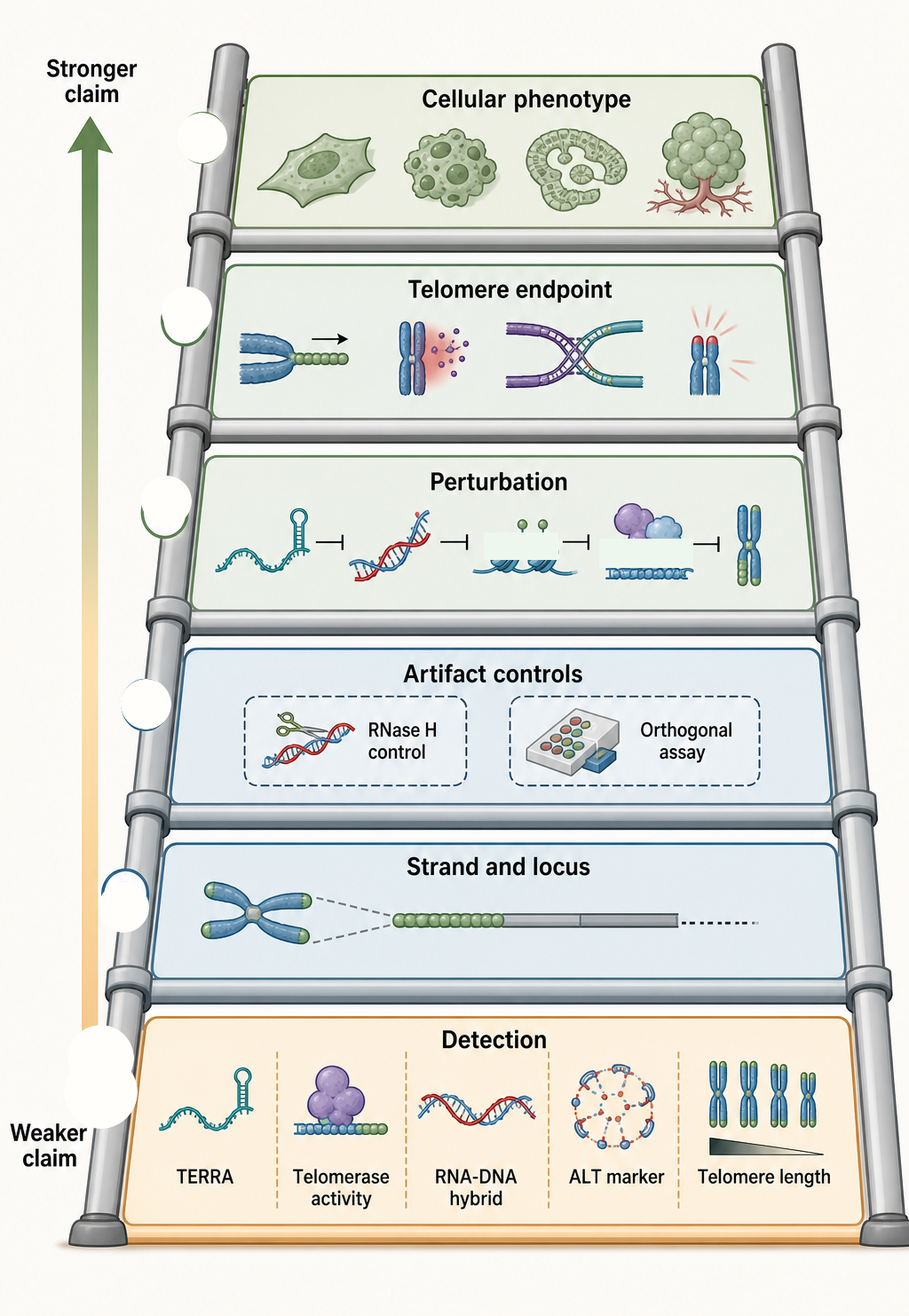
Figure 100.4. Evidence ladder for telomeric RNA and telomere-length claims. Give readers a reusable framework for evaluating claims about TERRA, telomerase activity, ALT status, and telomere biomarkers.
No single evidence class is sufficient. A telomerase inhibitor study needs enzyme inhibition, telomere-dependent cellular consequence, and appropriate cancer model context. A TERRA chromatin study needs RNA detection, chromatin state measurement, perturbation, and controls for telomere length or damage. A telomeric hybrid study needs direct hybrid detection and RNase H sensitivity. A clinical telomere syndrome study needs germline genetics, telomere length relative to age and cell type, phenotype, family history, and exclusion of acquired confounders.
Biological Contexts Across Organisms and Cell Types
Ciliates and yeasts were historically important for discovering telomerase and defining basic telomere principles, but their telomerase RNAs and telomere proteins differ from vertebrate systems. Budding yeast telomeres use different repeat sequences and telomere-binding proteins, while fission yeast has chromatin and RNA interference features that make it useful for studying subtelomeric regulation. Mammalian systems are central for disease, aging, and therapeutic translation. Human cells are especially important because telomerase repression in somatic tissues creates a strong barrier to unlimited proliferation.
Cell type matters. Germ cells, embryonic stem cells, activated lymphocytes, and some adult stem cells can have telomerase activity, while most differentiated somatic cells have low activity. Cancer cells can reactivate telomerase or ALT. Senescent cells can show telomere dysfunction and altered TERRA. Immune cells are clinically important because inherited telomere syndromes and aging can impair hematopoietic reserve. Fibroblasts and epithelial cells are common models for replicative senescence, but they should not be treated as universal proxies for all tissues.
Technology, Computational, Clinical, and Engineering Links
Telomere biology is increasingly computational because long repetitive regions, subtelomeric variation, and single-cell heterogeneity require specialized analysis. Telomere-to-telomere genome assemblies, long-read sequencing, optical mapping, and improved subtelomere annotations are changing what can be measured. For RNA, locus-resolved TERRA analysis remains difficult because telomeric repeats erase mapping information unless subtelomeric sequence is retained. Computational models of telomere-length dynamics should include initial length, cell division history, telomerase dosage, end-state regulation, damage, selection, and assay noise.
Clinically, telomere length is used to support diagnosis of inherited telomere syndromes, stratify some disease risks, and interpret bone marrow or pulmonary fibrosis presentations. It is not a general-purpose aging score. Telomerase activity and TERT promoter mutations can inform cancer biology but are not interchangeable biomarkers. Therapeutic targeting requires matching the maintenance mechanism: telomerase inhibitors for telomerase-dependent cells, ALT vulnerabilities for ALT-positive cells, and careful avoidance of toxicity in hematopoietic and progenitor compartments.
Recent Consensus
Current consensus treats telomeres as RNA-active chromatin domains. Telomerase RNA is a catalytic and structural RNP component, not merely a template string. TERRA is a regulated long noncoding RNA family whose effects depend on telomere length, chromatin state, cell cycle, damage, and telomere-maintenance mechanism. Telomeric R-loops can be protective, regulatory, or damaging depending on context. Telomerase reactivation and ALT are the two major cancer telomere-maintenance routes, while inherited telomere syndromes reveal the consequences of reduced telomerase dosage or defective telomere protection.
The strongest methodological consensus is that telomere claims need platform-aware evidence. Average telomere length, shortest telomeres, telomerase activity, TERRA abundance, R-loop signal, and telomere dysfunction are related but distinct measurements. Strong conclusions specify the assay, cell type, chromosome-end resolution, perturbation, and biological endpoint.
Open Questions, Controversies, Deprecated Models, and Common Misconceptions
Open questions:
- How TERRA is targeted to particular telomeres?
- How TERRA distinguishes long from short telomere states?
- How telomeric RNA-DNA hybrids switch between protective and damaging roles?
- How ALT cells balance recombination-based telomere extension against genome instability?
- Can TERRA or telomeric chromatin states be therapeutically manipulated with enough specificity to avoid broad effects on G-quadruplexes, R-loops, and chromatin elsewhere?
Common misconceptions:
- “Telomerase activity is not the same as immortality; cells still face checkpoints, differentiation, damage, and selection.” Telomere shortening is not a universal aging clock for every tissue or individual.
- “TERRA is simply telomerase poison, and telomeric R-loops are always pathological.” TERRA and telomeric R-loops can regulate telomere biology in context-dependent ways, and their consequences depend on timing, abundance, processing, and repair state.
- “ALT is not defined by long telomeres alone.” A qPCR telomere length value is not interchangeable with flow-FISH, Southern blot, Q-FISH, or shortest-telomere assays. Finally, telomere syndromes are not explained by one tissue; they reflect inherited and acquired constraints on stem-cell reserve across multiple organs.