Chapter 83. Archaeal Small RNAs, CRISPR Diversity, RNA Processing, and Archaeal Regulatory Logic
Scope Note
This chapter explains how archaea use small RNAs, CRISPR RNAs, RNA processing enzymes, guide RNPs, and compact transcriptome architectures to regulate gene expression and defend against mobile genetic elements. The chapter treats archaeal RNA biology as a subject in its own right, not merely as a bridge between bacteria and eukaryotes. Archaea combine eukaryote-like transcription machinery, bacterial-like genome compaction and operons, unique environmental adaptations, and deeply conserved RNA-protein machines.
Executive Summary
Archaeal RNA regulation is built on a distinctive biological combination. Archaeal genomes are usually compact and often organize protein-coding genes in operons, but archaeal transcription initiation uses a simplified version of the eukaryotic RNA polymerase II system, including TATA-binding protein, transcription factor B, and a multisubunit RNA polymerase. This arrangement means that archaeal transcriptomes cannot be understood by copying bacterial rules or eukaryotic rules wholesale. Archaeal transcription start sites, untranslated regions, leaderless mRNAs, processed transcript ends, and antisense RNAs all reflect a local compromise between compact genome architecture, eukaryote-like promoter recognition, environmental stress adaptation, and lineage-specific RNA decay systems.
The archaeal small-RNA landscape includes several categories that should be kept separate. Some small RNAs act as regulatory RNAs that pair with mRNAs or overlap genes. Some are guide RNAs that direct RNA modification enzymes to rRNA or tRNA. Some are CRISPR RNAs that guide immune complexes to foreign DNA or RNA. Some stable RNAs, such as RNase P RNA and signal recognition particle RNA, are catalytic or scaffold components of ancient RNPs. These classes differ in origin, structure, protein partners, evolutionary history, and evidence standards. A short transcript detected by sequencing is not automatically a regulatory RNA.
CRISPR-Cas systems are especially abundant and diverse in archaea. Archaeal CRISPR arrays are transcribed as long precursor RNAs that are processed into CRISPR RNAs, commonly by Cas6-family endoribonucleases or related Cas proteins that recognize repeat-derived structures or sequences. Mature crRNAs assemble with type I, type III, and other CRISPR-Cas complexes to identify matching mobile-element sequences. Type I systems primarily target DNA through Cascade-like surveillance complexes and Cas3 nucleases, whereas type III systems can detect target RNA and couple recognition to nuclease and second-messenger signaling. Archaeal CRISPR biology is therefore both an immune system and a major example of RNA-guided molecular recognition.
Antisense transcription, leader RNAs, and stress-responsive small RNAs show how archaeal regulation uses transcript architecture. Natural antisense transcripts can arise from promoters on the opposite strand, overlapping transcription units, processed RNAs, or mobile-element loci. Leader regions can contain translation initiation signals, RNA structures, riboswitch-like regulatory modules, or stress-responsive features. Many archaeal mRNAs are leaderless or have very short 5′ leaders, so regulation often acts through mechanisms different from bacterial Hfq-centered small-RNA networks or eukaryotic cap-dependent control.
Archaeal RNA modification systems provide some of the clearest mechanistic links between archaeal RNA biology and eukaryotic RNA biology. C/D box guide RNPs direct 2′-O-methylation, and H/ACA guide RNPs direct pseudouridylation. The archaeal proteins L7Ae, fibrillarin, Nop5, Cbf5, Nop10, and Gar1 are close functional and structural relatives of eukaryotic small nucleolar RNP components. Archaeal tRNAs and rRNAs also carry modifications that stabilize RNA folding, tune decoding, and support growth in extreme environments. These systems demonstrate that RNA-guided modification is ancient, mechanistically precise, and deeply tied to RNP architecture.
The field’s strongest evidence comes from a combination of transcriptome mapping, genetics, structural biology, comparative genomics, and biochemical reconstitution. Its weakest points are uneven taxonomic sampling, heavy dependence on a few experimentally tractable organisms, and incomplete mechanistic validation for many sequencing-detected small RNAs. Current consensus supports a rich and functionally varied archaeal RNA world, but many archaeal small RNAs remain candidates until their targets, protein partners, phenotypes, and processing pathways are experimentally tested.
Concept Inventory
- Archaea: a domain of cellular life distinct from bacteria and eukaryotes. Archaeal cells lack a nucleus, usually have compact genomes, and often inhabit environments with high salt, high temperature, anaerobiosis, acidity, or other physicochemical extremes. The word “archaeal” should not be used as a synonym for primitive. Modern archaea are highly evolved organisms with specialized membranes, transcription systems, viruses, defense systems, and RNA pathways.
- Archaeal transcriptome: the complete set of RNAs made in an archaeal cell under a defined condition. It includes protein-coding mRNAs, polycistronic operon transcripts, processed mRNA fragments, antisense RNAs, CRISPR RNAs, guide RNAs for modification, tRNAs, rRNAs, and stable RNP RNAs. Transcriptome maps are condition-dependent and method-dependent because archaeal RNA abundance changes with growth phase, temperature, salinity, nutrient state, and viral exposure.
- Small RNA: a short RNA molecule that is not translated into a conventional protein and is detected as a discrete RNA species. In this chapter, “sRNA” is an umbrella term rather than a mechanism. Archaeal sRNAs include trans-acting regulatory RNAs, cis-antisense RNAs, CRISPR RNAs, C/D box and H/ACA guide RNAs, tRNA-derived fragments, and stable RNP components. The boundary between a functional small RNA and a processed RNA fragment must be established by evidence.
- Antisense RNA: transcribed from the DNA strand opposite another annotated RNA or gene. A cis-antisense RNA overlaps its target locus on the opposite strand, whereas a trans-acting RNA pairs with a separate locus by partial complementarity. In archaea, antisense RNAs are common in transcriptome data, but the fraction that has direct regulatory function varies by organism and condition.
- Leader RNA or 5′ leader: the RNA segment upstream of a coding sequence on an mRNA. Archaeal leaders range from absent or very short to long structured regions. A leaderless mRNA begins at or very near the translation start codon. Leaderless initiation is common in several archaeal lineages and changes how one thinks about ribosome recruitment and small-RNA regulation.
- CRISPR RNA: a guide RNA produced from a clustered regularly interspaced short palindromic repeats array. Each crRNA contains spacer-derived sequence, which can base-pair with a matching invader sequence, and repeat-derived sequence, which helps the crRNA assemble with Cas proteins. Pre-crRNA processing is therefore the step that converts an array transcript into individual guide RNAs.
- C/D box guide RNA: a small RNA containing conserved C and D sequence boxes and usually kink-turn or kink-loop structures bound by L7Ae. In archaeal C/D RNPs, the guide region base-pairs with a substrate RNA and positions fibrillarin to methylate the 2′-hydroxyl of a target ribose. An H/ACA guide RNA is a related guide RNA that positions Cbf5-family pseudouridine synthase to convert uridine to pseudouridine.
- RNP: a functional complex of RNA and protein. Archaeal RNPs range from the ribosome and signal recognition particle to CRISPR surveillance complexes and small guide RNPs. The same basic principle appears repeatedly: RNA supplies sequence recognition, structure, or catalytic positioning, while proteins stabilize, remodel, or catalyze the reaction.
What to Know Before Reading This Chapter
The reader should know that transcription produces RNA from a DNA template, that translation reads mRNA to synthesize proteins, and that noncoding RNAs can act through base pairing, RNA structure, catalysis, or protein recruitment. The reader should also know the basic distinction between a cis-acting element, which affects the same RNA molecule on which it resides, and a trans-acting regulator, which acts on another molecule.
The chapter uses several running examples. CRISPR RNAs illustrate how an archaeal RNA can guide a protein complex to a nucleic acid target. C/D and H/ACA guide RNAs illustrate how an RNA can guide a chemical modification enzyme to a specific nucleotide. Antisense RNAs illustrate how compact genomes create overlapping transcription, but also why overlap alone does not prove regulation. Leaderless mRNAs illustrate why archaeal translation and mRNA control cannot be assumed to follow bacterial textbook rules.
Several caveats should be kept in mind. First, archaeal RNA biology is unevenly sampled. Many claims come from haloarchaea, Sulfolobales, methanogens, and thermophilic model organisms, while many archaeal lineages are known mostly from genomes or metagenomes. Second, small-RNA discovery by sequencing is sensitive to RNA extraction, size selection, adapter ligation, RNA modification, growth condition, and read-mapping rules. Third, a transcriptome feature may be real without being regulatory. Mechanistic conclusions require stronger evidence than differential expression.
83.1. Archaeal transcriptome organization and small RNA classes
Archaeal transcriptomes begin with a compact genome but do not end there. Many archaeal genes are arranged in operons, which are clusters of neighboring genes transcribed together from one promoter into a polycistronic RNA. Operons are familiar from bacteria, but archaeal promoters and RNA polymerase are closer to eukaryotic transcription systems. A typical archaeal promoter contains a TATA box and a transcription factor B recognition element, which recruit TATA-binding protein and transcription factor B. These factors position a multisubunit RNA polymerase that resembles a simplified eukaryotic RNA polymerase II. Chapter 21 treats this machinery in detail; here the important point is that archaeal transcript boundaries arise from a hybrid regulatory setting rather than from a bacterial sigma-factor system.
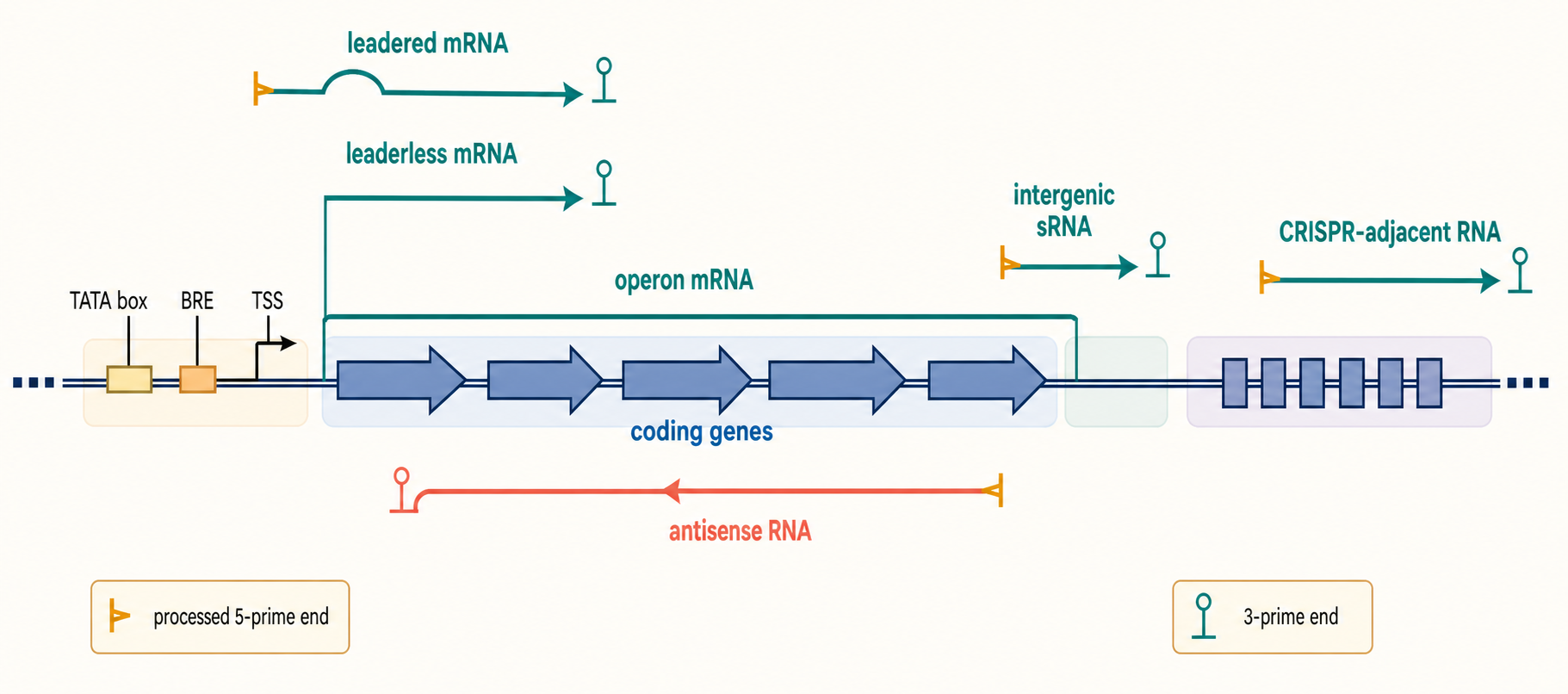
Figure 83.1. Archaeal Transcriptome Architecture. Archaeal transcriptome architecture includes operons, leadered and leaderless mRNAs, antisense RNAs, intergenic sRNAs, and processed transcript ends generated under eukaryote-like transcription initiation rules.
Genome-wide maps of transcription start sites have shown that archaeal genes can produce leadered mRNAs, leaderless mRNAs, alternative 5′ ends, antisense RNAs, and small RNAs from intergenic regions. A leadered mRNA contains a 5′ untranslated region upstream of the coding sequence. A leaderless mRNA begins at or very near the AUG or alternative start codon. Leaderless transcripts are especially important in archaea because they allow direct ribosome recruitment without a long upstream leader. Some archaeal mRNAs also contain Shine-Dalgarno-like sequences that pair with the 3′ end of small-subunit rRNA, but this is not universal. The result is a mixed translation-initiation landscape, with leaderless initiation, short leader-mediated initiation, and more bacterial-like ribosome-binding sites coexisting in the same domain.
Transcript ends are equally important. A transcription start site marks where RNA synthesis begins, whereas a processed 5′ end can be created later by RNA cleavage. Similarly, a 3′ end can reflect transcription termination, endonucleolytic cleavage, exonucleolytic trimming, or decay intermediates. Archaeal transcription termination is less uniformly understood than bacterial rho-independent termination or eukaryotic polyadenylation-coupled termination. Some archaeal transcripts end near U-rich sequences, and several archaeal lineages use termination and processing factors related to the broader archaeal and eukaryotic cleavage-polyadenylation factor family. The main lesson is that archaeal transcript-end maps must be interpreted as a mixture of transcriptional and post-transcriptional events.
Table 83.1. Archaeal Small RNA Classes. Archaeal small RNAs are a heterogeneous group; classification should follow mechanism, biogenesis, protein partners, and evidence, not transcript size alone.
| RNA class | Typical genomic source | Protein partners | Main mechanism | Evidence needed for confident annotation | Common caveat |
|---|---|---|---|---|---|
| Intergenic regulatory sRNA | Standalone transcript from an intergenic promoter or processed intergenic region. | Often unknown; possible Lsm-family or other archaeal RNA-binding proteins. | Trans base-pairing or protein binding tunes mRNA translation, stability, or stress-response output. | Mapped transcript, reproducible condition-dependent expression, target or protein partner, and perturbation phenotype. | A short intergenic peak can be a processed fragment or decay intermediate rather than a regulator. |
| Cis-antisense RNA | Opposite-strand transcript overlapping a gene, UTR, operon end, or mobile-element locus. | Often unknown; RNases and RNA-binding proteins may act after duplex formation. | Sense-antisense pairing can occlude translation or processing sites, alter stability, or reflect transcriptional interference. | Strand-specific overlap, coexpression with the sense RNA, and locus-specific perturbation that changes target RNA, protein, or phenotype. | Antisense transcription is an observation; antisense regulation requires mechanism. |
| Trans-acting sRNA | Intergenic or processed transcript acting on a separate genomic locus. | Candidate Lsm-family proteins or other archaeal RNA-binding proteins; not assumed to be Hfq-dependent. | Partial complementarity or protein recruitment modulates distant mRNAs, often in stress or metabolic networks. | Direct target binding, reporter or compensatory-mutant evidence, protein partner where relevant, and native-condition phenotype. | Complementarity and expression correlation are useful hypotheses but weak proof. |
| crRNA | Processed repeat-spacer transcript from a CRISPR array. | Cas6 or related processing enzymes; type I Cascade/Cas3 or type III Csm/Cmr complexes. | Spacer-derived guide sequence directs immune surveillance of matching DNA or RNA targets. | CRISPR array annotation, mature crRNA ends, Cas association, and demonstrated target interference or target binding. | Spacer or array presence alone does not prove active immunity in the tested condition. |
| C/D box guide RNA | Guide RNA locus with C/D and often C’/D’ motifs and guide regions complementary to rRNA or tRNA. | L7Ae, Nop5, and fibrillarin. | Guide-substrate duplex positions fibrillarin for site-specific 2′-O-methylation. | Box motifs, RNP association, mapped ribose methylation by chemical or mass-spectrometric evidence, and ideally reconstitution. | Guide complementarity predicts a possible target but does not prove modification. |
| H/ACA guide RNA | Guide RNA locus with H/ACA-like structural pockets that flank a target uridine. | Cbf5, Nop10, Gar1, and L7Ae. | Guide pocket positions substrate uridine for Cbf5-catalyzed pseudouridylation. | Structural motif, RNP association, pseudouridine mapping, and biochemical or genetic support. | Eukaryotic snoRNP analogy is useful, but archaea lack a nucleolus and pathway details vary. |
| RNase P RNA | RNase P RNA gene associated with tRNA maturation machinery. | Archaeal RNase P proteins; composition can be reduced or lineage-specific. | RNP removes 5′ leaders from precursor tRNAs. | Conserved RNA structure, protein association, pre-tRNA cleavage activity, and tRNA-maturation phenotype. | RNase P composition and RNA dependence vary among archaea. |
| SRP RNA | Signal recognition particle RNA gene encoding a stable scaffold RNA. | SRP54/Ffh-family protein and archaeal SRP accessory proteins such as SRP19 where present. | RNP scaffold helps target translating ribosomes or nascent proteins to membranes. | Conserved SRP RNA structure, protein binding, co-purification, and protein-targeting evidence. | It is a stable RNP RNA, not automatically a regulatory sRNA. |
| tRNA-derived fragment | Mature or precursor tRNA cleaved during processing, stress response, or decay. | Usually unresolved; may associate with RNA decay or RNA-guided proteins in specific systems. | Candidate regulatory or stress-linked fragment, but many cases may be byproducts of tRNA turnover. | Precise reproducible termini, condition dependence, protection from nonspecific decay, and target or protein-partner evidence. | Detection in small-RNA libraries often reflects processing or degradation rather than function. |
Archaeal small RNAs fall into several mechanistic classes. Intergenic sRNAs are transcribed from regions between annotated genes and may act in trans if they base-pair with distant mRNAs or bind proteins. Cis-antisense RNAs overlap a coding gene or noncoding RNA on the opposite strand and can form RNA duplexes with the sense transcript. CRISPR RNAs are generated from CRISPR arrays and guide Cas proteins to invader nucleic acids. C/D box and H/ACA guide RNAs base-pair with rRNAs or tRNAs and guide nucleotide modification. RNase P RNA and signal recognition particle RNA are stable RNP components with ancient cellular roles. tRNA fragments and rRNA fragments can appear in small-RNA libraries, but their functional status must be tested rather than assumed.
The strongest general reviews of archaeal small RNAs emphasize this diversity and caution against treating all short transcripts as the same biological category (Babski et al., 2014; Gomes-Filho et al., 2018). A regulatory sRNA should ideally have a defined transcription unit, a reproducible expression pattern, a molecular target or protein partner, and a phenotype when perturbed. Many archaeal candidates have only the first two forms of evidence. This does not make them unimportant; it means that the evidence supports existence and condition-dependent expression more strongly than it supports a specific mechanism.
83.2. Archaeal CRISPR-Cas diversity and RNA processing
CRISPR-Cas systems are RNA-guided immune systems that protect bacteria and archaea from viruses, plasmids, and other mobile genetic elements. A CRISPR array consists of repeated DNA sequences separated by spacers that were acquired from invaders. When the array is transcribed, the precursor CRISPR RNA contains many repeat-spacer units in one long RNA. Processing cuts this precursor into individual crRNAs, each carrying one spacer-derived guide segment and repeat-derived handles that help the guide assemble with Cas proteins.
CRISPR immunity has three conceptual stages. During adaptation, fragments of foreign DNA are inserted as new spacers into a CRISPR array. During expression and processing, the array is transcribed and converted into mature crRNAs. During interference, crRNA-Cas complexes search for complementary targets and destroy or disable the invader. Chapter 82 covers the general CRISPR cycle and engineered guide RNAs. This chapter emphasizes archaeal diversity and archaeal RNA processing because archaea contain many type I and type III systems, often with multiple arrays and complex combinations of Cas genes.
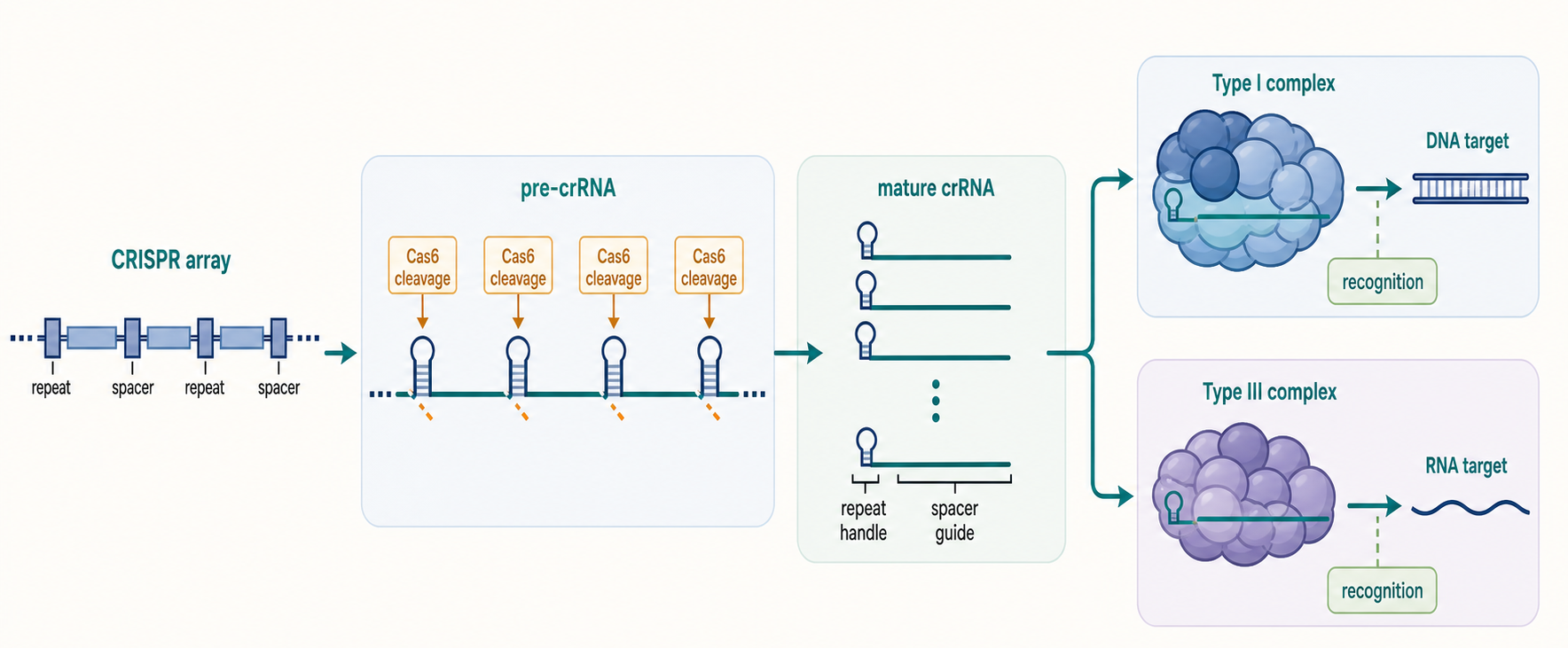
Figure 83.2. CRISPR RNA Maturation. Pre-crRNA processing converts repeat-spacer array transcripts into mature crRNAs that guide archaeal CRISPR-Cas complexes to invader nucleic acids.
In many archaeal systems, Cas6-family endoribonucleases perform the central processing step. Cas6 proteins recognize repeat-derived RNA structures or sequence motifs in the pre-crRNA. The enzyme cleaves at defined positions within or near the repeat, producing crRNAs with repeat-derived 5′ and 3′ handle sequences. The spacer sequence remains available for base pairing with the target. This mechanism illustrates a recurring archaeal RNA principle: a small guide RNA is not simply transcribed in its final form; it is generated by a processing enzyme that reads RNA structure and sequence.
Type I and type III systems use mature crRNAs differently. Type I systems assemble crRNAs into Cascade-like surveillance complexes that bind matching DNA sequences, usually with additional discrimination from a protospacer adjacent motif, or PAM, in the target DNA. After target recognition, Cas3 nuclease-helicase activity degrades DNA. Type III systems assemble crRNAs with Csm or Cmr proteins and can recognize target RNA. In many type III systems, target recognition activates cleavage of RNA, cleavage of DNA in a transcription-dependent manner, and synthesis of cyclic oligoadenylate second messengers that activate accessory ribonucleases. Thus, type III CRISPR systems connect crRNA recognition to broader antiviral signaling.
Archaeal CRISPR-Cas diversity also includes compact class 2 systems discovered from archaeal or archaeal-associated sequence space, as well as CRISPR loci in uncultivated genomes. Some compact nucleases have become attractive for biotechnology because their small size eases delivery constraints, but genome mining does not itself establish native cellular function. A protein encoded near a CRISPR array may be predicted as a Cas protein by comparative genomics, yet the endogenous crRNA processing pathway, target range, and physiological role still require experimental testing.
The landmark demonstration that small CRISPR RNAs guide antiviral defense in prokaryotes helped establish crRNA as the central guide molecule of adaptive immunity (Brouns et al., 2008). For this chapter’s archaeal scope, CRISPR guide-biogenesis reviews, archaeal crRNA-processing experiments, and modern classification syntheses provide the stronger local anchors for Cas6-related maturation, type I and type III diversity, and the distinction between native immune systems and engineered guide formats (Charpentier et al., 2015; Richter et al., 2012; Makarova et al., 2020).
83.3. Antisense RNAs, leader RNAs, and stress regulation
An antisense RNA is made from the DNA strand opposite another transcript. In compact archaeal genomes, antisense transcription can arise easily because promoters, terminators, mobile-element sequences, and overlapping genes are close together. A sense transcript and an antisense transcript can overlap at a 5′ end, a 3′ end, an internal coding region, or an untranslated region. If the two RNAs coexist in the same cell, they may form an RNA duplex. That duplex can change translation, RNA stability, processing, or transcriptional output, depending on the organism and the proteins present.
The causal mechanisms of antisense regulation should be stated carefully. One mechanism is direct base-pairing occlusion, in which the antisense RNA masks a ribosome-binding site, start codon region, processing site, or other functional sequence. A second mechanism is duplex-mediated decay or stabilization, in which the double-stranded region changes sensitivity to ribonucleases or RNA-binding proteins. A third mechanism is transcriptional interference, in which transcription from one promoter affects initiation or elongation from the opposite promoter. A fourth possibility is that the antisense RNA has no regulatory function and reflects pervasive transcription or incomplete termination. Distinguishing among these possibilities requires perturbation experiments, not only strand-specific RNA sequencing.
Leader RNAs add another layer. A 5′ leader can carry a ribosome-binding site, an RNA structure that masks or exposes that site, a metabolite-binding riboswitch aptamer, a protein-binding site, or a processing signal. Archaeal leaders can be very short, and leaderless mRNAs are common enough that the absence of a long leader is not an annotation error by default. For leaderless mRNAs, regulation may occur near the start codon, through transcript abundance, through coding-region structure, or through protein factors that recognize the 5′ end. For leadered mRNAs, archaeal regulation can resemble bacterial leader control in some cases, but archaeal transcription initiation, RNA decay, and translation initiation make the detailed logic different.
Stress regulation reveals why this architecture matters. Archaea face changes in salinity, temperature, oxygen exposure, metal availability, nutrient limitation, pH, and viral pressure. In haloarchaea, salt adaptation imposes constraints on protein charge, RNA folding, and ion balance. In thermophiles and hyperthermophiles, RNA structure and modification must remain compatible with high temperature. In methanogens, energy metabolism and redox state are tightly linked to growth. Transcriptome studies have found many archaeal sRNAs and antisense RNAs whose expression changes during stress, stationary phase, nutrient shifts, or viral exposure. These patterns support regulatory hypotheses, but they do not by themselves identify direct targets.
A useful regulatory model is network buffering. In a compact archaeal genome, one stress condition can alter promoter activity, operon read-through, transcript processing, antisense abundance, CRISPR expression, and RNA modification state at the same time. A small RNA may tune one node in this network rather than acting as a binary on-off switch. For example, an antisense RNA that partially reduces translation of a membrane protein during salt stress could contribute to gradual remodeling rather than a dramatic knockout phenotype. This quantitative view is important because many archaeal phenotypes are conditional, and laboratory conditions may not reproduce the environmental fluctuations that shaped the regulatory system.
The comparison with bacterial small RNAs is helpful but limited. Many bacterial sRNAs depend on Hfq or ProQ as RNA chaperones; the best-studied archaeal sRNA systems do not simply duplicate those networks. Archaeal Lsm-family proteins and other RNA-binding proteins may help organize subsets of RNAs, but archaeal RNA chaperone biology is less developed than bacterial Hfq biology. Therefore, an archaeal sRNA predicted to pair with an mRNA should not be assumed to use the same protein cofactors, target-site grammar, or decay pathway as an enterobacterial sRNA.
83.4. Archaeal RNA modification and RNP systems
Archaeal RNA modification systems are among the most mechanistically explicit examples of archaeal small-RNA function. RNA modification means a chemical change to a nucleotide after the RNA is transcribed. Two common guide-directed modifications are 2′-O-methylation, in which a methyl group is added to the ribose 2′-hydroxyl, and pseudouridylation, in which uridine is isomerized to pseudouridine. Both changes can stabilize local RNA structure, alter hydration and base stacking, influence ribosome function, and help RNAs tolerate challenging physical conditions.
C/D box guide RNPs direct 2′-O-methylation. The guide RNA contains conserved C and D boxes, often with related C’ and D’ boxes, and base-pairs with the substrate RNA near the target nucleotide. The protein L7Ae binds a kink-turn or kink-loop RNA structure, Nop5 organizes the RNP architecture, and fibrillarin catalyzes methyl transfer. The position of the guide-substrate duplex determines which ribose is methylated. Mechanistically, the guide RNA supplies specificity, while the protein enzyme supplies chemistry.
H/ACA guide RNPs direct pseudouridylation. The guide RNA forms a pocket that base-pairs with sequences flanking the target uridine, leaving the target positioned for modification by Cbf5, the archaeal homolog of eukaryotic dyskerin. Nop10, Gar1, and L7Ae stabilize the RNP and help form the active complex. This archaeal machinery is directly comparable to eukaryotic H/ACA small nucleolar RNPs, and it is one reason archaea are central for understanding the evolution of eukaryotic RNA modification systems.
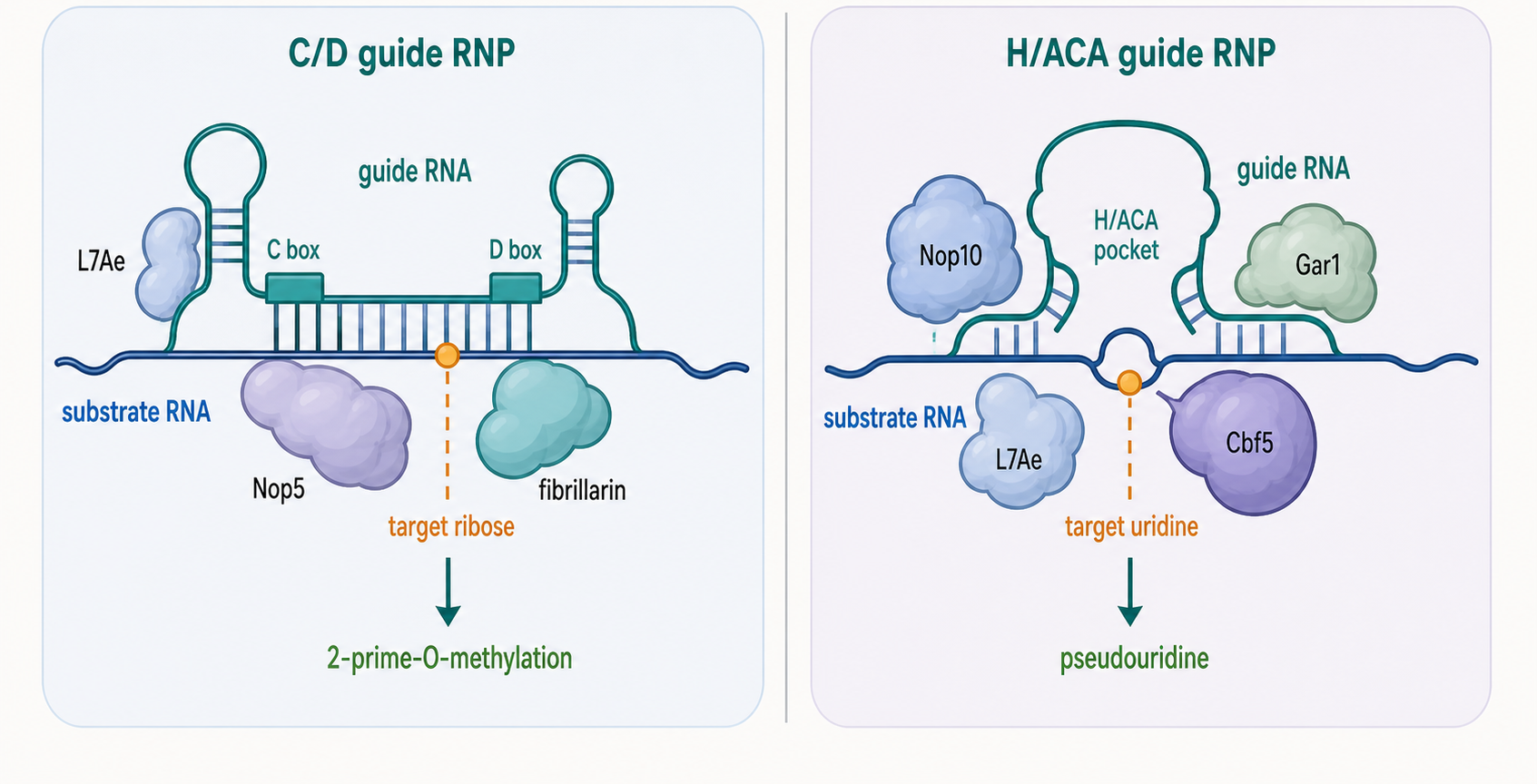
Figure 83.3. Guide RNP Modification. Archaeal guide RNPs use RNA base pairing to position substrate nucleotides for 2′-O-methylation or pseudouridylation.
rRNAs and tRNAs are major substrates for archaeal modification. rRNA modifications cluster in functionally important regions of the ribosome, including decoding and peptidyl-transferase regions, where they can influence folding and activity. tRNAs undergo end processing, intron removal in many archaeal species, CCA addition when CCA is not genomically encoded, base modifications in the anticodon loop and core, and quality-control steps that ensure mature tRNAs can be aminoacylated. Archaeal tRNA introns are removed by specialized tRNA splicing endonucleases that recognize structural features around the splice sites. The subsequent ligation chemistry differs across life and remains an important comparative topic.
RNase P, signal recognition particle, and ribosome biogenesis RNPs further expand the archaeal RNP repertoire. RNase P removes 5′ leaders from precursor tRNAs in many organisms and is classically an RNA-based ribozyme assisted by proteins. Some archaeal systems have reduced or unusual RNase P compositions, so the presence, absence, and protein dependence of RNase P activity should be checked by lineage rather than assumed. Signal recognition particle RNA helps target translating ribosomes or nascent proteins to membranes, linking RNA structure to protein trafficking. rRNA processing uses a mixture of transcription, cleavage, trimming, modification, and assembly with ribosomal proteins.
RNA modification is not merely decorative chemistry. In high-temperature archaea, modifications can contribute to thermostability, although not every modification should be interpreted as a heat-adaptation mark. In halophiles, ionic conditions affect RNA folding and RNP interactions. In methanogens and anaerobic archaea, metabolic state can influence modification substrates and cofactor availability. The evidence for particular modifications comes from biochemical mapping, mass spectrometry, comparative prediction of guide RNAs, structural studies, and genetic perturbation. Each method has limits: guide complementarity predicts possible targets, but chemical mapping or mass spectrometry is needed to show that a nucleotide is actually modified.
83.5. Comparative lessons for eukaryotic and bacterial RNA biology
Archaea teach comparative RNA biology because they combine features that are separated in common textbook organisms. Archaeal transcription initiation resembles a simplified eukaryotic system, but archaeal cells lack a nucleus and often organize genes in operons. Archaeal ribosomes and translation factors contain both bacterial-like and eukaryote-like features. Archaeal small RNAs include CRISPR guides, antisense RNAs, and modification guide RNAs, but archaea do not have canonical animal microRNA pathways. This mosaic organization is not an evolutionary halfway point; it is a stable biological design with its own rules.
The clearest eukaryotic connection is in RNP architecture. Archaeal C/D and H/ACA RNPs provide compact versions of the guide RNPs that eukaryotes use in the nucleolus to modify rRNA and small nuclear RNAs. Archaeal transcription factors and RNA polymerase subunits also illuminate the ancestry of eukaryotic transcription. These comparisons support the view that many eukaryotic information-processing systems have archaeal roots, although modern eukaryotes added nuclear compartmentalization, chromatin complexity, spliceosomal introns, and expanded RNA surveillance pathways.
The bacterial comparison is different. Bacteria and archaea both lack nuclei, often use operons, and respond rapidly to environmental change. Both domains use CRISPR-Cas immunity and can produce antisense RNAs and short regulatory transcripts. Yet bacterial small-RNA paradigms are dominated by a limited number of model organisms and RNA chaperones, especially Hfq in enterobacteria. Archaeal small-RNA pathways require their own target validation, protein-partner discovery, and organism-specific interpretation.
Asgard archaea add a further comparative layer. Genomic and experimental work on Asgard lineages has identified eukaryotic signature proteins and, more recently, archaeal Argonaute-associated RNA silencing activity in at least one Asgard context (Bastiaanssen et al., 2024). This does not mean that archaea have animal-like RNA interference. It means that RNA-guided nucleic acid recognition is broader and older than any single modern pathway. Comparisons should specify the protein family, guide type, target type, and experimental organism.
Comparative lessons also expose model-system bias. Haloferax, Sulfolobus, Methanosarcina, Pyrococcus, Thermococcus, and a few other lineages are valuable because they can be grown, perturbed, and mapped. But archaeal diversity extends far beyond these systems. Many archaeal genomes come from metagenomic assemblies without direct transcriptome data, and many small RNAs are predicted computationally. A claim that “archaea do X” should therefore be read as “archaea studied so far show X under tested conditions” unless broad phylogenetic and experimental support is available.
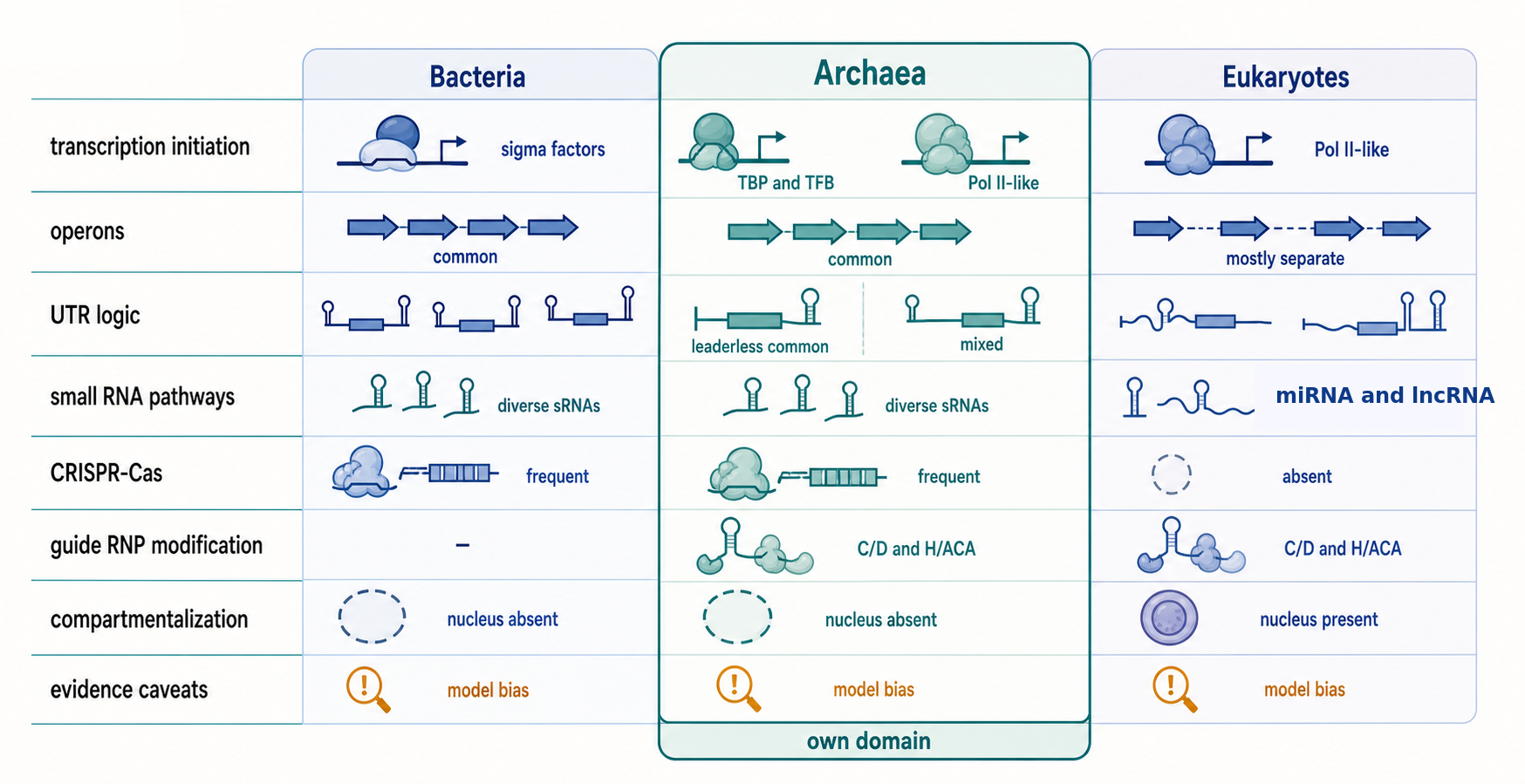
Figure 83.4. Comparative Archaeal Logic. Archaea combine bacterial-like genome compaction, eukaryote-like transcription machinery, and archaeal-specific RNA-guided defense and processing systems.
Experimental Foundations and Evidence
Archaeal RNA biology depends on mapping RNA molecules accurately. Standard RNA sequencing measures abundance but can blur primary transcripts, processed fragments, and degradation intermediates. Differential RNA sequencing enriches or distinguishes primary 5′ triphosphate ends from processed 5′ monophosphate ends, helping identify transcription start sites. Small-RNA sequencing enriches short molecules but is sensitive to size selection, RNA end chemistry, secondary structure, and modifications that interfere with adapter ligation or reverse transcription. Termini-focused methods can map 3′ ends, but a 3′ end may represent termination, processing, or decay.
Strand specificity is essential. Without strand information, antisense RNAs and overlapping transcription units are easily misassigned. High genomic AT or GC content, repetitive CRISPR arrays, and multicopy elements can also complicate read mapping. CRISPR arrays are especially challenging because repeats map to many positions, while spacers may match viruses, plasmids, or uncharacterized mobile elements. Careful analysis separates repeat-derived crRNA handles, spacer-derived guide segments, array transcripts, and possible degradation products.
Biochemical and genetic evidence converts transcript discovery into mechanism. Northern blotting can validate RNA size and condition-dependent expression. Deleting a small-RNA gene, promoter, processing site, or Cas nuclease can test phenotypes. Reporter assays can test whether a leader region or antisense RNA changes translation or RNA stability. RNA co-immunoprecipitation can identify RNAs bound by Cas proteins, Lsm-family proteins, C/D RNP proteins, or H/ACA RNP proteins. In vitro reconstitution can show whether a guide RNA and purified proteins are sufficient for cleavage, modification, or target binding.
Structural biology has been especially powerful for archaeal RNPs. Crystal structures and cryo-electron microscopy of archaeal C/D RNPs, H/ACA RNPs, ribosomal subcomplexes, and CRISPR complexes show how guide RNAs are positioned relative to catalytic proteins. These structures explain specificity in a way that sequencing alone cannot. A guide RNA’s base-pairing pattern predicts a target, but an RNP structure explains why a particular nucleotide is placed in an active site or why a target mismatch blocks interference.
Evidence caveats should remain visible. Growth in a rich laboratory medium may suppress stress pathways that operate in natural habitats. A deletion phenotype can be absent because of redundancy, condition specificity, compensatory changes, or weak quantitative effects. Conversely, overexpression of an sRNA can create artificial duplexes or saturate RNA-binding proteins. Comparative genomics can identify conserved RNA families, but lack of conservation does not prove lack of function because many archaeal RNAs may be lineage-specific or mobile-element-associated.
Table 83.2. Evidence Standards for Archaeal Small RNA Function. Functional claims about archaeal small RNAs become stronger as evidence moves from detection to target validation, perturbation, biochemical mechanism, and structure.
| Evidence level | What it shows | What it does not show | Example assay | Interpretation strength |
|---|---|---|---|---|
| RNA-seq detection | A discrete RNA species is present under the sampled condition. | Function, precise termini, target identity, or regulatory mechanism. | Total RNA-seq or small-RNA-seq. | Discovery-level evidence only. |
| Strand-specific expression | The transcript comes from a defined genomic strand and can reveal antisense or intergenic origin. | Direct regulation of the overlapping or predicted target. | Strand-specific RNA-seq or differential RNA-seq. | Stronger annotation, weak mechanism. |
| Mapped transcript ends | Primary starts, processed 5′ ends, 3′ ends, or mature crRNA and guide RNA boundaries. | Whether each end reflects termination, processing, decay, or function without additional evidence. | dRNA-seq, termini-focused sequencing, northern blot size validation. | Strong biogenesis evidence when chemistry is controlled. |
| Conservation or covariance | A sequence, structure, repeat, guide motif, or RNA family is preserved across related genomes. | Expression in the studied condition or physiological activity. | Comparative genomics, covariance models, CRISPR repeat-spacer annotation. | Moderate support; strongest for structured RNP RNAs. |
| Target prediction | A plausible mRNA, rRNA, tRNA, viral, plasmid, or protospacer target exists. | Physical binding, regulatory effect, cleavage, or modification. | Base-pairing prediction, spacer-protospacer search, C/D or H/ACA target scan. | Hypothesis-generating evidence. |
| RNA-protein association | The RNA is part of, or enriched with, a candidate RNP complex. | Direct target regulation, catalytic sufficiency, or native functional consequence. | RIP, CLIP-like capture, or co-immunoprecipitation of Cas, L7Ae, Cbf5, fibrillarin, or Lsm-family proteins. | Moderate evidence, stronger with specificity controls. |
| Perturbation phenotype | A small-RNA locus, processing site, or protein partner affects growth, stress response, RNA abundance, or immunity. | The direct molecular target if pleiotropy, compensation, or condition specificity remains unresolved. | Deletion, knockdown, promoter mutation, processing-site mutation, or overexpression. | Moderate to strong, depending on rescue and specificity. |
| Reporter or target assay | A predicted leader, antisense target, or mRNA responds to the RNA or its binding site. | Full native network behavior or absence of off-target effects. | Reporter fusion, target-site mutagenesis, compensatory mutations, or target RNA stability assay. | Strong evidence for a direct regulatory link. |
| Biochemical reconstitution | Purified RNA and proteins can perform processing, binding, cleavage, or modification. | In vivo timing, condition dependence, or cellular importance. | Cas6 pre-crRNA cleavage, C/D RNP methylation, H/ACA RNP pseudouridylation, or guide-target binding assay. | Strong mechanistic evidence. |
| Structural mechanism | RNA, protein, substrate, and catalytic or recognition geometry are directly visualized. | Cellular abundance, dynamics, or physiological relevance by itself. | X-ray crystallography, cryo-EM, or NMR of archaeal CRISPR or guide RNP complexes. | Strongest mechanism evidence when paired with function. |
Biological Contexts Across Archaeal Diversity
Haloarchaea live in high-salt environments and provide tractable genetics for studying archaeal promoters, small RNAs, and RNA processing. Their intracellular ionic conditions affect RNA folding and protein-RNA interactions, making them useful for asking how regulation works in salt-adapted cells. Haloferax volcanii has become a major system for transcriptome mapping, RNA processing, tRNA biology, and CRISPR-related studies.
Sulfolobus and related thermoacidophiles grow at high temperature and low pH. Their RNAs and RNPs must function under conditions that would destabilize many mesophilic complexes. Sulfolobus systems have contributed heavily to the study of archaeal CRISPR-Cas, viral interactions, transcription, and RNA stability. However, thermoacidophile data should not be treated as a universal archaeal default.
Methanogens connect RNA regulation to anaerobic energy metabolism. Methanogenesis requires coordinated expression of enzymes, cofactors, and membrane complexes. Small RNAs and antisense transcripts in methanogens may participate in metabolic tuning, stress response, and growth-phase regulation. Experimental interpretation can be difficult because metabolic state, redox balance, and growth rate are tightly coupled.
Hyperthermophiles such as Pyrococcus and Thermococcus species have informed archaeal RNA modification, tRNA processing, and thermostable RNP structure. Their proteins and RNPs are often biochemically robust, making them attractive for structural and enzymological studies. Yet thermostability can bias the field toward mechanisms that are easy to purify and crystallize.
Uncultivated and recently cultivated archaeal groups, including Asgard archaea, expand the possible range of archaeal RNA systems. Metagenomes can reveal CRISPR arrays, Cas genes, Argonaute homologs, RNA modification enzymes, and promoter-like motifs. But genome-resolved predictions must be separated from demonstrated RNA expression and mechanism. The next phase of archaeal RNA biology will depend on extending transcriptomics, genetics, and biochemistry beyond the classic model lineages.
Technology, Computational, and Engineering Links
Archaeal CRISPR systems have had major technological consequences. The concept that a short RNA guide can direct a protein complex to a nucleic acid target underlies genome editing, diagnostics, transcriptional control, and RNA targeting. Many widely used tools were developed from bacterial systems, but archaeal CRISPR diversity remains a source of compact nucleases, type III signaling enzymes, thermostable proteins, and unusual guide-processing mechanisms. Hypercompact Cas proteins are especially interesting for delivery-limited applications, although technological performance does not necessarily reveal the native biological role of the system.
Archaeal guide RNPs are also useful for understanding and engineering RNA modification. C/D and H/ACA RNPs show how guide-substrate pairing can position a chemical reaction at a defined nucleotide. This logic inspires programmable RNA modification concepts, but natural archaeal systems operate within carefully assembled RNP architectures. Engineering requires more than guide complementarity; it requires correct folding, protein assembly, target access, and avoidance of off-target modification.
Computational annotation is indispensable but risky. CRISPR arrays can be predicted from repeat-spacer patterns, Cas genes from protein domains, C/D guide RNAs from box motifs and target complementarity, and H/ACA guide RNAs from structural features. Antisense RNAs and intergenic sRNAs can be predicted from transcriptome peaks and conservation. Each prediction class has false positives. Repetitive genomes, mobile elements, RNA modifications, and growth-condition specificity can all mislead automated pipelines.
For experimental design, archaeal systems offer useful contrasts. A researcher interested in RNA-guided immunity may choose an organism with active type I or type III CRISPR loci and known viruses or plasmids. A researcher interested in guide-directed modification may choose a thermophilic archaeon with stable RNPs and mapped rRNA modifications. A researcher interested in antisense regulation may choose a genetically tractable species with strand-specific transcriptome data across stress conditions. In each case, the organism’s ecology and molecular toolkit should guide the question.
Recent Consensus
Current consensus holds that archaeal transcriptomes are complex, condition-dependent, and rich in noncoding and small RNA species. The best-supported small-RNA classes are CRISPR RNAs, C/D and H/ACA guide RNAs, stable RNP RNAs, and validated antisense or intergenic regulatory RNAs. Transcriptome surveys have expanded the candidate list greatly, but mechanistic validation lags behind discovery.
There is strong consensus that CRISPR-Cas systems are highly abundant and diverse in archaea and that crRNA maturation is a central step in archaeal immunity. There is also strong consensus that C/D and H/ACA RNPs are ancient RNA-guided modification systems with deep links to eukaryotic nucleolar RNPs. The consensus is more cautious for global antisense regulation, because many antisense transcripts have been observed but fewer have been linked to direct targets and phenotypes.
The strongest chapter-level anchors in the local bibliography are the archaeal small-RNA reviews by Babski et al. (2014) and Gomes-Filho et al. (2018), the broader archaeal RNA-processing reviews by Clouet-d’Orval et al. (2018) and Liang et al. (2025), the CRISPR guide-biogenesis and classification sources by Charpentier et al. (2015), Richter et al. (2012), and Makarova et al. (2020), and focused examples such as archaeal pseudouridylation mapping and Asgard archaeal Argonaute activity.
Open Questions, Controversies, Deprecated Models, and Common Misconceptions
Open questions:
- How should archaeal small-RNA targets be assigned? Many archaeal sRNAs have predicted mRNA targets based on complementarity, proximity, or expression correlation. Prediction is useful, but direct target binding, altered translation or stability, and phenotypic consequence remain to be shown for many candidates.
- Which protein partnerships organize archaeal small RNAs? Bacterial small-RNA biology was transformed by identifying RNA chaperones such as Hfq and ProQ. Archaeal RNA-binding proteins, including Lsm-family proteins and CRISPR-associated proteins, may organize subsets of small RNAs, but the global grammar of archaeal sRNA-protein interactions is still incomplete.
- What is the ecological relevance of archaeal small RNAs? Many archaeal RNA studies are performed in laboratory conditions that only approximate natural habitats. Stress-responsive RNAs may be most important during fluctuating salinity, temperature transitions, viral blooms, nutrient pulses, syntrophic interactions, or biofilm-like growth states that are difficult to reproduce.
- How broad is archaeal RNA biology across lineages? Archaeal RNA biology is expanding beyond classic euryarchaeal and crenarchaeal models, but many lineages still lack matched genome, transcriptome, proteome, and genetic data. Asgard archaea are especially important for comparative biology, yet many conclusions remain early because cultivation and manipulation are challenging.
Common misconceptions:
- “A small RNA is not automatically a regulator.” An antisense transcript is not automatically an inhibitory antisense regulator. A predicted C/D or H/ACA guide RNA does not prove that the predicted nucleotide is modified.
- “A CRISPR array does not prove active immunity under the tested condition.” Archaeal similarity to eukaryotes does not mean that archaea have eukaryotic nuclear RNA processing, and archaeal similarity to bacteria does not mean that archaeal small RNAs use bacterial Hfq-like rules.