Chapter 149. Artificial Nucleic Acid Backbones, Sugar Modifications, LNA, PNA, PMO, XNA, and Stereochemistry
Scope Note
This chapter explains how artificial nucleic acid chemistry changes the physical behavior, biological recognition, manufacturability, and safety profile of oligonucleotides used in RNA science and RNA-directed medicine. The chapter treats backbone substitution, sugar modification, constrained nucleosides, neutral artificial backbones, xeno nucleic acids, hybridization thermodynamics, nuclease resistance, protein binding, stereochemistry, and practical uses in diagnostics, therapeutics, sensors, and synthetic biology. The emphasis is not that any single chemistry is universally superior, but that each chemical change moves several coupled properties at once: affinity, selectivity, charge, hydration, conformational preorganization, enzyme compatibility, protein binding, tissue distribution, synthetic yield, impurity profile, and toxicology.
Executive Summary
Natural RNA and DNA use a negatively charged sugar-phosphate backbone that is chemically familiar to polymerases, nucleases, RNA-binding proteins, and innate immune sensors. Artificial nucleic acid chemistry keeps some parts of this architecture and changes others. Phosphorothioate chemistry replaces one nonbridging phosphate oxygen with sulfur, greatly improving nuclease resistance and plasma protein binding but creating a stereogenic phosphorus center and protein-binding liabilities. 2′-OMe and 2′-MOE sugars use ribose 2′ substituents to increase nuclease resistance, tune immune recognition, and stabilize duplexes. Locked nucleic acid and constrained ethyl nucleic acid restrict sugar pucker toward RNA-like conformations, often increasing affinity per modified residue while also narrowing the design window for toxicity and mismatch behavior.
Neutral or strongly altered backbones such as peptide nucleic acid, phosphorodiamidate morpholino oligomer, tricyclo-DNA, acyclic XNA, and triazole-linked systems show that nucleobase recognition can be separated from the natural phosphate-ribose scaffold. These chemistries can yield high nuclease resistance and distinctive hybridization behavior, but their biological use depends on delivery, solubility, synthesis, and compatibility with enzymes or cellular pathways. Hybridization is controlled by base pairing, stacking, conformational preorganization, electrostatics, hydration, and mismatch penalties; nuclease resistance is controlled by whether endogenous nucleases can bind and catalyze cleavage at the modified linkage or nearby natural linkage. Protein binding is both a benefit and a hazard: it can prolong circulation and tissue distribution for phosphorothioate oligonucleotides, but excessive or sequence-dependent binding can perturb proteins, activate complement, or concentrate compounds in sensitive tissues.
Stereochemistry is a central chemical variable rather than a minor synthetic detail. Each phosphorothioate linkage has Rp or Sp configuration, so a conventional all-PS oligonucleotide is a complex mixture of many stereoisomers. Stereopure synthesis can produce defined patterns that change RNase H recruitment, affinity, nuclease resistance, and pharmacology, but it also raises route, scale, analytical, and cost constraints. The practical lesson is design-by-mechanism: choose chemistry according to whether the intended molecule must recruit RNase H, block a splice site, evade nucleases, enter a diagnostic assay, serve as an artificial genetic polymer, or operate as a sensor.
Concept Inventory
- Artificial nucleic acid: an oligomer that preserves sequence-programmed recognition through nucleobases while changing the backbone, sugar, linkage, stereochemistry, or substituents relative to natural RNA or DNA. The term includes chemically modified therapeutic oligonucleotides, probe chemistries, and experimental genetic polymers.
- Backbone modification: a change in the chain that connects nucleobase-bearing units. A phosphorothioate is a minimal backbone modification because the phosphate remains anionic and tetrahedral; PNA and PMO are radical modifications because the repeating scaffold is no longer the natural sugar-phosphate chain.
- Sugar modification: a change on the ribose or deoxyribose ring that alters conformation, hydration, nuclease recognition, or duplex geometry. 2′-OMe and 2′-MOE are substituent modifications; LNA and cEt are conformationally constrained modifications.
- Xeno nucleic acid: a nonnatural nucleic-acid-like polymer with alternative backbone or sugar chemistry that can store sequence information and pair with complementary nucleic acids. In synthetic biology, XNA also implies the possibility of replication or evolution by engineered enzymes, although many diagnostic and therapeutic artificial backbones are not enzyme-replicated.
- Stereopure oligonucleotide: an oligonucleotide in which stereogenic internucleotide linkages have defined configurations rather than a statistical mixture. In the phosphorothioate context, this usually means defined Rp and Sp patterns at selected or all PS linkages.
What to Know Before Reading This Chapter
A reader should know that natural RNA is usually a 5′-to-3′ polymer in which each ribose is connected by a phosphodiester linkage. Each phosphate carries negative charge near physiological pH, and that charge shapes folding, protein binding, metal-ion interactions, and enzymatic recognition. A reader should also know that Watson-Crick base pairing is specific but not absolute: duplex stability depends on sequence, salt, strand concentration, modifications, terminal effects, and mismatch position. Chapter 3 explains thermodynamic vocabulary such as melting temperature, enthalpy, entropy, and ensemble; Chapter 150 explains how antisense oligonucleotides use these chemistries to recruit RNase H or block RNA processing; Chapter 158 explains why pharmacology and toxicology cannot be inferred from affinity alone.
This chapter uses a recurring therapeutic example: a short antisense oligonucleotide designed to bind a disease-associated pre-mRNA or mRNA. A gapmer version has modified flanks for affinity and stability but a central DNA-like gap that can recruit RNase H. A splice-switching version uses a nuclease-resistant chemistry to block an RNA element without inducing RNA cleavage. A diagnostic probe version is optimized for hybridization readout and discrimination rather than long in vivo exposure. The same base sequence can behave very differently in these formats because chemistry changes the physical object presented to proteins, nucleases, and cells.
149.1. Phosphorothioate and Backbone Chemistry
The natural phosphodiester backbone is a repeated linkage in which phosphate connects the 3′ oxygen of one sugar to the 5′ oxygen of the next sugar. A phosphorothioate linkage is formed when one nonbridging oxygen on this phosphate is replaced by sulfur. This single-atom change is one of the most important modifications in oligonucleotide medicine because it preserves an anionic backbone while making the linkage less susceptible to many nucleases and more likely to bind serum and cell-surface proteins. The sulfur atom is larger and more polarizable than oxygen, and the local geometry, hydration, metal-ion coordination, and protein-contact pattern are changed even though the overall chain still resembles a nucleic acid.
The first principle is that a backbone is not a passive string. It is the chemical surface that nucleases, polymerases, RNase H, RNA-binding proteins, scavenger receptors, and formulation components encounter before any base pair is read. Phosphodiester RNA and DNA are rapidly attacked by many endonucleases and exonucleases because biological systems have evolved proteins that recognize the charged sugar-phosphate geometry and position water or metal ions for cleavage. Phosphorothioate substitution disrupts this recognition and catalytic geometry enough to slow degradation. It also increases nonspecific and semispecific binding to proteins. In therapeutic antisense chemistry, that protein binding helps distribute compounds beyond rapid renal filtration; in toxicology, the same property can contribute to off-target protein interactions, complement activation, coagulation effects, or tissue accumulation.
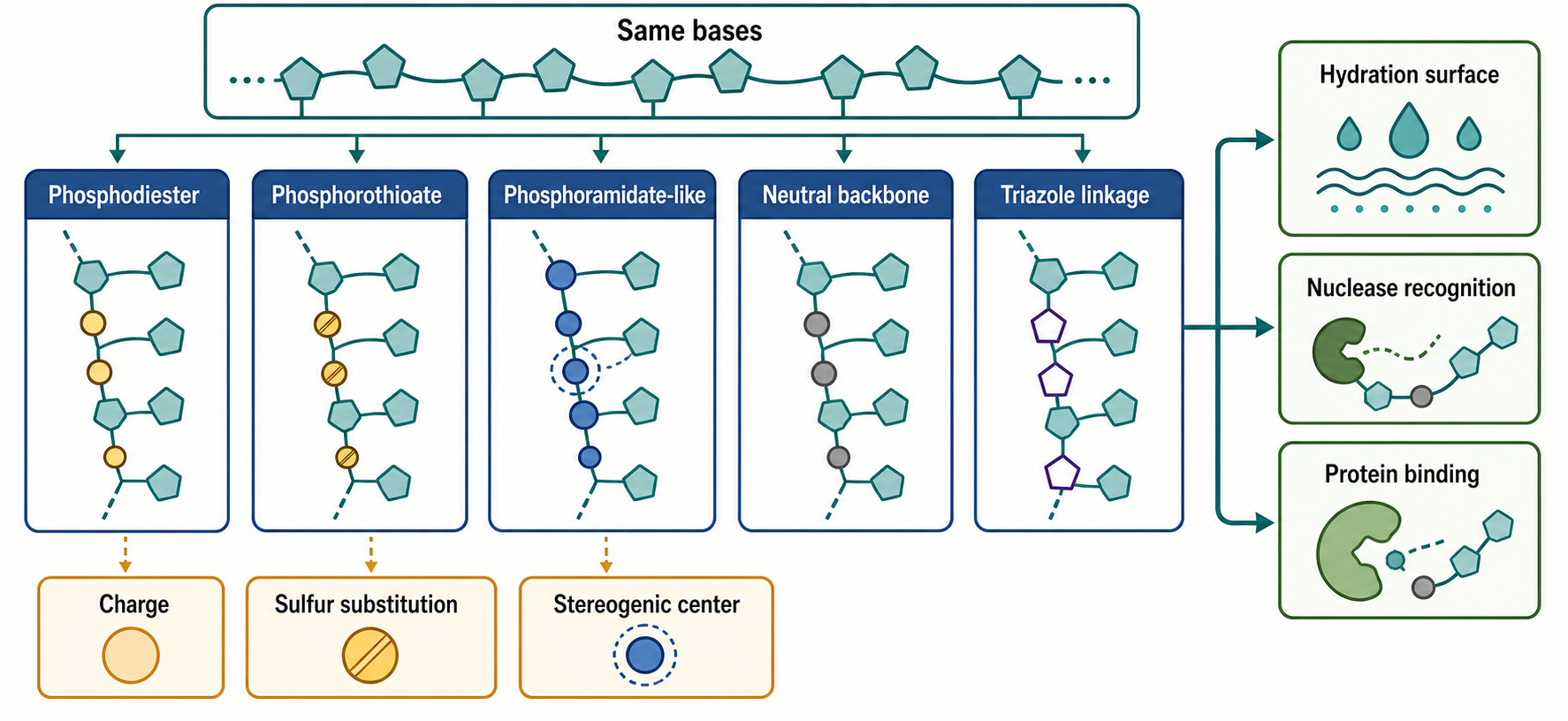
Figure 149.1. Backbone Chemistry Changes the Biological Surface. A single-atom or linkage-level change can preserve base sequence while changing charge, polarizability, hydration, nuclease recognition, protein binding, and stereochemistry.
A phosphorothioate linkage also creates stereochemistry. In an ordinary phosphodiester, the two nonbridging oxygens are chemically equivalent in an achiral environment. After one oxygen is replaced by sulfur, the phosphorus atom becomes stereogenic because sulfur and oxygen are distinct substituents. The two configurations are called Rp and Sp. A conventional solid-phase synthesis that introduces PS linkages without stereocontrol usually gives a mixture at each linkage. A 20-mer with 19 fully phosphorothioated linkages can therefore contain a very large population of stereoisomers. The product can still be a clinically useful material because it is sequence-defined and has reproducible average properties, but it is not a single stereochemical molecule.
Other backbone modifications move farther away from natural phosphodiester chemistry. Methylphosphonate neutralizes the linkage but can reduce water solubility and alter RNase H compatibility. Phosphoramidate and boranophosphate linkages change charge distribution and enzyme recognition. Triazole-linked nucleic acids replace the phosphate linkage with a click-chemistry-derived connection and are of interest for synthetic biology and biotechnology because they test how much of the natural linkage can be replaced while preserving information transfer or duplex formation. These variants illustrate a general design rule: preserving nucleobases is not enough. The spacing, torsion angles, charge, hydration, and conformational flexibility of the linkage must place bases in a geometry that supports the intended pairing or protein interaction.
Table 149.1. Backbone Modification Property Matrix. Backbone modifications change several coupled properties, so a chemistry cannot be ranked by one feature alone.
| Chemistry | Charge | Stereochemistry | Nuclease resistance | RNase H compatibility | Protein-binding tendency | Common uses | Main caveat |
|---|---|---|---|---|---|---|---|
| Phosphodiester DNA or RNA | Anionic sugar-phosphate backbone | Natural sugar stereochemistry; nonbridging phosphate oxygens are not PS-like Rp/Sp centers | Low for short unmodified oligonucleotides in many biological matrices | DNA strands in RNA-DNA hybrids can support RNase H; RNA-like duplexes do not provide the usual gapmer substrate | Readily recognized by nucleases and many nucleic-acid-binding proteins | Enzyme-compatible controls, natural substrates, transient probes | Rapid degradation and biological recognition often limit drug-like use |
| Phosphorothioate (PS) | Anionic, with one nonbridging oxygen replaced by sulfur | Each PS linkage has Rp or Sp configuration unless stereocontrolled | Often improved, especially with terminal or full-backbone substitution | Compatible in DNA-like gapmer regions when local geometry remains RNase H-readable | Increased plasma, cell-surface, and intracellular protein binding can aid distribution or create liabilities | Antisense gapmers, terminal protection, therapeutic backbone stabilization | Protein-binding toxicology and stereochemical mixtures must be managed |
| Methylphosphonate | Locally neutralized linkage | Linkage can be stereogenic and position-dependent | Increased relative to phosphodiester at modified positions | Extensive substitution generally weakens RNase H recruitment | Reduced electrostatic binding but greater hydrophobic and solubility effects | Mechanistic probes and selected neutral-linkage designs | Solubility, synthesis, and enzyme compatibility can become limiting |
| Phosphoramidate or PMO-like backbone | Neutral or charge-altered, depending on scaffold | Not governed by PS Rp/Sp patterns; scaffold stereochemistry is chemistry-specific | High for morpholino-type steric blockers | PMO-like oligomers generally do not recruit RNase H | Less natural phosphate-like recognition; uptake and distribution depend on delivery strategy | Splice-switching and translation-blocking steric blockers | Lack of catalytic RNA cleavage and tissue delivery constraints |
| PNA-like pseudopeptide backbone | Neutral | No PS stereocenters; sequence and side-chain choices control three-dimensional behavior | High because natural nucleases do not read the backbone efficiently | Does not form the standard RNase H substrate | Aggregation, solubility, and conjugate-dependent protein interactions can dominate | Diagnostic probes, FISH, strand invasion, steric-blocking research tools | Cellular uptake and bioavailability are common bottlenecks |
| Triazole-linked or click-linked systems | Usually less phosphate-like; charge depends on design | Linkage geometry and regiochemistry are design-specific rather than PS Rp/Sp | High at replaced linkages when the natural scissile phosphate is absent | Context-dependent and usually not assumed RNase H-compatible without testing | Nonnatural surface makes protein recognition hard to generalize | Click-assembled constructs, synthetic-biology polymers, robust probe architectures | Enzyme compatibility and information-transfer behavior are system-specific |
The evidence basis for backbone chemistry comes from several layers. Organic synthesis establishes that the intended linkage can be made, purified, and characterized. Biophysical measurements such as UV melting and calorimetry measure duplex stability. Nuclease assays test degradation in purified enzyme reactions, serum, plasma, cell lysates, or tissue homogenates. Protein-binding studies measure broad or specific interactions with albumin, lipoproteins, heparin-binding proteins, or intracellular proteins. Cell and animal studies then show whether those chemical effects translate into potency, distribution, persistence, or toxicity. Reviews of artificial nucleic acids and therapeutic oligonucleotide chemistry emphasize that these layers often disagree in detail: a modification that stabilizes a duplex in buffer may not improve cellular potency if delivery, endosomal escape, or protein sequestration becomes limiting (Bege and Borbas 2022; Epple et al. 2021).
Boundary cases matter. A few phosphorothioate linkages can protect vulnerable termini without making the whole chain strongly protein-binding. A fully phosphorothioated backbone may be useful for many antisense drugs, but it is not automatically best for every siRNA, aptamer, diagnostic probe, or synthetic-biology polymer. RNase H gapmers typically require a central DNA-like region that supports RNase H recognition, and some backbone or sugar substitutions in the gap can reduce cleavage even when target binding is strong. Conversely, steric-blocking oligonucleotides do not need RNase H and can use chemistries that are poor RNase H substrates if they bind the target and reach the relevant compartment.
Do not overgeneralize “nuclease resistant” to mean biologically inert. A phosphorothioate oligonucleotide can resist cleavage while still binding proteins, activating innate immune pathways depending on sequence and chemistry, or causing class-specific toxicities at sufficient exposure. The design question is therefore not whether the backbone is stable in isolation, but which biological interfaces the backbone creates and which interfaces it removes.
Box 149.1. Chemistry Labels Are Not Mechanism Claims
Render-ready box content
A chemistry label is a starting hypothesis, not a mechanism claim. Calling an oligonucleotide “phosphorothioate” says that one nonbridging phosphate oxygen has been replaced by sulfur; it does not by itself specify target-site accessibility, RNase H recruitment, innate immune sensing, tissue uptake, or toxicity. Calling a probe “LNA-containing” predicts conformational preorganization and high-affinity potential, but sequence context, placement, length, and assay conditions decide specificity. Calling a polymer “neutral” does not mean it is inert or deliverable; PNA and PMO avoid phosphate charge but must still handle solubility, aggregation, biodistribution, and cell entry. For each modified oligonucleotide, ask three questions: which chemical surface changed, which biological interface is supposed to read that surface, and which assay directly tests that interface?
149.2. 2-prime-OMe, 2-prime-MOE, LNA, cEt, and Constrained Sugars
RNA differs from DNA partly because ribose has a 2′ hydroxyl group. That 2′-OH influences sugar pucker, hydration, minor-groove geometry, nuclease susceptibility, and recognition by RNA-binding proteins. Sugar modifications exploit this position. A 2′-O-methyl modification replaces the 2′ hydroxyl hydrogen with a methyl group; a 2′-O-methoxyethyl modification adds a larger methoxyethyl substituent. Both modifications retain a ribose-like sugar but alter local conformation and reduce the ability of ribonucleases to use the 2′-OH or nearby geometry for cleavage. In many duplex contexts, 2′-OMe and 2′-MOE increase affinity for complementary RNA compared with DNA at the same position, although the magnitude depends on sequence and modification pattern.
The prerequisite concept is sugar pucker. Five-membered furanose rings are not flat; they adopt conformations often described by which atom is displaced from the ring plane. RNA duplexes favor C3′-endo sugar pucker and A-form geometry, whereas DNA duplexes often favor C2′-endo sugar pucker and B-form geometry. A 2′ substituent tends to bias the sugar toward RNA-like geometry, helping a modified strand pair with RNA in an A-form-like duplex. This is why sugar modifications can increase RNA affinity without changing the bases. The modification preorganizes the strand closer to the bound conformation, reducing the conformational penalty paid during duplex formation.
Locked nucleic acid is a more extreme example. In LNA, a bridge connects the 2′ oxygen and 4′ carbon of the ribose, locking the sugar into a conformation that strongly favors an RNA-like C3′-endo pucker. Constrained ethyl nucleic acid is a related bicyclic nucleic acid in which the bridge includes an ethyl constraint. Both LNA and cEt can raise duplex melting temperature per residue and improve potency in antisense designs, but the benefit is not merely “more affinity.” High-affinity modifications change mismatch discrimination, off-target binding, protein interactions, hepatotoxicity risk, and manufacturability. A design with too many high-affinity constrained residues may bind partially complementary RNAs or proteins in ways that reduce safety. A design with too few may fail to reach useful potency.
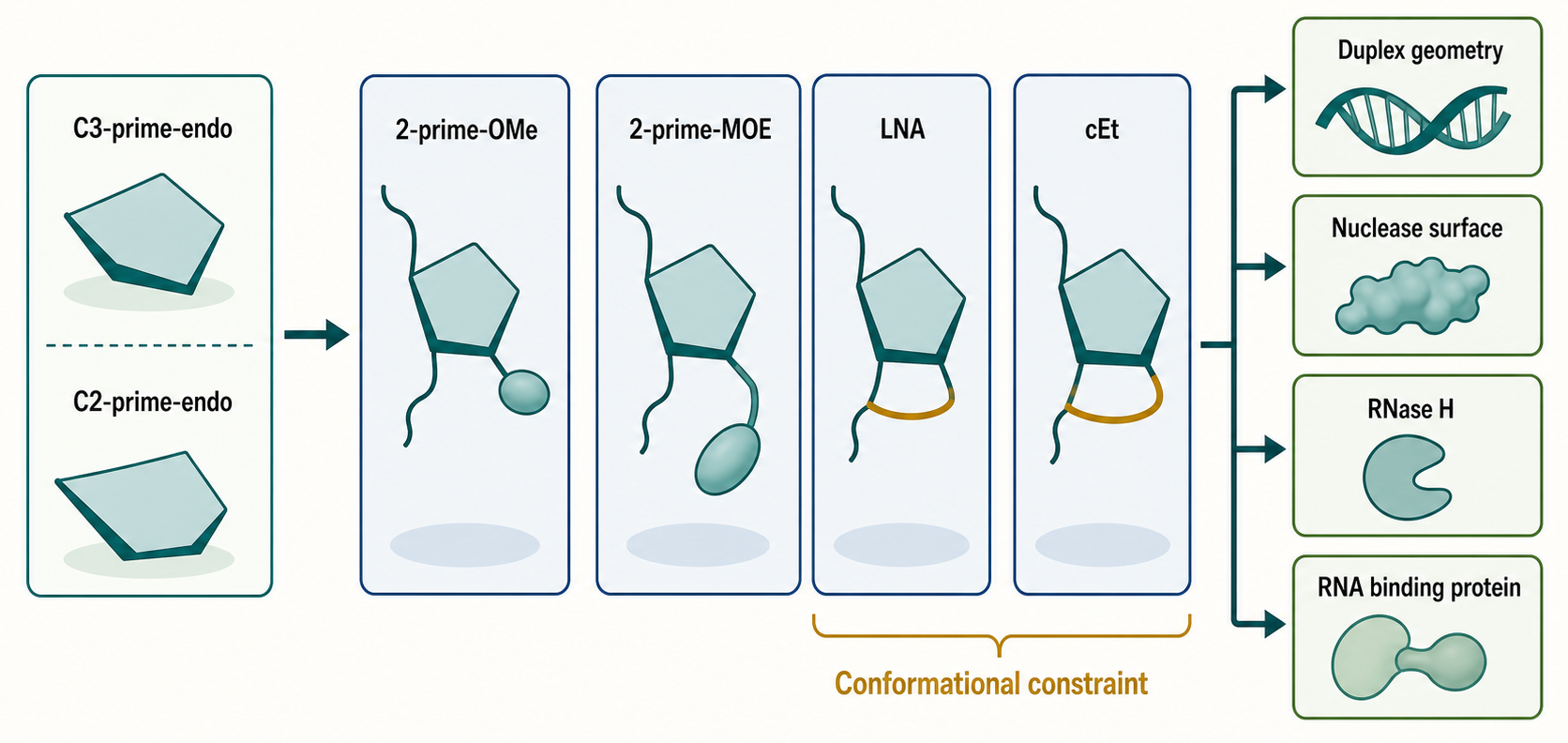
Figure 149.2. Sugar Pucker, 2′ Substitution, and Conformational Constraint. 2′ substituents and bridged sugars change the conformational cost of duplex formation and the surface presented to nucleases, RNase H, and RNA-binding proteins.
The common therapeutic architecture is the gapmer. A gapmer has high-affinity, nuclease-resistant modified nucleotides at the flanks and a central DNA-like gap that supports RNase H recruitment when the oligonucleotide binds a target RNA. 2′-MOE, LNA, cEt, and other constrained sugars can be used in the wings to increase affinity and protect termini. The central gap must remain compatible with RNase H geometry, so the design cannot simply maximize modification density. The same chemistry can also be used in steric-blocking oligonucleotides, splice-switching designs, miRNA inhibitors, and diagnostic probes where RNase H recruitment is not desired. In those cases, the design logic emphasizes stable occupancy of an RNA site, inhibition of a protein-RNA interaction, altered spliceosome recognition, or selective detection.
The evidence basis for sugar modification rests on chemistry, structural biology, thermodynamics, nuclease assays, and in vivo pharmacology. Synthetic chemistry defines the monomers and compatibility with phosphoramidite solid-phase synthesis. Duplex melting experiments show that constrained sugars often provide strong stabilization against RNA complements. Structural studies of modified duplexes explain how sugar pucker and minor-groove hydration shift. Nuclease assays show improved stability relative to unmodified RNA or DNA. Pharmacology and toxicology studies show that affinity and stability do not fully predict safety. Reviews of therapeutic artificial nucleic acids emphasize that sugar chemistry, backbone chemistry, sequence motif, dose, tissue exposure, and delivery mode must be considered together (Bege and Borbas 2022; Epple et al. 2021).
2′-OMe has a broad role outside therapeutic gapmers. It appears in natural RNA as a ribose methylation and in synthetic siRNA and antisense designs as a modification that can reduce nuclease sensitivity and alter innate immune recognition. 2′-MOE has been extensively used in antisense therapeutics because it offers a useful combination of affinity, stability, and tolerability in many designs. LNA is prominent in high-affinity probes and anti-miR compounds because short LNA-containing oligonucleotides can bind short RNA targets such as microRNAs with high affinity. cEt and related constrained sugars were developed to obtain high potency while tuning safety and pharmacological behavior. These historical uses should not be read as strict categories; the same chemistry can serve different roles when embedded in different architectures.
Boundary cases include position effects and sequence effects. A single LNA residue near a mismatch can strongly change mismatch penalty, but the direction and magnitude depend on local sequence and mismatch identity. A 2′ modification at a terminus may mostly protect against exonuclease attack, while the same modification inside a gap may reduce RNase H cleavage. Some modifications improve duplex affinity but reduce compatibility with enzymes that require natural-like geometry. Other modifications can make a strand too hydrophobic or too protein-binding when combined with particular conjugates or backbones.
The teaching point is that sugar modifications work by conformational and recognition logic. They are not generic “stability decorations.” They tune how much the single strand resembles its bound state, how a duplex surface is presented, how nucleases approach the backbone, and how proteins or immune sensors interpret the molecule.
149.3. PNA, PMO, Tricyclo-DNA, XNA, and Artificial Backbones
Peptide nucleic acid, phosphorodiamidate morpholino oligomer, tricyclo-DNA, and xeno nucleic acids show that sequence-specific recognition can survive major changes in the scaffold that holds the bases. The common element is that nucleobases are arranged so they can form hydrogen bonds and stacking interactions with complementary RNA or DNA. The uncommon elements are charge, spacing, flexibility, solubility, enzyme compatibility, and biological distribution.
Peptide nucleic acid replaces the sugar-phosphate backbone with a neutral pseudopeptide backbone, commonly based on N-(2-aminoethyl)glycine units bearing nucleobases. Because PNA lacks the natural negative charge, PNA-DNA and PNA-RNA duplexes avoid electrostatic repulsion between strands and can show high affinity. PNA can also invade some duplex DNA contexts under appropriate conditions. However, neutrality creates practical challenges. PNA solubility, aggregation, cellular uptake, and delivery often require careful sequence design, charged side chains, peptide conjugates, or formulation. PNA is therefore powerful in diagnostics, probes, and experimental systems, but biological application depends on overcoming delivery and bioavailability constraints (Patel et al. 2020).
Phosphorodiamidate morpholino oligomers use morpholine rings instead of ribose and phosphorodiamidate linkages instead of phosphodiesters. PMOs are neutral and highly resistant to nucleases. In therapeutics, PMOs are most associated with steric-blocking mechanisms, especially splice modulation or translation blocking, because they do not recruit RNase H in the way a DNA-like gapmer does. A PMO bound over a splice site, splicing enhancer, splicing silencer, or start-codon region can prevent proteins or ribosomal machinery from accessing that RNA element. The lack of RNase H recruitment is a feature for steric blockade but a limitation if the goal is catalytic degradation of target RNA.
Tricyclo-DNA is a conformationally constrained DNA analog in which the sugar region is locked by an additional ring system. Its value is not simply that it is “more artificial”; it combines altered conformation, nuclease resistance, and biological distribution properties that have made it interesting for neuromuscular and neurogenetic applications. The term tricyclo-DNA also reminds the reader that artificial backbones are not divided cleanly into “natural-like charged” and “neutral alien” categories. Many chemistries occupy intermediate positions in which the chain remains nucleic-acid-like but has strong conformational preorganization.
Xeno nucleic acid is a broader category. XNA can refer to polymers with altered sugars such as hexitol nucleic acid, threose nucleic acid, glycol nucleic acid, cyclohexenyl nucleic acid, or acyclic scaffolds. Some XNAs are studied for hybridization properties; others are studied as alternative genetic polymers that can be copied or evolved using engineered polymerases. Acyclic XNA oligomers are especially informative because they show that a flexible, nonribose scaffold can still support sequence recognition if base spacing and orientation are adequate (Murayama and Asanuma 2021). The boundary between “therapeutic oligonucleotide chemistry” and “synthetic genetic polymer” is therefore conceptual rather than absolute. A chemistry optimized for an in vivo drug may prioritize nuclease resistance and protein-binding behavior, whereas a chemistry optimized for artificial heredity must also be compatible with templated synthesis, copying, selection, and error control.
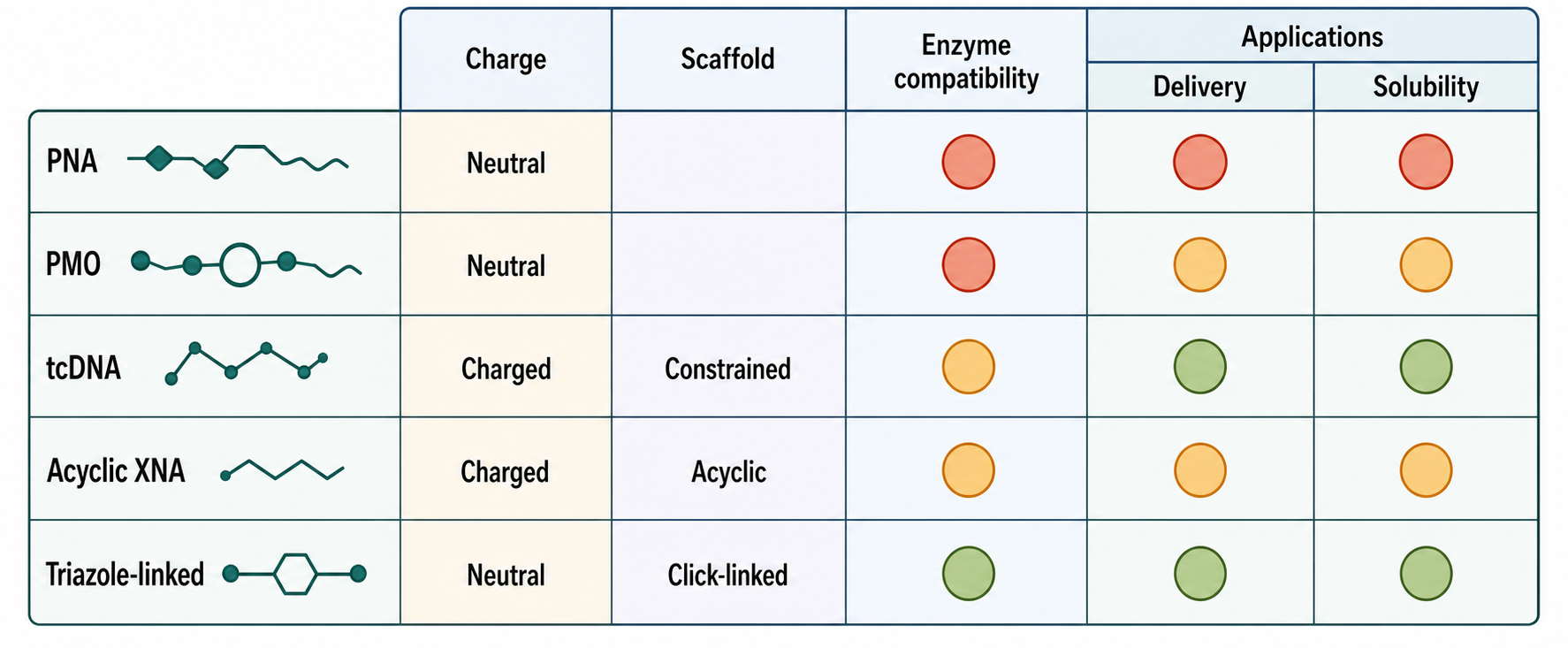
Figure 149.3. Artificial Backbone Taxonomy. Artificial nucleic acids preserve nucleobase information while varying the scaffold that controls solubility, spacing, flexibility, delivery, and biological recognition.
Triazole-linked nucleic acids add another design lesson. The triazole linkage can be introduced by azide-alkyne cycloaddition, allowing a nonnatural connection that can mimic some geometric features of a phosphodiester while changing charge and chemical reactivity. Such linkages are important in synthetic biology because they test whether biological enzymes and information-transfer systems can tolerate a linkage that is chemically distinct from phosphate. They are also useful in biotechnology because click chemistry can join fragments or create constructs that are difficult by standard enzymatic ligation. Reviews of triazole-linked nucleic acids emphasize synthesis, therapeutic possibilities, and synthetic-biology applications, while also noting that compatibility with natural enzymes is context-dependent (Sharma et al. 2024).
The evidence basis for these artificial backbones is more heterogeneous than for 2′ modifications. PNA evidence includes synthesis, thermal denaturation, structural studies, strand-invasion assays, diagnostic probe performance, and biological delivery studies. PMO evidence includes nuclease-resistance assays, splice-switching experiments, animal models, and clinical experience in selected diseases, although detailed clinical claims require regulatory and trial sources beyond the local bibliography. XNA evidence includes hybridization measurements, polymerase-engineering experiments for some systems, and in vitro selection demonstrations in the synthetic-biology literature. The chapter-local bibliography supports a general overview but not a definitive history of each artificial polymer, so landmark references remain Curation-deferred source need.
Boundary cases are crucial. A neutral backbone can increase affinity by removing repulsion but can also reduce solubility or alter biodistribution. A highly nuclease-resistant oligomer can be pharmacologically persistent but difficult to clear. A synthetic backbone can be excellent for a sensor in a tube but poor for intracellular delivery. A polymer compatible with hybridization is not necessarily compatible with RNase H, Argonaute, ribosomes, polymerases, or innate immune receptors. The phrase “artificial backbone” should therefore trigger the question “compatible with which biological or technological interface?”
149.4. Hybridization Thermodynamics, Nuclease Resistance, and Mismatch Behavior
Hybridization thermodynamics describes the energetics of two complementary strands forming a duplex. The most familiar readout is melting temperature, the temperature at which half of a duplex population is denatured under defined conditions. But melting temperature is not an intrinsic property of a sequence alone. It depends on strand concentration, salt, buffer, pH, strand length, terminal bases, mismatches, modifications, and whether the target is a free short oligonucleotide or a structured RNA embedded in protein complexes. Artificial chemistry changes hybridization by altering stacking, hydrogen-bond geometry, conformational preorganization, electrostatics, hydration, and sometimes the accessibility of the target.
A useful way to reason about duplex formation is to separate the bound-state benefit from the unbound-state cost. Bases contribute favorable hydrogen bonding and stacking when the duplex forms. The single strands pay an entropic and conformational cost because flexible chains must become ordered. Modifications such as LNA and cEt preorganize the sugar toward an RNA-like duplex conformation, often reducing the cost. Neutral backbones such as PNA remove charge repulsion between strands, often increasing apparent affinity in low-to-moderate salt contexts. Bulky 2′ substituents can stabilize a duplex with RNA while also creating local steric constraints that affect mismatch behavior. These effects are coupled, which is why empirical measurement remains necessary.
Box 149.2. Reading a Melting-Temperature Claim
Render-ready box content
When a paper reports that a modification “raises Tm,” read the claim as conditional. First, identify the exact sequence, strand length, modification pattern, salt, pH, strand concentration, and target strand used in the assay. Second, ask whether the target was a short naked oligonucleotide, a structured RNA fragment, or a cellular transcript site. Third, compare the perfect match with relevant mismatches, paralogous RNAs, miRNA family members, or allele variants rather than only with an unmodified control. Fourth, separate equilibrium affinity from kinetics: a tight duplex may form too slowly, dissociate too slowly, or fail to invade a structured target. A higher Tm supports the statement “this duplex is more stable under these conditions.” It does not by itself prove better cellular uptake, RNase H activity, splice switching, pharmacological duration, or safety.
Table 149.2. Interpreting Hybridization and Nuclease Assays. Each assay reports a limited layer of behavior; assay conditions must be stated before comparing modified oligonucleotides.
| Assay | Input | Output | Useful inference | Common overinterpretation | Follow-up needed |
|---|---|---|---|---|---|
| UV melting | Purified modified strand and short complementary target in defined buffer | Melting temperature and transition shape | Relative duplex stability under stated salt, concentration, and sequence conditions | Higher Tm automatically means higher cellular potency | Test target accessibility, mismatch behavior, and activity in cells |
| Calorimetry or detailed binding thermodynamics | Purified strands measured across controlled conditions | Binding enthalpy, entropy, and affinity estimates | Whether stabilization comes mainly from stacking, preorganization, or electrostatic effects | Thermodynamic parameters are universal for all matrices and targets | Repeat under relevant ionic conditions and compare with kinetic and cellular data |
| Mismatch or allele-discrimination assay | Perfect-match and mismatch targets with the same probe chemistry | Delta Tm, signal ratio, or binding selectivity | How one mismatch behaves in a defined assay design | One mismatch penalty predicts transcriptome-wide specificity | Test related RNAs, microRNA family members, isomiRs, and cellular off-targets |
| Purified nuclease assay | Oligonucleotide exposed to a named nuclease under defined conditions | Cleavage rate, resistant positions, and fragment pattern | Whether the chemistry blocks a specific enzymatic cleavage route | Resistance to one enzyme proves serum or in vivo stability | Add serum, plasma, lysate, and compartment-relevant stability assays |
| Serum, plasma, or tissue-homogenate stability | Oligonucleotide incubated in a biological matrix | Apparent half-life and degradation products | Persistence in a complex extracellular or tissue-like mixture | Matrix stability equals productive duration at the target site | Measure pharmacokinetics, tissue distribution, metabolites, and target engagement |
| Cellular target-engagement assay | Cells containing the relevant RNA target and treatment format | RNA knockdown, splice shift, translation block, reporter change, or imaging signal | Whether the compound reaches the relevant compartment and produces the expected RNA effect | A cellular readout proves direct binding and excludes off-target mechanisms | Use dose response, rescue or orthogonal chemistry, RNA profiling, and mechanism-specific controls |
Nuclease resistance is related but not identical to duplex stability. A single-stranded oligonucleotide may be degraded by exonucleases from the ends or by endonucleases at internal positions. A duplex may be protected from some nucleases but vulnerable to RNase H if it is an RNA-DNA hybrid or to other nucleases that recognize double-stranded substrates. Phosphorothioate linkages, 2′ substitutions, constrained sugars, PMO backbones, and PNA backbones can all improve resistance, but by different mechanisms. A modification can prevent productive nuclease binding, distort the scissile linkage, remove the catalytic geometry used by the enzyme, or eliminate the natural phosphodiester entirely. Because nucleases differ, “resistant to nuclease X in buffer” does not prove “stable in serum,” and “stable in serum” does not prove “stable in endosomes, cytosol, nucleus, or tissue.”
Mismatch behavior is a central design variable. A mismatch is a noncanonical or incorrect base pair relative to a fully complementary target. High-affinity chemistry can either improve discrimination by making the correct duplex very favorable and the incorrect duplex locally disruptive, or reduce practical specificity by allowing partial complementarity to remain stable enough for binding. Short targets such as microRNAs are especially sensitive to this balance. LNA-containing anti-miRs can bind short RNAs strongly, but a design must consider seed-family similarity, single-nucleotide variants, isomiRs, and partially complementary transcripts. PNA probes can discriminate single-nucleotide differences in some assays, but assay temperature, salt, strand length, and probe design are decisive.
Target structure adds another layer. An oligonucleotide designed against an accessible single-stranded region of an mRNA may bind well, while the same chemistry directed against a base-paired region may fail unless the target breathes open or the modified oligomer can invade. RNA-binding proteins can mask or remodel target sites. Cellular RNAs are not dilute, naked strands in buffer; they are folded, modified, translated, processed, localized, and bound by proteins. Therefore, a high melting temperature against a short synthetic RNA is a useful measurement but not a complete potency model. Chapter 3 provides the thermodynamic foundation, Chapter 54 treats folding in cells, and Chapter 150 explains how target-site accessibility affects antisense activity.
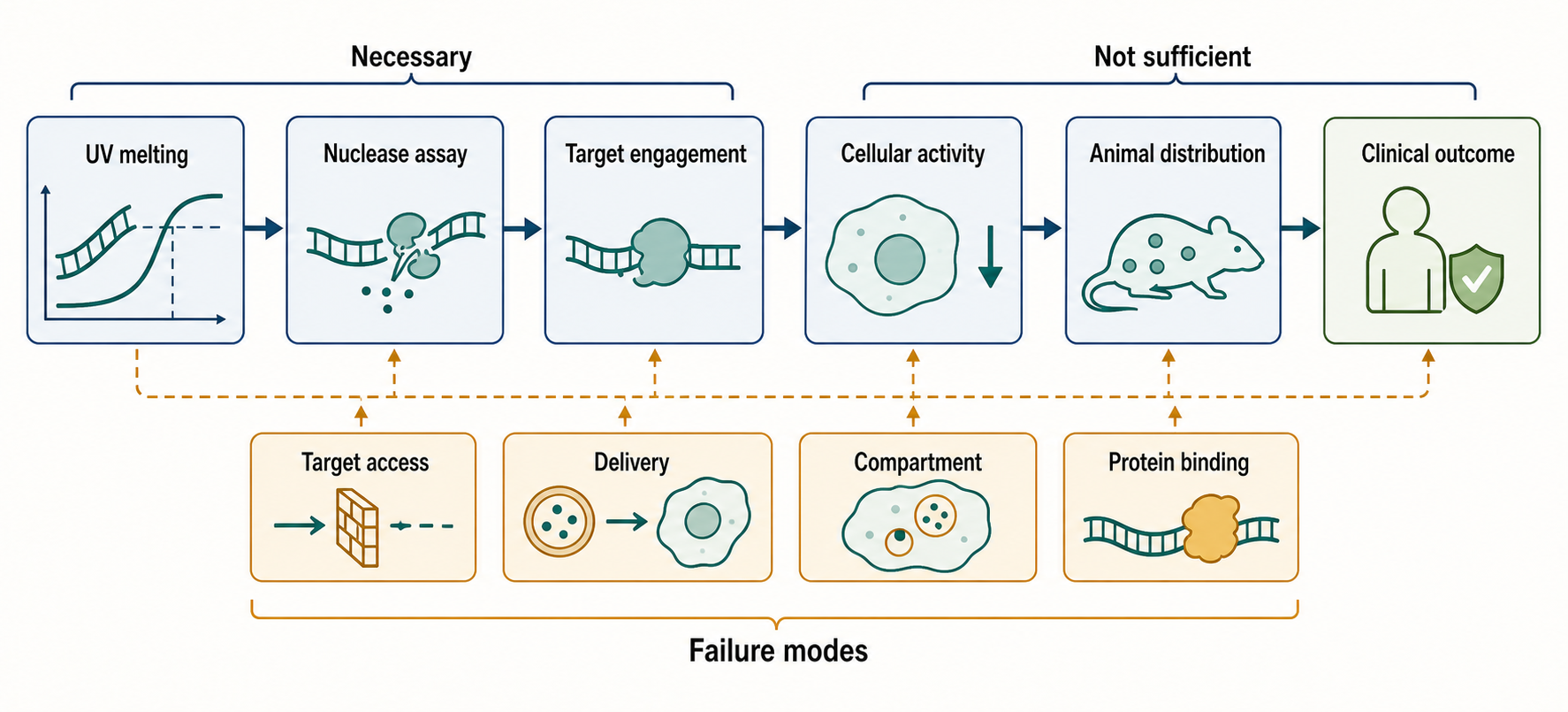
Figure 149.4. Evidence Ladder from Melting Temperature to Cellular Activity. Hybridization and stability assays are necessary but insufficient; cellular potency also depends on target accessibility, delivery, compartmentalization, and protein binding.
The evidence ladder should be explicit. First, purified oligonucleotide duplexes are measured by UV melting, fluorescence, calorimetry, or other biophysical assays. Second, nuclease assays test chemical persistence in defined enzymatic or biological mixtures. Third, cellular assays test whether the compound reaches the relevant compartment and produces the expected RNA change, such as RNase H-mediated degradation, splice switching, translation block, or reporter signal. Fourth, animal or clinical studies test distribution, persistence, efficacy, and safety. Disagreement across levels is informative rather than embarrassing. A design that looks weak in simple melting experiments may perform well if it reaches an accessible target efficiently; a design with excellent melting temperature may fail because it is trapped by proteins or endosomes.
Several overgeneralizations should be named. Higher melting temperature is not automatically higher potency. Nuclease resistance is not automatically longer useful duration if distribution or clearance differs. A perfect match in a short synthetic assay does not guarantee specificity in a transcriptome. A single mismatch penalty measured in buffer does not predict all off-target effects in cells. A chemically stable oligonucleotide can still be biologically unstable in the sense that it is sequestered, excreted, immunologically sensed, or bound to unintended proteins.
149.5. Protein Binding, Toxicity, and Stereochemistry
Protein binding is one of the defining differences between an oligonucleotide as a chemical duplex-forming reagent and an oligonucleotide as a drug-like biological object. Natural nucleic acids bind proteins through electrostatics, base and ribose contacts, shape recognition, metal ions, and sequence motifs. Artificial oligonucleotides add new surfaces. Phosphorothioate sulfur increases polarizability and hydrophobic character relative to phosphate oxygen, so PS oligonucleotides often bind many proteins more strongly than phosphodiester analogs. That binding can improve plasma half-life and tissue distribution by reducing rapid renal filtration. It can also create toxicology liabilities when the binding is excessive, sequence-biased, or concentrated in sensitive cell types.
Protein binding has several forms. Albumin and other abundant plasma proteins can serve as transport reservoirs. Cell-surface and extracellular-matrix proteins can influence uptake. Intracellular proteins can be displaced, stabilized, mislocalized, or functionally inhibited. Pattern-recognition receptors can respond to sequence and chemistry. Complement and coagulation pathways can be affected by some oligonucleotide classes at certain exposures. The same compound can therefore have beneficial binding in one compartment and harmful binding in another. Toxicity is not a single property of “the chemistry”; it emerges from sequence, chemistry, dose, route, exposure duration, species, tissue, conjugate, formulation, and target biology.
Stereochemistry affects protein binding because proteins are chiral surfaces. The Rp and Sp configurations at phosphorothioate linkages present sulfur and oxygen differently to a binding pocket or catalytic site. Some nucleases and RNase H variants may prefer or tolerate one stereochemical arrangement at a linkage more than another. A stereorandom PS oligonucleotide is a reproducible mixture when made by a controlled process, but each molecule in the mixture has a different three-dimensional pattern along the backbone. A stereopure or stereodefined oligonucleotide can, in principle, separate beneficial and harmful interactions by arranging Rp and Sp linkages in a designed pattern.
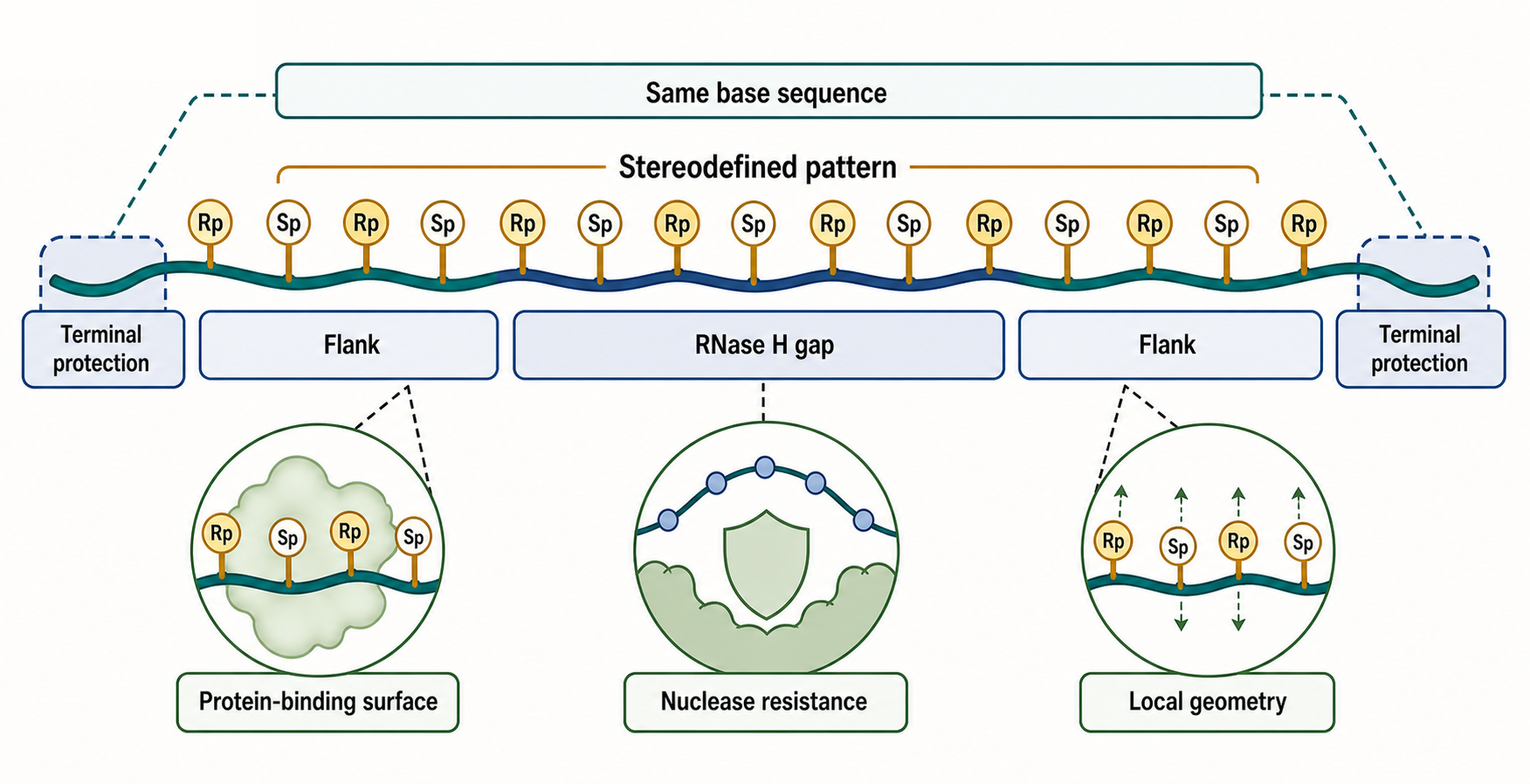
Figure 149.5. PS Stereochemistry as a Backbone Code. Stereodefined phosphorothioate patterns can alter local geometry, nuclease resistance, RNase H recruitment, and protein binding without changing base sequence.
The conceptual example is an RNase H gapmer. RNase H recognizes an RNA-DNA-like hybrid and cleaves the RNA strand. The enzyme reads the minor-groove geometry and the backbone of the DNA-like strand near the cleavage site. If the PS stereochemistry in the gap changes the geometry of the hybrid or the contacts made by RNase H, cleavage efficiency can change even though the base sequence is the same. At the flanks, stereochemistry can affect exonuclease resistance and protein binding. A stereodefined gapmer can therefore be designed with different goals at different positions: support RNase H in the central gap, protect termini, maintain affinity, and avoid protein-binding patterns associated with toxicity. This design logic is compelling, but broad generalization requires compound-specific evidence.
Toxicity evidence for artificial nucleic acids must be interpreted carefully. Cell viability assays can identify gross cytotoxicity but may miss immune activation, complement effects, platelet effects, renal accumulation, or delayed tissue injury. Animal studies can reveal tissue-specific exposure and pathology but may not predict human responses perfectly. Clinical adverse events reflect real exposure but are confounded by disease state, dose, route, and co-medications. Mechanistic toxicology studies try to link a chemical feature to a protein interaction or pathway, but the field remains context-dependent. Reviews of therapeutic oligonucleotide chemistry stress that chemical class, sequence motif, and stereochemistry all contribute to risk, and that empirical screening remains necessary (Bege and Borbas 2022; Epple et al. 2021).
Protein binding is also not always nonspecific noise. Some oligonucleotide designs intentionally use protein binding or conjugation to alter pharmacokinetics. GalNAc-conjugated siRNAs use a carbohydrate ligand for hepatocyte uptake, but that delivery chemistry is covered mainly in Chapter 151 and Chapter 157. Aptamers intentionally bind protein targets by folded nucleic acid structure. Diagnostic capture probes may be immobilized through engineered linkers. The distinction is whether the binding is part of the intended mechanism and whether it is measured under relevant conditions.
Boundary cases include short diagnostic probes that never enter the body, ex vivo reagents used briefly in cells, and therapeutic compounds given chronically at high exposure. A chemistry that is safe and useful as an in vitro probe may not be safe as a systemic drug. A chemistry that is tolerated in one tissue may not be tolerated in another. A stereochemical pattern that improves nuclease resistance may reduce RNase H activity or alter protein interactions. No single safety statement applies across all artificial nucleic acids.
149.6. Stereopure Oligonucleotides and Manufacturing Constraints
Stereopure oligonucleotides are attractive because they convert a complex stereochemical mixture into a defined molecular species or defined set of species. In a phosphorothioate oligonucleotide, each PS linkage can be Rp or Sp. If all linkages are made without stereocontrol, the product contains many stereochemical variants. If each linkage is made with a defined configuration, the product has a specified stereochemical code along the backbone. This code can affect hybridization, nuclease resistance, RNase H recruitment, protein binding, distribution, and toxicity.
The chemistry challenge is that standard oligonucleotide synthesis already demands high stepwise coupling efficiency. A 20-mer requires many sequential cycles of detritylation, coupling, oxidation or sulfurization, capping, and deprotection. Adding stereocontrol must not destroy yield, purity, scalability, or analytical tractability. Stereopure synthesis can use chiral auxiliaries, stereodefined monomers, or catalytic/chemical strategies that favor one phosphorus configuration. Each approach must solve practical questions: monomer availability, coupling rate, stereochemical fidelity, impurity removal, compatibility with modified sugars and bases, cost of goods, and robustness at manufacturing scale.
Analytical constraints are equally important. A stereorandom oligonucleotide can be characterized by mass, sequence, length impurities, depurination or deamination products, incomplete deprotection, residual solvents, and aggregate behavior, but its stereochemical microheterogeneity is accepted as part of the product definition. A stereopure oligonucleotide requires methods that verify stereochemical identity or at least support control of the stereochemical process. This can involve enzymatic digestion, chromatography, nuclear magnetic resonance for model compounds, mass spectrometry strategies, or comparison to reference standards. The more stereocenters are specified, the more demanding the control strategy becomes.
Box 149.3. Stereochemistry Is a Pattern, Not a Purity Slogan
Render-ready box content
A stereopure phosphorothioate oligonucleotide should be evaluated as a designed pattern of Rp and Sp linkages. The relevant question is not whether “pure” is better than “mixed” in the abstract. The relevant question is which linkage positions need a defined configuration for the intended mechanism. A central gap position may matter because RNase H contacts the hybrid near an RNA cleavage site. A terminal linkage may matter because exonucleases, plasma proteins, or intracellular binding partners contact the end of the molecule. A flank position may matter because it changes affinity, geometry, or protein binding without directly controlling cleavage. If stereochemistry is claimed as a design feature, the evidence should include stereochemical assignment or process control, comparison with appropriate stereorandom or alternative-pattern controls, and a mechanistic endpoint such as cleavage, stability, protein binding, exposure, or toxicity.
Table 149.3. Stereopure Manufacturing and Analytical Control Checklist. Stereopure design creates a molecular design variable and a manufacturing control obligation.
| Control point | Risk | Example measurement | Decision consequence |
|---|---|---|---|
| Monomer and reagent identity | Wrong monomer, wrong stereochemical precursor, or reactive impurity enters every downstream cycle | NMR, high-resolution MS, chromatography, and certificate review | Reject or requalify material before synthesis scale-up |
| Stepwise coupling efficiency | Truncated strands and deletion products accumulate across many cycles | Trityl monitoring, analytical HPLC, LC-MS, and crude purity profile | Optimize cycle chemistry, shorten design, or increase purification burden |
| Stereochemical fidelity at specified PS linkages | Rp/Sp scrambling makes the intended stereochemical code uncertain | Enzymatic digestion plus LC-MS, model-compound NMR, or comparison with stereochemical standards | Treat the pattern as unverified, redesign the route, or loosen the stereochemical claim |
| Sulfurization, oxidation, and deprotection control | Mixed PO/PS linkages, base damage, depurination, or incomplete protecting-group removal | Impurity mapping by LC-MS, ion-exchange or ion-pair chromatography, and forced-degradation studies | Adjust synthesis chemistry and define impurity acceptance criteria |
| Purification and sequence impurity profile | n-1, n+1, capped, deaminated, or aggregate species obscure the intended molecule | Preparative and analytical chromatography, mass confirmation, and purity trend analysis | Set release specifications and decide whether yield supports the design |
| Scale, cost, and route robustness | A research-scale stereopure pattern cannot be produced reproducibly or economically | Pilot-scale yield, cycle robustness, solvent and reagent use, and batch comparability | Choose full stereodefinition, partial stereodefinition, or a stereorandom process |
| Regulatory identity and release specification | Product definition does not match the intended molecular species or controlled mixture | Validated assay panel, reference standard, batch history, and stability program | Define the molecule or mixture for comparability, release, and later clinical interpretation |
Manufacturing constraints affect design choices. A stereodefined pattern that improves potency twofold may not be worth a much more expensive process if dose, delivery, or safety are not limiting. A stereodefined pattern that reduces a serious toxicity or enables lower dosing may be transformative. A research-scale route may not translate to kilogram-scale production. Some artificial backbones require nonstandard monomers, special deprotection conditions, or purification strategies that limit length or increase cost. Neutral backbones such as PNA and PMO have their own synthesis and purification workflows that differ from standard phosphoramidite oligonucleotide manufacturing.
Stereochemistry also interacts with regulatory identity. A therapeutic oligonucleotide must be defined well enough that batches are comparable and impurities are controlled. If stereochemistry is intentionally specified, it becomes part of the molecule’s identity and quality attributes. If stereochemistry is not specified, the process must still be controlled so the mixture is reproducible. In either case, analytical release testing must connect chemical identity to safety and efficacy. Detailed regulatory requirements are handled in Chapter 158 and Chapter 159; this chapter’s point is that stereochemistry changes not only molecular behavior but also the manufacturing and control problem.
The evidence basis for stereopure design is still developing relative to the broader history of PS and 2′-modified oligonucleotides. Mechanistic studies show that stereochemistry can affect nuclease resistance, RNase H activity, and protein binding. Medicinal chemistry programs show that defined stereochemical patterns can tune potency and safety in particular compounds. However, broad rules such as “all Rp is better” or “all Sp is safer” are not defensible. Linkage position, neighboring sequence, sugar modification, target RNA, intended mechanism, and protein environment all matter. Lu and Chen’s discussion of pre-twisting and improved targeting highlights the broader principle that local geometry and preorganization can be engineered, but application to a given therapeutic class requires direct evidence (Lu and Chen 2024).
Common misconceptions include treating stereopure synthesis as only a purity upgrade. It is more accurate to call it a design dimension. A stereorandom PS oligonucleotide is not necessarily inferior; many useful compounds have been developed as stereochemical mixtures. A stereopure compound is not automatically safer or more potent; it can reveal both beneficial and harmful stereochemical effects more sharply. Manufacturing feasibility is not a secondary administrative issue; it determines whether a chemistry can be used reproducibly at the scale and quality required for diagnostics, therapeutics, or industrial synthetic biology.
149.7. Diagnostics, Therapeutics, Sensors, and Synthetic Biology Uses
Artificial nucleic acid chemistry is useful because different applications impose different constraints. A diagnostic probe may need rapid, selective binding, signal generation, stability during storage, and compatibility with enzymes or surfaces. A therapeutic antisense drug may need tissue distribution, nuclease resistance, target engagement, tolerability, and a manufacturable impurity profile. A sensor may need reversible conformational switching or single-nucleotide discrimination. A synthetic-biology polymer may need replication, templating, orthogonality, or resistance to biological degradation. The same modification can be excellent in one role and poor in another.
In diagnostics, LNA, PNA, and other high-affinity chemistries are valuable because they can make short probes bind strongly and discriminate sequence variants under controlled assay conditions. LNA probes are widely used conceptually for short RNA targets such as microRNAs because short natural DNA probes may have insufficient affinity. PNA probes can bind strongly and resist nucleases, and their neutral backbone can be useful in fluorescence in situ hybridization, strand-invasion, and mismatch-sensitive assays. Assay design still matters: temperature, salt, washing, target accessibility, fluorophore placement, surface density, and background binding can dominate performance. A diagnostic probe is validated by analytical sensitivity, specificity, limit of detection, reproducibility, and performance in the sample matrix, not by melting temperature alone.
In therapeutics, artificial chemistry supports several mechanisms. RNase H gapmers use modified wings and a DNA-like gap to direct cleavage of target RNA. Steric-blocking oligonucleotides use nuclease-resistant chemistry to occupy RNA sites without cleavage. Splice-switching oligonucleotides redirect splice-site choice by blocking spliceosome components or regulatory proteins. Anti-miRs bind mature microRNAs and prevent Argonaute-loaded miRNAs from repressing targets. siRNA designs use selected sugar and backbone modifications to improve stability, reduce immune stimulation, and preserve Argonaute compatibility, although siRNA-specific design is treated in Chapter 151. PMO and related neutral chemistries are especially important when steric blockade is desired without RNase H.
Table 149.4. Application-Specific Validation Standards. The same artificial nucleic acid chemistry can succeed or fail depending on the validation standard imposed by the application.
| Application | Desired mechanism | Useful chemistries | Required evidence | Common failure mode |
|---|---|---|---|---|
| RNase H gapmer therapy | Bind target RNA and recruit RNase H cleavage through a DNA-like gap | PS backbone with DNA gap and 2′-MOE, LNA, cEt, or related modified wings | Target RNA reduction, RNase H-dependent mechanism, pharmacokinetics, toxicology, and manufacturable impurity profile | Overmodified gaps bind RNA but fail to recruit RNase H or create protein-binding toxicity |
| Splice-switching or steric-blocking therapy | Occupy an RNA element without intentional RNA cleavage | PMO, 2′-OMe or 2′-MOE designs, tcDNA, selected high-affinity blockers | Isoform shift, protein or phenotype rescue, tissue exposure, durability, and safety | Insufficient delivery to the disease tissue or unintended splice changes |
| Diagnostic probe or FISH assay | Detect a sequence or variant with controlled hybridization and signal | LNA, PNA, 2′-modified probes, or other high-affinity short probes | Analytical sensitivity, specificity, limit of detection, reproducibility, and matrix performance | Buffer Tm advantage disappears because of background, target structure, or wash conditions |
| Anti-miR or short-RNA inhibitor | Sequester a short regulatory RNA and prevent its normal RNP function | LNA-rich, 2′-modified, PS-supported, or mixed high-affinity designs | miRNA occupancy or derepression, family-member selectivity, dose response, and toxicity screen | High affinity captures related seed-family RNAs or partially complementary transcripts |
| Sensor or nanotechnology component | Produce a calibrated signal, switch, capture event, or strand-displacement response | PNA, LNA, XNA, triazole-linked constructs, or nuclease-resistant mixed chemistries | Sensitivity, selectivity, kinetics, reversibility or intended irreversibility, and storage stability | Binding is too tight, too slow, or too matrix-sensitive for the intended readout |
| Synthetic-biology XNA system | Store, copy, select, or insulate sequence information outside natural RNA/DNA chemistry | Acyclic XNA, HNA/TNA/GNA-like systems, triazole-linked constructs, and engineered polymerase-compatible designs | Templating, copying, error behavior, enzyme compatibility or independence, and selectable function | Stable hybridization is mistaken for replication, evolution, or circuit compatibility |
Sensors and nanotechnology exploit the programmability of base pairing. Artificial backbones can increase resistance to nucleases in biological fluids, alter strand-displacement kinetics, or create orthogonal recognition systems that do not interact strongly with natural nucleic acids. PNA and XNA systems can serve as probes, capture elements, or components of responsive materials. Triazole-linked systems can create chemically robust constructs. However, sensor performance depends on kinetics as much as equilibrium. A probe that binds too tightly may not release; a strand-displacement system with altered backbone geometry may have unexpected toehold behavior; a nuclease-resistant construct may persist longer than desired in environmental or biological settings.
Synthetic biology uses artificial nucleic acids in two broad ways. The first is protective or functional substitution: use modified oligomers to control natural RNA or DNA circuits, block sequences, guide assembly, or detect molecules. The second is informational expansion: build polymers that store and transmit genetic information outside the natural DNA/RNA chemical space. XNA research asks whether heredity depends on ribose-phosphate chemistry or on more abstract features such as templated complementarity, polymerase compatibility, and selectable variation. Acyclic XNAs, triazole-linked nucleic acids, and other artificial polymers are therefore not only tools but experiments about the chemical basis of genetics (Murayama and Asanuma 2021; Sharma et al. 2024).
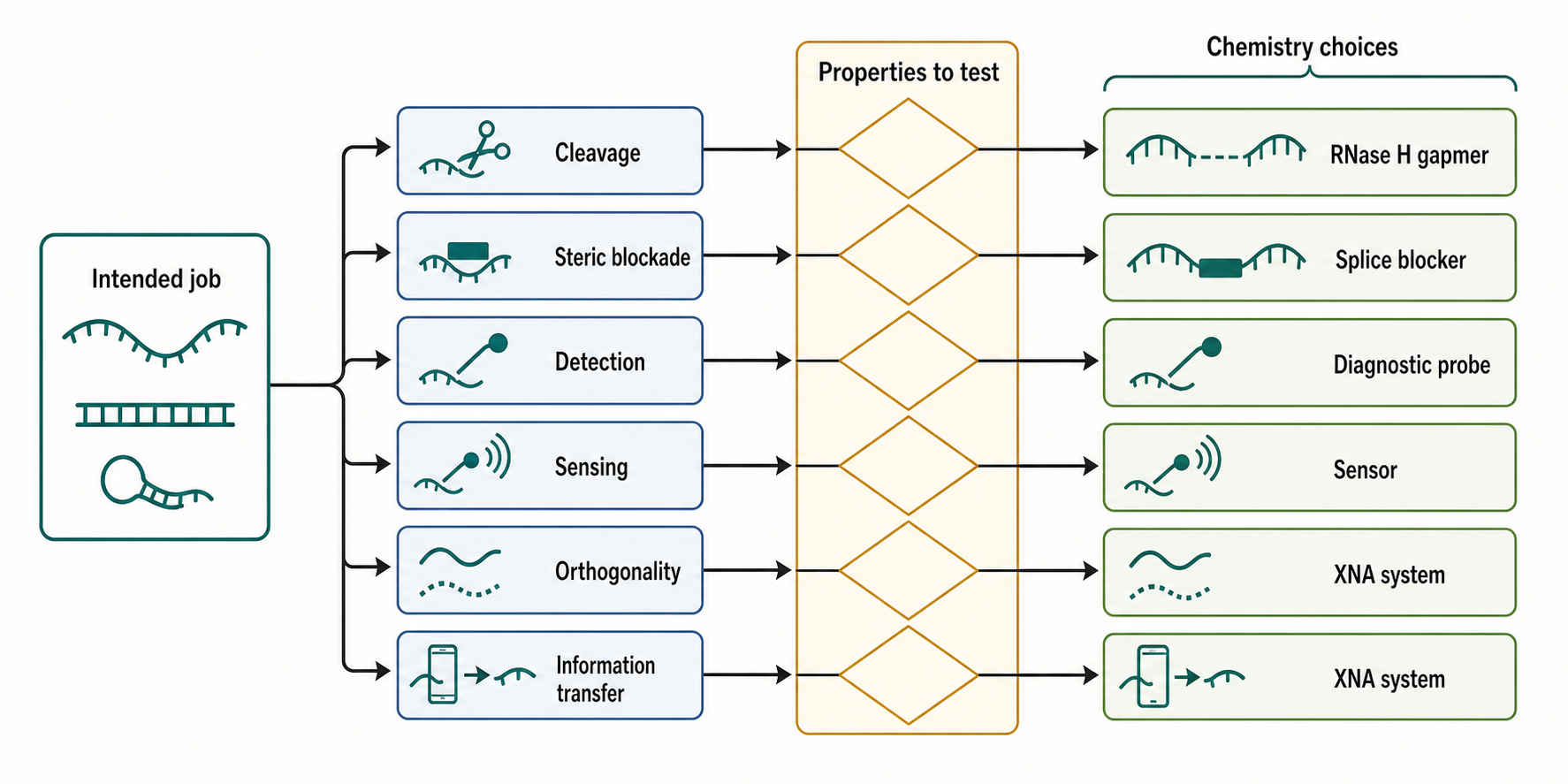
Figure 149.6. Choosing Chemistry by Intended Job. Artificial nucleic acid chemistry is selected by mechanism: cleavage, steric blockade, detection, sensing, orthogonality, or information transfer.
The applied evidence ladder differs by use. Diagnostic applications require analytical validation and matrix-specific performance. Therapeutic applications require pharmacology, toxicology, manufacturing, and clinical evidence. Sensors require sensitivity, selectivity, reversibility or irreversibility as intended, stability, and calibration. Synthetic-biology systems require demonstration of information transfer, enzyme compatibility or enzyme independence, error behavior, and evolutionary or circuit function. A chemistry should therefore be evaluated against the job it is supposed to perform rather than ranked on a single universal scale.
Do not overgeneralize from approved or successful examples. A PMO that works for one splice-switching application does not prove that PMO will enter every tissue or block every RNA site. An LNA probe that discriminates one microRNA family does not prove all LNA designs are specific in cells. A PNA that works in a diagnostic assay does not prove efficient intracellular delivery. An XNA that forms stable duplexes does not prove it can be replicated or evolved. The field’s consensus is that artificial nucleic acid chemistry is a powerful design space, not a solved lookup table.
Recent Consensus
The current consensus is that artificial nucleic acid design is multidimensional. Backbone, sugar, base, stereochemistry, length, sequence, terminal chemistry, conjugate, formulation, target accessibility, and intended mechanism must be optimized together. Phosphorothioate remains a central therapeutic backbone because it combines nuclease resistance with useful protein-mediated pharmacokinetics, but its protein binding and stereochemical complexity are central safety and manufacturing considerations. 2′-OMe, 2′-MOE, LNA, cEt, and related constrained sugars are established affinity and stability tools, but high affinity is not a substitute for specificity, target accessibility, and tolerability. PNA, PMO, tcDNA, XNA, and triazole-linked systems demonstrate that nucleic acid recognition can be supported by many scaffolds, but delivery, solubility, enzyme compatibility, and manufacturing often determine practical use (Murayama and Asanuma 2021; Bege and Borbas 2022; Patel et al. 2020; Sharma et al. 2024; Epple et al. 2021).
Open Questions, Controversies, Deprecated Models, and Common Misconceptions
Open questions:
- How to predict toxic protein binding from sequence and chemistry?
- How to design stereochemical patterns with generalizable rules?
- How to balance high affinity against off-target occupancy?
- How to deliver neutral and artificial backbones efficiently to extrahepatic tissues?
- How to scale complex modified chemistries while maintaining analytical control?
- How far artificial genetic polymers can be integrated with biological systems without losing orthogonality or safety?
Deprecated or weakened claims:
- Several older or oversimplified models should be avoided. It is obsolete to treat modifications as simple resistance tags added after sequence design. It is misleading to rank chemistries by melting temperature alone. It is incorrect to assume that neutral backbones are automatically nontoxic, or that charged backbones are automatically deliverable. It is also incorrect to treat a stereorandom phosphorothioate product as chemically undefined in a useless sense; such products can be reproducible and effective. The more precise distinction is whether stereochemistry is a controlled mixture attribute or an intentionally designed molecular code.